
BuddhistCatholicContemplativeEvangelicalGeneral ChristianHinduJewishLatter-day SaintMuslimNew VisionsProgressive Christian
Beliefs
- Buddhist
- Catholic
- Contemplative
- Evangelical
- General Christian
- Hindu
- Jewish
- Latter-day Saint
- More Voices
- Muslim
- New Visions
- Pagan
- Progressive Christian
Topics
- Religion News
- Food and Religion
- Sports and Religion
- Religious Art
- Religious Music and Entertainment
- Religious Events
- History and Religion
- Style and Religion
- Politics and Religion
- Women in Religion
- Recreation Outdoors and Religion
- Business Finance and Religion
- Careers Workplace and Religion
- Education and Religion
- Family Parenting and Religion
- Health Fitness and Religion
- Home and Religion
- Relationships and Religion
- Technology and Religion
- Travel and Religion
Columnists
- Buddhist Columnists
- Business Finance and Religion Columnists
- Careers Workplace and Religion Columnists
- Catholic Columnists
- Contemplative Columnists
- Education and Religion Columnists
- Evangelists Columnists
- Family Parenting and Religion Columnists
- General Christian Columnists
- Health Fitness and Religion Columnists
- Hindu Columnists
- History and Religion Columnists
- Home and Religion Columnists
- Jewish Columnists
- More Voices Columnists
- Latter Day Columnists
- Muslim Columnists
- New Visions Columnists
- Nonreligious Columnists
- Pagan Columnists
- Politics and Religion Columnists
- Progressive Columnists
- Recreation Outdoors and Religion Columnists
- Relationships and Religion Columnists
- Religion News Columnists
- Religious Art Columnists
- Religious Events Columnists
- Religious Music and Entertainment Columnists
- Sports and Religion Columnists
- Style and Religion Columnists
- Technology and Religion Columnists
- Travel and Religion Columnists
- Women in Religion Columnists
Resource Library
- 2026 Calendar
- Library of World Religions
- The 100 Most Holy Places on Earth
- Patheos Answers
- Podcasts
- Videos
- Faith Leaders Database
- Anglican Episcopalian
- Bahai
- Baptist
- Buddhism
- Christianity
- Confucianism
- Eastern Orthodoxy
- Hinduism
- Holiness and Pentecostal
- ISKCON
- Islam
- Judaism
- Lutheran
- Methodist
- The Church of Jesus Christ of Latter-day Saints
- New Age
- Paganism
- Presbytarian and Reformed
- Protestantism
- Religion Behind the Scenes
- Roman Catholic
- Scientology
- Shia Islam
- Sikhism
- Sufism
- Sunni Islam
- Taoism
- Zen
- See all religions
Research Tools
 Ad-Free & Subscriber Log-In Subscription Support
Ad-Free & Subscriber Log-In Subscription Support
Follow Patheos 

- Trending:
- Forgiveness
- |
- Marriage
- |
- Consciousness
- |
- Death Penalty
- |
- Election
- |
- Halloween

-
About
-
Catholic Apologetics
-
Church History
-
Great Apologists
-
Christian Worldview
-
Protestantism & Misc.
- Home
- Catholic
- History and Religion
- Vs. Lutheran Johann Hülsemann: Sola Scriptura
Vs. Lutheran Johann Hülsemann: Sola Scriptura
Last updated on: January 18, 2025 at 6:49 pm by Dave Armstrong
Vs. Lutheran Johann Hülsemann: Sola Scriptura 2025-01-18T18:49:45-04:00 Dave Armstrong
Patheos Explore the world's faith through different perspectives on religion and spirituality! Patheos has the views of the prevalent religions and spiritualities of the world.
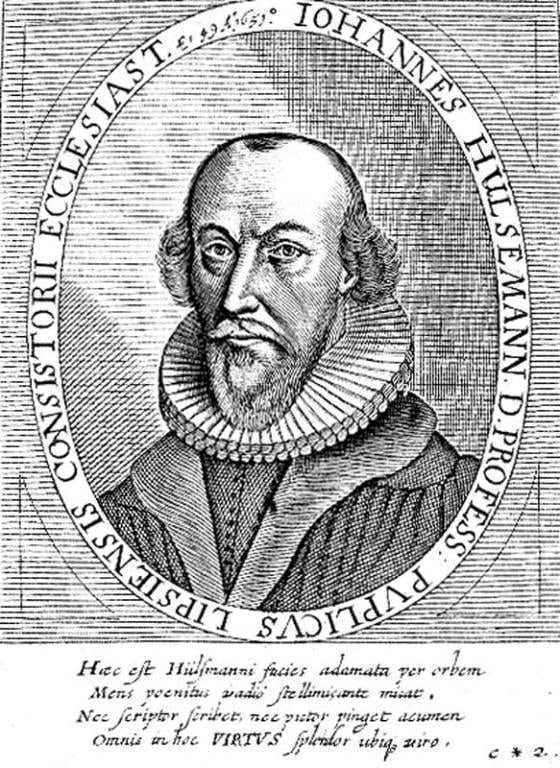
Photo credit: Johann Hülsemann: portrait by Jean-Jacques Boissard [public domain / Wikimedia Commons]
Johann Hülsemann (1602-1661) was a German Lutheran theologian and one of the most eminent Lutheran scholastics. In 1646 he became professor of theology at Leipzig, and served as pastor of St. Nicholas Church in town. He was excellent in the field of systematic theology, and during his lifetime many regarded him as the leader of German Lutheranism. I will be critiquing many parts of his book, Extensio brevarii theologiae [Extension of the Brevarium of Theology, 555 pages, Leipzig, 1655], which is available online in Latin. For translation I use Google Translate, with a few of my own edits for clearer English. My two replies will be filed under Hülsemann’s name on my Lutheranism web page. His words will be in blue. I use RSV for Bible citations.
*****
Traditions that are not written, either deliver a different and new object, not expressed in the Bible, or interpret and explain a dogma already delivered in the Bible. Insofar as they differ from the text which they explain, they are not an object of false faith, nor do they generate faith, divine, nor are they derived from divine faith, nor are they allowed to embrace them with the same affection of piety, which is necessary to embrace the dogmas revealed by God in the Bible.
This is too negative towards tradition, according to the Bible itself, which has many passages suggesting that tradition can and does pass down apostolic doctrine and truth alongside — and in harmony with — the written Bible. Here are eleven examples:
1 Corinthians 2:1, 4, 13 When I came to you, brethren, I did not come proclaiming to you the testimony of God in lofty words or wisdom. . . . [4] and my speech and my message were not in plausible words of wisdom, but in demonstration of the Spirit and of power, . . . [13] And we impart this in words not taught by human wisdom but taught by the Spirit, . . .
1 Corinthians 11:2 I commend you because you remember me in everything and maintain the traditions even as I have delivered them to you.
Philippians 4:9 What you have learned and received and heard and seen in me, do; and the God of peace will be with you.
1 Thessalonians 2:13 And we also thank God constantly for this, that when you received the word of God which you heard from us, you accepted it not as the word of men but as what it really is, the word of God, which is at work in you believers.
2 Thessalonians 2:15 . . . stand firm and hold to the traditions which you were taught by us, either by word of mouth, or by letter.
2 Thessalonians 3:6 Now we command you, brethren, in the name of our Lord Jesus Christ, that you keep away from any brother who is living in idleness and not in accord with the tradition that you received from us.
2 Timothy 1:13-14 Follow the pattern of the sound words which you have heard from me . . . [14] guard the truth which has been entrusted to you by the Holy Spirit who dwells within us.
2 Timothy 2:2 And what you have heard from me before many witnesses entrust to faithful men who will be able to teach others also.
Hebrews 2:1 Therefore we must pay the closer attention to what we have heard, lest we drift away from it.
1 Peter 1:25 “but the word of the Lord abides for ever.” That word is the good news which was preached to you.
1 John 2:24 Let what you heard from the beginning abide in you. If what you heard from the beginning abides in you, then you will abide in the Son and in the Father.
***
“Please Hit ‘Subscribe’”! If you have received benefit from this or any of my other 5,000+ articles, please follow my blog by signing up (with your email address) on the sidebar to the right (you may have to scroll down a bit), above where there is an icon bar, “Sign Me Up!”: to receive notice when I post a new blog article. This is the equivalent of subscribing to a YouTube channel. My blog was rated #1 for Christian sites by leading AI tool, ChatGPT: endorsed by influential Protestant blogger Adrian Warnock. Actually, I partner with Kenny Burchard on the YouTube channel, Catholic Bible Highlights. Please subscribe there, too! Please also consider following me on Twitter / X and purchasing one or more of my 55 books. All of this helps me get more exposure, and (however little!) more income for my full-time apologetics work. Thanks so much and happy reading!
***
Hülsemann assumes, with no biblical warrant whatsoever, the notion of inscripturation, in which every true extrabiblical tradition must needs be and is in fact eventually incorporated into the Bible. Failing that, it would be invalid and illegitimate. The only problem is that the Bible nowhere teaches this principle. It’s a Protestant tradition of men (hence fallible and not certain). In most cases, legitimate apostolic extrabiblical traditions further explain or develop ideas and doctrines that are implicit in Scripture or otherwise in harmony with it (or not contradictory to anything in the Bible).
As an example, take infant baptism (where Lutherans agree with us). St. Augustine said that this couldn’t be found in the Bible, but was nevertheless true, because the Church fathers widely taught it, so that it was to be regarded as apostolic tradition. I maintain, on the other hand, that it is implicit in the Bible, in passages that describe the baptism of entire households, and in the analogy to circumcision, that St. Paul drew in Colossians. Either, surely nothing in the Bible totally prohibits the practice. So we can say that it’s in harmony with Holy Scripture.
Hülsemann cites Deuteronomy 12:32, which reads, “Everything that I command you you shall be careful to do; you shall not add to it or take from it.” I agree that this has primary reference to the Mosaic Law, in context. But I think it also can be interpreted as a broader statement: whatever God commands, period, whether in the written law or through a prophet or in a vision, etc., we must obey. Even if I’m wrong, and it refers only to the Law, elsewhere, God’s commands extend further than the written law in the Bible:
1 Samuel 16:1, 4 The LORD said to Samuel, “How long will you grieve over Saul, seeing I have rejected him from being king over Israel? Fill your horn with oil, and go; I will send you to Jesse the Bethlehemite, for I have provided for myself a king among his sons.” . . . [4] Samuel did what the LORD commanded, and came to Bethlehem.
2 Samuel 5:23-25 And when David inquired of the LORD, he said, “You shall not go up; go around to their rear, and come upon them opposite the balsam trees. [24] And when you hear the sound of marching in the tops of the balsam trees, then bestir yourself; for then the LORD has gone out before you to smite the army of the Philistines.” [25] And David did as the LORD commanded him, and smote the Philistines from Geba to Gezer. (cf. 5:19)
Jeremiah 1:7 But the LORD said to me [Jeremiah], “Do not say, ‘I am only a youth’; for to all to whom I send you you shall go, and whatever I command you you shall speak.
Jeremiah 26:8 . . . Jeremiah had finished speaking all that the LORD had commanded him to speak to all the people . . .
Ezekiel 37:1, 4, 7 The hand of the LORD was upon me [Ezekiel], and he brought me out by the Spirit of the LORD, and set me down in the midst of the valley; it was full of bones. . . . [4] Again he said to me, “Prophesy to these bones, and say to them, O dry bones, hear the word of the LORD. . . . [7] So I prophesied as I was commanded;
Matthew 28:19-20 Go therefore and make disciples of all nations, baptizing them in the name of the Father and of the Son and of the Holy Spirit, [20] teaching them to observe all that I have commanded you . . .
1 Corinthians 14:37 If any one thinks that he is a prophet, or spiritual, he should acknowledge that what I am writing to you is a command of the Lord.
Nor is there any need for another new revelation, or miracle, to confirm that this spirit of the revealed word is true, and consistent with the mind of the Revealer. For the intrinsic power of the word, because it is divine, makes faith in the hearer or to the reader not foolishly probable, but also infallible.
It doesn’t follow that there is no other infallible source of truth (not identical to “revelation”) besides the Bible, because the Bible is infallible. I just provided several examples of extrabiblical infallible commands directly from God. All such examples prove that sola Scriptura is false.
They did not understand what was said in the parable of the sower, but Jesus opened it to them, so that they might understand the scriptures.
Jesus told the parable of the sower (Mt 13:3-9), then He explained it to His disciples (13:18-23), who had “asked him what this parable meant” (Lk 8:9), which proves that they didn’t understand it on their own. Then Jesus told the parable of the weeds (Mt 13:24-30), and afterwards “his disciples came to him, saying, ‘Explain to us the parable of the weeds of the field'” (13:36) and He did so (13:37-43).
The parallel account in Mark states, “when he was alone, those who were about him with the twelve asked him concerning the parables” (Mk 4:10) and “privately to his own disciples he explained everything” (4:34). This expressly contradicts the notion of the perspicuity (clearness) of the Bible without authoritative interpretation. So Hülsemann makes our argument for us here.
No one can evangelize except and beyond what has already been evangelized, Apoc. XXII, 18; Nothing can be added to what is written. Against the pontifical enthusiasts.
That text says, “I warn every one who hears the words of the prophecy of this book [i.e., Revelation alone, not the whole NT]: if any one adds to them, God will add to him the plagues described in this book”. It doesn’t address the completely separate issue that Hülsemann pulls out of a hat. This is what is called eisegesis: improperly extracting out of a biblical text what in fact is not there. No one can add words to the book of Revelation. It’s complete. It doesn’t follow from that, that no one can evangelize in ways that expand upon what is in Revelation, or even in the New Testament as a whole.
I stated in my most recent video, on sola Scriptura, that the use of YouTube in order to spread Catholic teachings — just like radio and TV before it — is not specifically in the Bible, but it’s perfectly consistent with it, and is an application of St. Paul’s evangelistic principle, “I have become all things to all men, that I might by all means save some” (1 Cor 9:22).
Whatever the prophets speak, and write, by the inspiration of the Holy Spirit speak & write. Against the Pontiffs.
Just because popes are not inspired (papal encyclicals are not Scripture, in other words), it doesn’t follow that they don’t possess the far lesser gift of infallibility (and that’s what sola Scriptura denies). So this proves nothing with regard to Protestant-Catholic disputes, since we never claimed that popes were inspired in the first place. They are equipped by the Holy Spirit to at times infallibly interpret the inspired revelation of Scripture, in a way that the layperson cannot do.
From the institution of God, and the condition of the Church after Christ’s birth, it was necessary that the Word of God should be set in writing, And whatever the prophets and apostles left written, was done by the help of God, Jer.XXXVI.2: The word of the Lord came to Jeremiah, saying: Take the roll of the book, and write. Hab.II.2. And the Lord said to me, Write and set it upon a table, that all that pass by may read!
None of this proves that the entirety of the “Word of God” — which term in the Bible refers to oral prophetic or apostolic proclamation far more times than to the Bible — was committed to writing. He again simply assumes without proof in the Bible, the idea of “inscripturation.” If we want to be truly biblical, we can’t simply assume that whatever we wish to be in the Bible (due to our prior man-made tradition) is present there, when in fact it is not. That makes a mockery of God’s revelation, to treat it in such cavalier fashion.
We know that the prophet Jeremiah survived the destruction of Jerusalem in 587 BC and that He was again told by God after that sad event (as in Jer 36: 2, cited by Hülsemann) to “Write in a book all the words that I have spoken to you” (Jer 30:2). But of course that only applies to Jeremiah. It doesn’t follow that all the prophets or other writers of the Bible like Moses and David and Solomon wrote down absolutely everything that God told them, so that no oral traditions remained apart from Scripture, in harmony with it.
The prophet Habbakkuk was told by God to “Write the vision” (2:2), but this refers to one “oracle of God which Habak’kuk the prophet saw” (1:1). That tells us nothing about other possible visions that he saw, or revelations that he heard. We simply don’t know if he wrote them all down. His book is only three chapters long. It’s quite reasonable and plausible to presume that he proclaimed many more things than that, and that his life’s work as a prophet did not consist in writing three chapters of the Bible, which could have been done in one day. So this is — as always — a very weak proof of supposedly “no oral tradition” and inscripturation and sola Scriptura. The inspired Bible, after all, stated even about Jesus: about Whom we know a lot:
John 20:30 Now Jesus did many other signs in the presence of the disciples, which are not written in this book;
John 21:25 But there are also many other things which Jesus did; were every one of them to be written, I suppose that the world itself could not contain the books that would be written.
What is true about Jesus is almost certainly also true of the prophets and other writers of Scripture. Therefore, oral tradition is not at all disproven by what we know in Holy Scripture, and these two passages by themselves disprove “inscripturation.”
*
***
*
Practical Matters: I run the most comprehensive “one-stop” Catholic apologetics site: rated #1 for Christian sites by leading AI tool, ChatGPT — endorsed by popular Protestant blogger Adrian Warnock. Perhaps some of my 5,000+ free online articles or fifty-six books have helped you (by God’s grace) to decide to become Catholic or to return to the Church, or better understand some doctrines and why we believe them.
*
Or you may believe my work is worthy to support for the purpose of apologetics and evangelism in general. If so, please seriously consider a much-needed financial contribution. I’m always in need of more funds: especially monthly support. “The laborer is worthy of his wages” (1 Tim 5:18, NKJV). 1 December 2021 was my 20th anniversary as a full-time Catholic apologist, and February 2022 marked the 25th anniversary of my blog.
*
PayPal donations are the easiest: just send to my email address: [email protected]. Here’s also a second page to get to PayPal. You’ll see the term “Catholic Used Book Service”, which is my old side-business. To learn about the different methods of contributing (including Zelle), see my page: About Catholic Apologist Dave Armstrong / Donation Information. Thanks a million from the bottom of my heart!
*
***
*
Photo credit: Johann Hülsemann: portrait by Jean-Jacques Boissard [public domain / Wikimedia Commons]

Summary: I critique arguments for sola Scriptura from the German Lutheran scholastic theologian, Johann Hülsemann (1602-1661), found in his 1655 book, “Extensio brevarii theologiae“.
Lutheran critique of Catholicism
Previous Post
January 9, 2025
Reply to Lutheran Johann Gerhard (1582-1637) #2
Next Post

January 13, 2025 Vs. Lutheran Johann Hülsemann: Sanctification
Recent Comments
"And lastly, I belong to no denomination and am free to serve God as He ..."
Is Venerating Men & Angels Worship? ..."
"And obeisance doesn't mean "worship". It means "respect", "obey", or "submission". Very weird that you ..."
Is Venerating Men & Angels Worship? ..."
"Many of these scriptures you have noted have been taken out of context. With Daniel, ..."
Is Venerating Men & Angels Worship? ..."
""Protestants often point out that Jesus is now triumphant in heaven and object to Catholics ..."
Three More Anti-Catholic Lies About Catholicism ..."
Browse Our Archives
Select a Category & Last Things About Me Anti-Catholicism Atheism & Agnosticism Baptism and Sacramentalism Bible and Tradition Blessed Virgin Mary Books by Dave Armstrong C. S. Lewis Calvinism & General Protestantism Catholic Apologetics Catholic Apologists Catholic conversion Catholic converts Christmas Church (Ecclesiology) Church History Conversion and Converts Development of Doctrine Eastern Orthodoxy Ecumenism & Christian Unity Eucharist & Liturgy Fathers of the Church French Translations G. K. Chesterton Hell Hell & Satan Hell & Satan & Last Things Heresies & Comparative Religion Holistic Health Inquisition & Crusades & Scandals James White Jews & Judaism & Old Testament John Calvin John Henry Newman Liberal / Modernist Theology Life Issues Literary Resume Lutheranism Mariology Martin Luther Music Orthodoxy Papacy & Infallibility Personal Page Philosophy & Science Political & Ethical & Moral Issues Protestant Persecution & Intolerance Protestantism Purgatory Purgatory & Penance Romantic & Imaginative Theology Saints & Purgatory & Penance Salvation Salvation & Justification Satan & Last Things Sexuality and Gender Issues Spanish Translations Traditionalism vs. Radical Catholic Reactionaries Traducciones al español / tradução para português Trinitarianism & Christology Uncategorized Videos
Select a Month October 2026 September 2026 August 2026 July 2026 June 2026 May 2026 April 2026 March 2026 February 2026 January 2026 December 2025 November 2025 October 2025 September 2025 August 2025 July 2025 June 2025 May 2025 April 2025 March 2025 February 2025 January 2025 December 2024 November 2024 October 2024 September 2024 August 2024 July 2024 June 2024 May 2024 April 2024 March 2024 February 2024 January 2024 December 2023 November 2023 October 2023 September 2023 August 2023 July 2023 June 2023 May 2023 April 2023 March 2023 February 2023 January 2023 December 2022 November 2022 October 2022 September 2022 August 2022 July 2022 June 2022 May 2022 April 2022 March 2022 February 2022 January 2022 December 2021 November 2021 October 2021 September 2021 August 2021 July 2021 June 2021 May 2021 April 2021 March 2021 February 2021 January 2021 December 2020 November 2020 October 2020 September 2020 August 2020 July 2020 June 2020 May 2020 April 2020 March 2020 February 2020 January 2020 December 2019 November 2019 October 2019 September 2019 August 2019 July 2019 June 2019 May 2019 April 2019 March 2019 February 2019 January 2019 December 2018 November 2018 October 2018 September 2018 August 2018 July 2018 June 2018 May 2018 April 2018 March 2018 February 2018 January 2018 December 2017 November 2017 October 2017 September 2017 August 2017 July 2017 June 2017 May 2017 April 2017 March 2017 February 2017 January 2017 December 2016 November 2016 October 2016 September 2016 August 2016 July 2016 June 2016 May 2016 April 2016 March 2016 February 2016 January 2016 December 2015 November 2015 October 2015 September 2015 August 2015 July 2015 June 2015 May 2015 April 2015 March 2015 February 2015 January 2015 December 2014 November 2014 October 2014 September 2014 August 2014 July 2014 June 2014 April 2014 March 2014 February 2014 January 2014 December 2013 November 2013 October 2013 September 2013 August 2013 July 2013 June 2013 April 2013 March 2013 February 2013 January 2013 December 2012 November 2012 October 2012 September 2012 August 2012 July 2012 June 2012 May 2012 April 2012 March 2012 February 2012 January 2012 December 2011 November 2011 October 2011 September 2011 August 2011 July 2011 June 2011 April 2011 March 2011 February 2011 October 2010 September 2010 August 2010 July 2010 April 2010 March 2010 December 2009 October 2009 August 2009 July 2009 June 2009 May 2009 March 2009 February 2009 October 2008 September 2008 April 2008 March 2008 February 2008 January 2008 December 2007 November 2007 October 2007 May 2007 March 2007 February 2007 January 2007 November 2006 October 2006 September 2006 August 2006 July 2006 June 2006 May 2006 April 2006 March 2006 February 2006 October 2005 June 2005 April 2005 February 2005 July 2004 May 2004 April 2004
Follow Us!
TAKE THE
Religious Wisdom Quiz
What book of the Bible comes after Genesis?
Select your answer to see how you score.
Deuteronomy Exodus Leviticus Numbers
Books by This Author Books by Dave Armstrong
Related posts from Biblical Evidence for Catholicism

Does Catholic Intercession of Saints Require Omniscience?
Biblical Evidence for Catholicism

Protestant Confessions & "Ever-Virgin" Mary
Biblical Evidence for Catholicism

Jesus Founded the [Catholic] Church. If Not Him,...
Biblical Evidence for Catholicism

A Few "Worst" & "Best" Arguments vs. Protestantism
Biblical Evidence for Catholicism
TRENDING AT PATHEOS Catholic

In "Irreplaceable," our book on vocation and technology, Trevor Sutton and I...

I was strolling through the top floor of the brand new Parthenon...

What Does Gêvâh Mean For Kimberley Guifoyle &...
This week, a lot of the news is focused on Kimberly Guilfoyle....

INNER CIRCLE: Profound Mystery (Of Christ In All...
Ephesians 5:31-32 “For this reason, a man will leave his father and...

Do Not Rejoice When Your Enemy Falls: The...
Turning an execution into a public spectacle is a disturbing expression of...

'The Chosen' S6 Trailer: The Passion Gets Very...
Not many watching 'The Chosen' worry about spoilers, but just because they...
view all Catholic blogs
What Are Your Thoughts?leave a comment
Ad-Free & Subscriber Log-In Subscription Support
- About Us
- 2026 Calendar
- Videos
- Podcasts
- Library of World Religions
- Faith In Media Tracker
- Advertise With Us
- Write for Us
- Privacy Policy
- Terms of Service
- Do Not Sell My Data
- Contact Us
- Radiant Digital
- Manage Newsletter Subscriptions
- Unsubscribe From Notifications
- Sitemap
Copyright 2008-2026, Patheos. All rights reserved.
Subscription Support Ad-Free & Subscriber Log-In
Follow Patheos