
BuddhistCatholicContemplativeEvangelicalGeneral ChristianHinduJewishLatter-day SaintMuslimNew VisionsProgressive Christian
Beliefs
- Buddhist
- Catholic
- Contemplative
- Evangelical
- General Christian
- Hindu
- Jewish
- Latter-day Saint
- More Voices
- Muslim
- New Visions
- Pagan
- Progressive Christian
Topics
- Religion News
- Food and Religion
- Sports and Religion
- Religious Art
- Religious Music and Entertainment
- Religious Events
- History and Religion
- Style and Religion
- Politics and Religion
- Women in Religion
- Recreation Outdoors and Religion
- Business Finance and Religion
- Careers Workplace and Religion
- Education and Religion
- Family Parenting and Religion
- Health Fitness and Religion
- Home and Religion
- Relationships and Religion
- Technology and Religion
- Travel and Religion
Columnists
- Buddhist Columnists
- Business Finance and Religion Columnists
- Careers Workplace and Religion Columnists
- Catholic Columnists
- Contemplative Columnists
- Education and Religion Columnists
- Evangelists Columnists
- Family Parenting and Religion Columnists
- General Christian Columnists
- Health Fitness and Religion Columnists
- Hindu Columnists
- History and Religion Columnists
- Home and Religion Columnists
- Jewish Columnists
- More Voices Columnists
- Latter Day Columnists
- Muslim Columnists
- New Visions Columnists
- Nonreligious Columnists
- Pagan Columnists
- Politics and Religion Columnists
- Progressive Columnists
- Recreation Outdoors and Religion Columnists
- Relationships and Religion Columnists
- Religion News Columnists
- Religious Art Columnists
- Religious Events Columnists
- Religious Music and Entertainment Columnists
- Sports and Religion Columnists
- Style and Religion Columnists
- Technology and Religion Columnists
- Travel and Religion Columnists
- Women in Religion Columnists
Resource Library
- 2026 Calendar
- Library of World Religions
- The 100 Most Holy Places on Earth
- Patheos Answers
- Podcasts
- Videos
- Faith Leaders Database
- Anglican Episcopalian
- Bahai
- Baptist
- Buddhism
- Christianity
- Confucianism
- Eastern Orthodoxy
- Hinduism
- Holiness and Pentecostal
- ISKCON
- Islam
- Judaism
- Lutheran
- Methodist
- The Church of Jesus Christ of Latter-day Saints
- New Age
- Paganism
- Presbytarian and Reformed
- Protestantism
- Religion Behind the Scenes
- Roman Catholic
- Scientology
- Shia Islam
- Sikhism
- Sufism
- Sunni Islam
- Taoism
- Zen
- See all religions
Research Tools
 Ad-Free & Subscriber Log-In Subscription Support
Ad-Free & Subscriber Log-In Subscription Support
Follow Patheos 

- Trending:
- Forgiveness
- |
- Marriage
- |
- Consciousness
- |
- Death Penalty
- |
- Election
- |
- Halloween

-
About
-
Catholic Apologetics
-
Church History
-
Great Apologists
-
Christian Worldview
-
Protestantism & Misc.
- Home
- Catholic
- History and Religion
- Vs. Lutheran Johann Hülsemann: Sanctification
Vs. Lutheran Johann Hülsemann: Sanctification
Last updated on: January 18, 2025 at 6:49 pm by Dave Armstrong
Vs. Lutheran Johann Hülsemann: Sanctification 2025-01-18T18:49:06-04:00 Dave Armstrong
Patheos Explore the world's faith through different perspectives on religion and spirituality! Patheos has the views of the prevalent religions and spiritualities of the world.
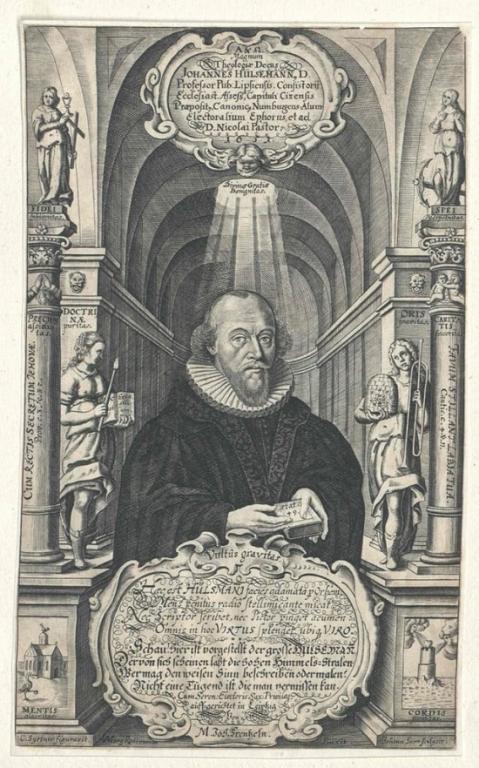
Photo credit: Johann Hülsemann: Österreichische Nationalbibliothek – Austrian National Library [public domain / picryl]
Johann Hülsemann (1602-1661) was a German Lutheran theologian and one of the most eminent Lutheran scholastics. In 1646 he became professor of theology at Leipzig, and served as pastor of St. Nicholas Church in town. He excelled in the field of systematic theology and during his lifetime many regarded him as the leader of German Lutheranism. I will be critiquing his book, Extensio brevarii theologiae [Extension of the Brevarium of Theology, 555 pages, Leipzig, 1655], which is available online in Latin. For translation I use Google Translate, with a few of my own edits for clearer English. My two replies will be filed under Hülsemann’s name on my Lutheranism web page. His words will be in blue. I use RSV for Bible citations.
*****
Although the Law promises eternal life to those who are perfectly obedient; yet by the Decree of God, founded in his omniscience, the law would never be fulfilled by man. (p. 102)
He then cites Paul, writing about the law and its relationship to grace. But as far as I know, Paul never states the common Protestant polemical claim that “no one can perfectly keep the law.” But Paul described his former adherence to Judaism and the Law as follows: “as to righteousness under the law blameless” (Phil 3:6; cf. Gal 1:14: “I advanced in Judaism beyond many of my own age among my people, so extremely zealous was I for the traditions of my fathers.”).
Moreover, the Bible verifies that several other people also kept the law perfectly: Zechariah and Elizabeth, the Psalmist, King David, Moses, Aaron, Samuel, the children of Levi, and King Hezekiah. See my article: Perfectly Keeping the Law: 15 Bible Passages (12-12-24).
Abraham the Patriarch also being circumcised and regenerated, found nothing of grace or glory by works; But the Scripture says: “Abraham believed God, and it was reckoned to him as righteousness.” (p. 104).
This is the usual Protestant treatment of Abraham, but it’s too simplistic and presents only one side of the story. The full account also incorporates meritorious works, as I have written about, and Abraham was justified three times (twice by works, once by faith). In Genesis 12 Abraham was justified by faith and works together. “So Abram went, as the LORD had told him” (12:4; cf. Heb 8:12). Then he built two altars to the Lord (12:7-8).
These were good works of obedience, and as a result, God said to him, “I will make of you a great nation, and I will bless you, and make your name great . . . by you, all the families of the earth shall bless themselves” (12:2-3). Abraham clearly exercised faith by obeying God’s instructions (as Heb 11:9 verifies).
In Genesis 15:6, Abraham was justified again: “And he believed the LORD, and he reckoned it to him as righteousness.” James interprets this passage, in the context of three verses about justification, faith and works, all tied in together (Jas 2:20-22). This is what James says “fulfilled” Genesis 15:6 (Jas 2:23). Then he condemns the Protestant notion of “faith alone”: “A man is justified by works and not by faith alone” (2:24).
In Genesis 22, Abraham was willing to sacrifice his son Isaac if God commanded him to do so, and God said, “Because you have done this . . . I will indeed bless you, and I will multiply your descendants . . . because you have obeyed my voice” (Genesis 22:16-18). James 2:21 interprets: “Was not Abraham our father justified by works, when he offered his son Isaac upon the altar?” (2:21; cf. Heb 11:17).
Works are always present where true faith exists. James also asserts that faith was also a key part of Abraham’s justification (2:18, 20, 22-24, 26). But God again reiterates in Genesis that works were central: “I have chosen him, that he may charge his children and his household after him to keep the way of the LORD by doing righteousness and justice; so that the LORD may bring to Abraham what he has promised him” (Gen 18:19).
For more on this, see my article, Abraham: Justified Twice by Works & Once by Faith [8-30-23]. We can see that Hülsemann completely ignored the crucial role that works played in Abraham’s multiple justifications. He saw what he wanted to see (Protestant faith alone). I, on the other hand, have sought to incorporate all of the relevant biblical data regarding Abraham’s justification(s).
Moses pursued righteousness by the law . . . (p. 104)
He appears to have succeeded, since the Bible states about him: “Moses . . . kept his testimonies, and the statutes . . .” (Ps 99:6-7). God Himself made it clear (through His prophets) that a man could indeed be “righteous” if he followed the Mosaic Law:
Isaiah 51:7 “Hearken to me, you who know righteousness, the people in whose heart is my law; . . .”
Ezekiel 18:5-9 “If a man is righteous and does what is lawful and right — [6] if he does not eat upon the mountains or lift up his eyes to the idols of the house of Israel, does not defile his neighbor’s wife or approach a woman in her time of impurity, [7] does not oppress any one, but restores to the debtor his pledge, commits no robbery, gives his bread to the hungry and covers the naked with a garment, [8] does not lend at interest or take any increase, withholds his hand from iniquity, executes true justice between man and man, [9] walks in my statutes, and is careful to observe my ordinances — he is righteous, he shall surely live,” says the Lord GOD.
St. Paul is not running down the Law altogether in his analyses (since he noted that he himself had kept it in a “blameless” fashion), but — very much like Jesus — he goes much deeper and addresses what ultimately lies behind the Law; what it’s fundamental purpose was: love and faith.
No one is justified by works; for life is to be acquired by faith. (p. 105)
St. James disagrees:
James 2:21, 24-25 Was not Abraham our father justified by works, when he offered his son Isaac upon the altar? [24] You see that a man is justified by works and not by faith alone. [25] And in the same way was not also Rahab the harlot justified by works when she received the messengers and sent them out another way?
This is not works alone, or the heresy of Pelagianism, but grace-induced works in the regenerate person, that organically flow from faith. In the book of James, the word “works” appears 13 times, and “faith” in the usual sense of the word appears 16 times, so there is a balance. Nor is it just James. St. Paul directly connects works with salvation and eternal life:
Romans 2:6-7, 10 For he will render to every man according to his works: [7] to those who by patience in well-doing seek for glory and honor and immortality, he will give eternal life; . . . [10] but glory and honor and peace for every one who does good, the Jew first and also the Greek.
St. John agrees with Paul and James:
Revelation 2:23, 26 “. . . I am he who searches mind and heart, and I will give to each of you as your works deserve. . . . [26] He who conquers and who keeps my works until the end, I will give him power over the nations, . . .”
Our Lord Jesus also clearly makes eternal life directly contingent upon keeping commandments and doing extraordinary good works:
Matthew 7:19-21 Every tree that does not bear good fruit is cut down and thrown into the fire. [20] Thus you will know them by their fruits. [21] “Not every one who says to me, ‘Lord, Lord,’ shall enter the kingdom of heaven, but he who does the will of my Father who is in heaven.” (cf. 3:10; Lk 3:9; Jn 15:6)
Matthew 19:16-17, 20-21 And behold, one came up to him, saying, “Teacher, what good deed must I do, to have eternal life?” [17] And he said to him, “. . . If you would enter life, keep the commandments.” . . . [20] The young man said to him, “All these I have observed; what do I still lack?” [21] Jesus said to him, “If you would be perfect, go, sell what you possess and give to the poor, and you will have treasure in heaven; and come, follow me.” (in the parallel passage Lk 10:27 the ruler says, “. . . You shall love the Lord your God with all your heart, and with all your soul, and with all your strength, and with all your mind; and your neighbor as yourself.” And Jesus replied, “You have answered right; do this, and you will live.”)
Matthew 19:29 And every one who has left houses or brothers or sisters or father or mother or children or lands, for my name’s sake, will receive a hundredfold, and inherit eternal life. (cf. Mk 10:29-30)
Matthew 25:34-35, 41-43, 46 Then the King will say to those at his right hand, ‘Come, O blessed of my Father, inherit the kingdom prepared for you from the foundation of the world; [35] for I was hungry and you gave me food, I was thirsty and you gave me drink, I was a stranger and you welcomed me, . . . [41] Then he will say to those at his left hand, `Depart from me, you cursed, into the eternal fire prepared for the devil and his angels; [42] for I was hungry and you gave me no food, I was thirsty and you gave me no drink, [43] I was a stranger and you did not welcome me, naked and you did not clothe me, sick and in prison and you did not visit me.’ . . . [46] And they will go away into eternal punishment, but the righteous into eternal life.”
Luke 18:26-30 Those who heard it said, “Then who can be saved?” [27] But he said, “What is impossible with men is possible with God.” [28] And Peter said, “Lo, we have left our homes and followed you.” [29] And he said to them, “Truly, I say to you, there is no man who has left house or wife or brothers or parents or children, for the sake of the kingdom of God, [30] who will not receive manifold more in this time, and in the age to come eternal life.”
The difference between the Old and New Testaments is this: that there works were required of man for the condition of the reward: Here, non-works, . . . (p. 106)
But the many passages I just cited above decisively show that this is false: works indeed are a crucial, non-optional part of the equation of salvation and the attainment of eternal life. The Bible couldn’t be clearer than it is about that. If the choice is the Bible vs. a man-made, late-arriving tradition of faith alone, then the Bible must prevail. See my collection: Bible vs. “Faith Alone”: 100 Proofs.
Piety has the promise of life and future life. . . . The necessity of good works are either plain and certain, or ambiguous . . . (1) This proposition is certain and undoubted: good works are necessary to justify. (2) It is ambiguous: good works are necessary to whoever wishes to achieve eternal life. . . . [It’s] more ambiguous: (3) Good works are necessary to justify; eternal life is given . . . (4) . . . it is extremely ambiguous, and only with great difficulty reconciled with the orthodox view: good works are not necessary for the attainment of eternal happiness. . . . (5) This proposition: Good works are not necessary for the attainment of eternal happiness, is plainly false and intolerable. (pp. 181-182)
This is close to Catholic and biblical teaching: especially #1 and #5. None of this is “ambiguous”; it’s quite clear. Good works are indeed necessary, post-baptism and post-regeneration, caused by grace and in conjunction with faith, but with our full and meritorious cooperation, in order to appropriate salvation and eternal life.
I’ve shown this in passages above already, but I’ve also additionally collected 80 Bible passages on “salvation caused by actions” and 50 on meritorious works. Protestantism simply can’t explain away all of these. But Hülsemann is joining justification and sanctification very close together indeed, in a way that is virtually biblical and Catholic (whether he knew that or not!).
Good works . . . are necessary to bring about a concord, because of the necessity of the divine commandment, and the natural or intrinsic necessity of the effective connection with the effective cause, i.e. faith, Good works are necessary for all . . . because it is ordained of God, that the one who is created may attain eternal life by faith. (p. 184)
He cites the following passages in support of this:
Hebrews 12:14 Strive for peace with all men, and for the holiness without which no one will see the Lord.
Matthew 7:19 Every tree that does not bear good fruit is cut down and thrown into the fire.
1 Timothy 2:15 Yet woman will be saved through bearing children, if she continues in faith and love and holiness, with modesty.
To which I say, amen!
I believe that those who do the will of God, those who do good, are understood as [having done] works of charity, but the purpose and reason . . . is a specification of the object of salvation, not a cause, a medium, or a merit of salvation. . . . the Holy Spirit, when he speaks of the ways, means, and conditions of acquiring salvation from the innate, excludes both the works of the reborn and the unregenerate from every way of obtaining or achieving salvation; both instrumental and meritorious. (p. 186)
Having virtually stated the biblical and Catholic position, now in effect he “waters it down”: so that it doesn’t sound too “Catholic” or smack of works-salvation (which we condemn as vigorously as any Protestant does). I submit that this is equivocation at worst and incoherence and inconsistency at best. Scripture indeed teaches that our works play a causal role in the attainment of salvation. I’ve listed probably the principle passages above. Others directly assert sanctification is a direct cause of salvation (always along with God-originated grace and faith and our cooperation):
Psalm 7:10 My shield is with God, who saves the upright in heart.
Matthew 5:20 For I tell you, unless your righteousness exceeds that of the scribes and Pharisees, you will never enter the kingdom of heaven.
Acts 26:18 to open their eyes, that they may turn from darkness to light and from the power of Satan to God, that they may receive forgiveness of sins and a place among those who are sanctified by faith in me.
Romans 6:22 But now that you have been set free from sin and have become slaves of God, the return you get is sanctification and its end, eternal life.
Romans 13:11-14 . . . For salvation is nearer to us now than when we first believed; [12] the night is far gone, the day is at hand. Let us then cast off the works of darkness and put on the armor of light; [13] let us conduct ourselves becomingly as in the day, not in reveling and drunkenness, not in debauchery and licentiousness, not in quarreling and jealousy. [14] But put on the Lord Jesus Christ, and make no provision for the flesh, to gratify its desires.
2 Thessalonians 2:13 . . . God chose you from the beginning to be saved, through sanctification by the Spirit and belief in the truth.
2 Peter 3:11-14 . . . what sort of persons ought you to be in lives of holiness and godliness, [12] waiting for and hastening the coming of the day of God, because of which the heavens will be kindled and dissolved, and the elements will melt with fire! [13] But according to his promise we wait for new heavens and a new earth in which righteousness dwells. [14] Therefore, beloved, since you wait for these, be zealous to be found by him without spot or blemish, and at peace.
We do not deny merit, as commonly accepted by the Latin Fathers, for any way of accomplishing good. (p. 187)
Good as far as it goes . . .
Having good works, will be given increase of profit, not grace, not glory for themselves: . . . Grace is not from you: nay, [not] even from works, but through faith. (p. 188)
In fact, the Bible teaches that there are degrees of grace given to persons, and at least in some cases, this seems to have a relation to what the person did (good works):
James 4:6 But he gives more grace; therefore it says, “God opposes the proud, but gives grace to the humble.” (1 Pet 5:5 also cites this saying)
2 Peter 3:18 But grow in the grace and knowledge of our Lord and Savior Jesus Christ. . . . (how can we “grow” in grace — Peter commands us to — if we have no part that at all? Therefore, grace-enabled merit in us must necessarily be involved)
The Bible also massively teaches that God shares His glory with His creatures and that we are “being changed into his likeness from one degree of glory to another” (2 Cor 3:18), and in some passages, works are the cause of both glory and eternal life / salvation:
Romans 2:7, 10 For he will render to every man according to his works: [7] to those who by patience in well-doing seek for glory and honor and immortality, he will give eternal life; . . . [9] There will be tribulation and distress for every human being who does evil, the Jew first and also the Greek, [10] but glory and honor and peace for every one who does good, the Jew first and also the Greek.
1 Thessalonians 2:12 to lead a life worthy of God, who calls you into his own kingdom and glory.
2 Peter 1:3 His divine power has granted to us all things that pertain to life and godliness, through the knowledge of him who called us to his own glory and excellence,
As so often, Protestants provide slogans and sayings with assumed premises (not always biblically-based ones) or relatively few carefully selected Bible verses (while ignoring many other relevant ones, which sometimes amount to half-truths), whereas Catholics can consider what the entire Bible teaches on any given topic, because it’s always harmonious with our Catholic doctrines. And that’s because those doctrines were based on the Bible in the first place.
Here we have a major Lutheran theologian — thought to be one of the best –, and I’m running rings around him (as a mere lay apologist), in terms of how much Scripture I bring to bear to support Catholic views and critique Lutheran views where they differ. And I frequently find this to be the case. Ironic or shocking as it may sound, Protestantism is insufficiently biblical: even woefully inadequate in this respect at times.
What confidence can any man have among the popes: for he is bound to doubt whether he has true faith, truth, and merit? (p. 188)
It’s a (polemical) falsehood that Catholics have less confidence in their salvation than Protestants do, merely because we deny faith alone. I’ve addressed this topic in writing and in a video. Catholic self-examination of conscience is also quite biblical.
We deny only that trust can be placed in works to both confer and earn justification and glorification benefits, . . . (p. 188)
Then they deny many clear passages of the Bible that include works in the overall equation of salvation, and also teach merit.
We retain . . . the form of speech: good works are necessary, because obedience to the divine order is due. But we do not use this form of speech: good works are necessary for the sake of eternal life: . . . (p. 196)
This is contrary to the teaching of the Bible, as shown above, and much more so in the many links I have provided (which mostly collect Bible passages).
*
***
*
Practical Matters: I run the most comprehensive “one-stop” Catholic apologetics site: rated #1 for Christian sites by leading AI tool, ChatGPT — endorsed by popular Protestant blogger Adrian Warnock. Perhaps some of my 5,000+ free online articles or fifty-six books have helped you (by God’s grace) to decide to become Catholic or to return to the Church, or better understand some doctrines and why we believe them.
*
Or you may believe my work is worthy to support for the purpose of apologetics and evangelism in general. If so, please seriously consider a much-needed financial contribution. I’m always in need of more funds: especially monthly support. “The laborer is worthy of his wages” (1 Tim 5:18, NKJV). 1 December 2021 was my 20th anniversary as a full-time Catholic apologist, and February 2022 marked the 25th anniversary of my blog.
*
PayPal donations are the easiest: just send to my email address: [email protected]. Here’s also a second page to get to PayPal. You’ll see the term “Catholic Used Book Service”, which is my old side-business. To learn about the different methods of contributing (including Zelle), see my page: About Catholic Apologist Dave Armstrong / Donation Information. Thanks a million from the bottom of my heart!
*
***
*
Photo credit: Johann Hülsemann: Österreichische Nationalbibliothek – Austrian National Library [public domain / picryl]
Summary: I critique arguments for faith alone from the German Lutheran scholastic theologian, Johann Hülsemann (1602-1661), found in his 1655 book, “Extensio brevarii theologiae“.
Lutheran critique of Catholicism
Previous Post
January 10, 2025
Vs. Lutheran Johann Hülsemann: Sola Scriptura
Next Post
January 20, 2025 Reply to Anglican E. B. Pusey #1
Recent Comments
"Special pleading, and not a serious response to my arguments . . ."
Is Venerating Men & Angels Worship? ..."
""no man needs to teach us."Didn't you just teach us?"
Is Venerating Men & Angels Worship? ..."
""Catholics say they are the only church that can lead people into heaven."In fact, we ..."
Is Venerating Men & Angels Worship? ..."
"And lastly, I belong to no denomination and am free to serve God as He ..."
Is Venerating Men & Angels Worship? ..."
Browse Our Archives
Select a Category & Last Things About Me Anti-Catholicism Atheism & Agnosticism Baptism and Sacramentalism Bible and Tradition Blessed Virgin Mary Books by Dave Armstrong C. S. Lewis Calvinism & General Protestantism Catholic Apologetics Catholic Apologists Catholic conversion Catholic converts Christmas Church (Ecclesiology) Church History Conversion and Converts Development of Doctrine Eastern Orthodoxy Ecumenism & Christian Unity Eucharist & Liturgy Fathers of the Church French Translations G. K. Chesterton Hell Hell & Satan Hell & Satan & Last Things Heresies & Comparative Religion Holistic Health Inquisition & Crusades & Scandals James White Jews & Judaism & Old Testament John Calvin John Henry Newman Liberal / Modernist Theology Life Issues Literary Resume Lutheranism Mariology Martin Luther Music Orthodoxy Papacy & Infallibility Personal Page Philosophy & Science Political & Ethical & Moral Issues Protestant Persecution & Intolerance Protestantism Purgatory Purgatory & Penance Romantic & Imaginative Theology Saints & Purgatory & Penance Salvation Salvation & Justification Satan & Last Things Sexuality and Gender Issues Spanish Translations Traditionalism vs. Radical Catholic Reactionaries Traducciones al español / tradução para português Trinitarianism & Christology Uncategorized Videos
Select a Month October 2026 September 2026 August 2026 July 2026 June 2026 May 2026 April 2026 March 2026 February 2026 January 2026 December 2025 November 2025 October 2025 September 2025 August 2025 July 2025 June 2025 May 2025 April 2025 March 2025 February 2025 January 2025 December 2024 November 2024 October 2024 September 2024 August 2024 July 2024 June 2024 May 2024 April 2024 March 2024 February 2024 January 2024 December 2023 November 2023 October 2023 September 2023 August 2023 July 2023 June 2023 May 2023 April 2023 March 2023 February 2023 January 2023 December 2022 November 2022 October 2022 September 2022 August 2022 July 2022 June 2022 May 2022 April 2022 March 2022 February 2022 January 2022 December 2021 November 2021 October 2021 September 2021 August 2021 July 2021 June 2021 May 2021 April 2021 March 2021 February 2021 January 2021 December 2020 November 2020 October 2020 September 2020 August 2020 July 2020 June 2020 May 2020 April 2020 March 2020 February 2020 January 2020 December 2019 November 2019 October 2019 September 2019 August 2019 July 2019 June 2019 May 2019 April 2019 March 2019 February 2019 January 2019 December 2018 November 2018 October 2018 September 2018 August 2018 July 2018 June 2018 May 2018 April 2018 March 2018 February 2018 January 2018 December 2017 November 2017 October 2017 September 2017 August 2017 July 2017 June 2017 May 2017 April 2017 March 2017 February 2017 January 2017 December 2016 November 2016 October 2016 September 2016 August 2016 July 2016 June 2016 May 2016 April 2016 March 2016 February 2016 January 2016 December 2015 November 2015 October 2015 September 2015 August 2015 July 2015 June 2015 May 2015 April 2015 March 2015 February 2015 January 2015 December 2014 November 2014 October 2014 September 2014 August 2014 July 2014 June 2014 April 2014 March 2014 February 2014 January 2014 December 2013 November 2013 October 2013 September 2013 August 2013 July 2013 June 2013 April 2013 March 2013 February 2013 January 2013 December 2012 November 2012 October 2012 September 2012 August 2012 July 2012 June 2012 May 2012 April 2012 March 2012 February 2012 January 2012 December 2011 November 2011 October 2011 September 2011 August 2011 July 2011 June 2011 April 2011 March 2011 February 2011 October 2010 September 2010 August 2010 July 2010 April 2010 March 2010 December 2009 October 2009 August 2009 July 2009 June 2009 May 2009 March 2009 February 2009 October 2008 September 2008 April 2008 March 2008 February 2008 January 2008 December 2007 November 2007 October 2007 May 2007 March 2007 February 2007 January 2007 November 2006 October 2006 September 2006 August 2006 July 2006 June 2006 May 2006 April 2006 March 2006 February 2006 October 2005 June 2005 April 2005 February 2005 July 2004 May 2004 April 2004
Follow Us!
TAKE THE
Religious Wisdom Quiz
I made a rash vow that cost me my only child after a military victory. Who am I?
Select your answer to see how you score.
Jephthah Samson Gideon Barak
Books by This Author Books by Dave Armstrong
Related posts from Biblical Evidence for Catholicism

Does Catholic Intercession of Saints Require Omniscience?
Biblical Evidence for Catholicism

Protestant Confessions & "Ever-Virgin" Mary
Biblical Evidence for Catholicism

Jesus Founded the [Catholic] Church. If Not Him,...
Biblical Evidence for Catholicism
Chrysostom vs. Faith Alone (vs. Lutheran Will Weedon)
Biblical Evidence for Catholicism
TRENDING AT PATHEOS Catholic

The Sermon on the Mount, Part I: Matthew...
The Sermon on the Mount, Part I (Matthew 4:12-5:12) St. Matthew moves...

What's up from Crossway: Reviewing some of their latest A few weeks...

Janie Learns the Way of the Cross: A...
Teaching children about Jesus' Passion can be challenging. Many parents and educators...

Looking For Good Catholic Writing - October 2026
He alone extends the heavens, and he walks upon the waves of...

In "Irreplaceable," our book on vocation and technology, Trevor Sutton and I...

I was strolling through the top floor of the brand new Parthenon...
view all Catholic blogs
What Are Your Thoughts?leave a comment
Ad-Free & Subscriber Log-In Subscription Support
- About Us
- 2026 Calendar
- Videos
- Podcasts
- Library of World Religions
- Faith In Media Tracker
- Advertise With Us
- Write for Us
- Privacy Policy
- Terms of Service
- Do Not Sell My Data
- Contact Us
- Radiant Digital
- Manage Newsletter Subscriptions
- Unsubscribe From Notifications
- Sitemap
Copyright 2008-2026, Patheos. All rights reserved.
Subscription Support Ad-Free & Subscriber Log-In
Follow Patheos