
BuddhistCatholicContemplativeEvangelicalGeneral ChristianHinduJewishLatter-day SaintMuslimNew VisionsProgressive Christian
Beliefs
- Buddhist
- Catholic
- Contemplative
- Evangelical
- General Christian
- Hindu
- Jewish
- Latter-day Saint
- More Voices
- Muslim
- New Visions
- Pagan
- Progressive Christian
Topics
- Religion News
- Food and Religion
- Sports and Religion
- Religious Art
- Religious Music and Entertainment
- Religious Events
- History and Religion
- Style and Religion
- Politics and Religion
- Women in Religion
- Recreation Outdoors and Religion
- Business Finance and Religion
- Careers Workplace and Religion
- Education and Religion
- Family Parenting and Religion
- Health Fitness and Religion
- Home and Religion
- Relationships and Religion
- Technology and Religion
- Travel and Religion
Columnists
- Buddhist Columnists
- Business Finance and Religion Columnists
- Careers Workplace and Religion Columnists
- Catholic Columnists
- Contemplative Columnists
- Education and Religion Columnists
- Evangelists Columnists
- Family Parenting and Religion Columnists
- General Christian Columnists
- Health Fitness and Religion Columnists
- Hindu Columnists
- History and Religion Columnists
- Home and Religion Columnists
- Jewish Columnists
- More Voices Columnists
- Latter Day Columnists
- Muslim Columnists
- New Visions Columnists
- Nonreligious Columnists
- Pagan Columnists
- Politics and Religion Columnists
- Progressive Columnists
- Recreation Outdoors and Religion Columnists
- Relationships and Religion Columnists
- Religion News Columnists
- Religious Art Columnists
- Religious Events Columnists
- Religious Music and Entertainment Columnists
- Sports and Religion Columnists
- Style and Religion Columnists
- Technology and Religion Columnists
- Travel and Religion Columnists
- Women in Religion Columnists
Resource Library
- 2026 Calendar
- Library of World Religions
- The 100 Most Holy Places on Earth
- Patheos Answers
- Podcasts
- Videos
- Faith Leaders Database
- Anglican Episcopalian
- Bahai
- Baptist
- Buddhism
- Christianity
- Confucianism
- Eastern Orthodoxy
- Hinduism
- Holiness and Pentecostal
- ISKCON
- Islam
- Judaism
- Lutheran
- Methodist
- The Church of Jesus Christ of Latter-day Saints
- New Age
- Paganism
- Presbytarian and Reformed
- Protestantism
- Religion Behind the Scenes
- Roman Catholic
- Scientology
- Shia Islam
- Sikhism
- Sufism
- Sunni Islam
- Taoism
- Zen
- See all religions
Research Tools
 Ad-Free & Subscriber Log-In Subscription Support
Ad-Free & Subscriber Log-In Subscription Support
Follow Patheos 

- Trending:
- Forgiveness
- |
- Marriage
- |
- Consciousness
- |
- Death Penalty
- |
- Election
- |
- Halloween

-
About
-
Catholic Apologetics
-
Church History
-
Great Apologists
-
Christian Worldview
-
Protestantism & Misc.
- Home
- Catholic
- History and Religion
- Reply to Anglican E. B. Pusey #3
Reply to Anglican E. B. Pusey #3
Last updated on: January 29, 2025 at 8:33 pm by Dave Armstrong
Reply to Anglican E. B. Pusey #3 2025-01-29T20:33:42-04:00 Dave Armstrong
Patheos Explore the world's faith through different perspectives on religion and spirituality! Patheos has the views of the prevalent religions and spiritualities of the world.
Admirable Ecumenical Sentiments; Mary as Our “Hope” & “Refuge” & “Comfort”; Must We Always Know of Mary’s Co-Mediation?
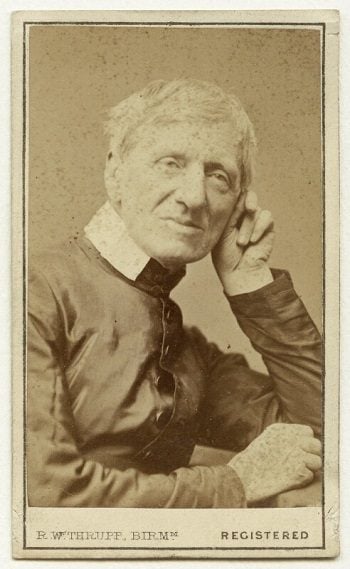
Photo credit: photograph of St. John Henry Cardinal Newman (1801-1890) from 1866, three years before E. B. Pusey’s long letter to him. [public domain]
Edward Bouverie (E. B.) Pusey (1800-1882) was an English Anglican cleric, professor of Hebrew at Oxford University for more than fifty years, and author of many books. He was a leading figure in the Oxford Movement, along with St. John Henry Cardinal Newman and John Keble, an expert on patristics, and was involved in many theological and academic controversies. Pusey helped revive the doctrine of the Real Presence in the Church of England, and because of several other affinities with Catholic theology and tradition, he and his followers (derisively called “Puseyites”) were mocked by over-anxious adversaries in 1853 as “half papist and half protestant”. But, unlike Newman and like Keble, he never left Anglicanism.
I continue my replies to Pusey by examining a few portions of his follow-up volume, First letter to the Very Rev. J. H. Newman, D.D., in explanation chiefly in regard to the reverential love due to the ever-blessed Theotokos, and the doctrine of Her Immaculate Conception (London: Rivingtons, 1869; aka Eirenicon, Pt. II). He described Newman in the beginning of his letter as his “dearest friend” and a person “whom I still admire as well as love” and he fondly recalled the “sunny memories” of their time together in the Oxford Movement and rejoiced that they were still comrades-in-arms “against unbelief.” It’s an ecumenical model we can all admire, and should seek to emulate. Pusey’s words will be in blue. The larger series will be collected under the “Anglicanism” section of my Calvinism and General Protestantism web page, under his name. I use RSV for Bible citations.
*****
The Church of England does hold a Divine authority in the Church, to be exercised in a certain way, deriving the truth from Holy Scripture, following Apostolical tradition, under the guidance of God the Holy Ghost. I fully believe that there is no difference between us in this. The “quod ubique, quod semper, quod ab omnibus,” [“that which was believed everywhere, always, and by all”] which our own Divines have so often inculcated, contains, I believe, the self-same doctrine as is laid down in the Council of Trent upon tradition. (pp. 4-5)
This shows that High Anglicans or Anglo-Catholics, hold the same view on the rule of faith that we do, over against sola Scriptura.
My book [An Eirenicon, 1864] had necessarily a two-fold aspect. It was a defence of ourselves against what, amid all courteousness of language, was a root-and-branch attack upon the Church of England, . . . I claimed to her all the broad outlines of faith which you too have, and, (as I trust, truly,) I set aside many things which are the ordinary subjects of Protestant attack upon you. (p. 6)
This is true. Pusey’s criticisms are some of the most articulate and reasoned and bigotry- and falsehood-free observations about Catholicism that I have seen from a Protestant in my 34+ years as a Catholic. He disagrees in all good faith and honesty and he does so with class and a lack of all acrimony and derision. What a breath of fresh air! Pusey is to be highly commended for this and it’s a pleasure to interact with his thoughts.
I meant to suggest, that this state of things was not irremediable; that there was a way, whereby peace and intercommunion might be restored, through mutual explanations, without calling upon the Church of Rome to abandon any thing which she had pronounced to be “de fide.” (p. 7)
It’s certainly a worthy goal. How sad and discouraging, however, to think upon how much the Church of England has changed — in a heterodox direction — from 1869 up to the present time, where the prospect of such unity and reunion would be the most distant pipe-dream at best. I believe that Pusey, like C. S. Lewis, would certainly be a Catholic if he had the choice that would be presented to him today. The Protestant body that is closest to the Catholic Church in its thinking now is the conservative wing of Lutheranism, though there are still small bodies of separatist traditional orthodox Anglicans that have separated themselves from their mother-communion.
I simply wished to exhibit the picture of practical devotion to the Blessed Virgin, as it was reflected to me in their writings, and it did not even occur to me that I could be thought thereby to pass any opinion as to the inner life of those whose words were cited. When I heard that my not expressing this was thought to be unjust to holy men whom I quoted, I took the first opportunity which occurred to say, that I did not mean, to impute to any, of them that “they took from our Lord any of the love which they gave to His Mother.” (p. 8)
This is the very model of charity in theological dialogues: assuming the best of the opponent and not attributing to him ill will or ill motives or insincerity. It’s not surprising that it’s an exchange between men who had been, and continued to be, good friends. Would that all dialogue could be of this sublime nature!
Pusey critiques what he thinks is the excessive Marian veneration of St. Alphonsus de Liguori in his Glories of Mary, on pages 9-10. I have explained in several papers that this perceived-to-be-extreme-and blasphemous language has to be understood within the backdrop of St. Alphonsus’ repeated statements and reiterations in the same book of the primacy of Jesus Christ. See:
St. Alphonsus de Liguori: Mary-Worshiper & Idolater? [8-9-02]
It seems to me, that the writer, in his vehement desire to set forth the privileges of Mary, contradicted the truth which he himself held, if he believed that the mercy of Jesus could save them. (p. 10)
This is relatively more accurate, but I submit that the problem isn’t contradiction in the Catholic writer; rather, it’s misunderstanding of the overall theology and veneration of the Catholic writer by the Anglican reader. There are two different ways to look at almost anything.
But my object was a practical one. I knew that in thousands of English minds (I doubt not, that in millions), this and the like language is the great barrier against re-union. (p. 10)
All the more reason to take the greatest pains to try to understand and comprehend the writing and worldview which is so vehemently disagreed with . . . I think articles such as mine, above, can help Protestants today to do exactly that. But it takes an open and willing mind.
I have often (though you will smile perhaps at the advocacy) had to defend the Roman Church against being idolatrous, and that, on the ground of this and the like language. (p. 10)
Then he was predisposed to be open to an agreeable explanation for what he thinks are Marian “excesses.” But if the brilliant Cardinal Newman couldn’t persuade him, I doubt that anyone else ever could (and apparently no one did, or else he would have converted to Catholicism, too). There are many of us — including myself — who have made the move from a much more distant Protestantism to Catholicism, without any insuperable intellectual difficulties. It’s entirely possible.
. . . (in your Bishop Milner’s words which I have already quoted,) ” That, as the saints in Heaven are free from every stain of sin and imperfection, and are confirmed in grace and glory, so their prayers are far more efficacious for obtaining what they ask for, than are the prayers of us imperfect and sinful mortals.” If this had been all, I have expressed my conviction that the difficulty never would have arisen. (pp. 35-36)
There still, indeed, remain the difficulties of some titles, which do not occur in the Fathers, and which one would have expected rather to be given to our Lord ; Health of the weak, Refuge of sinners, Comforter of the afflicted, Help of Christians . . .
This title, “Refuge of sinners,” is, accordingly, the text on which S. Liguori puts together the passages of middle-age writers, or such as are attributed wrongly to the Fathers, which speak of her as the Hope of Sinners.” Such sinners seem to be spoken of as out of the reach of Jesus, or hopeless of His help, and Mary seems to be held out to them as the way by which they are to approach to Jesus. (p. 37)
I don’t see that this is beyond what the Bible says about great prayer warriors. In my Reply #2 to Pusey, I went through a long list of such holy and powerful people. When, for example, God told Abimelech that Abraham would pray for him, so he could live, “for” Abraham was “a prophet” (Gen 20:6-7), would it not have been appropriate and fitting for Abimelech to consider Abraham his “hope” or “refuge” or “help”? I think it makes perfect sense. And so we consider Mary a hope and help and refuge in this very sense: her extraordinary holiness helps make her prayers much more powerful. Pusey recognized the premise of this principle of prayer in his words from pages 35-36 above (derived from James 5:16).
Likewise, when “All Israel” (1 Sam 12:1) “said to Samuel [the prophet], ‘Pray for your servants to the LORD your God, that we may not die’. . .” (1 Sam 12:19), would it not have made perfect sense for them to regard Samuel as their “hope of sinners” or “refuge” or “help”? Why couldn’t this be, then, also applicable to the far holier and indeed sinless and immaculate Mary? Further, when God’s “anger was kindled, and the fire of the LORD burned among them” and as a result, “the people cried to Moses; and Moses prayed to the LORD, and the fire abated” (Num 11:1-2), who could argue that they couldn’t possibly have regarded Moses as their “hope of sinners” or “refuge of sinners” or “help”? He saved their lives, and possibly saved them from eternal damnation! How is that not being “hope” or “refuge” or “help”?
St. Paul wrote in some depth about the “comfort” that his suffering and work had been to the Corinthian Christians, even unto their “salvation”:
2 Corinthians 1:3-7 Blessed be the God and Father of our Lord Jesus Christ, the Father of mercies and God of all comfort, [4] who comforts us in all our affliction, so that we may be able to comfort those who are in any affliction, with the comfort with which we ourselves are comforted by God. [5] For as we share abundantly in Christ’s sufferings, so through Christ we share abundantly in comfort too. [6] If we are afflicted, it is for your comfort and salvation; and if we are comforted, it is for your comfort, which you experience when you patiently endure the same sufferings that we suffer. [7] Our hope for you is unshaken; for we know that as you share in our sufferings, you will also share in our comfort.
So would Pusey argue that the Corinthians could not have called St. Paul in this sense their “comforter”? That would somehow take away from God? Indeed, such comfort worked both ways, too. Paul spoke of the “comfort” he received from several of his followers (2 Cor 7:4, 6-7, 13; Col 4:11; 1 Thess 3:7; Phlm 1:7). But we mustn’t ever say this about Mary? I think it’s unbiblical thinking to make such claims or criticisms.
*
It came to be thought that ” God willed that we should have all through her,” or that “through her,” i. e., through her intercession,” God willeth that all graces should pass from Christ the Head unto the Church His Body,” that doctrine involved the whole system of teaching as to the office of the B. V., as our access to our Redeemer, from which we wish to be exempt. For, setting aside cases of inculpable ignorance, then, if this were true, any one who should neglect to ask her, through whom God willed all His graces to come to His creatures, would be shewing contempt to the known will of God, and incurring the forfeiture of all the graces necessary to his salvation. (pp. 39-40)
*
His conclusion doesn’t follow at all. God choosing to utilize Mary in this way to distribute His grace does not require that we always and necessarily know that this is the case, in order for it to obtain. We do good things all the time, not thinking that they were only possible by God’s enabling grace (Catholic teaching). If that can be the case without our conscious knowledge, why not also Mary‘s intercession, whether it is regarded as universally applicable or not? Thus, Pusey harps on a nonexistent problem, or, put another way: he arbitrarily creates one when it fact it’s not a problem at all.
*
Pusey keeps citing St. Alphonsus, not seeming to be aware that 1) he is not the magisterium, and 2) because of that lack of fallibility, he may, of course, make statements that go too far, and/or 3) these “alarming” statements may be misinterpreted by not allowing for background explanations, as mentioned above. He cites him, for example, writing about “the necessity of invoking the intercession of Mary.” That’s certainly not Catholic teaching, if he meant that it must occur in absolutely every case of intercession. It is true if it means that there is some such necessity in a general sense.
*
Even Suarez goes beyond the Council of Trent. “The Church holds that the intercession and prayer of the Virgin are useful and necessary to her above all others [saints]; the Blessed Virgin therefore is to be prayed by us above all.” For the Council of Trent only says that it is useful; Suarez says, that “she is to be prayed to,” because her special intercession (for of this he is speaking), such intercession as is to be gained by prayer to her, is necessary. (p. 40)
*
Pusey surely knows that Trent has the magisterial authority; Suarez does not. So either the latter is wrong; corrected by Trent, or he is being interpreted in a way that he didn’t intend, and his meaning is a general one, just as Trent’s is. One or the other thing is likely true, and so this objection poses no problem whatsoever for the Catholic system.
*
*
***
*
Practical Matters: I run the most comprehensive “one-stop” Catholic apologetics site: rated #1 for Christian sites by leading AI tool, ChatGPT — endorsed by popular Protestant blogger Adrian Warnock. Perhaps some of my 5,000+ free online articles or fifty-six books have helped you (by God’s grace) to decide to become Catholic or to return to the Church, or better understand some doctrines and why we believe them. If you believe my full-time apostolate is worth supporting, please seriously consider a much-needed monthly or one-time financial contribution. “The laborer is worthy of his wages” (1 Tim 5:18, NKJV).
*
PayPal donations are the easiest: just send to my email address: [email protected]. Here’s also a second page to get to PayPal. You’ll see the term “Catholic Used Book Service”, which is my old side-business. To learn about the different methods of contributing (including Zelle and 100% tax-deductible donations if desired), see my page: About Catholic Apologist Dave Armstrong / Donation Information.
*
You can support my work a great deal in non-financial ways, if you prefer; by subscribing to, commenting on, liking, and sharing videos from my YouTube channel, Catholic Bible Highlights, where I partner with Kenny Burchard (see my own videos), and/or by signing up to receive notice for new articles on this blog. Just type your email address on the sidebar to the right (scroll down quite a bit), where you see, “Sign Me Up!” Thanks a million!
*
***
*
Photo credit: photograph of St. John Henry Cardinal Newman (1801-1890) from 1866, three years before E. B. Pusey’s long letter to him*.* [public domain]
Summary: This is a reply to a few portions of E. B. Pusey’s “First letter to the Very Rev. J. H. Newman” (1869), dealing with the veneration of Mary and her Immaculate Conception.
Calvinism & General Protestantism
Pusey & Mary's Immaculate Conception
Previous Post

January 23, 2025
Reputed Biblical Moral Difficulties & Internal Confusion
Next Post

January 27, 2025 Joy in Purgatory: St. Catherine of Genoa & Bishop Camus
Recent Comments
"And lastly, I belong to no denomination and am free to serve God as He ..."
Is Venerating Men & Angels Worship? ..."
"And obeisance doesn't mean "worship". It means "respect", "obey", or "submission". Very weird that you ..."
Is Venerating Men & Angels Worship? ..."
"Many of these scriptures you have noted have been taken out of context. With Daniel, ..."
Is Venerating Men & Angels Worship? ..."
""Protestants often point out that Jesus is now triumphant in heaven and object to Catholics ..."
Three More Anti-Catholic Lies About Catholicism ..."
Browse Our Archives
Select a Category & Last Things About Me Anti-Catholicism Atheism & Agnosticism Baptism and Sacramentalism Bible and Tradition Blessed Virgin Mary Books by Dave Armstrong C. S. Lewis Calvinism & General Protestantism Catholic Apologetics Catholic Apologists Catholic conversion Catholic converts Christmas Church (Ecclesiology) Church History Conversion and Converts Development of Doctrine Eastern Orthodoxy Ecumenism & Christian Unity Eucharist & Liturgy Fathers of the Church French Translations G. K. Chesterton Hell Hell & Satan Hell & Satan & Last Things Heresies & Comparative Religion Holistic Health Inquisition & Crusades & Scandals James White Jews & Judaism & Old Testament John Calvin John Henry Newman Liberal / Modernist Theology Life Issues Literary Resume Lutheranism Mariology Martin Luther Music Orthodoxy Papacy & Infallibility Personal Page Philosophy & Science Political & Ethical & Moral Issues Protestant Persecution & Intolerance Protestantism Purgatory Purgatory & Penance Romantic & Imaginative Theology Saints & Purgatory & Penance Salvation Salvation & Justification Satan & Last Things Sexuality and Gender Issues Spanish Translations Traditionalism vs. Radical Catholic Reactionaries Traducciones al español / tradução para português Trinitarianism & Christology Uncategorized Videos
Select a Month October 2026 September 2026 August 2026 July 2026 June 2026 May 2026 April 2026 March 2026 February 2026 January 2026 December 2025 November 2025 October 2025 September 2025 August 2025 July 2025 June 2025 May 2025 April 2025 March 2025 February 2025 January 2025 December 2024 November 2024 October 2024 September 2024 August 2024 July 2024 June 2024 May 2024 April 2024 March 2024 February 2024 January 2024 December 2023 November 2023 October 2023 September 2023 August 2023 July 2023 June 2023 May 2023 April 2023 March 2023 February 2023 January 2023 December 2022 November 2022 October 2022 September 2022 August 2022 July 2022 June 2022 May 2022 April 2022 March 2022 February 2022 January 2022 December 2021 November 2021 October 2021 September 2021 August 2021 July 2021 June 2021 May 2021 April 2021 March 2021 February 2021 January 2021 December 2020 November 2020 October 2020 September 2020 August 2020 July 2020 June 2020 May 2020 April 2020 March 2020 February 2020 January 2020 December 2019 November 2019 October 2019 September 2019 August 2019 July 2019 June 2019 May 2019 April 2019 March 2019 February 2019 January 2019 December 2018 November 2018 October 2018 September 2018 August 2018 July 2018 June 2018 May 2018 April 2018 March 2018 February 2018 January 2018 December 2017 November 2017 October 2017 September 2017 August 2017 July 2017 June 2017 May 2017 April 2017 March 2017 February 2017 January 2017 December 2016 November 2016 October 2016 September 2016 August 2016 July 2016 June 2016 May 2016 April 2016 March 2016 February 2016 January 2016 December 2015 November 2015 October 2015 September 2015 August 2015 July 2015 June 2015 May 2015 April 2015 March 2015 February 2015 January 2015 December 2014 November 2014 October 2014 September 2014 August 2014 July 2014 June 2014 April 2014 March 2014 February 2014 January 2014 December 2013 November 2013 October 2013 September 2013 August 2013 July 2013 June 2013 April 2013 March 2013 February 2013 January 2013 December 2012 November 2012 October 2012 September 2012 August 2012 July 2012 June 2012 May 2012 April 2012 March 2012 February 2012 January 2012 December 2011 November 2011 October 2011 September 2011 August 2011 July 2011 June 2011 April 2011 March 2011 February 2011 October 2010 September 2010 August 2010 July 2010 April 2010 March 2010 December 2009 October 2009 August 2009 July 2009 June 2009 May 2009 March 2009 February 2009 October 2008 September 2008 April 2008 March 2008 February 2008 January 2008 December 2007 November 2007 October 2007 May 2007 March 2007 February 2007 January 2007 November 2006 October 2006 September 2006 August 2006 July 2006 June 2006 May 2006 April 2006 March 2006 February 2006 October 2005 June 2005 April 2005 February 2005 July 2004 May 2004 April 2004
Follow Us!
TAKE THE
Religious Wisdom Quiz
Who was the first woman?
Select your answer to see how you score.
Sarah Eve Mary Deborah
Books by This Author Books by Dave Armstrong
Related posts from Biblical Evidence for Catholicism

On Protestant Explanations of Catholic Conversion
Biblical Evidence for Catholicism

Holy Ground: Why Mary Had NO Other Children...
Biblical Evidence for Catholicism
Protestant Confessions & "Ever-Virgin" Mary
Biblical Evidence for Catholicism

A Few "Worst" & "Best" Arguments vs. Protestantism
Biblical Evidence for Catholicism
TRENDING AT PATHEOS Catholic

In "Irreplaceable," our book on vocation and technology, Trevor Sutton and I...

I was strolling through the top floor of the brand new Parthenon...

What Does Gêvâh Mean For Kimberley Guifoyle &...
This week, a lot of the news is focused on Kimberly Guilfoyle....

INNER CIRCLE: Profound Mystery (Of Christ In All...
Ephesians 5:31-32 “For this reason, a man will leave his father and...

Do Not Rejoice When Your Enemy Falls: The...
Turning an execution into a public spectacle is a disturbing expression of...

'The Chosen' S6 Trailer: The Passion Gets Very...
Not many watching 'The Chosen' worry about spoilers, but just because they...
view all Catholic blogs
What Are Your Thoughts?leave a comment
Ad-Free & Subscriber Log-In Subscription Support
- About Us
- 2026 Calendar
- Videos
- Podcasts
- Library of World Religions
- Faith In Media Tracker
- Advertise With Us
- Write for Us
- Privacy Policy
- Terms of Service
- Do Not Sell My Data
- Contact Us
- Radiant Digital
- Manage Newsletter Subscriptions
- Unsubscribe From Notifications
- Sitemap
Copyright 2008-2026, Patheos. All rights reserved.
Subscription Support Ad-Free & Subscriber Log-In
Follow Patheos