
BuddhistCatholicContemplativeEvangelicalGeneral ChristianHinduJewishLatter-day SaintMuslimNew VisionsProgressive Christian
Beliefs
- Buddhist
- Catholic
- Contemplative
- Evangelical
- General Christian
- Hindu
- Jewish
- Latter-day Saint
- More Voices
- Muslim
- New Visions
- Pagan
- Progressive Christian
Topics
- Religion News
- Food and Religion
- Sports and Religion
- Religious Art
- Religious Music and Entertainment
- Religious Events
- History and Religion
- Style and Religion
- Politics and Religion
- Women in Religion
- Recreation Outdoors and Religion
- Business Finance and Religion
- Careers Workplace and Religion
- Education and Religion
- Family Parenting and Religion
- Health Fitness and Religion
- Home and Religion
- Relationships and Religion
- Technology and Religion
- Travel and Religion
Columnists
- Buddhist Columnists
- Business Finance and Religion Columnists
- Careers Workplace and Religion Columnists
- Catholic Columnists
- Contemplative Columnists
- Education and Religion Columnists
- Evangelists Columnists
- Family Parenting and Religion Columnists
- General Christian Columnists
- Health Fitness and Religion Columnists
- Hindu Columnists
- History and Religion Columnists
- Home and Religion Columnists
- Jewish Columnists
- More Voices Columnists
- Latter Day Columnists
- Muslim Columnists
- New Visions Columnists
- Nonreligious Columnists
- Pagan Columnists
- Politics and Religion Columnists
- Progressive Columnists
- Recreation Outdoors and Religion Columnists
- Relationships and Religion Columnists
- Religion News Columnists
- Religious Art Columnists
- Religious Events Columnists
- Religious Music and Entertainment Columnists
- Sports and Religion Columnists
- Style and Religion Columnists
- Technology and Religion Columnists
- Travel and Religion Columnists
- Women in Religion Columnists
Resource Library
- 2026 Calendar
- Library of World Religions
- The 100 Most Holy Places on Earth
- Patheos Answers
- Podcasts
- Videos
- Faith Leaders Database
- Anglican Episcopalian
- Bahai
- Baptist
- Buddhism
- Christianity
- Confucianism
- Eastern Orthodoxy
- Hinduism
- Holiness and Pentecostal
- ISKCON
- Islam
- Judaism
- Lutheran
- Methodist
- The Church of Jesus Christ of Latter-day Saints
- New Age
- Paganism
- Presbytarian and Reformed
- Protestantism
- Religion Behind the Scenes
- Roman Catholic
- Scientology
- Shia Islam
- Sikhism
- Sufism
- Sunni Islam
- Taoism
- Zen
- See all religions
Research Tools
 Ad-Free & Subscriber Log-In Subscription Support
Ad-Free & Subscriber Log-In Subscription Support
Follow Patheos 

- Trending:
- Forgiveness
- |
- Marriage
- |
- Consciousness
- |
- Death Penalty
- |
- Election
- |
- Halloween

-
About
-
Catholic Apologetics
-
Church History
-
Great Apologists
-
Christian Worldview
-
Protestantism & Misc.
- Home
- Catholic
- History and Religion
- Reply to Anglican E. B. Pusey #1
Reply to Anglican E. B. Pusey #1
Last updated on: January 29, 2025 at 8:35 pm by Dave Armstrong
Reply to Anglican E. B. Pusey #1 2025-01-29T20:35:56-04:00 Dave Armstrong
Patheos Explore the world's faith through different perspectives on religion and spirituality! Patheos has the views of the prevalent religions and spiritualities of the world.
Agreement on Ecumenism and Various Doctrines; Sola Scriptura
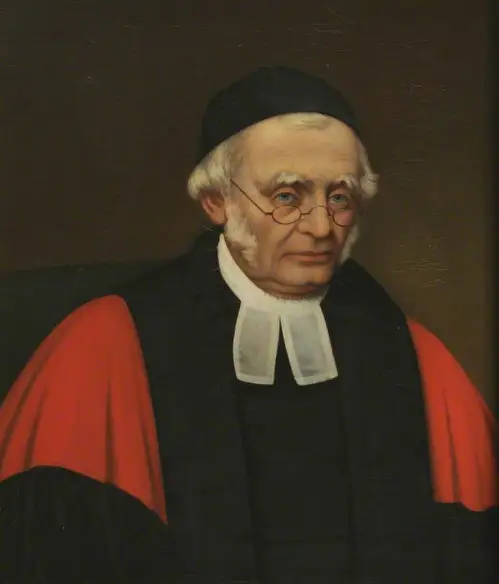
Photo credit: portrait of Pusey from For all the Saints (18 September 2014).
Edward Bouverie (E. B.) Pusey (1800-1882) was an English Anglican cleric, professor of Hebrew at Oxford University for more than fifty years, and author of many books. He was a leading figure in the Oxford Movement, along with St. John Henry Cardinal Newman and John Keble, an expert on patristics, and was involved in many theological and academic controversies. Pusey helped revive the doctrine of the Real Presence in the Church of England, and because of several other affinities with Catholic theology and tradition, he and his followers (derisively called “Puseyites”) were mocked by over-anxious adversaries in 1853 as “half papist and half protestant”. But, unlike Newman and like Keble, he never left Anglicanism.
This is the first of two replies to his book, An Eirenicon (New York: D. Appleton & Co., 1864), which was a letter to his former colleague and “dearest friend” William Lockhart: the first of the tractarians to convert to Catholicism (in August 1843, even before Newman’s reception in October 1845). Cardinal Newman himself replied to this book in 1865, in his volume, Certain Difficulties Felt by Anglicans in Catholic Teaching, Volume 2. I haven’t read it, so it won’t have any influence on these replies. Pusey’s words will be in blue. These two and additional replies to Pusey will be collected under the “Anglicanism” section of my Calvinism and General Protestantism web page, under his name. I use RSV for Bible citations.
*****
You know how long it has been my wish to part with all controversy, and to consecrate the evening of my life to the unfolding of some of the deep truths of God’s Holy Word, as God might enable me, by aid of those whom He has taught in times past. This employment, and practical duties which God has brought to me, were my ideal of the employments of the closing years of a laborious life. The inroad made upon the Gospel by unbelievers, or half-believers, compelled me in part to modify this my hope. Still, since there is a common foe, pressing alike upon all who believe in Jesus, I the more hoped, at least, to be freed from any necessity of controversy with any who hold the Catholic faith. The recent personal appeal of Dr. Manning to myself seems, as you and other friends think, to call for an exception to this too; . . . (p. 2)
Delightful ecumenical sentiment, in wonderful prose. I’m not enthralled with “controversy” either (it may surprise many to hear). My interest is in constructive, substantive, amiable dialogue and debate, with the aim of always seeking truth and to learn about other views, even if I disagree with them. This is as rare as hen’s teeth to find anymore (if it ever was readily obtainable). But in any event, it’s not merely controversy for its own sake, or “quarreling” or “squabbling” endlessly and aimlessly. I desire what it looks like I will find here: interaction with a well-meaning, articulate, thoughtful theological opponent, with whom I can agree in many important ways, too. It’s a well-intentioned conversation between brothers in the Christian faith.
Ever since I knew them (which was not in my earliest years) I have loved those who are called “Evangelicals.” I loved them, because they loved our Lord. I loved them, for their zeal for souls. I often thought them narrow; yet I was often drawn to individuals among them more than to others who held truths in common with myself, which the Evangelicals did not hold, at least explicitly. I believe them to be “of the truth.” I have ever believed and believe, that their faith was and is, on some points of doctrine, much truer than their words. I believed and believe, that they are often withheld from the clear and full sight of the truth by an inveterate prejudice, that that truth, as held by us, is united with error, or with indistinct acknowledgment of other truths which they themselves hold sacred. Whilst, then, I lived in society, I ever sought them out, both out of love for themselves, and because I believed that nothing (with God’s help) so dispels untrue prejudice as personal intercourse, heart to heart, with those against whom that prejudice is entertained. I sought to point out to them our common basis of faith. (p. 2)
This is another refreshing ecumenical expression, with which I very much agree, in my great affection for Protestant evangelicals, among whom I proudly counted myself between 1977 and 1990. Just as they misunderstand Pusey’s high Anglicanism, so they lack accurate knowledge — then and now — about an even “higher” Catholicism.
I have not united with them in any of those things which were not in accordance with my own principles. It was not any thing new, then, when, in high places, fundamental truths had been denied, I sought to unite with those, some of whom had often spoken against me, but against whom I had never spoken. It was the pent-up longing of years. I had long felt that common zeal for faith could alone bring together those who were opposed; I hoped that, through that common zeal and love, inveterate prejudices which hindered the reception of truth would be dispelled. This, however, was a bright vista which lay beyond. The immediate object was to resist unitedly an inroad upon our common faith. . . .
But while, on the one hand, I profess plainly that love for the Evangelicals which I ever had, I may be, perhaps, the more bound to say, that, in no matter of faith, nor in my thankfulness to God for my faith, have I changed. (p. 3)
And here he describes how often in actuality ecumenical goals and hopes die a sad death. Again, I, too, have always had the attitude he expresses: unite where possible against the enemies of Christianity. I had that view towards Catholics as a Protestant, and towards Protestants now as a Catholic. Disagreement is not the same as disrespect or malice. But of course I dispute (hopefully amiably) in areas where we hold honest disagreements. This need not be acrimonious or even not pleasurable, but we all know that all too often it descends to those things.
“I believe explicitly all which I know God to have revealed to His Church; and implicitly (implicitè) any thing, if He has revealed it, which I know not.” In
simple words, “I believe all which the Church believes.” . . . This I confess when I say to God, “I believe one Catholic and Apostolic Church.” (p. 3)
This, of course, is very un-Protestant, and an area (the rule of faith) where we have strong agreement. We disagree, however, on the nature and location of the one Church of God.
As individuals, we, too, thankfully acknowledge that whoever teaches any true faith in Jesus is, so far, one of God’s instruments against unbelief. (p. 5)
Agreed.
There is not one statement in the elaborate chapters on Justification in the Council of Trent which any of us could fail of receiving; nor is there one of their
anathemas on the subject, which in the least rejects any statement of the Church of England. (p. 8)
This is a pretty amazing statement. I can see why some (more evangelical) Anglicans would be suspicious of Pusey!
The Church of England, while teaching (as the fathers often do) that Baptism and the Holy Eucharist have a special dignity, . . . is careful not to exclude other appointments of God from being in some way sacraments, as channels of grace, or (in the old definition of sacraments), “visible signs of an invisible grace.” This is indeed inseparable from the idea of Confirmation, Orders, Absolution, Marriage.
Marriage is, we know, directly called a “Sacrament” in the Homilies. . . . “Absolution, it says, “has the promise of forgiveness of sins.” . . .
Even as to Extreme Unction, it only objects to the later abuse before the Council of Trent, when it was customarily administered to those only, of whom there was a moral certainty that they could not recover; . . . (pp. 9-10)
Blessed agreement on the sacraments as well . . .
I am persuaded that, on this point, the two Churches might be reconciled by explanation of the terms used. The Council of Trent, in laying down the doctrine of the sacrifice of the Mass, claims nothing for the Holy Eucharist but an application of the One meritorious sacrifice of the Cross. An application of that sacrifice the Church of England believes also. Many years have flowed away since we have taught this, and have noticed how the words, “sacrifice,” “proper,” or “propitiatory sacrifice,” have been alternately accepted or rejected, according as they were supposed to mean that the Eucharistic sacrifice acquired something propitiatory in itself, or only applied what was merited once and for ever by the One sacrifice of our Lord upon the Cross. (p. 12)
This is pretty amazing, too. I didn’t know this.
The chief controversy I hold to be about the sovereignty of the Pope. For this is at this time the great wall of separation which divides the two Churches. (p. 27)
It’s certainly one of the main points of dispute.
The office of our Divine Lord, as a Teacher, was, to be the perfect Revealer of the whole truth as to God, which God willed to disclose to His creatures here. This same office God the Holy Ghost undertook after the Resurrection, teaching invisibly to the Apostles that same divine truth. Our Lord said to His Apostles, “He shall teach you the whole truth, and bring all things to your remembrance, whatever I have said unto you” [Jn 14:26; 16:13]. The whole revelation then was completed at the first. (p. 37)
Of course it was. Catholics agree! It doesn’t follow, however, that all of this revelation and apostolic deposit was in the Bible or that oral tradition ceased after the writing of the New Testament.
He, “the Spirit of Truth,” was to teach the Apostles the whole truth. It was a personal promise to the Apostles, and fulfilled in them. (p. 37)
It never states in the Bible that all of this was in writing, or, for that matter, in the Bible (as determined by the Church, since it doesn’t name its own books).
The Church of this day cannot know more than St. John, else the promise would not have been fulfilled to him, that God, the Holy Ghost, should teach him the whole truth. Whatever the Apostles received, that they were enjoined to teach [Mt 10:27; 28:20]. And that whole truth the Apostles taught, orally and in writing, committing it as the deposit to the Bishops whom they left in their place, and, under inspiration of God the Holy Ghost, embodying it in Holy Scripture. (p. 37)
Again, Scripture doesn’t teach “inscripturation”: the notion that all of the truth God wanted to preserve for posterity is in the Bible, and infallibly only there. John 20:30 informs us that “Jesus did many other signs . . . not written in this book.” John 21:25 refers to “many other things which Jesus did” that were so numerous that a written record would be such that “the world itself could not contain” all of it. Certainly this is hyperbole, but in any event, it’s referring to a lot of extrabiblical material that — it stands to reason — could have been largely or wholly contained in oral traditions passed down.
At least we know from the testimony of those who followed, that they taught it orally in all its great outlines; and St. Paul himself says, “I have not shunned to declare to you the whole counsel of God.” It does not indeed absolutely follow, that they so taught in detail all which is contained in Holy Scripture. (p. 37)
Nor does it absolutely follow that we must deny that there was a great deal of the apostolic deposit not contained in Scripture, and beyond it (though in harmony with it), or if contained at all, not explicitly spelled out.
How much, e. g., is taught in the Epistles incidentally, in answer to doubts which had arisen, whether this were so or no, even as to Apostolic teaching, or in correction of nascent heresies! But there is this difference between the teaching of the Apostles and that of the Church after them, that what the Apostles taught as the original and Fountain-head, that the Church only transmitted. (p. 37)
Again, we agree. But all doctrines develop as well, which is consistent with being present from the beginning. They were simply mostly primitive and basic at first.
According to the Council of Trent, then, as well as ourselves, the revelation was finished in and through the Apostles. (p. 38)
Exactly right; in terms of the apostolic deposit. He cited Session IV in this regard. It references unwritten tradition as well as the Holy Scripture:
The sacred and holy, ecumenical, and general Synod of Trent . . . keeping this always in view, that, errors being removed, the purity itself of the Gospel be preserved in the Church; which (Gospel), before promised through the prophets in the holy Scriptures, our Lord Jesus Christ, the Son of God, first promulgated with His own mouth, and then commanded to be preached by His Apostles to every creature, as the fountain of all, both saving truth, and moral discipline; and seeing clearly that this truth and discipline are contained in the written books, and the unwritten traditions which, received by the Apostles from the mouth of Christ himself, or from the Apostles themselves, the Holy Ghost dictating, have come down even unto us, transmitted as it were from hand to hand; (the Synod) following the examples of the orthodox Fathers, receives and venerates with an equal affection of piety, and reverence, all the books both of the Old and of the New Testament–seeing that one God is the author of both –as also the said traditions, as well those appertaining to faith as to morals, as having been dictated, either by Christ’s own word of mouth, or by the Holy Ghost, and preserved in the Catholic Church by a continuous succession. (Decree Concerning the Canonical Scriptures: beginning)
This statement alone proves that the Catholic Church adheres to a tradition regarded as infallible, just as the Bible is. It’s also quite arguable that authentic apostolic tradition is inspired, too, since it’s referred to as having been derived “from the mouth of Christ himself, or from the Apostles themselves, the Holy Ghost dictating.” Whatever is dictated by the Holy Spirit is, by definition, inspired. And there are many many such communications detailed in the Bible itself, as I recently compiled in great detail in my article, 601+ Bible Passages Disprove Sola Scriptura [1-6-25].
*
Extraordinary operations of this same teaching of God the Holy Ghost have been on those occasions, when the Church has had to state, explicitly and formally, in correction of emerging heresies, the truth which God the Holy Ghost ever taught by her. I call these “extraordinary,” because such occasions have been comparatively rare in the history of the Church. (p. 38)
*
This means that such councils were not only infallible, but also inspired, insofar as they passed along teachings which (to use Pusey’s words) “God the Holy Ghost . . . taught by her” — which was also true of the Jerusalem Council in Acts 15 (see especially 15:28). This annihilates sola Scriptura, which is precisely the false premise that causes Anglicans like Pusey to deny that there is a perpetual infallible teaching office in the Church. Hence, he hastens to claim that such instances are “extraordinary” and “comparatively rare.”
*
But I fail to see why that must be the case, in light of St. Paul describing the Church as “the pillar and bulwark of the truth” (1 Tim 3:15). That means something “extraordinary” also, and I think I have identified its essential and necessary meaning. It’s not confined to a few “rare” instances, but rather, this is an ongoing or perpetual role of the Church, by God’s express decree in His Word, the Bible.
*
In the three first centuries a General Council was obviously impossible. It would only have marked out Christian bishops for martyrdom, on the supposition that they were engaged in a conspiracy against the State; yet emergent heresies were condemned, and the mind of the whole Church was ascertained as clearly without them as with them. (p. 39)
*
Yes, spearheaded and led by popes and to a lesser extent, other prominent bishops . . .
*
*
***
*
Practical Matters: I run the most comprehensive “one-stop” Catholic apologetics site: rated #1 for Christian sites by leading AI tool, ChatGPT — endorsed by popular Protestant blogger Adrian Warnock. Perhaps some of my 5,000+ free online articles or fifty-six books have helped you (by God’s grace) to decide to become Catholic or to return to the Church, or better understand some doctrines and why we believe them. If you believe my full-time apostolate is worth supporting, please seriously consider a much-needed monthly or one-time financial contribution. “The laborer is worthy of his wages” (1 Tim 5:18, NKJV).
*
PayPal donations are the easiest: just send to my email address: [email protected]. Here’s also a second page to get to PayPal. You’ll see the term “Catholic Used Book Service”, which is my old side-business. To learn about the different methods of contributing (including Zelle and 100% tax-deductible donations if desired), see my page: About Catholic Apologist Dave Armstrong / Donation Information.
*
You can support my work a great deal in non-financial ways, if you prefer; by subscribing to, commenting on, liking, and sharing videos from my YouTube channel, Catholic Bible Highlights, where I partner with Kenny Burchard (see my own videos), and/or by signing up to receive notice for new articles on this blog. Just type your email address on the sidebar to the right (scroll down quite a bit), where you see, “Sign Me Up!” Thanks a million!
*
***
*
Photo credit: portrait of Pusey from For all the Saints (18 September 2014).
Summary: This is the first of two replies to E. B. Pusey’s Eirenicon (1866). Here I joyfully note many areas of agreement and discuss sola Scriptura and an infallible teaching Church.
Calvinism & General Protestantism
Previous Post
January 13, 2025
Vs. Lutheran Johann Hülsemann: Sanctification
Next Post

January 21, 2025 Jason Engwer's War Against Baptismal Regeneration in Acts
Recent Comments
"And lastly, I belong to no denomination and am free to serve God as He ..."
Is Venerating Men & Angels Worship? ..."
"And obeisance doesn't mean "worship". It means "respect", "obey", or "submission". Very weird that you ..."
Is Venerating Men & Angels Worship? ..."
"Many of these scriptures you have noted have been taken out of context. With Daniel, ..."
Is Venerating Men & Angels Worship? ..."
""Protestants often point out that Jesus is now triumphant in heaven and object to Catholics ..."
Three More Anti-Catholic Lies About Catholicism ..."
Browse Our Archives
Select a Category & Last Things About Me Anti-Catholicism Atheism & Agnosticism Baptism and Sacramentalism Bible and Tradition Blessed Virgin Mary Books by Dave Armstrong C. S. Lewis Calvinism & General Protestantism Catholic Apologetics Catholic Apologists Catholic conversion Catholic converts Christmas Church (Ecclesiology) Church History Conversion and Converts Development of Doctrine Eastern Orthodoxy Ecumenism & Christian Unity Eucharist & Liturgy Fathers of the Church French Translations G. K. Chesterton Hell Hell & Satan Hell & Satan & Last Things Heresies & Comparative Religion Holistic Health Inquisition & Crusades & Scandals James White Jews & Judaism & Old Testament John Calvin John Henry Newman Liberal / Modernist Theology Life Issues Literary Resume Lutheranism Mariology Martin Luther Music Orthodoxy Papacy & Infallibility Personal Page Philosophy & Science Political & Ethical & Moral Issues Protestant Persecution & Intolerance Protestantism Purgatory Purgatory & Penance Romantic & Imaginative Theology Saints & Purgatory & Penance Salvation Salvation & Justification Satan & Last Things Sexuality and Gender Issues Spanish Translations Traditionalism vs. Radical Catholic Reactionaries Traducciones al español / tradução para português Trinitarianism & Christology Uncategorized Videos
Select a Month October 2026 September 2026 August 2026 July 2026 June 2026 May 2026 April 2026 March 2026 February 2026 January 2026 December 2025 November 2025 October 2025 September 2025 August 2025 July 2025 June 2025 May 2025 April 2025 March 2025 February 2025 January 2025 December 2024 November 2024 October 2024 September 2024 August 2024 July 2024 June 2024 May 2024 April 2024 March 2024 February 2024 January 2024 December 2023 November 2023 October 2023 September 2023 August 2023 July 2023 June 2023 May 2023 April 2023 March 2023 February 2023 January 2023 December 2022 November 2022 October 2022 September 2022 August 2022 July 2022 June 2022 May 2022 April 2022 March 2022 February 2022 January 2022 December 2021 November 2021 October 2021 September 2021 August 2021 July 2021 June 2021 May 2021 April 2021 March 2021 February 2021 January 2021 December 2020 November 2020 October 2020 September 2020 August 2020 July 2020 June 2020 May 2020 April 2020 March 2020 February 2020 January 2020 December 2019 November 2019 October 2019 September 2019 August 2019 July 2019 June 2019 May 2019 April 2019 March 2019 February 2019 January 2019 December 2018 November 2018 October 2018 September 2018 August 2018 July 2018 June 2018 May 2018 April 2018 March 2018 February 2018 January 2018 December 2017 November 2017 October 2017 September 2017 August 2017 July 2017 June 2017 May 2017 April 2017 March 2017 February 2017 January 2017 December 2016 November 2016 October 2016 September 2016 August 2016 July 2016 June 2016 May 2016 April 2016 March 2016 February 2016 January 2016 December 2015 November 2015 October 2015 September 2015 August 2015 July 2015 June 2015 May 2015 April 2015 March 2015 February 2015 January 2015 December 2014 November 2014 October 2014 September 2014 August 2014 July 2014 June 2014 April 2014 March 2014 February 2014 January 2014 December 2013 November 2013 October 2013 September 2013 August 2013 July 2013 June 2013 April 2013 March 2013 February 2013 January 2013 December 2012 November 2012 October 2012 September 2012 August 2012 July 2012 June 2012 May 2012 April 2012 March 2012 February 2012 January 2012 December 2011 November 2011 October 2011 September 2011 August 2011 July 2011 June 2011 April 2011 March 2011 February 2011 October 2010 September 2010 August 2010 July 2010 April 2010 March 2010 December 2009 October 2009 August 2009 July 2009 June 2009 May 2009 March 2009 February 2009 October 2008 September 2008 April 2008 March 2008 February 2008 January 2008 December 2007 November 2007 October 2007 May 2007 March 2007 February 2007 January 2007 November 2006 October 2006 September 2006 August 2006 July 2006 June 2006 May 2006 April 2006 March 2006 February 2006 October 2005 June 2005 April 2005 February 2005 July 2004 May 2004 April 2004
Follow Us!
TAKE THE
Religious Wisdom Quiz
What famous cathedral is in Paris, known for its flying buttresses and rose windows?
Select your answer to see how you score.
Notre Dame St. Paul's St. Peter's Canterbury
Books by This Author Books by Dave Armstrong
Related posts from Biblical Evidence for Catholicism

On Protestant Explanations of Catholic Conversion
Biblical Evidence for Catholicism

Protestant Confessions & "Ever-Virgin" Mary
Biblical Evidence for Catholicism

A Few "Worst" & "Best" Arguments vs. Protestantism
Biblical Evidence for Catholicism

Jerusalem Council vs. James White & Sola Scriptura
Biblical Evidence for Catholicism
TRENDING AT PATHEOS Catholic

In "Irreplaceable," our book on vocation and technology, Trevor Sutton and I...

I was strolling through the top floor of the brand new Parthenon...

What Does Gêvâh Mean For Kimberley Guifoyle &...
This week, a lot of the news is focused on Kimberly Guilfoyle....

INNER CIRCLE: Profound Mystery (Of Christ In All...
Ephesians 5:31-32 “For this reason, a man will leave his father and...

Do Not Rejoice When Your Enemy Falls: The...
Turning an execution into a public spectacle is a disturbing expression of...

'The Chosen' S6 Trailer: The Passion Gets Very...
Not many watching 'The Chosen' worry about spoilers, but just because they...
view all Catholic blogs
What Are Your Thoughts?leave a comment
Ad-Free & Subscriber Log-In Subscription Support
- About Us
- 2026 Calendar
- Videos
- Podcasts
- Library of World Religions
- Faith In Media Tracker
- Advertise With Us
- Write for Us
- Privacy Policy
- Terms of Service
- Do Not Sell My Data
- Contact Us
- Radiant Digital
- Manage Newsletter Subscriptions
- Unsubscribe From Notifications
- Sitemap
Copyright 2008-2026, Patheos. All rights reserved.
Subscription Support Ad-Free & Subscriber Log-In
Follow Patheos