
BuddhistCatholicContemplativeEvangelicalGeneral ChristianHinduJewishLatter-day SaintMuslimNew VisionsProgressive Christian
Beliefs
- Buddhist
- Catholic
- Contemplative
- Evangelical
- General Christian
- Hindu
- Jewish
- Latter-day Saint
- More Voices
- Muslim
- New Visions
- Pagan
- Progressive Christian
Topics
- Religion News
- Food and Religion
- Sports and Religion
- Religious Art
- Religious Music and Entertainment
- Religious Events
- History and Religion
- Style and Religion
- Politics and Religion
- Women in Religion
- Recreation Outdoors and Religion
- Business Finance and Religion
- Careers Workplace and Religion
- Education and Religion
- Family Parenting and Religion
- Health Fitness and Religion
- Home and Religion
- Relationships and Religion
- Technology and Religion
- Travel and Religion
Columnists
- Buddhist Columnists
- Business Finance and Religion Columnists
- Careers Workplace and Religion Columnists
- Catholic Columnists
- Contemplative Columnists
- Education and Religion Columnists
- Evangelists Columnists
- Family Parenting and Religion Columnists
- General Christian Columnists
- Health Fitness and Religion Columnists
- Hindu Columnists
- History and Religion Columnists
- Home and Religion Columnists
- Jewish Columnists
- More Voices Columnists
- Latter Day Columnists
- Muslim Columnists
- New Visions Columnists
- Nonreligious Columnists
- Pagan Columnists
- Politics and Religion Columnists
- Progressive Columnists
- Recreation Outdoors and Religion Columnists
- Relationships and Religion Columnists
- Religion News Columnists
- Religious Art Columnists
- Religious Events Columnists
- Religious Music and Entertainment Columnists
- Sports and Religion Columnists
- Style and Religion Columnists
- Technology and Religion Columnists
- Travel and Religion Columnists
- Women in Religion Columnists
Resource Library
- 2026 Calendar
- Library of World Religions
- The 100 Most Holy Places on Earth
- Patheos Answers
- Podcasts
- Videos
- Faith Leaders Database
- Anglican Episcopalian
- Bahai
- Baptist
- Buddhism
- Christianity
- Confucianism
- Eastern Orthodoxy
- Hinduism
- Holiness and Pentecostal
- ISKCON
- Islam
- Judaism
- Lutheran
- Methodist
- The Church of Jesus Christ of Latter-day Saints
- New Age
- Paganism
- Presbytarian and Reformed
- Protestantism
- Religion Behind the Scenes
- Roman Catholic
- Scientology
- Shia Islam
- Sikhism
- Sufism
- Sunni Islam
- Taoism
- Zen
- See all religions
Research Tools
 Ad-Free & Subscriber Log-In Subscription Support
Ad-Free & Subscriber Log-In Subscription Support
Follow Patheos 

- Trending:
- Forgiveness
- |
- Marriage
- |
- Consciousness
- |
- Death Penalty
- |
- Election
- |
- Halloween

-
About
-
Catholic Apologetics
-
Church History
-
Great Apologists
-
Christian Worldview
-
Protestantism & Misc.
- Home
- Catholic
- History and Religion
- Reply to Anglican E. B. Pusey #2
Reply to Anglican E. B. Pusey #2
Last updated on: June 6, 2026 at 12:04 am by Dave Armstrong
Reply to Anglican E. B. Pusey #2 2026-06-06T00:04:56-04:00 Dave Armstrong
Patheos Explore the world's faith through different perspectives on religion and spirituality! Patheos has the views of the prevalent religions and spiritualities of the world.
Mary’s Intercession Analogous to “The prayer of a righteous man has great power in its effects” (James 5:16)
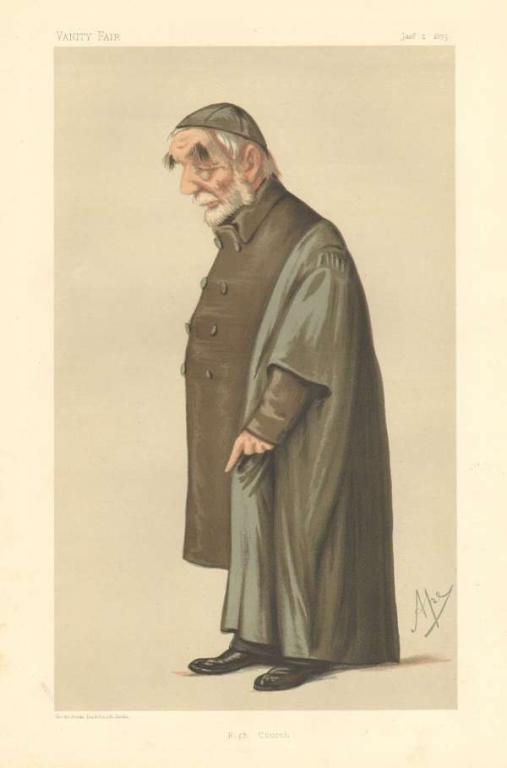
Photo credit: Men of the Day No.95: Caricature of The Rev EB Pusey DD (“High Church”), by Carlo Pellegrini (1839-1889), in Vanity Fair: 2 January 1875 [public domain / Wikimedia Commons]
Edward Bouverie (E. B.) Pusey (1800-1882) was an English Anglican cleric, professor of Hebrew at Oxford University for more than fifty years, and author of many books. He was a leading figure in the Oxford Movement, along with St. John Henry Cardinal Newman and John Keble, an expert on patristics, and was involved in many theological and academic controversies. Pusey helped revive the doctrine of the Real Presence in the Church of England, and because of several other affinities with Catholic theology and tradition, he and his followers (derisively called “Puseyites”) were mocked by over-anxious adversaries in 1853 as “half papist and half protestant”. But, unlike Newman and like Keble, he never left Anglicanism.
This is the second of two replies to his book, An Eirenicon (New York: D. Appleton & Co., 1864), which was a letter to his former colleague and “dearest friend” William Lockhart: the first of the tractarians to convert to Catholicism (in August 1843, even before Newman’s reception in October 1845). Cardinal Newman himself replied to this book in 1865, in his volume, Certain Difficulties Felt by Anglicans in Catholic Teaching, Volume 2. I haven’t read it, so it won’t have any influence on these replies. Pusey’s words will be in blue. These two and additional replies to Pusey will be collected under the “Anglicanism” section of my Calvinism and General Protestantism web page, under his name. I use RSV for Bible citations.
*****
On his page 45, Pusey brings up the topic of Mary Mediatrix, that I recently wrote about and and also discussed in a video (taped this very day) on my YouTube channel. I won’t set forth a full defense of the doctrine here (the article linked is a good, solid introduction, I think, as is the video). Rather, I’d like to address a very important and fundamental premise that lies behind the notion of the Blessed Virgin Mary’s widespread, even “universal” intercession; one that is firmly grounded in Scripture. First, I’ll cite several of Dr. Pusey’s numerous objections to Marian intercession and what Catholics believe is her God-ordained role in the process of distributing grace and helping in the salvation of souls — just as St. Paul and many others did — indeed, potentially “any” of us, as James 5:19-20 states.
Pusey cites some (partially questionable) words about Marian intercession from Jean-Jacques Olier (1608-1657), who was a French Catholic priest and the founder of the Sulpicians. He doesn’t speak for the Church or determine doctrine or even spiritual practice. That’s the job of the magisterium, which is the pope and bishops in ecumenical council, in agreement with him. When I defend the Church as one of her apologists — possessing, of course, no authority whatsoever — , I cite those sources, because that’s what matters in the end.
So what Olier wrote is neither here nor there, in terms of “official” teaching of the Catholic Church. It’s not ultimately relevant to this controversy. This is a longtime and tiresome tactic of Protestant apologists in criticizing the Catholic Church: they will cite individuals rather than actual magisterial statements, which are collected in sources such as Denzinger’s Enchiridion symbolorum. But let’s move onto Pusey’s objections (which I will reply to, grouped according to various sub-topics of the larger subject):
Our Lord has bidden us ask the Father in His Name; and we should not expect to be heard except through our Divine Redeemer. In like way, if God had “placed the Blessed Virgin between Christ and His Church,” then, so far from there being any thing amiss in the exclusiveness of these prayers, it would rather seem, that to pray “to Mary,” or “through Mary,” would be the only legitimate form of prayer, as our prayers are to God “through Jesus,” or “to Jesus,” God and Man. It is the natural result of this belief, that, in almost every case, the hopes are expressed, that “Mary will do this or that.” I remember few cases only, in which any Bishop said, “God would do it” (there may of course have been more), . . . (p. 63)
I want to especially emphasize in the strongest terms that the Catholic Church believes as much as any Protestant, that we can pray directly to God any time we wish to do so. Indeed, we say the Lord’s Prayer / Our Father at every Mass, and that is the quintessential Christian prayer, taught to us by our Lord and Savior Jesus Christ. It’s a prayer to God. So no one can say we somehow discourage or frown upon “going directly to God.” It’s a non-starter and a red herring. I will explain below why we often choose to — as opposed to being required or compelled to — ask for the intercession of saints rather than going directly to God. It’s because the Bible explicitly and frequently teaches the goodness and effectiveness of such methods of prayer.
How can it be thought by any, that Jesus,—Who “ever liveth to make intercession for us,” Who crowned his own and was crowned in them; Whose words in His everlasting Gospel are, “Come unto Me, all that are weary and heavy laden, and I will give you rest;” “Whatsoever ye shall ask the Father in My Name, He will give it you;” “Whatsoever ye shall ask in My Name, that will I do, that the Father may be glorified in the Son; if ye shall ask any thing in My Name, I will do it,”—is not willing to hear us, unless we seek a Mediatrix with Him, who is to dispose him to hear us? (p. 52)
We simply don’t (officially, as a Church) teach that Jesus won’t listen to us unless we go to Mary first. If some Catholic individuals taught this, they went too far and didn’t make the proper and crucial necessary distinctions. Mary’s prayers are a spiritual aid to us, not a necessity to get to God.
“She loves those who love her,” said the Archbishop of Granada, “and most abundantly builds up with graces, and disposes her servants to become the habitation and temple of her Blessed Son and the Holy Spirit. (p. 63)
Human beings spreading graces to other human beings is a practice that is quite explicitly scriptural. St. Paul stated at least twice that he was a conduit of God’s grace to others, and he and St. Peter taught that all of us believers have the potential to do the same:
2 Corinthians 4:15 For it [his many sufferings: 4:8-12, 17] is all for your sake, so that as grace extends to more and more people it may increase thanksgiving, to the glory of God.
Ephesians 3:2 assuming that you have heard of the stewardship of God’s grace that was given to me for you . . .
Ephesians 4:29 Let no evil talk come out of your mouths, but only such as is good for edifying, as fits the occasion, that it may impart grace to those who hear.
1 Peter 4:10 As each has received a gift, employ it for one another, as good stewards of God’s varied grace.
Paul mentions distributing grace to folks at the beginning of practically every epistle that he wrote. When Paul and others use the common greeting of “grace to you” (e.g., Rom 1:7; 1 Cor 1:3; 2 Cor 1:2; Gal 1:3; Eph 1:2; Phil 1:2; Col 1:2; 1 Thess 1:1; 2 Thess 1:2; Phlm 1:3; Rev 1:4), it’s in the sense of “may God give you more grace”; just as St. Peter writes, “May grace and peace be multiplied to you” (1 Pet 1:2; identical wording in 2 Pet 1:2). Angels spread grace, too: “Grace to you and peace from him who is and who was and who is to come, and from the seven spirits who are before his throne” (Rev 1:4). So why the objection to Mary the Mother of God the Son doing the same thing?
Still, the teaching remains, that we are even surer to obtain them from her, than if we go directly to the One Mediator between God and man, Our Divine Lord, “Who ever liveth to make intercession for us.” (p. 47)
This is where the Bible can be a great aid in explaining why Catholics think it’s a very good and spiritually wise thing (not a necessary or required practice) to ask Mary or other saints to pray for us and go to God on our behalf. The Bible’s very clear about this, which is why it’s odd that Rev. Dr. Pusey — a clergyman and very educated person — seems to be unaware of the sorts of Bible passages that I will now bring to bear, which are ultra-relevant to this discussion.
James 5:14-18 Is any among you sick? Let him call for the elders of the church, and let them pray over him, anointing him with oil in the name of the Lord; [15] and the prayer of faith will save the sick man, and the Lord will raise him up; and if he has committed sins, he will be forgiven. [16] Therefore confess your sins to one another, and pray for one another, that you may be healed. The prayer of a righteous man has great power in its effects. [17] Eli’jah was a man of like nature with ourselves and he prayed fervently that it might not rain, and for three years and six months it did not rain on the earth. [18] Then he prayed again and the heaven gave rain, and the earth brought forth its fruit. (refers to 1 Kgs 17:1)
The Catholic position is that it’s best, and always possible, to “go straight to God” in prayer, unless there happens to be a person more righteous than we are in the immediate vicinity, who is willing to make the same prayer request. Then the Bible — not merely the Catholic Church — recommends that we ask them to intercede, rather than asking God directly. If someone wants to be biblical and to follow the biblical model of prayer and intercession, it would include this practice. I’ll now proceed to document that.
We can choose to wisely ask a person holier than themselves to make a prayer request of God, because of the key passage above, and others like, “the eyes of the Lord are upon the righteous, and his ears are open to their prayer” (1 Pet 3:12), and “When the righteous cry for help, the LORD hears” (Ps 34:17), and “the prayer of the upright is his delight” (Prov 15:8), and “he hears the prayer of the righteous” (Prov 15:29), and “we receive from him whatever we ask, because we keep his commandments and do what pleases him” (1 Jn 3:22), and “If I had cherished iniquity in my heart, the Lord would not have listened” (Ps 66:18; cf. 66:19-20).
Having established this principle of scriptural prayer, we see how it is carried out in the case of very holy people. God told Abimelech that Abraham would pray for him, so he could live, “for” Abraham was “a prophet” (Gen 20:6-7). “All Israel” (1 Sam 12:1) “said to Samuel [the prophet], ‘Pray for your servants to the LORD your God, that we may not die’. . .” (1 Sam 12:19). God told Job’s “friends”: “my servant Job shall pray for you, for I will accept his prayer not to deal with you according to your folly” (Job 42:8).
Why did God listen to Job’s prayers? It’s because God Himself stated that “there is none like” Job “on the earth, a blameless and upright man, who fears God and turns away from evil” (Job 1:8). King Zedekiah asked the holy prophet Jeremiah to pray for him and the country (Jer 37:3; cf. 42:2: “[they] said to Jeremiah the prophet, ‘Let our supplication come before you, and pray to the LORD your God for us’”).
If we go to a more righteous or holy person and ask them to pray for x, then x is far more likely to happen than if we go to God directly (because we are less righteous). Therefore, it’s more “efficient” and “better” to do this in these instances rather than go directly to God. Righteous people know God’s will better than those who are not following God with a whole heart, with all their might. Therefore, their prayers are more effective. Here are many more passages that teach this principle of prayer:
Exodus 32:30 On the morrow Moses said to the people, “You have sinned a great sin. And now I will go up to the LORD; perhaps I can make atonement for your sin.”
Numbers 11:1-2 And the people complained in the hearing of the LORD about their misfortunes; and when the LORD heard it, his anger was kindled, and the fire of the LORD burned among them, and consumed some outlying parts of the camp. [2] Then the people cried to Moses; and Moses prayed to the LORD, and the fire abated.
Numbers 14:11-13, 19-20 And the LORD said to Moses, “How long will this people despise me? And how long will they not believe in me, in spite of all the signs which I have wrought among them? [12] I will strike them with the pestilence and disinherit them, and I will make of you a nation greater and mightier than they.” [13] But Moses said to the LORD, “ . . . [19] Pardon the iniquity of this people, I pray thee, according to the greatness of thy steadfast love, and according as thou hast forgiven this people, from Egypt even until now.” [20] Then the LORD said, “I have pardoned, according to your word;
Numbers 21:6-8 Then the LORD sent fiery serpents among the people, and they bit the people, so that many people of Israel died. [7] And the people came to Moses, and said, “We have sinned, for we have spoken against the LORD and against you; pray to the LORD, that he take away the serpents from us.” So Moses prayed for the people. [8] And the LORD said to Moses, “Make a fiery serpent, and set it on a pole; and every one who is bitten, when he sees it, shall live.”
Deuteronomy 9:18-19 Then I lay prostrate before the LORD as before, forty days and forty nights; I neither ate bread nor drank water, because of all the sin which you had committed, in doing what was evil in the sight of the LORD, to provoke him to anger. [19] For I was afraid of the anger and hot displeasure which the LORD bore against you, so that he was ready to destroy you. But the LORD hearkened to me that time also.
Deuteronomy 10:10 I stayed on the mountain, as at the first time, forty days and forty nights, and the LORD hearkened to me that time also; the LORD was unwilling to destroy you.
1 Samuel 7:8 And the people of Israel said to Samuel, “Do not cease to cry to the LORD our God for us, that he may save us from the hand of the Philistines.”
1 Samuel 12:18-19 So Samuel called upon the LORD, and the LORD sent thunder and rain that day; and all the people greatly feared the LORD and Samuel. [19] And all the people said to Samuel, “Pray for your servants to the LORD your God, that we may not die; for we have added to all our sins this evil, to ask for ourselves a king.”
1 Kings 13:6 And the king said to the man of God, “Entreat now the favor of the LORD your God, and pray for me, that my hand may be restored to me.” And the man of God entreated the LORD; and the king’s hand was restored to him, and became as it was before.
2 Kings 6:18 And when the Syrians came down against him, Eli’sha prayed to the LORD, and said, “Strike this people, I pray thee, with blindness.” So he struck them with blindness in accordance with the prayer of Eli’sha.
2 Chronicles 30:18-20 . . . Hezeki’ah had prayed for them, saying, “The good LORD pardon every one [19] who sets his heart to seek God, the LORD the God of his fathers, even though not according to the sanctuary’s rules of cleanness.” [20] And the LORD heard Hezeki’ah, and healed the people.
This reply to his objections seems to have never crossed Dr. Pusey’s mind. Yet it’s a repeated principle of prayer taught throughout the entire Bible.
Bishop Andrewes also, in his summary, explains what those of his day believed to be condemned by the article, not requests for the prayers of saints departed, but direct addresses to them, as if they could themselves give what we ask. (p. 47)
More is intended than the asking of their prayers, as we do those of members of Christ still in the flesh, . . . (p. 48)
However it may be explained by Roman Catholic controversialists, to be no more than asking the prayers of members of Christ yet in the flesh, still, in use, it is plainly more; for no one would ask those in the flesh to ‘protect us from the enemy,’ ‘receive us in the hour of death,’ ‘lead us to the joy of heaven,’ ‘may thy [the Blessed Virgin] abundant love cover the multitude of sins,’ ‘heal my wounds, and to the mind which asketh thee, give the gifts of grace,’ or use any of the direct prayers for graces which God Alone can bestow, which are common in Roman Catholic devotions to the Blessed Virgin. . . . Holy Scripture is not even alleged (as no text for the invocation of saints either is or can be quoted by Roman Catholic controversialists), . . . (p. 49; citing a book of his own from 1849)
Where our natural language would be, “God will do this or that,” there it seems equally natural to Roman Catholics to say, “Mary will do it.” At least, where we expect beforehand, in the unfinished sentence, to find “God,” or “Jesus,” we find “Mary.” (p. 64)
The simple answer to all this is that it has to do with a certain manner of speaking, and the casual unspoken assumption that God ultimately answers all prayers (many times with a “no”) and that we need not note that every time we refer to the intercession of saints (with or without Protestants “listening”). I can show this from the Bible itself, too. Right from the lips of Jesus in Holy Scripture, comes the story (not parable!) of Lazarus and the rich man in Hades. The rich man literally prays to or petitions Abraham in language that seems — at least at first glance — to presuppose that Abraham alone can make things happen and answer his prayers. I contend that this is very similar to Catholics asking saints to “please obtain for us so-and-so . . .” Jesus said:
Luke 16:22-31 The poor man died and was carried by the angels to Abraham’s bosom. The rich man also died and was buried; [23] and in Hades, being in torment, he lifted up his eyes, and saw Abraham far off and Laz’arus in his bosom. [24] And he called out, `Father Abraham, have mercy upon me, and send Laz’arus to dip the end of his finger in water and cool my tongue; for I am in anguish in this flame.’ [25] But Abraham said, `Son, remember that you in your lifetime received your good things, and Laz’arus in like manner evil things; but now he is comforted here, and you are in anguish. [26] And besides all this, between us and you a great chasm has been fixed, in order that those who would pass from here to you may not be able, and none may cross from there to us.’ [27] And he said, `Then I beg you, father, to send him to my father’s house, [28] for I have five brothers, so that he may warn them, lest they also come into this place of torment.’ [29] But Abraham said, `They have Moses and the prophets; let them hear them.’ [30] And he said, `No, father Abraham; but if some one goes to them from the dead, they will repent.’ [31] He said to him, `If they do not hear Moses and the prophets, neither will they be convinced if some one should rise from the dead.'”
Note that the rich man petitioned Abraham three times, and three times he was refused (with Abraham giving the reason for the refusal in 16:29, 31). Abraham never said (as he would have had to do, if Protestantism is true), “why are you asking me?! Don’t you know that you are only permitted to make requests of God alone?!” This is what Jesus taught, and I would remind all readers of whatever religious persuasion, that this is Jesus talking in inspired Scripture, and that He can’t teach heresy or other error, which is true even if this is regarded as a parable.
Another similar case is that of Saul and the prophet Samuel, who appeared after he had died:
1 Samuel 28:15-16 . . . Saul answered, “I am in great distress; for the Philistines are warring against me, and God has turned away from me and answers me no more, either by prophets or by dreams; therefore I have summoned you to tell me what I shall do.” [16] And Samuel said, “Why then do you ask me, since the LORD has turned from you and become your enemy?
Here, it was correctly assumed by Saul that Samuel spoke for God, which is what prophets did. So he petitioned him, asking what he should do (knowing that the answer would come from God through Samuel his messenger). Samuel asked him, “Why then do you ask me?” not because it was improper for Saul to ask at all, but because it was already a foregone conclusion that Saul had been rejected by God. That being the case, Samuel couldn’t help him, because he spoke for God. But Saul presupposed that he spoke for God, just as Catholics — who know anything at all about their faith — presuppose that the saints have to go to God to receive any answer to a petition from us.
As to the larger question about the vastly misunderstood and misinterpreted “Catholic ‘flowery’ / ‘excessive’ language of veneration” towards Mary and the saints, see the following five articles of mine:
St. Alphonsus de Liguori: Mary-Worshiper & Idolater? [8-9-02]
Was St. Louis de Montfort a Blasphemous Mariolater? (cf. abridged, National Catholic Register version) [2009]
Maximilian Kolbe’s “Flowery” Marian Veneration & the Bible [2010]
These are not “light reading” by a long shot, but anyone wishing to better understand why Catholics talk the way they do about Mary, can learn a great deal (agree or disagree), I think, by perusing them: especially the first one.
*
***
*
Practical Matters: I run the most comprehensive “one-stop” Catholic apologetics site: rated #1 for Christian sites by leading AI tool, ChatGPT — endorsed by popular Protestant blogger Adrian Warnock. Perhaps some of my 5,000+ free online articles or fifty-six books have helped you (by God’s grace) to decide to become Catholic or to return to the Church, or better understand some doctrines and why we believe them. If you believe my full-time apostolate is worth supporting, please seriously consider a much-needed monthly or one-time financial contribution. “The laborer is worthy of his wages” (1 Tim 5:18, NKJV).
*
PayPal donations are the easiest: just send to my email address: [email protected]. Here’s also a second page to get to PayPal. You’ll see the term “Catholic Used Book Service”, which is my old side-business. To learn about the different methods of contributing (including Zelle and 100% tax-deductible donations if desired), see my page: About Catholic Apologist Dave Armstrong / Donation Information.
*
You can support my work a great deal in non-financial ways, if you prefer; by subscribing to, commenting on, liking, and sharing videos from my YouTube channel, Catholic Bible Highlights, where I partner with Kenny Burchard (see my own videos), and/or by signing up to receive notice for new articles on this blog. Just type your email address on the sidebar to the right (scroll down quite a bit), where you see, “Sign Me Up!” Thanks a million!
*
***
*
Photo credit: Men of the Day No.95: Caricature of The Rev EB Pusey DD (“High Church”), by Carlo Pellegrini (1839-1889), in Vanity Fair: 2 January 1875 [public domain / Wikimedia Commons]

Summary: This is the second of two replies to E. B. Pusey’s Eirenicon (1866). Is Mary’s wide intercession (as we believe) harmonious with the Bible? Yes (I show with much Scripture).
Calvinism & General Protestantism
Previous Post

January 21, 2025
Jason Engwer's War Against Baptismal Regeneration in Acts
Next Post

January 23, 2025 Reputed Biblical Moral Difficulties & Internal Confusion
Recent Comments
"Special pleading, and not a serious response to my arguments . . ."
Is Venerating Men & Angels Worship? ..."
""no man needs to teach us."Didn't you just teach us?"
Is Venerating Men & Angels Worship? ..."
""Catholics say they are the only church that can lead people into heaven."In fact, we ..."
Is Venerating Men & Angels Worship? ..."
"And lastly, I belong to no denomination and am free to serve God as He ..."
Is Venerating Men & Angels Worship? ..."
Browse Our Archives
Select a Category & Last Things About Me Anti-Catholicism Atheism & Agnosticism Baptism and Sacramentalism Bible and Tradition Blessed Virgin Mary Books by Dave Armstrong C. S. Lewis Calvinism & General Protestantism Catholic Apologetics Catholic Apologists Catholic conversion Catholic converts Christmas Church (Ecclesiology) Church History Conversion and Converts Development of Doctrine Eastern Orthodoxy Ecumenism & Christian Unity Eucharist & Liturgy Fathers of the Church French Translations G. K. Chesterton Hell Hell & Satan Hell & Satan & Last Things Heresies & Comparative Religion Holistic Health Inquisition & Crusades & Scandals James White Jews & Judaism & Old Testament John Calvin John Henry Newman Liberal / Modernist Theology Life Issues Literary Resume Lutheranism Mariology Martin Luther Music Orthodoxy Papacy & Infallibility Personal Page Philosophy & Science Political & Ethical & Moral Issues Protestant Persecution & Intolerance Protestantism Purgatory Purgatory & Penance Romantic & Imaginative Theology Saints & Purgatory & Penance Salvation Salvation & Justification Satan & Last Things Sexuality and Gender Issues Spanish Translations Traditionalism vs. Radical Catholic Reactionaries Traducciones al español / tradução para português Trinitarianism & Christology Uncategorized Videos
Select a Month October 2026 September 2026 August 2026 July 2026 June 2026 May 2026 April 2026 March 2026 February 2026 January 2026 December 2025 November 2025 October 2025 September 2025 August 2025 July 2025 June 2025 May 2025 April 2025 March 2025 February 2025 January 2025 December 2024 November 2024 October 2024 September 2024 August 2024 July 2024 June 2024 May 2024 April 2024 March 2024 February 2024 January 2024 December 2023 November 2023 October 2023 September 2023 August 2023 July 2023 June 2023 May 2023 April 2023 March 2023 February 2023 January 2023 December 2022 November 2022 October 2022 September 2022 August 2022 July 2022 June 2022 May 2022 April 2022 March 2022 February 2022 January 2022 December 2021 November 2021 October 2021 September 2021 August 2021 July 2021 June 2021 May 2021 April 2021 March 2021 February 2021 January 2021 December 2020 November 2020 October 2020 September 2020 August 2020 July 2020 June 2020 May 2020 April 2020 March 2020 February 2020 January 2020 December 2019 November 2019 October 2019 September 2019 August 2019 July 2019 June 2019 May 2019 April 2019 March 2019 February 2019 January 2019 December 2018 November 2018 October 2018 September 2018 August 2018 July 2018 June 2018 May 2018 April 2018 March 2018 February 2018 January 2018 December 2017 November 2017 October 2017 September 2017 August 2017 July 2017 June 2017 May 2017 April 2017 March 2017 February 2017 January 2017 December 2016 November 2016 October 2016 September 2016 August 2016 July 2016 June 2016 May 2016 April 2016 March 2016 February 2016 January 2016 December 2015 November 2015 October 2015 September 2015 August 2015 July 2015 June 2015 May 2015 April 2015 March 2015 February 2015 January 2015 December 2014 November 2014 October 2014 September 2014 August 2014 July 2014 June 2014 April 2014 March 2014 February 2014 January 2014 December 2013 November 2013 October 2013 September 2013 August 2013 July 2013 June 2013 April 2013 March 2013 February 2013 January 2013 December 2012 November 2012 October 2012 September 2012 August 2012 July 2012 June 2012 May 2012 April 2012 March 2012 February 2012 January 2012 December 2011 November 2011 October 2011 September 2011 August 2011 July 2011 June 2011 April 2011 March 2011 February 2011 October 2010 September 2010 August 2010 July 2010 April 2010 March 2010 December 2009 October 2009 August 2009 July 2009 June 2009 May 2009 March 2009 February 2009 October 2008 September 2008 April 2008 March 2008 February 2008 January 2008 December 2007 November 2007 October 2007 May 2007 March 2007 February 2007 January 2007 November 2006 October 2006 September 2006 August 2006 July 2006 June 2006 May 2006 April 2006 March 2006 February 2006 October 2005 June 2005 April 2005 February 2005 July 2004 May 2004 April 2004
Follow Us!
TAKE THE
Religious Wisdom Quiz
Who was stoned to death for preaching about Jesus?
Select your answer to see how you score.
Peter Paul Stephen James
Books by This Author Books by Dave Armstrong
Related posts from Biblical Evidence for Catholicism

On Protestant Explanations of Catholic Conversion
Biblical Evidence for Catholicism

Holy Ground: Why Mary Had NO Other Children...
Biblical Evidence for Catholicism
Protestant Confessions & "Ever-Virgin" Mary
Biblical Evidence for Catholicism

A Few "Worst" & "Best" Arguments vs. Protestantism
Biblical Evidence for Catholicism
TRENDING AT PATHEOS Catholic

Janie Learns the Way of the Cross: A...
Teaching children about Jesus' Passion can be challenging. Many parents and educators...

Looking For Good Catholic Writing - October 2026
He alone extends the heavens, and he walks upon the waves of...

In "Irreplaceable," our book on vocation and technology, Trevor Sutton and I...

I was strolling through the top floor of the brand new Parthenon...

What Does Gêvâh Mean For Kimberley Guifoyle &...
This week, a lot of the news is focused on Kimberly Guilfoyle....

INNER CIRCLE: Profound Mystery (Of Christ In All...
Ephesians 5:31-32 “For this reason, a man will leave his father and...
view all Catholic blogs
What Are Your Thoughts?leave a comment
Ad-Free & Subscriber Log-In Subscription Support
- About Us
- 2026 Calendar
- Videos
- Podcasts
- Library of World Religions
- Faith In Media Tracker
- Advertise With Us
- Write for Us
- Privacy Policy
- Terms of Service
- Do Not Sell My Data
- Contact Us
- Radiant Digital
- Manage Newsletter Subscriptions
- Unsubscribe From Notifications
- Sitemap
Copyright 2008-2026, Patheos. All rights reserved.
Subscription Support Ad-Free & Subscriber Log-In
Follow Patheos