
BuddhistCatholicContemplativeEvangelicalGeneral ChristianHinduJewishLatter-day SaintMuslimNew VisionsProgressive Christian
Beliefs
- Buddhist
- Catholic
- Contemplative
- Evangelical
- General Christian
- Hindu
- Jewish
- Latter-day Saint
- More Voices
- Muslim
- New Visions
- Pagan
- Progressive Christian
Topics
- Religion News
- Food and Religion
- Sports and Religion
- Religious Art
- Religious Music and Entertainment
- Religious Events
- History and Religion
- Style and Religion
- Politics and Religion
- Women in Religion
- Recreation Outdoors and Religion
- Business Finance and Religion
- Careers Workplace and Religion
- Education and Religion
- Family Parenting and Religion
- Health Fitness and Religion
- Home and Religion
- Relationships and Religion
- Technology and Religion
- Travel and Religion
Columnists
- Buddhist Columnists
- Business Finance and Religion Columnists
- Careers Workplace and Religion Columnists
- Catholic Columnists
- Contemplative Columnists
- Education and Religion Columnists
- Evangelists Columnists
- Family Parenting and Religion Columnists
- General Christian Columnists
- Health Fitness and Religion Columnists
- Hindu Columnists
- History and Religion Columnists
- Home and Religion Columnists
- Jewish Columnists
- More Voices Columnists
- Latter Day Columnists
- Muslim Columnists
- New Visions Columnists
- Nonreligious Columnists
- Pagan Columnists
- Politics and Religion Columnists
- Progressive Columnists
- Recreation Outdoors and Religion Columnists
- Relationships and Religion Columnists
- Religion News Columnists
- Religious Art Columnists
- Religious Events Columnists
- Religious Music and Entertainment Columnists
- Sports and Religion Columnists
- Style and Religion Columnists
- Technology and Religion Columnists
- Travel and Religion Columnists
- Women in Religion Columnists
Resource Library
- 2026 Calendar
- Library of World Religions
- The 100 Most Holy Places on Earth
- Patheos Answers
- Podcasts
- Videos
- Faith Leaders Database
- Anglican Episcopalian
- Bahai
- Baptist
- Buddhism
- Christianity
- Confucianism
- Eastern Orthodoxy
- Hinduism
- Holiness and Pentecostal
- ISKCON
- Islam
- Judaism
- Lutheran
- Methodist
- The Church of Jesus Christ of Latter-day Saints
- New Age
- Paganism
- Presbytarian and Reformed
- Protestantism
- Religion Behind the Scenes
- Roman Catholic
- Scientology
- Shia Islam
- Sikhism
- Sufism
- Sunni Islam
- Taoism
- Zen
- See all religions
Research Tools
 Ad-Free & Subscriber Log-In Subscription Support
Ad-Free & Subscriber Log-In Subscription Support
Follow Patheos 

- Trending:
- Forgiveness
- |
- Marriage
- |
- Consciousness
- |
- Death Penalty
- |
- Election
- |
- Halloween

-
About
-
Catholic Apologetics
-
Church History
-
Great Apologists
-
Christian Worldview
-
Protestantism & Misc.
- Home
- Catholic
- History and Religion
- Apostolic Tradition: 28 Passages in Paul’s Epistles
Apostolic Tradition: 28 Passages in Paul’s Epistles
Last updated on: January 29, 2025 at 8:22 pm by Dave Armstrong
Apostolic Tradition: 28 Passages in Paul’s Epistles 2025-01-29T20:22:45-04:00 Dave Armstrong
Patheos Explore the world's faith through different perspectives on religion and spirituality! Patheos has the views of the prevalent religions and spiritualities of the world.
Including Incisive Commentary from the Anglican Tractarian John Keble (1792-1866)
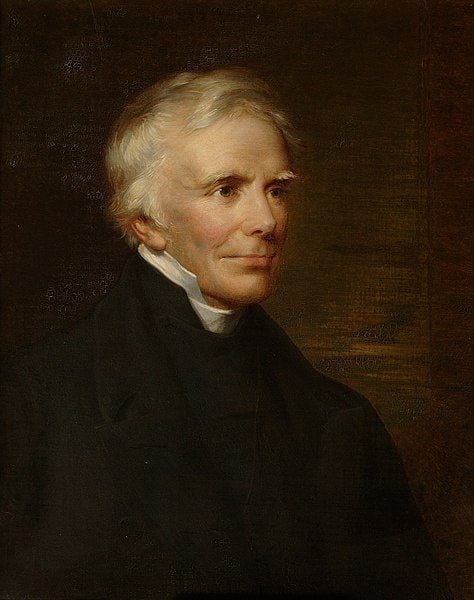
Photo credit: Portrait of John Keble (1792-1866) [public domain / Wikimedia Commons]
Excerpts are from Primitive Tradition Recognised in Holy Scripture (London: Rivington: 1839), by John Keble (page numbers in green). I use RSV for biblical citations.
*****
1 Corinthians 11:1-2 Be imitators of me, as I am of Christ. [2] I commend you because you remember me in everything and maintain the traditions even as I have delivered them to you. (cf. Acts 15:27)
2 Corinthians 10:11 Let such people understand that what we say by letter when absent, we do when present.
Colossians 2:6-8 As therefore you received Christ Jesus the Lord, so live in him, [7] rooted and built up in him and established in the faith, just as you were taught, abounding in thanksgiving. [8] See to it that no one makes a prey of you by philosophy and empty deceit, according to human tradition, according to the elemental spirits of the universe, and not according to Christ.
2 Thessalonians 2:15 So then, brethren, stand firm and hold to the traditions which you were taught by us, either by word of mouth or by letter.
2 Thessalonians 3:6-7 Now we command you, brethren, in the name of our Lord Jesus Christ, that you keep away from any brother who is living in idleness and not in accord with the tradition that you received from us. [7] For you yourselves know how you ought to imitate us . . . (cf. Acts 2:42: “they devoted themselves to the apostles’ teaching”)
2 Timothy 1:12-14 . . . I am not ashamed, for I know whom I have believed, and I am sure that he is able to guard until that Day what has been entrusted to me. [13] Follow the pattern of the sound words which you have heard from me, in the faith and love which are in Christ Jesus; [14] guard the truth that has been entrusted to you by the Holy Spirit who dwells within us.
2 Timothy 2:2 and what you have heard from me before many witnesses entrust to faithful men who will be able to teach others also.
A diligent eye may detect, in St. Paul’s Epistles, many traces of the like use of language current sayings, or senses of words, or formula, which the Apostle only just alludes to, as well known to all his readers. For instance, the expression, “This is a faithful saying,” which occurs repeatedly in these latter Epistles, indicates, in all probability, so many Christian proverbs, familiar in the mouths of that generation of believers. (p. 14)
There was a certain set of ” sayings” current among the Christians of that time, to which any allusion or appeal, however brief, would be presently understood. (p. 15)
1 Timothy 1:15 The saying is sure and worthy of full acceptance, that Christ Jesus came into the world to save sinners. And I am the foremost of sinners;
1 Timothy 3:1 The saying is sure: If any one aspires to the office of bishop, he desires a noble task.
1 Timothy 4:8-9, 11 . . . godliness is of value in every way, as it holds promise for the present life and also for the life to come. [9] The saying is sure and worthy of full acceptance. . . . [11] Command and teach these things.
2 Timothy 2:11-13 The saying is sure: If we have died with him, we shall also live with him; [12] if we endure, we shall also reign with him; if we deny him, he also will deny us; [13] if we are faithless, he remains faithful — for he cannot deny himself.
Titus 3:5-8 he saved us, not because of deeds done by us in righteousness, but in virtue of his own mercy, by the washing of regeneration and renewal in the Holy Spirit, [6] which he poured out upon us richly through Jesus Christ our Savior, [7] so that we might be justified by his grace and become heirs in hope of eternal life. [8] The saying is sure.
Nor will it be hard to find examples of single words, which had evidently acquired by that time a Christian sense; so that, even when used absolutely, they could only be taken by Christians in a particular relation . . . [which] conveyed to Christian ears in those days a peculiar and definite, I had almost said, a technical, meaning. (p. 15)
Romans 6:17 . . . the standard of teaching to which you were committed,
Ephesians 3:4-5 . . . the mystery of Christ, [5] which was not made known to the sons of men in other generations as it has now been revealed to his holy apostles and prophets by the Spirit;
1 Thessalonians 5:19-21 Do not quench the Spirit, [20] do not despise prophesying, [21] but test everything; hold fast what is good,
1 Timothy 1:3-4 . . . charge certain persons not to teach any different doctrine, [4] nor to occupy themselves with myths and endless genealogies which promote speculations rather than the divine training that is in faith;
1 Timothy 1:18 This charge I commit to you, Timothy, my son, in accordance with the prophetic utterances which pointed to you, that inspired by them you may wage the good warfare,
1 Timothy 6:12, 14 Fight the good fight of the faith; take hold of the eternal life to which you were called when you made the good confession in the presence of many witnesses. . . . [14] I charge you to keep the commandment unstained and free from reproach until the appearing of our Lord Jesus Christ;
1 Timothy 6:20 O Timothy, guard what has been entrusted to you. . . .
Titus 1:3 and at the proper time manifested in his word through the preaching with which I have been entrusted by command of God our Savior;
Upon the whole we may assume with some confidence that the good tiling loft in Timothy’s charge, thus absolutely to be kept at all events, was the treasure of apostolical doctrines and church rules : the rules and doctrines which made up the charter of Christ’s kingdom.
The next question to be settled is, whether the precept in the text apply literally to us: i. e. in other words, whether we have yet in our possession the identical deposit which St. Paul left with Timothy. For, if we have, mere natural piety would teach us to reverence and guard it as he was required to do. Some will reply to this question at once, We have the Holy Scriptures, and we know for certain that they contain all that is important in Timothy’s trust. These would resolve the custody of the good deposit into the simple duty of preserving the Scriptures incorrupt, and maintaining them in their due estimation among Christians. (pp. 19-20)
Must it not be owned, on fair consideration, that Timothy’s deposit did comprise matter, independent of, and distinct from, the truths which are directly Scriptural? that it contained, besides the substance of Christian doctrine, a certain form, arrangement, selection, methodizing the whole, and distinguishing fundamentals; and also a certain system of church practice, both in government, discipline, and worship; of which, whatever portion we can prove to be still remaining, ought to be religiously guarded by us, even for the same reason that we reverence and retain that which is more properly scriptural, both being portions of the same divine treasure [?]
To these conclusions we are led by the consideration, first, that the truths and rules committed to Timothy’s charge were at the time almost or wholly unwritten. This is clear from the very date of the Epistles which mention that charge: the latest of which must have been composed many years before St. John’s gospel, and in the first of them the deposit in question is spoken of, not as an incomplete thing on its progress towards perfection, but as something so wholly sufficient, so unexceptionably accurate, as to require nothing but fidelity in its transmitters. [1 Tim 1:3; 6:14, 20] (p. 21)
The holy writings themselves intimate, that the persons to whom they were addressed were in possession of a body of truth and duty, totally distinct from themselves and independent of them. Timothy, for instance, a few verses after the text, is enjoined to take measures for the transmission, not of holy Scripture, but of the things which he had heard of St. Paul among many witnesses [2 Tim 2:2]. The Thessalonians had been exhorted to hold the traditions which they had received, whether by word or apostolical letter [2 Thess 2:15]. They could not be exhorted to hold the Christian Scriptures, since at that time in all probability no Christian Scriptures yet existed, except perhaps St. Matthew’s gospel. Much later we find St. Peter declaring to the whole body of Oriental Christians, that in neither of his Epistles did he profess to reveal to them any new truth or duty, but to “stir up their minds by way of remembrance of the commandment of the Apostles of the Lord and Saviour” [2 Pet 3:1]. St. John refers believers, for a standard of doctrine, to the word which they had heard from the beginning [1 Jn 2:24] and intimates that it was sufficient for their Christian communion if that word abode in them. If the Word, the Commandment, the Tradition, which the latest of these holy writers severally commend in these and similar passages, meant only or chiefly the Scriptures before written, would there not appear a more significant mention of those Scriptures; something nearer the tone of our own divines, when they are delivering precepts on the Rule of Faith? As it is, the phraseology of the Epistles exactly concurs with what we should be led to expect: that the Church would be already in possession of the substance of saving Truth, in a sufficiently systematic form, by the sole teaching of the Apostles. As long as that teaching itself, or the accurate recollection of it, remained in the world, it must have constituted a standard or measure of Christian knowledge, . . . (pp. 21-23)
Another way tradition is seen in Paul’s letters is in his expression, paradidomi (“deliver”):
1 Corinthians 11:23-25 For I received from the Lord what I also delivered to you, that the Lord Jesus on the night when he was betrayed took bread, [24] and when he had given thanks, he broke it, and said, “This is my body which is for you. Do this in remembrance of me.” [25] In the same way also the cup, after supper, saying, “This cup is the new covenant in my blood. Do this, as often as you drink it, in remembrance of me.” (cf. 11:2 above, at the top)
1 Corinthians 15:3-8 For I delivered to you as of first importance what I also received, that Christ died for our sins in accordance with the scriptures, [4] that he was buried, that he was raised on the third day in accordance with the scriptures, [5] and that he appeared to Cephas, then to the twelve. [6] Then he appeared to more than five hundred brethren at one time, most of whom are still alive, though some have fallen asleep. [7] Then he appeared to James, then to all the apostles. [8] Last of all, as to one untimely born, he appeared also to me. (cf. 2 Pet 2:21; Jude 3)
Related to that is the use of paralambano (“received”):
1 Corinthians 15:1 Now I would remind you, brethren, in what terms I preached to you the gospel, which you received, . . . (cf. 11:23; 15:3 above; Acts 8:14; 17:11)
2 Corinthians 11:4, 6-7 For if some one comes and preaches another Jesus than the one we preached, or if you receive a different spirit from the one you received, or if you accept a different gospel from the one you accepted, you submit to it readily enough. . . . [6] Even if I am unskilled in speaking, I am not in knowledge; in every way we have made this plain to you in all things. [7] Did I commit a sin in abasing myself so that you might be exalted, because I preached God’s gospel without cost to you?
Galatians 1:9, 11-12 As we have said before, so now I say again, If any one is preaching to you a gospel contrary to that which you received, let him be accursed. . . . [11] For I would have you know, brethren, that the gospel which was preached by me is not man’s gospel. [12] For I did not receive it from man, nor was I taught it, but it came through a revelation of Jesus Christ.
Philippians 4:9 What you have learned and received and heard and seen in me, do; and the God of peace will be with you.
1 Thessalonians 2:9, 13-14 . . . we preached to you the gospel of God. . . . [13] And we also thank God constantly for this, that when you received the word of God which you heard from us, you accepted it not as the word of men but as what it really is, the word of God, which is at work in you believers. [14] For you, brethren, became imitators of the churches of God in Christ Jesus which are in Judea; . . . (cf. 2 Thess 3:6 above; 1:6 [different Greek word translated “received”])
Surely, in whatever respect any tradition is really apostolical, to think lightly of it must be the same kind of sin, as if those unlearned and remote Christians, of whom Irenaeus speaks, had thought lightly of the New Testament when it came to be propounded to them. We see at once in what manner sincere reverence for God’s truth would lead them to treat the portions of His written word, as they were brought successively under their notice. If we will be impartial, we cannot hide it from ourselves, that His unwritten word, if it can be any how authenticated, must necessarily demand the same reverence from us ; and for exactly the same reason: because it is His word.
But, further: the fact is clearly demonstrable from Scripture, that as long as the canon of the New Testament was incomplete, the unwritten system served as a test even for the Apostles’ own writings. Nothing was to be read, as canonical, except it agreed with the faith delivered once for all to the first generation of the saints. The directions of St. Paul on this subject are perfectly clear, and without reserve. “Though we or an angel from heaven preach any other Gospel unto you than that which we have preached unto you, let him be anathema.” (p. 26)
Galatians 1:6-8 I am astonished that you are so quickly deserting him who called you in the grace of Christ and turning to a different gospel — [7] not that there is another gospel, but there are some who trouble you and want to pervert the gospel of Christ. [8] But even if we, or an angel from heaven, should preach to you a gospel contrary to that which we preached to you, let him be accursed.
I do not see how we can be wrong in inferring, from these and similar passages, that the faith once for all delivered to the saints, in other words, Apostolical Tradition, was divinely appointed in the Church as the touchstone of canonical Scripture itself. No writing, however plausible the appearance of its having come from the Apostles, was to be accepted as theirs, if it taught any other doctrine than what they at first delivered: rather both it and its writers were to be anathema.
This use of apostolical tradition may well correct the presumptuous irreverence of disparaging the Fathers under a plea of magnifying Scripture. Here is a tradition so highly honoured by the Almighty Founder and Guide of the Church, as to be made the standard and rule of His own divine Scriptures. The very writings of the Apostles were to be first tried by it, before they could be incorporated into the canon. Thus the Scriptures themselves, as it were, do homage to the tradition of the Apostles; the despisers, therefore, of that tradition take part, inadvertently or profanely, with the despisers of the Scripture itself. (pp. 27-28)
The doctrine of the sufficiency of Scripture is nowhere expressly affirmed in Scripture itself. (p. 29)
*
***
*
Practical Matters: I run the most comprehensive “one-stop” Catholic apologetics site: rated #1 for Christian sites by leading AI tool, ChatGPT — endorsed by popular Protestant blogger Adrian Warnock. Perhaps some of my 5,000+ free online articles or fifty-six books have helped you (by God’s grace) to decide to become Catholic or to return to the Church, or better understand some doctrines and why we believe them. If you believe my full-time apostolate is worth supporting, please seriously consider a much-needed monthly or one-time financial contribution. “The laborer is worthy of his wages” (1 Tim 5:18, NKJV).
*
PayPal donations are the easiest: just send to my email address: [email protected]. Here’s also a second page to get to PayPal. You’ll see the term “Catholic Used Book Service”, which is my old side-business. To learn about the different methods of contributing (including Zelle and 100% tax-deductible donations if desired), see my page: About Catholic Apologist Dave Armstrong / Donation Information.
*
You can support my work a great deal in non-financial ways, if you prefer; by subscribing to, commenting on, liking, and sharing videos from my YouTube channel, Catholic Bible Highlights, where I partner with Kenny Burchard (see my own videos), and/or by signing up to receive notice for new articles on this blog. Just type your email address on the sidebar to the right (scroll down quite a bit), where you see, “Sign Me Up!” Thanks a million!
*
***
*
Photo credit: Portrait of John Keble (1792-1866) [public domain / Wikimedia Commons]

Summary: I examine the many ways in which St. Paul refers to apostolic and oral tradition, in 28 passages from his epistles, with commentary from Anglican John Keble (1792-1866).
Calvinism & General Protestantism
Previous Post

January 29, 2025
Reply to Anglican E. B. Pusey #4
Next Post

January 30, 2025 Works & Sanctification Partly Cause Salvation: 34 Passages
Recent Comments
"Special pleading, and not a serious response to my arguments . . ."
Is Venerating Men & Angels Worship? ..."
""no man needs to teach us."Didn't you just teach us?"
Is Venerating Men & Angels Worship? ..."
""Catholics say they are the only church that can lead people into heaven."In fact, we ..."
Is Venerating Men & Angels Worship? ..."
"And lastly, I belong to no denomination and am free to serve God as He ..."
Is Venerating Men & Angels Worship? ..."
Browse Our Archives
Select a Category & Last Things About Me Anti-Catholicism Atheism & Agnosticism Baptism and Sacramentalism Bible and Tradition Blessed Virgin Mary Books by Dave Armstrong C. S. Lewis Calvinism & General Protestantism Catholic Apologetics Catholic Apologists Catholic conversion Catholic converts Christmas Church (Ecclesiology) Church History Conversion and Converts Development of Doctrine Eastern Orthodoxy Ecumenism & Christian Unity Eucharist & Liturgy Fathers of the Church French Translations G. K. Chesterton Hell Hell & Satan Hell & Satan & Last Things Heresies & Comparative Religion Holistic Health Inquisition & Crusades & Scandals James White Jews & Judaism & Old Testament John Calvin John Henry Newman Liberal / Modernist Theology Life Issues Literary Resume Lutheranism Mariology Martin Luther Music Orthodoxy Papacy & Infallibility Personal Page Philosophy & Science Political & Ethical & Moral Issues Protestant Persecution & Intolerance Protestantism Purgatory Purgatory & Penance Romantic & Imaginative Theology Saints & Purgatory & Penance Salvation Salvation & Justification Satan & Last Things Sexuality and Gender Issues Spanish Translations Traditionalism vs. Radical Catholic Reactionaries Traducciones al español / tradução para português Trinitarianism & Christology Uncategorized Videos
Select a Month October 2026 September 2026 August 2026 July 2026 June 2026 May 2026 April 2026 March 2026 February 2026 January 2026 December 2025 November 2025 October 2025 September 2025 August 2025 July 2025 June 2025 May 2025 April 2025 March 2025 February 2025 January 2025 December 2024 November 2024 October 2024 September 2024 August 2024 July 2024 June 2024 May 2024 April 2024 March 2024 February 2024 January 2024 December 2023 November 2023 October 2023 September 2023 August 2023 July 2023 June 2023 May 2023 April 2023 March 2023 February 2023 January 2023 December 2022 November 2022 October 2022 September 2022 August 2022 July 2022 June 2022 May 2022 April 2022 March 2022 February 2022 January 2022 December 2021 November 2021 October 2021 September 2021 August 2021 July 2021 June 2021 May 2021 April 2021 March 2021 February 2021 January 2021 December 2020 November 2020 October 2020 September 2020 August 2020 July 2020 June 2020 May 2020 April 2020 March 2020 February 2020 January 2020 December 2019 November 2019 October 2019 September 2019 August 2019 July 2019 June 2019 May 2019 April 2019 March 2019 February 2019 January 2019 December 2018 November 2018 October 2018 September 2018 August 2018 July 2018 June 2018 May 2018 April 2018 March 2018 February 2018 January 2018 December 2017 November 2017 October 2017 September 2017 August 2017 July 2017 June 2017 May 2017 April 2017 March 2017 February 2017 January 2017 December 2016 November 2016 October 2016 September 2016 August 2016 July 2016 June 2016 May 2016 April 2016 March 2016 February 2016 January 2016 December 2015 November 2015 October 2015 September 2015 August 2015 July 2015 June 2015 May 2015 April 2015 March 2015 February 2015 January 2015 December 2014 November 2014 October 2014 September 2014 August 2014 July 2014 June 2014 April 2014 March 2014 February 2014 January 2014 December 2013 November 2013 October 2013 September 2013 August 2013 July 2013 June 2013 April 2013 March 2013 February 2013 January 2013 December 2012 November 2012 October 2012 September 2012 August 2012 July 2012 June 2012 May 2012 April 2012 March 2012 February 2012 January 2012 December 2011 November 2011 October 2011 September 2011 August 2011 July 2011 June 2011 April 2011 March 2011 February 2011 October 2010 September 2010 August 2010 July 2010 April 2010 March 2010 December 2009 October 2009 August 2009 July 2009 June 2009 May 2009 March 2009 February 2009 October 2008 September 2008 April 2008 March 2008 February 2008 January 2008 December 2007 November 2007 October 2007 May 2007 March 2007 February 2007 January 2007 November 2006 October 2006 September 2006 August 2006 July 2006 June 2006 May 2006 April 2006 March 2006 February 2006 October 2005 June 2005 April 2005 February 2005 July 2004 May 2004 April 2004
Follow Us!
TAKE THE
Religious Wisdom Quiz
Which book of the Bible contains the most direct prophecies about the Messiah?
Select your answer to see how you score.
Micah Isaiah Zechariah Psalms
Books by This Author Books by Dave Armstrong
Related posts from Biblical Evidence for Catholicism

On Protestant Explanations of Catholic Conversion
Biblical Evidence for Catholicism

Protestant Confessions & "Ever-Virgin" Mary
Biblical Evidence for Catholicism

A Few "Worst" & "Best" Arguments vs. Protestantism
Biblical Evidence for Catholicism

Jerusalem Council vs. James White & Sola Scriptura
Biblical Evidence for Catholicism
TRENDING AT PATHEOS Catholic

The Sermon on the Mount, Part I: Matthew...
The Sermon on the Mount, Part I (Matthew 4:12-5:12) St. Matthew moves...

What's up from Crossway: Reviewing some of their latest A few weeks...

Janie Learns the Way of the Cross: A...
Teaching children about Jesus' Passion can be challenging. Many parents and educators...

Looking For Good Catholic Writing - October 2026
He alone extends the heavens, and he walks upon the waves of...

In "Irreplaceable," our book on vocation and technology, Trevor Sutton and I...

I was strolling through the top floor of the brand new Parthenon...
view all Catholic blogs
What Are Your Thoughts?leave a comment
Ad-Free & Subscriber Log-In Subscription Support
- About Us
- 2026 Calendar
- Videos
- Podcasts
- Library of World Religions
- Faith In Media Tracker
- Advertise With Us
- Write for Us
- Privacy Policy
- Terms of Service
- Do Not Sell My Data
- Contact Us
- Radiant Digital
- Manage Newsletter Subscriptions
- Unsubscribe From Notifications
- Sitemap
Copyright 2008-2026, Patheos. All rights reserved.
Subscription Support Ad-Free & Subscriber Log-In
Follow Patheos