
BuddhistCatholicContemplativeEvangelicalGeneral ChristianHinduJewishLatter-day SaintMuslimNew VisionsProgressive Christian
Beliefs
- Buddhist
- Catholic
- Contemplative
- Evangelical
- General Christian
- Hindu
- Jewish
- Latter-day Saint
- More Voices
- Muslim
- New Visions
- Pagan
- Progressive Christian
Topics
- Religion News
- Food and Religion
- Sports and Religion
- Religious Art
- Religious Music and Entertainment
- Religious Events
- History and Religion
- Style and Religion
- Politics and Religion
- Women in Religion
- Recreation Outdoors and Religion
- Business Finance and Religion
- Careers Workplace and Religion
- Education and Religion
- Family Parenting and Religion
- Health Fitness and Religion
- Home and Religion
- Relationships and Religion
- Technology and Religion
- Travel and Religion
Columnists
- Buddhist Columnists
- Business Finance and Religion Columnists
- Careers Workplace and Religion Columnists
- Catholic Columnists
- Contemplative Columnists
- Education and Religion Columnists
- Evangelists Columnists
- Family Parenting and Religion Columnists
- General Christian Columnists
- Health Fitness and Religion Columnists
- Hindu Columnists
- History and Religion Columnists
- Home and Religion Columnists
- Jewish Columnists
- More Voices Columnists
- Latter Day Columnists
- Muslim Columnists
- New Visions Columnists
- Nonreligious Columnists
- Pagan Columnists
- Politics and Religion Columnists
- Progressive Columnists
- Recreation Outdoors and Religion Columnists
- Relationships and Religion Columnists
- Religion News Columnists
- Religious Art Columnists
- Religious Events Columnists
- Religious Music and Entertainment Columnists
- Sports and Religion Columnists
- Style and Religion Columnists
- Technology and Religion Columnists
- Travel and Religion Columnists
- Women in Religion Columnists
Resource Library
- 2026 Calendar
- Library of World Religions
- The 100 Most Holy Places on Earth
- Patheos Answers
- Podcasts
- Videos
- Faith Leaders Database
- Anglican Episcopalian
- Bahai
- Baptist
- Buddhism
- Christianity
- Confucianism
- Eastern Orthodoxy
- Hinduism
- Holiness and Pentecostal
- ISKCON
- Islam
- Judaism
- Lutheran
- Methodist
- The Church of Jesus Christ of Latter-day Saints
- New Age
- Paganism
- Presbytarian and Reformed
- Protestantism
- Religion Behind the Scenes
- Roman Catholic
- Scientology
- Shia Islam
- Sikhism
- Sufism
- Sunni Islam
- Taoism
- Zen
- See all religions
Research Tools
 Ad-Free & Subscriber Log-In Subscription Support
Ad-Free & Subscriber Log-In Subscription Support
Follow Patheos 

- Trending:
- Forgiveness
- |
- Marriage
- |
- Consciousness
- |
- Death Penalty
- |
- Election
- |
- Halloween

-
About
-
Catholic Apologetics
-
Church History
-
Great Apologists
-
Christian Worldview
-
Protestantism & Misc.
- Home
- Catholic
- History and Religion
- “Blameless” & “Pure” in the Bible (Sinless?): 40 Passages
“Blameless” & “Pure” in the Bible (Sinless?): 40 Passages
Last updated on: December 12, 2024 at 2:11 pm by Dave Armstrong
“Blameless” & “Pure” in the Bible (Sinless?): 40 Passages 2024-12-12T14:11:26-04:00 Dave Armstrong
Patheos Explore the world's faith through different perspectives on religion and spirituality! Patheos has the views of the prevalent religions and spiritualities of the world.
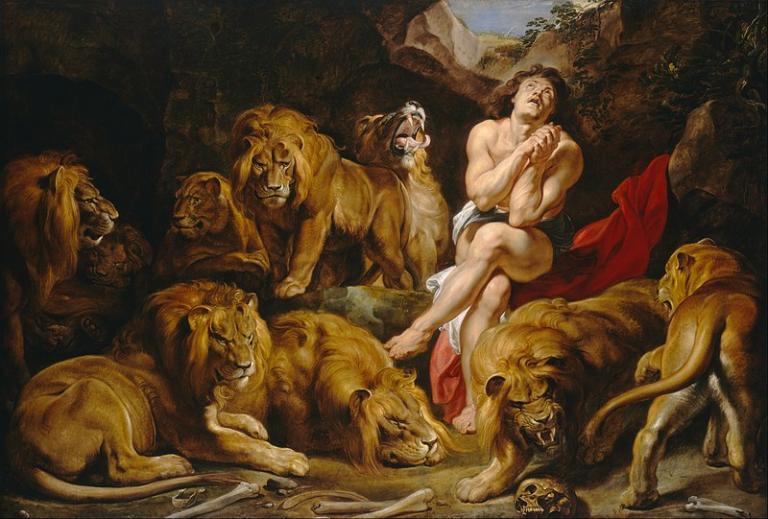
Photo credit: Daniel in the Lions’ Den (bet. c. 1614-c. 1616), by Peter Paul Rubens (1577-1640) [public domain / Wikipedia]
[all passages RSV]
Philippians 2:12-15 . . . work out your own salvation with fear and trembling; [13] for God is at work in you, both to will and to work for his good pleasure. [14] Do all things without grumbling or questioning, [15] that you may be blameless and innocent, children of God without blemish in the midst of a crooked and perverse generation, among whom you shine as lights in the world,
1 Thessalonians 3:12-13 and may the Lord make you increase and abound in love to one another and to all men, as we do to you, [13] so that he may establish your hearts unblamable in holiness before our God and Father, at the coming of our Lord Jesus with all his saints.
The Greek word in these passages for “blameless and “unblamable” is amemptos (ἄμεμπτος): Strong’s Greek word #273. Strong’s Lexicon on this same page defines it as:
a state of being without fault or blame. It conveys the idea of moral integrity and uprightness, often in the context of one’s conduct before God and others. In the New Testament, it is used to describe individuals who live in a manner that is above reproach, adhering to God’s commandments and maintaining a pure and righteous lifestyle.
Thayer’s Greek Lexicon gives the meaning for these two passage as “blameless, deserving no censure . . . free from fault or defect.” Presbyterian Greek linguist Marvin Vincent, in his Word Studies in the New Testament, defines this word in Philippians 2:15 as “Blameless in the sight of others, guileless in your own hearts.”
There are other related Greek words, too:
Ephesians 1:3-4 Blessed be the God and Father of our Lord Jesus Christ, who has blessed us in Christ with every spiritual blessing in the heavenly places, [4] even as he chose us in him before the foundation of the world, that we should be holy and blameless before him.
This word is amomos (ἄμωμος), Strong’s Greek word #299. Strong’s Lexicon on this same page defines it as:
a state of being without fault or blemish. It conveys the idea of moral and spiritual purity, often in the context of being acceptable or pleasing to God. This term is frequently used to describe the character of Christ, the nature of the Church, and the desired state of believers. . . . the moral and spiritual purity required of believers and exemplified in Christ.
Thayer’s Greek Lexicon gives the following meaning:
without blemish, free from faultiness, as a victim without spot or blemish: 1 Peter 1:19 (Leviticus 22:21); Hebrews 9:14; in both places allusion is made to the sinless life of Christ. Ethically, without blemish, faultless, unblamable: Ephesians 1:4; Ephesians 5:27; Colossians 1:22; Philippians 2:15 . . . Jude 1:24; Revelation 14:5.
Kittel’s Theological Dictionary of the New Testament (one-volume edition) states regarding amomos:
It may also be used for the absolute blamelessness of God (2 Sam. 22:31). The NT adopts the term for the perfect piety to which believers are obligated by membership in the eschatological community (cf. Eph. 1:4; 5:27; Phil. 2:15; Col. 1:22). They are to manifest this at the judgment (cf. Jude 24). (p. 619)
Vincent writes about Ephesians 1:4: “The reference is to moral rather than to forensic righteousness. Compare 1 Thessalonians 4:7 [“For God has not called us for uncleanness, but in holiness.”]”
Colossians 1:21-23 And you, who once were estranged and hostile in mind, doing evil deeds, [22] he has now reconciled in his body of flesh by his death, in order to present you holy and blameless and irreproachable before him, [23] provided that you continue in the faith, stable and steadfast, not shifting from the hope of the gospel which you heard,
Vincent writes about the same word in 1:22 above: “Unreprovable, not only actually free from blemish, but from the charge of it. See on 1 Corinthians 1:8 [“our Lord Jesus Christ; [8] who will sustain you to the end, guiltless in the day of our Lord Jesus Christ”], and compare 1 Timothy 6:14 [“I charge you to keep the commandment unstained and free from reproach until the appearing of our Lord Jesus Christ.”]”
Jude 24 Now to him who is able to keep you from falling and to present you without blemish before the presence of his glory with rejoicing,
Revelation 14:2-5 And I heard a voice from heaven like the sound of many waters and like the sound of loud thunder; the voice I heard was like the sound of harpers playing on their harps, [3] and they sing a new song before the throne and before the four living creatures and before the elders. No one could learn that song except the hundred and forty-four thousand who had been redeemed from the earth. [4] It is these who have not defiled themselves with women, for they are chaste; it is these who follow the Lamb wherever he goes; these have been redeemed from mankind as first fruits for God and the Lamb, [5] and in their mouth no lie was found, for they are spotless.
Moreover, we have the word, aproskopos (ἀπρόσκοπος), Strong’s Greek word #677. Strong’s Lexicon on this web page defines it as:
a state of being free from blame or offense, particularly in the context of one’s conduct and interactions with others. It implies a life lived in such a way that does not cause others to stumble in their faith or moral walk. This word emphasizes the importance of integrity and moral uprightness in the life of a believer.
Thayer’s Greek Lexicon defines it as:
1. actively, having nothing for one to strike against; not causing to stumble;
a. properly: ὁδός, a smooth road, Sir. 35: (32) 21.
b. metaphorically, not leading others into sin by one’s mode of life: 1 Corinthians 10:32.
2. passively,
a. not striking against or stumbling; metaphorically, not led into sin; blameless: Philippians 1:10 (joined with εἰλικρινεῖς).
b. without offence: συνείδησις, not troubled and distressed by a consciousness of sin, Acts 24:16.
It appears in three New Testament passages:
Acts 24:16 So I always take pains to have a clear conscience toward God and toward men.
1 Corinthians 10:31-32 So, whether you eat or drink, or whatever you do, do all to the glory of God. [32] Give no offense to Jews or to Greeks or to the church of God,
Philippians 1:9-11 And it is my prayer that your love may abound more and more, with knowledge and all discernment, [10] so that you may approve what is excellent, and may be pure and blameless for the day of Christ, [11] filled with the fruits of righteousness which come through Jesus Christ, to the glory and praise of God.
***
“Please Hit ‘Subscribe’”! If you have received benefit from this or any of my other 5,000+ articles, please follow my blog by signing up (with your email address) on the sidebar to the right (you may have to scroll down a bit), above where there is an icon bar, “Sign Me Up!”: to receive notice when I post a new blog article. This is the equivalent of subscribing to a YouTube channel. My blog was rated #1 for Christian sites by leading AI tool, ChatGPT: endorsed by influential Protestant blogger Adrian Warnock. Actually, I partner with Kenny Burchard on the YouTube channel, Catholic Bible Highlights. Please subscribe there, too! Please also consider following me on Twitter / X and purchasing one or more of my 55 books. All of this helps me get more exposure, and (however little!) more income for my full-time apologetics work. Thanks so much and happy reading!
***
Then we have amemptós (ἄμεμπτος), Strong’s Greek word #274 (the adverbial form of the word seen above in #273). Strong’s Lexicon observes about it:
It implies a life that is free from legitimate criticism or reproach, particularly in relation to adherence to God’s commandments and ethical standards. . . . In Jewish culture, adherence to the Law was paramount, and being blameless was associated with righteousness and piety. The New Testament writers, particularly Paul, emphasize this quality as essential for believers, reflecting a life transformed by faith in Christ and empowered by the Holy Spirit.
Thayer’s Greek Lexicon adds: “blamelessly, so that there is no cause for censure: 1 Thessalonians 2:10;” It appears twice:
1 Thessalonians 2:10 You are witnesses, and God also, how holy and righteous and blameless was our behavior to you believers;
1 Thessalonians 5:21-23 but test everything; hold fast what is good, [22] abstain from every form of evil. [23] May the God of peace himself sanctify you wholly; and may your spirit and soul and body be kept sound and blameless at the coming of our Lord Jesus Christ.
Anegklétos (ἀνέγκλητος) — Strong’s Greek word #410 — is yet another New Testament term translated as “blameless.” Strong’s Lexicon defines it as:
used in the New Testament to describe a person who is free from any valid accusation or charge, particularly in the context of moral and ethical conduct. It implies a state of being irreproachable or without blame, especially in the eyes of others. This word is often used to describe the qualifications of church leaders, emphasizing the importance of a good reputation and moral integrity.
In the Greco-Roman world, reputation and public perception were crucial, especially for those in positions of authority or leadership. Being “anegklétos” meant that a person was not only innocent of wrongdoing but also perceived as such by the community. This was particularly important in the early Christian church, where leaders were expected to set an example for the congregation and maintain a witness to the surrounding society.
Thayer’s Greek Lexicon states that the word means “cannot be called to account, unreprovable, unaccused, blameless: 1 Corinthians 1:8; Colossians 1:22; 1 Timothy 3:10; Titus 1:6f.” It appears five times:
1 Corinthians 1:7-8 so that you are not lacking in any spiritual gift, as you wait for the revealing of our Lord Jesus Christ; [8] who will sustain you to the end, guiltless in the day of our Lord Jesus Christ.
Colossians 1:22 he has now reconciled in his body of flesh by his death, in order to present you holy and blameless and irreproachable before him,
1 Timothy 3:8-10 Deacons likewise must be serious, not double-tongued, not addicted to much wine, not greedy for gain; [9] they must hold the mystery of the faith with a clear conscience. [10] And let them also be tested first; then if they prove themselves blameless let them serve as deacons.
Titus 1:6-8 if any man is blameless, the husband of one wife, and his children are believers and not open to the charge of being profligate or insubordinate. [7] For a bishop, as God’s steward, must be blameless; he must not be arrogant or quick-tempered or a drunkard or violent or greedy for gain, [8] but hospitable, a lover of goodness, master of himself, upright, holy, and self-controlled;
These Greek words also appeared in the Septuagint: the Greek Old Testament, translated in the 3rd century BC:
Amemptos (ἄμεμπτος): Strong’s Greek word #273:
Genesis 17:1 When Abram was ninety-nine years old the LORD appeared to Abram, and said to him, “I am God Almighty; walk before me, and be blameless.
Job 1:1 There was a man in the land of Uz, whose name was Job; and that man was blameless and upright, one who feared God, and turned away from evil.
Job 1:8 And the LORD said to Satan, “Have you considered my servant Job, that there is none like him on the earth, a blameless and upright man, who fears God and turns away from evil?”
Job 2:3 And the LORD said to Satan, “Have you considered my servant Job, that there is none like him on the earth, a blameless and upright man, who fears God and turns away from evil? He still holds fast his integrity, although you moved me against him, to destroy him without cause.”
Job 12:4 I am . . . a just and blameless man, . . .
Amomos (ἄμωμος), Strong’s Greek word #299:
Psalm 15:2 He who walks blamelessly, and does what is right, and speaks truth from his heart;
Psalm 18:24-25 Therefore the LORD has recompensed me according to my righteousness, according to the cleanness of my hands in his sight. [25] With the loyal thou dost show thyself loyal; with the blameless man thou dost show thyself blameless;
Psalm 19:13 Keep back thy servant also from presumptuous sins; let them not have dominion over me! Then I shall be blameless, and innocent of great transgression.
Psalm 37:18 The LORD knows the days of the blameless, and their heritage will abide for ever;
Psalm 37:37 Mark the blameless man, and behold the upright, for there is posterity for the man of peace. (cf. 64:4)
Psalm 101:6 he who walks in the way that is blameless shall minister to me.
Psalm 119:1 Blessed are those whose way is blameless, who walk in the law of the LORD!
Psalm 119:80 May my heart be blameless in thy statutes, that I may not be put to shame!
Proverbs 11:5 The righteousness of the blameless keeps his way straight, but the wicked falls by his own wickedness.
Proverbs 11:20 Men of perverse mind are an abomination to the LORD, but those of blameless ways are his delight.
Proverbs 20:7 A righteous man who walks in his integrity — blessed are his sons after him!
Proverbs 22:11 He who loves purity of heart, and whose speech is gracious, will have the king as his friend.
Isaiah 33:15-16 He who walks righteously and speaks uprightly, who despises the gain of oppressions, who shakes his hands, lest they hold a bribe,
who stops his ears from hearing of bloodshed and shuts his eyes from looking upon evil, [16] he will dwell on the heights; . . .
A related Hebrew word leads to further compelling biblical evidence with regard to purity or being pure (perhaps all the way up to sinlessness):
Daniel 6:21-22 Then Daniel said to the king, “O king, live for ever! [22] My God sent his angel and shut the lions’ mouths, and they have not hurt me, because I was found blameless before him; . . .
This is zakuw (זָכוּ), Strong’s Hebrew word #2136. Strong’s Lexicon on this same page provides a thorough definition for it:
Corresponding Greek / Hebrew Entries: The Greek equivalent often associated with the concept of purity is καθαρός (katharos), Strong’s Greek #2513, which also means clean or pure. This term is used in the New Testament to describe both physical cleanliness and moral purity, as seen in passages like Matthew 5:8 (BSB): “Blessed are the pure in heart, for they will see God.”
Usage: The Hebrew verb “zaku” primarily conveys the idea of being pure or clean, both in a physical and moral sense. It is used to describe the state of being free from impurities or moral blemishes. In the context of the Hebrew Bible, it often refers to ritual purity, moral integrity, and the clarity of one’s heart and actions before God.
Cultural and Historical Background: In ancient Israelite culture, purity was a significant concept, both in religious and social contexts. Ritual purity was essential for participation in worship and community life. The idea of moral purity was also deeply embedded in the covenant relationship between God and His people, where obedience to God’s laws was seen as a reflection of one’s purity and devotion. The concept of purity extended beyond physical cleanliness to include ethical and spiritual dimensions, emphasizing the importance of a pure heart and righteous living.
Following the lead of this entry, I’ll now do a survey of the word katharos (καθαρός), Strong’s Greek #2513. Thayer’s Greek Lexicon on this page defines it:
from Homer down; the Sept. mostly for טָהור; clean, pure (free from the admixture or adhesion of anything that soils, adulterates, corrupts); . . .
c. ethically; free from corrupt desire, from sin and guilt: Titus 1:15; ὑμεῖς καθαροί, John 13:10 (11); οἱ καθαροί τῇ καρδία . . . , Matthew 5:8 (καθαρός χεῖρας . . .); free from every admixture of what is false, sincere, ἐκ καθαρᾶς καρδίας, 1 Timothy 1:5; 2 Timothy 2:22, and R G in 1 Peter 1:22; ἐν καθαρά συνειδήσει, 1 Timothy 3:9; 2 Timothy 1:3; genuine (joined with ἀμίαντος) θρησκεία, James 1:27; blameless, innocent, Acts 18:6.
Here are relevant instances of the word in this moral / ethical sense:
Matthew 5:8 “Blessed are the pure in heart, for they shall see God.”
John 15:3 You are already made clean by the word which I have spoken to you.
1 Timothy 1:5 whereas the aim of our charge is love that issues from a pure heart and a good conscience and sincere faith.
2 Timothy 1:3 I thank God whom I serve with a clear conscience, . . .
2 Timothy 2:21-22 If any one purifies himself from what is ignoble, then he will be a vessel for noble use, consecrated and useful to the master of the house, ready for any good work. [22] So shun youthful passions and aim at righteousness, faith, love, and peace, along with those who call upon the Lord from a pure heart.
Titus 1:15 To the pure all things are pure, but to the corrupt and unbelieving nothing is pure; their very minds and consciences are corrupted. (note that Thayer above applied to this verse the description, “free . . . from sin and guilt”)
1 Peter 1:22 Having purified your souls by your obedience to the truth for a sincere love of the brethren, love one another earnestly from the heart.
Related Reading
Sinless Creatures in the Bible: Actual & Potential (Including a Listing of Many Biblical Passages About Sin, Holiness, Blamelessness, Righteousness, Godliness, Perfection, and Sanctity) [10-20-22; greatly expanded on 7-27-23]
“All Have Sinned” vs. a Sinless, Immaculate Mary? [1996; revised and posted at National Catholic Register on 12-11-17]
*
***
*
Practical Matters: I run the most comprehensive “one-stop” Catholic apologetics site: rated #1 for Christian sites by leading AI tool, ChatGPT — endorsed by popular Protestant blogger Adrian Warnock. Perhaps some of my 5,000+ free online articles or fifty-six books have helped you (by God’s grace) to decide to become Catholic or to return to the Church, or better understand some doctrines and why we believe them.
*
Or you may believe my work is worthy to support for the purpose of apologetics and evangelism in general. If so, please seriously consider a much-needed financial contribution. I’m always in need of more funds: especially monthly support. “The laborer is worthy of his wages” (1 Tim 5:18, NKJV). 1 December 2021 was my 20th anniversary as a full-time Catholic apologist, and February 2022 marked the 25th anniversary of my blog.
*
PayPal donations are the easiest: just send to my email address: [email protected]. Here’s also a second page to get to PayPal. You’ll see the term “Catholic Used Book Service”, which is my old side-business. To learn about the different methods of contributing (including Zelle), see my page: About Catholic Apologist Dave Armstrong / Donation Information. Thanks a million from the bottom of my heart!
*
***
*
Photo credit: Daniel in the Lions’ Den (bet. c. 1614-c. 1616), by Peter Paul Rubens (1577-1640) [public domain / Wikipedia]

Summary: Thorough linguistic examination of Bible passages (six Greek words and one Hebrew) concerning blamelessness and purity: many of which seem to imply possible sinlessness.
Previous Post
December 12, 2024
Perfectly Keeping the Law: 15 Bible Passages
Next Post

December 16, 2024 Transformation of Believers in the NT: 150 Passages
Recent Comments
"And lastly, I belong to no denomination and am free to serve God as He ..."
Is Venerating Men & Angels Worship? ..."
"And obeisance doesn't mean "worship". It means "respect", "obey", or "submission". Very weird that you ..."
Is Venerating Men & Angels Worship? ..."
"Many of these scriptures you have noted have been taken out of context. With Daniel, ..."
Is Venerating Men & Angels Worship? ..."
""Protestants often point out that Jesus is now triumphant in heaven and object to Catholics ..."
Three More Anti-Catholic Lies About Catholicism ..."
Browse Our Archives
Select a Category & Last Things About Me Anti-Catholicism Atheism & Agnosticism Baptism and Sacramentalism Bible and Tradition Blessed Virgin Mary Books by Dave Armstrong C. S. Lewis Calvinism & General Protestantism Catholic Apologetics Catholic Apologists Catholic conversion Catholic converts Christmas Church (Ecclesiology) Church History Conversion and Converts Development of Doctrine Eastern Orthodoxy Ecumenism & Christian Unity Eucharist & Liturgy Fathers of the Church French Translations G. K. Chesterton Hell Hell & Satan Hell & Satan & Last Things Heresies & Comparative Religion Holistic Health Inquisition & Crusades & Scandals James White Jews & Judaism & Old Testament John Calvin John Henry Newman Liberal / Modernist Theology Life Issues Literary Resume Lutheranism Mariology Martin Luther Music Orthodoxy Papacy & Infallibility Personal Page Philosophy & Science Political & Ethical & Moral Issues Protestant Persecution & Intolerance Protestantism Purgatory Purgatory & Penance Romantic & Imaginative Theology Saints & Purgatory & Penance Salvation Salvation & Justification Satan & Last Things Sexuality and Gender Issues Spanish Translations Traditionalism vs. Radical Catholic Reactionaries Traducciones al español / tradução para português Trinitarianism & Christology Uncategorized Videos
Select a Month October 2026 September 2026 August 2026 July 2026 June 2026 May 2026 April 2026 March 2026 February 2026 January 2026 December 2025 November 2025 October 2025 September 2025 August 2025 July 2025 June 2025 May 2025 April 2025 March 2025 February 2025 January 2025 December 2024 November 2024 October 2024 September 2024 August 2024 July 2024 June 2024 May 2024 April 2024 March 2024 February 2024 January 2024 December 2023 November 2023 October 2023 September 2023 August 2023 July 2023 June 2023 May 2023 April 2023 March 2023 February 2023 January 2023 December 2022 November 2022 October 2022 September 2022 August 2022 July 2022 June 2022 May 2022 April 2022 March 2022 February 2022 January 2022 December 2021 November 2021 October 2021 September 2021 August 2021 July 2021 June 2021 May 2021 April 2021 March 2021 February 2021 January 2021 December 2020 November 2020 October 2020 September 2020 August 2020 July 2020 June 2020 May 2020 April 2020 March 2020 February 2020 January 2020 December 2019 November 2019 October 2019 September 2019 August 2019 July 2019 June 2019 May 2019 April 2019 March 2019 February 2019 January 2019 December 2018 November 2018 October 2018 September 2018 August 2018 July 2018 June 2018 May 2018 April 2018 March 2018 February 2018 January 2018 December 2017 November 2017 October 2017 September 2017 August 2017 July 2017 June 2017 May 2017 April 2017 March 2017 February 2017 January 2017 December 2016 November 2016 October 2016 September 2016 August 2016 July 2016 June 2016 May 2016 April 2016 March 2016 February 2016 January 2016 December 2015 November 2015 October 2015 September 2015 August 2015 July 2015 June 2015 May 2015 April 2015 March 2015 February 2015 January 2015 December 2014 November 2014 October 2014 September 2014 August 2014 July 2014 June 2014 April 2014 March 2014 February 2014 January 2014 December 2013 November 2013 October 2013 September 2013 August 2013 July 2013 June 2013 April 2013 March 2013 February 2013 January 2013 December 2012 November 2012 October 2012 September 2012 August 2012 July 2012 June 2012 May 2012 April 2012 March 2012 February 2012 January 2012 December 2011 November 2011 October 2011 September 2011 August 2011 July 2011 June 2011 April 2011 March 2011 February 2011 October 2010 September 2010 August 2010 July 2010 April 2010 March 2010 December 2009 October 2009 August 2009 July 2009 June 2009 May 2009 March 2009 February 2009 October 2008 September 2008 April 2008 March 2008 February 2008 January 2008 December 2007 November 2007 October 2007 May 2007 March 2007 February 2007 January 2007 November 2006 October 2006 September 2006 August 2006 July 2006 June 2006 May 2006 April 2006 March 2006 February 2006 October 2005 June 2005 April 2005 February 2005 July 2004 May 2004 April 2004
Follow Us!
TAKE THE
Religious Wisdom Quiz
Who asked Jesus, "What is truth?"
Select your answer to see how you score.
Caiaphas Pilate Nicodemus Herod
Books by This Author Books by Dave Armstrong
Related posts from Biblical Evidence for Catholicism

Bible & Catholicism on Mortal Sin (vs. John...
Biblical Evidence for Catholicism

Dialogue on Eternal Security / Absolute Assurance
Biblical Evidence for Catholicism

Holy Ground: Why Mary Had NO Other Children...
Biblical Evidence for Catholicism
Protestant Confessions & "Ever-Virgin" Mary
Biblical Evidence for Catholicism
TRENDING AT PATHEOS Catholic

I was strolling through the top floor of the brand new Parthenon...

What Does Gêvâh Mean For Kimberley Guifoyle &...
This week, a lot of the news is focused on Kimberly Guilfoyle....

INNER CIRCLE: Profound Mystery (Of Christ In All...
Ephesians 5:31-32 “For this reason, a man will leave his father and...

Do Not Rejoice When Your Enemy Falls: The...
Turning an execution into a public spectacle is a disturbing expression of...

'The Chosen' S6 Trailer: The Passion Gets Very...
Not many watching 'The Chosen' worry about spoilers, but just because they...

The purpose-driven labor priest
A labor activist reads Rick Warren and it gets me wondering about...
view all Catholic blogs
What Are Your Thoughts?leave a comment
Ad-Free & Subscriber Log-In Subscription Support
- About Us
- 2026 Calendar
- Videos
- Podcasts
- Library of World Religions
- Faith In Media Tracker
- Advertise With Us
- Write for Us
- Privacy Policy
- Terms of Service
- Do Not Sell My Data
- Contact Us
- Radiant Digital
- Manage Newsletter Subscriptions
- Unsubscribe From Notifications
- Sitemap
Copyright 2008-2026, Patheos. All rights reserved.
Subscription Support Ad-Free & Subscriber Log-In
Follow Patheos