
BuddhistCatholicContemplativeEvangelicalGeneral ChristianHinduJewishLatter-day SaintMuslimNew VisionsProgressive Christian
Beliefs
- Buddhist
- Catholic
- Contemplative
- Evangelical
- General Christian
- Hindu
- Jewish
- Latter-day Saint
- More Voices
- Muslim
- New Visions
- Pagan
- Progressive Christian
Topics
- Religion News
- Food and Religion
- Sports and Religion
- Religious Art
- Religious Music and Entertainment
- Religious Events
- History and Religion
- Style and Religion
- Politics and Religion
- Women in Religion
- Recreation Outdoors and Religion
- Business Finance and Religion
- Careers Workplace and Religion
- Education and Religion
- Family Parenting and Religion
- Health Fitness and Religion
- Home and Religion
- Relationships and Religion
- Technology and Religion
- Travel and Religion
Columnists
- Buddhist Columnists
- Business Finance and Religion Columnists
- Careers Workplace and Religion Columnists
- Catholic Columnists
- Contemplative Columnists
- Education and Religion Columnists
- Evangelists Columnists
- Family Parenting and Religion Columnists
- General Christian Columnists
- Health Fitness and Religion Columnists
- Hindu Columnists
- History and Religion Columnists
- Home and Religion Columnists
- Jewish Columnists
- More Voices Columnists
- Latter Day Columnists
- Muslim Columnists
- New Visions Columnists
- Nonreligious Columnists
- Pagan Columnists
- Politics and Religion Columnists
- Progressive Columnists
- Recreation Outdoors and Religion Columnists
- Relationships and Religion Columnists
- Religion News Columnists
- Religious Art Columnists
- Religious Events Columnists
- Religious Music and Entertainment Columnists
- Sports and Religion Columnists
- Style and Religion Columnists
- Technology and Religion Columnists
- Travel and Religion Columnists
- Women in Religion Columnists
Resource Library
- 2026 Calendar
- Library of World Religions
- The 100 Most Holy Places on Earth
- Patheos Answers
- Podcasts
- Videos
- Faith Leaders Database
- Anglican Episcopalian
- Bahai
- Baptist
- Buddhism
- Christianity
- Confucianism
- Eastern Orthodoxy
- Hinduism
- Holiness and Pentecostal
- ISKCON
- Islam
- Judaism
- Lutheran
- Methodist
- The Church of Jesus Christ of Latter-day Saints
- New Age
- Paganism
- Presbytarian and Reformed
- Protestantism
- Religion Behind the Scenes
- Roman Catholic
- Scientology
- Shia Islam
- Sikhism
- Sufism
- Sunni Islam
- Taoism
- Zen
- See all religions
Research Tools
 Ad-Free & Subscriber Log-In Subscription Support
Ad-Free & Subscriber Log-In Subscription Support
Follow Patheos 

- Trending:
- Forgiveness
- |
- Marriage
- |
- Consciousness
- |
- Death Penalty
- |
- Election
- |
- Halloween

-
About
-
Catholic Apologetics
-
Church History
-
Great Apologists
-
Christian Worldview
-
Protestantism & Misc.
- Home
- Catholic
- History and Religion
- Harnack, “The Amateur Exegete”, & Anti-Apologetics
Harnack, “The Amateur Exegete”, & Anti-Apologetics
Last updated on: June 6, 2026 at 12:52 am by Dave Armstrong
Harnack, “The Amateur Exegete”, & Anti-Apologetics 2026-06-06T00:52:10-04:00 Dave Armstrong
Patheos Explore the world's faith through different perspectives on religion and spirituality! Patheos has the views of the prevalent religions and spiritualities of the world.
Including Proof That Jesus Wasn’t Totally Silent During His Trial; That is, He Didn’t “Turn the Other Cheek”
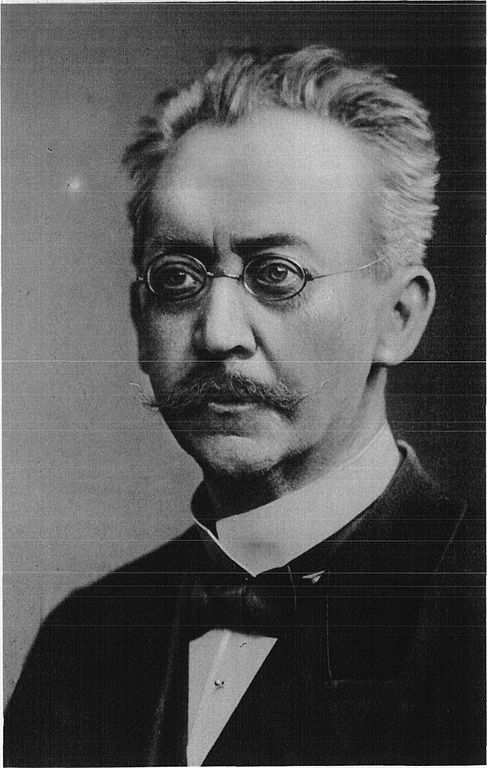
Photo credit: Adolf Harnack (1851-1930): Project Gutenberg eText 13635 – http://www.gutenberg.net/dirs/1/3/6/3/13635/13635-h/13635-h.htm; User Tagishsimon on en.wikipedia [public domain / Wikimedia Commons]
On 24 October 2024, The Amateur Exegete website (its title a great irony in light of this article), published, “Adolf von Harnack: Apologetics Is in a Deplorable State”. Words of the first anonymous commenter will be in green; words of webmaster “Ben” (aka “The Amateur Exegete”) will be in blue. I have made a few very slight changes to the original comments I made on his site.
*****
The article consists solely of a citation:
Adolf von Harnack, What is Christianity? translated by Thomas Bailey Saunders (Fortress Press, 1986 [originally published in 1957]), 7-8
Harnack (1851-1930) was a German Lutheran theologian. And here is the entire article, taken from his book, published in 1900:
Apologetics holds a necessary place in religious knowledge, and to demonstrate the validity of the Christian religion and exhibit its importance for the moral and intellectual life is a great and a worthy undertaking. But this undertaking must be kept quite separate from the purely historical question as to the nature of that religion, or else historical research will be brought into complete discredit. Moreover, in the kind of apologetics that is now required no really high standard has yet been attained. Apart from a few steps that have been taken in the direction of improvement, apologetics as a subject of study is in a deplorable state: it is not clear as to the positions to be defended, and it is uncertain as to the means to be employed. It is also not infrequently pursued in an undignified and obtrusive fashion. Apologists imagine that they are doing a great work by crying up religion as though it were a job-lot at a sale, or a universal remedy for all social ills. They are perpetually snatching, too, at all sorts of baubles, so as to deck out religion in fine clothes. In their endeavour to present it as a glorious necessity, they deprive it of its earnest character, and at the best only prove that it is something which may be safely accepted because it can do no harm. Finally, they cannot refrain from slipping in some church programme of yesterday and “demonstrating” its claims as well. The structure of their ideas is so loose that an idea or two makes no difference. The mischief that has been thereby done already and is still being done is indescribable.
This is the usual nauseating, condescending, academic snob drivel along the lines of, “apologetics is so wonderful and necessary, but unfortunately not a single apologist can be found who does it well: especially not those pretentious amateurs — whom we never name — who are abominably stupid, unlike us academics!” He doesn’t give any specific examples, so one can’t rationally respond to it. Maybe in the book he does, but if so, one would never know that from this excerpt.
***
“Please Hit ‘Subscribe’”! If you have received benefit from this or any of my other 4,800+ articles, please follow my blog by signing up (with your email address) on the sidebar to the right (you may have to scroll down a bit), above where there is an icon bar, “Sign Me Up!”: to receive notice when I post a new blog article. This is the equivalent of subscribing to a YouTube channel. My blog was rated #1 for Christian sites by leading AI tool, ChatGPT: endorsed by influential Protestant blogger Adrian Warnock. Actually, I partner with Kenny Burchard on the YouTube channel, Catholic Bible Highlights. Please subscribe there, too! Please also consider following me on Twitter / X and purchasing one or more of my 55 books. All of this helps me get more exposure, and (however little!) more income for my full-time apologetics work. Thanks so much and happy reading!
***
Then the first comment from “Anonymous” (as always!) continued the tired, vapid, virtually content-less polemics against apologetics and apologists, with the extra bonus of a gratuitous swipe at yours truly:
A hit, a very palpable hit. If von Harnick thought things were bad in 1901, I can’t imagine what he’d make of the apologetics enterprise in 2024. (The subtext of your post, I imagine.) There are reasons apologists cite the works of various historians, archaeologists, and linguists, while historians, archaeologists, and linguists don’t cite apologetics.
I’m reminded of the frequent disconnect between the believing scholars who’ve rigorously studied Greek, Hebrew, ANE history, etc. and many conservative apologists who have not. The discomfort of certain Catholic apologists with mainstream critical biblical scholarship is a recurring example. The commentary and notes in the NAB/NABRE–currently the sole English translation available on the Vatican website, and prepared by prominent experts under USCCB leadership–incorporate a broad version of the Documentary Hypothesis, acknowledge the complicated composition of Isaiah, date Daniel to the Hellenistic period, etc. (Same with The Jerome Biblical Commentary, the most recent edition of which includes an introduction from Pope Francis himself.)
But then look at content from Catholic Answers, SJ Thomason, Dave Armstrong, and other like-minded folks. They tend to be conspicuously quiet about the commentary in the NAB/NABRE, and seem to argue that mainstream critical scholarship is suspect at best, modernist malarkey at worst. So if I were a new Catholic, where should I turn for The Most Correct Information? To the NAB/NABRE prepared by scholars under Church auspices in alignment with the magisterium, or to lay Catholic apologists? Von Harnick’s observation, “it is not clear as to the positions to be defended,” is especially on point here, by my reckoning.
And this is how I responded:
***
Care to make specific criticisms of my work rather than the broad swipe (since you brought up my name)? That’s only fair, isn’t it? Let a man defend himself? Scholarship is a mixed bag. There is heterodox stuff and there is very orthodox stuff. The popes are scholarly and orthodox, and I have been known as a vigorous defender of the three popes who have been in office since my conversion in 1990. Pope Francis is considered a “liberal” by many but he isn’t, as I have shown again and again.
For some reason, people are always pitting lay apologetics and academic scholarship against each other, as if they are antithetical or competing with each other. I have never pretended to be a scholar. I cite them all the time, as one who strives to be a serious semi-scholarly thinker.
As I always point out, Chesterton never obtained any degree at all. Most of his college courses that he did take were art classes. Yet Thomist scholars have regarded his book on St. Thomas Aquinas as virtually the equal of any other. Those scholars certainly cited an apologist, didn’t they? There are many good lay apologists and a great many also who never had formal theological education (C. S. Lewis, Peter Kreeft, Malcolm Muggeridge, Thomas Howard, Frank Sheed, ad nauseam). C. S. Lewis is massively cited by scholars of many types, both in theology and philosophy. He was trained as an English scholar.
The Catholic Church has always encouraged lay apologetics, as I have documented. It’s not a requirement of catechetics, evangelism, or apologetics, to have a degree in theology. It helps, of course, but those enterprises are larger than that. The attempted false dichotomy is boorish and silly.
My work has received three Imprimaturs. Funny you bring up the NAB, too. Our Sunday Visitor, the largest Catholic publisher, published The Catholic Answer Bible in 2002, with an NAB text and my 44 short apologetics articles (my notes received the Imprimatur from James P. Kelleher, S.T.D., Archbishop of Kansas City and the Nihil Obstat from Gary Applegate, J.C.L.). It was revised in 2005 as The New Catholic Answer Bible, with additional work from Dr. Paul Thigpen; this time with an Imprimatur from J. Kevin Boland, D.D., bishop of Savannah, and Nihil Obstat from Douglas K. Clark, S.T.L.).
Is that “kosher” enough for ya? So there I am working with an academic, with my work overseen and confirmed as orthodox and helpful to educate, by bishops and other Catholic scholars. Pretty hard to do your false dichotomy there, isn’t it? I’m currently also partnering on YouTube with Kenny Burchard, who has a Master’s Degree in NT.
I am very good friends with and often ask theological advice from Dr. Robert Fastiggi, who is a professor of theology at Sacred Heart Seminary in Detroit and editor and translator of the latest version of Denzinger’s Enchiridion symbolorum (Ignatius, 2012): the premier scholarly source for Catholic dogma and magisterial pronouncements. He loves my work: has said so innumerable times. My first book, A Biblical Defense of Catholicism (1996) received a glowing endorsement in the Foreword by Fr. John A. Hardon, SJ: one of the foremost catechists in the world. Was he wrong to do that because I wasn’t a scholar? Dr. Scott Hahn wrote the Foreword to my book, More Biblical Evidence for Catholicism (2002). Did I have him fooled, too?
My latest “officially published” book is The Word Set in Stone: How Archaeology, Science, and History Back Up the Bible (Catholic Answers Press: 2023). In it, I massively cite scholars (mostly archaeologists and historians): 393 footnotes. I think it’s a good book. You would have to judge that for yourself. I’ll send you a free PDF copy if you like. At least read a serious piece of apologetics from me before you want to publicly blast me, and safely anonymous at that. Write to me at apologistdave [at] gmail [dot] com and I’ll send it along.
***
“The Amateur Exegete” then started interacting:
I’m curious as to what the phrase “its title a great irony in light of this article” means as it pertains to my website. Is that also a swipe?
It was a pointed observation (perhaps a swipe, but a justified one). The irony as I saw it is a site called “The Amateur Exegete” running a very strongly worded section from Harnack excoriating amateur apologetics, as if those of us who do it ought to be ashamed, and as if no one in his environment was out there doing it well at all. I’m quite sure that there were respectable Lutheran apologists in his Germany of 1900, because Lutheranism is a respectable Protestant position and there’s no way that they wouldn’t have been there.
And if that is true, as I think it almost certainly is, then Harnack should have acknowledged them rather than issue this literally prejudicial, broad-brushed caricature of apologetics per se. He names neither the bad ones nor the good ones and documents nothing. It’s simply a poisoning of the well that should have been beneath him. Again, maybe in his book he did, but you decided to put up this excerpt: presumably because it fits into your own pet peeves.
***
When you hit “About” at this website it provides Ben’s short bio:
My name is Ben but I go by the moniker the Amateur Exegete: “amateur” because I am by no means a scholar and “exegete” because my main interest lay in understanding the meaning and import of texts, particularly the biblical texts. Though I spent three years at the fundamentalist bastion Pensacola Christian College, I ultimately graduated with a Bachelor of Science degree from Williamson College. I’ve also done some work toward a graduate degree in apologetics from Luther Rice Seminary but please don’t hold that against me! My religious journey began in King James Only fundamentalism, evolved to Reformed evangelicalism, and is currently flourishing in the absence of religion altogether. One thing hasn’t changed: my love for and interest in the Bible.
This website has a few goals: to counter poor takes on the Bible whether they are from believers or unbelievers, to promote sound scholarship by writing pieces full of citations to the work of credible scholars, and to educate people who are interested in the Bible but don’t know a lot about it. The Bible remains one of the most read but least understood works in the world. My hope is that my small, non-professional contribution to the discussion about it will make things clearer for those less familiar with it.
So he has no degree in theology, either (though he has some courses under his belt), has a radical fundamentalist background, and now his views are characterized by “the absence of religion altogether.” Yet he continues to feel that he is more qualified to discuss the Bible and apologetics — and educate folks on biblical teaching — than lay Christian apologists.
***
Von Harnack doesn’t name names probably because the quotation in question comes from a lecture series he delivered at the end of the 19th century that was put into print in 1900. He very rarely names specific persons in the series. Additionally, he prefaces his comments about apologists by noting that to answer the question “What is Christianity?” he is more interested in answering it “in its historical sense” rather than spend time on “the view…taken by the apologist and the religious philosopher” (p. 6). He doesn’t denigrate apologetics (as you claim) but the methods and manners of contemporary apologists. Their approach he finds problematic, turning Christianity into something that it is not on his view.
He being dead yet speaks.
There is a reason that so much of what passes for apologetics is written not with skeptics in mind but with fellow Christians. It is an insularly task, designed to protect against doubt and loss of faith rather than convince those without faith of the cogency of the Christian message. And often its practitioners are less than scrupulous with their propaganda, either not reading well, not reading enough, or, as I’ve seen especially in social media spaces, not reading at all. Additionally, the manner of so many of these apologists is sufficient reason to disbelieve their message. In my many encounters with Thomists and Reformed apologists, it is clear that there is nothing transformative about their gospel such that I should believe it. What good is being “right” if it turns you into a spiteful, miserable soul?
I’m obviously not claiming all apologists are like this. I do find it interesting that you felt the need to comment on the post after your name had been mentioned. How did you discover it? Do you frequently search for your own name on the Internet? Do you feel it necessary to respond to every perceived slight? And what about taking a swipe at me makes you think that I’m going to find your particular approach to apologetics convincing? From my point of view as a mere amateur, it seems that you value being “right” more than you value promoting Christ, the one who “[w]hen he was abused, he did not return abuse” (1 Peter 2:23).
You are free to defend yourself and your views; I have no problem with that. But I’ve always found it curious that so many Christians, when they feel wronged, feel it necessary to lash out. I suppose it is because they do not have the faith to trust “the one who judges justly” to handle it. And at least on that we are in complete agreement.
You make the same mistake again: you start going after me, without actually dealing with anything I have written, just as Harnack did with apologetics and apologists. This is pure content-less bigotry. If one wishes to make some point about the futility of apologetics or the utter inability to find an apologist who does anything worthwhile, then by all means, pick and name someone and actually interact with their arguments and/or perceived deficient methodology.
It’s very much like the spirit of demonization that goes on in politics. “Republicans are racist, sexist homophobes.” “All Democrats are communists.” Etc. There is very little actual argumentation or dialogue or discussion across the party lines.
I defend myself not because I am so wounded or hurt; not at all! I couldn’t care less what strangers think of me, or my work: especially if they provide no cogent criticism. I do because it’s not me, personally that the commenter was attacking, so much as what I do; what I represent. I refuse to let what I love be besmirched and tarnished in such an illegitimate fashion: with prejudicial broad-brushing and no actual discussion occurring.
Yes, I do searches of my name and that’s how I found this. Why do I do it? Is it your theory: I’m full of myself and “value being ‘right’ more than you value promoting Christ”? Thanks for judging my soul and supposedly reading my heart. No! The reason is to defend what I love and have devoted my life and career to: defending Christianity and Catholic Christianity in particular. And I also have the old-fashioned, antiquated view that a person ought to have the opportunity to defend himself against unwarranted public attacks. Since I am rarely informed of such attacks, I have to find them myself. And then I respond, on the principle of fair play and the “right” of readers to actually hear both sides, rather than only one biased and negative outlook.
Do you agree with that principle? Well, you assert that you do: “You are free to defend yourself and your views; I have no problem with that.” Yet on the other hand, you don’t strike me as being enthralled by the fact that I actually did it.
You appear to have a view that I have encountered many times: the notion that the Bible and Jesus allegedly teach us to never respond to any attack (physical or verbal). It’s not true. “Turn the other cheek” is a typical piece of proverbial Hebrew practical wisdom. As a general rule, it’s a good policy. But it doesn’t follow that it must be done in every situation or that no one can ever defend himself. How do I know that? It’s because such responses are also displayed in the Bible. The biggest example is Paul defending himself vigorously at his trial. Even Jesus was not absolutely silent at His trial: as is the erroneous perception of many:
Matthew 26:62-64 (RSV) And the high priest stood up and said, “Have you no answer to make? What is it that these men testify against you?” [63] But Jesus was silent. And the high priest said to him, “I adjure you by the living God, tell us if you are the Christ, the Son of God.” [64] Jesus said to him, “You have said so. But I tell you, hereafter you will see the Son of man seated at the right hand of Power, and coming on the clouds of heaven.” (in the parallel passage Mark 14:62, Jesus says, “I am . . .”)
Note how Jesus was silent in reply to the first question, but not the second. We see the same mixture in the next chapter:
Matthew 27:11-14 Now Jesus stood before the governor; and the governor asked him, “Are you the King of the Jews?” Jesus said, “You have said so.” [12] But when he was accused by the chief priests and elders, he made no answer. [13] Then Pilate said to him, “Do you not hear how many things they testify against you?” [14] But he gave him no answer, not even to a single charge; so that the governor wondered greatly.
In the Gospel of John, however, an extensive conversation between Pontius Pilate and Jesus is recorded, and also the fact that Jesus was sometimes — not always! — silent:
John 18:33-37 Pilate entered the praetorium again and called Jesus, and said to him, “Are you the King of the Jews?” [34] Jesus answered, “Do you say this of your own accord, or did others say it to you about me?” [35] Pilate answered, “Am I a Jew? Your own nation and the chief priests have handed you over to me; what have you done?” [36] Jesus answered, “My kingship is not of this world; if my kingship were of this world, my servants would fight, that I might not be handed over to the Jews; but my kingship is not from the world.” [37] Pilate said to him, “So you are a king?” Jesus answered, “You say that I am a king. For this I was born, and for this I have come into the world, to bear witness to the truth. Every one who is of the truth hears my voice.”
John 19:8-11 When Pilate heard these words, he was the more afraid; [9] he entered the praetorium again and said to Jesus, “Where are you from?” But Jesus gave no answer. [10] Pilate therefore said to him, “You will not speak to me? Do you not know that I have power to release you, and power to crucify you?” [11] Jesus answered him, “You would have no power over me unless it had been given you from above; therefore he who delivered me to you has the greater sin.”
So I defend myself because Jesus did so, too: for the sake of truth and the defense of what I believe to be right. Another model of this is St. John Henry Cardinal Newman: my theological hero. He wrote an entire book, called, Apologia pro vita sua, which was an elaborate defense of himself against various scurrilous lies that were directed his way in anti-Catholic Anglican England. The result was that he basically won over the country, and brought out the English sense of “fair play.” For a while, he was actually more popular among Anglicans than among Catholics.
You are quite correct that most apologetics is directed to, and most effective with those who are already Christian believers. There is nothing wrong with being more educated as to why one believes what one does as a Christian. The heart can’t reject what the mind deems to be false. We must have rational reasons to believe as we do, and not blind faith.
But there is also apologetics alongside evangelism: giving reasons for why we believe and trying to persuade nonbelievers. I do both. My latest book was about biblical archaeology, and was an effort to do both things at one time: give Christians more confidence and persuade agnostics and atheists of the profound, extraordinary historical trustworthiness of the Bible: utilizing mostly secular archaeology and history to do so.
It literally came about when I spent over a year hanging out in an atheist venue (Jonathan M. S. Pearce). I’ve written hundreds of articles — and a book — responding to atheists who attack the Bible: mostly falsely claiming that it contradicts itself in every other sentence. Pearce counter-responded a few times: most never do. They simply insult and dismiss.
Why you have left the faith would be a long discussion. I’d be happy to have such a discussion, but it will never occur while you are lobbing attacks at me and what I do and foolishly trying to read my heart. So that’s up to you. “A man convinced against his will retains his original belief still.”
But you brought up all this stuff and I have answered, according to the command of 1 Peter 3:15: “Always be prepared to make a defense to any one who calls you to account for the hope that is in you” and Jude 3: “contend for the faith which was once for all delivered to the saints.”
Thanks for allowing me to do so on your site!
One last question: you leave a little window for a few apologists actually doing that task well (“so much of what passes for apologetics . . . so many of these apologists . . . I’m obviously not claiming all apologists are like this”). Who would these people be? Can you actually name a few apologists whom you think do not fall under your broad criticisms and those of Harnack: respectable people with respectable views worth interacting with, rather than dismissing and insulting en masse?
Dave, I am utterly uninterested in engaging with you further. You accuse me of things I have not done and then take to your own website to further attack me. I wish you well.
*
***
*
Practical Matters: I run the most comprehensive “one-stop” Catholic apologetics site: rated #1 for Christian sites by leading AI tool, ChatGPT — endorsed by popular Protestant blogger Adrian Warnock. Perhaps some of my 4,800+ free online articles or fifty-five books have helped you (by God’s grace) to decide to become Catholic or to return to the Church, or better understand some doctrines and why we believe them.
Or you may believe my work is worthy to support for the purpose of apologetics and evangelism in general. If so, please seriously consider a much-needed financial contribution. I’m always in need of more funds: especially monthly support. “The laborer is worthy of his wages” (1 Tim 5:18, NKJV). 1 December 2021 was my 20th anniversary as a full-time Catholic apologist, and February 2022 marked the 25th anniversary of my blog.
PayPal donations are the easiest: just send to my email address: [email protected]. Here’s also a second page to get to PayPal. You’ll see the term “Catholic Used Book Service”, which is my old side-business. To learn about the different methods of contributing (including Zelle), see my page: About Catholic Apologist Dave Armstrong / Donation Information. Thanks a million from the bottom of my heart!
*
***
*
Photo credit: Adolf Harnack (1851-1930): Project Gutenberg eText 13635 – http://www.gutenberg.net/dirs/1/3/6/3/13635/13635-h/13635-h.htm; User Tagishsimon on en.wikipedia [public domain / Wikimedia Commons]

Summary: Lutheran theologian Adolf von Harnack (1851-1930) offered up the same tired anti-apologetics rhetoric that we see today; then a commenter futilely tried to apply it to me.
Previous Post
October 24, 2024
Bible vs. “Faith Alone” vs. John Calvin #3
Next Post
October 28, 2024 Baptism: Was Mengele Saved By It?
Recent Comments
"Special pleading, and not a serious response to my arguments . . ."
Is Venerating Men & Angels Worship? ..."
""no man needs to teach us."Didn't you just teach us?"
Is Venerating Men & Angels Worship? ..."
""Catholics say they are the only church that can lead people into heaven."In fact, we ..."
Is Venerating Men & Angels Worship? ..."
"And lastly, I belong to no denomination and am free to serve God as He ..."
Is Venerating Men & Angels Worship? ..."
Browse Our Archives
Select a Category & Last Things About Me Anti-Catholicism Atheism & Agnosticism Baptism and Sacramentalism Bible and Tradition Blessed Virgin Mary Books by Dave Armstrong C. S. Lewis Calvinism & General Protestantism Catholic Apologetics Catholic Apologists Catholic conversion Catholic converts Christmas Church (Ecclesiology) Church History Conversion and Converts Development of Doctrine Eastern Orthodoxy Ecumenism & Christian Unity Eucharist & Liturgy Fathers of the Church French Translations G. K. Chesterton Hell Hell & Satan Hell & Satan & Last Things Heresies & Comparative Religion Holistic Health Inquisition & Crusades & Scandals James White Jews & Judaism & Old Testament John Calvin John Henry Newman Liberal / Modernist Theology Life Issues Literary Resume Lutheranism Mariology Martin Luther Music Orthodoxy Papacy & Infallibility Personal Page Philosophy & Science Political & Ethical & Moral Issues Protestant Persecution & Intolerance Protestantism Purgatory Purgatory & Penance Romantic & Imaginative Theology Saints & Purgatory & Penance Salvation Salvation & Justification Satan & Last Things Sexuality and Gender Issues Spanish Translations Traditionalism vs. Radical Catholic Reactionaries Traducciones al español / tradução para português Trinitarianism & Christology Uncategorized Videos
Select a Month October 2026 September 2026 August 2026 July 2026 June 2026 May 2026 April 2026 March 2026 February 2026 January 2026 December 2025 November 2025 October 2025 September 2025 August 2025 July 2025 June 2025 May 2025 April 2025 March 2025 February 2025 January 2025 December 2024 November 2024 October 2024 September 2024 August 2024 July 2024 June 2024 May 2024 April 2024 March 2024 February 2024 January 2024 December 2023 November 2023 October 2023 September 2023 August 2023 July 2023 June 2023 May 2023 April 2023 March 2023 February 2023 January 2023 December 2022 November 2022 October 2022 September 2022 August 2022 July 2022 June 2022 May 2022 April 2022 March 2022 February 2022 January 2022 December 2021 November 2021 October 2021 September 2021 August 2021 July 2021 June 2021 May 2021 April 2021 March 2021 February 2021 January 2021 December 2020 November 2020 October 2020 September 2020 August 2020 July 2020 June 2020 May 2020 April 2020 March 2020 February 2020 January 2020 December 2019 November 2019 October 2019 September 2019 August 2019 July 2019 June 2019 May 2019 April 2019 March 2019 February 2019 January 2019 December 2018 November 2018 October 2018 September 2018 August 2018 July 2018 June 2018 May 2018 April 2018 March 2018 February 2018 January 2018 December 2017 November 2017 October 2017 September 2017 August 2017 July 2017 June 2017 May 2017 April 2017 March 2017 February 2017 January 2017 December 2016 November 2016 October 2016 September 2016 August 2016 July 2016 June 2016 May 2016 April 2016 March 2016 February 2016 January 2016 December 2015 November 2015 October 2015 September 2015 August 2015 July 2015 June 2015 May 2015 April 2015 March 2015 February 2015 January 2015 December 2014 November 2014 October 2014 September 2014 August 2014 July 2014 June 2014 April 2014 March 2014 February 2014 January 2014 December 2013 November 2013 October 2013 September 2013 August 2013 July 2013 June 2013 April 2013 March 2013 February 2013 January 2013 December 2012 November 2012 October 2012 September 2012 August 2012 July 2012 June 2012 May 2012 April 2012 March 2012 February 2012 January 2012 December 2011 November 2011 October 2011 September 2011 August 2011 July 2011 June 2011 April 2011 March 2011 February 2011 October 2010 September 2010 August 2010 July 2010 April 2010 March 2010 December 2009 October 2009 August 2009 July 2009 June 2009 May 2009 March 2009 February 2009 October 2008 September 2008 April 2008 March 2008 February 2008 January 2008 December 2007 November 2007 October 2007 May 2007 March 2007 February 2007 January 2007 November 2006 October 2006 September 2006 August 2006 July 2006 June 2006 May 2006 April 2006 March 2006 February 2006 October 2005 June 2005 April 2005 February 2005 July 2004 May 2004 April 2004
Follow Us!
TAKE THE
Religious Wisdom Quiz
Which Gospel is addressed to "Theophilus"?
Select your answer to see how you score.
Matthew John Luke Mark
Books by This Author Books by Dave Armstrong
Related posts from Biblical Evidence for Catholicism

Why Wes Huff (and Everyone) Should Be Catholic
Biblical Evidence for Catholicism

Invocation of Saints: Catholic Scholars vs. Me? Nope!
Biblical Evidence for Catholicism

My “Number Articles”: Alphabetized by Topic
Biblical Evidence for Catholicism

General Debate on Christianity with an Atheist
Biblical Evidence for Catholicism
TRENDING AT PATHEOS Catholic

57th Dove Awards Honor Dolly Parton, Crown New...
On gospel music’s biggest night, the 57th annual GMA Dove Awards honored...

The First Eucharistic Controversy: Christ’s Real Presence
For Catholics, the Eucharist is the source and summit of the Christian...

What a Stop Sign Can Teach Us About...
How to Make a Decision When You Can't Hear God Main point:...

Archdiocese Hosts Military Marriage Retreat in Germany
RASTATT, Germany — The transient military lifestyle, with its frequent deployments and...

Nearly every morning, I make the drive to Detroit with my high-school-age...

The Real AI Story Is Adoption Without Trust
Artificial intelligence has crossed a political threshold. It is no longer a...
view all Catholic blogs
What Are Your Thoughts?leave a comment
Ad-Free & Subscriber Log-In Subscription Support
- About Us
- 2026 Calendar
- Videos
- Podcasts
- Library of World Religions
- Faith In Media Tracker
- Advertise With Us
- Write for Us
- Privacy Policy
- Terms of Service
- Do Not Sell My Data
- Contact Us
- Radiant Digital
- Manage Newsletter Subscriptions
- Unsubscribe From Notifications
- Sitemap
Copyright 2008-2026, Patheos. All rights reserved.
Subscription Support Ad-Free & Subscriber Log-In
Follow Patheos