
BuddhistCatholicContemplativeEvangelicalGeneral ChristianHinduJewishLatter-day SaintMuslimNew VisionsProgressive Christian
Beliefs
- Buddhist
- Catholic
- Contemplative
- Evangelical
- General Christian
- Hindu
- Jewish
- Latter-day Saint
- More Voices
- Muslim
- New Visions
- Pagan
- Progressive Christian
Topics
- Religion News
- Food and Religion
- Sports and Religion
- Religious Art
- Religious Music and Entertainment
- Religious Events
- History and Religion
- Style and Religion
- Politics and Religion
- Women in Religion
- Recreation Outdoors and Religion
- Business Finance and Religion
- Careers Workplace and Religion
- Education and Religion
- Family Parenting and Religion
- Health Fitness and Religion
- Home and Religion
- Relationships and Religion
- Technology and Religion
- Travel and Religion
Columnists
- Buddhist Columnists
- Business Finance and Religion Columnists
- Careers Workplace and Religion Columnists
- Catholic Columnists
- Contemplative Columnists
- Education and Religion Columnists
- Evangelists Columnists
- Family Parenting and Religion Columnists
- General Christian Columnists
- Health Fitness and Religion Columnists
- Hindu Columnists
- History and Religion Columnists
- Home and Religion Columnists
- Jewish Columnists
- More Voices Columnists
- Latter Day Columnists
- Muslim Columnists
- New Visions Columnists
- Nonreligious Columnists
- Pagan Columnists
- Politics and Religion Columnists
- Progressive Columnists
- Recreation Outdoors and Religion Columnists
- Relationships and Religion Columnists
- Religion News Columnists
- Religious Art Columnists
- Religious Events Columnists
- Religious Music and Entertainment Columnists
- Sports and Religion Columnists
- Style and Religion Columnists
- Technology and Religion Columnists
- Travel and Religion Columnists
- Women in Religion Columnists
Resource Library
- 2026 Calendar
- Library of World Religions
- The 100 Most Holy Places on Earth
- Patheos Answers
- Podcasts
- Videos
- Faith Leaders Database
- Anglican Episcopalian
- Bahai
- Baptist
- Buddhism
- Christianity
- Confucianism
- Eastern Orthodoxy
- Hinduism
- Holiness and Pentecostal
- ISKCON
- Islam
- Judaism
- Lutheran
- Methodist
- The Church of Jesus Christ of Latter-day Saints
- New Age
- Paganism
- Presbytarian and Reformed
- Protestantism
- Religion Behind the Scenes
- Roman Catholic
- Scientology
- Shia Islam
- Sikhism
- Sufism
- Sunni Islam
- Taoism
- Zen
- See all religions
Research Tools
 Ad-Free & Subscriber Log-In Subscription Support
Ad-Free & Subscriber Log-In Subscription Support
Follow Patheos 

- Trending:
- Forgiveness
- |
- Marriage
- |
- Consciousness
- |
- Death Penalty
- |
- Election
- |
- Halloween

-
About
-
Catholic Apologetics
-
Church History
-
Great Apologists
-
Christian Worldview
-
Protestantism & Misc.
- Home
- Catholic
- History and Religion
- Bible vs. “Faith Alone” vs. John Calvin #2
Bible vs. “Faith Alone” vs. John Calvin #2
Last updated on: June 6, 2026 at 12:52 am by Dave Armstrong
Bible vs. “Faith Alone” vs. John Calvin #2 2026-06-06T00:52:10-04:00 Dave Armstrong
Patheos Explore the world's faith through different perspectives on religion and spirituality! Patheos has the views of the prevalent religions and spiritualities of the world.
Matthew 7:16-21; 10:22; 16:27
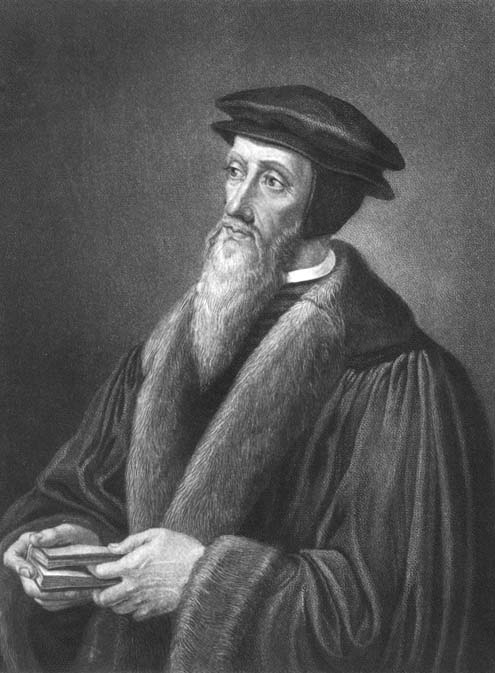
Photo credit: John Calvin: unknown 16th century portrait [public domain / Wikimedia Commons]
On 10-8-24, I published my article, Bible vs. “Faith Alone”: 100 Proofs (100 Bible Passages On Catholic Justification, Sanctification, and Faith + Works [from 22 out of 27 NT Books]: All Disproving Protestant “Faith Alone” Soteriology). Later, I got the idea of inquiring as to how John Calvin (1509-1564), one of the two the most influential founders of Protestantism, along with Martin Luther, would react to these passages in his Commentaries (and then offering my rebuttals). My approach here will be the same as in my book, The Catholic Verses: 95 Bible Passages That Confound Protestants (Aug. 2004). I explain my method in that book’s Introduction:
I shall now proceed to offer a critique of common Protestant attempts to ignore, explain away, rationalize, wish away, overpolemicize, minimize, de-emphasize, evade clear consequences of, or special plead with regard to “the Catholic Verses”: ninety-five biblical passages that provide the foundation for Catholicism’s most distinctive doctrines. . . .
I will assert – with all due respect and, I hope, with a minimum of “triumphalism” — the ultimate incoherence, inadequacy, inconsistency, or exegetical and theological implausibility of the Protestant interpretations, and will submit the Catholic views as exegetically and logically superior alternatives.
The dates of Calvin’s various Commentaries are as follows:
1540 Romans
1548 All the Epistles of Paul
1551 Hebrews, and the Epistles of Peter, John, Jude, and James
1551 Isaiah
1552 Acts of the Apostles
1554 Genesis
1557 Psalms
1557 Hosea
1559 Twelve Minor Prophets
1561 Daniel
1562 Joshua
1563 Harmony of Exodus, Leviticus, Numbers, and Deuteronomy
1563 Jeremiah
1563 Harmony of Three Gospels and Commentary on St John
I use RSV for biblical citations. Calvin’s words will be in blue.
A complete listing of this series will be on my web page, John Calvin: Catholic Appraisal, under the subtitle: “Bible vs. ‘Faith Alone’ vs. John Calvin”.
*****
Matthew 7:16, 18-21 You will know them by their fruits . . . [18] A sound tree cannot bear evil fruit, nor can a bad tree bear good fruit. [19] Every tree that does not bear good fruit is cut down and thrown into the fire. [20] Thus you will know them by their fruits. [21] Not every one who says to me, “Lord, Lord,” shall enter the kingdom of heaven, but he who does the will of my Father who is in heaven. . . .
Calvin pretty much misses the entire point of the passage, refuses to make specific comment on verses 18-21 (passes right over them) and instead decides to make his commentary an anti-Catholic rant:
If, for example, we place before our minds what Paul requires in bishops, (1 Timothy 3:1; Titus 1:6-9,) that description will be sufficient of itself to condemn the whole mass of Popery: for the Popish priests seem as if they purposely intended to present an opposite picture.
If one can’t provide a rational, sensible counter-reply, then one can always ignore! It’s the standard practice of Protestant apologists online, who only rarely engage in point-by-point dialogue with Catholic apologists. They are especially reluctant to do so in direct proportion to how much Scripture the Catholic offers in favor of their views and against the Protestant ones. Oh, the ironies . . .
Meanwhile, Jesus clearly, undeniably teaches here that works are one of the things that are absolutely essential to salvation, since the ones who don’t do them end up in hell (“fire”: following the agricultural analogies) and can’t go to heaven. I think this ought to have been directly addressed by Calvin, who was duty-bound to explain — to exhibit the courage of his convictions — how this can possible be squared with “faith alone.”
***
“Please Hit ‘Subscribe’”! If you have received benefit from this or any of my other 4,800+ articles, please follow my blog by signing up (with your email address) on the sidebar to the right (you may have to scroll down a bit), above where there is an icon bar, “Sign Me Up!”: to receive notice when I post a new blog article. This is the equivalent of subscribing to a YouTube channel. My blog was rated #1 for Christian sites by leading AI tool, ChatGPT: endorsed by influential Protestant blogger Adrian Warnock. Actually, I partner with Kenny Burchard on the YouTube channel, Catholic Bible Highlights. Please subscribe there, too! Please also consider following me on Twitter / X and purchasing one or more of my 55 books. All of this helps me get more exposure, and (however little!) more income for my full-time apologetics work. Thanks so much and happy reading!
***
Matthew 10:22 (cf. Mt 24:13; Mk 13:13) . . . But he who endures to the end will be saved.
Here, Calvin is brief. I cite his entire commentary:
This single promise ought sufficiently to support the minds of the godly, though the whole world should rise against them: for they are assured that the result will be prosperous and happy. If those who fight under earthly commanders, and are uncertain as to the issue of the battle, are carried forward even to death by steadiness of purpose, shall those who are certain of victory hesitate to abide by the cause of Christ to the very last?
It’s simply wrongheaded. This is not primarily a promise. Rather, it’s an exhortation to be vigilant. Nor is it an instance of assurance, for no one knows the future; hence, we don’t know with absolute certainly if we will endure to the end. St. Paul certainly exhibited no such faux-certainty, even about his own final state in the afterlife:
Philippians 3:10-14, 16 that I may know him and the power of his resurrection, and may share his sufferings, becoming like him in his death, [11] that if possible I may attain the resurrection from the dead. [12] Not that I have already obtained this or am already perfect; but I press on to make it my own, . . . [13] Brethren, I do not consider that I have made it my own; . . . [14] I press on toward the goal for the prize of the upward call of God in Christ Jesus. . . . [16] Only let us hold true to what we have attained.
Elsewhere, St. Paul is very clear and direct:
1 Corinthians 9:25-27 Every athlete exercises self-control in all things. They do it to receive a perishable wreath, but we an imperishable. [26] Well, I do not run aimlessly, I do not box as one beating the air; [27] but I pommel my body and subdue it, lest after preaching to others I myself should be disqualified.
1 Corinthians 10:12 Therefore let any one who thinks that he stands take heed lest he fall.
St. Peter casually assumes the possibility of falling away from grace and salvation. We don’t allow that to happen by engaging in numerous good works:
2 Peter 1:5-7, 10-11 For this very reason make every effort to supplement your faith with virtue, and virtue with knowledge, [6] and knowledge with self-control, and self-control with steadfastness, and steadfastness with godliness, [7] and godliness with brotherly affection, and brotherly affection with love. . . . [10] Therefore, brethren, be the more zealous to confirm your call and election, for if you do this you will never fall; [11] so there will be richly provided for you an entrance into the eternal kingdom of our Lord and Savior Jesus Christ.
Likewise, St. John:
2 John 1:8 Look to yourselves, that you may not lose what you have worked for, but may win a full reward.
In the context of the parallel verse in Matthew 24:13, Jesus taught:
Matthew 24:4-5 . . . “Take heed that no one leads you astray. [5] For many will come in my name, saying, ‘I am the Christ,’ and they will lead many astray.”
Why is He warning His disciples about a thing that supposedly can’t happen? Who knows? Calvin’s theology requires him to believe in the unbiblical notion of believers being eternally secure (irresistible grace). Similarly, Jesus stated:
Luke 21:8, 34-36 “Take heed that you are not led astray; . . . [34] But take heed to yourselves lest your hearts be weighed down with dissipation and drunkenness and cares of this life, and that day come upon you suddenly like a snare; [35] for it will come upon all who dwell upon the face of the whole earth. [36] But watch at all times, praying that you may have strength to escape all these things that will take place, and to stand before the Son of man.”
Again, Jesus says:
Revelation 2:5 Remember then from what you have fallen, repent and do the works you did at first. If not, I will come to you and remove your lampstand from its place, unless you repent.
In Revelation 2:10, Jesus says, “Be faithful unto death, and I will give you the crown of life.” It seems to me that if Calvin’s doctrine were true, He would have said something like, “you will be faithful unto death, at which time I will give you the crown of life.” But instead, the reward comes as a result of our faithful works and endurance. As always, it’s “both/and”: God’s grace enabling us to do good works, which He in turn rewards. But our works can’t be left out of it, as of no relevance whatsoever, and that’s what Calvin futilely attempts to do, because he is beholden to a false tradition of men, rather than to the Bible in this instance.
Matthew 16:27 For the Son of man is to come with his angels in the glory of his Father, and then he will repay every man for what he has done.
The reward of works has been treated by me as fully as was necessary under another passage.
The editor thinks that Calvin refers to his commentary on John 4:36. It’s a good verse that I could and should have included among my one hundred Bible proofs against “faith alone“. So let’s take a look at that:
John 4:36-38 He who reaps receives wages, and gathers fruit for eternal life, so that sower and reaper may rejoice together. [37] For here the saying holds true, ‘One sows and another reaps.’ [38] I sent you to reap that for which you did not labor; others have labored, and you have entered into their labor.”
How diligently we ought to devote ourselves to the work of God, he proves by another argument; namely, because a large and most excellent reward is reserved for our labor; for he promises that there will be fruit, and fruit not corruptible or fading.
Yes, and it is rewards for our work, including “for eternal life.” This is the whole point, and key to Protestant-Catholic soteriological disagreements.
And certainly both considerations ought greatly to encourage the ministers of the word, that they may never sink under the toil, when they hear that a crown of glory is prepared for them in heaven, and know that the fruit of their harvest will not only be precious in the sight of God, but will also be eternal.
This is better. Calvin virtually stumbles upon the Catholic view, almost despite himself. The fruit and the reward are “eternal.” I don’t see how that is essentially different from saying that “good works help bring about eternal life, along with grace and faith.” If B is a reward for A, then by the same token, we can also say that A (partially or wholly) caused B.
It is for this purpose that Scripture everywhere mentions reward, and not for the purpose of leading us to judge from it as to the merits of works; for which of us, if we come to a reckoning, will not be found more worthy of being punished for slothfulness than of being rewarded for diligence?
Note how Calvin takes a swipe at merit (and the God-enabled good works that bring it about), but that’s abundantly proven in Scripture as well. He offers no immediate Scriptures to justify his hostility to merit. I provide fifty that establish it beyond any doubt.
To the best laborers nothing else will be left than to approach to God in all humility to implore forgiveness.
That’s easy to say, but it’s not what the Bible teaches. It regularly asserts that works are one of the three things (along with grace and faith) directly involved in the causation of salvation.
But the Lord, who acts towards us with the kindness of a father, in order to correct our sloth, and to encourage us who would otherwise be dismayed, deigns to bestow upon us an undeserved reward.
But again, it’s deserved in terms of our having truly earned the reward by our works. That’s not just me making a bald claim (as Calvin often does); it’s at least a hundred Bible passages saying so. I didn’t write the Bible or determine my theology; I simply follow it wherever it leads me. It’s why there are many passages in the Bible in which a person (prominently, St. Paul) is “proud” about his work for God, and boasts about it. This sense of deserving reward would make no sense whatever if merit weren’t true, and if Calvin’s “faith alone” was true doctrine.
This is so far from overturning justification by faith that it rather confirms it. For, in the first place, how comes it that God finds in us any thing to reward, but because He has bestowed it upon us by his Spirit?
Yes, He rewards His own gifts, as St. Augustine noted. It doesn’t follow, however, that we did nothing, or that we get no credit. “Both/and.” God makes our works His. Both things are true. I provided seven Bible passages proving that in my previous installment (see especially 1 Cor 15:10, 58 and Phil 2:12-13).
Secondly, how comes it that God confers so great honor on imperfect and sinful works but because, after having by free grace reconciled us to himself, He accepts our works without any regard to merit, by not imputing the sins which cleave to them?
This is not an argument; it’s a false assumption. The Bible never teaches that every single work is imperfect and sinful, nor that God supposedly doesn’t impute these “sins” that “cleave” to them: as Calvin mistakenly believes. God thinks they are altogether good enough to not only receive merit but also to help bring about salvation. I have brought forth 150 Bible passages to prove it. I need not keep citing them. Readers may follow the links. And we are going through many of those now, in the effort to reveal how pitifully Calvin tries to systematically — and unsuccessfully — skirt around them. Sadly, it’s what almost all Protestant apologists have done for over 500 years, when it comes to actually grappling with Catholic biblical arguments (which they avoid like the plague but occasionally descend to trying to refute).
But, in order that this passage may be properly understood, we must comprehend the contrast between sowing and reaping The sowing was the doctrine of the Law and the Prophets; for at that time the seed thrown into the soil remained, as it were, in the blade; but the doctrine of the Gospel, which brings men to proper maturity, is on that account justly compared to the harvest. For the Law was very far from that perfection which has at length been exhibited to us in Christ.
This lame defense of faith alone might have worked (at least prima facie), except that the Bible contradicts it, by placing sowing and reaping together:
1 Corinthians 9:9-11 For it is written in the law of Moses, “You shall not muzzle an ox when it is treading out the grain.” Is it for oxen that God is concerned? [10] Does he not speak entirely for our sake? It was written for our sake, because the plowman should plow in hope and the thresher thresh in hope of a share in the crop. [11] If we have sown spiritual good among you, is it too much if we reap your material benefits?
2 Corinthians 9:6, 10 The point is this: he who sows sparingly will also reap sparingly, and he who sows bountifully will also reap bountifully. . . . [10] He who supplies seed to the sower and bread for food will supply and multiply your resources and increase the harvest of your righteousness.
Galatians 6:7-8 Do not be deceived; God is not mocked, for whatever a man sows, that he will also reap. [8] For he who sows to his own flesh will from the flesh reap corruption; but he who sows to the Spirit will from the Spirit reap eternal life.
God doesn’t denigrate sowing, by equating it with antiquated law, as Calvin does; especially in these words:
as that seed was degenerated from the very root, and as the corn which could spring from it, though not good or natural, was choked by a huge mass of errors, it is unreasonable to suppose that such destructive corruption is compared to sowing
Now I return to Calvin’s commentary on Matthew 16:27:
When a reward is promised to good works, their merit is not contrasted with the justification which is freely bestowed on us through faith; nor is it pointed out as the cause of our salvation, but is only held out to excite believers to aim at doing what is right, by assuring them that their labor will not be lost.
If that were indeed true, then Calvin would and should have refuted all of these “Catholic verses” that I produce: showing exactly why and how they don’t refute faith alone (and provide us with many other verses that uphold that novel doctrine). But as we see, he doesn’t come within a million miles of doing so.
God, of his own good pleasure, bestows on our works a reward which we did not deserve.
The Bible says that they are worthy. That’s why Paul stated that he was “proud” of his own works, and boasted about them, and boasted about works of his followers, too. If we want to find the notion of works “deserving” reward, we can find that, too:
Matthew 10:10 . . . the laborer deserves his food.
Luke 10:7 . . . the laborer deserves his wages . . .
These two passages refer to the disciples going out and evangelizing and performing miracles.
1 Timothy 5:18 for the scripture says, “You shall not muzzle an ox when it is treading out the grain,” and, “The laborer deserves his wages.”
Revelation 2:23 . . . I will give to each of you as your works deserve.
Scripture knows nothing of the false doctrine of every good work inevitably being tainted by sin and corruption. God gives rewards that we have merited and deserve. Calvin gets it exactly backwards.
*
***
*
Practical Matters: I run the most comprehensive “one-stop” Catholic apologetics site: rated #1 for Christian sites by leading AI tool, ChatGPT — endorsed by popular Protestant blogger Adrian Warnock. Perhaps some of my 4,800+ free online articles or fifty-five books have helped you (by God’s grace) to decide to become Catholic or to return to the Church, or better understand some doctrines and why we believe them.
*
Or you may believe my work is worthy to support for the purpose of apologetics and evangelism in general. If so, please seriously consider a much-needed financial contribution. I’m always in need of more funds: especially monthly support. “The laborer is worthy of his wages” (1 Tim 5:18, NKJV). 1 December 2021 was my 20th anniversary as a full-time Catholic apologist, and February 2022 marked the 25th anniversary of my blog.
*
PayPal donations are the easiest: just send to my email address: [email protected]. Here’s also a second page to get to PayPal. You’ll see the term “Catholic Used Book Service”, which is my old side-business. To learn about the different methods of contributing (including Zelle), see my page: About Catholic Apologist Dave Armstrong / Donation Information. Thanks a million from the bottom of my heart!
*
***
*
Photo credit: John Calvin: unknown 16th century portrait [public domain / Wikimedia Commons]

Summary: One of a series examining how John Calvin (1509-1564) exegeted biblical passages in his Commentaries that (in my opinion) refute the novel Protestant doctrine of “faith alone”.
Previous Post

October 22, 2024
Bible vs. "Faith Alone" vs. John Calvin #1
Next Post

October 24, 2024 Bible vs. “Faith Alone” vs. John Calvin #3
Recent Comments
"Special pleading, and not a serious response to my arguments . . ."
Is Venerating Men & Angels Worship? ..."
""no man needs to teach us."Didn't you just teach us?"
Is Venerating Men & Angels Worship? ..."
""Catholics say they are the only church that can lead people into heaven."In fact, we ..."
Is Venerating Men & Angels Worship? ..."
"And lastly, I belong to no denomination and am free to serve God as He ..."
Is Venerating Men & Angels Worship? ..."
Browse Our Archives
Select a Category & Last Things About Me Anti-Catholicism Atheism & Agnosticism Baptism and Sacramentalism Bible and Tradition Blessed Virgin Mary Books by Dave Armstrong C. S. Lewis Calvinism & General Protestantism Catholic Apologetics Catholic Apologists Catholic conversion Catholic converts Christmas Church (Ecclesiology) Church History Conversion and Converts Development of Doctrine Eastern Orthodoxy Ecumenism & Christian Unity Eucharist & Liturgy Fathers of the Church French Translations G. K. Chesterton Hell Hell & Satan Hell & Satan & Last Things Heresies & Comparative Religion Holistic Health Inquisition & Crusades & Scandals James White Jews & Judaism & Old Testament John Calvin John Henry Newman Liberal / Modernist Theology Life Issues Literary Resume Lutheranism Mariology Martin Luther Music Orthodoxy Papacy & Infallibility Personal Page Philosophy & Science Political & Ethical & Moral Issues Protestant Persecution & Intolerance Protestantism Purgatory Purgatory & Penance Romantic & Imaginative Theology Saints & Purgatory & Penance Salvation Salvation & Justification Satan & Last Things Sexuality and Gender Issues Spanish Translations Traditionalism vs. Radical Catholic Reactionaries Traducciones al español / tradução para português Trinitarianism & Christology Uncategorized Videos
Select a Month October 2026 September 2026 August 2026 July 2026 June 2026 May 2026 April 2026 March 2026 February 2026 January 2026 December 2025 November 2025 October 2025 September 2025 August 2025 July 2025 June 2025 May 2025 April 2025 March 2025 February 2025 January 2025 December 2024 November 2024 October 2024 September 2024 August 2024 July 2024 June 2024 May 2024 April 2024 March 2024 February 2024 January 2024 December 2023 November 2023 October 2023 September 2023 August 2023 July 2023 June 2023 May 2023 April 2023 March 2023 February 2023 January 2023 December 2022 November 2022 October 2022 September 2022 August 2022 July 2022 June 2022 May 2022 April 2022 March 2022 February 2022 January 2022 December 2021 November 2021 October 2021 September 2021 August 2021 July 2021 June 2021 May 2021 April 2021 March 2021 February 2021 January 2021 December 2020 November 2020 October 2020 September 2020 August 2020 July 2020 June 2020 May 2020 April 2020 March 2020 February 2020 January 2020 December 2019 November 2019 October 2019 September 2019 August 2019 July 2019 June 2019 May 2019 April 2019 March 2019 February 2019 January 2019 December 2018 November 2018 October 2018 September 2018 August 2018 July 2018 June 2018 May 2018 April 2018 March 2018 February 2018 January 2018 December 2017 November 2017 October 2017 September 2017 August 2017 July 2017 June 2017 May 2017 April 2017 March 2017 February 2017 January 2017 December 2016 November 2016 October 2016 September 2016 August 2016 July 2016 June 2016 May 2016 April 2016 March 2016 February 2016 January 2016 December 2015 November 2015 October 2015 September 2015 August 2015 July 2015 June 2015 May 2015 April 2015 March 2015 February 2015 January 2015 December 2014 November 2014 October 2014 September 2014 August 2014 July 2014 June 2014 April 2014 March 2014 February 2014 January 2014 December 2013 November 2013 October 2013 September 2013 August 2013 July 2013 June 2013 April 2013 March 2013 February 2013 January 2013 December 2012 November 2012 October 2012 September 2012 August 2012 July 2012 June 2012 May 2012 April 2012 March 2012 February 2012 January 2012 December 2011 November 2011 October 2011 September 2011 August 2011 July 2011 June 2011 April 2011 March 2011 February 2011 October 2010 September 2010 August 2010 July 2010 April 2010 March 2010 December 2009 October 2009 August 2009 July 2009 June 2009 May 2009 March 2009 February 2009 October 2008 September 2008 April 2008 March 2008 February 2008 January 2008 December 2007 November 2007 October 2007 May 2007 March 2007 February 2007 January 2007 November 2006 October 2006 September 2006 August 2006 July 2006 June 2006 May 2006 April 2006 March 2006 February 2006 October 2005 June 2005 April 2005 February 2005 July 2004 May 2004 April 2004
Follow Us!
TAKE THE
Religious Wisdom Quiz
I wrote of a new covenant where God's law would be written not on stone but where?
Select your answer to see how you score.
On scrolls On their hearts In the temple In a book
Books by This Author Books by Dave Armstrong
Related posts from Biblical Evidence for Catholicism

Bible & Catholicism on Mortal Sin (vs. John...
Biblical Evidence for Catholicism

Dialogue on Eternal Security / Absolute Assurance
Biblical Evidence for Catholicism

"Faith Alone" Dialogue with a Calvinist
Biblical Evidence for Catholicism

Exegesis of 75 NT Faith [Alone?] & Works...
Biblical Evidence for Catholicism
TRENDING AT PATHEOS Catholic

Janie Learns the Way of the Cross: A...
Teaching children about Jesus' Passion can be challenging. Many parents and educators...

Looking For Good Catholic Writing - October 2026
He alone extends the heavens, and he walks upon the waves of...

In "Irreplaceable," our book on vocation and technology, Trevor Sutton and I...

I was strolling through the top floor of the brand new Parthenon...

What Does Gêvâh Mean For Kimberley Guifoyle &...
This week, a lot of the news is focused on Kimberly Guilfoyle....

INNER CIRCLE: Profound Mystery (Of Christ In All...
Ephesians 5:31-32 “For this reason, a man will leave his father and...
view all Catholic blogs
What Are Your Thoughts?leave a comment
Ad-Free & Subscriber Log-In Subscription Support
- About Us
- 2026 Calendar
- Videos
- Podcasts
- Library of World Religions
- Faith In Media Tracker
- Advertise With Us
- Write for Us
- Privacy Policy
- Terms of Service
- Do Not Sell My Data
- Contact Us
- Radiant Digital
- Manage Newsletter Subscriptions
- Unsubscribe From Notifications
- Sitemap
Copyright 2008-2026, Patheos. All rights reserved.
Subscription Support Ad-Free & Subscriber Log-In
Follow Patheos