
BuddhistCatholicContemplativeEvangelicalGeneral ChristianHinduJewishLatter-day SaintMuslimNew VisionsProgressive Christian
Beliefs
- Buddhist
- Catholic
- Contemplative
- Evangelical
- General Christian
- Hindu
- Jewish
- Latter-day Saint
- More Voices
- Muslim
- New Visions
- Pagan
- Progressive Christian
Topics
- Religion News
- Food and Religion
- Sports and Religion
- Religious Art
- Religious Music and Entertainment
- Religious Events
- History and Religion
- Style and Religion
- Politics and Religion
- Women in Religion
- Recreation Outdoors and Religion
- Business Finance and Religion
- Careers Workplace and Religion
- Education and Religion
- Family Parenting and Religion
- Health Fitness and Religion
- Home and Religion
- Relationships and Religion
- Technology and Religion
- Travel and Religion
Columnists
- Buddhist Columnists
- Business Finance and Religion Columnists
- Careers Workplace and Religion Columnists
- Catholic Columnists
- Contemplative Columnists
- Education and Religion Columnists
- Evangelists Columnists
- Family Parenting and Religion Columnists
- General Christian Columnists
- Health Fitness and Religion Columnists
- Hindu Columnists
- History and Religion Columnists
- Home and Religion Columnists
- Jewish Columnists
- More Voices Columnists
- Latter Day Columnists
- Muslim Columnists
- New Visions Columnists
- Nonreligious Columnists
- Pagan Columnists
- Politics and Religion Columnists
- Progressive Columnists
- Recreation Outdoors and Religion Columnists
- Relationships and Religion Columnists
- Religion News Columnists
- Religious Art Columnists
- Religious Events Columnists
- Religious Music and Entertainment Columnists
- Sports and Religion Columnists
- Style and Religion Columnists
- Technology and Religion Columnists
- Travel and Religion Columnists
- Women in Religion Columnists
Resource Library
- 2026 Calendar
- Library of World Religions
- The 100 Most Holy Places on Earth
- Patheos Answers
- Podcasts
- Videos
- Faith Leaders Database
- Anglican Episcopalian
- Bahai
- Baptist
- Buddhism
- Christianity
- Confucianism
- Eastern Orthodoxy
- Hinduism
- Holiness and Pentecostal
- ISKCON
- Islam
- Judaism
- Lutheran
- Methodist
- The Church of Jesus Christ of Latter-day Saints
- New Age
- Paganism
- Presbytarian and Reformed
- Protestantism
- Religion Behind the Scenes
- Roman Catholic
- Scientology
- Shia Islam
- Sikhism
- Sufism
- Sunni Islam
- Taoism
- Zen
- See all religions
Research Tools
 Ad-Free & Subscriber Log-In Subscription Support
Ad-Free & Subscriber Log-In Subscription Support
Follow Patheos 

- Trending:
- Forgiveness
- |
- Marriage
- |
- Consciousness
- |
- Death Penalty
- |
- Election
- |
- Halloween

-
About
-
Catholic Apologetics
-
Church History
-
Great Apologists
-
Christian Worldview
-
Protestantism & Misc.
- Home
- Catholic
- History and Religion
- Bible vs. “Faith Alone” vs. John Calvin #1
Bible vs. “Faith Alone” vs. John Calvin #1
Last updated on: June 6, 2026 at 12:52 am by Dave Armstrong
Bible vs. “Faith Alone” vs. John Calvin #1 2026-06-06T00:52:10-04:00 Dave Armstrong
Patheos Explore the world's faith through different perspectives on religion and spirituality! Patheos has the views of the prevalent religions and spiritualities of the world.
Psalm 7:10; Isaiah 1:27; 26:2; 32:17; 33:15-16; 48:18-19; 56:1
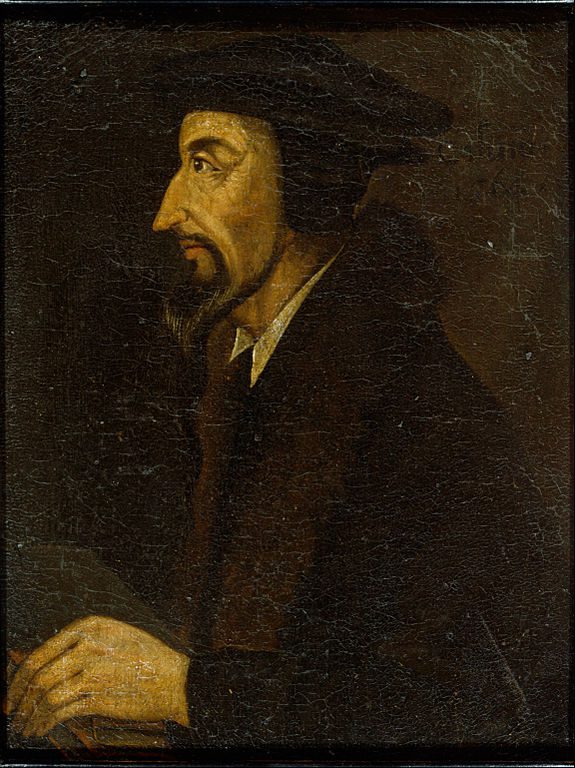
Photo credit: John Calvin (1564: British) [public domain / Wikimedia Commons]
On 10-8-24, I published my article, Bible vs. “Faith Alone”: 100 Proofs (100 Bible Passages On Catholic Justification, Sanctification, and Faith + Works [from 22 out of 27 NT Books]: All Disproving Protestant “Faith Alone” Soteriology). Later, I got the idea of inquiring as to how John Calvin (1509-1564), one of the two the most influential founders of Protestantism, along with Martin Luther, would react to these passages in his Commentaries (and then offering my rebuttals). My approach here will be the same as in my book, The Catholic Verses: 95 Bible Passages That Confound Protestants (Aug. 2004). I explain my method in that book’s Introduction:
I shall now proceed to offer a critique of common Protestant attempts to ignore, explain away, rationalize, wish away, overpolemicize, minimize, de-emphasize, evade clear consequences of, or special plead with regard to “the Catholic Verses”: ninety-five biblical passages that provide the foundation for Catholicism’s most distinctive doctrines. . . .
I will assert – with all due respect and, I hope, with a minimum of “triumphalism” — the ultimate incoherence, inadequacy, inconsistency, or exegetical and theological implausibility of the Protestant interpretations, and will submit the Catholic views as exegetically and logically superior alternatives.
The dates of Calvin’s various Commentaries are as follows:
1540 Romans
1548 All the Epistles of Paul
1551 Hebrews, and the Epistles of Peter, John, Jude, and James
1551 Isaiah
1552 Acts of the Apostles
1554 Genesis
1557 Psalms
1557 Hosea
1559 Twelve Minor Prophets
1561 Daniel
1562 Joshua
1563 Harmony of Exodus, Leviticus, Numbers, and Deuteronomy
1563 Jeremiah
1563 Harmony of Three Gospels and Commentary on St John
I use RSV for biblical citations. Calvin’s words will be in blue.
A complete listing of this series will be on my web page, John Calvin: Catholic Appraisal, under the subtitle: “Bible vs. ‘Faith Alone’ vs. John Calvin”.
*****
Psalm 7:10 My shield is with God, who saves the upright in heart.
He declares, that as God saves the upright in heart, he is perfectly safe under his protection. Whence it follows, that he had the testimony of an approving conscience. And, as he does not simply say the righteous, but the upright in heart, he appears to have an eye to that inward searching of the heart and reins mentioned in the preceding verse.
Accordingly, I cite his comment on Ps 7:9 also:
Accordingly there follows immediately after the corresponding prayer Direct thou the righteous, or establish him; for it is of little importance which of these two readings we adopt. The meaning is, that God would re-establish and uphold the righteous, who are wrongfully oppressed, and thus make it evident that they are continued in their estate by the power of God, notwithstanding the persecution to which they are subjected.—For God searcheth the hearts. The Hebrew copulative is here very properly translated by the causal particle for, since David, without doubt, adds this clause as an argument to enforce his prayer. He now declares, for the third time, that, trusting to the testimony of a good conscience, he comes before God with confidence; but here he expresses something more than he had done before, namely, that he not only showed his innocence, by his external conduct, but had also cultivated purity in the secret affection of his heart.
None of this proves faith alone, or refutes the Catholic view of infused justification. Calvin simply notes that “they are continued in their estate by the power of God.” Of course we fully agree. That doesn’t preclude our necessary cooperation with God. But the point is that we must be righteous to be saved. Calvin hasn’t shown that it’s merely imputed righteousness and not an actual holiness of behavior. He provides nothing that Protestants need in order to determine that this verse supports rather than disproves the notion of faith alone.
***
“Please Hit ‘Subscribe’”! If you have received benefit from this or any of my other 4,800+ articles, please follow my blog by signing up (with your email address) on the sidebar to the right (you may have to scroll down a bit), above where there is an icon bar, “Sign Me Up!”: to receive notice when I post a new blog article. This is the equivalent of subscribing to a YouTube channel. My blog was rated #1 for Christian sites by leading AI tool, ChatGPT: endorsed by influential Protestant blogger Adrian Warnock. Please also consider following me on Twitter / X and purchasing one or more of my 55 books. All of this helps me get more exposure, and (however little!) more income for my full-time apologetics work. Thanks so much and happy reading!
***
Isaiah 1:27 Zion shall be redeemed by justice, and those in her who repent, by righteousness.
Because the restoration of the Church was hard to be believed, he shows that it does not depend on the will of men, but is founded on the justice and judgment of God; as if he had said, that God will by no means permit his Church to be altogether destroyed, because he is righteous. The design of the Prophet, therefore, is to withdraw the minds of the godly from earthly thoughts, that in looking for the safety of the Church they may depend entirely on God, . . . though men yield no assistance, the justice of God is fully sufficient for redeeming his Church. And, indeed, so long as we look at ourselves, what hope are we entitled to cherish? How many things, on the contrary, immediately present themselves that are fitted to weaken our faith! It is only in the justice of God that we shall find solid and lasting ground of confidence.
Calvin commits the same mistake that he did regarding the previous verse: he refers solely to God’s primary and ultimate causational role in salvation, while ignoring man’s part in the transaction. Since he denies man’s free will, this makes consistent sense within his own paradigm, but it’s unbiblical. God saves the righteous. We must cooperate with God’s grace and become more righteous, as opposed to merely being declared righteous when we really aren’t. The entire context of the chapter makes that abundantly clear:
Isaiah 1:16-21 Wash yourselves; make yourselves clean; remove the evil of your doings from before my eyes; cease to do evil, [17] learn to do good; seek justice, correct oppression; defend the fatherless, plead for the widow. [18] “Come now, let us reason together, says the LORD: though your sins are like scarlet, they shall be as white as snow; though they are red like crimson, they shall become like wool. [19] If you are willing and obedient, you shall eat the good of the land; [20] But if you refuse and rebel, you shall be devoured by the sword; for the mouth of the LORD has spoken.” [21] How the faithful city has become a harlot, she that was full of justice! Righteousness lodged in her, but now murderers.
It’s interesting how many of these themes appear in the NT in conjunction with salvation:
“He saved us, . . . by the washing of regeneration” (baptism: Titus 3:5); “. . . our bodies washed with pure water” (Heb 10:22).
“Cleanse out the old leaven” (1 Cor 5:7); “let us cleanse ourselves from every defilement of body and spirit, and make holiness perfect” (2 Cor 7:1); “our hearts sprinkled clean from an evil conscience” (Heb 10:22).
“A sound tree cannot bear evil fruit” (Mt 7:18); “those who have done evil, to the resurrection of judgment” (Jn 5:29); “There will be tribulation and distress for every human being who does evil” (Rom 2:9).
“do good . . . and you will be sons of the Most High” (Lk 6:35); “those who have done good, to the resurrection of life” (Jn 5:29); “glory and honor and peace for every one who does good” (Rom 2:10); “They are to do good, to be rich in good deeds, . . . so that they may take hold of the life which is life indeed” (1 Tim 6:18-19).
“Woe to you, scribes and Pharisees, hypocrites! for you . . . have neglected the weightier matters of the law, justice and mercy and faith; these you ought to have done, . . .” (Mt 23:23).
“The Spirit of the Lord is upon me, because he has anointed me to preach good news to the poor. He has sent me to proclaim release to the captives and recovering of sight to the blind, to set at liberty those who are oppressed” (Lk 4:18).
“Religion that is pure and undefiled before God and the Father is this: to visit orphans and widows in their affliction, and to keep oneself unstained from the world” (Jas 1:27).
Isaiah 26:2 Open the gates, that the righteous nation which keeps faith may enter in.
When the Prophet calls the nation “righteous and truthful,” he not only, as I mentioned a little before, describes the persons to whom this promise relates, but shews the fruit of the chastisement; for when its pollution shall have been washed away, the holiness and righteousness of the Church shall shine more brightly. . . .
Now, as the Prophet foretells the grace of God, so he also exhorts the redeemed people to maintain uprightness of life. In short, he threatens that these promises will be of no avail to hypocrites, and that the gates of the city will not be opened for them, but only for the righteous and holy. It is certain that the Church was always like a barn, (Matthew 3:12) in which the chaff is mingled with the wheat, or rather, the wheat is overpowered by the chaff; but when the Jews had been brought back into their country, the Church was unquestionably purer than before. . . . though the Church even at that time was stained by many imperfections, still this description was comparatively true; for a large portion of the filth had been swept away, and those who remained had profited in some degree under God’s chastisements.
There is not much to disagree with here –at least, prima facie; it reads very “Catholic”; even including themes not unlike the purifying processes of purgatory. But, as in the previous passages, Calvin basically is highlighting what God did, and ignoring the role of human beings cooperating with the God’s saving and enabling grace, per his theological system, which is insufficiently biblical.
Ten verses later (26:12), we see a synergistic, “both/and” passage (“thou hast wrought for us all our works”) that exhibits the notion of our works — truly ours! — being at the same time, God’s, much like 1 Corinthians 15:10: “But by the grace of God I am what I am, and his grace toward me was not in vain. On the contrary, I worked harder than any of them, though it was not I, but the grace of God which is with me.” Other translations help to elaborate upon this passage’s meaning:
NIV . . . all that we have accomplished you have done for us.
KJV . . . thou also hast wrought all our works in us.
NKJV . . . You have also done all our works in us.
Amplified . . . You have also performed for us all that we have done.
CEV . . . everything we have done was by your power.
GNB . . . everything that we achieve is the result of what you do.
We still do something. And because we cooperate and do what God makes possible, by His grace (as with all good works), we achieve merit in doing them; as St. Augustine famously wrote, “Merit is God crowning His own gifts.”
Isaiah 32:17 And the effect of righteousness will be peace, and the result of righteousness, quietness and trust for ever.
He now promises a different kind of repose, which will be a striking proof of the love of God, who has received them into favor, and will faithfully guard them. . . . that different kind of repose, on the other hand, which the children of God obtain by a religious and holy life, and which Isaiah exhorts us to desire, shewing that we ought fearlessly to believe that a blessed and joyful peace awaits us when we have been reconciled to God.
In this way he recommends to them to follow uprightness, that they may obtain assured peace; for, as Peter declares, there is no better way of procuring favor, that no man may do us injury, than to abstain from all evil-doing. (1 Peter 3:13.) But the Prophet leads them higher, to aim at a religious and holy life by the grace of God; . . .
Part of this “procuring favor” and that which we “obtain by a religious and holy life” is doing the good works which the Bible teaches are crucial to salvation itself. But Calvin carefully avoids any such implication. I submit that my hundred passages cannot all be dismissed simply by ignoring the author’s intent when it contradicts Calvinism. He almost “backs into” Catholic soteriology, but in the final analysis skirts around it.
Isaiah 33:15-16 He who walks righteously and speaks uprightly, who despises the gain of oppressions, who shakes his hands, lest they hold a bribe, who stops his ears from hearing of bloodshed and shuts his eyes from looking upon evil, [16] he will dwell on the heights; his place of defense will be the fortresses of rocks; his bread will be given him, his water will be sure.
No man, indeed, can be so holy or upright as to be capable of enduring the eye of God; for “if the Lord mark our iniquities,” as David says, “who shall endure?” (Psalms 130:3.) We therefore need a mediator, through whose intercession our sins may be forgiven; and the Prophet did not intend to set aside the ordinary doctrine of Scripture on this subject, but to strike with terror wicked men, who are continually stung and pursued by an evil conscience, This ought to be carefully observed in opposition to the Popish doctors, by whom passages of this kind, which recommend works, are abused in order to destroy the righteousness of faith; as if the atonement for our sins, which we obtain through the sacrifice of Christ, ought to be set aside.
Ah! Now we see the incipient anti-Catholicism that never lurks very far beneath the surface of Calvin’s commentary. Note how he creates a false dichotomy (a common feature of his theology and methods of argumentation). As soon as dreaded “works” are brought into play at all, they must be denigrated, as if the Bible doesn’t teach that they play a real role in salvation (always alongside grace and faith, which are antecedent to them). My hundred Bible passages are designed to cut through this falsehood and to relentlessly refute it from the Bible. Works are not in opposition to “the sacrifice of Christ”; rather, they naturally flow from it. They are how we show or prove that we are in Christ: as Jesus Himself taught:
John 15:2, 4-6, 8 Every branch of mine that bears no fruit, he takes away, and every branch that does bear fruit he prunes, that it may bear more fruit. . . . [4] Abide in me, and I in you. As the branch cannot bear fruit by itself, unless it abides in the vine, neither can you, unless you abide in me. [5] I am the vine, you are the branches. He who abides in me, and I in him, he it is that bears much fruit, for apart from me you can do nothing. [6] If a man does not abide in me, he is cast forth as a branch and withers; and the branches are gathered, thrown into the fire and burned. . . . [8] By this my Father is glorified, that you bear much fruit, and so prove to be my disciples.
So why does Calvin pit our good works against the sacrifice of Christ on our behalf, as if the two things are intrinsically antithetical? Who knows? But we know that this emphasis — whether Calvin was aware of it or not — is a result of placing man’s false, nonbiblical traditions above the Word of God in Holy Scripture. The irony, of course, is that this is what Calvin always accuses Catholics of doing.
Isaiah 48:18-19 O that you had hearkened to my commandments! Then your peace would have been like a river, and your righteousness like the waves of the sea; [19] your offspring would have been like the sand, and your descendants like its grains; their name would never be cut off or destroyed from before me.”
Yet it would be foolish to attempt to penetrate into his secret counsel, and to inquire why he did not add the efficacy of the Spirit to the external word; for nothing is said here about his power, but there is only a reproof of the hard-heartedness of men, that they may be rendered inexcusable.
Here Calvin appears to wonder “aloud” why God isn’t a good Protestant in what he conveyed to the Jews, and why He doesn’t mention grace and/or the Holy Spirit every time He referred to commandments and works. When Calvin is stumped for ideas, he usually waxes eloquent and sophistical, as in this instance. He can be as clever as he is wrong.
Isaiah 56:1 Thus says the LORD: “Keep justice, and do righteousness, for soon my salvation will come, and my deliverance be revealed.
He . . . points out the source and the cause why it is the duty of all to devote themselves to newness of life. It is because “the righteousness of the Lord approaches to us,” that we, on our part, ought to draw near to him. The Lord calls himself “righteous,” and declares that this is “his righteousness,” not because he keeps it shut up in himself, but because he pours it out on men. In like manner he calls it “his salvation,” by which he delivers men from destruction.
Again, Calvin superimposes the late Protestant doctrine of imputed, external, justification, by only stressing that God’s righteousness is in play, and not also our righteousness, from Him, which is related to salvation. The good works that regenerated, initially justified believers do are simultaneously God’s own. Therefore, He gets ultimate credit for them, while at the same time they are truly our own, too. That’s the biblical, Hebraic “both/and” outlook on life and theology. Many Bible passages teach this:
Mark 16:20 And they went forth and preached everywhere, while the Lord worked with them . . .
Romans 15:17-19 In Christ Jesus, then, I have reason to be proud of my work for God. [18] For I will not venture to speak of anything except what Christ has wrought through me to win obedience from the Gentiles, by word and deed, [19] by the power of signs and wonders, by the power of the Holy Spirit, . . .
1 Corinthians 3:9 For we are God’s fellow workers . . .
1 Corinthians 15:10 But by the grace of God I am what I am, and his grace toward me was not in vain. On the contrary, I worked harder than any of them, though it was not I, but the grace of God which is with me.
1 Corinthians 15:58 . . . be steadfast, immovable, always abounding in the work of the Lord, knowing that in the Lord your labor is not in vain.
2 Corinthians 6:1 Working together with him, . . .
Philippians 2:12-13 . . . work out your own salvation with fear and trembling; [13] for God is at work in you, both to will and to work for his good pleasure.
Five of the next six verses in the chapter highlight good works as the path to the salvation alluded to in verse 1:
56:2 “Blessed is the man who does this, and the son of man who holds it fast, who keeps the sabbath, not profaning it, and keeps his hand from doing any evil.”
56:4-5 For thus says the LORD: “To the eunuchs who keep my sabbaths, who choose the things that please me and hold fast my covenant, [5] I will give in my house and within my walls a monument and a name better than sons and daughters; I will give them an everlasting name which shall not be cut off.
56:6-7 “And the foreigners who join themselves to the LORD, to minister to him, to love the name of the LORD, and to be his servants, every one who keeps the sabbath, and does not profane it, and holds fast my covenant — [7] these I will bring to my holy mountain, and make them joyful in my house of prayer; . . .
*
***
*
Practical Matters: I run the most comprehensive “one-stop” Catholic apologetics site: rated #1 for Christian sites by leading AI tool, ChatGPT — endorsed by popular Protestant blogger Adrian Warnock. Perhaps some of my 4,800+ free online articles or fifty-five books have helped you (by God’s grace) to decide to become Catholic or to return to the Church, or better understand some doctrines and why we believe them.
*
Or you may believe my work is worthy to support for the purpose of apologetics and evangelism in general. If so, please seriously consider a much-needed financial contribution. I’m always in need of more funds: especially monthly support. “The laborer is worthy of his wages” (1 Tim 5:18, NKJV). 1 December 2021 was my 20th anniversary as a full-time Catholic apologist, and February 2022 marked the 25th anniversary of my blog.
*
PayPal donations are the easiest: just send to my email address: [email protected]. Here’s also a second page to get to PayPal. You’ll see the term “Catholic Used Book Service”, which is my old side-business. To learn about the different methods of contributing (including Zelle), see my page: About Catholic Apologist Dave Armstrong / Donation Information. Thanks a million from the bottom of my heart!
*
***
*
Photo credit: John Calvin (1564: British) [public domain / Wikimedia Commons]

Summary: One of a series examining how John Calvin (1509-1564) exegeted biblical passages in his Commentaries that (in my opinion) refute the novel Protestant doctrine of “faith alone”.
Previous Post

October 17, 2024
Reply to Calvin’s Antidote to Trent (Justification), Pt. 2
Next Post
October 23, 2024 Bible vs. “Faith Alone” vs. John Calvin #2
Recent Comments
"And lastly, I belong to no denomination and am free to serve God as He ..."
Is Venerating Men & Angels Worship? ..."
"And obeisance doesn't mean "worship". It means "respect", "obey", or "submission". Very weird that you ..."
Is Venerating Men & Angels Worship? ..."
"Many of these scriptures you have noted have been taken out of context. With Daniel, ..."
Is Venerating Men & Angels Worship? ..."
""Protestants often point out that Jesus is now triumphant in heaven and object to Catholics ..."
Three More Anti-Catholic Lies About Catholicism ..."
Browse Our Archives
Select a Category & Last Things About Me Anti-Catholicism Atheism & Agnosticism Baptism and Sacramentalism Bible and Tradition Blessed Virgin Mary Books by Dave Armstrong C. S. Lewis Calvinism & General Protestantism Catholic Apologetics Catholic Apologists Catholic conversion Catholic converts Christmas Church (Ecclesiology) Church History Conversion and Converts Development of Doctrine Eastern Orthodoxy Ecumenism & Christian Unity Eucharist & Liturgy Fathers of the Church French Translations G. K. Chesterton Hell Hell & Satan Hell & Satan & Last Things Heresies & Comparative Religion Holistic Health Inquisition & Crusades & Scandals James White Jews & Judaism & Old Testament John Calvin John Henry Newman Liberal / Modernist Theology Life Issues Literary Resume Lutheranism Mariology Martin Luther Music Orthodoxy Papacy & Infallibility Personal Page Philosophy & Science Political & Ethical & Moral Issues Protestant Persecution & Intolerance Protestantism Purgatory Purgatory & Penance Romantic & Imaginative Theology Saints & Purgatory & Penance Salvation Salvation & Justification Satan & Last Things Sexuality and Gender Issues Spanish Translations Traditionalism vs. Radical Catholic Reactionaries Traducciones al español / tradução para português Trinitarianism & Christology Uncategorized Videos
Select a Month October 2026 September 2026 August 2026 July 2026 June 2026 May 2026 April 2026 March 2026 February 2026 January 2026 December 2025 November 2025 October 2025 September 2025 August 2025 July 2025 June 2025 May 2025 April 2025 March 2025 February 2025 January 2025 December 2024 November 2024 October 2024 September 2024 August 2024 July 2024 June 2024 May 2024 April 2024 March 2024 February 2024 January 2024 December 2023 November 2023 October 2023 September 2023 August 2023 July 2023 June 2023 May 2023 April 2023 March 2023 February 2023 January 2023 December 2022 November 2022 October 2022 September 2022 August 2022 July 2022 June 2022 May 2022 April 2022 March 2022 February 2022 January 2022 December 2021 November 2021 October 2021 September 2021 August 2021 July 2021 June 2021 May 2021 April 2021 March 2021 February 2021 January 2021 December 2020 November 2020 October 2020 September 2020 August 2020 July 2020 June 2020 May 2020 April 2020 March 2020 February 2020 January 2020 December 2019 November 2019 October 2019 September 2019 August 2019 July 2019 June 2019 May 2019 April 2019 March 2019 February 2019 January 2019 December 2018 November 2018 October 2018 September 2018 August 2018 July 2018 June 2018 May 2018 April 2018 March 2018 February 2018 January 2018 December 2017 November 2017 October 2017 September 2017 August 2017 July 2017 June 2017 May 2017 April 2017 March 2017 February 2017 January 2017 December 2016 November 2016 October 2016 September 2016 August 2016 July 2016 June 2016 May 2016 April 2016 March 2016 February 2016 January 2016 December 2015 November 2015 October 2015 September 2015 August 2015 July 2015 June 2015 May 2015 April 2015 March 2015 February 2015 January 2015 December 2014 November 2014 October 2014 September 2014 August 2014 July 2014 June 2014 April 2014 March 2014 February 2014 January 2014 December 2013 November 2013 October 2013 September 2013 August 2013 July 2013 June 2013 April 2013 March 2013 February 2013 January 2013 December 2012 November 2012 October 2012 September 2012 August 2012 July 2012 June 2012 May 2012 April 2012 March 2012 February 2012 January 2012 December 2011 November 2011 October 2011 September 2011 August 2011 July 2011 June 2011 April 2011 March 2011 February 2011 October 2010 September 2010 August 2010 July 2010 April 2010 March 2010 December 2009 October 2009 August 2009 July 2009 June 2009 May 2009 March 2009 February 2009 October 2008 September 2008 April 2008 March 2008 February 2008 January 2008 December 2007 November 2007 October 2007 May 2007 March 2007 February 2007 January 2007 November 2006 October 2006 September 2006 August 2006 July 2006 June 2006 May 2006 April 2006 March 2006 February 2006 October 2005 June 2005 April 2005 February 2005 July 2004 May 2004 April 2004
Follow Us!
TAKE THE
Religious Wisdom Quiz
Who fell out of a window and was restored to life by Paul?
Select your answer to see how you score.
Silas Barnabas Eutychus Timothy
Books by This Author Books by Dave Armstrong
Related posts from Biblical Evidence for Catholicism

Bible & Catholicism on Mortal Sin (vs. John...
Biblical Evidence for Catholicism

Dialogue on Eternal Security / Absolute Assurance
Biblical Evidence for Catholicism

"Faith Alone" Dialogue with a Calvinist
Biblical Evidence for Catholicism

Exegesis of 75 NT Faith [Alone?] & Works...
Biblical Evidence for Catholicism
TRENDING AT PATHEOS Catholic

In "Irreplaceable," our book on vocation and technology, Trevor Sutton and I...

I was strolling through the top floor of the brand new Parthenon...

What Does Gêvâh Mean For Kimberley Guifoyle &...
This week, a lot of the news is focused on Kimberly Guilfoyle....

INNER CIRCLE: Profound Mystery (Of Christ In All...
Ephesians 5:31-32 “For this reason, a man will leave his father and...

Do Not Rejoice When Your Enemy Falls: The...
Turning an execution into a public spectacle is a disturbing expression of...

'The Chosen' S6 Trailer: The Passion Gets Very...
Not many watching 'The Chosen' worry about spoilers, but just because they...
view all Catholic blogs
What Are Your Thoughts?leave a comment
Ad-Free & Subscriber Log-In Subscription Support
- About Us
- 2026 Calendar
- Videos
- Podcasts
- Library of World Religions
- Faith In Media Tracker
- Advertise With Us
- Write for Us
- Privacy Policy
- Terms of Service
- Do Not Sell My Data
- Contact Us
- Radiant Digital
- Manage Newsletter Subscriptions
- Unsubscribe From Notifications
- Sitemap
Copyright 2008-2026, Patheos. All rights reserved.
Subscription Support Ad-Free & Subscriber Log-In
Follow Patheos