
BuddhistCatholicContemplativeEvangelicalGeneral ChristianHinduJewishLatter-day SaintMuslimNew VisionsProgressive Christian
Beliefs
- Buddhist
- Catholic
- Contemplative
- Evangelical
- General Christian
- Hindu
- Jewish
- Latter-day Saint
- More Voices
- Muslim
- New Visions
- Pagan
- Progressive Christian
Topics
- Religion News
- Food and Religion
- Sports and Religion
- Religious Art
- Religious Music and Entertainment
- Religious Events
- History and Religion
- Style and Religion
- Politics and Religion
- Women in Religion
- Recreation Outdoors and Religion
- Business Finance and Religion
- Careers Workplace and Religion
- Education and Religion
- Family Parenting and Religion
- Health Fitness and Religion
- Home and Religion
- Relationships and Religion
- Technology and Religion
- Travel and Religion
Columnists
- Buddhist Columnists
- Business Finance and Religion Columnists
- Careers Workplace and Religion Columnists
- Catholic Columnists
- Contemplative Columnists
- Education and Religion Columnists
- Evangelists Columnists
- Family Parenting and Religion Columnists
- General Christian Columnists
- Health Fitness and Religion Columnists
- Hindu Columnists
- History and Religion Columnists
- Home and Religion Columnists
- Jewish Columnists
- More Voices Columnists
- Latter Day Columnists
- Muslim Columnists
- New Visions Columnists
- Nonreligious Columnists
- Pagan Columnists
- Politics and Religion Columnists
- Progressive Columnists
- Recreation Outdoors and Religion Columnists
- Relationships and Religion Columnists
- Religion News Columnists
- Religious Art Columnists
- Religious Events Columnists
- Religious Music and Entertainment Columnists
- Sports and Religion Columnists
- Style and Religion Columnists
- Technology and Religion Columnists
- Travel and Religion Columnists
- Women in Religion Columnists
Resource Library
- 2026 Calendar
- Library of World Religions
- The 100 Most Holy Places on Earth
- Patheos Answers
- Podcasts
- Videos
- Faith Leaders Database
- Anglican Episcopalian
- Bahai
- Baptist
- Buddhism
- Christianity
- Confucianism
- Eastern Orthodoxy
- Hinduism
- Holiness and Pentecostal
- ISKCON
- Islam
- Judaism
- Lutheran
- Methodist
- The Church of Jesus Christ of Latter-day Saints
- New Age
- Paganism
- Presbytarian and Reformed
- Protestantism
- Religion Behind the Scenes
- Roman Catholic
- Scientology
- Shia Islam
- Sikhism
- Sufism
- Sunni Islam
- Taoism
- Zen
- See all religions
Research Tools
 Ad-Free & Subscriber Log-In Subscription Support
Ad-Free & Subscriber Log-In Subscription Support
Follow Patheos 

- Trending:
- Forgiveness
- |
- Marriage
- |
- Consciousness
- |
- Death Penalty
- |
- Election
- |
- Halloween

-
About
-
Catholic Apologetics
-
Church History
-
Great Apologists
-
Christian Worldview
-
Protestantism & Misc.
- Home
- Catholic
- History and Religion
- Treviño Misrepresents My “Peter the Rock” Argument
Treviño Misrepresents My “Peter the Rock” Argument
Last updated on: June 6, 2026 at 12:52 am by Dave Armstrong
Treviño Misrepresents My “Peter the Rock” Argument 2026-06-06T00:52:10-04:00 Dave Armstrong
Patheos Explore the world's faith through different perspectives on religion and spirituality! Patheos has the views of the prevalent religions and spiritualities of the world.
Why I Cited Protestant Scholars Who Believe that Jesus Thought Peter Himself was the “Rock”
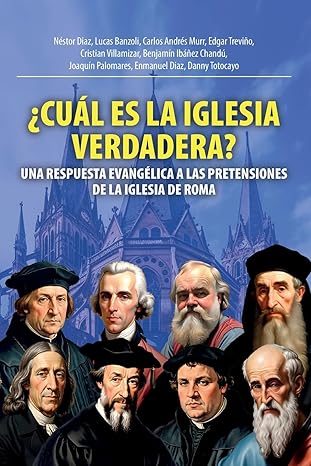
Photo credit: cover of the Spanish-language book, ¿Cuál Es La Iglesia Verdadera?: Una Respuesta Evangélica A Las Pretensiones De La Iglesia De Roma from its Amazon page. Copyright by ibukku, LLC (June 5, 2024).
This is a reply to a portion of a book written in Spanish, entitled, ¿Cuál Es La Iglesia Verdadera?: Una Respuesta Evangélica A Las Pretensiones De La Iglesia De Roma [Which Is the True Church?: An Evangelical Response to the Claims of the Church of Rome] (self-published, 5 June 2024): a collection of polemical writings against Catholicism from nine anti-Catholics.
In chapter 3, “The Papacy and the History of the Church”, by Edgar Treviño, one of my statements was cited and its meaning and intent completely misrepresented in an embarrassing and inexcusable way, in a subsection entitled, “Do Protestant Scholars Support the Papacy in Matthew 16:18?” The author’s goal (typical of anti-Catholics’ modus operandi) was to make me — and the point I was making here — look ridiculous. In order to try to accomplish that, he had to create a caricature of my actual argument. In actuality, he has proven himself to be ridiculous, and manifested to one and all his inability to comprehend rather simple logic and straightforward reasoning.
Treviño’s words will be in blue. I used Google Translate to render the Spanish into English (excepting the citation from my book).
*****
I will concern myself in this article only with the portion that cited me and misrepresented my argument. It’s a case study in either 1) deliberate dishonesty in anti-Catholic argumentation, or 2) extraordinary incompetence and shoddy so-called “reasoning” and research ability in anti-Catholic polemics. Take your pick.
Roman Catholic apologist Dave Armstrong wrote:
Many prominent Protestant scholars and exegetes have agreed that Peter is the “rock” in Matthew 16:18; these include Alford, Broadus, Keil, Kittel, Cullmann, Albright, Robert McAfee Brown, and, most recently, respected Evangelical commentators R. T. France and D. A. Carson. (citation from my 2003 book, A Biblical Defense of Catholicism, p. 219; see also the entire chapter, available online for free, with the full documentation of the sources)
He did accurately cite me (thank you for small favors). But it’s his misinterpretation of my argument that is problematic and ludicrous.
And what good does it do Armstrong that these Protestant scholars interpret Peter as the “rock” of Matthew 16:18? It does him no good, because they do not believe in the papacy, in fact, they say that even if Peter was the “rock” in Matthew 16:18, that is no basis for the papacy.
It’s irrelevant whether they believe in the papacy or not (of course they don’t: being Protestant), because that isn’t why I cited them. I did precisely because they do not believe in the papacy. It’s the argumentative technique of the “hostile witness.” In other words, the reasoning runs as follows: “even several reputable, scholarly Protestants who disbelieve in the papacy agree with a key premise in the Catholic defense of Petrine primacy and the papacy that developed from it: i.e., that Jesus regarded Peter as “the Rock” in Matthew 16:18, not merely Peter’s confession or He (Christ) Himself” (the two standard views of almost all Protestants these past 500 years).
If one cites a dialogical / theological opponent in agreement regarding one important premise for a notion that he or she disagrees with, that is a very strong argument, with much force. If a Catholic cites other Catholics, the Protestant simply dismisses them as biased and partisan. But if their own Protestant scholars are cited, then they must stand up and take notice, if they are honest and seekers of truth. Protestant scholars, in other words, can’t be accused of partisan bias when they agree with some Catholic premise (as opposed to a Catholic belief).
Protestant apologists use the same technique all the time. I’ve personally observed this thousands of times, in my 34 years of doing Catholic apologetics. They will cite Catholic scholars in order to oppose some Catholic doctrine or premise of same. But Protestants usually cite liberal, nominal Catholic scholars, who barely even accept all that the Catholic Church teaches. I don’t have to do that. I cited solid, respectable Protestant scholars.
I searched the term, “Erudito católico romano” [Roman Catholic scholar”] in the book, and it appeared 14 times. The various co-authors cited Catholics such as Eamon Duffy, Robert B. Eno, Xabier Pikaza, Pierre Batiffol, [theological liberal] Raymond E. Brown (2), [theological liberal] Richard McBrien, Antonio Royo Marín, Yves Congar, and [orthodox] Ludwig Ott (3).
This is exactly the same sort of reasoning that I utilized. Yet when I do it, Treviño claims that it is irrelevant and ineffective. Well, then, when his co-authors do the same thing, it must be irrelevant and ineffective for them, too. Since he surely would reject that, his clueless pseudo-argument against me collapses, by reductio ad absurdum (there’s another form of argument for you), since his own colleagues use the same method.
Armstrong is not proving the papacy in Matthew 16:18 by quoting Protestant scholars.
I never claimed that I was doing that or seeking to do it. I agree! In my book, in the passage cited, I stated, “Many prominent Protestant scholars and exegetes have agreed that Peter is the “rock” in Matthew 16:18 . . .” I did not state, or argue, “Many prominent Protestant scholars and exegetes have agreed that the papacy is proven by Matthew 16:18.” Reading Treviño, one would think that I had stated the latter, not the former. But I was arguing that important Protestant scholars agreed with one particular argument for the papacy that Catholics have made for many centuries.
The first thing one learns in debate club in middle school is to understand one’s debate opponent’s views at least as well as they do themselves. Treviño miserably fails that test. He has no idea what I was even contending for, and seems unfamiliar with a type of argumentation that is very commonly used, and was in the very book he was part of: about a dozen times.
***
“Please Hit ‘Subscribe’”! If you have received benefit from this or any of my other 4,800+ articles, please follow my blog by signing up (with your email address) on the sidebar to the right (you may have to scroll down a bit), above where there is an icon bar, “Sign Me Up!”: to receive notice when I post a new blog article. This is the equivalent of subscribing to a YouTube channel. My blog was rated #1 for Christian sites by leading AI tool, ChatGPT: endorsed by influential Protestant blogger Adrian Warnock. Please also consider following me on Twitter / X and purchasing one or more of my 55 books. All of this helps me get more exposure, and (however little!) more income for my full-time apologetics work. Thanks so much and happy reading!
***
On the contrary, Dave Armstrong also makes the same mistake as other Catholic apologists, by quoting half-baked Protestant scholars who say that Peter is the “rock” in Matthew 16:18.
This is where Treviño makes an even bigger fool of himself. He not only astonishingly misrepresents what I was arguing, but then goes on to insult the Protestant scholars that I cited; thus proving how unaware he is even of his own broad theological heritage and Protestant tradition. I was already familiar with most of them as a Protestant (prior to 1990). Let me do a brief survey of them, for his sake, and that of any other Protestants who believe that I cited “half-baked” Protestant scholars to make my argument (information mostly from Wikipedia articles):
Henry Alford (1810-1871) was an English Anglican churchman, theologian, textual critic, scholar, poet, hymnodist, and writer. His chief fame rests on his monumental edition of the New Testament in Greek (8 vols.), written from 1841 to 1861 [see volumes one, two, three, four]. In this work he first brought before English students a careful collation of the readings of the chief manuscripts and the researches of the ripest continental scholarship of his day. Philological rather than theological in character, it marked an epochal change from the old homiletic commentary, and through more recent research, patristic and papyral, largely changed the method of New Testament exegesis. See many of his other works as well.
John Albert Broadus (1827-1895) was an American Baptist pastor and President of the Southern Baptist Theological Seminary. His many writings include Commentary on the Gospel of Matthew, A Harmony of the Gospels in the Revised Version, and Commentary on the Gospel of Mark (see many more). Charles Spurgeon called Broadus the “greatest of living preachers.” Church historian Albert Henry Newman called Broadus “perhaps the greatest preacher the Baptists have produced.”
Carl Friedrich Keil (1807-1888) was a conservative German Lutheran Old Testament commentator. Keil was appointed to the theological faculty of Dorpat in Estonia where he taught Bible, New Testament exegesis, and Oriental languages. Keil was a conservative critic who reacted strongly against the scientific biblical criticism of his day. He strongly supported Mosaic authorship of the Pentateuch. He maintained the validity of the historico-critical investigation of the Bible only if it proved the existence of New Testament revelation in the Scriptures. To this aim he edited (with Franz Delitzsch) his principal work, a commentary on the Bible, Biblical Commentary on the Old Testament, 5 vols., 1872–77; available online). The work remains his most enduring contribution to biblical studies.
Gerhard Kittel (1888-1948), Lutheran author, with Gerhard Friedrich, of the Theological Dictionary of the New Testament (ten volumes, and also a one-volume edition; my own copy sits a foot away from me as I write). It’s considered by many scholars to be the best New Testament dictionary ever compiled. Mediating between ordinary lexicography and the specific task of exposition, TDNT treats more than 2,300 theologically significant New Testament words, including the more important prepositions and numbers as well as many proper names from the Old Testament.
Oscar Cullmann (1902-1999) was a French Lutheran theologian and ecumenist. In 1930, he was awarded a full professorship of New Testament. From 1936, he also taught the history of the early church. In 1938, he began teaching both subjects at Basel Reformed Seminary. In 1948 Cullmann accepted a position teaching theology in Paris at the Sorbonne while he continued at Basel. See his many writings.
William Foxwell Albright (1891-1971), a Methodist, was an American archaeologist, biblical scholar, and philologist. He is considered “one of the twentieth century’s most influential American biblical scholars”, having become known to the public in 1948 for his role in the authentication of the Dead Sea Scrolls. Albright was a leading theorist and practitioner of biblical archaeology, and is regarded as the founder of the biblical archaeology movement. He served as the W. W. Spence Professor of Semitic Languages at Johns Hopkins University from 1930 to 1958 and was the Director of the American School of Oriental Research in Jerusalem for several terms between 1922 and 1936. Albright’s work has had a lasting impact on the understanding of ancient Near Eastern history and the historicity of the Bible. See his many works.
Robert McAfee Brown (1920–2001) was an American Presbyterian minister, theologian, and ecumenist. He studied at the University of Oxford before completing a doctorate in the philosophy of religion at Columbia University in 1951. He was appointed as Professor of Religion at Stanford University in 1962. See his many books.
Richard Thomas (R. T.) France (1938–2012) was a New Testament scholar and evangelical Anglican cleric. He was Principal of Wycliffe Hall, Oxford, from 1989 to 1995. He also worked for the London School of Theology. He was known as one of the best exegetes and commentators on the New Testament. See his many commentaries.
Donald Arthur (D. A.) Carson (born December 21, 1946) is a Canadian evangelical theologian. He is a Distinguished Emeritus Professor of New Testament at Trinity Evangelical Divinity School and president and co-founder of the Gospel Coalition. He has written or edited about sixty books (or more) and served as president of the Evangelical Theological Society in 2022. Carson has been described as doing “the most seminal New Testament work by contemporary evangelicals” and as “one of the last great Renaissance men in evangelical biblical scholarship.” He has written on a wide range of topics including New Testament, hermeneutics, biblical theology, the Greek New Testament, the use of the Old Testament in the New, and more. He obtained a Doctor of Philosophy in New Testament from the University of Cambridge in 1975. He has authored and edited over 60 books.
And these were just scholars that I had mentioned in this regard 28 years ago, in my first book, completed in 1996. Since then, I have found at least twenty more prominent Protestant exegetes and reference works (making it a total of 29) who also held that Peter himself (not his confession) was the Rock:
New Bible Dictionary, Word Studies in the New Testament (Marvin Vincent), Wycliffe Bible Commentary, New Bible Commentary, Eerdmans Bible Commentary, Herman N. Ridderbos, Albert Barnes, David Hill, M. Eugene Boring, William Hendriksen, Peake’s Commentary, Gerhard Maier, J. Knox Chamblin, Craig L. Blomberg, William E. McCumber, Donald A. Hagner, Philip Schaff, Lange’s Commentary on the Holy Scriptures: The Gospel According to Matthew, vol. 8, The Layman’s Bible Commentary, Encyclopaedia Britannica (1985; article by D. W. O’Connor, a Protestant), and Richard Baumann. For much more on this, see my article, Peter the Rock: Only a Catholic View? (vs. James White) [Includes Documentation of 14 Church Fathers Who Thought Peter Was the Rock] [5-11-24].
Now, if Treviño — in his infinite knowledge of Protestant scholarship — wishes to contend that all of these scholars and reputable reference works are also “half-baked” he is free, of course, to do so, but it will obliterate any shred of intellectual credibility he still has left. I think he should admit that he has no idea what he is talking about and instantly retire from pretending to engage in Protestant apologetics, in order to save himself from future embarrassing refutations such as this one. I feel bad for my Protestant brothers and sisters! Treviño — like anti-Catholics generally speaking — doesn’t represent the thought of serious Protestant exegetes and scholars.
Armstrong does not cite the conclusions of the Protestant scholars he cites, and they are very important, because their conclusions contradict what Armstrong believes about Matthew 16:18 and the papacy, and the interpretation of Peter being the “rock” according to what these Protestant scholars say about Matthew 16:18. These Protestant scholars do not connect Matthew 16:18 with the belief of the papacy (Armstrong does).
As explained, this is completely irrelevant to my argument (what is known in logic as a non sequitur). It’s understood and assumed going in that they reject the papacy and papal ecclesiology, by definition (as Protestants).
It is like trying to go 100 kilometers in a car that has little gasoline, and can only go 50 kilometers. Armstrong falls into the “non sequitur fallacy”, the conclusion does not follow from the premise.
*
This is sheer nonsense, since Treviño never even understood the nature of my argument in the first place, and so has been engaging in “straw man” tactics and caricature. Again (repetition being a good teacher), I wasn’t seeking to prove that they believed in the papacy itself, but rather, that they believed in an important premise of Catholic argumentation for the papacy: that Jesus regarded Peter Himself as the “Rock” upon which He would build His Church. To “Catholic ears” that is very “papal” indeed, however Protestants conceptualize it.
*
And many Protestants have made profound statements about the degree of Peter’s authority, too, based on Jesus having given him “the keys of the kingdom.” The argument for Petrine primacy and the papacy, based on the Bible, is a cumulative one, as I have often noted: made up of many strands that we believe all point in the direction of the papacy as a divinely instituted office in the Church. I wrote over 22 years ago, for example:
The case for the papacy is a cumulative argument. As such, showing that the consensus today is that Peter was the Rock is one aspect of that. It isn’t the whole ball of wax. We also show what was meant by having the keys of the kingdom, etc. We support our positions one-by-one and then conclude that the evidence is strong. (2-26-02)
It is a “cumulative” argument. One doesn’t expect that all individual pieces of such an argument are “airtight” or conclusive in and of themselves, in isolation, by the nature of the case. I certainly don’t do so. . . . all the various evidences become strong only as they are considered together (like many weak strands of twine which become a strong rope when they are woven together). . . . all the various evidences become strong only as they are considered together (like many weak strands of twine which become a strong rope when they are woven together). (3-14-02)
See, for example, my fairly well-known piece, 50 New Testament Proofs for Petrine Primacy & the Papacy [1994] [+ French version] [+ Portugese version 1 / Portugese version 2], and also, Reply to Lucas Banzoli’s 205 Potshots at St. Peter, Part I (+ Part II, Part III, Part IV) [5-30-22]. Banzoli is one of the contributors to this book. See many more biblical and historical arguments for the papacy on my web page, The Papacy and Infallibility.
*
I have refuted Banzoli’s writings 66 times. From 25 May until 12 November 2022 he wrote not one single word in reply, claiming that my articles were “without exception poor, superficial and weak” and that “only a severely cognitively impaired person” would take them “seriously.” Nevertheless, he found them so “entertaining” that after almost six months of inaction he resolved to “make a point of rebutting” them “one by one”; this effort being his “new favorite sport.” He has replied to me 16 times (the last one dated 2-20-23). My replies can be found under his name on my Anti-Catholicism page.
*
When Roman Catholic apologists cite lists of Protestant scholars who say that Peter is the “rock” it does not prove their point, because these Protestant scholars do not believe in the Roman Catholic interpretation. To give the appearance that these Protestants support the Roman Catholic interpretation is either a failure to read the citations or intentionally omitting the full citations of these Protestant scholars and their interpretation of Matthew 16:18.
*
Merely repeating lies or falsehoods make them no more true or less false than they were the first time they were brought up. All Treviño does is spew out this stupid, clueless “reply” over and over; never understanding the nature of my argument. It’s astonishing to behold, and should be embarrassing and scandalous to all who read it. These Protestant scholars are following the interpretation (i.e., in terms of Peter being the Rock, not a pope) of at least 14 Church fathers that I have found:
*
Tertullian, writing around 200-220, stated that “Peter . . . is called the Rock whereon the Church was to be built” (Prescription against Heretics, 22).
Origen writing around 230-250, called Peter “that great foundation of the Church, and most solid rock, upon which Christ founded the Church” (In Exod. Hom. v. n. 4, tom. ii) and “Upon him (Peter) . . . the Church was founded” (In Epist. ad Rom. lib. v. c. 10, tom. iv) and “Peter upon whom is built Christ’s Church” (T. iv. In Joan. Tom. v.).
St. Cyprian, c. 246, wrote about “Peter, upon whom by the same Lord the Church had been built” (Epistle 54 to Cornelius, 7).
Firmilian, c. 254, wrote about “one Church, which was once first established by Christ on a Rock” (Inter Ep. S. Cyp. Ep. lxxv).
Aphraates (c. 336) stated that “the Lord . . . set him up as the foundation, called him the rock and structure of the Church” (Homily 7:15, De Paenitentibus).
St. Ephraem (c. 350-370) called Peter “the foundation of the holy Church” (Homilies 4:1).
St. Hilary of Poitiers in 360 held that Peter was “the foundation-stone of the Church” (On the Trinity, Bk. VI, 20).
St. Gregory of Nazianzen (370) stated that Peter “is entrusted with the Foundations of the Church” (T. i. or. xxxii. n. 18).
St. Gregory of Nyssa (371) wrote that Peter was “the Head of the Apostles . . . (upon him) is the Church of God firmly established. . . . that unbroken and most firm Rock upon which the Lord built His Church” (Alt. Or. De S. Steph.).
St. Basil the Great (371) stated that Peter “received on himself the building of the Church” (Adversus Eunomius 2:4).
St. Epiphanius (c. 385): “upon which (Rock) the Church is in every way built . . . Foundation of the house of God” (Adv. Haeres.).
St. Ambrose (c. 385-389): “whom when He styles a Rock, He pointed out the Foundation of the Church” (T. ii. l. iv. De Fide, c. v. n. 56).
St. John Chrysostom (c. 387): “Head or Crown of the Apostles, the First in the Church . . . that unbroken Rock, that firm Foundation, the Great Apostle, the First of the disciples” (T. ii. Hom. iii. de Paenit. n. 4).
St. Jerome (385): “Peter, upon whom the Lord has founded the Church” (Letters 41, 2).
ADDENDUM
Treviño made a “reply” on 8 October 2024. I read about six paragraphs, which consisted solely of juvenile insults, before giving up. I don’t waste my time interacting with fools and idiots who can only insult and lie about their opponents (“He is afraid of the truth, and that bothers him greatly” etc. ad nauseam); offering no rational thoughts. Life is too short. I interacted with the book portion, following Solomon’s advice: “Answer a fool according to his folly, lest he be wise in his own eyes” (Prov 26:5). But now is the time to apply his equally sage advice, “Answer not a fool according to his folly, lest you be like him yourself” (26:4).
***
*
Practical Matters: I run the most comprehensive “one-stop” Catholic apologetics site: rated #1 for Christian sites by leading AI tool, ChatGPT — endorsed by popular Protestant blogger Adrian Warnock. Perhaps some of my 4,800+ free online articles or fifty-five books have helped you (by God’s grace) to decide to become Catholic or to return to the Church, or better understand some doctrines and why we believe them.
Or you may believe my work is worthy to support for the purpose of apologetics and evangelism in general. If so, please seriously consider a much-needed financial contribution. I’m always in need of more funds: especially monthly support. “The laborer is worthy of his wages” (1 Tim 5:18, NKJV). 1 December 2021 was my 20th anniversary as a full-time Catholic apologist, and February 2022 marked the 25th anniversary of my blog.
PayPal donations are the easiest: just send to my email address: [email protected]. Here’s also a second page to get to PayPal. You’ll see the term “Catholic Used Book Service”, which is my old side-business. To learn about the different methods of contributing (including Zelle), see my page: About Catholic Apologist Dave Armstrong / Donation Information. Thanks a million from the bottom of my heart!
*
***
*
Photo credit: cover of the Spanish-language book, ¿Cuál Es La Iglesia Verdadera?: Una Respuesta Evangélica A Las Pretensiones De La Iglesia De Roma from its Amazon page. Copyright by ibukku, LLC (June 5, 2024).
Summary: Edgar Treviño, in Which Is the True Church?: An Evangelical Response to the Claims of the Church of Rome (2024), utterly misrepresents my argument about Peter the Rock.
Previous Post
September 10, 2024
Reply to Melanchthon on the Invocation of Saints
Next Post

September 16, 2024 Dr. Robert Gagnon vs. the Immaculate Conception
Recent Comments
"Special pleading, and not a serious response to my arguments . . ."
Is Venerating Men & Angels Worship? ..."
""no man needs to teach us."Didn't you just teach us?"
Is Venerating Men & Angels Worship? ..."
""Catholics say they are the only church that can lead people into heaven."In fact, we ..."
Is Venerating Men & Angels Worship? ..."
"And lastly, I belong to no denomination and am free to serve God as He ..."
Is Venerating Men & Angels Worship? ..."
Browse Our Archives
Select a Category & Last Things About Me Anti-Catholicism Atheism & Agnosticism Baptism and Sacramentalism Bible and Tradition Blessed Virgin Mary Books by Dave Armstrong C. S. Lewis Calvinism & General Protestantism Catholic Apologetics Catholic Apologists Catholic conversion Catholic converts Christmas Church (Ecclesiology) Church History Conversion and Converts Development of Doctrine Eastern Orthodoxy Ecumenism & Christian Unity Eucharist & Liturgy Fathers of the Church French Translations G. K. Chesterton Hell Hell & Satan Hell & Satan & Last Things Heresies & Comparative Religion Holistic Health Inquisition & Crusades & Scandals James White Jews & Judaism & Old Testament John Calvin John Henry Newman Liberal / Modernist Theology Life Issues Literary Resume Lutheranism Mariology Martin Luther Music Orthodoxy Papacy & Infallibility Personal Page Philosophy & Science Political & Ethical & Moral Issues Protestant Persecution & Intolerance Protestantism Purgatory Purgatory & Penance Romantic & Imaginative Theology Saints & Purgatory & Penance Salvation Salvation & Justification Satan & Last Things Sexuality and Gender Issues Spanish Translations Traditionalism vs. Radical Catholic Reactionaries Traducciones al español / tradução para português Trinitarianism & Christology Uncategorized Videos
Select a Month October 2026 September 2026 August 2026 July 2026 June 2026 May 2026 April 2026 March 2026 February 2026 January 2026 December 2025 November 2025 October 2025 September 2025 August 2025 July 2025 June 2025 May 2025 April 2025 March 2025 February 2025 January 2025 December 2024 November 2024 October 2024 September 2024 August 2024 July 2024 June 2024 May 2024 April 2024 March 2024 February 2024 January 2024 December 2023 November 2023 October 2023 September 2023 August 2023 July 2023 June 2023 May 2023 April 2023 March 2023 February 2023 January 2023 December 2022 November 2022 October 2022 September 2022 August 2022 July 2022 June 2022 May 2022 April 2022 March 2022 February 2022 January 2022 December 2021 November 2021 October 2021 September 2021 August 2021 July 2021 June 2021 May 2021 April 2021 March 2021 February 2021 January 2021 December 2020 November 2020 October 2020 September 2020 August 2020 July 2020 June 2020 May 2020 April 2020 March 2020 February 2020 January 2020 December 2019 November 2019 October 2019 September 2019 August 2019 July 2019 June 2019 May 2019 April 2019 March 2019 February 2019 January 2019 December 2018 November 2018 October 2018 September 2018 August 2018 July 2018 June 2018 May 2018 April 2018 March 2018 February 2018 January 2018 December 2017 November 2017 October 2017 September 2017 August 2017 July 2017 June 2017 May 2017 April 2017 March 2017 February 2017 January 2017 December 2016 November 2016 October 2016 September 2016 August 2016 July 2016 June 2016 May 2016 April 2016 March 2016 February 2016 January 2016 December 2015 November 2015 October 2015 September 2015 August 2015 July 2015 June 2015 May 2015 April 2015 March 2015 February 2015 January 2015 December 2014 November 2014 October 2014 September 2014 August 2014 July 2014 June 2014 April 2014 March 2014 February 2014 January 2014 December 2013 November 2013 October 2013 September 2013 August 2013 July 2013 June 2013 April 2013 March 2013 February 2013 January 2013 December 2012 November 2012 October 2012 September 2012 August 2012 July 2012 June 2012 May 2012 April 2012 March 2012 February 2012 January 2012 December 2011 November 2011 October 2011 September 2011 August 2011 July 2011 June 2011 April 2011 March 2011 February 2011 October 2010 September 2010 August 2010 July 2010 April 2010 March 2010 December 2009 October 2009 August 2009 July 2009 June 2009 May 2009 March 2009 February 2009 October 2008 September 2008 April 2008 March 2008 February 2008 January 2008 December 2007 November 2007 October 2007 May 2007 March 2007 February 2007 January 2007 November 2006 October 2006 September 2006 August 2006 July 2006 June 2006 May 2006 April 2006 March 2006 February 2006 October 2005 June 2005 April 2005 February 2005 July 2004 May 2004 April 2004
Follow Us!
TAKE THE
Religious Wisdom Quiz
What does "Apocalypse" mean in Greek?
Select your answer to see how you score.
Revelation Destruction Judgment Victory
Books by This Author Books by Dave Armstrong
Related posts from Biblical Evidence for Catholicism

Three More Anti-Catholic Lies About Catholicism (#6-4)
Biblical Evidence for Catholicism

Top Ten Anti-Catholic Lies (#10-7)
Biblical Evidence for Catholicism

Was Peter "Any Old" Apostle? 10 Anti-Papal Arguments
Biblical Evidence for Catholicism

Jesus Founded the [Catholic] Church. If Not Him,...
Biblical Evidence for Catholicism
TRENDING AT PATHEOS Catholic

The Sermon on the Mount, Part I: Matthew...
The Sermon on the Mount, Part I (Matthew 4:12-5:12) St. Matthew moves...

What's up from Crossway: Reviewing some of their latest A few weeks...

Janie Learns the Way of the Cross: A...
Teaching children about Jesus' Passion can be challenging. Many parents and educators...

Looking For Good Catholic Writing - October 2026
He alone extends the heavens, and he walks upon the waves of...

In "Irreplaceable," our book on vocation and technology, Trevor Sutton and I...

I was strolling through the top floor of the brand new Parthenon...
view all Catholic blogs
What Are Your Thoughts?leave a comment
Ad-Free & Subscriber Log-In Subscription Support
- About Us
- 2026 Calendar
- Videos
- Podcasts
- Library of World Religions
- Faith In Media Tracker
- Advertise With Us
- Write for Us
- Privacy Policy
- Terms of Service
- Do Not Sell My Data
- Contact Us
- Radiant Digital
- Manage Newsletter Subscriptions
- Unsubscribe From Notifications
- Sitemap
Copyright 2008-2026, Patheos. All rights reserved.
Subscription Support Ad-Free & Subscriber Log-In
Follow Patheos