
BuddhistCatholicContemplativeEvangelicalGeneral ChristianHinduJewishLatter-day SaintMuslimNew VisionsProgressive Christian
Beliefs
- Buddhist
- Catholic
- Contemplative
- Evangelical
- General Christian
- Hindu
- Jewish
- Latter-day Saint
- More Voices
- Muslim
- New Visions
- Pagan
- Progressive Christian
Topics
- Religion News
- Food and Religion
- Sports and Religion
- Religious Art
- Religious Music and Entertainment
- Religious Events
- History and Religion
- Style and Religion
- Politics and Religion
- Women in Religion
- Recreation Outdoors and Religion
- Business Finance and Religion
- Careers Workplace and Religion
- Education and Religion
- Family Parenting and Religion
- Health Fitness and Religion
- Home and Religion
- Relationships and Religion
- Technology and Religion
- Travel and Religion
Columnists
- Buddhist Columnists
- Business Finance and Religion Columnists
- Careers Workplace and Religion Columnists
- Catholic Columnists
- Contemplative Columnists
- Education and Religion Columnists
- Evangelists Columnists
- Family Parenting and Religion Columnists
- General Christian Columnists
- Health Fitness and Religion Columnists
- Hindu Columnists
- History and Religion Columnists
- Home and Religion Columnists
- Jewish Columnists
- More Voices Columnists
- Latter Day Columnists
- Muslim Columnists
- New Visions Columnists
- Nonreligious Columnists
- Pagan Columnists
- Politics and Religion Columnists
- Progressive Columnists
- Recreation Outdoors and Religion Columnists
- Relationships and Religion Columnists
- Religion News Columnists
- Religious Art Columnists
- Religious Events Columnists
- Religious Music and Entertainment Columnists
- Sports and Religion Columnists
- Style and Religion Columnists
- Technology and Religion Columnists
- Travel and Religion Columnists
- Women in Religion Columnists
Resource Library
- 2026 Calendar
- Library of World Religions
- The 100 Most Holy Places on Earth
- Patheos Answers
- Podcasts
- Videos
- Faith Leaders Database
- Anglican Episcopalian
- Bahai
- Baptist
- Buddhism
- Christianity
- Confucianism
- Eastern Orthodoxy
- Hinduism
- Holiness and Pentecostal
- ISKCON
- Islam
- Judaism
- Lutheran
- Methodist
- The Church of Jesus Christ of Latter-day Saints
- New Age
- Paganism
- Presbytarian and Reformed
- Protestantism
- Religion Behind the Scenes
- Roman Catholic
- Scientology
- Shia Islam
- Sikhism
- Sufism
- Sunni Islam
- Taoism
- Zen
- See all religions
Research Tools
 Ad-Free & Subscriber Log-In Subscription Support
Ad-Free & Subscriber Log-In Subscription Support
Follow Patheos 

- Trending:
- Forgiveness
- |
- Marriage
- |
- Consciousness
- |
- Death Penalty
- |
- Election
- |
- Halloween

-
About
-
Catholic Apologetics
-
Church History
-
Great Apologists
-
Christian Worldview
-
Protestantism & Misc.
- Home
- Catholic
- History and Religion
- Reply to Melanchthon on the Invocation of Saints
Reply to Melanchthon on the Invocation of Saints
Last updated on: September 10, 2024 at 12:49 pm by Dave Armstrong
Reply to Melanchthon on the Invocation of Saints 2024-09-10T12:49:38-04:00 Dave Armstrong
Patheos Explore the world's faith through different perspectives on religion and spirituality! Patheos has the views of the prevalent religions and spiritualities of the world.
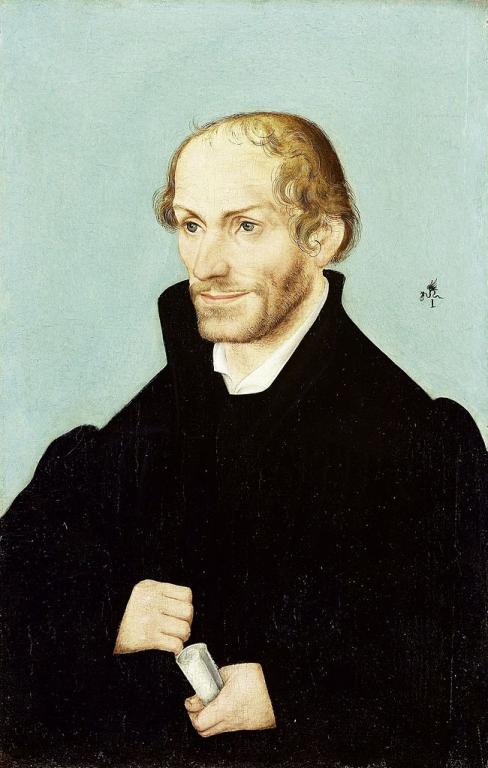
Photo credit: Portrait of Philipp Melanchton (c. 1545), by Workshop of Lucas Cranach the Elder (1472-1553) [public domain / Wikimedia Commons]
Philip Melanchthon (1497-1560) was the founder of Protestantism: Martin Luther’s best friend, co-reformer, and successor as the leader of Lutheranism. Encyclopaedia Britannica (“Philipp Melanchthon“) states that “Melanchthon . . . in 1521 published the Loci communes rerum theologicarum (‘Theological Commonplaces’), the first systematic treatment of Reformation thought.” It’s considered the initiatory work in the Lutheran scholastic tradition. Modified editions appeared in 1535, 1543 and 1559.
Martin Luther wrote, “No better book has been written after the Holy Scriptures than Philip’s. He expresses himself more concisely than I do when he argues and instructs. I’m garrulous and more rhetorical” (Table-Talk, 1543; in Luther’s Works, Vol. 54, 439-440). Many think that this volume was the reason why Luther never wrote his own work of systematic theology. Melanchthon at length departed from Luther in some ways; most notably, in his denial of the Real Presence in the Holy Eucharist, by the time of the 1543 edition, and on the question of free will.
In this series of replies, I will be utilizing the 1992 translation of the 1543 Latin version (St. Louis: Concordia Publishing House), by J. A. O. Preuss (1920-1994), who was a pastor, theologian, and the president of the Lutheran Church–Missouri Synod (LCMS) from 1969 to 1981. He wrote in the Introduction:
Luther, who had some violent disagreements with him, never criticized him publicly and never really broke with him. In fact, the verdict of history is that Luther was kinder to Melanchthon than Melanchthon was to Luther. . . . Most Lutherans in America up to the present time have been critical of him, including Schmauck, Neve, Bente, Pelikan, and many others, although that attitude is changing somewhat. (p. 7)
Melanchthon was a prodigy. He entered Heidelberg University at twelve and received his bachelor’s degree at 14. He moved on to Tubingen, where he earned the master’s degree at 17, . . . He never received the doctorate and was never ordained into the ministry. He never preached from the pulpit, although he had much to do with the development of the study of oratory and homiletics. He received an appointment to teach at the newly established University of Wittenberg in 1518. . . . He remained at Wittenberg the rest of his life . . . differences [with Luther] appear as early as 1530, . . . and become more evident as the years roll on. (p. 8)
See also my introductory post for this series on Facebook, which highlights his historically brand-new position of imputed justification (sola fide). For other installments of this series, see my Lutheranism web page, second section: “Replies to Philip Melanchthon’s Loci Communes.” Melanchthon’s words will be in blue. I use RSV for biblical citations.
*****
We are not to join to this kind of address the calling upon dead men, for this obscures and corrupts true invocation. But we must hold to the rule [Luke 4:8]: “You shall worship the Lord your God and Him only shall you serve.” (p. 207)
*
Melanchthon assumes (typical of Protestants) that all prayer is equal to worship. But this is not true, and it’s not made clear in Holy Scripture (to the best of my knowledge). Even when directed towards God, as it usually is, it’s not the same thing as worship. It’s a request or petition. If my wife asks me to pick up some milk on the way home, that’s not her admiring or extolling me. Worship can, of course, be included as part of a prayer, such as when we say, “Hallowed by thy name” in the Lord’s Prayer.
*
It is no light matter to establish the invocation of dead men, since there is no testimony favoring this which has been given us by God, and since it clearly obscures Christ, the mediator, (p. 207)
*
Jesus taught the following, which was a true story, not a parable (parables never contain proper names):
Luke 16:19-31 “There was a rich man, who was clothed in purple and fine linen and who feasted sumptuously every day. [20] And at his gate lay a poor man named Laz’arus, full of sores, [21] who desired to be fed with what fell from the rich man’s table; moreover the dogs came and licked his sores. [22] The poor man died and was carried by the angels to Abraham’s bosom. The rich man also died and was buried; [23] and in Hades, being in torment, he lifted up his eyes, and saw Abraham far off and Laz’arus in his bosom. [24] And he called out, `Father Abraham, have mercy upon me, and send Laz’arus to dip the end of his finger in water and cool my tongue; for I am in anguish in this flame.’ [25] But Abraham said, `Son, remember that you in your lifetime received your good things, and Laz’arus in like manner evil things; but now he is comforted here, and you are in anguish. [26] And besides all this, between us and you a great chasm has been fixed, in order that those who would pass from here to you may not be able, and none may cross from there to us.’ [27] And he said, `Then I beg you, father, to send him to my father’s house, [28] for I have five brothers, so that he may warn them, lest they also come into this place of torment.’ [29] But Abraham said, `They have Moses and the prophets; let them hear them.’ [30] And he said, `No, father Abraham; but if some one goes to them from the dead, they will repent.’ [31] He said to him, `If they do not hear Moses and the prophets, neither will they be convinced if some one should rise from the dead.'”
From this we learn many things:
- Prayer petitions can be made to someone other than God: to dead saints; in this case, a famous figure and the father of faith and monotheism, Abraham. Three petitions are made (16:24, 27-28, 30). In Luke 16:27 in the King James Bible, it even renders what the rich man says as, “I pray thee.”
- The rich man assumes that Abraham has it in his power to answer his petitions. Abraham doesn’t deny that he can answer; nor does this contradict the idea that Abraham would go to God to fulfill the request (per Rev 5:8), and if God so wills, deliver the reply to the rich man. From the rich man’s perspective, Abraham can grant to him what he desires.
- The usual Protestant counter-reply to this is to say that Abraham refused the requests. But that no more proves their illegitimacy than God’s refusal to answer all of our prayers “proves” that we shouldn’t pray to Him. If prayer to him were indeed totally improper, Jesus could have never told the story in the first place. It would be a demonic lie, from Jesus’ lips! And if Protestants are right on this point, Abraham would have had to say that the rich man was asking amiss, and he would have rebuked him and told him to “pray to God only! You can’t pray to me!” But he didn’t. Therefore, it is proper.
- The second most common Protestant retort is to say that both men are dead, so it is an irrelevant example. This fails, because if in fact we ought to never pray to anyone but God, it remains a sin even after we are dead (like the rich man was). What’s wrong is wrong. If such a prayer is totally impermissible, period, then the rich man can’t make it. Whether he is dead or not is irrelevant. He’s still alive as a soul.
- Melanchthon is dead wrong. It’s Jesus Christ, Who is God, Who taught us this sort of prayer, by providing the story that included it without condemnation and no hint of wrongdoing (in praying to Abraham) whatsoever. Jesus can’t contradict Himself. He can’t “obscure” Himself. And He certainly can’t teach rank heresy in any illustrative story or parable that He tells, or any of His sayings or sermons whatsoever. Yet here we are: Jesus is teaching things that Protestants tell us are damnable lies and idolatrous, blasphemous, occultic practices. One must choose! I choose Jesus over unbiblical man-made traditions, any day, any time.
and since the invocation of invisible things attributes to those who are invoked the power of judging the inner movements of our hearts, which is a property belonging only to the nature of one who is omnipotent, as is mentioned in 1 Chron. 28[:9], where it says, “The Lord searches all hearts and understands the thoughts of all minds.” And Jer. 17[:10], “I, the Lord, search the hearts.” (p. 207)
*
This doesn’t follow at all, either. To hear a prayer, one need not be omnipotent or omniscient. The Bible teaches a number of extraordinary things about what we will be like when we are in heaven. I detailed them in an article. Once all of that explicit biblical teaching is understood, then a saint hearing a prayer (even thousands of them) is no “biggie” at all, because it is God making it all possible. The passages above don’t teach that we can only pray to God. Rather, they teach that only God knows all hearts and minds (being omniscient). It’s apples and oranges.
*
This honoring of God must not be transferred to the prophets or the apostles or to Mary. (p. 207)
*
This teaching of Jesus isn’t calling for honoring anyone else like God. It’s saying that one can ask another to pray, even if they are dead: provided they are saved.
*
And Is. 63(:16] clearly says, “Abraham did not know us.” (p. 207)
*
In context, the text is saying that neither Abraham nor Israel can save them, since the same verse calls God “our Redeemer.” Again, that is totally different from whether they can intercede, and “hear” petitions. Jesus said that Abraham could. That’s more than sufficient. Case closed. It’s amazing to me that Melanchthon seems completely unfamiliar with Luke 16.
*
*
***
*
Practical Matters: I run the most comprehensive “one-stop” Catholic apologetics site: rated #1 for Christian sites by leading AI tool, ChatGPT — endorsed by popular Protestant blogger Adrian Warnock. Perhaps some of my 4,800+ free online articles or fifty-five books have helped you (by God’s grace) to decide to become Catholic or to return to the Church, or better understand some doctrines and why we believe them.
Or you may believe my work is worthy to support for the purpose of apologetics and evangelism in general. If so, please seriously consider a much-needed financial contribution. I’m always in need of more funds: especially monthly support. “The laborer is worthy of his wages” (1 Tim 5:18, NKJV). 1 December 2021 was my 20th anniversary as a full-time Catholic apologist, and February 2022 marked the 25th anniversary of my blog.
PayPal donations are the easiest: just send to my email address: [email protected]. Here’s also a second page to get to PayPal. You’ll see the term “Catholic Used Book Service”, which is my old side-business. To learn about the different methods of contributing (including Zelle), see my page: About Catholic Apologist Dave Armstrong / Donation Information. Thanks a million from the bottom of my heart!
*
***
*
Photo credit: Portrait of Philipp Melanchton (c. 1545), by Workshop of Lucas Cranach the Elder (1472-1553) [public domain / Wikimedia Commons]

*
Summary: Replies to Philip Melanchthon, concerning whether the invocation of saints is proper and wholesome. I submit Jesus’ teaching in Luke 16, where the rich man petitions Abraham.
Melanchthon & invocation of saints
Previous Post

September 6, 2024
Reply to Melanchthon: Justification #5: Good Works 4
Next Post
September 13, 2024 Treviño Misrepresents My "Peter the Rock" Argument
Recent Comments
"Special pleading, and not a serious response to my arguments . . ."
Is Venerating Men & Angels Worship? ..."
""no man needs to teach us."Didn't you just teach us?"
Is Venerating Men & Angels Worship? ..."
""Catholics say they are the only church that can lead people into heaven."In fact, we ..."
Is Venerating Men & Angels Worship? ..."
"And lastly, I belong to no denomination and am free to serve God as He ..."
Is Venerating Men & Angels Worship? ..."
Browse Our Archives
Select a Category & Last Things About Me Anti-Catholicism Atheism & Agnosticism Baptism and Sacramentalism Bible and Tradition Blessed Virgin Mary Books by Dave Armstrong C. S. Lewis Calvinism & General Protestantism Catholic Apologetics Catholic Apologists Catholic conversion Catholic converts Christmas Church (Ecclesiology) Church History Conversion and Converts Development of Doctrine Eastern Orthodoxy Ecumenism & Christian Unity Eucharist & Liturgy Fathers of the Church French Translations G. K. Chesterton Hell Hell & Satan Hell & Satan & Last Things Heresies & Comparative Religion Holistic Health Inquisition & Crusades & Scandals James White Jews & Judaism & Old Testament John Calvin John Henry Newman Liberal / Modernist Theology Life Issues Literary Resume Lutheranism Mariology Martin Luther Music Orthodoxy Papacy & Infallibility Personal Page Philosophy & Science Political & Ethical & Moral Issues Protestant Persecution & Intolerance Protestantism Purgatory Purgatory & Penance Romantic & Imaginative Theology Saints & Purgatory & Penance Salvation Salvation & Justification Satan & Last Things Sexuality and Gender Issues Spanish Translations Traditionalism vs. Radical Catholic Reactionaries Traducciones al español / tradução para português Trinitarianism & Christology Uncategorized Videos
Select a Month October 2026 September 2026 August 2026 July 2026 June 2026 May 2026 April 2026 March 2026 February 2026 January 2026 December 2025 November 2025 October 2025 September 2025 August 2025 July 2025 June 2025 May 2025 April 2025 March 2025 February 2025 January 2025 December 2024 November 2024 October 2024 September 2024 August 2024 July 2024 June 2024 May 2024 April 2024 March 2024 February 2024 January 2024 December 2023 November 2023 October 2023 September 2023 August 2023 July 2023 June 2023 May 2023 April 2023 March 2023 February 2023 January 2023 December 2022 November 2022 October 2022 September 2022 August 2022 July 2022 June 2022 May 2022 April 2022 March 2022 February 2022 January 2022 December 2021 November 2021 October 2021 September 2021 August 2021 July 2021 June 2021 May 2021 April 2021 March 2021 February 2021 January 2021 December 2020 November 2020 October 2020 September 2020 August 2020 July 2020 June 2020 May 2020 April 2020 March 2020 February 2020 January 2020 December 2019 November 2019 October 2019 September 2019 August 2019 July 2019 June 2019 May 2019 April 2019 March 2019 February 2019 January 2019 December 2018 November 2018 October 2018 September 2018 August 2018 July 2018 June 2018 May 2018 April 2018 March 2018 February 2018 January 2018 December 2017 November 2017 October 2017 September 2017 August 2017 July 2017 June 2017 May 2017 April 2017 March 2017 February 2017 January 2017 December 2016 November 2016 October 2016 September 2016 August 2016 July 2016 June 2016 May 2016 April 2016 March 2016 February 2016 January 2016 December 2015 November 2015 October 2015 September 2015 August 2015 July 2015 June 2015 May 2015 April 2015 March 2015 February 2015 January 2015 December 2014 November 2014 October 2014 September 2014 August 2014 July 2014 June 2014 April 2014 March 2014 February 2014 January 2014 December 2013 November 2013 October 2013 September 2013 August 2013 July 2013 June 2013 April 2013 March 2013 February 2013 January 2013 December 2012 November 2012 October 2012 September 2012 August 2012 July 2012 June 2012 May 2012 April 2012 March 2012 February 2012 January 2012 December 2011 November 2011 October 2011 September 2011 August 2011 July 2011 June 2011 April 2011 March 2011 February 2011 October 2010 September 2010 August 2010 July 2010 April 2010 March 2010 December 2009 October 2009 August 2009 July 2009 June 2009 May 2009 March 2009 February 2009 October 2008 September 2008 April 2008 March 2008 February 2008 January 2008 December 2007 November 2007 October 2007 May 2007 March 2007 February 2007 January 2007 November 2006 October 2006 September 2006 August 2006 July 2006 June 2006 May 2006 April 2006 March 2006 February 2006 October 2005 June 2005 April 2005 February 2005 July 2004 May 2004 April 2004
Follow Us!
TAKE THE
Religious Wisdom Quiz
What did John see coming down from heaven in Revelation 21?
Select your answer to see how you score.
The Ark of the Covenant The four horsemen The New Jerusalem A chariot of fire
Books by This Author Books by Dave Armstrong
Related posts from Biblical Evidence for Catholicism

Bible & Catholicism on Mortal Sin (vs. John...
Biblical Evidence for Catholicism

Does Catholic Intercession of Saints Require Omniscience?
Biblical Evidence for Catholicism

Capabilities of Heavenly Saints: Protestant Commentaries
Biblical Evidence for Catholicism

Revelation 5 & 8 (Intercession of Saints &...
Biblical Evidence for Catholicism
TRENDING AT PATHEOS Catholic

Swimfan: Forgotten Aughts Pleasures
This is a recovery effort. In 2002, My Big Fat Greek Wedding...

Top Three Anti-Catholic Lies About Catholicism
This is my initial transcript for the video, "THE 3 WORST...

Pope Leo Celebrates Mass for Nurses & Docs...
I don't have any idea how he did it, but Pope Leo...

The Sermon on the Mount, Part I: Matthew...
The Sermon on the Mount, Part I (Matthew 4:12-5:12) St. Matthew moves...

What's up from Crossway: Reviewing some of their latest A few weeks...

Janie Learns the Way of the Cross: A...
Teaching children about Jesus' Passion can be challenging. Many parents and educators...
view all Catholic blogs
What Are Your Thoughts?leave a comment
Ad-Free & Subscriber Log-In Subscription Support
- About Us
- 2026 Calendar
- Videos
- Podcasts
- Library of World Religions
- Faith In Media Tracker
- Advertise With Us
- Write for Us
- Privacy Policy
- Terms of Service
- Do Not Sell My Data
- Contact Us
- Radiant Digital
- Manage Newsletter Subscriptions
- Unsubscribe From Notifications
- Sitemap
Copyright 2008-2026, Patheos. All rights reserved.
Subscription Support Ad-Free & Subscriber Log-In
Follow Patheos