
BuddhistCatholicContemplativeEvangelicalGeneral ChristianHinduJewishLatter-day SaintMuslimNew VisionsProgressive Christian
Beliefs
- Buddhist
- Catholic
- Contemplative
- Evangelical
- General Christian
- Hindu
- Jewish
- Latter-day Saint
- More Voices
- Muslim
- New Visions
- Pagan
- Progressive Christian
Topics
- Religion News
- Food and Religion
- Sports and Religion
- Religious Art
- Religious Music and Entertainment
- Religious Events
- History and Religion
- Style and Religion
- Politics and Religion
- Women in Religion
- Recreation Outdoors and Religion
- Business Finance and Religion
- Careers Workplace and Religion
- Education and Religion
- Family Parenting and Religion
- Health Fitness and Religion
- Home and Religion
- Relationships and Religion
- Technology and Religion
- Travel and Religion
Columnists
- Buddhist Columnists
- Business Finance and Religion Columnists
- Careers Workplace and Religion Columnists
- Catholic Columnists
- Contemplative Columnists
- Education and Religion Columnists
- Evangelists Columnists
- Family Parenting and Religion Columnists
- General Christian Columnists
- Health Fitness and Religion Columnists
- Hindu Columnists
- History and Religion Columnists
- Home and Religion Columnists
- Jewish Columnists
- More Voices Columnists
- Latter Day Columnists
- Muslim Columnists
- New Visions Columnists
- Nonreligious Columnists
- Pagan Columnists
- Politics and Religion Columnists
- Progressive Columnists
- Recreation Outdoors and Religion Columnists
- Relationships and Religion Columnists
- Religion News Columnists
- Religious Art Columnists
- Religious Events Columnists
- Religious Music and Entertainment Columnists
- Sports and Religion Columnists
- Style and Religion Columnists
- Technology and Religion Columnists
- Travel and Religion Columnists
- Women in Religion Columnists
Resource Library
- 2026 Calendar
- Library of World Religions
- The 100 Most Holy Places on Earth
- Patheos Answers
- Podcasts
- Videos
- Faith Leaders Database
- Anglican Episcopalian
- Bahai
- Baptist
- Buddhism
- Christianity
- Confucianism
- Eastern Orthodoxy
- Hinduism
- Holiness and Pentecostal
- ISKCON
- Islam
- Judaism
- Lutheran
- Methodist
- The Church of Jesus Christ of Latter-day Saints
- New Age
- Paganism
- Presbytarian and Reformed
- Protestantism
- Religion Behind the Scenes
- Roman Catholic
- Scientology
- Shia Islam
- Sikhism
- Sufism
- Sunni Islam
- Taoism
- Zen
- See all religions
Research Tools
 Ad-Free & Subscriber Log-In Subscription Support
Ad-Free & Subscriber Log-In Subscription Support
Follow Patheos 

- Trending:
- Forgiveness
- |
- Marriage
- |
- Consciousness
- |
- Death Penalty
- |
- Election
- |
- Halloween

-
About
-
Catholic Apologetics
-
Church History
-
Great Apologists
-
Christian Worldview
-
Protestantism & Misc.
- Home
- Catholic
- History and Religion
- Reply to Melanchthon: Justification #5: Good Works 4
Reply to Melanchthon: Justification #5: Good Works 4
Last updated on: September 6, 2024 at 10:14 am by Dave Armstrong
Reply to Melanchthon: Justification #5: Good Works 4 2024-09-06T10:14:39-04:00 Dave Armstrong
Patheos Explore the world's faith through different perspectives on religion and spirituality! Patheos has the views of the prevalent religions and spiritualities of the world.
Isaiah vs. Protestant Soteriology / Absolution, Love, & Remission of Sins / Was Mary Who Wiped Jesus’ Feet with Her Hair, a Believer When She Did So? / Good Works of the Regenerate Rewarded with Heaven
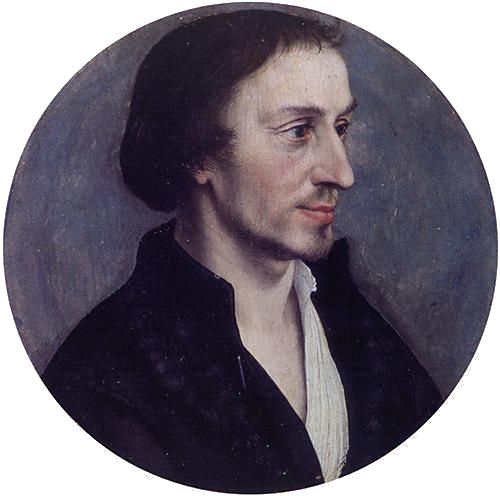
Photo credit: Portrait of Philipp Melanchthon (c. 1535), by Hans Holbein (c. 1497-1543) [public domain / Wikimedia Commons]
Philip Melanchthon (1497-1560) was the founder of Protestantism: Martin Luther’s best friend, co-reformer, and successor as the leader of Lutheranism. Encyclopaedia Britannica (“Philipp Melanchthon“) states that “Melanchthon . . . in 1521 published the Loci communes rerum theologicarum (‘Theological Commonplaces’), the first systematic treatment of Reformation thought.” It’s considered the initiatory work in the Lutheran scholastic tradition. Modified editions appeared in 1535, 1543 and 1559.
Martin Luther wrote, “No better book has been written after the Holy Scriptures than Philip’s. He expresses himself more concisely than I do when he argues and instructs. I’m garrulous and more rhetorical” (Table-Talk, 1543; in Luther’s Works, Vol. 54, 439-440). Many think that this volume was the reason why Luther never wrote his own work of systematic theology. Melanchthon at length departed from Luther in some ways; most notably, in his denial of the Real Presence in the Holy Eucharist, by the time of the 1543 edition, and on the question of free will.
In this series of replies, I will be utilizing the 1992 translation of the 1543 Latin version (St. Louis: Concordia Publishing House), by J. A. O. Preuss (1920-1994), who was a pastor, theologian, and the president of the Lutheran Church–Missouri Synod (LCMS) from 1969 to 1981. He wrote in the Introduction:
Luther, who had some violent disagreements with him, never criticized him publicly and never really broke with him. In fact, the verdict of history is that Luther was kinder to Melanchthon than Melanchthon was to Luther. . . . Most Lutherans in America up to the present time have been critical of him, including Schmauck, Neve, Bente, Pelikan, and many others, although that attitude is changing somewhat. (p. 7)
Melanchthon was a prodigy. He entered Heidelberg University at twelve and received his bachelor’s degree at 14. He moved on to Tubingen, where he earned the master’s degree at 17, . . . He never received the doctorate and was never ordained into the ministry. He never preached from the pulpit, although he had much to do with the development of the study of oratory and homiletics. He received an appointment to teach at the newly established University of Wittenberg in 1518. . . . He remained at Wittenberg the rest of his life . . . differences [with Luther] appear as early as 1530, . . . and become more evident as the years roll on. (p. 8)
See also my introductory post for this series on Facebook, which highlights his historically brand-new position of imputed justification (sola fide). For other installments of this series, see my Lutheranism web page, second section: “Replies to Philip Melanchthon’s Loci Communes.” Melanchthon’s words will be in blue. I use RSV for biblical citations.
*****
Isaiah does not say that we should cease doing evil things and remission will be given you be cause of your virtues. Indeed, in another passage he clearly says of Christ, “Truly He has borne our griefs,” Is. 53:4. (p. 112)
*
Isaiah teaches that God draws all sinners by His grace, without which no one is, or can be saved, and there are passages hinting at the NT doctrines of justification, faith, grace, and salvation, as well as about God’s love and mercy and forgiveness. Thus far, Catholics and Protestants are in agreement. But Isaiah also regards works — as Catholics do — in necessary conjunction with faith (rejection of “faith alone”):
Isaiah 1:27 Zion shall be redeemed by justice, and those in her who repent, by righteousness.
Isaiah 26:2 Open the gates, that the righteous nation which keeps faith may enter in.
Isaiah 32:17 And the effect of righteousness will be peace, and the result of righteousness, quietness and trust for ever.
Isaiah 38:2-3 Then Hezeki’ah turned his face to the wall, and prayed to the LORD, [3] and said, “Remember now, O LORD, I beseech thee, how I have walked before thee in faithfulness and with a whole heart, and have done what is good in thy sight.” . . .
Isaiah 64:5 Thou meetest him that joyfully works righteousness, those that remember thee in thy ways. . . .
Isaiah teaches the NT and Catholic doctrine of grace, works, and faith all being involved in the process of salvation (see fifty passages from Paul about this). He also proclaims the biblical and Catholic doctrine of good, meritorious works and obedience to God’s law and moral commands playing a central role in God’s determination of every person’s ultimate salvation or damnation:
Isaiah 3:10 Tell the righteous that it shall be well with them, for they shall eat the fruit of their deeds.
Isaiah 10:1-3 Woe to those who decree iniquitous decrees, and the writers who keep writing oppression, [2] to turn aside the needy from justice and to rob the poor of my people of their right, that widows may be their spoil, and that they may make the fatherless their prey! [3] What will you do on the day of punishment, in the storm which will come from afar? To whom will you flee for help, and where will you leave your wealth?
Isaiah 29:20 . . . all who watch to do evil shall be cut off,
Isaiah 33:15-16 He who walks righteously and speaks uprightly, who despises the gain of oppressions, who shakes his hands, lest they hold a bribe, who stops his ears from hearing of bloodshed and shuts his eyes from looking upon evil, [16] he will dwell on the heights; his place of defense will be the fortresses of rocks; his bread will be given him, his water will be sure.
Isaiah 48:18-19 O that you had hearkened to my commandments! Then your peace would have been like a river, and your righteousness like the waves of the sea; [19] your offspring would have been like the sand, and your descendants like its grains; their name would never be cut off or destroyed from before me.”
Isaiah 56:1 Thus says the LORD: “Keep justice, and do righteousness, for soon my salvation will come, and my deliverance be revealed.
Isaiah 57:1-2 . . . For the righteous man is taken away from calamity, [2] he enters into peace; they rest in their beds who walk in their uprightness.
Isaiah 59:2 but your iniquities have made a separation between you and your God, and your sins have hid his face from you so that he does not hear.
Isaiah 59:11-12, 18 . . . we look for justice, but there is none; for salvation, but it is far from us. [12] For our transgressions are multiplied before thee, and our sins testify against us; for our transgressions are with us, and we know our iniquities: . . . [18] According to their deeds, so will he repay, . . .
Melanchthon later refutes his own view, by citing Daniel:
Dan. 4:27, “Free yourself from sins by righteousness and alms for the poor, and there will be a cleansing of your iniquities.” (p. 113)
Exactly! This is Catholic merit and infused justification: God crowning His own gifts of grace, and our working together with Him.
Nor am I using this story to support the notion that good works merit the remission of present sins, . . . (p. 113)
So Melanchthon doesn’t get it. The text plainly teaches that, but he can’t see it, because his preconceived man-made tradition of “faith alone” blinds him to it.
Thus in this statement, “Forgive and it shall be forgiven you,” the first part is a commandment. The second part contains the promise; but it is not added that because of your forgiving spirit your sins are remitted to you. (p. 112)
We have our sins forgiven all the time, in absolution:
John 20:23 If you forgive the sins of any, they are forgiven; if you retain the sins of any, they are retained.
James 5:14-15 Is any among you sick? Let him call for the elders of the church, and let them pray over him, anointing him with oil in the name of the Lord; [15] and the prayer of faith will save the sick man, and the Lord will raise him up; and if he has committed sins, he will be forgiven.
1 John 1:9 If we confess our sins, he is faithful and just, and will forgive our sins and cleanse us from all unrighteousness.
we are accepted before God on account of the Mediator and not on account of our own worthiness or our own qualities. (p. 113)
*
That is quite true in initial justification and of regeneration, but not in later life, when we stumble into sin and have to be absolved, and where we have to persevere and exhibit good works, which then contribute to ultimate salvation.
*
“Her sins, which were many, have been forgiven her because she loved much,” Luke 7:47: Therefore remission of sins takes place on account of love. I reply: There is a twofold absolution. One is private, directed to the conscience which is struggling with the wrath of God. In this absolution we must understand that remission is received by faith and not on account of our virtues. . . . Our faith does not rely upon our love
but only on the mercy which has been promised, as is evident. (p. 114)
*
Jesus said that forgiveness was granted because of the great love of the penitent and also because of her faith (“Your faith has saved you; go in peace”: Lk 7:50). So it’s both faith and love (see my previous installment for much biblical data on the relationship of faith, works, and love). But Melanchthon holds that the forgiveness came only by faith and not “on account of . . . virtues”. He does the frequently observed Protestant false dichotomy: because it’s by faith it supposedly can’t also be by love.
*
Catholics say it is both (i.e., after regeneration and initial justification, as we must repeat till we’re blue in the face), because the biblical text plainly asserts that. We don’t have to force an outside tradition or philosophy onto the text (eisegesis). We can let it speak for itself, and follow it in grateful obedience: yielding up our predispositions to the inspired Word of God in the revelation of Scripture.
*
This takes place on account of good works which are testimonies of a person’s conversion, as when Christ here explains to the Pharisee why He had received the woman, namely because there were evident testimonies to her conversion. . . . Christ transfers this honor to this poor woman: the righteousness of the Law is pleasing here where there is the true knowledge of Christ. And in this congregation there is true worship, that is to say, repentance, faith, true calling upon God, love, kissing Christ’s feet and washing them, that is, adorning and defending the ministry of
the Gospel and the necessary zeal for the church, . . . Her many sins were forgiven her because she had been converted. (p. 114)
*
There is no evidence whatsoever in the text for what Melanchthon incorrectly assumes: that this woman was already a Christian believer. To the contrary, Luke’s narrative describes her as “a woman of the city, who was a sinner” (Lk 7:37) and Simon the Pharisee said, “If this man were a prophet, he would have known who and what sort of woman this is who is touching him, for she is a sinner” (7:39). Jesus then gave the parable of two debtors (7:41-43), where the debt of one was ten times that of the other (an obvious analogy to this woman), and He further noted that “her sins . . . are many” (7:47). She was a nonbeliever who was repenting and was on the verge of becoming a believer.
*
Christian movies (using the technique of “dramatic compression”) often portray this woman as Mary Magdalene, but again, the text gives no indication of that at all, and in fact, Mary Magdalene is mentioned two verses later in Luke 8:2, with no awareness that it’s the same person. Moreover, John 11:1-2 actually identifies the repentant woman as Mary, the sister of Lazarus, whom Jesus raised from the dead.
*
“Sinner[s]” appears 30 times in the Gospels, and never once does it refer to a believer or disciple of Jesus. Paul contrasts “sinners” with believers in Romans 5:8, 19. In one exception in the epistles, Paul says of himself, “I am the foremost of sinners” (1 Tim 1:15), but this is in the immediate context of a description of his past behavior: “I formerly blasphemed and persecuted and insulted him; but I received mercy because I had acted ignorantly in unbelief” (1 Tim 1:13). So Melanchthon is simply wrong. This woman was not yet a believer / disciple of Jesus.
*
God gave her grace and faith enough to repent and perform an extraordinary act of love towards Jesus, and then her sins were forgiven — present tense: “are forgiven”: 7:47-48 — and she became a believer. Jesus expressly said that it was her faith and love that “saved” her; not faith alone. Melanchthon chose to simply disbelieve one thing that Jesus said and embrace the other. Oh how many errors our theology will contain if that is our method of Bible interpretation: picking and choosing which sayings of Jesus we will accept and which we will reject! Remember what Martin Luther wrote: “No better book has been written after the Holy Scriptures than Philip’s.” Forgive me if I am underwhelmed and unimpressed.
*
Eternal life is a reward because it brings blessings even if it is given for another reason, namely for the sake of Christ. Just as an inheritance is a reward for a son, even if it comes to him for another reason. This reply is brief and simple and it satisfies the objection of our adversaries who are exaggerating the word “reward” out of all proportion and are drawing some ridiculous conclusions from it, such as placing works and reward either in the realm of the marketplace, or making the price and the reward equal. Thus they come up with the notion of equalizing our obedience with our eternal life, and speak of the obedience of the merit of our worthiness (meritum de condigno); they imagine that men can satisfy the Law and they mix it all up with works of supererogation. And in regard to faith which does not look to our worthiness but to the Mediator and which receives the remission of sins and the inheritance of eternal life for the sake of Christ—of this they say nothing. (pp. 114-115)
*
More caricatures of Catholic teaching, and no documentation of what it actually is . . . What else is new in classic Protestant polemics? Melanchthon calls “ridiculous” the notion that eternal reward has some relation to our works. That’s highly interesting, since Jesus Himself expressly taught this:
Matthew 16:27 For the Son of man is to come with his angels in the glory of his Father, and then he will repay every man for what he has done.
Matthew 19:29 And every one who has left houses or brothers or sisters or father or mother or children or lands, for my name’s sake, will receive a hundredfold, and inherit eternal life. (cf. Mk 10:29-30; Lk 18:26-30)
Matthew 25:34-35 Then the King will say to those at his right hand, ‘Come, O blessed of my Father, inherit the kingdom prepared for you from the foundation of the world; [35] for I was hungry and you gave me food, I was thirsty and you gave me drink, I was a stranger and you welcomed me, . . .
Luke 6:35 But love your enemies, and do good, and lend, expecting nothing in return; and your reward will be great, and you will be sons of the Most High; for he is kind to the ungrateful and the selfish.
Luke 14:13-14 But when you give a feast, invite the poor, the maimed, the lame, the blind, [14] and you will be blessed, because they cannot repay you. You will be repaid at the resurrection of the just.”
See many more similar biblical proofs from Jesus, Paul, and others. St. John is arguably referring to heaven, too, when he writes, “Look to yourselves, that you may not lose what you have worked for, but may win a full reward” (2 Jn 1:8). St. Paul certainly is doing so:
Colossians 3:23-25 Whatever your task, work heartily, as serving the Lord and not men, [24] knowing that from the Lord you will receive the inheritance as your reward; you are serving the Lord Christ. [25] For the wrongdoer will be paid back for the wrong he has done, and there is no partiality.
Our good works do not merit . . . the inheritance of eternal life, . . . (p. 115)
*
Really? Why don’t we look to see what the Bible actually teaches about works of faith, enabled by grace, being involved as causes of eternal life:
Matthew 7:18-21, 24 A sound tree cannot bear evil fruit, nor can a bad tree bear good fruit. [19] Every tree that does not bear good fruit is cut down and thrown into the fire. [20] Thus you will know them by their fruits. [21] “Not every one who says to me, `Lord, Lord,’ shall enter the kingdom of heaven, but he who does the will of my Father who is in heaven.. . . [24] Every one then who hears these words of mine and does them will be like a wise man who built his house upon the rock
Matthew 25:34-35, 41-43. 46 Then the King will say to those at his right hand, ‘Come, O blessed of my Father, inherit the kingdom prepared for you from the foundation of the world; [35] for I was hungry and you gave me food, I was thirsty and you gave me drink, I was a stranger and you welcomed me, . . . [41] Then he will say to those at his left hand, `Depart from me, you cursed, into the eternal fire prepared for the devil and his angels; [42] for I was hungry and you gave me no food, I was thirsty and you gave me no drink, [43] I was a stranger and you did not welcome me, naked and you did not clothe me, sick and in prison and you did not visit me.’ . . . [46] And they will go away into eternal punishment, but the righteous into eternal life.”
*Luke 3:9 (+ Mt 3:10; 7:19) . . . every tree therefore that does not bear good fruit is cut down and thrown into the fire.
John 5:28-29 . . . all who are in the tombs will hear his voice [29] and come forth, those who have done good, to the resurrection of life, and those who have done evil, to the resurrection of judgment.
Romans 2:6-10 For he will render to every man according to his works: [7] to those who by patience in well-doing seek for glory and honor and immortality, he will give eternal life; [8] but for those who are factious and do not obey the truth, but obey wickedness, there will be wrath and fury. [9] There will be tribulation and distress for every human being who does evil, the Jew first and also the Greek, [10] but glory and honor and peace for every one who does good, the Jew first and also the Greek.
Romans 6:22 But now that you have been set free from sin and have become slaves of God, the return you get is sanctification and its end, eternal life.
2 Thessalonians 1:8 inflicting vengeance upon those who do not know God and upon those who do not obey the gospel of our Lord Jesus.
1 Timothy 6:18-19 They are to do good, to be rich in good deeds, liberal and generous, [19] thus laying up for themselves a good foundation for the future, so that they may take hold of the life which is life indeed.
Hebrews 5:9 and being made perfect he became the source of eternal salvation to all who obey him,
James 2:14 What does it profit, my brethren, if a man says he has faith but has not works? Can his faith save him?
Revelation 2:5 Remember then from what you have fallen, repent and do the works you did at first. If not, I will come to you and remove your lampstand from its place, unless you repent.
Revelation 20:12-13 . . . And the dead were judged by what was written in the books, by what they had done. [13] . . . and all were judged by what they had done.
*
***
*
Practical Matters: I run the most comprehensive “one-stop” Catholic apologetics site: rated #1 for Christian sites by leading AI tool, ChatGPT — endorsed by popular Protestant blogger Adrian Warnock. Perhaps some of my 4,800+ free online articles or fifty-five books have helped you (by God’s grace) to decide to become Catholic or to return to the Church, or better understand some doctrines and why we believe them.
Or you may believe my work is worthy to support for the purpose of apologetics and evangelism in general. If so, please seriously consider a much-needed financial contribution. I’m always in need of more funds: especially monthly support. “The laborer is worthy of his wages” (1 Tim 5:18, NKJV). 1 December 2021 was my 20th anniversary as a full-time Catholic apologist, and February 2022 marked the 25th anniversary of my blog.
PayPal donations are the easiest: just send to my email address: [email protected]. Here’s also a second page to get to PayPal. You’ll see the term “Catholic Used Book Service”, which is my old side-business. To learn about the different methods of contributing (including Zelle), see my page: About Catholic Apologist Dave Armstrong / Donation Information. Thanks a million from the bottom of my heart!
*
***
*
Photo credit: Portrait of Philipp Melanchthon (c. 1535), by Hans Holbein (c. 1497-1543) [public domain / Wikimedia Commons]

*
Summary: Replies to Philip Melanchthon, including Isaiah’s soteriology; love & absolution; Mary, who wiped Jesus’ feet: a believer?; good works of the regenerate rewarded with heaven.
Previous Post

September 5, 2024
Reply to Melanchthon: Justification #4: Good Works 3
Next Post

September 10, 2024 Reply to Melanchthon on the Invocation of Saints
Recent Comments
"And lastly, I belong to no denomination and am free to serve God as He ..."
Is Venerating Men & Angels Worship? ..."
"And obeisance doesn't mean "worship". It means "respect", "obey", or "submission". Very weird that you ..."
Is Venerating Men & Angels Worship? ..."
"Many of these scriptures you have noted have been taken out of context. With Daniel, ..."
Is Venerating Men & Angels Worship? ..."
""Protestants often point out that Jesus is now triumphant in heaven and object to Catholics ..."
Three More Anti-Catholic Lies About Catholicism ..."
Browse Our Archives
Select a Category & Last Things About Me Anti-Catholicism Atheism & Agnosticism Baptism and Sacramentalism Bible and Tradition Blessed Virgin Mary Books by Dave Armstrong C. S. Lewis Calvinism & General Protestantism Catholic Apologetics Catholic Apologists Catholic conversion Catholic converts Christmas Church (Ecclesiology) Church History Conversion and Converts Development of Doctrine Eastern Orthodoxy Ecumenism & Christian Unity Eucharist & Liturgy Fathers of the Church French Translations G. K. Chesterton Hell Hell & Satan Hell & Satan & Last Things Heresies & Comparative Religion Holistic Health Inquisition & Crusades & Scandals James White Jews & Judaism & Old Testament John Calvin John Henry Newman Liberal / Modernist Theology Life Issues Literary Resume Lutheranism Mariology Martin Luther Music Orthodoxy Papacy & Infallibility Personal Page Philosophy & Science Political & Ethical & Moral Issues Protestant Persecution & Intolerance Protestantism Purgatory Purgatory & Penance Romantic & Imaginative Theology Saints & Purgatory & Penance Salvation Salvation & Justification Satan & Last Things Sexuality and Gender Issues Spanish Translations Traditionalism vs. Radical Catholic Reactionaries Traducciones al español / tradução para português Trinitarianism & Christology Uncategorized Videos
Select a Month October 2026 September 2026 August 2026 July 2026 June 2026 May 2026 April 2026 March 2026 February 2026 January 2026 December 2025 November 2025 October 2025 September 2025 August 2025 July 2025 June 2025 May 2025 April 2025 March 2025 February 2025 January 2025 December 2024 November 2024 October 2024 September 2024 August 2024 July 2024 June 2024 May 2024 April 2024 March 2024 February 2024 January 2024 December 2023 November 2023 October 2023 September 2023 August 2023 July 2023 June 2023 May 2023 April 2023 March 2023 February 2023 January 2023 December 2022 November 2022 October 2022 September 2022 August 2022 July 2022 June 2022 May 2022 April 2022 March 2022 February 2022 January 2022 December 2021 November 2021 October 2021 September 2021 August 2021 July 2021 June 2021 May 2021 April 2021 March 2021 February 2021 January 2021 December 2020 November 2020 October 2020 September 2020 August 2020 July 2020 June 2020 May 2020 April 2020 March 2020 February 2020 January 2020 December 2019 November 2019 October 2019 September 2019 August 2019 July 2019 June 2019 May 2019 April 2019 March 2019 February 2019 January 2019 December 2018 November 2018 October 2018 September 2018 August 2018 July 2018 June 2018 May 2018 April 2018 March 2018 February 2018 January 2018 December 2017 November 2017 October 2017 September 2017 August 2017 July 2017 June 2017 May 2017 April 2017 March 2017 February 2017 January 2017 December 2016 November 2016 October 2016 September 2016 August 2016 July 2016 June 2016 May 2016 April 2016 March 2016 February 2016 January 2016 December 2015 November 2015 October 2015 September 2015 August 2015 July 2015 June 2015 May 2015 April 2015 March 2015 February 2015 January 2015 December 2014 November 2014 October 2014 September 2014 August 2014 July 2014 June 2014 April 2014 March 2014 February 2014 January 2014 December 2013 November 2013 October 2013 September 2013 August 2013 July 2013 June 2013 April 2013 March 2013 February 2013 January 2013 December 2012 November 2012 October 2012 September 2012 August 2012 July 2012 June 2012 May 2012 April 2012 March 2012 February 2012 January 2012 December 2011 November 2011 October 2011 September 2011 August 2011 July 2011 June 2011 April 2011 March 2011 February 2011 October 2010 September 2010 August 2010 July 2010 April 2010 March 2010 December 2009 October 2009 August 2009 July 2009 June 2009 May 2009 March 2009 February 2009 October 2008 September 2008 April 2008 March 2008 February 2008 January 2008 December 2007 November 2007 October 2007 May 2007 March 2007 February 2007 January 2007 November 2006 October 2006 September 2006 August 2006 July 2006 June 2006 May 2006 April 2006 March 2006 February 2006 October 2005 June 2005 April 2005 February 2005 July 2004 May 2004 April 2004
Follow Us!
TAKE THE
Religious Wisdom Quiz
Who asked Jesus, "What is truth?"
Select your answer to see how you score.
Caiaphas Pilate Nicodemus Herod
Books by This Author Books by Dave Armstrong
Related posts from Biblical Evidence for Catholicism

Bible & Catholicism on Mortal Sin (vs. John...
Biblical Evidence for Catholicism

Does Catholic Intercession of Saints Require Omniscience?
Biblical Evidence for Catholicism

Dialogue on Eternal Security / Absolute Assurance
Biblical Evidence for Catholicism

Protestant Confessions & "Ever-Virgin" Mary
Biblical Evidence for Catholicism
TRENDING AT PATHEOS Catholic

I was strolling through the top floor of the brand new Parthenon...

What Does Gêvâh Mean For Kimberley Guifoyle &...
This week, a lot of the news is focused on Kimberly Guilfoyle....

INNER CIRCLE: Profound Mystery (Of Christ In All...
Ephesians 5:31-32 “For this reason, a man will leave his father and...

Do Not Rejoice When Your Enemy Falls: The...
Turning an execution into a public spectacle is a disturbing expression of...

'The Chosen' S6 Trailer: The Passion Gets Very...
Not many watching 'The Chosen' worry about spoilers, but just because they...

The purpose-driven labor priest
A labor activist reads Rick Warren and it gets me wondering about...
view all Catholic blogs
What Are Your Thoughts?leave a comment
Ad-Free & Subscriber Log-In Subscription Support
- About Us
- 2026 Calendar
- Videos
- Podcasts
- Library of World Religions
- Faith In Media Tracker
- Advertise With Us
- Write for Us
- Privacy Policy
- Terms of Service
- Do Not Sell My Data
- Contact Us
- Radiant Digital
- Manage Newsletter Subscriptions
- Unsubscribe From Notifications
- Sitemap
Copyright 2008-2026, Patheos. All rights reserved.
Subscription Support Ad-Free & Subscriber Log-In
Follow Patheos