
BuddhistCatholicContemplativeEvangelicalGeneral ChristianHinduJewishLatter-day SaintMuslimNew VisionsProgressive Christian
Beliefs
- Buddhist
- Catholic
- Contemplative
- Evangelical
- General Christian
- Hindu
- Jewish
- Latter-day Saint
- More Voices
- Muslim
- New Visions
- Pagan
- Progressive Christian
Topics
- Religion News
- Food and Religion
- Sports and Religion
- Religious Art
- Religious Music and Entertainment
- Religious Events
- History and Religion
- Style and Religion
- Politics and Religion
- Women in Religion
- Recreation Outdoors and Religion
- Business Finance and Religion
- Careers Workplace and Religion
- Education and Religion
- Family Parenting and Religion
- Health Fitness and Religion
- Home and Religion
- Relationships and Religion
- Technology and Religion
- Travel and Religion
Columnists
- Buddhist Columnists
- Business Finance and Religion Columnists
- Careers Workplace and Religion Columnists
- Catholic Columnists
- Contemplative Columnists
- Education and Religion Columnists
- Evangelists Columnists
- Family Parenting and Religion Columnists
- General Christian Columnists
- Health Fitness and Religion Columnists
- Hindu Columnists
- History and Religion Columnists
- Home and Religion Columnists
- Jewish Columnists
- More Voices Columnists
- Latter Day Columnists
- Muslim Columnists
- New Visions Columnists
- Nonreligious Columnists
- Pagan Columnists
- Politics and Religion Columnists
- Progressive Columnists
- Recreation Outdoors and Religion Columnists
- Relationships and Religion Columnists
- Religion News Columnists
- Religious Art Columnists
- Religious Events Columnists
- Religious Music and Entertainment Columnists
- Sports and Religion Columnists
- Style and Religion Columnists
- Technology and Religion Columnists
- Travel and Religion Columnists
- Women in Religion Columnists
Resource Library
- 2026 Calendar
- Library of World Religions
- The 100 Most Holy Places on Earth
- Patheos Answers
- Podcasts
- Videos
- Faith Leaders Database
- Anglican Episcopalian
- Bahai
- Baptist
- Buddhism
- Christianity
- Confucianism
- Eastern Orthodoxy
- Hinduism
- Holiness and Pentecostal
- ISKCON
- Islam
- Judaism
- Lutheran
- Methodist
- The Church of Jesus Christ of Latter-day Saints
- New Age
- Paganism
- Presbytarian and Reformed
- Protestantism
- Religion Behind the Scenes
- Roman Catholic
- Scientology
- Shia Islam
- Sikhism
- Sufism
- Sunni Islam
- Taoism
- Zen
- See all religions
Research Tools
 Ad-Free & Subscriber Log-In Subscription Support
Ad-Free & Subscriber Log-In Subscription Support
Follow Patheos 

- Trending:
- Forgiveness
- |
- Marriage
- |
- Consciousness
- |
- Death Penalty
- |
- Election
- |
- Halloween

-
About
-
Catholic Apologetics
-
Church History
-
Great Apologists
-
Christian Worldview
-
Protestantism & Misc.
- Home
- Catholic
- History and Religion
- Reply to Melanchthon: Justification #2: Good Works 1
Reply to Melanchthon: Justification #2: Good Works 1
Last updated on: June 6, 2026 at 12:04 am by Dave Armstrong
Reply to Melanchthon: Justification #2: Good Works 1 2026-06-06T00:04:35-04:00 Dave Armstrong
Patheos Explore the world's faith through different perspectives on religion and spirituality! Patheos has the views of the prevalent religions and spiritualities of the world.
“Working Together” with God / Human Striving & Merit / Tridentine Soteriology / David’s & Paul’s Godly “Boasting” / Regenerate Sinners / Romans 7 & 8 & Sin / God is Pleased by Our Meritorious Acts / Colossians 1:28: Imputed Justification?
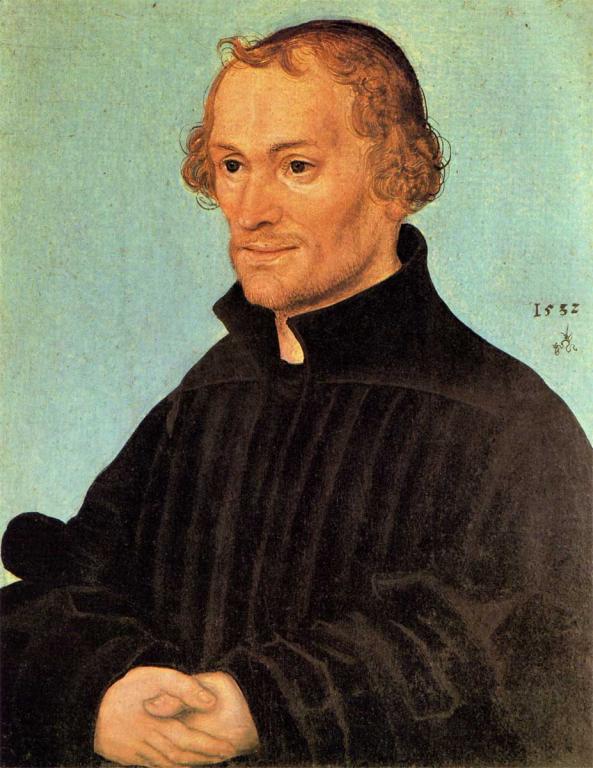
Photo credit: Philip Melanchthon (1497-1560): leader of Lutheranism after Luther’s death; 1532 portrait by Lucas Cranach the Elder (1472-1553) [public domain / Wikimedia Commons]
Philip Melanchthon (1497-1560) was the founder of Protestantism: Martin Luther’s best friend, co-reformer, and successor as the leader of Lutheranism. Encyclopaedia Britannica (“Philipp Melanchthon“) states that “Melanchthon . . . in 1521 published the Loci communes rerum theologicarum (‘Theological Commonplaces’), the first systematic treatment of Reformation thought.” It’s considered the initiatory work in the Lutheran scholastic tradition. Modified editions appeared in 1535, 1543 and 1559.
*
Martin Luther wrote, “No better book has been written after the Holy Scriptures than Philip’s. He expresses himself more concisely than I do when he argues and instructs. I’m garrulous and more rhetorical” (Table-Talk, 1543; in Luther’s Works, Vol. 54, 439-440). Many think that this volume was the reason why Luther never wrote his own work of systematic theology. Melanchthon at length departed from Luther in some ways; most notably, in his denial of the Real Presence in the Holy Eucharist, by the time of the 1543 edition, and on the question of free will.
*
In this series of replies, I will be utilizing the 1992 translation of the 1543 Latin version (St. Louis: Concordia Publishing House), by J. A. O. Preuss (1920-1994), who was a pastor, theologian, and the president of the Lutheran Church–Missouri Synod (LCMS) from 1969 to 1981. He wrote in the Introduction:
Luther, who had some violent disagreements with him, never criticized him publicly and never really broke with him. In fact, the verdict of history is that Luther was kinder to Melanchthon than Melanchthon was to Luther. . . . Most Lutherans in America up to the present time have been critical of him, including Schmauck, Neve, Bente, Pelikan, and many others, although that attitude is changing somewhat. (p. 7)
Melanchthon was a prodigy. He entered Heidelberg University at twelve and received his bachelor’s degree at 14. He moved on to Tubingen, where he earned the master’s degree at 17, . . . He never received the doctorate and was never ordained into the ministry. He never preached from the pulpit, although he had much to do with the development of the study of oratory and homiletics. He received an appointment to teach at the newly established University of Wittenberg in 1518. . . . He remained at Wittenberg the rest of his life . . . differences [with Luther] appear as early as 1530, . . . and become more evident as the years roll on. (p. 8)
See also my introductory post for this series on Facebook, which highlights his historically brand-new position of imputed justification (sola fide). For other installments of this series, see my Lutheranism web page, second section: “Replies to Philip Melanchthon’s Loci Communes.” Melanchthon’s words will be in blue. I use RSV for biblical citations.
***
I want to say clearly and plainly that our obedience, that is, the righteousness of a good conscience or of the good works which God has commanded us, must necessarily follow our reconciliation. (p. 97)
*
That’s what everyone agrees on: the true regenerated Christian with authentic faith must do grace-enabled good works. The controversy comes over whether they are meritorious, and whether sanctification is an organic part of justification, rather than an abstractly separate category.
*
Then there is comfort in the fact that he says that God has prepared before hand these good works in the church [Eph 2:10], just as He prepared beforehand in Samuel, David, Isaiah, Jeremiah, and others the marvelous works through which He both calls, governs, and preserves His church; and as He says in another place, “Strengthen, O God, that which You have wrought in us,” Ps. 68[:28]. (p. 97)
*
Exactly. They are not exclusively our works. They are caused by God’s grace and in His will. But they are also ours at the same time. It’s the paradoxical, biblical “both/and” rather than “either/or”:
1 Corinthians 15:10 But by the grace of God I am what I am, and his grace toward me was not in vain. On the contrary, I worked harder than any of them, though it was not I, but the grace of God which is with me.
1 Corinthians 3:9 For we are God’s fellow workers . . .
2 Corinthians 6:1 Working together with him, . . .
Philippians 2:13 for God is at work in you, both to will and to work for his good pleasure.
Colossians 1:29 . . . I toil, striving with all the energy which he mightily inspires within me.
Mark 16:20 And they went forth and preached everywhere, while the Lord worked with them . . .
The adversaries want to appear to be treating the doctrine of works as something very important, although they actually are speaking only of external hypocrisy or human ceremonies. But they do not know the works of the First Table and they bury the real source of good works. They say nothing about faith which is trust in the mercy and the free reconciliation of God, nor of the necessity of praying to Him in all situations. And when this faith is taken away then doubt prevails which either despises God or flees His wrath and does not call upon Him. (p. 97)
*
Now (after initial encouraging agreement) we see the usual inane caricatures of Catholicism. If one feels compelled to lie about one’s theological opponents in order to set forth a supposedly superior, more biblical theology, something is surely awry. It bespeaks a lack of confidence in one’s own beliefs. I, on the other hand, don’t have to misrepresent and distort Melanchthon’s Lutheran beliefs. I have no need or desire whatsoever to do that: with him or anyone else.
*
I want my readers to know exactly what others believe, and why they do. Towards that end, I present their good-faith, sincerely held positions in their own words and then proceed to show why I believe they are in error, based on Holy Scripture. But Melanchthon uses the age-old method of Protestant polemics against Catholicism (something Luther was a “master” at): present a straw man of what we supposedly believe in his words rather than actually citing a Catholic source and letting us speak for ourselves.
*
I have often said that we must not indulge in the idle human notion that we can govern our outward behavior by human diligence and human powers . . . (p. 98)
*
Really? We can and should do so after we are regenerated and justified initially (thus working with God, per the above passages):
Philippians 2:12 . . . work out your own salvation with fear and trembling;
1 Timothy 5:22 . . . keep yourself pure.
2 Timothy 2:15, 21 Do your best to present yourself to God as one approved, . . . [21] If any one purifies himself from what is ignoble, then he will be a vessel for noble use, consecrated and useful to the master of the house, ready for any good work.
2 Peter 1:10 Therefore, brethren, be the more zealous to confirm your call and election, for if you do this you will never fall;
Jude 20-21 But you, beloved, build yourselves up on your most holy faith; pray in the Holy Spirit; [21] keep yourselves in the love of God;
It is evident that godly minds are tormented and also hopeful that their obedience may be pleasing to God, but in this terrible weakness of ours they see that our obedience is crippled, impeded, imperfect, corrupt, . . . (p. 99)
Sometimes it is (we being fallen human beings who fail even after regeneration); most times it is not, if we are being obedient (the very act of which indicates a preceding grace). The seven representative passages above show not the slightest hint of the efforts and works done being “crippled, impeded, imperfect, corrupt.” That’s simply Protestant “faith alone”: being improperly superimposed onto the Bible. I submit that Melanchthon’s and Protestants’ prior presuppositions or worldview trump what the Bible actually teaches (which I think I am showing as I move along).
The hypocrites think that they do satisfy the Law, that they are righteous, that is, that they have been accepted by God because of their own worthiness or their fulfillment of the Law, as the Pharisee says in Luke 18:9-12. (p. 99)
That’s supposedly us dumb, deluded Catholics, of course! This is the old tired caricature of Catholicism as works-salvation (a thing we had roundly condemned 1100 years before Melanchthon): equating it with the Pharisees and Judaizers. The silliness and wrongheadedness of this charge — in terms of what Catholics actually teach and believe and seek to practice — is seen in the Decree on Justification from the Council of Trent, from its Sixth Session on 13 January 1547: less than four years after the third edition of Loci Communes that I am critiquing, was published, and thirteen years before Melanchthon died:
CHAPTER I. On the Inability of Nature and of the Law to justify man.
The holy Synod declares first, that, for the correct and sound understanding of the doctrine of Justification, it is necessary that each one recognise and confess, that, whereas all men had lost their innocence in the prevarication of Adam-having become unclean, and, as the apostle says, by nature children of wrath, as (this Synod) has set forth in the decree on original sin,-they were so far the servants of sin, and under the power of the devil and of death, that not the Gentiles only by the force of nature, but not even the Jews by the very letter itself of the law of Moses, were able to be liberated, or to arise, therefrom; although free will, attenuated as it was in its powers, and bent down, was by no means extinguished in them.
Thus we see that actual magisterial Church teaching, reiterated and promulgated during Melanchthon’s lifetime, is the polar opposite of his ridiculous caricature (that is still widely used to this day). The first three canons on justification from the same document, are so in line with Protestant teaching, that John Calvin, in his work, Acts of the Council of Trent with the Antidote (21 November 1547) — which I wrote about it in one article –, completely agreed with them and offered no further comment (writing, “To Canons 1, 2, and 3:, I say, Amen.”):
CANON I.-If any one saith, that man may be justified before God by his own works, whether done through the teaching of human nature, or that of the law, without the grace of God through Jesus Christ; let him be anathema.
CANON II.-If any one saith, that the grace of God, through Jesus Christ, is given only for this, that man may be able more easily to live justly, and to merit eternal life, as if, by free will without grace, he were able to do both, though hardly indeed and with difficulty; let him be anathema.
CANON III.-If any one saith, that without the prevenient inspiration of the Holy Ghost, and without his help, man can believe, hope, love, or be penitent as he ought, so as that the grace of Justification may be bestowed upon him; let him be anathema.
Here are some more good ones that any Protestant ought to readily agree with:
CANON X.-If any one saith, that men are just without the justice of Christ, whereby He merited for us to be justified; or that it is by that justice itself that they are formally just; let him be anathema.
CHAPTER V. On the necessity, in adults, of preparation for Justification, and whence it proceeds.
. . . the beginning of the said justification is to be derived from the prevenient grace of God through Jesus Christ . . . without any merits existing on their parts . . . yet is he not able, by his own free-will, without the grace of God, to move himself into justice in His sight . . .
CHAPTER VIII. In what manner it is to be understood, that the impious is justified by faith, and gratuitously.
. . . none of those things which precede justification — whether faith or works — merit the grace itself of justification. For if it be a grace, it is not now by works; otherwise, as the same Apostle says, grace is no more grace.
There are always people like this who admire their own virtues, who give long tributes to their own wisdom and righteousness, especially in secondary matters which are showy, which they think they can govern by their own ideas and which they choose to accept as the divinely given fruits of their own virtues and diligence, . . . (p. 99)
This is the picture which many hypocrites project, and there are not a few who are like this, self-confident, pleased with them selves because of their gifts, applauding their own wisdom, . . . (p. 100)
I guess he is talking about David and Paul, too:
1 Samuel 26:23 [David] The LORD rewards every man for his righteousness and his faithfulness; . . .
2 Samuel 22:21-25 [David] The LORD rewarded me according to my righteousness; according to the cleanness of my hands he recompensed me. [22] For I have kept the ways of the LORD, and have not wickedly departed from my God.
Romans 15:17 . . . In Christ Jesus, then, I have reason to be proud of my work for God.
2 Timothy 4:6-8 For I am already on the point of being sacrificed; the time of my departure has come. [7] I have fought the good fight, I have finished the race, I have kept the faith. [8] Henceforth there is laid up for me the crown of righteousness, which the Lord, the righteous judge, will award to me on that Day, . . .
***
“Please Hit ‘Subscribe’”! If you have received benefit from this or any of my other 4,800+ articles, please follow my blog by signing up (with your email address) on the sidebar to the right (you may have to scroll down a bit), above where there is an icon bar, “Sign Me Up!”: to receive notice when I post a new blog article. This is the equivalent of subscribing to a YouTube channel. My blog was rated #1 for Christian sites by leading AI tool, ChatGPT: endorsed by influential Protestant blogger Adrian Warnock. Please also consider following me on Twitter / X and purchasing one or more of my 55 books. All of this helps me get more exposure, and (however little!) more income for my full-time apologetics work. Thanks so much and happy reading!
***
In fact, St. Paul was in several instances in his letters, given to long glowing descriptions of his own [God-enabled] righteous works and sanctity (I guess Melanchthon would consign him to the proud, arrogant, Pharisee-types, too, huh?):
2 Corinthians 11:5-30 I think that I am not in the least inferior to these superlative apostles. [6] Even if I am unskilled in speaking, I am not in knowledge; in every way we have made this plain to you in all things. [7] Did I commit a sin in abasing myself so that you might be exalted, because I preached God’s gospel without cost to you? [8] I robbed other churches by accepting support from them in order to serve you. [9] And when I was with you and was in want, I did not burden any one, for my needs were supplied by the brethren who came from Macedo’nia. So I refrained and will refrain from burdening you in any way. [10] As the truth of Christ is in me, this boast of mine shall not be silenced in the regions of Acha’ia. [11] And why? Because I do not love you? God knows I do! [12] And what I do I will continue to do, in order to undermine the claim of those who would like to claim that in their boasted mission they work on the same terms as we do. [13] For such men are false apostles, deceitful workmen, disguising themselves as apostles of Christ. [14] And no wonder, for even Satan disguises himself as an angel of light. [15] So it is not strange if his servants also disguise themselves as servants of righteousness. Their end will correspond to their deeds. [16] I repeat, let no one think me foolish; but even if you do, accept me as a fool, so that I too may boast a little. [17] (What I am saying I say not with the Lord’s authority but as a fool, in this boastful confidence; [18] since many boast of worldly things, I too will boast.) [19] For you gladly bear with fools, being wise yourselves! [20] For you bear it if a man makes slaves of you, or preys upon you, or takes advantage of you, or puts on airs, or strikes you in the face. [21] To my shame, I must say, we were too weak for that! But whatever any one dares to boast of — I am speaking as a fool — I also dare to boast of that. [22] Are they Hebrews? So am I. Are they Israelites? So am I. Are they descendants of Abraham? So am I. [23] Are they servants of Christ? I am a better one — I am talking like a madman — with far greater labors, far more imprisonments, with countless beatings, and often near death. [24] Five times I have received at the hands of the Jews the forty lashes less one. [25] Three times I have been beaten with rods; once I was stoned. Three times I have been shipwrecked; a night and a day I have been adrift at sea; [26] on frequent journeys, in danger from rivers, danger from robbers, danger from my own people, danger from Gentiles, danger in the city, danger in the wilderness, danger at sea, danger from false brethren; [27] in toil and hardship, through many a sleepless night, in hunger and thirst, often without food, in cold and exposure. [28] And, apart from other things, there is the daily pressure upon me of my anxiety for all the churches. [29] Who is weak, and I am not weak? Who is made to fall, and I am not indignant? [30] If I must boast, I will boast of the things that show my weakness.
1 Corinthians 9:14-19 In the same way, the Lord commanded that those who proclaim the gospel should get their living by the gospel. [15] But I have made no use of any of these rights, nor am I writing this to secure any such provision. For I would rather die than have any one deprive me of my ground for boasting. [16] For if I preach the gospel, that gives me no ground for boasting. For necessity is laid upon me. Woe to me if I do not preach the gospel! [17] For if I do this of my own will, I have a reward; but if not of my own will, I am entrusted with a commission. [18] What then is my reward? Just this: that in my preaching I may make the gospel free of charge, not making full use of my right in the gospel. [19] For though I am free from all men, I have made myself a slave to all, that I might win the more.
2 Corinthians 1:5-14 For as we share abundantly in Christ’s sufferings, so through Christ we share abundantly in comfort too. [6] If we are afflicted, it is for your comfort and salvation; and if we are comforted, it is for your comfort, which you experience when you patiently endure the same sufferings that we suffer. [7] Our hope for you is unshaken; for we know that as you share in our sufferings, you will also share in our comfort. [8] For we do not want you to be ignorant, brethren, of the affliction we experienced in Asia; for we were so utterly, unbearably crushed that we despaired of life itself. [9] Why, we felt that we had received the sentence of death; but that was to make us rely not on ourselves but on God who raises the dead; [10] he delivered us from so deadly a peril, and he will deliver us; on him we have set our hope that he will deliver us again. [11] You also must help us by prayer, so that many will give thanks on our behalf for the blessing granted us in answer to many prayers. [12] For our boast is this, the testimony of our conscience that we have behaved in the world, and still more toward you, with holiness and godly sincerity, not by earthly wisdom but by the grace of God. [13] For we write you nothing but what you can read and understand; I hope you will understand fully, [14] as you have understood in part, that you can be proud of us as we can be of you, on the day of the Lord Jesus.
Colossians 1:24-28 Now I rejoice in my sufferings for your sake, and in my flesh I complete what is lacking in Christ’s afflictions for the sake of his body, that is, the church, [25] of which I became a minister according to the divine office which was given to me for you, to make the word of God fully known, [26] the mystery hidden for ages and generations but now made manifest to his saints. [27] To them God chose to make known how great among the Gentiles are the riches of the glory of this mystery, which is Christ in you, the hope of glory. [28] Him we proclaim, . . .
Yes, of course in 2 Corinthians 11, it is partly sarcastic (this boast of mine”; “I am talking like a madman” etc.), but he goes on and on, and sarcasm (in Paul or Jesus or anyone else who uses it) always has an underlying serious point to make. If indeed, Paul could take no credit at all for any or all of this (the Protestant denial of merit), then the whole discourse is most improper and inappropriate. Moreover, he also uses “boast” in a totally non-sarcastic way in 1 Corinthians 9 and 2 Corinthians 1.
Therefore they tout themselves above others because of their wisdom and righteousness, as Nebuchadnezzar did, . . . (p. 99)
Paul certainly did so above. He had none of Luther’s existential angst and cyclical insecurity about his standing before God. Melanchthon, a timid, nervous type to begin with, seems to have inherited that from Luther. Unfortunately, they both passed on their personal insecurities and struggles into mainstream Protestant soteriology (theology of salvation), so that they became institutionalized. Personally, I suspect that it’s more psychological stuff than theological or biblical . . .
But even before psychology enters in, the root of it is arguably the Protestant leading trait of creating illogical “either/or” false dichotomies. Louis Bouyer, a Lutheran who became a Catholic, wrote an entire brilliant book about this, called The Spirit and Forms of Protestantism. I recommend it more highly than any other book, for Catholics desiring to understand the premises and presuppositions of Protestantism.
Likewise Saul believed that the kingdom of Israel had been established by his power, although he should have known that both this power and the successes were blessings from God, and that he could not have accomplished or ruled over such things by himself, . . . (p. 100)
That’s exactly my point: both as regards biblical teaching and the fact that Catholics agree with it in this respect and every other. Protestants aren’t the only ones who teach salvation by grace alone, God’s providence and sovereignty, predestination, election, the wrongness of works-salvation, etc. This may come as a shock to many, but so be it. I’m here to educate and proclaim what I strongly believe to be the truth, not please (i.e., when the two differ from each other).
But first of all we must establish this point: Although in the regenerate there must be a beginning of obedience and the righteousness of a good conscience, yet sins still remain in them, that is to say, the disease which is born in us, the doubts, the ignorance of many things; or in other words, that they do not fear God as they ought nor burn with love toward Him as the Law demands. (p. 100)
That’s self-evident in the Bible, and the Catholic Church had always taught it, so I fail to see why Melanchthon thought he needed to “establish” it (with whom?: biblical illiterates or completely uncatechized folks?). Odd . . . :
Psalm 130:3-4 If thou, O LORD, shouldst mark iniquities, Lord, who could stand? [4] But there is forgiveness with thee, . . . (130:3 was cited by Melanchthon on p. 101; mistakenly identified as “103:3” by either him or translator Preuss)
Matthew 6:14-15 For if you forgive men their trespasses, your heavenly Father also will forgive you; [15] but if you do not forgive men their trespasses, neither will your Father forgive your trespasses.
John 8:7 . . . “Let him who is without sin among you be the first to throw a stone at her.”
James 5:15-16 . . . if he has committed sins, he will be forgiven. [16] Therefore confess your sins to one another, . . .
1 John 1:8-10 If we say we have no sin, we deceive ourselves, and the truth is not in us. [9] If we confess our sins, he is faithful and just, and will forgive our sins and cleanse us from all unrighteousness. [10] If we say we have not sinned, we make him a liar, and his word is not in us. (1:8 was cited by Melanchthon later on the same page: 100).
1 John 2:1 My little children, I am writing this to you so that you may not sin; but if any one does sin, we have an advocate with the Father, Jesus Christ the righteous;
The monks even teach that these doubts concerning providence, the wrath of God, His mercy, our wicked desires, unless there is consent to them, are not sins; . . . (p. 100)
The key word there is “consent.” He is writing about concupiscence here. See my articles, Augsburg Confession Dialogues: God / Original Sin (Agreement Regarding God’s Nature, But Differences Concerning the Rule of Faith & Concupiscence) [5-2-24] and Calvinist Total Depravity vs. Catholic Concupiscence [1996].
. . . sin remains in this mortal nature of ours. (p. 100)
No one is disagreeing, so again, I don’t know who it is that Melanchthon fancies would disagree with this. Catholics simply say that one can become holier and holier and more righteous over time, by God’s grace and our resolve, discipline, and free will choices. Theoretically, we could arrive at a sinless state of being, but as we all know, it virtually never happens. We all strive, or should at least desire to strive, with God’s help, to live as free from sin as we can. At the moment of baptism, we are at least momentarily sinless, since all of our old sins have been forgiven and we have been regenerated and born again.
Rom. 7:23, “I see another law at work in my members waging war against the law of my mind and making me a prisoner to the law of sin which is in my members.” Now, although the sophists get around this passage and say that . . . here the word refers to . . . the tendency to sin which has come from the fall of our first parents [concupiscence], yet Paul himself refutes this sophistry in his definition of sin itself, when he says that it is an evil in our members which is at war with the law of God.
Furthermore, we have discussed in regard to this article whether the wickedness which remains in our nature is something which is in conflict with the law of God. Human judgment excuses this corruption, but Paul uses very graphic words to describe this terrible thing. He says that the corruption is at war in his members, that it is viciously contending against the law of his mind, confirming his carnal security or his righteous ness which is at odds with God, filling his mind with pride in his own virtues and arrogance, kindling lusts, hatred, desire for revenge, and urging him to seek for bidden help; and finally it takes him captive, because it overthrows the antagonisms of his mind by fears and brings him to the point of despair, so that he flees from God. aw at work in my members waging war against the law of my mind and making me a prisoner to the law of sin which is in my members.” Now, although the sophists get around this passage and say that there has been a shift in the word “sin,” and that here the word refers to “the punishment of sin,” the tendency to sin which has come from the fall of our first parents, yet Paul himself refutes this sophistry in his definition of sin itself, when he says that it is an evil in our members which is at war with the law of God. (p. 100)
Dom Bernard Orchard, in his Catholic Commentary (1953) writes about Romans 7:
It is characteristic of this and the following paragraph, 13–25, that St Paul argues in the first person. The natural conclusion is that he relates his own experience. On the other hand, to argue from a purely individual experience is out of place in such a general discussion as is developed in Rom. This forces upon us the further conclusion that Paul regarded his own experience in this case as typical. And since he speaks in the past, obviously referring to the time before baptism, it can be further described as typical of the pre-Christian time. Then the question arises whether it is to be considered as a typical experience of Israelites and Gentiles alike or only of the former. The answers differ. All who limit the theme of Rom 7 to a discussion on the Mosaic Law must limit the typical value of Paul’s experience accordingly because it is the basis of the whole argument. On the other hand, Rom is addressed to a Christian community consisting of former Israelites as well as of former Gentiles (cf. 1:18–3, 20) and there is no evidence that in our chapter Paul is speaking to the former Israelites only. In view of the addressees, therefore, it seems more natural to think that he looked upon his own experience in the matter as generally typical of the time before becoming a Christian without distinguishing between former Israelites and Gentiles.
The law of which St Paul speaks here has been identified with the natural moral law, the Mosaic Law, and both together. The last is the most satisfactory answer. That he foremost had the Mosaic Law in mind follows from the fact that he speaks in the first person. At the same time he must have included the natural moral law because of the former Gentiles among his readers. The simplest solution therefore is to take the law here as the Mosaic Law but as typical of the natural moral law in the same sense as the first person in this description is meant to be typical of man in general, Israelite and Gentile alike. This wider interpretation of ‘law’ is not contradicted by the commandment ‘Thou shalt not covet’, 7. No doubt this is a quotation from the Decalogue. But the quotation is so free (cf. Ex 20:17; Deut 5:21) that it fits the natural moral law as well. Nor can it be urged against this explanation that it entails the abrogation of the natural law which is clearly against Christian doctrine. The point of the whole chapter is not the abrogation of the law, but ‘who is to be given first place’, Christ or — as it has been heretofore — the law? . . .
Modern commentators agree that both context and contents point decisively to the time before conversion. It is the characteristic experience of the soul before conversion to the Christian faith to be ‘sold under sin’, 14, and to be unable to carry out its higher aspirations, 15, 18, 23, 25b. To regard this experience as remaining after conversion is against the whole line of the argument, cf. 6:6, 9, 12–14, 17, 22; 7:6; 8; and also against all the moral exhortations in St Paul’s epistle. Nor is it necessary to understand the picture as a reflexion of the Apostle’s own state of soul when writing because he uses the present tense. There is no reason against taking this as an historic or graphic present to denote what is past, so that there is no real change of tense between 7–12 and 13–25. (my italics)
Romans 8 is Paul’s “treatise” on what the spiritual life is like after regeneration. Paul didn’t have two personalities. Nor was he self-contradictory. The topic of Romans 7 is the pre-regenerate or pagan / carnal life, whereas Romans 8 is about the Christian life, which he was experiencing (and all of us can, too):
Romans 8:1-3, 6 There is therefore now no condemnation for those who are in Christ Jesus. [2] For the law of the Spirit of life in Christ Jesus has set me free from the law of sin and death. [3] For God has done what the law, weakened by the flesh, could not do: . . . [6] To set the mind on the flesh is death, but to set the mind on the Spirit is life and peace.
Romans 8:26-28 Likewise the Spirit helps us in our weakness; for we do not know how to pray as we ought, but the Spirit himself intercedes for us with sighs too deep for words. [27] And he who searches the hearts of men knows what is the mind of the Spirit, because the Spirit intercedes for the saints according to the will of God. [28] We know that in everything God works for good with those who love him, who are called according to his purpose. (8:28 is my favorite verse in the Bible).
Romans 8:37 No, in all these things we are more than conquerors through him who loved us.
Melanchthon, on the other hand, wants to take Romans 7 as descriptive of the life of every Christian (even Paul’s!): supposedly miserably and utterly unable to overcome sin, as if there were no Romans 8 to follow it and provide the solution to Paul’s rhetorical spiritual dilemma, laid out in chapter 7. It’s classic isolated proof-texting, which is sadly common in Protestant theology and apologetics, especially when deliberately trying to refute Catholicism. St. Paul in Romans 8 isn’t arguing that we are beyond sin (as if it poses no difficulties at all), but rather, that we can always conquer it, provided we cooperate with God the Holy Spirit, Who lives within us (8:9-11; cf. John 14-16). That’s why it’s such a jubilant, triumphalistic, joyous, sunny chapter.
This gets to the heart of the “Reformation” debate over justification: does it actually change us for the better (Catholicism), or is it a mere declaration, with any actual righteousness neatly separated into a separate non-salvific “box” of sanctification (Protestantism)? As Protestant scholars like Alister McGrath and Norman Geisler tell us, the latter notion wasn’t taught by the Church fathers (especially not by St. Augustine), and Melanchthon introduced it fifteen centuries after Christ; in effect making out that no one had ever understood this until he did. I also add that our view has the support of the Bible, as I think I have demonstrated here and in scores and scores of other articles collected on my Salvation, Justification, & “Faith Alone” web page (see especially the first section). I habitually provide much more biblical argumentation than my theological opponents do. Melanchthon is no exception.
Therefore, although sins are present with us and the godly to some degree recognize the wrath of God, yet they believe that they are pleasing to God because of His promised mercy, and they sustain themselves with this comfort, as Ps. 33:20 ff. says, “My soul sustains itself in His Word … my soul hopes in the Lord, for with the Lord there is mercy”; Ps. 32:5-6, . . . (p. 101; he provides several more biblical examples of that)
That’s necessary, given our fallen nature prior to regeneration, but in the Bible there are also many examples of God being “pleased” because of what regenerate believers obediently do in His power and grace (which is precisely why He rewards us for same, which is Catholic merit: vigorously and categorically denied by Protestantism). Yet here it is massively in the Bible (“ya pays yer money and ya makes yer choice”):
Genesis 18:19 I have chosen him, that he may charge his children and his household after him to keep the way of the LORD by doing righteousness and justice; so that the LORD may bring to Abraham what he has promised him.
Genesis 22:16-17 “By myself I have sworn, says the LORD, because you have done this, and have not withheld your son, your only son, [17] I will indeed bless you, and I will multiply your descendants as the stars of heaven and as the sand which is on the seashore. . . .
1 Samuel 26:23 The LORD rewards every man for his righteousness and his faithfulness; . . .
2 Samuel 22:21-25 The LORD rewarded me according to my righteousness; according to the cleanness of my hands he recompensed me. [22] For I have kept the ways of the LORD, and have not wickedly departed from my God. [23] For all his ordinances were before me, and from his statutes I did not turn aside. [24] I was blameless before him, and I kept myself from guilt. [25] Therefore the LORD has recompensed me according to my righteousness, according to my cleanness in his sight. (cf. Ps 18:20-23)
1 Kings 3:9-14 Give thy servant therefore an understanding mind to govern thy people, that I may discern between good and evil; for who is able to govern this thy great people?” [10] It pleased the Lord that Solomon had asked this. [11] And God said to him, “Because you have asked this, and have not asked for yourself long life or riches or the life of your enemies, but have asked for yourself understanding to discern what is right, [12] behold, I now do according to your word. Behold, I give you a wise and discerning mind, so that none like you has been before you and none like you shall arise after you. [13] I give you also what you have not asked, both riches and honor, so that no other king shall compare with you, all your days. [14] And if you will walk in my ways, keeping my statutes and my commandments, as your father David walked, then I will lengthen your days.”
Proverbs 15:26 The thoughts of the wicked are an abomination to the LORD, the words of the pure are pleasing to him.
Jeremiah 31:16 . . . your work shall be rewarded, says the LORD, . . .
Jeremiah 32:19 great in counsel and mighty in deed; whose eyes are open to all the ways of men, rewarding every man according to his ways and according to the fruit of his doings;
Haggai 1:8 Go up to the hills and bring wood and build the house, that I may take pleasure in it and that I may appear in my glory, says the LORD.
Matthew 6:3-4 But when you give alms, do not let your left hand know what your right hand is doing, [4] so that your alms may be in secret; and your Father who sees in secret will reward you. . . . (cf. 6:6, 17-18, 20)
Mark 10:29-30 Jesus said, “Truly, I say to you, there is no one who has left house or brothers or sisters or mother or father or children or lands, for my sake and for the gospel, [30] who will not receive a hundredfold now in this time, houses and brothers and sisters and mothers and children and lands, . . .
Ephesians 5:10 and try to learn what is pleasing to the Lord. (cf. Phil 2:13)
Ephesians 6:8 knowing that whatever good any one does, he will receive the same again from the Lord, . . .
Philippians 4:18 I have received full payment, and more; I am filled, having received from Epaphrodi’tus the gifts you sent, a fragrant offering, a sacrifice acceptable and pleasing to God.
Colossians 1:10 to lead a life worthy of the Lord, fully pleasing to him, . . .
Colossians 3:20 Children, obey your parents in everything, for this pleases the Lord.
1 Thessalonians 2:4 but just as we have been approved by God to be entrusted with the gospel, so we speak, not to please men, but to please God who tests our hearts.
1 Thessalonians 4:1 Finally, brethren, we beseech and exhort you in the Lord Jesus, that as you learned from us how you ought to live and to please God, just as you are doing, you do so more and more.
Hebrews 13:16 Do not neglect to do good and to share what you have, for such sacrifices are pleasing to God.
1 John 3:22 and we receive from him whatever we ask, because we keep his commandments and do what pleases him.
Daniel teaches the same thing for which Paul so copiously contends, when he says that we understand that the nature of man is wicked and does not satisfy the Law, but that we are accepted by God through His mercy for the sake of the promised Lord. (p. 101)
That’s only part of the whole picture, as I just proved. Melanchthon, in classic Protestant style, completely ignores a prominent biblical motif, while pretending that the partial truth he presents is the whole picture. There is a reason why we swear in courts to tell “the truth, the whole truth, and nothing but the truth.” Later, Melanchthon acknowledges that we can do things that are pleasing to God:
It is necessary to possess the good righteousness of a good conscience and to know how it pleases God. . . . obedience is pleasing to God, . . . (pp. 101-102)
But he can’t admit that this is essentially the same thing as what Catholics call merit, because Luther and Protestantism arbitrarily, irrationally, and unbiblically decided that it doesn’t exist. In another paper, I provided 46 biblical passages proving that it does.
In 1 Cor. 1:31, “He who glories, let him glory in the Lord,” that is, we cannot be glorified or exalted because we are without sin, but we glory in the Lord, that is to say, in the Lord who promises us mercy. (p. 101)
This is another partial truth. Many biblical passages (I found 26 myself) teach that God shares His glory with us. Why is it that Melanchthon, a Bible scholar, didn’t know this; nor does he seem familiar with many other biblical themes I am pointing out? Or did he indeed know, but wanted to conceal them and engage in consciously selective presentation?
In Col. 1:28 it says, “You are presented perfect in Christ Jesus,” that is, even if the regenerate do not yet fulfill the Law, yet they are righteous and pleasing to God for the sake of His Son. Here we should confess and celebrate the fulness of the mercy of God, that in those who have been reconciled, this obedience which is incomplete, imperfect, unclean, and corrupted by many wicked desires, is still accepted by God, not in deed because of the worth of our virtues but because of the Son of God, Rom. 6:14, “You are not under the Law but under grace.” (p. 102)
Melanchthon seeks to force-fit this verse into Protestant forensic, external, imputed justification. To do so, he made out that it is referring to a completed event. But my RSV reads, “that we may present every man mature in Christ.” Then Paul immediately adds, “For this I toil, . . . (1:29). How can he “toil” for a thing that is, by definition, God’s work alone? “May” is present in virtually every English translation of Colossians 1:28. But in any event (whatever the Greek tense is), Paul couldn’t “toil” for imputed justification (even in the temporary sense in which Catholics accept it). He would have nothing to do with it.
Paul also expressly denies what Melanchthon seeks to assert: “Not that I . . . am already perfect . . . I press on toward the goal . . .” (Phil 3:12, 14). This is the Catholic striving for actual holiness, not a one-time instant declaration that we are holy in God’s sight, when in fact we aren’t. Forgiveness of sins and reconciliation — which we receive in baptism and initial justification — are not the same thing as being perfectly holy: although we temporarily are that after baptism until the next sin we commit. Catholic and Protestantism happily “meet” in what we call initial justification, but then it immediately diverges again when it comes to considering what happens after that, for the rest of the person’s life.
*
***
*
Practical Matters: I run the most comprehensive “one-stop” Catholic apologetics site: rated #1 for Christian sites by leading AI tool, ChatGPT — endorsed by popular Protestant blogger Adrian Warnock. Perhaps some of my 4,800+ free online articles or fifty-five books have helped you (by God’s grace) to decide to become Catholic or to return to the Church, or better understand some doctrines and why we believe them.
*
Or you may believe my work is worthy to support for the purpose of apologetics and evangelism in general. If so, please seriously consider a much-needed financial contribution. I’m always in need of more funds: especially monthly support. “The laborer is worthy of his wages” (1 Tim 5:18, NKJV). 1 December 2021 was my 20th anniversary as a full-time Catholic apologist, and February 2022 marked the 25th anniversary of my blog.
*
PayPal donations are the easiest: just send to my email address: [email protected]. Here’s also a second page to get to PayPal. You’ll see the term “Catholic Used Book Service”, which is my old side-business. To learn about the different methods of contributing (including Zelle), see my page: About Catholic Apologist Dave Armstrong / Donation Information. Thanks a million from the bottom of my heart!
*
***
*
Photo credit: Philip Melanchthon (1497-1560): leader of Lutheranism after Luther’s death; 1532 portrait by Lucas Cranach the Elder (1472-1553) [public domain / Wikimedia Commons]

*
Summary: Topics covered incl. “working with God”, merit, Tridentine soteriology, Paul’s “boasting”, Rom 7 & 8 & the Spiritual Life, Col 1:28 and imputed justification, and pleasing God.
Previous Post
August 29, 2024
Reply to Melanchthon: Justification #1
Next Post
September 3, 2024 Reply to Melanchthon: Justification #3: Good Works 2
Recent Comments
"And lastly, I belong to no denomination and am free to serve God as He ..."
Is Venerating Men & Angels Worship? ..."
"And obeisance doesn't mean "worship". It means "respect", "obey", or "submission". Very weird that you ..."
Is Venerating Men & Angels Worship? ..."
"Many of these scriptures you have noted have been taken out of context. With Daniel, ..."
Is Venerating Men & Angels Worship? ..."
""Protestants often point out that Jesus is now triumphant in heaven and object to Catholics ..."
Three More Anti-Catholic Lies About Catholicism ..."
Browse Our Archives
Select a Category & Last Things About Me Anti-Catholicism Atheism & Agnosticism Baptism and Sacramentalism Bible and Tradition Blessed Virgin Mary Books by Dave Armstrong C. S. Lewis Calvinism & General Protestantism Catholic Apologetics Catholic Apologists Catholic conversion Catholic converts Christmas Church (Ecclesiology) Church History Conversion and Converts Development of Doctrine Eastern Orthodoxy Ecumenism & Christian Unity Eucharist & Liturgy Fathers of the Church French Translations G. K. Chesterton Hell Hell & Satan Hell & Satan & Last Things Heresies & Comparative Religion Holistic Health Inquisition & Crusades & Scandals James White Jews & Judaism & Old Testament John Calvin John Henry Newman Liberal / Modernist Theology Life Issues Literary Resume Lutheranism Mariology Martin Luther Music Orthodoxy Papacy & Infallibility Personal Page Philosophy & Science Political & Ethical & Moral Issues Protestant Persecution & Intolerance Protestantism Purgatory Purgatory & Penance Romantic & Imaginative Theology Saints & Purgatory & Penance Salvation Salvation & Justification Satan & Last Things Sexuality and Gender Issues Spanish Translations Traditionalism vs. Radical Catholic Reactionaries Traducciones al español / tradução para português Trinitarianism & Christology Uncategorized Videos
Select a Month October 2026 September 2026 August 2026 July 2026 June 2026 May 2026 April 2026 March 2026 February 2026 January 2026 December 2025 November 2025 October 2025 September 2025 August 2025 July 2025 June 2025 May 2025 April 2025 March 2025 February 2025 January 2025 December 2024 November 2024 October 2024 September 2024 August 2024 July 2024 June 2024 May 2024 April 2024 March 2024 February 2024 January 2024 December 2023 November 2023 October 2023 September 2023 August 2023 July 2023 June 2023 May 2023 April 2023 March 2023 February 2023 January 2023 December 2022 November 2022 October 2022 September 2022 August 2022 July 2022 June 2022 May 2022 April 2022 March 2022 February 2022 January 2022 December 2021 November 2021 October 2021 September 2021 August 2021 July 2021 June 2021 May 2021 April 2021 March 2021 February 2021 January 2021 December 2020 November 2020 October 2020 September 2020 August 2020 July 2020 June 2020 May 2020 April 2020 March 2020 February 2020 January 2020 December 2019 November 2019 October 2019 September 2019 August 2019 July 2019 June 2019 May 2019 April 2019 March 2019 February 2019 January 2019 December 2018 November 2018 October 2018 September 2018 August 2018 July 2018 June 2018 May 2018 April 2018 March 2018 February 2018 January 2018 December 2017 November 2017 October 2017 September 2017 August 2017 July 2017 June 2017 May 2017 April 2017 March 2017 February 2017 January 2017 December 2016 November 2016 October 2016 September 2016 August 2016 July 2016 June 2016 May 2016 April 2016 March 2016 February 2016 January 2016 December 2015 November 2015 October 2015 September 2015 August 2015 July 2015 June 2015 May 2015 April 2015 March 2015 February 2015 January 2015 December 2014 November 2014 October 2014 September 2014 August 2014 July 2014 June 2014 April 2014 March 2014 February 2014 January 2014 December 2013 November 2013 October 2013 September 2013 August 2013 July 2013 June 2013 April 2013 March 2013 February 2013 January 2013 December 2012 November 2012 October 2012 September 2012 August 2012 July 2012 June 2012 May 2012 April 2012 March 2012 February 2012 January 2012 December 2011 November 2011 October 2011 September 2011 August 2011 July 2011 June 2011 April 2011 March 2011 February 2011 October 2010 September 2010 August 2010 July 2010 April 2010 March 2010 December 2009 October 2009 August 2009 July 2009 June 2009 May 2009 March 2009 February 2009 October 2008 September 2008 April 2008 March 2008 February 2008 January 2008 December 2007 November 2007 October 2007 May 2007 March 2007 February 2007 January 2007 November 2006 October 2006 September 2006 August 2006 July 2006 June 2006 May 2006 April 2006 March 2006 February 2006 October 2005 June 2005 April 2005 February 2005 July 2004 May 2004 April 2004
Follow Us!
TAKE THE
Religious Wisdom Quiz
Who prayed for rain after a long drought and sent his servant to look seven times?
Select your answer to see how you score.
Elijah Isaiah Samuel Hosea
Books by This Author Books by Dave Armstrong
Related posts from Biblical Evidence for Catholicism

Bible & Catholicism on Mortal Sin (vs. John...
Biblical Evidence for Catholicism

Does Catholic Intercession of Saints Require Omniscience?
Biblical Evidence for Catholicism

Dialogue on Eternal Security / Absolute Assurance
Biblical Evidence for Catholicism

Protestant Confessions & "Ever-Virgin" Mary
Biblical Evidence for Catholicism
TRENDING AT PATHEOS Catholic

I was strolling through the top floor of the brand new Parthenon...

What Does Gêvâh Mean For Kimberley Guifoyle &...
This week, a lot of the news is focused on Kimberly Guilfoyle....

INNER CIRCLE: Profound Mystery (Of Christ In All...
Ephesians 5:31-32 “For this reason, a man will leave his father and...

Do Not Rejoice When Your Enemy Falls: The...
Turning an execution into a public spectacle is a disturbing expression of...

'The Chosen' S6 Trailer: The Passion Gets Very...
Not many watching 'The Chosen' worry about spoilers, but just because they...

The purpose-driven labor priest
A labor activist reads Rick Warren and it gets me wondering about...
view all Catholic blogs
What Are Your Thoughts?leave a comment
Ad-Free & Subscriber Log-In Subscription Support
- About Us
- 2026 Calendar
- Videos
- Podcasts
- Library of World Religions
- Faith In Media Tracker
- Advertise With Us
- Write for Us
- Privacy Policy
- Terms of Service
- Do Not Sell My Data
- Contact Us
- Radiant Digital
- Manage Newsletter Subscriptions
- Unsubscribe From Notifications
- Sitemap
Copyright 2008-2026, Patheos. All rights reserved.
Subscription Support Ad-Free & Subscriber Log-In
Follow Patheos