
BuddhistCatholicContemplativeEvangelicalGeneral ChristianHinduJewishLatter-day SaintMuslimNew VisionsProgressive Christian
Beliefs
- Buddhist
- Catholic
- Contemplative
- Evangelical
- General Christian
- Hindu
- Jewish
- Latter-day Saint
- More Voices
- Muslim
- New Visions
- Pagan
- Progressive Christian
Topics
- Religion News
- Food and Religion
- Sports and Religion
- Religious Art
- Religious Music and Entertainment
- Religious Events
- History and Religion
- Style and Religion
- Politics and Religion
- Women in Religion
- Recreation Outdoors and Religion
- Business Finance and Religion
- Careers Workplace and Religion
- Education and Religion
- Family Parenting and Religion
- Health Fitness and Religion
- Home and Religion
- Relationships and Religion
- Technology and Religion
- Travel and Religion
Columnists
- Buddhist Columnists
- Business Finance and Religion Columnists
- Careers Workplace and Religion Columnists
- Catholic Columnists
- Contemplative Columnists
- Education and Religion Columnists
- Evangelists Columnists
- Family Parenting and Religion Columnists
- General Christian Columnists
- Health Fitness and Religion Columnists
- Hindu Columnists
- History and Religion Columnists
- Home and Religion Columnists
- Jewish Columnists
- More Voices Columnists
- Latter Day Columnists
- Muslim Columnists
- New Visions Columnists
- Nonreligious Columnists
- Pagan Columnists
- Politics and Religion Columnists
- Progressive Columnists
- Recreation Outdoors and Religion Columnists
- Relationships and Religion Columnists
- Religion News Columnists
- Religious Art Columnists
- Religious Events Columnists
- Religious Music and Entertainment Columnists
- Sports and Religion Columnists
- Style and Religion Columnists
- Technology and Religion Columnists
- Travel and Religion Columnists
- Women in Religion Columnists
Resource Library
- 2026 Calendar
- Library of World Religions
- The 100 Most Holy Places on Earth
- Patheos Answers
- Podcasts
- Videos
- Faith Leaders Database
- Anglican Episcopalian
- Bahai
- Baptist
- Buddhism
- Christianity
- Confucianism
- Eastern Orthodoxy
- Hinduism
- Holiness and Pentecostal
- ISKCON
- Islam
- Judaism
- Lutheran
- Methodist
- The Church of Jesus Christ of Latter-day Saints
- New Age
- Paganism
- Presbytarian and Reformed
- Protestantism
- Religion Behind the Scenes
- Roman Catholic
- Scientology
- Shia Islam
- Sikhism
- Sufism
- Sunni Islam
- Taoism
- Zen
- See all religions
Research Tools
 Ad-Free & Subscriber Log-In Subscription Support
Ad-Free & Subscriber Log-In Subscription Support
Follow Patheos 

- Trending:
- Forgiveness
- |
- Marriage
- |
- Consciousness
- |
- Death Penalty
- |
- Election
- |
- Halloween

-
About
-
Catholic Apologetics
-
Church History
-
Great Apologists
-
Christian Worldview
-
Protestantism & Misc.
- Home
- Catholic
- History and Religion
- Reply to Luther’s “On the Councils & the Church”
Reply to Luther’s “On the Councils & the Church”
Last updated on: August 14, 2024 at 11:55 pm by Dave Armstrong
Reply to Luther’s “On the Councils & the Church” 2024-08-14T23:55:05-04:00 Dave Armstrong
Patheos Explore the world's faith through different perspectives on religion and spirituality! Patheos has the views of the prevalent religions and spiritualities of the world.
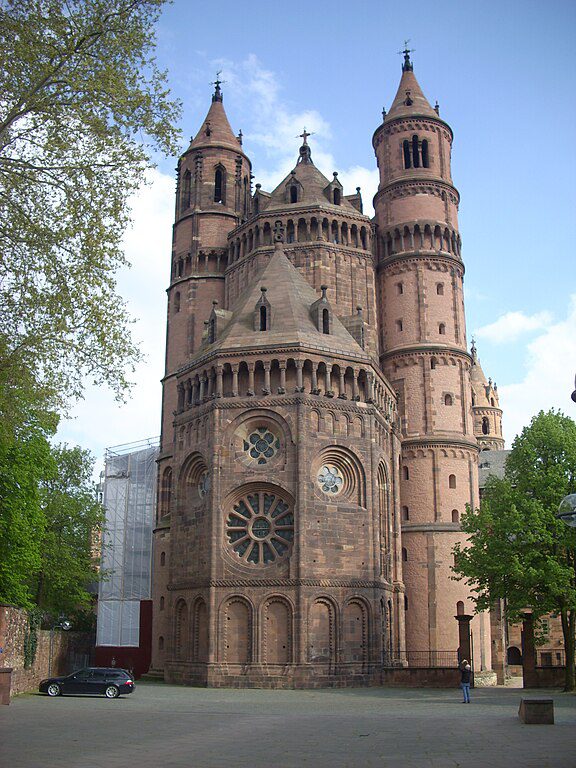
Photo credit: St. Peter’s Cathedral in Worms, Germany (west end), in the same city where the famous Diet of Worms with Martin Luther took place, in January-May 1521. Photo by AndreasThum (4-17-11) [Wikimedia Commons / Creative Commons Attribution-Share Alike 3.0 Unported license]
Martin Luther completed his treatise, On the Councils and the Church in March 1539. In Luther’s Works (Vol. 41) it takes up 170 pages (9-178; translated in 1966). In the Introduction included in that volume, the editors observe:
Luther’s On the Councils and the Church represents his final judgment concerning the medieval church as well as the first broad foundation for a new doctrine of the church within nascent Lutheranism. . . . Luther concludes from his analysis that although councils protect the church from error, they have no authority to create new articles of faith. . . .
Experience taught Luther to bury all hopes for any reconciliation with Rome — a sad lesson, climaxing in the conviction that “a free, general, Christian council,” once his dream, was never to become a reality. (p. 5)
I will be utilizing a different public domain translation of Rev. C. B. Smyth: published in London by William Edward Painter in 1847; available at Internet Archive. When I cite Scripture, it is RSV. Luther’s words will be in blue.
***
I have bypassed Luther’s Preface, which consists of ranting and raving and little actual argument. Likewise, I will pass over similar material in my reply and stick to portions where Luther is actually lucid and presents some sort of sustained rational argument. Luther is not Calvin, who (like him or not) systematically presents concise, cogent arguments. Unless one wants to essentially descend to a shouting match or polemics and little else (which helps nobody), one must necessarily be selective in what to respond to in Luther.
They will consign the Church to ruin sooner than they will give way in one point — that is, they will first give up councils and fathers before they will abandon anything invented by themselves. For were the councils and the fathers faithfully followed, ah, then, what a sorry figure would the pontiff and modern prelates exhibit? (p. 14)
Of course, we say precisely this against Lutherans and larger Protestantism. It’s because they have departed from the Church fathers and early councils that they have gone astray in many ways. Not only do they massively differ from patristic consensus in several major ways (as I have shown many times: see my Fathers of the Church web page); they also contradict each other innumerable times, since they have split into many hundreds of sects, and have no way to resolve that scandalous problem. Where there are serious differences of opinion, contradictions are massively and necessarily present, on one side or possibly both, in any given conflict. But Catholicism can trace itself back to the beginning, in an unbroken chain of consistent development of doctrine.
They must go to ruin, and cease to remain as lords in the ascendant. (p. 15)
Thus prophesied Luther in 1539. We’re still here, teaching the same as always, whereas his Lutherans have split into factions: most of them theologically liberal and contrary to historic Lutheranism, while a small portion remains true. If that’s supposedly the “mainstream” of Christianity, it’s a pathetic thing indeed.
Why, the universal vicar is above councils, above fathers, above kingly and divine authority, and angels! Let me see you bring him down to submission, and (if you can) make fathers and councils to dictate to the apostolic vicar. (p. 16)
I guess he’s projecting here, since he wrote 17 years earlier about himself:
I call myself an ecclesiastic by the grace of God in defiance of you and the devil, although you call me a heretic with an abundance of slander. And even if I called myself an evangelist by the grace of God, I would still be more confident of proving it than that any one of you could prove his episcopal title or name. I am certain that Christ himself, who is the master of my teaching, gives me this title and regards me as one. Moreover, he will be my witness on the Last Day that it is not my pure gospel but his. . . .
I need not have any title and name to praise highly the word, office, and work which I have from God and which you blind blasphemers defile and persecute beyond measure. I trust my praise will overcome your defiling, just as my justice will overcome your injustice. It does not matter if, with your blasphemy, you are on top for the moment.
Therefore, I now let you know that from now on I shall no longer do you the honor of allowing you – or even an angel from heaven – to judge my teaching or to examine it. For there has been enough foolish humility now for the third time at Worms, and it has not helped. Instead, I shall let myself be heard and, as St. Peter teaches, give an explanation and defense of my teaching to all the world – I Pet. 3:15. I shall not have it judged by any man, not even by any angel. For since I am certain of it, I shall be your judge and even the angels’ judge through this teaching(as St. Paul says [I Cor. 6:3 ]) so that whoever does not accept my teaching may not be saved – for it is God’s and not mine. Therefore, my judgment is also not mine but God’s. (Against the Spiritual Estate of the Pope and the Bishops Falsely So-Called, July 1522; from Luther’s Works, Vol. 39: Church and Ministry I, excerpt from pp. 247-249; see much more along these lines)
In stark contrast, popes massively consult with bishops, priests, and even laypeople, before making any major doctrinal or dogmatic pronouncements, as I recently documented. No one could disagree with Luther (if they did he often consigned them to a destiny in hell, in his singular foreknowledge). He was as autocratic and dogmatic (in the worst sense of that word) as they come.
The holy father will not succumb to any reformation of himself and inferior lords, cardinals, and prelates — no council can be of any service — no reformation is to be hoped for in the Catholic Church. Thus he tramples under foot the bare mention of any proposals, and peremptorily bids us to close our lips. Are we required, then, to allow ourselves to be reformed, and benefit the Church with their co-operation, according to conciliar and patristic patterns, when truly the pontiff and papists will not allow it to be put to experiment? . . .
Even in points of importance we would bend, so far as we could, without opposing the Almighty. Yes: we are willing to give way to the very last degree of suffering in order to avert injury and destruction from the Churches, according to the utmost of our knowledge and our power. (pp. 17-18)
***
“Please Hit ‘Subscribe’”! If you have received benefit from this or any of my other 4,800+ articles, please follow my blog by signing up (with your email address) on the sidebar to the right (you may have to scroll down a bit), above where there is an icon bar, “Sign Me Up!”: to receive notice when I post a new blog article. This is the equivalent of subscribing to a YouTube channel. My blog was rated #1 for Christian sites by leading AI tool, ChatGPT: endorsed by influential Protestant blogger Adrian Warnock. Please also consider following me on Twitter / X and purchasing one or more of my 55 books. All of this helps me get more exposure, and (however little!) more income for my full-time apologetics work. Thanks so much and happy reading!
***
Anyone can talk a good game, but it takes the cooperation of two parties to compromise or come to any resolution of honest disagreements. So what do we observe in the closest thing to any sort of attempt at reconciliation between Catholics and Protestants near the beginning of the Protestant Revolt, at the Diet of Augsburg in 1530? Catholic historian Warren Carroll described the proceedings and the lack of tolerance in the Lutheran party:
Early in July the bishops presented their complaints to the Diet of the plundering and destruction of churches, seizure of monasteries and hospitals, prohibition of Masses, and attacks on religious processions by the Protestants. When Charles called upon the Protestants to restore the property they had seized, they said that to do so would be against their consciences. Charles responded crushingly: ‘The Word of God, the Gospel, and every law civil and canonical, forbid a man to appropriate to himself the property of another.’ He said that as Emperor he had the duty of guarding the rights of all, especially those Catholics unwilling to accept Protestantism or go into exile, who should at least be allowed to remain in their homes and practice their ancestral faith, specifically the Mass; the Protestants replied that they would not tolerate the Mass . . .
On the 13th [of July] Luther announced from Coburg that the Protestants would never tolerate the Mass, which he called blasphemous, and said of the Emperor:
We know that he is in error and that he is striving against the Gospel . . . He does not conform to God’s Word and we do . . .
Luther stated in a letter to Melanchthon [on] August 26:
This talk of compromise . . . is a scandal to God . . . I am thoroughly displeased with this negotiating concerning union in doctrine, since it is utterly impossible unless the Pope wishes to take away his power.
In subsequent letters he declared that no religious settlement was possible as long as the Pope remained and the Mass was unchanged . . .
The Augsburg Confession must endure, as the true and unadulterated Word of God, until the great Judgment Day . . . Not even an angel from Heaven could alter a syllable of it, and any angel who dared to do so must be accursed and damned . . . The stipulations made that monks and nuns still dwelling in their cloisters should not be expelled, and that the Mass should not be abolished, could not be accepted; for whoever acts against his conscience simply paves his way to Hell. The monastic life and the Mass covered with infamous ignominy the merit and suffering of Christ. Of all the horrors and abominations that could be mentioned, the Mass was the greatest.
. . . no Catholic of spirit and courage could be expected, let alone morally required, to give up all his religious rights without a struggle; and few Protestants, at this point, would allow Catholics to exercise those rights if the Protestants were strong enough to deny them. These were the irreconcilable positions taken by the two sides at the Diet of Augsburg in 1530, which made those long and bloody years of conflict inevitable. (The Cleaving of Christendom; from the series, A History of Christendom, Volume 4, Front Royal, Virginia: Christendom Press, 2000, 103-107; see more about the council)
These abominable behaviors and positions are supposedly the spirit of “reformation” and “co-operation” that Luther scolded Catholics and popes for not possessing? Protestants were equally as intolerant amongst themselves in the colloquies of Regensburg (1541) and Poissy (1561). There is plenty of inflexibility and unwillingness to change to go around.
*
The difference, however, is that Catholics were simply wishing to continue their 1500-year history of development, whereas Protestants were seeking to establish a novel doctrine and “church” which had existed for less than a generation (indeed, for only 13 years at the time of the Diet of Augsburg). Luther burst onto the scene in 1517, and by 1520 had demanded that the Catholic Church change its beliefs and practices in at least fifty ways. No institution can reasonably or sensibly be expected to do that just because one man arbitrarily and irrationally demands it.
*
In the first place, it is notorious that the councils not only do not harmonize, but are perfectly contradictory to each other. (p. 23)
*
This is a fundamental disagreement. Because Luther and Protestants believe this (part of sola Scriptura: nothing is infallible except the Bible), Luther is bound to argue the position he does. Protestantism doesn’t have enough faith to believe that God could or would protect His Church from error. Catholics, on the other hand, have faith enough — by God’s grace — to believe that He can and does protect His Church from error in terms of infallible pronouncements not being contradictory (non-infallible ones can contradict, by definition; this is a crucial distinction to be kept in mind throughout this analysis): just as He preserved Holy Scripture without error.
*
The same charge is equally applicable to the patristic writers. (p. 23)
*
Here Luther denies what is called “unanimous consent” of the fathers: a term that is much misunderstood. In an ecclesiological / patristic context, “unanimous consent” doesn’t mean “absolutely every” — as it is commonly used today in general usage, but rather, “consensus of the vast majority” in line with the magisterium of the Church (see more on this issue).
*
I strongly contend that Protestantism is doctrinally very often at odds with what the Church fathers taught, and I have documented this time and again. Church fathers clearly do contradict each other in many areas, but a broad consensus can be easily observed. I have documented and summarized the fathers’ teaching regarding, for example, the rule of faith (rejection of sola Scriptura), their rejection of “faith alone” (sola fide): see Part 1 and Part 2, and baptism: all positions in line with Catholicism and in conflict with Protestantism.
*
A mighty task, indeed, it would be to select the truth, and reject what is false, in the midst of so much that is unlike and wholly at variance with itself! (pp. 23-24)
*
This is precisely why Catholics believe that God ordained an authoritative Church (the magisterium) — protected in its infallibility and indefectibility by God — to make these determinations (including things like the canon of Scripture). Since Lutheranism ditched the magisterium and infallible Church, it can only offer arbitrary and conflicting opinions (often merely a head count of scholars), and that is the Protestant tragedy. Protestants will fight with each other till Kingdom come, with no way of resolving anything, because there is no final say.
*
All they can do is split from each other and form new groups, after their endless squabbling produces no resolution. Meanwhile, the Bible teaches that there is one faith, one Church, and not hundreds of competing sects. The latter is roundly condemned in the Bible, especially by St. Paul, and Luther agreed with him; so did Calvin and Melanchthon in their correspondence. Protestantism is institutionally hopeless: doomed to be forever unbiblical and at odds with the 1500-year Christian tradition before it.
*
Who is to distinguish on these questions? (p. 24)
*
Excellent question! Protestantism can’t answer it.
*
St. Augustine . . . mentions no other than [baptism and the Eucharist as sacraments]. (p. 25)
*
Augustine taught that matrimony was a sacrament: “Undoubtedly the substance of the sacrament is of this bond, so that when man and woman have been joined in marriage they must continue inseparably . . .” (Marriage and Concupiscence, 1:10:11 and 1:17:19). So was penance / absolution: “In the Church, therefore, there are three ways in which sins are forgiven: in baptisms, in prayer, and in the greater humility of penance” (Sermon to Catechumens on the Creed, 8:16). And confirmation: “By this ointment you wish the sacrament of chrism to be understood, which is indeed holy as among the class of visible signs, like baptism itself” (Against Petilian the Donatist, 2, 104:239). And holy orders: “There remains in the ordained persons the Sacrament of Ordination” (On the Good of Marriage, III:412).
*
He also believed in performing Extreme Unction / Anointing, which is a Catholic sacrament as well (see more about all of these). So Luther was wrong five times about what St. Augustine taught. He falsely believed that Augustine affirmed only two sacraments, and so followed the “practice” that was a myth of his own invention. This is hardly impressive, let alone compelling.
*
What are we then to do? Must we subject the Church once more to patristic and conciliar teaching and practice? This is the ground taken by Augustine; but such a step in us would lead us into error. . . . Suppose we banish Austin [Augustine] from their ranks — the residue of them would not be of any great value. (p. 32)
*
Huh?! Protestant apologists tell us till they are blue in the face that they follow the Church fathers supposedly far more closely than Catholics do; they honor and esteem them as great authorities in Christianity (though not infallible), etc. But now here is Luther expressly rejecting any subjection to them, and disagreeing even with his (off and on) hero St. Augustine! This strikingly confirms what we have often noted: the ahistoricism, anti-traditionalism and radical subjectivism of Protestantism.
*
Protestants reject the fathers and simply casually assume that Luther, Calvin, Bucer, Bullinger, Zwingli et al know better than they do. In other words: get rid of the influence of the early Church and follow instead self-proclaimed “reformers” fifteen centuries after Christ, who want to introduce scores of unheard-of novelties. “The fathers contradicted each other, so we’ll ditch them.” This is the mentality. Like Protestant don’t do the same thing to a much greater degree?! It makes very little sense, once adequately scrutinized. The Bible states, in contrast: “Remove not the ancient landmark which your fathers have set” (Prov 22:28).
*
The preachers at this [Jerusalem] council declare that the sentence of the Holy Spirit [Acts 15:28] is that Christians must keep themselves from things offered to idols, and blood, and strangled, &c. Shall we then, constitute the government of a Church after this highest and first model? If so, then none must touch the red interior of the birds, animals, and fishes, and the game that is strangled by hunters. Shall we adopt this prohibition? Are the Hebrews to become directors over our churches and kitchens, who will eat no meat with Pagan or Christian? (pp. 32-33)
This is a clever argument; I’ll give Luther that much. But it ultimately falls short and doesn’t accomplish what he thinks. Faced with a clear example of a conciliar decision guided by the Holy Spirit, he must somehow discount it, lest his novelty sola Scriptura be overthrown by a biblical teaching of an infallible council (which expressly contradicts sola Scriptura). So how does he do that? He notes that it is a timebound or temporary decision, having to do with legal dietary requirements, that obviously haven’t applied to all of history.
In terms of being analogous to the full Catholic notion of an infallible decision, which is that it is irrevocable for all time, Luther’s point has force. It’s true that it’s not analogous in that sense. But the decision also had the other quality of conciliar or ecclesiastical infallibility: being binding upon all Christians at the time it is given. In that sense, the Jerusalem Council still contradicts sola Scriptura. It was binding upon Christians far and wide, as shown by how the text treats St. Paul’s promulgation of it:
Acts 16:4 As they went on their way through the cities, they delivered to them for observance the decisions which had been reached by the apostles and elders who were at Jerusalem.
The decision would be analogous to the original giving of the Law to Moses on Mt. Sinai. Jews were bound to that. Things changed later as the new covenant came into being and the New Testament was written, with a radically developed interpretation of the place of the Law in the Christian life. But for the observant Jew, the Mosaic Law was written in stone (figuratively and literally).
Let us understand these matters well before we commit the Church to the modes of life prescribed by ecclesiastical councils. If the first and highest gives us such embarrassment, how shall we dispose of all the rest? (p. 35)
Luther triumphantly — but prematurely — declares victory concerning this dispute. But he hasn’t understood the second aspect of this, that I just pointed out. The decision was binding on Christians far and wide. In other words, it was not merely local, as many Protestants argue was the case in early Church ecclesiology: authority extended no further than the local church. The Jerusalem Council puts the lie to that. It shows an authoritative and hierarchical (as well as episcopal) Church. Bishops and apostles and elders got together and decided what was what. And their word was law, and was ratified by the Holy Spirit (which makes it impossible to be wrong, when it was decreed, albeit being temporary)
But I must not forget to resume the subject of the Nicene assembly — the best and first general synod after that held by the holy apostles. One of its decrees commands all Christians who have grievously sinned to be debarred from absolution for seven years; and, if they die before the septennial penance be completed, they are to be absolved and to partake of the Eucharist at the point of death. But what is the practice now of the advocates for councils? (p. 35)
The same analysis I made above applies here. It was an authoritative temporary decree, just as the Mosaic Law ultimately was. St. Paul taught that:
Galatians 3:23-26 Now before faith came, we were confined under the law, kept under restraint until faith should be revealed. [24] So that the law was our custodian [KJV: tutor”] until Christ came, that we might be justified by faith. [25] But now that faith has come, we are no longer under a custodian; [26] for in Christ Jesus you are all sons of God, through faith.
If we set this constitution aside, we may dispense with all conciliar edicts. (p. 36)
True to form, Luther throws the baby out with the bathwater. It was his constant method. But this doesn’t follow. The Jerusalem Council proved that conciliar and hierarchical authority is a feature of Christianity. Pope Peter was the central figure, and James the bishop of Jerusalem also played an important role. The Council of Nicaea showed the same thing, even though it dealt with things that weren’t binding for all time, either.
*
***
*
Practical Matters: I run the most comprehensive “one-stop” Catholic apologetics site: rated #1 for Christian sites by leading AI tool, ChatGPT — endorsed by popular Protestant blogger Adrian Warnock. Perhaps some of my 4,800+ free online articles or fifty-five books have helped you (by God’s grace) to decide to become Catholic or to return to the Church, or better understand some doctrines and why we believe them.
Or you may believe my work is worthy to support for the purpose of apologetics and evangelism in general. If so, please seriously consider a much-needed financial contribution. I’m always in need of more funds: especially monthly support. “The laborer is worthy of his wages” (1 Tim 5:18, NKJV). 1 December 2021 was my 20th anniversary as a full-time Catholic apologist, and February 2022 marked the 25th anniversary of my blog.
PayPal donations are the easiest: just send to my email address: [email protected]. Here’s also a second page to get to PayPal. You’ll see the term “Catholic Used Book Service”, which is my old side-business. To learn about the different methods of contributing (including Zelle), see my page: About Catholic Apologist Dave Armstrong / Donation Information. Thanks a million from the bottom of my heart!
*
***
*
Photo credit: St. Peter’s Cathedral in Worms, Germany (west end), in the same city where the famous Diet of Worms with Martin Luther took place, in January-May 1521. Photo by AndreasThum (4-17-11) [Wikimedia Commons / Creative Commons Attribution-Share Alike 3.0 Unported license]

Summary: An examination of Martin Luther’s treatise, “On the Councils and the Church” (March 1539), leading to discussions about the rule of faith and sola Scriptura.
Luther's On the Councils & the Church
Previous Post

August 9, 2024
Church Fathers on Baptism: First 400 Years
Next Post

August 14, 2024 Various Protestant Errors (vs. Steve Gregg)
Recent Comments
"And lastly, I belong to no denomination and am free to serve God as He ..."
Is Venerating Men & Angels Worship? ..."
"And obeisance doesn't mean "worship". It means "respect", "obey", or "submission". Very weird that you ..."
Is Venerating Men & Angels Worship? ..."
"Many of these scriptures you have noted have been taken out of context. With Daniel, ..."
Is Venerating Men & Angels Worship? ..."
""Protestants often point out that Jesus is now triumphant in heaven and object to Catholics ..."
Three More Anti-Catholic Lies About Catholicism ..."
Browse Our Archives
Select a Category & Last Things About Me Anti-Catholicism Atheism & Agnosticism Baptism and Sacramentalism Bible and Tradition Blessed Virgin Mary Books by Dave Armstrong C. S. Lewis Calvinism & General Protestantism Catholic Apologetics Catholic Apologists Catholic conversion Catholic converts Christmas Church (Ecclesiology) Church History Conversion and Converts Development of Doctrine Eastern Orthodoxy Ecumenism & Christian Unity Eucharist & Liturgy Fathers of the Church French Translations G. K. Chesterton Hell Hell & Satan Hell & Satan & Last Things Heresies & Comparative Religion Holistic Health Inquisition & Crusades & Scandals James White Jews & Judaism & Old Testament John Calvin John Henry Newman Liberal / Modernist Theology Life Issues Literary Resume Lutheranism Mariology Martin Luther Music Orthodoxy Papacy & Infallibility Personal Page Philosophy & Science Political & Ethical & Moral Issues Protestant Persecution & Intolerance Protestantism Purgatory Purgatory & Penance Romantic & Imaginative Theology Saints & Purgatory & Penance Salvation Salvation & Justification Satan & Last Things Sexuality and Gender Issues Spanish Translations Traditionalism vs. Radical Catholic Reactionaries Traducciones al español / tradução para português Trinitarianism & Christology Uncategorized Videos
Select a Month October 2026 September 2026 August 2026 July 2026 June 2026 May 2026 April 2026 March 2026 February 2026 January 2026 December 2025 November 2025 October 2025 September 2025 August 2025 July 2025 June 2025 May 2025 April 2025 March 2025 February 2025 January 2025 December 2024 November 2024 October 2024 September 2024 August 2024 July 2024 June 2024 May 2024 April 2024 March 2024 February 2024 January 2024 December 2023 November 2023 October 2023 September 2023 August 2023 July 2023 June 2023 May 2023 April 2023 March 2023 February 2023 January 2023 December 2022 November 2022 October 2022 September 2022 August 2022 July 2022 June 2022 May 2022 April 2022 March 2022 February 2022 January 2022 December 2021 November 2021 October 2021 September 2021 August 2021 July 2021 June 2021 May 2021 April 2021 March 2021 February 2021 January 2021 December 2020 November 2020 October 2020 September 2020 August 2020 July 2020 June 2020 May 2020 April 2020 March 2020 February 2020 January 2020 December 2019 November 2019 October 2019 September 2019 August 2019 July 2019 June 2019 May 2019 April 2019 March 2019 February 2019 January 2019 December 2018 November 2018 October 2018 September 2018 August 2018 July 2018 June 2018 May 2018 April 2018 March 2018 February 2018 January 2018 December 2017 November 2017 October 2017 September 2017 August 2017 July 2017 June 2017 May 2017 April 2017 March 2017 February 2017 January 2017 December 2016 November 2016 October 2016 September 2016 August 2016 July 2016 June 2016 May 2016 April 2016 March 2016 February 2016 January 2016 December 2015 November 2015 October 2015 September 2015 August 2015 July 2015 June 2015 May 2015 April 2015 March 2015 February 2015 January 2015 December 2014 November 2014 October 2014 September 2014 August 2014 July 2014 June 2014 April 2014 March 2014 February 2014 January 2014 December 2013 November 2013 October 2013 September 2013 August 2013 July 2013 June 2013 April 2013 March 2013 February 2013 January 2013 December 2012 November 2012 October 2012 September 2012 August 2012 July 2012 June 2012 May 2012 April 2012 March 2012 February 2012 January 2012 December 2011 November 2011 October 2011 September 2011 August 2011 July 2011 June 2011 April 2011 March 2011 February 2011 October 2010 September 2010 August 2010 July 2010 April 2010 March 2010 December 2009 October 2009 August 2009 July 2009 June 2009 May 2009 March 2009 February 2009 October 2008 September 2008 April 2008 March 2008 February 2008 January 2008 December 2007 November 2007 October 2007 May 2007 March 2007 February 2007 January 2007 November 2006 October 2006 September 2006 August 2006 July 2006 June 2006 May 2006 April 2006 March 2006 February 2006 October 2005 June 2005 April 2005 February 2005 July 2004 May 2004 April 2004
Follow Us!
TAKE THE
Religious Wisdom Quiz
What was Paul’s profession before becoming an apostle?
Select your answer to see how you score.
Tentmaker Tax Collector Fisherman Carpenter
Books by This Author Books by Dave Armstrong
Related posts from Biblical Evidence for Catholicism

Jesus Founded the [Catholic] Church. If Not Him,...
Biblical Evidence for Catholicism

A Few "Worst" & "Best" Arguments vs. Protestantism
Biblical Evidence for Catholicism

Jerusalem Council vs. James White & Sola Scriptura
Biblical Evidence for Catholicism

Book: Martin Luther: Dissenter and Defender
Biblical Evidence for Catholicism
TRENDING AT PATHEOS Catholic

I was strolling through the top floor of the brand new Parthenon...

What Does Gêvâh Mean For Kimberley Guifoyle &...
This week, a lot of the news is focused on Kimberly Guilfoyle....

INNER CIRCLE: Profound Mystery (Of Christ In All...
Ephesians 5:31-32 “For this reason, a man will leave his father and...

Do Not Rejoice When Your Enemy Falls: The...
Turning an execution into a public spectacle is a disturbing expression of...

'The Chosen' S6 Trailer: The Passion Gets Very...
Not many watching 'The Chosen' worry about spoilers, but just because they...

The purpose-driven labor priest
A labor activist reads Rick Warren and it gets me wondering about...
view all Catholic blogs
What Are Your Thoughts?leave a comment
Ad-Free & Subscriber Log-In Subscription Support
- About Us
- 2026 Calendar
- Videos
- Podcasts
- Library of World Religions
- Faith In Media Tracker
- Advertise With Us
- Write for Us
- Privacy Policy
- Terms of Service
- Do Not Sell My Data
- Contact Us
- Radiant Digital
- Manage Newsletter Subscriptions
- Unsubscribe From Notifications
- Sitemap
Copyright 2008-2026, Patheos. All rights reserved.
Subscription Support Ad-Free & Subscriber Log-In
Follow Patheos