
BuddhistCatholicContemplativeEvangelicalGeneral ChristianHinduJewishLatter-day SaintMuslimNew VisionsProgressive Christian
Beliefs
- Buddhist
- Catholic
- Contemplative
- Evangelical
- General Christian
- Hindu
- Jewish
- Latter-day Saint
- More Voices
- Muslim
- New Visions
- Pagan
- Progressive Christian
Topics
- Religion News
- Food and Religion
- Sports and Religion
- Religious Art
- Religious Music and Entertainment
- Religious Events
- History and Religion
- Style and Religion
- Politics and Religion
- Women in Religion
- Recreation Outdoors and Religion
- Business Finance and Religion
- Careers Workplace and Religion
- Education and Religion
- Family Parenting and Religion
- Health Fitness and Religion
- Home and Religion
- Relationships and Religion
- Technology and Religion
- Travel and Religion
Columnists
- Buddhist Columnists
- Business Finance and Religion Columnists
- Careers Workplace and Religion Columnists
- Catholic Columnists
- Contemplative Columnists
- Education and Religion Columnists
- Evangelists Columnists
- Family Parenting and Religion Columnists
- General Christian Columnists
- Health Fitness and Religion Columnists
- Hindu Columnists
- History and Religion Columnists
- Home and Religion Columnists
- Jewish Columnists
- More Voices Columnists
- Latter Day Columnists
- Muslim Columnists
- New Visions Columnists
- Nonreligious Columnists
- Pagan Columnists
- Politics and Religion Columnists
- Progressive Columnists
- Recreation Outdoors and Religion Columnists
- Relationships and Religion Columnists
- Religion News Columnists
- Religious Art Columnists
- Religious Events Columnists
- Religious Music and Entertainment Columnists
- Sports and Religion Columnists
- Style and Religion Columnists
- Technology and Religion Columnists
- Travel and Religion Columnists
- Women in Religion Columnists
Resource Library
- 2026 Calendar
- Library of World Religions
- The 100 Most Holy Places on Earth
- Patheos Answers
- Podcasts
- Videos
- Faith Leaders Database
- Anglican Episcopalian
- Bahai
- Baptist
- Buddhism
- Christianity
- Confucianism
- Eastern Orthodoxy
- Hinduism
- Holiness and Pentecostal
- ISKCON
- Islam
- Judaism
- Lutheran
- Methodist
- The Church of Jesus Christ of Latter-day Saints
- New Age
- Paganism
- Presbytarian and Reformed
- Protestantism
- Religion Behind the Scenes
- Roman Catholic
- Scientology
- Shia Islam
- Sikhism
- Sufism
- Sunni Islam
- Taoism
- Zen
- See all religions
Research Tools
 Ad-Free & Subscriber Log-In Subscription Support
Ad-Free & Subscriber Log-In Subscription Support
Follow Patheos 

- Trending:
- Forgiveness
- |
- Marriage
- |
- Consciousness
- |
- Death Penalty
- |
- Election
- |
- Halloween

-
About
-
Catholic Apologetics
-
Church History
-
Great Apologists
-
Christian Worldview
-
Protestantism & Misc.
- Home
- Catholic
- History and Religion
- Meaning of “Live by Faith” (Hab 2:4, Rom 1:17, etc.)
Meaning of “Live by Faith” (Hab 2:4, Rom 1:17, etc.)
Last updated on: August 17, 2024 at 10:19 am by Dave Armstrong
Meaning of “Live by Faith” (Hab 2:4, Rom 1:17, etc.) 2024-08-17T10:19:44-04:00 Dave Armstrong
Patheos Explore the world's faith through different perspectives on religion and spirituality! Patheos has the views of the prevalent religions and spiritualities of the world.
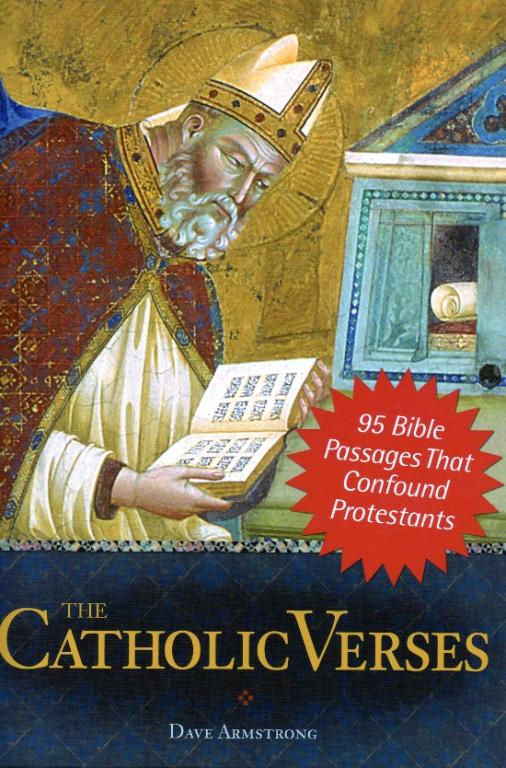
Photo credit: cover of my book, published by Sophia Institute Press in 2004.
I will be interacting with an excellent, ecumenical, and thought-provoking article, entitled “Interpreting Faith in the Reformation: Catholic and Protestant Interpretations of Habakkuk 2:4b and Its New Testament Quotations” (Mario M. C. Melendez, Themelios, Vol. 45, Issue 2, August 2020). Mario M. C. Melendez is Auguie Henry Chair of Bible and assistant professor of Old Testament and biblical studies at Oklahoma Baptist University in Shawnee, Oklahoma. His words will be in blue, Martin Luther’s in green, and John Calvin’s in brown. I use RSV for biblical citations.
*****
This study provides a historical survey of Habakkuk 2:4b’s use in the reformation. The accomplished research shows that Luther and Calvin pointed to Christ’s faithfulness as the object of the Habakkuk 2:4b faith.
And I will show, I think, that they were mistaken in this belief; that it is flawed exegesis on their part, flowing from their prior theological / soteriological allegiances (i.e., faith alone or sola fide).
The Reformers proclaimed a doctrine of justification by faith alone (sola fide) which they based on Habakkuk 2:4 as quoted in Romans 1:17.
Let’s look at both these passages before proceeding:
Habakkuk 2:4 Behold, he whose soul is not upright in him shall fail, but the righteous shall live by his faith.
Romans 1:17 For in it the righteousness of God is revealed through faith for faith; as it is written, “He who through faith is righteous shall live.”
Habbakuk 2:4 is also cited — or at least alluded to — in these two additional passages:
Galatians 3:11 Now it is evident that no man is justified before God by the law; for “He who through faith is righteous shall live”;
Hebrews 10:38-39 “but my righteous one shall live by faith, and if he shrinks back, my soul has no pleasure in him.” [39] But we are not of those who shrink back and are destroyed, but of those who have faith and keep their souls.
Right away we see two seemingly — or prima facie — distinguishable concepts: “live by [his] faith” (Hab 2:4; Heb 10:38) and “through faith is righteous shall live” (Rom 1:17; Gal 3:11). I consulted other OT versions to see if they render Habakkuk 2:4 as Paul does in his citation of it. It looks like most or all are basically the same. Conversely, most appear to be very similar to the wording of Habakkuk 2:4, and RSV seems to be an exception to the rule.
The “normative” translation of Galatians 3:11 is “. . . The just shall live by faith” (KJV) or “. . . The just man liveth by faith” (Douay-Rheims) or “. . . The righteous one will live by faith” (NASB) or “. . . The righteous will live by faith” (NIV). Even RSV broadly follows it in Hebrews 10:38. Now the task is to exegete and cross-reference these related passages, to determine precisely what they mean: for Habakkuk, Paul, and the author of the book of Hebrews. In doing so, we get to the heart of 16th-century and ongoing disputes about justification and the Protestant conception of “faith alone.” Do they support the latter position or not? Predictably, I say no.
Alister McGrath noted that the Reformation debate centered upon the interpretation of Scripture.
He’s right about that. I would contend that the Protestant movement sadly introduced mistaken and novel biblical interpretation — when it dissented from received and carefully developed 1500-year-old theology: especially regarding it’s two “pillars”: sola fide and sola Scriptura.
The hypothesis of this paper is that Luther and Calvin pointed to Christ’s faithfulness as the object of the Habakkuk 2:4b faith, while the Roman Catholics pointed to the faithful actions of a believer as the object of the Habakkuk 2:4b faith.
I will be arguing that the latter conclusion follows straightforwardly from context and cross-referencing. It’s an interesting discussion, and equally learned, sincere, honest, well-meaning believers disagree with each other, but I dare say, with all due respect, that I think we can fairly decisively show that Scripture and specifically, these particular passages, do not support the “faith alone” position.
Throughout Luther’s lifetime, he wrote numerous commentaries, reflection letters, lessons, and sermons. In his commentary of the Minor Prophets, Luther wrote this concerning Habakkuk 2:4b:
In summary form Habakkuk presents the following thought: The godly people are waiting for the Lord; therefore they live, therefore they are saved, therefore they receive what has been promised. They receive it by faith, because they give glory to the God of truth, because they hold the hand of the Lord. And so the prophet is looking not only to this promise but also to all the other promises about preaching the Gospel or revealing grace. And so this is the thought: “I cannot force it into your hearts. You have the clear written record (picture) and Word. If you believe it, you will live, because the righteous live by his faith as long as he waits for the Lord. If you will not believe, you will not live, etc.” [Lectures on the Minor Prophets II: Jonah and Habakkuk, ed. Hiilton C. Oswald, Luther’s Works 19 (St. Louis: Concordia, 1974), 123.]
Luther simply assumes his new (yes, new) faith alone position and improperly reads it into the text when, I submit, it isn’t there. How do we know that? Well, by context and cross-referencing, as we apply to any given passage of Scripture. Habakkuk is only three chapters. We can see what related notions he writes about throughout his book. He refers to “righteous” (1:4, 13; 2:4) and the starkly contrasting wicked (1:4, 13; 3:13), “terrible” (1:7),”not upright” (2:4), and “arrogant” (2:5) people, in the usual straightforward sense. Most of the book describes the nature and evil actions of these bad people; non-believers or heathen.
Then he states that “the righteous shall live by his faith” (2:4). That is, he conducts himself and acts in accordance with his belief and faith in God. It’s not talking about God‘s faithfulness, because the righteous person is contrasted with the evil person, in the same verse: “he whose soul is not upright in him shall fail.” But those who are upright will “live by” (that’s good works) their “faith.” The word “faith” or similar only appears two times in the book. The other instance is “faithless men” in 1:13. There is no contextual indication that this is talking about God‘s faithfulness. It’s simply read into the text, which is improper eisegesis: the literal meaning of that term.
In fact, 2:4 records the words of God, and He refers to “his faith”; i.e., the faith of the righteous person (both in 2:4). If God were referring to His own faithfulness, He would have used the word “my” rather than “his.” It’s very clear. The author of the article claims that Luther and Calvin applied Habakkuk 2:4 to “Christ’s faithfulness.” I don’t see how Habakkuk 2:4, however, can possibly mean that, in light of grammar, context, and the meaning of the words.
The “faithfulness” of God is indeed an Old Testament (Gen 32:10; Ex 34:6; Dt 32:4; 2 Sam 2:6; 15:20; Ps 30:9; 36:5; 40:10-11; 54:5; 57:3, 10; many more) and New Testament (Rom 3:3) concept. But I don’t see that it’s referred to in Habakkuk 2:4. If we cross-reference “live by” we find the same thing:
Galatians 2:20 I have been crucified with Christ; it is no longer I who live, but Christ who lives in me; and the life I now live in the flesh I live by faith in the Son of God, who loved me and gave himself for me. (cf. 5:25: “If we live by the Spirit, let us also walk by the Spirit.”)
This is very much the same thought as Habakkuk 2:4. It’s true that Christ lives in the believer, but when “faith” appears in Galatians 2:20, it is faith in God, not the faith or faithfulness of God. The faith is exercised by the person, bringing about the “life” that he lives, just as Melendez noted was the Catholic interpretation of Habakkuk 2:4. I wrote about this passage in my article, “Minor Prophets: Their Theology of Salvation” (8-2-23):
I interpret this passage as saying that living the faith is inseparable from faith in the sense of belief. In the Hebrew mind the two things are the same. To believe a thing is to live it out. Accordingly, James 2:18 states: “I by my works will show you my faith.” . . . Hebrews 10:38 also cites this verse: “my righteous one shall live by faith.” And again, context (10:36) mentions works (“do”) as part and parcel of faith: “you have need of endurance, so that you may do the will of God and receive what is promised.”
Once we “do the will of God,” then we receive the promise. Here’s another similar verse:
Ezekiel 33:12 And you, son of man, say to your people, The righteousness of the righteous shall not deliver him when he transgresses; and as for the wickedness of the wicked, he shall not fall by it when he turns from his wickedness; and the righteous shall not be able to live by his righteousness when he sins.
Whose “righteousness”? Well, it’s the “righteousness of the righteous” (the righteous person), not of God. But that person can’t “live by his righteousness when he sins.” It’s clearly talking about his righteousness, which can exist to more or less degrees. We can also look at the surrounding context of Romans 1:17. Do grace-generated human (and meritorious) good works appear there? Absolutely:
Romans 2:6-10, 13 For he will render to every man according to his works: [7] to those who by patience in well-doing seek for glory and honor and immortality, he will give eternal life; [8] but for those who are factious and do not obey the truth, but obey wickedness, there will be wrath and fury. [9] There will be tribulation and distress for every human being who does evil, the Jew first and also the Greek, [10] but glory and honor and peace for every one who does good, the Jew first and also the Greek. . . . [13] For it is not the hearers of the law who are righteous before God, but the doers of the law who will be justified.
Romans 8:17 . . . heirs of God and fellow heirs with Christ, provided we suffer with him in order that we may also be glorified with him.
Romans 15:17-18 . . . In Christ Jesus, then, I have reason to be proud of my work for God. [18] For I will not venture to speak of anything except what Christ has wrought through me to win obedience from the Gentiles, by word and deed,
I’m also reminded of Paul’s concept of the “work of faith” by God’s power:
1 Thessalonians 1:3 remembering before our God and Father your work of faith and labor of love and steadfastness of hope in our Lord Jesus Christ.
2 Thessalonians 1:11 To this end we always pray for you, that our God may make you worthy of his call, and may fulfil every good resolve and work of faith by his power, (cf. Gal 5:6: “faith working through love”)
Luther’s famous struggle with the book of James leads one to further grasp that Luther did not discount holy actions of the believer, but he did discount their efficacy for salvation.
This is where he and Protestants are wrong, because works are often directly tied to salvation in the Bible. The very phrase, “live by his faith” means that one is living and working and doing things, caused by their faith. That’s already works. We saw how Paul put faith and works together — and tied to both “eternal life” and justification, above:
Romans 2:6-7, 13 For he will render to every man according to his works: [7] to those who by patience in well-doing seek for glory and honor and immortality, he will give eternal life; . . . [13] For it is not the hearers of the law who are righteous before God, but the doers of the law who will be justified.
***
“Please Hit ‘Subscribe’”! If you have received benefit from this or any of my other 4,800+ articles, please follow my blog by signing up (with your email address) on the sidebar to the right (you may have to scroll down a bit), above where there is an icon bar, “Sign Me Up!”: to receive notice when I post a new blog article. This is the equivalent of subscribing to a YouTube channel. My blog was rated #1 for Christian sites by leading AI tool, ChatGPT: endorsed by influential Protestant blogger Adrian Warnock. Please also consider following me on Twitter / X and purchasing one or more of my 55 books. All of this helps me get more exposure, and (however little!) more income for my full-time apologetics work. Thanks so much and happy reading!
***
Here are twenty-one more passages that tie works directly to salvation:
Psalm 7:10 My shield is with God, who saves the upright in heart.
Isaiah 59:18 According to their deeds, so will he repay, wrath to his adversaries, requital to his enemies; . . .
Jeremiah 4:4 . . . lest my wrath go forth like fire, and burn with none to quench it, because of the evil of your doings.
Jeremiah 21:12 O house of David! Thus says the LORD: “‘Execute justice in the morning, and deliver from the hand of the oppressor him who has been robbed, lest my wrath go forth like fire, and burn with none to quench it, because of your evil doings.'”
Zephaniah 2:3 Seek the LORD, all you humble of the land, who do his commands; seek righteousness, seek humility; perhaps you may be hidden on the day of the wrath of the LORD.
Matthew 7:18-21, 24 A sound tree cannot bear evil fruit, nor can a bad tree bear good fruit. [19] Every tree that does not bear good fruit is cut down and thrown into the fire. [20] Thus you will know them by their fruits. [21] “Not every one who says to me, `Lord, Lord,’ shall enter the kingdom of heaven, but he who does the will of my Father who is in heaven.. . . [24] Every one then who hears these words of mine and does them will be like a wise man who built his house upon the rock
Matthew 16:27 For the Son of man is to come with his angels in the glory of his Father, and then he will repay every man for what he has done.
Matthew 19:16-17, 20-21 And behold, one came up to him, saying, “Teacher, what good deed must I do, to have eternal life?” [17] And he said to him, “. . . If you would enter life, keep the commandments.” . . . [20] The young man said to him, “All these I have observed; what do I still lack?” [21] Jesus said to him, “If you would be perfect, go, sell what you possess and give to the poor, and you will have treasure in heaven; and come, follow me.”
Matthew 25:34-35, 41-43. 46 Then the King will say to those at his right hand, ‘Come, O blessed of my Father, inherit the kingdom prepared for you from the foundation of the world; [35] for I was hungry and you gave me food, I was thirsty and you gave me drink, I was a stranger and you welcomed me, . . . [41] Then he will say to those at his left hand, `Depart from me, you cursed, into the eternal fire prepared for the devil and his angels; [42] for I was hungry and you gave me no food, I was thirsty and you gave me no drink, [43] I was a stranger and you did not welcome me, naked and you did not clothe me, sick and in prison and you did not visit me.’ . . . [46] And they will go away into eternal punishment, but the righteous into eternal life.”
Luke 3:9 (+ Mt 3:10; 7:19) . . . every tree therefore that does not bear good fruit is cut down and thrown into the fire.
John 5:28-29 . . . all who are in the tombs will hear his voice [29] and come forth, those who have done good, to the resurrection of life, and those who have done evil, to the resurrection of judgment.
Romans 6:22 But now that you have been set free from sin and have become slaves of God, the return you get is sanctification and its end, eternal life.
2 Corinthians 5:10 For we must all appear before the judgment seat of Christ, so that each one may receive good or evil, according to what he has done in the body.
2 Thessalonians 1:8 inflicting vengeance upon those who do not know God and upon those who do not obey the gospel of our Lord Jesus.
2 Thessalonians 2:13 . . . God chose you from the beginning to be saved, through sanctification by the Spirit and belief in the truth.
James 2:14 What does it profit, my brethren, if a man says he has faith but has not works? Can his faith save him?
1 Peter 1:17 . . . who judges each one impartially according to his deeds . . .
2 Peter 1:10 Therefore, brethren, be the more zealous to confirm your call and election, for if you do this you will never fall;
Revelation 2:5 Remember then from what you have fallen, repent and do the works you did at first. If not, I will come to you and remove your lampstand from its place, unless you repent.
Revelation 2:23 . . . I will give to each of you as your works deserve.
Revelation 20:12-13 . . . And the dead were judged by what was written in the books, by what they had done. [13] . . . and all were judged by what they had done.
That’s an awful lot for Luther to have missed. But somehow he did, and so do millions of Protestants.
Catholics tied faith with human works, whereas Luther tied faith with Christ’s work.
The twenty passages above sure seem to tie faith (and also salvation itself and the attainment of eternal life in heaven) in with human works, don’t they? These works always flow from and are caused by grace and faith, mind you, but works cannot be removed from the overall equation. That is what Catholicism teaches, following compelling teachings in the Bible (see the above proofs of that).
faith is a gift from God, focused upon the works of God, for the purpose of purifying man.
We’re in full agreement there, but we add that works (as James 2 stresses) are part and parcel of faith, like two sides of a coin, or better yet, like eggs and milk put together in scrambled eggs. That’s how mixed together they are. “Faith without works is dead.” If faith is dead without works, then it follows that works are an essential and inseparable part of it. Yet Protestants separate works and make them non-essential to salvation by placing them in a nice little non-salvific category and “box” of sanctification, with a nice bow on top.
No one, no matter who he may be, is allowed to be a master and judge of the Scripture, rather all must be its witnesses, disciples, and confessors. This means that no one is in a position to validate Scripture. Scripture validates itself. The church’s witness to Scripture can never be anything more than the obedient recognition of the witness which Scripture bears to itself as God’s word. The church’s decision is never under any circumstances an authority standing above the word of God but only beneath it. [cited in Paul Althaus, The Theology of Martin Luther (Philadelphia: Fortress, 1966), 75.]
We fully agree with that. I say that Luther is violating his own principle by eisegeting Scripture and reading into it things that aren’t there, and ignoring or discounting the abundant scriptural indications that he is wrong (again, see these passages above). In my opinion, Scripture is abundantly clear on this score, and all we need to do is present the relevant biblical data and let folks decide what to do with it. I haven’t cited any papal bulls or other Catholic documents. My case against faith alone is fully and strongly made by Scripture alone.
Luther’s interpretation sees faith preceding the law, Christ’s fulfillment of promises as the focus of faith, and holy actions as a response to the grace of God.
Works intrinsically flow from God’s grace, but — biblically speaking — they are not separate from salvation, and (contrary to the Protestant view) they are meritorious, as we see in the passages above. In the article, John Calvin’s commentary on Romans 1:17 is cited:
The faith of the righteous alone brings everlasting life. What is the source of that life but the faith which leads us to God, and makes our life depend on him? Paul’s reference to this passage from Habbakuk would have been irrelevant, unless the prophet meant that we then stand firm only when we rest on God by faith.
I just provided twenty-one quite plain Bible passages that prove that salvation and everlasting life does not come by faith alone but by faith as manifested by works, all in God’s grace. That being the case, Romans 1:17 can’t contradict it, because that would be an error and the Bible contains no theological error or falsehood. And I believe I have demonstrated how Romans 1:17 doesn’t mean that in and of itself anyway.
In essence Calvin too believed that faith is a God dependent action, necessary for grace to abound. . . . one should understand Calvin to have believed that faith is a gift from God.
Catholics agree (over against Pelagianism, or works-salvation). This is not what the dispute is about.
Calvin believes the “work” needed for salvation, is that of Christ’s death upon the cross.
That’s true, too, but it doesn’t exclude our work. Paul wrote that “I have reason to be proud of my work for God” (Rom 15:17) and referred to “what Christ has wrought through me to win obedience from the Gentiles, by word and deed” (Rom 15:18). It’s not either/or and yet another of Protestantism’s notorious false and unbiblical dichotomies. God works in us, and we work. Hence Paul also wrote, “But by the grace of God I am what I am, and his grace toward me was not in vain. On the contrary, I worked harder than any of them, though it was not I, but the grace of God which is with me” (1 Cor 15:10).
He referred to himself and Apollos as “God’s fellow workers” (1 Cor 3:9) and mentioned “good works, which God prepared beforehand, that we should walk in them” (Eph 2:10) and the fact that “God is at work in you, both to will and to work” (Phil 2:13). We are “workers together with him” (2 Cor 6:1, KJV), “abounding in the work of the Lord, knowing that in the Lord” our “labor is not in vain” (1 Cor 15:58). And Paul proclaimed, in a most unProtestant way:
2 Timothy 2:15, 21 Do your best to present yourself to God as one approved, . . . [21] If any one purifies himself from what is ignoble, then he will be a vessel for noble use, consecrated and useful to the master of the house, ready for any good work.
Calvin believes the “work” needed for salvation, is that of Christ’s death upon the cross. . . . What did Calvin say of works? The Institutes eloquently described the actions of the believer. However, when it comes to works related to justification, Calvin pointed to Christ: “if we ask how we have been justified, Paul answers, ‘By Christ’s obedience.’” [Inst. III, 11:9] Thus, one should understand the works needed for mankind’s salvation is Christ’s death and resurrection, not any human action.
If that were correct, how could Paul write, “the doers of the law who will be justified” (Rom 2:13)? James added, “What does it profit . . . if a man says he has faith but has not works? Can his faith save him?” (Jas 2:17). The rich young ruler specifically asked Jesus, “what good deed must I do, to have eternal life?” (Mt 19:16). If Jesus were a good Protestant, or understood and believed in faith alone, first of all, He should have rebuked him, saying, “there’s no good deed you can do to attain eternal life!” But instead, Jesus was a good Catholic, and said that the requirements to “enter life” were to “keep the commandments” (19:17) and “sell what you possess and give to the poor” (19:21). But Calvin would have none of that. So much for Calvin, then, in cases where he expressly contradicts the inspired and inerrant words of Jesus and Paul and James in God’s holy revelation of Scripture.
The attribution of salvific works to Christ does not negate the works of response in the believer’s life. Calvin connect work with faith, but is careful to show that any reliance upon human works negates Christ’s gift of grace.
Calvin and Protestants generally speaking strongly urge the necessity of good works in the Christian life, which is great, but where they go astray (as massively shown above) and become unbiblical is in separating them altogether from the overall equation of attainment of salvation:
. . . with Christ’s righteousness interceding and forgiveness of sins accomplished he is justified. And although regenerated by the Spirit of God, he ponders the everlasting righteousness laid up for him not in the good works to which he inclines but in the sole righteousness of Christ. (Inst. III, 11:16)
From this relation it is clear that those who are justified by faith are justified apart from the merit of works—in fact, without the merit of works. For faith receives that righteousness which the gospel bestows. (Inst. III, 11:18)
They dare not deny that man is justified by faith because it recurs so often in Scripture. (Inst. III, 11:19)
We don’t deny it in fact. But as soon as we are justified by faith (what Catholics call initial justification) we are required to do grace-caused good works in order to sustain this justification.
But since the word “alone” is nowhere expressed, they do not allow this addition to be made. (Ibid.)
It does appear once in Scripture, in conjunction with faith:
James 2:24 You see that a man is justified by works and not by faith alone.
St. James — I hasten to add — isn’t maintaining that salvation is only by works (which would be heresy). He also writes, in context: “faith was active along with his works, and faith was completed by works” (Jas 2:22). He contends that both must be present together:
James 2:17 So faith by itself, if it has no works, is dead.
James 2:20 . . . faith apart from works is barren
James 2:26 . . . faith apart from works is dead.
But what will they reply to these words of Paul where he contends that righteousness cannot be of faith unless it be free [Rom. 4:2 ff.]? How will a free gift agree with works? (Ibid.)
I say that Romans 4 hearkens back to Abraham’s justification, which is a fascinating topic, because once one examines his case closely, one discovers that Scripture teaches twice that he was justified by works and once that he was justified by faith.
With what chicaneries will they elude what he says in another passage, that God’s righteousness is revealed in the gospel [Rom. 1:17]? (Ibid.)
My “chicaneries” can be observed above, where I exegeted Romans 1:17. It simply doesn’t fit the Protestant schema.
The Protestant conclusion is that man is saved by faith in Christ’s faithfulness. . . . the Council of Trent concluded with a conviction that both the works of Christ and sacraments are necessary for salvation. Thus, the Catholic interpretation of Habakkuk 2:4b is that man is saved by faith in Christ, and his work, but then is preserved by observing the sacraments. . . . The Roman Catholic church does point to the faithful actions of a believer as the object of faith in Habakkuk 2:4b, but they also to point to the actions of Christ as the beginning of justification.
I agree.
*
***
*
Practical Matters: I run the most comprehensive “one-stop” Catholic apologetics site: rated #1 for Christian sites by leading AI tool, ChatGPT — endorsed by popular Protestant blogger Adrian Warnock. Perhaps some of my 4,800+ free online articles or fifty-five books have helped you (by God’s grace) to decide to become Catholic or to return to the Church, or better understand some doctrines and why we believe them.
*
Or you may believe my work is worthy to support for the purpose of apologetics and evangelism in general. If so, please seriously consider a much-needed financial contribution. I’m always in need of more funds: especially monthly support. “The laborer is worthy of his wages” (1 Tim 5:18, NKJV). 1 December 2021 was my 20th anniversary as a full-time Catholic apologist, and February 2022 marked the 25th anniversary of my blog.
*
PayPal donations are the easiest: just send to my email address: [email protected]. Here’s also a second page to get to PayPal. You’ll see the term “Catholic Used Book Service”, which is my old side-business. To learn about the different methods of contributing (including Zelle), see my page: About Catholic Apologist Dave Armstrong / Donation Information. Thanks a million from the bottom of my heart!
*
***
*
Photo credit: cover of my book, published by Sophia Institute Press in 2004.
Summary: I reply to an informative article about Protestant & Catholic interpretation of Habakkuk 2:4: “the righteous shall live by his faith”, contending that “faith alone” is a false doctrine.
Previous Post

August 14, 2024
Various Protestant Errors (vs. Steve Gregg)
Next Post
August 17, 2024 Reply to a Protestant: Misc. Protestant Errors
Recent Comments
"And lastly, I belong to no denomination and am free to serve God as He ..."
Is Venerating Men & Angels Worship? ..."
"And obeisance doesn't mean "worship". It means "respect", "obey", or "submission". Very weird that you ..."
Is Venerating Men & Angels Worship? ..."
"Many of these scriptures you have noted have been taken out of context. With Daniel, ..."
Is Venerating Men & Angels Worship? ..."
""Protestants often point out that Jesus is now triumphant in heaven and object to Catholics ..."
Three More Anti-Catholic Lies About Catholicism ..."
Browse Our Archives
Select a Category & Last Things About Me Anti-Catholicism Atheism & Agnosticism Baptism and Sacramentalism Bible and Tradition Blessed Virgin Mary Books by Dave Armstrong C. S. Lewis Calvinism & General Protestantism Catholic Apologetics Catholic Apologists Catholic conversion Catholic converts Christmas Church (Ecclesiology) Church History Conversion and Converts Development of Doctrine Eastern Orthodoxy Ecumenism & Christian Unity Eucharist & Liturgy Fathers of the Church French Translations G. K. Chesterton Hell Hell & Satan Hell & Satan & Last Things Heresies & Comparative Religion Holistic Health Inquisition & Crusades & Scandals James White Jews & Judaism & Old Testament John Calvin John Henry Newman Liberal / Modernist Theology Life Issues Literary Resume Lutheranism Mariology Martin Luther Music Orthodoxy Papacy & Infallibility Personal Page Philosophy & Science Political & Ethical & Moral Issues Protestant Persecution & Intolerance Protestantism Purgatory Purgatory & Penance Romantic & Imaginative Theology Saints & Purgatory & Penance Salvation Salvation & Justification Satan & Last Things Sexuality and Gender Issues Spanish Translations Traditionalism vs. Radical Catholic Reactionaries Traducciones al español / tradução para português Trinitarianism & Christology Uncategorized Videos
Select a Month October 2026 September 2026 August 2026 July 2026 June 2026 May 2026 April 2026 March 2026 February 2026 January 2026 December 2025 November 2025 October 2025 September 2025 August 2025 July 2025 June 2025 May 2025 April 2025 March 2025 February 2025 January 2025 December 2024 November 2024 October 2024 September 2024 August 2024 July 2024 June 2024 May 2024 April 2024 March 2024 February 2024 January 2024 December 2023 November 2023 October 2023 September 2023 August 2023 July 2023 June 2023 May 2023 April 2023 March 2023 February 2023 January 2023 December 2022 November 2022 October 2022 September 2022 August 2022 July 2022 June 2022 May 2022 April 2022 March 2022 February 2022 January 2022 December 2021 November 2021 October 2021 September 2021 August 2021 July 2021 June 2021 May 2021 April 2021 March 2021 February 2021 January 2021 December 2020 November 2020 October 2020 September 2020 August 2020 July 2020 June 2020 May 2020 April 2020 March 2020 February 2020 January 2020 December 2019 November 2019 October 2019 September 2019 August 2019 July 2019 June 2019 May 2019 April 2019 March 2019 February 2019 January 2019 December 2018 November 2018 October 2018 September 2018 August 2018 July 2018 June 2018 May 2018 April 2018 March 2018 February 2018 January 2018 December 2017 November 2017 October 2017 September 2017 August 2017 July 2017 June 2017 May 2017 April 2017 March 2017 February 2017 January 2017 December 2016 November 2016 October 2016 September 2016 August 2016 July 2016 June 2016 May 2016 April 2016 March 2016 February 2016 January 2016 December 2015 November 2015 October 2015 September 2015 August 2015 July 2015 June 2015 May 2015 April 2015 March 2015 February 2015 January 2015 December 2014 November 2014 October 2014 September 2014 August 2014 July 2014 June 2014 April 2014 March 2014 February 2014 January 2014 December 2013 November 2013 October 2013 September 2013 August 2013 July 2013 June 2013 April 2013 March 2013 February 2013 January 2013 December 2012 November 2012 October 2012 September 2012 August 2012 July 2012 June 2012 May 2012 April 2012 March 2012 February 2012 January 2012 December 2011 November 2011 October 2011 September 2011 August 2011 July 2011 June 2011 April 2011 March 2011 February 2011 October 2010 September 2010 August 2010 July 2010 April 2010 March 2010 December 2009 October 2009 August 2009 July 2009 June 2009 May 2009 March 2009 February 2009 October 2008 September 2008 April 2008 March 2008 February 2008 January 2008 December 2007 November 2007 October 2007 May 2007 March 2007 February 2007 January 2007 November 2006 October 2006 September 2006 August 2006 July 2006 June 2006 May 2006 April 2006 March 2006 February 2006 October 2005 June 2005 April 2005 February 2005 July 2004 May 2004 April 2004
Follow Us!
TAKE THE
Religious Wisdom Quiz
What famous cathedral is in Paris, known for its flying buttresses and rose windows?
Select your answer to see how you score.
Notre Dame St. Paul's St. Peter's Canterbury
Books by This Author Books by Dave Armstrong
Related posts from Biblical Evidence for Catholicism

Bible & Catholicism on Mortal Sin (vs. John...
Biblical Evidence for Catholicism

Dialogue on Eternal Security / Absolute Assurance
Biblical Evidence for Catholicism

"Faith Alone" Dialogue with a Calvinist
Biblical Evidence for Catholicism

Exegesis of 75 NT Faith [Alone?] & Works...
Biblical Evidence for Catholicism
TRENDING AT PATHEOS Catholic

In "Irreplaceable," our book on vocation and technology, Trevor Sutton and I...

I was strolling through the top floor of the brand new Parthenon...

What Does Gêvâh Mean For Kimberley Guifoyle &...
This week, a lot of the news is focused on Kimberly Guilfoyle....

INNER CIRCLE: Profound Mystery (Of Christ In All...
Ephesians 5:31-32 “For this reason, a man will leave his father and...

Do Not Rejoice When Your Enemy Falls: The...
Turning an execution into a public spectacle is a disturbing expression of...

'The Chosen' S6 Trailer: The Passion Gets Very...
Not many watching 'The Chosen' worry about spoilers, but just because they...
view all Catholic blogs
What Are Your Thoughts?leave a comment
Ad-Free & Subscriber Log-In Subscription Support
- About Us
- 2026 Calendar
- Videos
- Podcasts
- Library of World Religions
- Faith In Media Tracker
- Advertise With Us
- Write for Us
- Privacy Policy
- Terms of Service
- Do Not Sell My Data
- Contact Us
- Radiant Digital
- Manage Newsletter Subscriptions
- Unsubscribe From Notifications
- Sitemap
Copyright 2008-2026, Patheos. All rights reserved.
Subscription Support Ad-Free & Subscriber Log-In
Follow Patheos