
BuddhistCatholicContemplativeEvangelicalGeneral ChristianHinduJewishLatter-day SaintMuslimNew VisionsProgressive Christian
Beliefs
- Buddhist
- Catholic
- Contemplative
- Evangelical
- General Christian
- Hindu
- Jewish
- Latter-day Saint
- More Voices
- Muslim
- New Visions
- Pagan
- Progressive Christian
Topics
- Religion News
- Food and Religion
- Sports and Religion
- Religious Art
- Religious Music and Entertainment
- Religious Events
- History and Religion
- Style and Religion
- Politics and Religion
- Women in Religion
- Recreation Outdoors and Religion
- Business Finance and Religion
- Careers Workplace and Religion
- Education and Religion
- Family Parenting and Religion
- Health Fitness and Religion
- Home and Religion
- Relationships and Religion
- Technology and Religion
- Travel and Religion
Columnists
- Buddhist Columnists
- Business Finance and Religion Columnists
- Careers Workplace and Religion Columnists
- Catholic Columnists
- Contemplative Columnists
- Education and Religion Columnists
- Evangelists Columnists
- Family Parenting and Religion Columnists
- General Christian Columnists
- Health Fitness and Religion Columnists
- Hindu Columnists
- History and Religion Columnists
- Home and Religion Columnists
- Jewish Columnists
- More Voices Columnists
- Latter Day Columnists
- Muslim Columnists
- New Visions Columnists
- Nonreligious Columnists
- Pagan Columnists
- Politics and Religion Columnists
- Progressive Columnists
- Recreation Outdoors and Religion Columnists
- Relationships and Religion Columnists
- Religion News Columnists
- Religious Art Columnists
- Religious Events Columnists
- Religious Music and Entertainment Columnists
- Sports and Religion Columnists
- Style and Religion Columnists
- Technology and Religion Columnists
- Travel and Religion Columnists
- Women in Religion Columnists
Resource Library
- 2026 Calendar
- Library of World Religions
- The 100 Most Holy Places on Earth
- Patheos Answers
- Podcasts
- Videos
- Faith Leaders Database
- Anglican Episcopalian
- Bahai
- Baptist
- Buddhism
- Christianity
- Confucianism
- Eastern Orthodoxy
- Hinduism
- Holiness and Pentecostal
- ISKCON
- Islam
- Judaism
- Lutheran
- Methodist
- The Church of Jesus Christ of Latter-day Saints
- New Age
- Paganism
- Presbytarian and Reformed
- Protestantism
- Religion Behind the Scenes
- Roman Catholic
- Scientology
- Shia Islam
- Sikhism
- Sufism
- Sunni Islam
- Taoism
- Zen
- See all religions
Research Tools
 Ad-Free & Subscriber Log-In Subscription Support
Ad-Free & Subscriber Log-In Subscription Support
Follow Patheos 

- Trending:
- Forgiveness
- |
- Marriage
- |
- Consciousness
- |
- Death Penalty
- |
- Election
- |
- Halloween

-
About
-
Catholic Apologetics
-
Church History
-
Great Apologists
-
Christian Worldview
-
Protestantism & Misc.
- Home
- Catholic
- History and Religion
- Sola Scriptura in the Protestant Confessions & Creeds
Sola Scriptura in the Protestant Confessions & Creeds
Last updated on: June 6, 2026 at 12:04 am by Dave Armstrong
Sola Scriptura in the Protestant Confessions & Creeds 2026-06-06T00:04:17-04:00 Dave Armstrong
Patheos Explore the world's faith through different perspectives on religion and spirituality! Patheos has the views of the prevalent religions and spiritualities of the world.
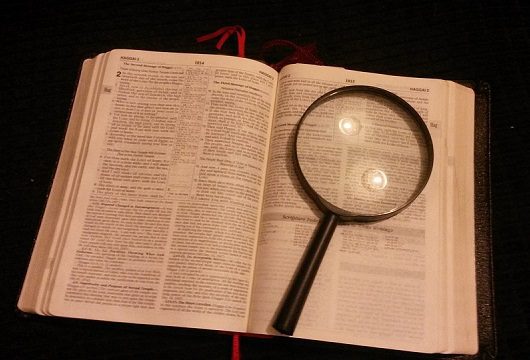
Photo credit: Photograph by James Nichols [public domain / Pixabay]
“Please Hit ‘Subscribe’”! If you have received benefit from this or any of my other 4,600+ articles, please follow this blog by signing up (with your email address) on the sidebar to the right (you may have to scroll down a bit), above where there is an icon bar, “Sign Me Up!”: to receive notice when I post a new blog article. This is the equivalent of subscribing to a YouTube channel. Please also consider following me on Twitter / X and purchasing one or more of my 55 books. All of this helps me get more exposure, and (however little!) more income for my full-time apologetics work. Thanks so much and happy reading!
***
For the purpose of historical background, it should be understood that sola Scriptura (as the Christian rule of faith) began when Martin Luther (1483-1546), the founder of Protestantism, decided to deny the infallibility of the Church, apostolic tradition, ecumenical councils, and the pope (i.e., claiming that they could err); thus leaving — almost by “default” — the Bible as the only infallible rule of faith. Protestant Luther biographer Roland Bainton stated that in 1518 Luther “declared the pope and councils to be capable of error” (Here I Stand, New York: Mentor, 1950, 78-79).
He reiterated and strengthened such claims during his 18-day Leipzig Disputation of July 1519, with Johann Eck. Bainton reports that Luther stated: “I assert that a council has sometimes erred and may sometimes err. . . . Councils have contradicted each other, . . . For the sake of Scripture we should reject pope and councils” (Ibid., 90). In 1520, Luther expressly denied papal infallibility: “they play about with words before our very eyes, trying to persuade us that the pope cannot err in matters of faith, regardless of whether he is righteous or wicked” (To the Christian Nobility of the German Nation; in Three Treatises, taken from Luther’s Works, revised edition, 1970, Philadelphia: Fortress Press, 19). Likewise, he wrote in March 1521 about “holy teachers in the church”:
I do not reject them. But everyone, indeed, knows that at times they have erred, as men will; . . . (Defense and Explanation of All the Articles of Dr. Martin Luther Which Were Unjustly Condemned by the Roman Bull, in Luther’s Works, Vol. 32, 11–12)
The next big milestone in Luther’s anti-traditional trajectory is the Diet of Worms, where Luther, on April 18th, 1521, stated, “I do not trust either in the pope or in councils alone, since it is well known that they have often erred and contradicted themselves.” The late Presbyterian teacher R. C. Sproul commented on this:
In one sense, this concept of sola Scriptura was born publicly in Luther’s famous confrontation with the rulers of the state and the church at the Diet of Worms, whereupon Luther was called to recant of his teaching. . . . In one sense, this concept of sola Scriptura was born publicly in Luther’s famous confrontation with the rulers of the state and the church at the Diet of Worms, whereupon Luther was called to recant of his teaching. (“What is Reformed Theology?”)
John Calvin, the second most important and influential leader of early Protestantism, also disputed the Catholic contention that ecumenical councils were “under the immediate guidance of the Holy Spirit, and therefore cannot err” (Institutes of the Christian Religion, Bk, IV, 8:10) and thought the Roman See, “once the mother of all the churches,” exhibited in his day “nothing but horrible apostacy” and had become “the seat of Antichrist” (Ibid., IV, 7:34). Luther’s newfound belief, reiterated by Calvin, established the standard definition of sola Scriptura:
Scripture is formally sufficient in and of itself to function as the rule of faith and standard for Christian doctrine, since it alone is inspired revelation and God’s Word, and [the other essential component], nothing is infallible and divinely protected from error except for Holy Scripture.
Thus, Protestantism’s rejection of papal, conciliar, and ecclesiastical infallibility, as well as the infallibility of sacred apostolic tradition (asserting that all of them could err), is a simultaneous assertion of sola Scriptura. I shall now document how the confessions and creeds of historical Protestantism repeatedly assert this definition of sola Scriptura.
The Smalcald Articles (1537): “We do not concede to them that they are the Church, and [in truth] they are not [the Church]; nor will we listen to those things which, under the name of Church, they enjoin or forbid” (XII, 1); “the Pope is not, according to divine law or according to the Word of God the head of all Christendom” (IV, 1);
Anglican Forty-Two Articles (1553; my update of the old English): “the Church of Rome has erred not only in their living, but also in matters of their faith” (“Of the Church”); “General councils . . . may err, and sometime have erred, not only in worldly matters, but also in things pertaining unto God” (“Of the Authority of General Councils”).
The Scots Confession (1560): “As we believe and confess the Scriptures of God sufficient to instruct and make the man of God perfect, so do we affirm and avow the authority of the same to be of God, and neither to depend on men nor angels” (19). “General Councils . . . as they were men, so have some of them manifestly erred, and that in matters of great weight and importance” (20).
The Belgic Confession (1561) referred to the Bible as the sole “infallible rule.”
The 2nd Helvetic Confession (1564): “we do not permit ourselves, in controversies about religion or matters of faith, to urge our case with only the opinions of the fathers or decrees of councils . . . we reject human traditions, even if they be adorned with high-sounding titles, as though they were divine and apostolical, delivered to the Church by the living voice of the apostles.” And it states that, “The Church . . . does not err as long as it rests upon the rock Christ, and upon the foundation of the prophets and apostles. And it is no wonder if it errs, as often as it deserts him who alone is the truth.” In other words, it assumes that the true Church will fall into error, and is not divinely protected from that.
The Anglican Thirty-Nine Articles (1571): “the Church of Rome hath erred, . . . in matters of faith” (Art. XIX). Ecumenical councils “may err and sometime have erred, even in things pertaining to God” (Art. XXI).
First London Baptist Confession of Faith (1644): “The rule of this knowledge, faith, and obedience, concerning the worship and service of God, and all other Christian duties, is not mans inventions, opinions, devices, laws, constitutions, or traditions unwritten whatsoever, but only the word of God contained in the Canonical Scriptures” (VII); ” faults and corruptions, . . . as long as the church consists of men subject to failings, will fall out and arise amongst them, even in true constituted churches” (XLVI).
The Westminster Confession of Faith (1946 translation of the 1646 version): “The infallible rule of interpretation of Scripture is the Scripture itself” (I, 9), and, “The purest Churches under heaven are subject both to mixture and error” (XXV, 5), and, “Nor can the Pope of Rome, in any sense, be head thereof: but is that Antichrist” (XXV, 6), and, “All synods or councils, since the Apostles’ times, whether general or particular, may err; and many have erred. Therefore they are not to be made the rule of faith and practice” (XXXI, 4).
Savoy Declaration of Faith (1658): “The infallible rule of interpretation of Scripture is the Scripture itself” (I, 9); “The purest churches under heaven are subject both to mixture and error” (XXVI, 3); “There is no other Head of the Church but the Lord Jesus Christ; nor can the Pope of Rome in any sense be head thereof; but is that antichrist” (XXVI, 4).
Second London Baptist Confession of Faith (1689): “The Holy Scripture is the only sufficient, certain, and infallible rule of all saving knowledge, faith, and obedience” (I, 1); “The infallible rule of interpretation of Scripture is the Scripture itself” (I, 9); “The purest churches under heaven are subject to mixture and error” (XXVI, 3); “neither can the Pope of Rome in any sense be head thereof, but is that antichrist, that man of sin, and son of perdition” (XXVI, 4).
More recent Protestant apologists and scholars have followed suit:
Scripture is . . . our sole infallible authority. (Lutheran Jordan Cooper, at 38:39 in his video, Sola Scriptura: Scripture Alone (The Five Solas) (2-24-24).
Sola Scriptura . . . recognizes that there are many authorities, but Scripture is the sole infallible authority, so Scripture has preference over all other authorities we might have. (Jordan Cooper, “An Explanation of Sola Scriptura“, 3-11-19)
Sola Scriptura means that Scripture is the Church’s only infallible rule. It doesn’t mean that Scripture is the only authority. Sola Scriptura simply means that popes, councils, and other post-apostolic organs of the church are fallible. (Reformed Baptist Gavin Ortlund, in his video, “Sola Scriptura Defended in 6 Minutes”: 1-17-24).
Sola Scriptura has always been maintained as the view that the Bible is the only infallible rule for theology. (Gavin Ortlund, “Sola Scriptura DEFENDED”, 12-15-20).
Scripture . . . is the only inspired and inherently infallible norm, and therefore Scripture is the only final authoritative norm. (Reformed Protestant Keith A. Mathison, The Shape of Sola Scriptura, Moscow, Idaho: Canon Press, 2001, 260)
What Protestants mean by sola scriptura is that the Bible alone is the infallible written authority for faith and morals. (evangelicals Norman Geisler and Ralph E. Mackenzie Roman Catholics and Evangelicals: Agreements and Differences, Grand Rapids, Michigan: Baker Books, 1995, 178)
The doctrine of sola scriptura, simply stated, is that the Scriptures alone are sufficient to function as the regula fidei, the infallible rule of faith for the Church. (Reformed Baptist James White, The Roman Catholic Controversy, Minneapolis: Bethany House Publishers, 1996, 59)
Luther and the Reformers did not mean by Sola Scriptura that the Bible is the only authority in the church. Rather, they meant that the Bible is the only infallible authority in the church. . . . For the Reformers no church council, synod, classical theologian, or early church father is regarded as infallible. (Presbyterian R. C. Sproul, “Sola Scriptura: Crucial To Evangelicalism”)
The only reliable canon, the only infallible doctrine, the only binding principles, and the only saving message, is the God-breathed truth of Scripture. . . . it never acknowledges any other infallible source of authority. Word-of-mouth tradition is never said to be theopneustos, God-breathed, or infallible. (Baptist John F. MacArthur, Jr., “The Sufficiency of the Written Word”)
See my scores of articles refuting sola Scriptura in the third section of my web page, Bible, Tradition, Canon, & “Sola Scriptura”.
*
***
*
Practical Matters: Perhaps some of my 4,600+ free online articles (the most comprehensive “one-stop” Catholic apologetics site) or fifty-five books have helped you (by God’s grace) to decide to become Catholic or to return to the Church, or better understand some doctrines and why we believe them.
Or you may believe my work is worthy to support for the purpose of apologetics and evangelism in general. If so, please seriously consider a much-needed financial contribution. I’m always in need of more funds: especially monthly support. “The laborer is worthy of his wages” (1 Tim 5:18, NKJV). 1 December 2021 was my 20th anniversary as a full-time Catholic apologist, and February 2022 marked the 25th anniversary of my blog.
PayPal donations are the easiest: just send to my email address: [email protected]. Here’s also a second page to get to PayPal. You’ll see the term “Catholic Used Book Service”, which is my old side-business. To learn about the different methods of contributing (including Zelle), see my page: About Catholic Apologist Dave Armstrong / Donation Information. Thanks a million from the bottom of my heart!
*
***
*
Photo credit: Photograph by James Nichols [public domain / Pixabay]
Summary: Sola Scriptura holds that Scripture is formally sufficient for doctrine and theology, and that nothing is infallible and divinely protected from error except for Holy Scripture.
Previous Post

June 11, 2024
Luther, Church Offices, + Swan's & White's Ignorance
Next Post
June 12, 2024 Grace-Caused Faith is Catholic Teaching, Too!
Recent Comments
""Catholics say they are the only church that can lead people into heaven."In fact, we ..."
Is Venerating Men & Angels Worship? ..."
"And lastly, I belong to no denomination and am free to serve God as He ..."
Is Venerating Men & Angels Worship? ..."
"And obeisance doesn't mean "worship". It means "respect", "obey", or "submission". Very weird that you ..."
Is Venerating Men & Angels Worship? ..."
"Many of these scriptures you have noted have been taken out of context. With Daniel, ..."
Is Venerating Men & Angels Worship? ..."
Browse Our Archives
Select a Category & Last Things About Me Anti-Catholicism Atheism & Agnosticism Baptism and Sacramentalism Bible and Tradition Blessed Virgin Mary Books by Dave Armstrong C. S. Lewis Calvinism & General Protestantism Catholic Apologetics Catholic Apologists Catholic conversion Catholic converts Christmas Church (Ecclesiology) Church History Conversion and Converts Development of Doctrine Eastern Orthodoxy Ecumenism & Christian Unity Eucharist & Liturgy Fathers of the Church French Translations G. K. Chesterton Hell Hell & Satan Hell & Satan & Last Things Heresies & Comparative Religion Holistic Health Inquisition & Crusades & Scandals James White Jews & Judaism & Old Testament John Calvin John Henry Newman Liberal / Modernist Theology Life Issues Literary Resume Lutheranism Mariology Martin Luther Music Orthodoxy Papacy & Infallibility Personal Page Philosophy & Science Political & Ethical & Moral Issues Protestant Persecution & Intolerance Protestantism Purgatory Purgatory & Penance Romantic & Imaginative Theology Saints & Purgatory & Penance Salvation Salvation & Justification Satan & Last Things Sexuality and Gender Issues Spanish Translations Traditionalism vs. Radical Catholic Reactionaries Traducciones al español / tradução para português Trinitarianism & Christology Uncategorized Videos
Select a Month October 2026 September 2026 August 2026 July 2026 June 2026 May 2026 April 2026 March 2026 February 2026 January 2026 December 2025 November 2025 October 2025 September 2025 August 2025 July 2025 June 2025 May 2025 April 2025 March 2025 February 2025 January 2025 December 2024 November 2024 October 2024 September 2024 August 2024 July 2024 June 2024 May 2024 April 2024 March 2024 February 2024 January 2024 December 2023 November 2023 October 2023 September 2023 August 2023 July 2023 June 2023 May 2023 April 2023 March 2023 February 2023 January 2023 December 2022 November 2022 October 2022 September 2022 August 2022 July 2022 June 2022 May 2022 April 2022 March 2022 February 2022 January 2022 December 2021 November 2021 October 2021 September 2021 August 2021 July 2021 June 2021 May 2021 April 2021 March 2021 February 2021 January 2021 December 2020 November 2020 October 2020 September 2020 August 2020 July 2020 June 2020 May 2020 April 2020 March 2020 February 2020 January 2020 December 2019 November 2019 October 2019 September 2019 August 2019 July 2019 June 2019 May 2019 April 2019 March 2019 February 2019 January 2019 December 2018 November 2018 October 2018 September 2018 August 2018 July 2018 June 2018 May 2018 April 2018 March 2018 February 2018 January 2018 December 2017 November 2017 October 2017 September 2017 August 2017 July 2017 June 2017 May 2017 April 2017 March 2017 February 2017 January 2017 December 2016 November 2016 October 2016 September 2016 August 2016 July 2016 June 2016 May 2016 April 2016 March 2016 February 2016 January 2016 December 2015 November 2015 October 2015 September 2015 August 2015 July 2015 June 2015 May 2015 April 2015 March 2015 February 2015 January 2015 December 2014 November 2014 October 2014 September 2014 August 2014 July 2014 June 2014 April 2014 March 2014 February 2014 January 2014 December 2013 November 2013 October 2013 September 2013 August 2013 July 2013 June 2013 April 2013 March 2013 February 2013 January 2013 December 2012 November 2012 October 2012 September 2012 August 2012 July 2012 June 2012 May 2012 April 2012 March 2012 February 2012 January 2012 December 2011 November 2011 October 2011 September 2011 August 2011 July 2011 June 2011 April 2011 March 2011 February 2011 October 2010 September 2010 August 2010 July 2010 April 2010 March 2010 December 2009 October 2009 August 2009 July 2009 June 2009 May 2009 March 2009 February 2009 October 2008 September 2008 April 2008 March 2008 February 2008 January 2008 December 2007 November 2007 October 2007 May 2007 March 2007 February 2007 January 2007 November 2006 October 2006 September 2006 August 2006 July 2006 June 2006 May 2006 April 2006 March 2006 February 2006 October 2005 June 2005 April 2005 February 2005 July 2004 May 2004 April 2004
Follow Us!
TAKE THE
Religious Wisdom Quiz
Who threw Daniel into the lion’s den?
Select your answer to see how you score.
King Nebuchadnezzar Pharaoh King Saul King Darius
Books by This Author Books by Dave Armstrong
Related posts from Biblical Evidence for Catholicism

A Few "Worst" & "Best" Arguments vs. Protestantism
Biblical Evidence for Catholicism

Jerusalem Council vs. James White & Sola Scriptura
Biblical Evidence for Catholicism

Biblical Perspicuity: Absurd Anti-Catholic "Defense"
Biblical Evidence for Catholicism

50 Biblical Disproofs of "Evident Clearness" of the...
Biblical Evidence for Catholicism
TRENDING AT PATHEOS Catholic

Janie Learns the Way of the Cross: A...
Teaching children about Jesus' Passion can be challenging. Many parents and educators...

Looking For Good Catholic Writing - October 2026
He alone extends the heavens, and he walks upon the waves of...

In "Irreplaceable," our book on vocation and technology, Trevor Sutton and I...

I was strolling through the top floor of the brand new Parthenon...

What Does Gêvâh Mean For Kimberley Guifoyle &...
This week, a lot of the news is focused on Kimberly Guilfoyle....

INNER CIRCLE: Profound Mystery (Of Christ In All...
Ephesians 5:31-32 “For this reason, a man will leave his father and...
view all Catholic blogs
What Are Your Thoughts?leave a comment
Ad-Free & Subscriber Log-In Subscription Support
- About Us
- 2026 Calendar
- Videos
- Podcasts
- Library of World Religions
- Faith In Media Tracker
- Advertise With Us
- Write for Us
- Privacy Policy
- Terms of Service
- Do Not Sell My Data
- Contact Us
- Radiant Digital
- Manage Newsletter Subscriptions
- Unsubscribe From Notifications
- Sitemap
Copyright 2008-2026, Patheos. All rights reserved.
Subscription Support Ad-Free & Subscriber Log-In
Follow Patheos