
BuddhistCatholicContemplativeEvangelicalGeneral ChristianHinduJewishLatter-day SaintMuslimNew VisionsProgressive Christian
Beliefs
- Buddhist
- Catholic
- Contemplative
- Evangelical
- General Christian
- Hindu
- Jewish
- Latter-day Saint
- More Voices
- Muslim
- New Visions
- Pagan
- Progressive Christian
Topics
- Religion News
- Food and Religion
- Sports and Religion
- Religious Art
- Religious Music and Entertainment
- Religious Events
- History and Religion
- Style and Religion
- Politics and Religion
- Women in Religion
- Recreation Outdoors and Religion
- Business Finance and Religion
- Careers Workplace and Religion
- Education and Religion
- Family Parenting and Religion
- Health Fitness and Religion
- Home and Religion
- Relationships and Religion
- Technology and Religion
- Travel and Religion
Columnists
- Buddhist Columnists
- Business Finance and Religion Columnists
- Careers Workplace and Religion Columnists
- Catholic Columnists
- Contemplative Columnists
- Education and Religion Columnists
- Evangelists Columnists
- Family Parenting and Religion Columnists
- General Christian Columnists
- Health Fitness and Religion Columnists
- Hindu Columnists
- History and Religion Columnists
- Home and Religion Columnists
- Jewish Columnists
- More Voices Columnists
- Latter Day Columnists
- Muslim Columnists
- New Visions Columnists
- Nonreligious Columnists
- Pagan Columnists
- Politics and Religion Columnists
- Progressive Columnists
- Recreation Outdoors and Religion Columnists
- Relationships and Religion Columnists
- Religion News Columnists
- Religious Art Columnists
- Religious Events Columnists
- Religious Music and Entertainment Columnists
- Sports and Religion Columnists
- Style and Religion Columnists
- Technology and Religion Columnists
- Travel and Religion Columnists
- Women in Religion Columnists
Resource Library
- 2026 Calendar
- Library of World Religions
- The 100 Most Holy Places on Earth
- Patheos Answers
- Podcasts
- Videos
- Faith Leaders Database
- Anglican Episcopalian
- Bahai
- Baptist
- Buddhism
- Christianity
- Confucianism
- Eastern Orthodoxy
- Hinduism
- Holiness and Pentecostal
- ISKCON
- Islam
- Judaism
- Lutheran
- Methodist
- The Church of Jesus Christ of Latter-day Saints
- New Age
- Paganism
- Presbytarian and Reformed
- Protestantism
- Religion Behind the Scenes
- Roman Catholic
- Scientology
- Shia Islam
- Sikhism
- Sufism
- Sunni Islam
- Taoism
- Zen
- See all religions
Research Tools
 Ad-Free & Subscriber Log-In Subscription Support
Ad-Free & Subscriber Log-In Subscription Support
Follow Patheos 

- Trending:
- Forgiveness
- |
- Marriage
- |
- Consciousness
- |
- Death Penalty
- |
- Election
- |
- Halloween

-
About
-
Catholic Apologetics
-
Church History
-
Great Apologists
-
Christian Worldview
-
Protestantism & Misc.
- Home
- Catholic
- History and Religion
- Luther: I Was a Better Christian as a Catholic
Luther: I Was a Better Christian as a Catholic
Last updated on: June 6, 2024 at 1:32 am by Dave Armstrong
Luther: I Was a Better Christian as a Catholic 2024-06-06T01:32:53-04:00 Dave Armstrong
Patheos Explore the world's faith through different perspectives on religion and spirituality! Patheos has the views of the prevalent religions and spiritualities of the world.
“Please Hit ‘Subscribe’”! If you have received benefit from this or any of my other 4,600+ articles, please follow this blog by signing up (with your email address) on the sidebar to the right (you may have to scroll down a bit), above where there is an icon bar, “Sign Me Up!”: to receive notice when I post a new blog article. This is the equivalent of subscribing to a YouTube channel. Please also consider following me on Twitter / X and purchasing one or more of my 55 books. All of this helps me get more exposure, and (however little!) more income for my full-time apologetics work. Thanks so much and happy reading!
***
Martin Luther’s words will be in blue; James Swan’s in green.
***
Luther preached in a sermon:
This is what St. Paul meant when he preaches about love. “If I speak in the tongues of angels;” and again: “If I had all faith so that I could move mountains, but did not have love, then I would still be nothing,” etc. (1 Corinthians 13[:1-2]) If a person goes off securely in the thought that he has faith, and yet never experiences it, he must decay and dry up; his faith will be found nowhere at all when it comes to the point that it should be found.
The dear apostles certainly saw this, and we experience it. The world always either boasts falsely about faith, or wants to be holy without faith. If we preach about faith and grace, no one wants to do works. If we promote works, no one wants faith. Those who keep to the true middle course are very rare. Indeed, it is even hard for righteous Christians.
I confess for myself — and without a doubt others must also confess, that I lack the diligence and seriousness [some translations: “earnestness”], which I should now much more than before; I am much more careless than I was under the papacy. Nowhere is there now the seriousness [some translations: “zeal”] with the Gospel which we saw previously among the monks and priests, when people established and built so much, and no one was so poor that he would not give something. However, now there is not one city which would support a preacher, and nothing except only robbing and stealing among the people, and no one restrains it. Where does such a shameful affliction come from? They cry out: “From the doctrine they teach, that people should not rely on works!” However, it is the devil himself who falsely blames this on the pure, saving doctrine; it is the fault of his and people’s malice who misuse this doctrine — as well as our old Adam who always wants to follow the forest trail to nowhere- and think that it is unnecessary, even if we do not do many good works and so become unintentionally lazy and negligent and stale, until we completely lose the strength and savor of faith. (Sermon on 1 John 4:16-21: from a series of sermons on 1 John and love, dated 1532-1533; in Luther’s Works, Vol. 78: Church Postil IV [2015], 365-405; click “Look Inside” under the image of the cover for the Table of Contents; my bolding)
Pretty striking admission, I would say. It’s so jarring to Protestant ears, that Luther defender and vitriolic anti-Catholic James Swan felt compelled to write one of his notorious sophistical rationalizations in a futile attempt to spin Luther’s words so as to make them (to gullible readers) not mean what they plainly do mean.
A portion of these words appeared in the 1884 volume, Luther’s Own Statements, by Henry O’Connor (p. 56), and in the third volume of six of the title, Luther, by Hartmann Grisar (p. 206); dated 1914. Swan, writing in November 2011, chides Catholics who produce this citation, in his usual boorish fashion:
If you search around on the Internet for this quote, you’ll probably not find any of Rome’s current defenders producing a primary context. What you’ll typically find is the reference “Walch IX 1311.” I doubt any of Rome’s current defenders actually possess or have read this old source. Most of them couldn’t tell you if this statement was from a treatise, letter, sermon, or a Table Talk recording. Their “deep into history” triumphalism is often abandoned when Luther is the subject. Where did Luther say it? What’s the context? These basic questions should be asked by anyone thinking of using this quote.
This is a ridiculous charge, for the simple reason that the entire context (the complete sermon) doesn’t seem to have been available in English until 2015 (four years after Swan originally wrote his article about the citation), when it was added to volume 78 of Luther’s Works (originally, 55 volumes). What Swan was demanding, then, was for Catholics to find obscure German collections of Luther’s works (and apparently to take a course in German beforehand), locate the sermon and read all of it. If one knows German, great, but if not, it’s an unnecessary demand on his part. O’Connor (footnote 164) made the reference to Walch.
As Swan himself notes, this “refers to a set of Luther’s works published 1740-1753 by Johann Georg Walch. . . .Here is volume IX, 1311 from the old set.” There is nothing improper whatsoever for a scholar to cite a primary source of a citation in another language, and for an apologist like myself to cite him as a secondary source citing the primary source. But I’m not required to learn German, so as to understand the words in the context of where they appear. The words are self-evident as they are, and stand alone, in any event (as I will discuss in more depth below). Context doesn’t add all that much.
Likewise, Swan notes that Grisar cited the Erlangen edition of Luther’s works in German, and cites the volume online, and the exact page Grisar quotes from. Additionally, he mentions that the citation is also present in vol. 36 of the standard Weimar edition of Luther’s works in German, from 1883, citing the page (469). None of this is the least bit improper or dishonest. Yet Swan always makes that insinuation when Catholic apologists and others cite secondary sources such as these.
Grisar described the words as coming from “a sermon in 1532.” He gives the German source if anyone wants to look it up. That’s what scholars do. But if I dare to cite Luther from Grisar, as I have done hundreds of times. Swan scolds me, as if I have committed a capital crime. It’s nonsense! And it’s embarrassing, from one intelligent enough to obtain a degree in philosophy. You would think he knows how basic research and citation work. But he seems not to.
Swan in his article continues his usual asinine, insipid, vapid accusations against Catholics and how they interpret this utterance of Luther:
This quote is used by Roman Catholics in a variety of ways. First, it sometimes serves as proof Luther admitted his personal life was characterized by sin, or that once he was freed from Rome, his moral and spiritual life became worse (see below). Second, it’s sometimes used as proof that the doctrine of justification by faith alone does not produce good works, and Luther here admitted it. . . . Another blogger uses the quote as proof Luther had “regrets as to the relative failure of the ‘Reformation’ ” and “the lower state of general morality.”
That blogger was yours truly, in a paper of mine dated May 2008 and originally entitled, Martin Luther’s Regrets as to the Relative Failure of the ‘Reformation’. I later uploaded it to my current blog on Patheos, and it’s entitled, Did Luther Regret Anything About His “Reformation”? Note the question in the new title, and the word “relative” in the original one. This shows where I am coming from. So do my clear, concise words in the article itself (if we want to talk about “context”!):
Luther never said that the “Reformation” as a whole was a failure, or shouldn’t have happened, but he said quite a bit about how the new Protestants were miserably failing in manifesting the superiority of their system over Catholicism. . . .
I will cite only those statements that directly connect Protestant teaching to the negative results observed in his own lifetime: where he himself observes that there is some causal connection, or when he unfavorably compares Protestant behavior to Catholic.
When, on the other hand, he states, for example, that popular morals are going to pot, I haven’t cited those statements, if they don’t express the notion that the result was due (partially or wholly) to the new Lutheran teachings. I would contend that there were probably many different causes (as in most questions of history).
Luther’s statements are self-explanatory. The man always said exactly what he meant and meant what he said. No one can deny that. The evidence is in my paper above and many other similar ones I have written, too:
Martin Luther: “Our manner of life is as evil as is that of the papists” [12-29-07]
Luther on Early Lutherans: “Ingrates” Who Deserve God’s “Wrath” [2-28-10]
Luther’s Disgust Over Protestant Sectarianism and Radical Heresies [3-1-10; abridged and published in the National Catholic Register: 9-8-17]
Luther on Early Lutheran Degeneracy & Bad Witness [3-2-10]
Was Luther in His Old Age in Agony & Bitter About Lutheranism? [3-3-10]
Luther’s “Agony” Over Sectarianism (vs. a Lutheran) [3-10-10]
Luther: Monks & Priests More “Earnest” Than Lutherans [11-10-11]
This is not nothing. There is quite a bit here to examine. Luther complained frequently about these sorts of things. Swan majors on the minors and absurdly quibbles about sources and perfectly acceptable research techniques. What I’m interested is an in-depth analysis of these words of Luther (something Swan virtually never does; he’s so busy rationalizing and engaging in obfuscation and obscurantist anti-Catholicism). Let’s look at the key words bit-by-bit:
I confess for myself — and without a doubt others must also confess, that I lack the diligence and seriousness, which I should now much more than before; I am much more careless than I was under the papacy.
We get that Luther didn’t reject his own so-called “Reformation” or his own conception of the gospel and justification by faith alone. That’s not at issue. He didn’t. Period. But in my opinion that makes his words all the more fascinating and even mysterious. Luther wants to — at least in part — blame it on the devil and those in his Lutheran party who corrupt his pure gospel and are bad examples (hypocritical, nominal folks that all religious groups contain). But that doesn’t totally explain this, precisely because he includes himself among those who aren’t living up to the ideal.
This is now 1532 or 1533, or 15-16 years after the Protestant Revolution began. Why is it that Luther — flush with all of his supposedly new discoveries about grace and Christianity — is wanting in the “diligence and seriousness” that he used to have as a Catholic, and is “much more careless” than he was before he decided to ditch Catholicism? Does that not imply that there is something deficient in the new belief-system that he decided to follow? If not, what accounts for it? It’s easy to blame the devil, but I think Luther failed to make a full examination of why these things were as they were. Looked at from another angle, what is it that Catholics possessed that enabled them to — widely — be more diligent and serious and careful than Luther and the Lutherans were? Of what spiritual advantage was Lutheranism if this was its fruit?
Nowhere is there now the seriousness with the Gospel which we saw previously among the monks and priests,
Note the extremity of his statement! He’s not just saying that there are problems here and there with the new group of Lutherans, as there would be in any group at any time. No; “nowhere” is a serious adherence to the gospel seen among the Lutherans, according to Luther. And to add insult to injury, the Catholics — who were supposedly so spiritually ignorant and less advanced than Lutherans –, were doing much better spiritually than the Lutherans: even, indeed, the monks and priests (!!), whom Luther often excoriated. How can this be? One wonders, then, how this is “reform” at all, with such miserable results “on the ground.”
when people established and built so much, and no one was so poor that he would not give something.
Again, Luther is praising Catholics to the skies, over against the Lutherans. They “built” and “established” things. And even the poorest among them gave alms to others in more need. Why? Things improved later on among Lutherans and Protestants in general, but it must be asked why these sorts of things were the initial manifestation of the new religious movement. To me, that is something to think and wonder about. One need not be “anti-Protestant” to do that. We’re simply wondering why this was, and taking Luther at his word as to his report.
However, now there is not one city which would support a preacher, and nothing except only robbing and stealing among the people, and no one restrains it.
More extraordinary observations . . . Not even “one“ city would support a Lutheran pastor! That’s incredible! Then he says nothing is taking place except “robbing and stealing.”
To me, these things are not theological discussions, but rather historical and sociological ones; even psychological to some extent. Personally, I find them interesting and worth pondering and discussing. Many others don’t. What else is new?
*
***
*
Practical Matters: Perhaps some of my 4,600+ free online articles (the most comprehensive “one-stop” Catholic apologetics site) or fifty-five books have helped you (by God’s grace) to decide to become Catholic or to return to the Church, or better understand some doctrines and why we believe them.
Or you may believe my work is worthy to support for the purpose of apologetics and evangelism in general. If so, please seriously consider a much-needed financial contribution. I’m always in need of more funds: especially monthly support. “The laborer is worthy of his wages” (1 Tim 5:18, NKJV). 1 December 2021 was my 20th anniversary as a full-time Catholic apologist, and February 2022 marked the 25th anniversary of my blog.
PayPal donations are the easiest: just send to my email address: [email protected]. Here’s also a second page to get to PayPal. You’ll see the term “Catholic Used Book Service”, which is my old side-business. To learn about the different methods of contributing (including Zelle), see my page: About Catholic Apologist Dave Armstrong / Donation Information. Thanks a million from the bottom of my heart!
*
***
*
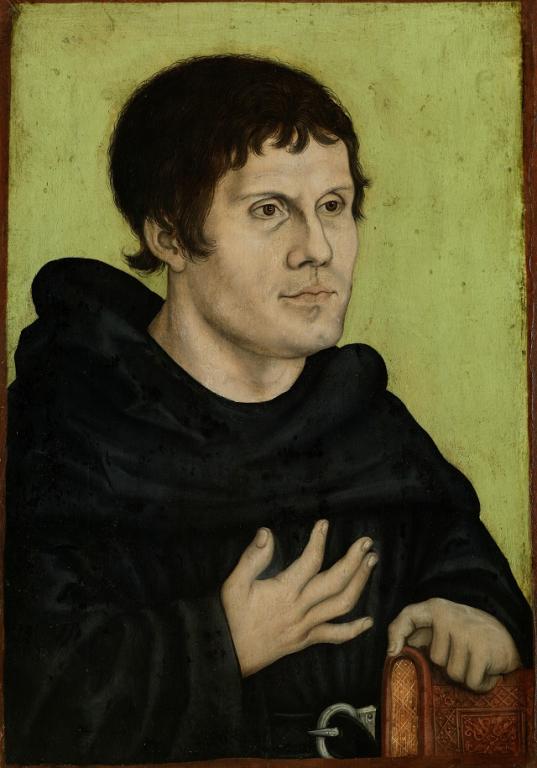
Photo credit: Posthumous Portrait of Martin Luther as an Augustinian Monk (after 1546), from the workshop of Lucas Cranach the Elder (1472-1553) [public domain / Wikimedia Commons]

Summary: Martin Luther, the founder of Protestantism, thought that the state of piety & morality among his Lutherans (and himself) was widely less stellar than that of Catholics.
excesses of early Protestantism
Previous Post
June 4, 2024
Eck Vs. Protestantism Chronicles: Veneration of Saints
Next Post
June 6, 2024 Did Grisar Characterize Luther as a "Psychopath"?
Recent Comments
"Special pleading, and not a serious response to my arguments . . ."
Is Venerating Men & Angels Worship? ..."
""no man needs to teach us."Didn't you just teach us?"
Is Venerating Men & Angels Worship? ..."
""Catholics say they are the only church that can lead people into heaven."In fact, we ..."
Is Venerating Men & Angels Worship? ..."
"And lastly, I belong to no denomination and am free to serve God as He ..."
Is Venerating Men & Angels Worship? ..."
Browse Our Archives
Select a Category & Last Things About Me Anti-Catholicism Atheism & Agnosticism Baptism and Sacramentalism Bible and Tradition Blessed Virgin Mary Books by Dave Armstrong C. S. Lewis Calvinism & General Protestantism Catholic Apologetics Catholic Apologists Catholic conversion Catholic converts Christmas Church (Ecclesiology) Church History Conversion and Converts Development of Doctrine Eastern Orthodoxy Ecumenism & Christian Unity Eucharist & Liturgy Fathers of the Church French Translations G. K. Chesterton Hell Hell & Satan Hell & Satan & Last Things Heresies & Comparative Religion Holistic Health Inquisition & Crusades & Scandals James White Jews & Judaism & Old Testament John Calvin John Henry Newman Liberal / Modernist Theology Life Issues Literary Resume Lutheranism Mariology Martin Luther Music Orthodoxy Papacy & Infallibility Personal Page Philosophy & Science Political & Ethical & Moral Issues Protestant Persecution & Intolerance Protestantism Purgatory Purgatory & Penance Romantic & Imaginative Theology Saints & Purgatory & Penance Salvation Salvation & Justification Satan & Last Things Sexuality and Gender Issues Spanish Translations Traditionalism vs. Radical Catholic Reactionaries Traducciones al español / tradução para português Trinitarianism & Christology Uncategorized Videos
Select a Month October 2026 September 2026 August 2026 July 2026 June 2026 May 2026 April 2026 March 2026 February 2026 January 2026 December 2025 November 2025 October 2025 September 2025 August 2025 July 2025 June 2025 May 2025 April 2025 March 2025 February 2025 January 2025 December 2024 November 2024 October 2024 September 2024 August 2024 July 2024 June 2024 May 2024 April 2024 March 2024 February 2024 January 2024 December 2023 November 2023 October 2023 September 2023 August 2023 July 2023 June 2023 May 2023 April 2023 March 2023 February 2023 January 2023 December 2022 November 2022 October 2022 September 2022 August 2022 July 2022 June 2022 May 2022 April 2022 March 2022 February 2022 January 2022 December 2021 November 2021 October 2021 September 2021 August 2021 July 2021 June 2021 May 2021 April 2021 March 2021 February 2021 January 2021 December 2020 November 2020 October 2020 September 2020 August 2020 July 2020 June 2020 May 2020 April 2020 March 2020 February 2020 January 2020 December 2019 November 2019 October 2019 September 2019 August 2019 July 2019 June 2019 May 2019 April 2019 March 2019 February 2019 January 2019 December 2018 November 2018 October 2018 September 2018 August 2018 July 2018 June 2018 May 2018 April 2018 March 2018 February 2018 January 2018 December 2017 November 2017 October 2017 September 2017 August 2017 July 2017 June 2017 May 2017 April 2017 March 2017 February 2017 January 2017 December 2016 November 2016 October 2016 September 2016 August 2016 July 2016 June 2016 May 2016 April 2016 March 2016 February 2016 January 2016 December 2015 November 2015 October 2015 September 2015 August 2015 July 2015 June 2015 May 2015 April 2015 March 2015 February 2015 January 2015 December 2014 November 2014 October 2014 September 2014 August 2014 July 2014 June 2014 April 2014 March 2014 February 2014 January 2014 December 2013 November 2013 October 2013 September 2013 August 2013 July 2013 June 2013 April 2013 March 2013 February 2013 January 2013 December 2012 November 2012 October 2012 September 2012 August 2012 July 2012 June 2012 May 2012 April 2012 March 2012 February 2012 January 2012 December 2011 November 2011 October 2011 September 2011 August 2011 July 2011 June 2011 April 2011 March 2011 February 2011 October 2010 September 2010 August 2010 July 2010 April 2010 March 2010 December 2009 October 2009 August 2009 July 2009 June 2009 May 2009 March 2009 February 2009 October 2008 September 2008 April 2008 March 2008 February 2008 January 2008 December 2007 November 2007 October 2007 May 2007 March 2007 February 2007 January 2007 November 2006 October 2006 September 2006 August 2006 July 2006 June 2006 May 2006 April 2006 March 2006 February 2006 October 2005 June 2005 April 2005 February 2005 July 2004 May 2004 April 2004
Follow Us!
TAKE THE
Religious Wisdom Quiz
What type of building was Jesus born in?
Select your answer to see how you score.
A cave A tent A castle A stable
Books by This Author Books by Dave Armstrong
Related posts from Biblical Evidence for Catholicism

Three More Anti-Catholic Lies About Catholicism (#6-4)
Biblical Evidence for Catholicism

Top Ten Anti-Catholic Lies (#10-7)
Biblical Evidence for Catholicism

"Faith Alone" Dialogue with a Calvinist
Biblical Evidence for Catholicism

Exegesis of 75 NT Faith [Alone?] & Works...
Biblical Evidence for Catholicism
TRENDING AT PATHEOS Catholic

Janie Learns the Way of the Cross: A...
Teaching children about Jesus' Passion can be challenging. Many parents and educators...

Looking For Good Catholic Writing - October 2026
He alone extends the heavens, and he walks upon the waves of...

In "Irreplaceable," our book on vocation and technology, Trevor Sutton and I...

I was strolling through the top floor of the brand new Parthenon...

What Does Gêvâh Mean For Kimberley Guifoyle &...
This week, a lot of the news is focused on Kimberly Guilfoyle....

INNER CIRCLE: Profound Mystery (Of Christ In All...
Ephesians 5:31-32 “For this reason, a man will leave his father and...
view all Catholic blogs
What Are Your Thoughts?leave a comment
Ad-Free & Subscriber Log-In Subscription Support
- About Us
- 2026 Calendar
- Videos
- Podcasts
- Library of World Religions
- Faith In Media Tracker
- Advertise With Us
- Write for Us
- Privacy Policy
- Terms of Service
- Do Not Sell My Data
- Contact Us
- Radiant Digital
- Manage Newsletter Subscriptions
- Unsubscribe From Notifications
- Sitemap
Copyright 2008-2026, Patheos. All rights reserved.
Subscription Support Ad-Free & Subscriber Log-In
Follow Patheos