
BuddhistCatholicContemplativeEvangelicalGeneral ChristianHinduJewishLatter-day SaintMuslimNew VisionsProgressive Christian
Beliefs
- Buddhist
- Catholic
- Contemplative
- Evangelical
- General Christian
- Hindu
- Jewish
- Latter-day Saint
- More Voices
- Muslim
- New Visions
- Pagan
- Progressive Christian
Topics
- Religion News
- Food and Religion
- Sports and Religion
- Religious Art
- Religious Music and Entertainment
- Religious Events
- History and Religion
- Style and Religion
- Politics and Religion
- Women in Religion
- Recreation Outdoors and Religion
- Business Finance and Religion
- Careers Workplace and Religion
- Education and Religion
- Family Parenting and Religion
- Health Fitness and Religion
- Home and Religion
- Relationships and Religion
- Technology and Religion
- Travel and Religion
Columnists
- Buddhist Columnists
- Business Finance and Religion Columnists
- Careers Workplace and Religion Columnists
- Catholic Columnists
- Contemplative Columnists
- Education and Religion Columnists
- Evangelists Columnists
- Family Parenting and Religion Columnists
- General Christian Columnists
- Health Fitness and Religion Columnists
- Hindu Columnists
- History and Religion Columnists
- Home and Religion Columnists
- Jewish Columnists
- More Voices Columnists
- Latter Day Columnists
- Muslim Columnists
- New Visions Columnists
- Nonreligious Columnists
- Pagan Columnists
- Politics and Religion Columnists
- Progressive Columnists
- Recreation Outdoors and Religion Columnists
- Relationships and Religion Columnists
- Religion News Columnists
- Religious Art Columnists
- Religious Events Columnists
- Religious Music and Entertainment Columnists
- Sports and Religion Columnists
- Style and Religion Columnists
- Technology and Religion Columnists
- Travel and Religion Columnists
- Women in Religion Columnists
Resource Library
- 2026 Calendar
- Library of World Religions
- The 100 Most Holy Places on Earth
- Patheos Answers
- Podcasts
- Videos
- Faith Leaders Database
- Anglican Episcopalian
- Bahai
- Baptist
- Buddhism
- Christianity
- Confucianism
- Eastern Orthodoxy
- Hinduism
- Holiness and Pentecostal
- ISKCON
- Islam
- Judaism
- Lutheran
- Methodist
- The Church of Jesus Christ of Latter-day Saints
- New Age
- Paganism
- Presbytarian and Reformed
- Protestantism
- Religion Behind the Scenes
- Roman Catholic
- Scientology
- Shia Islam
- Sikhism
- Sufism
- Sunni Islam
- Taoism
- Zen
- See all religions
Research Tools
 Ad-Free & Subscriber Log-In Subscription Support
Ad-Free & Subscriber Log-In Subscription Support
Follow Patheos 

- Trending:
- Forgiveness
- |
- Marriage
- |
- Consciousness
- |
- Death Penalty
- |
- Election
- |
- Halloween

-
About
-
Catholic Apologetics
-
Church History
-
Great Apologists
-
Christian Worldview
-
Protestantism & Misc.
- Home
- Catholic
- History and Religion
- Luther Grasped “Faith Alone” on a Toilet: “Myth”?
Luther Grasped “Faith Alone” on a Toilet: “Myth”?
Last updated on: June 20, 2024 at 4:19 pm by Dave Armstrong
Luther Grasped “Faith Alone” on a Toilet: “Myth”? 2024-06-20T16:19:42-04:00 Dave Armstrong
Patheos Explore the world's faith through different perspectives on religion and spirituality! Patheos has the views of the prevalent religions and spiritualities of the world.
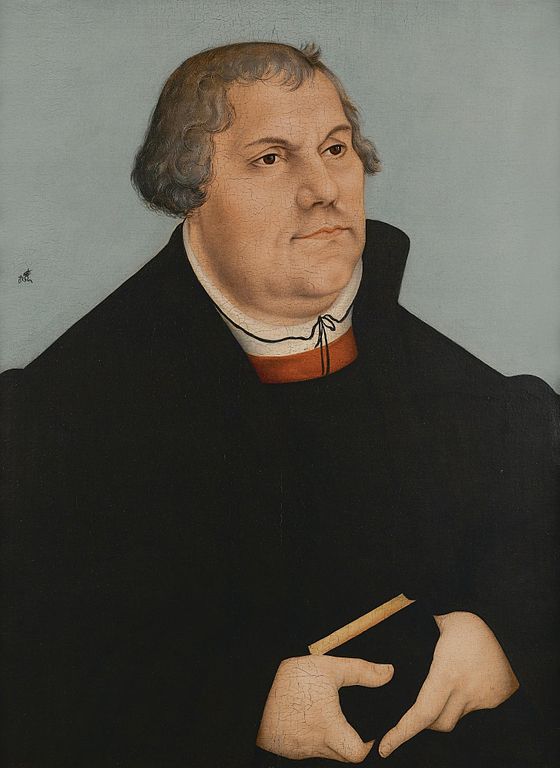
Photo Credit: Portrait of Martin Luther (probably 1540s), by workshop of Lucas Cranach the Elder (1472-1553) [public domain / Wikimedia Commons]
“Please Hit ‘Subscribe’”! If you have received benefit from this or any of my other 4,600+ articles, please follow this blog by signing up (with your email address) on the sidebar to the right (you may have to scroll down a bit), above where there is an icon bar, “Sign Me Up!”: to receive notice when I post a new blog article. This is the equivalent of subscribing to a YouTube channel. Please also consider following me on Twitter / X and purchasing one or more of my 55 books. All of this helps me get more exposure, and (however little!) more income for my full-time apologetics work. Thanks so much and happy reading!
***
Anti-Catholic Reformed Protestant polemicist James Swan, of Boors All infamy, wrote an article on James White’s Alpha & Omega blog, entitled, “Ten Martin Luther Myths” (6-30-07). I will be critiquing #2: “Luther’s Evangelical Breakthrough Occurred in the Bathroom.” Swan’s words will be in blue; Luther’s in green.
Per his usual boorish modus operandi, Swan sets out to make Catholic and other non-Protestant critics of Luther look as ridiculous and inaccurate as possible. He’s tried unsuccessfully to do this to me many times, so I know the process and the mentality very well from firsthand experience. Swan claims it is a “myth, that Luther’s understanding of Romans 1:17-18 came to him while in the bathroom in the tower of the Augustinian cloister.” He wrote in his introduction that he was “amazed certain myths still circulate.” Okay.
Well, we shall see if this is simply mockery and a fable that originated from and is perpetuated by Catholics and other non-Protestants (that we ought to be “amazed” at), or if it actually has historical documentation. I will cite only Protestant or otherwise non-Catholic sources in that regard (lest I simply be accused of producing biased and supposedly inherently untrustworthy Catholic sources). Swan goes on:
In the twentieth century, many approached Luther by applying psychoanalysis to his writings. Psychologist Eric [it’s Erik] Erikson [raised Jewish but not particularly religious] took a German phrase [actually, the primary debate is over a Latin phrase] uttered by Luther and interpreted it literally to mean Luther was in the bathroom when he had his evangelical breakthrough. Erikson concluded, from a Freudian perspective, Luther’s spiritual issues were tied up with biological functions. But, there was not a bathroom in the tower [actually, there was]. The phrase Erikson interpreted literally in German was simply conventional speech. Luther really was saying that his breakthrough came during a time when he was depressed, or in a state of melancholy.
Now, let me make clear, right off the bat, the nature of my motivation in writing this article. I’m not trying to dismiss Luther — or “faith alone ” — merely because of this alleged connection with a bathroom experience. It’s simply a question of the ascertainable facts of history. In and of itself, I couldn’t care less about this “controversy,” and I don’t believe I have ever referred to it in my 34 years of writing about Martin Luther. In fact, I wrote about what is known as Luther’s “tower experience” three weeks ago and never mentioned this aspect at all. Curious, I did an Advanced Search of my blog with its more than 4,600 articles on Google and indeed, no hits came up at all.
But then — here’s the thing — a guy like Swan comes along and confidently asserts that it’s a “myth” and in other places, no doubt, he has blasted Catholics for repeating it. That gets my intellectual curiosity going, so that now I’d like to figure out what we can actually determine — or plausibly speculate — about this purported fact from solid historical sources. I just clarified why I write about Luther, in an article I posted yesterday:
[I am] interested in Christian history, including the founder of Protestantism (who is an extremely fascinating figure). I’ve always loved history in general, and it’s much more interesting to me than fiction. Anomalies like this are interesting and educational by nature.
So — bottom line — it’s simply an interesting question to be looked into. The truth or falsity of “faith alone” obviously doesn’t rest upon whether Luther came up with it during a digestive event or not. Swan denies it, and he has said about 6,987,165 times that he is always a very accurate chronicler of history and All Things Luther (whereas Catholic apologists like myself allegedly are relentlessly wrong about such things). So that, I confess, gives me some extra motivation to write this article as well. It’s a challenge, in other words. I’m responding to his bogus claim. But in any event, it has nothing whatsoever to do with “belittling Luther” etc.
Right away, I discovered an article by a Lutheran “confessional pastor” that examines this issue in considerable depth: “Luther Visualized 5 – The Tower Discovery” (8-25-17). He observes:
The published preface mentioned above [from 1545] was the first time Luther made his gospel rediscovery public. From the Table Talk sources cited above, however, you can see that he had often talked about it privately with his friends before 1545. Most of Luther’s retellings focus exclusively on the content of his discovery. But the 1532 retelling, recorded by both Johannes Schlaginhaufen and Conrad Cordatus, is different. There Luther also makes a point of identifying the location (one gets the impression the group was near the site of the famous discovery at the time): “But when I was in this tower one time (in which there was a privy for the monks), I was speculating on those words [in Romans 1:17].” Another copy of Cordatus’s transcription has: “But when I was in this tower and sweating room…” And after describing his epiphany, he concludes, according to both of his transcribers, “The Holy Spirit introduced this art to me on this latrine” or “on this tower” or “on this latrine on the tower.”
What are we to make of this? I cannot make anything of it except to take Luther at his words. Consider the following: . . .
The plain language of Luther’s description (with several references varying in explicitness) recorded by two different transcribers . . .
In all of his descriptions of his epiphany, Luther never once says he was at his desk or reading; he always says he was speculating or meditating.
The ground floor of the tower had under-floor heating. The warm air from a small stove was led through the pictured conduit under the floor slabs (info marker). Considering that this conduit went right above the latrine, it would have indeed made it a “sweating room.” . . .
According to an info marker outside the excavation in 2013, the tower with the latrine “could only be reached from the monastery” (later Luther’s house after the monastery was gifted to him). This accords with its description in Cordatus’s transcription as “a privy [or private place] for the monks.” . . .
And if you want to find the truth of the gospel in 1518, you have to look in the bathroom at a monk from an ordinary copper miner’s family performing one of life’s less attractive chores.
Luther’s Works, the standard 55+-volume English collection, includes the 1532 Table Talk entry. It translates the phrase in question as “in the tower and heated room of this building” (Vol. 54, 193, No. 3232c). Then it provides an extensive footnote:
This report . . . indicates that Luther’s exegetical discovery took place in a heated room (hypocaustum), which a variant (No. 3232a) calls “the secret place of the monks” and other variants (No. 3232b . . .) appear to call the lavatory (cloaca). Here the meaning of the abbreviation cl. has been the subject of debate, some arguing that it meant “cell” or “chapter” rather than cloaca.
Thus, Luther’s Works presents the question as one open to interpretation, where equally honest and reasonable persons may legitimately differ; certainly not as a mere “myth” that must be immediately dismissed. Renowned Protestant historian Heiko A. Oberman, in his acclaimed biography, Luther: Man Between God and the Devil (New York: Doubleday Image, 1992, from the 1982 German original; I have this paperback in my library), takes an affirmative position and even gives it a theological context:
If this [cloaca] is the site of the Reformation discovery, man’s powerlessness is joined by ignominy. Must the trail of the Reformation be followed this far? There is a dignified way out: by cloaca Luther did not mean toilet, but the study up in the tower above it. That, however, would be to miss the point of Luther’s provocative statement. The cloaca is not just a privy, it is the most degrading place for man and the Devil’s favorite habitat. Medieval monks already knew this . . . No spot is unholy for the Holy Ghost; this is the very place to express contempt for the adversary through trust in Christ crucified. (p. 155)
Oberman clarifies what “medieval monks . . . knew” in footnote 8 for this chapter, on pages 338-339:
Luther mentions later (ca. Christmas 1531) the rhyme about the devil who catches a monk reading the first breviary prayer of the day while sitting on the toilet: . . .
[Devil: You monk on the latrine, you may not read the matins here!
Monk: I am cleansing my bowels and worshipping God Almighty; you deserve what descends and God what ascends.]
Robert Herndon Fife (a Methodist), in his volume, The Revolt and Martin Luther (New York: Columbia University Press, 1957) has no objection to this hypothesis. He writes in a footnote:
TR (Tischreden, or the German version of Table Talk) . . . II, No. 1681 (1532), where the word cloaca, instead of hypocaustum, seems well attested. . . . Cloaca, “privy,” has caused much perturbation to Luther biographers. . . . The privy was probably located in the tower which was removed shortly after Luther’s death. . . . A reference to the privy in this connection would not have been out of line with the realistic speech of Martin and his time. (pp. 198-199)
I could spend many more hours laboriously searching for further similar documentation and opinion, but there is little point. All I was trying to show was that the “toilet hypothesis” was a respectable, legitimate theory, held by many Protestant Luther biographers and scholars. It’s not a “myth” that no serious scholar entertains. I’ve provided four sources, including, most notably, Luther’s Works, and the impeccable research of Heiko Oberman.
*
Readers may choose between the dogmatic opinion of James Swan, a self-appointed, supposed Luther expert (a guy with a philosophy degree, a blog, and no published books) or actual Luther scholars (including Lutheran ones). It’s an easy choice for me!
*
*
***
*
Practical Matters: Perhaps some of my 4,600+ free online articles (the most comprehensive “one-stop” Catholic apologetics site) or fifty-five books have helped you (by God’s grace) to decide to become Catholic or to return to the Church, or better understand some doctrines and why we believe them.
Or you may believe my work is worthy to support for the purpose of apologetics and evangelism in general. If so, please seriously consider a much-needed financial contribution. I’m always in need of more funds: especially monthly support. “The laborer is worthy of his wages” (1 Tim 5:18, NKJV). 1 December 2021 was my 20th anniversary as a full-time Catholic apologist, and February 2022 marked the 25th anniversary of my blog.
PayPal donations are the easiest: just send to my email address: [email protected]. Here’s also a second page to get to PayPal. You’ll see the term “Catholic Used Book Service”, which is my old side-business. To learn about the different methods of contributing (including Zelle), see my page: About Catholic Apologist Dave Armstrong / Donation Information. Thanks a million from the bottom of my heart!
*
***
*
Photo Credit: Portrait of Martin Luther (probably 1540s), by workshop of Lucas Cranach the Elder (1472-1553) [public domain / Wikimedia Commons]

Summary: Anti-Catholic Protestant polemicist James Swan vainly contends that the story of Luther discovering “faith alone” in the bathroom of a monastery tower is merely a “myth.”
did Luther discover "faith alone" on the toilet?
Previous Post

June 20, 2024
James Swan: Loose Cannon Regarding NT Canon
Next Post
June 21, 2024 Luther's Devotion to Mary (James Swan vs. History)
Recent Comments
"And lastly, I belong to no denomination and am free to serve God as He ..."
Is Venerating Men & Angels Worship? ..."
"And obeisance doesn't mean "worship". It means "respect", "obey", or "submission". Very weird that you ..."
Is Venerating Men & Angels Worship? ..."
"Many of these scriptures you have noted have been taken out of context. With Daniel, ..."
Is Venerating Men & Angels Worship? ..."
""Protestants often point out that Jesus is now triumphant in heaven and object to Catholics ..."
Three More Anti-Catholic Lies About Catholicism ..."
Browse Our Archives
Select a Category & Last Things About Me Anti-Catholicism Atheism & Agnosticism Baptism and Sacramentalism Bible and Tradition Blessed Virgin Mary Books by Dave Armstrong C. S. Lewis Calvinism & General Protestantism Catholic Apologetics Catholic Apologists Catholic conversion Catholic converts Christmas Church (Ecclesiology) Church History Conversion and Converts Development of Doctrine Eastern Orthodoxy Ecumenism & Christian Unity Eucharist & Liturgy Fathers of the Church French Translations G. K. Chesterton Hell Hell & Satan Hell & Satan & Last Things Heresies & Comparative Religion Holistic Health Inquisition & Crusades & Scandals James White Jews & Judaism & Old Testament John Calvin John Henry Newman Liberal / Modernist Theology Life Issues Literary Resume Lutheranism Mariology Martin Luther Music Orthodoxy Papacy & Infallibility Personal Page Philosophy & Science Political & Ethical & Moral Issues Protestant Persecution & Intolerance Protestantism Purgatory Purgatory & Penance Romantic & Imaginative Theology Saints & Purgatory & Penance Salvation Salvation & Justification Satan & Last Things Sexuality and Gender Issues Spanish Translations Traditionalism vs. Radical Catholic Reactionaries Traducciones al español / tradução para português Trinitarianism & Christology Uncategorized Videos
Select a Month October 2026 September 2026 August 2026 July 2026 June 2026 May 2026 April 2026 March 2026 February 2026 January 2026 December 2025 November 2025 October 2025 September 2025 August 2025 July 2025 June 2025 May 2025 April 2025 March 2025 February 2025 January 2025 December 2024 November 2024 October 2024 September 2024 August 2024 July 2024 June 2024 May 2024 April 2024 March 2024 February 2024 January 2024 December 2023 November 2023 October 2023 September 2023 August 2023 July 2023 June 2023 May 2023 April 2023 March 2023 February 2023 January 2023 December 2022 November 2022 October 2022 September 2022 August 2022 July 2022 June 2022 May 2022 April 2022 March 2022 February 2022 January 2022 December 2021 November 2021 October 2021 September 2021 August 2021 July 2021 June 2021 May 2021 April 2021 March 2021 February 2021 January 2021 December 2020 November 2020 October 2020 September 2020 August 2020 July 2020 June 2020 May 2020 April 2020 March 2020 February 2020 January 2020 December 2019 November 2019 October 2019 September 2019 August 2019 July 2019 June 2019 May 2019 April 2019 March 2019 February 2019 January 2019 December 2018 November 2018 October 2018 September 2018 August 2018 July 2018 June 2018 May 2018 April 2018 March 2018 February 2018 January 2018 December 2017 November 2017 October 2017 September 2017 August 2017 July 2017 June 2017 May 2017 April 2017 March 2017 February 2017 January 2017 December 2016 November 2016 October 2016 September 2016 August 2016 July 2016 June 2016 May 2016 April 2016 March 2016 February 2016 January 2016 December 2015 November 2015 October 2015 September 2015 August 2015 July 2015 June 2015 May 2015 April 2015 March 2015 February 2015 January 2015 December 2014 November 2014 October 2014 September 2014 August 2014 July 2014 June 2014 April 2014 March 2014 February 2014 January 2014 December 2013 November 2013 October 2013 September 2013 August 2013 July 2013 June 2013 April 2013 March 2013 February 2013 January 2013 December 2012 November 2012 October 2012 September 2012 August 2012 July 2012 June 2012 May 2012 April 2012 March 2012 February 2012 January 2012 December 2011 November 2011 October 2011 September 2011 August 2011 July 2011 June 2011 April 2011 March 2011 February 2011 October 2010 September 2010 August 2010 July 2010 April 2010 March 2010 December 2009 October 2009 August 2009 July 2009 June 2009 May 2009 March 2009 February 2009 October 2008 September 2008 April 2008 March 2008 February 2008 January 2008 December 2007 November 2007 October 2007 May 2007 March 2007 February 2007 January 2007 November 2006 October 2006 September 2006 August 2006 July 2006 June 2006 May 2006 April 2006 March 2006 February 2006 October 2005 June 2005 April 2005 February 2005 July 2004 May 2004 April 2004
Follow Us!
TAKE THE
Religious Wisdom Quiz
Who said, "I do not know how to speak; I am too young"?
Select your answer to see how you score.
Isaiah Jeremiah Samuel Moses
Books by This Author Books by Dave Armstrong
Related posts from Biblical Evidence for Catholicism

Three More Anti-Catholic Lies About Catholicism (#6-4)
Biblical Evidence for Catholicism

Top Ten Anti-Catholic Lies (#10-7)
Biblical Evidence for Catholicism

"Baptism" & Romans 10 (Engwer's Silly Word Games)
Biblical Evidence for Catholicism

Book: Martin Luther: Dissenter and Defender
Biblical Evidence for Catholicism
TRENDING AT PATHEOS Catholic

I was strolling through the top floor of the brand new Parthenon...

What Does Gêvâh Mean For Kimberley Guifoyle &...
This week, a lot of the news is focused on Kimberly Guilfoyle....

INNER CIRCLE: Profound Mystery (Of Christ In All...
Ephesians 5:31-32 “For this reason, a man will leave his father and...

Do Not Rejoice When Your Enemy Falls: The...
Turning an execution into a public spectacle is a disturbing expression of...

'The Chosen' S6 Trailer: The Passion Gets Very...
Not many watching 'The Chosen' worry about spoilers, but just because they...

The purpose-driven labor priest
A labor activist reads Rick Warren and it gets me wondering about...
view all Catholic blogs
What Are Your Thoughts?leave a comment
Ad-Free & Subscriber Log-In Subscription Support
- About Us
- 2026 Calendar
- Videos
- Podcasts
- Library of World Religions
- Faith In Media Tracker
- Advertise With Us
- Write for Us
- Privacy Policy
- Terms of Service
- Do Not Sell My Data
- Contact Us
- Radiant Digital
- Manage Newsletter Subscriptions
- Unsubscribe From Notifications
- Sitemap
Copyright 2008-2026, Patheos. All rights reserved.
Subscription Support Ad-Free & Subscriber Log-In
Follow Patheos