
BuddhistCatholicContemplativeEvangelicalGeneral ChristianHinduJewishLatter-day SaintMuslimNew VisionsProgressive Christian
Beliefs
- Buddhist
- Catholic
- Contemplative
- Evangelical
- General Christian
- Hindu
- Jewish
- Latter-day Saint
- More Voices
- Muslim
- New Visions
- Pagan
- Progressive Christian
Topics
- Religion News
- Food and Religion
- Sports and Religion
- Religious Art
- Religious Music and Entertainment
- Religious Events
- History and Religion
- Style and Religion
- Politics and Religion
- Women in Religion
- Recreation Outdoors and Religion
- Business Finance and Religion
- Careers Workplace and Religion
- Education and Religion
- Family Parenting and Religion
- Health Fitness and Religion
- Home and Religion
- Relationships and Religion
- Technology and Religion
- Travel and Religion
Columnists
- Buddhist Columnists
- Business Finance and Religion Columnists
- Careers Workplace and Religion Columnists
- Catholic Columnists
- Contemplative Columnists
- Education and Religion Columnists
- Evangelists Columnists
- Family Parenting and Religion Columnists
- General Christian Columnists
- Health Fitness and Religion Columnists
- Hindu Columnists
- History and Religion Columnists
- Home and Religion Columnists
- Jewish Columnists
- More Voices Columnists
- Latter Day Columnists
- Muslim Columnists
- New Visions Columnists
- Nonreligious Columnists
- Pagan Columnists
- Politics and Religion Columnists
- Progressive Columnists
- Recreation Outdoors and Religion Columnists
- Relationships and Religion Columnists
- Religion News Columnists
- Religious Art Columnists
- Religious Events Columnists
- Religious Music and Entertainment Columnists
- Sports and Religion Columnists
- Style and Religion Columnists
- Technology and Religion Columnists
- Travel and Religion Columnists
- Women in Religion Columnists
Resource Library
- 2026 Calendar
- Library of World Religions
- The 100 Most Holy Places on Earth
- Patheos Answers
- Podcasts
- Videos
- Faith Leaders Database
- Anglican Episcopalian
- Bahai
- Baptist
- Buddhism
- Christianity
- Confucianism
- Eastern Orthodoxy
- Hinduism
- Holiness and Pentecostal
- ISKCON
- Islam
- Judaism
- Lutheran
- Methodist
- The Church of Jesus Christ of Latter-day Saints
- New Age
- Paganism
- Presbytarian and Reformed
- Protestantism
- Religion Behind the Scenes
- Roman Catholic
- Scientology
- Shia Islam
- Sikhism
- Sufism
- Sunni Islam
- Taoism
- Zen
- See all religions
Research Tools
 Ad-Free & Subscriber Log-In Subscription Support
Ad-Free & Subscriber Log-In Subscription Support
Follow Patheos 

- Trending:
- Forgiveness
- |
- Marriage
- |
- Consciousness
- |
- Death Penalty
- |
- Election
- |
- Halloween

-
About
-
Catholic Apologetics
-
Church History
-
Great Apologists
-
Christian Worldview
-
Protestantism & Misc.
- Home
- Catholic
- History and Religion
- Luther: “As Many Sects and Creeds as Heads”
Luther: “As Many Sects and Creeds as Heads”
Last updated on: June 6, 2026 at 12:51 am by Dave Armstrong
Luther: “As Many Sects and Creeds as Heads” 2026-06-06T00:51:51-04:00 Dave Armstrong
Patheos Explore the world's faith through different perspectives on religion and spirituality! Patheos has the views of the prevalent religions and spiritualities of the world.
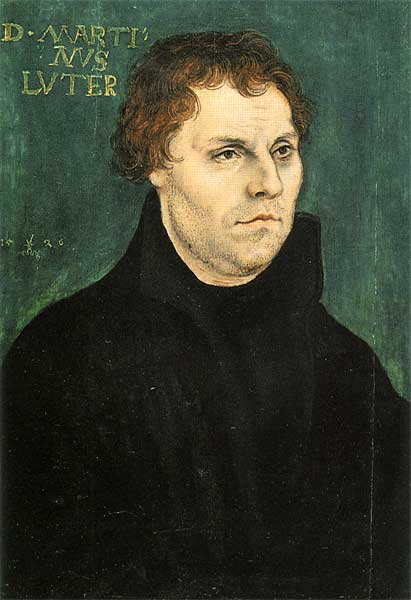
Photo credit: Martin Luther: 31 December 1525 (age 42), by Lucas Cranach the Elder [public domain / Wikimedia Commons]
James Swan Misses the Forest for the Trees / Calvin & Melanchthon Embarrassed & Scandalized by Protestant Sectarianism
***
“Please Hit ‘Subscribe’”! If you have received benefit from this or any of my other 4,600+ articles, please follow this blog by signing up (with your email address) on the sidebar to the right (you may have to scroll down a bit), above where there is an icon bar, “Sign Me Up!”: to receive notice when I post a new blog article. This is the equivalent of subscribing to a YouTube channel. Please also consider following me on Twitter / X and purchasing one or more of my 55 books. All of this helps me get more exposure, and (however little!) more income for my full-time apologetics work. Thanks so much and happy reading!
Swan’s words will be in blue, Luther’s in green, Calvin’s in brown, and Melanchthon’s in purple.
***
Anti-Catholic Reformed Protestant James Swan wrote an article entitled, “The Evils of Private Interpretation: ‘There are almost as many sects and beliefs as there are heads’ “ (Boors All, 2-25-06). As usual, his goal is to show that Catholic apologists and other writers are incompetent, even dishonest stooges and buffoons: incapable of identifying the proper identification of a source. And accordingly, he says, “I’d like to demonstrate again the failure of Roman Catholic apologetics.”
My goal, however, is to go much deeper and analyze the import and significance of Luther’s statement. What are its implications? What does it suggest? Swan doesn’t touch any of that with a ten-foot pole. What’s quite obvious to one and all is that Luther despised and had contempt for this state of affairs. Swan wrote:
This is one of those quotes put forth by Roman Catholics attempting to substantiate Luther’s opinion of the failure of Protestant Biblical interpretation, as well as the need for the infallible authority of the Roman Catholic Church.
To this extent, I agree with Swan. As far as I know (having read quite a bit of Luther), he never denounced his own so-called “Reformation” or took any blame at all for bringing about a state of affairs in which “as many sects as heads” was even possible or thinkable, let alone actual. He didn’t blame private judgment or sola Scriptura, or the schismatic mentality, etc. Maybe something will turn up. But I think if it had, it would have been known by now and used in Catholic critiques of Luther and his ideas: which in the past were generally far more critical than they are now, and much more than my own point of view.
The strategy goes like this: use the above quote and then put forth something like- “…see, even Luther realized how much of a failure sola scriptura was.” . . .
they are misusing Luther to prove the alleged superiority of their church.
Well, in order to succeed in demonstrating that, it seems to me that the person would have to find Luther expressly making the specific point about sola Scriptura. I’ve never seen it. It’s perfectly legitimate and plausible, however, for Catholics to note that the change in the rule of faith — whatever Luther thought — indeed had a direct impact on the ludicrous proliferation of sects, which is directly contradictory to the biblical idea of one Church and no denominations. St. Paul was even more critical of sectarianism and division than Luther was.
Swan then goes on to note that several Catholics, including apologist Steve Ray, cited these words but provided no primary documentation. Yeah; ideally, they should have. Again, I agree. Swan noted that it was cited in the 1917 book, The Facts About Luther, by Patrick O’Hare: a book I used to cite, when I had few Catholic sources about Luther in the early 90s, but stopped, after determining that it was too “anti-Luther” and sloppy. But O’Hare does provide a primary source and some context:
“This one,” he says, “will not hear of Baptism, and that one denies the sacrament, another puts a world between this and the last day: some teach that Christ is not God, some say this, some say that: there are as many sects and creeds as there are heads. No yokel is so rude but when he has dreams and fancies, he thinks himself inspired by the Holy Ghost and must be a prophet.” (De Wette III, 61) [p. 214]
There is nothing whatsoever wrong with this. The primary source is there. He didn’t provide the name of the specific work (Letter to the Christians of Antwerp, from early 1525), which is unfortunate, but he gives the readers something to verify the words that Luther wrote: of that there can be no doubt. And they mean something. The 55-volume Luther’s Works (which I have in hardcover in my living room) chose not to include this letter in its three volumes of Luther’s letters (the year 1525 is in volume 49). Some twenty or so new volumes are planned; perhaps the editors will see fit to include it in those.
*
Wilhelm Martin Leberecht de Wette (1780-1849) was a German theologian and biblical scholar, who compiled five volumes of Luther’s writings (Berlin: 1825-1828). They are now available online (in Latin and German): see volumes one / two / three / four / five. One can go to the Google book page for volume 3, type in the word “Antwerpen” in the “Search Inside” box and see that word in the name of the letter on page 60, and the year 1525. The words from the famous citation appear on page 61. The letter is in German. The PDF of the entire book can also be searched. The letter in question can be seen on page 60 (actually “79” in the pagination on top). I ran the German title, An die Christen zu Antwerpen through Google Translate and it came out as To the Christians of Antwerp. So this is definitely the letter, and one can see a photocopy of the original book online. I kept translating the material on page 61 (first two paragraphs and part of the third) and this is what I got:
*
For a long time under the papal regime we have suffered many cruel seductions from the scoundrels or the wicked spirits, which we believed and held to be human souls who had died and were supposed to be walking around in the flesh. This belief has now been brought to light and revealed by the grace of God through the Gospel, so that we know that they are not human souls, but pure evil devils who have deceived the people with false answers and have established much idolatry throughout the world.
But now that the wretched devil sees that his blustering and thumping no longer counts, he attacks something new and begins to rage in his members, that is, in the godless, and thunders out all sorts of wild, dark beliefs and teachings. One does not want to be baptized, another denies the sacrament; another sees a world between this and the last day; some teach that Christ is not God; some say this, some that, and there are almost as many sects and beliefs as there are heads; his nonsense is now so gross that if he dreams or thinks of something, then the Holy Spirit must have inspired him and wants to be a prophet.
I must tell you an example here, because I have a lot to do with such ghosts. There is no one who claims to be more learned than Luther, who said, “They would all become nemesis of me; and if God would that they were what they think they are, and I were nothing.”
The Introduction on page 60 (presumably by De Wette) reads:
A fanatic from the Netherlands had come to Wittenberg, and had made his opinions known to Luther: this letter is directed against this and other fanaticisms. Luther wrote this letter in Latin, as Walch’s preface to the Xth Th. p. 90 claims, but Opsopoeus No. 15. gives it only in a Latin version (f. Beefenmeyer Litterargeſsch. d. Br. L. p. 58.) and so it can be found in Aurif. II. 281. Viteb. VII. 503. It was published in German under the title: A letter from D. Martini Luther to the Christians in Antorf. Wittenberg 1525. 4. S. Rotermund p. 43. It can also be found in German in the German edition Wittenb. II. 60. Jen. III. 109. Altenb. III. 101. Leipz. XIX. 345. Watch X. 1782. We deliver it in German after the first printing.
Is that enough primary documentation for Swan? If not, there is nowhere else to go. He commented under a related post on 11-28-07:
I would gladly welcome someone scrutinizing the text. In fact, I wouldn’t mind having some good translation work on this, even if it meant I was wrong on the conclusions I drew from the text. . . .
I can actually provide the German text for this quote, now that I actually have a reference (recall not one Catholic apologist I’ve ever come across has given any sort of helpful documentation for the quote…but they use the quote gleefully). . . .
I may be a bit paranoid due to all those in the RC’s in the past I’m used to dealing with.
His own article puts the lie to this (his claim in the second paragraph above). He himself cited the Catholic Encyclopedia (ironically and humorously without including the title of the article), which gave the title of the letter and the primary source from De Wette. That was in 1912. O’Hare also gave the primary source in 1916. Now we can access that in Google Books and translate it with Google Translate (which I did). It’ll all kosher and legit. Much ado about nothing, as usual.
One can readily see that O’Hare (or whoever else he may have gotten it from, in English) accurately translated it. The Catholic Encyclopedia article was written by Sydney Smith in 1912 under the title, “Union of Christendom.” Smith made, in my opinion, exactly the argument that should be set forth (one I have made myself, many times), without claiming that Luther agreed with it. He stated:
What was special and novel in Luther and his colleagues was that they erected the principle of an appeal to the Bible not only into an exclusive standard of sound doctrines, but even into one which the individual could always apply for himself without dependence on the authoritative interpretations of any Church whatever. Luther himself and his fellow-reformers did not even understand their new rule of faith in the Rationalistic sense that the individual inquirer can, by applying the recognized principles of exegesis, be sure of extracting from the Scripture text the intended meaning of its Divine author. Their idea was that the earnest Protestant who goes direct to the Bible for his beliefs is brought into immediate contact with the Holy Spirit, and can take the ideas that his reading conveys to him personally as the direct teaching of the Spirit to himself. But, however much the Reformers might thus formulate their principle, they could not in practice avoid resorting to the principles of exegesis, applied well or ill, according to each man’s capacity, for the discovery of the sense ascribed to the Holy Spirit. Thus their new doctrinal standard lapsed even in their own days, though they perceived it not, and still more in later days, into the more intelligible but less pietistic method of Rationalism.
Now, if the Bible were drawn up, as it is not, in the form of a clear, simple, systematic, and comprehensive statement of doctrine and rule of conduct, it might not, perhaps, seem antecedently impossible that God should have wished this to be the way by which his people should attain to the knowledge of the true religion. Still, even then the validity of the method would need to be tested by the character of the results, and only if these exhibited a profound and far-reaching agreement among those who followed it would it be safe to conclude that it was the method God had really sanctioned. This, however, was far from the experience of the Reformers. Luther had strangely assumed that those who followed him into revolt would use their right of private judgment only to affirm their entire agreement with his own opinions, for which he claimed the sanction of an inspiration received from God that equaled him with the Prophets of old [which he did indeed virtually claim, as I have documented to a tee]. But he was soon to learn that his followers attached as high a value to their own interpretations of the Bible as he did to his, and were quite prepared to act upon their own conclusions instead of upon his. The result was that as early as the beginning of 1525 — only eight years after he first propounded his heresies — we find him acknowledging, in his “Letter to the Christians of Antwerp” (de Wette, III, 61), that “there are as many sects and creeds in Germany as heads. . . .”
This is exactly my own opinion. Swan did, at least, cite a good chunk of the above, for which I give him credit. Luther’s big problem in this regard, per the “theory” above, was his extreme naivete: thinking that everything would be fine and dandy in his new system and never being able to conceptualize the quite arguable connection between it and the proliferation of sects.
It’s real simple in the final analysis: others applied Luther’s new rule of faith (sola Scriptura, private judgment, and a distorted individualistic supremacy of conscience) and went their own way, differing from Luther, just as he had with the Catholic Church. Any astute observer could have easily predicted what happened. Erasmus and More and Eck could see what was coming, in their disputes with Luther. But Luther couldn’t (or wouldn’t, one might opine).
*
Much better, I think, was the perspective of John Calvin, in addressing the problem of the wildly multiplying denominations, in a letter to Luther’s successor Philip Melanchthon, dated 28 November 1552. At least he is clearly embarrassed by it, implying that he thought the principles of Protestantism were in some way and to some extent responsible (otherwise, why the discomfort?). He stated:
For you see how the eyes of many are turned upon us, so that the wicked take occasion from our dissensions to speak evil, and the weak are only perplexed by our unintelligible disputations. Nor in truth, is it of little importance to prevent the suspicion of any difference having arisen between us from being handed down in any way to posterity; for it is worse than absurd that parties should be found disagreeing on the very principles, after we have been compelled to make our departure from the world. . . .
And surely it is indicative of a marvellous and monstrous insensibility, that we so readily set at nought that sacred unanimity, by which we ought to be bringing back into the world the angels of heaven. Meanwhile, Satan is busy scattering here and there the seeds of discord, and our folly is made to supply much material. At length he has discovered fans of his own, for fanning into a flame the fires of discord. (Selected Works of John Calvin: Tracts and Letters: Letters, Part 2, 1545-1553, vol. 5 of 7; edited by Jules Bonnet, translated by David Constable; Grand Rapids, Michigan: Baker Book House [Protestant publisher], 1983, 454 pages; reproduction of Letters of John Calvin, vol. 2 (Philadelphia: Presbyterian Board of Publication, 1858; the letter in question is numbered as CCCV [305] and is found on pp. 375-381; the portion above is from pp. 376-377).
Whereas Luther made it clear that the other sects were completely separate from him, and fanatical, Calvin was more honest and open to criticism, and included himself in the scandal of denominationalism:
the eyes of many are turned upon us, so that the wicked take occasion from our dissensions . . . our unintelligible disputations. . . . difference having arisen between us . . . after we have been compelled to make our departure from the world . . . we so readily set at nought that sacred unanimity . . . our folly . . .
Melanchthon, too, was severely distressed over internal Protestant divisions and strife, as I have documented not just once, but twice. Protestant historian Philip Schaff referenced this:
The controversies among the Protestants in the sixteenth century roused all the religious and political passions and cast a gloom over the bright picture of the Reformation. Melanchthon declared [c. Dec. 1552?] that with tears as abundant as the waters of the river Elbe he could not express his grief over the distractions of Christendom and the “fury of theologians.” (History of the Christian Church, vol. 6, p. 46)
Writing to Cranmer on April Fools’ Day, 1548, Melanchthon expressed statements of embarrassment (?) quite similar to Calvin’s word above:
I do not, however, desire in this letter to do anything more than express my grief, which is so great, that it could not be exhausted, though I were to shed a flood of tears as large as our Elbe or your Thames.
You see what a multitude of explanations have been elaborated in former times, and are elaborated at this day; because a simple and sincere [appeal to] antiquity is neglected.
. . . no ambiguities should be left to posterity, as an apple of discord.
Melanchthon makes several dramatic, agonized remarks along these lines:
This most miserable anarchy causes me such anguish that I would gladly leave this life . . .
If only I could revive the jurisdiction of the bishops! For I see what sort of Church we shall have if the ecclesiastical constitution is destroyed.
I am unable to suggest anything that could heal this anarchy (letter to Hardenburg, c. 1558).
Something wasn’t going as planned (it seems obvious). He didn’t specifically place the blame on anything, but he was greatly troubled, to the point of many tears. Why? The devil again? Protestants and their leaders bore no blame at all? Human beings find it hard to admit any wrong, as we all know.
*
The causes and the solutions are what is at issue between Protestants and Catholics. Luther and Calvin and Melanchthon apparently never figured out that it was their foundational principles which set the wheels of this sad process inexorably and inevitably in motion. The weakness, I submit, is in the foundation, not the superstructure of denominationalism gone wild. Calvin and Melanchthon were embarrassed — as well they should have been — at the “absurd” (as Calvin put it) nature of such strong disagreements occurring, and the “miserable anarchy.”
*
To their credit, they felt this tension, expressed it in private letters, and wished that it could be resolved before “posterity” got wind of it. They understood the scandalous, indefensible scandal of sectarianism and denominationalism in a way that few Protestants today do (after 500 years of rationalizing and pretending that it is a good, healthy thing).
*
But Calvin and Melanchthon didn’t understand or know how to properly solve the problem of relativism and Protestant “epistemology”. That’s my take, and it seems obvious to me. They were referring to the public and history’s reaction to the dissensions. They “got it.” The founders of the Protestant system (including Luther) thought that Protestant divisions were scandalous. This has been a problem since Day One: Luther at Worms in 1521. Private judgment and sola Scriptura inevitably produce such doctrinal relativism and ecclesiological confusion.
*
The Catholic, on the other hand, believes that there is one Church instituted by Christ (of which Protestants are imperfectly a part, by virtue of baptism and common beliefs), which the Holy Spirit will prevent from falling into dogmatic error. We have the faith that God can and does do such a thing. Protestants don’t believe in such a thing as an indefectible Church that God ordained, free from error. The Catholic view is not only a far more plausible scenario, but also far more a biblical one, and spectacularly borne out by the facts of history.
*
If the Catholic Church were merely human, as so many seem to think, it would have long since evolved into something else, or disappeared. But it doesn’t do either thing. It’s the Protestant denominations that continually evolve into theological liberalism and that adopt immoral teachings, according to the zeitgeist. Witness, for example, the recent abominable caving of the United Methodists on homosexuality. John Wesley (I published a collection of his quotations with a Wesleyan publisher) is surely turning over in his grave. The liberal Protestant denominations have also long since caved on abortion, too: calling evil good. No other institution in world history is even remotely like the Catholic Church. Protestantism survives only to the extent that its life comes from the doctrines it inherited from us.
*
In my opinion, Calvin, in the letter above to Melanchthon, and the sensitive Melanchthon, in his various despairing utterances, are rightly and admirably aghast with regard to a situation (division) which is equally alarming to us Catholics. In this instance they agree with us and candidly, honestly admit the strong contradiction between sectarianism and the Bible. But like Luther, they don’t see that the discord resulted from fallacious first principles, just recently conceived by their illustrious predecessor.
*
Their anarchical and semi-Donatist principles set the wheels in motion that made rampant sectarianism historically inevitable. I’m sure they didn’t think that; nor was it their intent, but I hold all of them responsible for extreme naivete and irresponsibility in not anticipating what their principle of sola Scriptura would inexorably lead to.
*
They thought everyone would simply agree with them and that there would be this spontaneous, marvelous unity out under the “yoke of Rome.” Their novel views brought about what we see, despite whatever good intentions they had (which I readily grant them). But of course, they couldn’t even agree with each other.
*
It’s not with glee that I critique what I feel are flawed principles, while simultaneously acknowledging — as I always have — the great good which is also present in Protestantism and its members. The very fact that I have a high regard personally for many, many Protestants, makes me think that I can persuade them of some of the serious difficulties in their system, as perceived by a friendly “outsider.”
*
I appreciate anyone who takes the time to respond to anything I’ve written. (2-18-06; my emphasis; and this is at the bottom of an article dealing with mostly my arguments; he calls me a “guy”; per his usual juvenile methodology)
*
Really? How does this expressed appreciation harmonize with Swan’s refusal to reply to any critique I have made for about fourteen years now? If he appreciated even my critiques (notwithstanding his innumerable insults sent my way: including that I am supposedly psychotic and off my rocker), wouldn’t it follow that he would interact with what I offer? “Say one thing, do another”? Meanwhile, I continue to critique his articles (see his section on my Anti-Catholicism web page), because doing so is, I think, helpful for the purpose of understanding how to effectively confront the errors of Protestantism (and especially of the tiny fringe anti-Catholic faction). I refute falsehoods and bad arguments, so that my readers can get some suggestions as to how to reply to similar objections that they encounter. This is the utility of dialogue. It’s a great teaching tool.
*
***
*
Practical Matters: Perhaps some of my 4,600+ free online articles (the most comprehensive “one-stop” Catholic apologetics site) or fifty-five books have helped you (by God’s grace) to decide to become Catholic or to return to the Church, or better understand some doctrines and why we believe them.
Or you may believe my work is worthy to support for the purpose of apologetics and evangelism in general. If so, please seriously consider a much-needed financial contribution. I’m always in need of more funds: especially monthly support. “The laborer is worthy of his wages” (1 Tim 5:18, NKJV). 1 December 2021 was my 20th anniversary as a full-time Catholic apologist, and February 2022 marked the 25th anniversary of my blog.
PayPal donations are the easiest: just send to my email address: [email protected]. Here’s also a second page to get to PayPal. You’ll see the term “Catholic Used Book Service”, which is my old side-business. To learn about the different methods of contributing (including Zelle), see my page: About Catholic Apologist Dave Armstrong / Donation Information. Thanks a million from the bottom of my heart!
*
***
*
Photo credit: Martin Luther: 31 December 1525 (age 42), by Lucas Cranach the Elder [public domain / Wikimedia Commons]

Summary: Anti-Catholic Protestant polemicist James Swan falsely claimed that Catholics never documented this famous quotation, and as usual he ignored its troubling implications.
Calvinism & General Protestantism
Previous Post
June 14, 2024
Luther's Odd Take on Mary & Jesus in the Temple at 12
Next Post
June 18, 2024 David T. King: No Father Believed in an Infallible Church
Recent Comments
""Protestants often point out that Jesus is now triumphant in heaven and object to Catholics ..."
Three More Anti-Catholic Lies About Catholicism ..."
"Veey Good Dave. Perhaps you 2 will start a dialogue."
Bible & Catholicism on Mortal Sin ..."
"Yes He is! Amen!"
Marian Devotion is NOT Idolatry! (vs. ..."
"Jesus is Lord!"
Marian Devotion is NOT Idolatry! (vs. ..."
Browse Our Archives
Select a Category & Last Things About Me Anti-Catholicism Atheism & Agnosticism Baptism and Sacramentalism Bible and Tradition Blessed Virgin Mary Books by Dave Armstrong C. S. Lewis Calvinism & General Protestantism Catholic Apologetics Catholic Apologists Catholic conversion Catholic converts Christmas Church (Ecclesiology) Church History Conversion and Converts Development of Doctrine Eastern Orthodoxy Ecumenism & Christian Unity Eucharist & Liturgy Fathers of the Church French Translations G. K. Chesterton Hell Hell & Satan Hell & Satan & Last Things Heresies & Comparative Religion Holistic Health Inquisition & Crusades & Scandals James White Jews & Judaism & Old Testament John Calvin John Henry Newman Liberal / Modernist Theology Life Issues Literary Resume Lutheranism Mariology Martin Luther Music Orthodoxy Papacy & Infallibility Personal Page Philosophy & Science Political & Ethical & Moral Issues Protestant Persecution & Intolerance Protestantism Purgatory Purgatory & Penance Romantic & Imaginative Theology Saints & Purgatory & Penance Salvation Salvation & Justification Satan & Last Things Sexuality and Gender Issues Spanish Translations Traditionalism vs. Radical Catholic Reactionaries Traducciones al español / tradução para português Trinitarianism & Christology Uncategorized Videos
Select a Month October 2026 September 2026 August 2026 July 2026 June 2026 May 2026 April 2026 March 2026 February 2026 January 2026 December 2025 November 2025 October 2025 September 2025 August 2025 July 2025 June 2025 May 2025 April 2025 March 2025 February 2025 January 2025 December 2024 November 2024 October 2024 September 2024 August 2024 July 2024 June 2024 May 2024 April 2024 March 2024 February 2024 January 2024 December 2023 November 2023 October 2023 September 2023 August 2023 July 2023 June 2023 May 2023 April 2023 March 2023 February 2023 January 2023 December 2022 November 2022 October 2022 September 2022 August 2022 July 2022 June 2022 May 2022 April 2022 March 2022 February 2022 January 2022 December 2021 November 2021 October 2021 September 2021 August 2021 July 2021 June 2021 May 2021 April 2021 March 2021 February 2021 January 2021 December 2020 November 2020 October 2020 September 2020 August 2020 July 2020 June 2020 May 2020 April 2020 March 2020 February 2020 January 2020 December 2019 November 2019 October 2019 September 2019 August 2019 July 2019 June 2019 May 2019 April 2019 March 2019 February 2019 January 2019 December 2018 November 2018 October 2018 September 2018 August 2018 July 2018 June 2018 May 2018 April 2018 March 2018 February 2018 January 2018 December 2017 November 2017 October 2017 September 2017 August 2017 July 2017 June 2017 May 2017 April 2017 March 2017 February 2017 January 2017 December 2016 November 2016 October 2016 September 2016 August 2016 July 2016 June 2016 May 2016 April 2016 March 2016 February 2016 January 2016 December 2015 November 2015 October 2015 September 2015 August 2015 July 2015 June 2015 May 2015 April 2015 March 2015 February 2015 January 2015 December 2014 November 2014 October 2014 September 2014 August 2014 July 2014 June 2014 April 2014 March 2014 February 2014 January 2014 December 2013 November 2013 October 2013 September 2013 August 2013 July 2013 June 2013 April 2013 March 2013 February 2013 January 2013 December 2012 November 2012 October 2012 September 2012 August 2012 July 2012 June 2012 May 2012 April 2012 March 2012 February 2012 January 2012 December 2011 November 2011 October 2011 September 2011 August 2011 July 2011 June 2011 April 2011 March 2011 February 2011 October 2010 September 2010 August 2010 July 2010 April 2010 March 2010 December 2009 October 2009 August 2009 July 2009 June 2009 May 2009 March 2009 February 2009 October 2008 September 2008 April 2008 March 2008 February 2008 January 2008 December 2007 November 2007 October 2007 May 2007 March 2007 February 2007 January 2007 November 2006 October 2006 September 2006 August 2006 July 2006 June 2006 May 2006 April 2006 March 2006 February 2006 October 2005 June 2005 April 2005 February 2005 July 2004 May 2004 April 2004
Follow Us!
TAKE THE
Religious Wisdom Quiz
What was primary method of land transfer?
Select your answer to see how you score.
Oath Written deed Verbal agreement Witness testimony
Books by This Author Books by Dave Armstrong
Related posts from Biblical Evidence for Catholicism

On Protestant Explanations of Catholic Conversion
Biblical Evidence for Catholicism

Three More Anti-Catholic Lies About Catholicism (#6-4)
Biblical Evidence for Catholicism

Top Ten Anti-Catholic Lies (#10-7)
Biblical Evidence for Catholicism

Protestant Confessions & "Ever-Virgin" Mary
Biblical Evidence for Catholicism
TRENDING AT PATHEOS Catholic

'The Chosen' S6 Trailer: The Passion Gets Very...
Not many watching 'The Chosen' worry about spoilers, but just because they...

The purpose-driven labor priest
A labor activist reads Rick Warren and it gets me wondering about...

The Golden Rule Demands More than We Think
Everyone is related, and everything is connected. That sets a high standard...

What Will We Be Able to do on...
The term perfect is often misused when it describes our state in...

‘Conceivable’ Opens Friday: Faith, Family & a Surprise...
A new faith-based drama inspired by a true story opens in theaters...
Pope Leo has Lung Cancer. We Need Him...
I’ve been caught up with a conundrum in my own life and...
view all Catholic blogs
What Are Your Thoughts?leave a comment
Ad-Free & Subscriber Log-In Subscription Support
- About Us
- 2026 Calendar
- Videos
- Podcasts
- Library of World Religions
- Faith In Media Tracker
- Advertise With Us
- Write for Us
- Privacy Policy
- Terms of Service
- Do Not Sell My Data
- Contact Us
- Radiant Digital
- Manage Newsletter Subscriptions
- Unsubscribe From Notifications
- Sitemap
Copyright 2008-2026, Patheos. All rights reserved.
Subscription Support Ad-Free & Subscriber Log-In
Follow Patheos