
BuddhistCatholicContemplativeEvangelicalGeneral ChristianHinduJewishLatter-day SaintMuslimNew VisionsProgressive Christian
Beliefs
- Buddhist
- Catholic
- Contemplative
- Evangelical
- General Christian
- Hindu
- Jewish
- Latter-day Saint
- More Voices
- Muslim
- New Visions
- Pagan
- Progressive Christian
Topics
- Religion News
- Food and Religion
- Sports and Religion
- Religious Art
- Religious Music and Entertainment
- Religious Events
- History and Religion
- Style and Religion
- Politics and Religion
- Women in Religion
- Recreation Outdoors and Religion
- Business Finance and Religion
- Careers Workplace and Religion
- Education and Religion
- Family Parenting and Religion
- Health Fitness and Religion
- Home and Religion
- Relationships and Religion
- Technology and Religion
- Travel and Religion
Columnists
- Buddhist Columnists
- Business Finance and Religion Columnists
- Careers Workplace and Religion Columnists
- Catholic Columnists
- Contemplative Columnists
- Education and Religion Columnists
- Evangelists Columnists
- Family Parenting and Religion Columnists
- General Christian Columnists
- Health Fitness and Religion Columnists
- Hindu Columnists
- History and Religion Columnists
- Home and Religion Columnists
- Jewish Columnists
- More Voices Columnists
- Latter Day Columnists
- Muslim Columnists
- New Visions Columnists
- Nonreligious Columnists
- Pagan Columnists
- Politics and Religion Columnists
- Progressive Columnists
- Recreation Outdoors and Religion Columnists
- Relationships and Religion Columnists
- Religion News Columnists
- Religious Art Columnists
- Religious Events Columnists
- Religious Music and Entertainment Columnists
- Sports and Religion Columnists
- Style and Religion Columnists
- Technology and Religion Columnists
- Travel and Religion Columnists
- Women in Religion Columnists
Resource Library
- 2026 Calendar
- Library of World Religions
- The 100 Most Holy Places on Earth
- Patheos Answers
- Podcasts
- Videos
- Faith Leaders Database
- Anglican Episcopalian
- Bahai
- Baptist
- Buddhism
- Christianity
- Confucianism
- Eastern Orthodoxy
- Hinduism
- Holiness and Pentecostal
- ISKCON
- Islam
- Judaism
- Lutheran
- Methodist
- The Church of Jesus Christ of Latter-day Saints
- New Age
- Paganism
- Presbytarian and Reformed
- Protestantism
- Religion Behind the Scenes
- Roman Catholic
- Scientology
- Shia Islam
- Sikhism
- Sufism
- Sunni Islam
- Taoism
- Zen
- See all religions
Research Tools
 Ad-Free & Subscriber Log-In Subscription Support
Ad-Free & Subscriber Log-In Subscription Support
Follow Patheos 

- Trending:
- Forgiveness
- |
- Marriage
- |
- Consciousness
- |
- Death Penalty
- |
- Election
- |
- Halloween

-
About
-
Catholic Apologetics
-
Church History
-
Great Apologists
-
Christian Worldview
-
Protestantism & Misc.
- Home
- Catholic
- History and Religion
- Eck Vs. Protestantism Chronicles: Veneration of Saints
Eck Vs. Protestantism Chronicles: Veneration of Saints
Last updated on: June 4, 2024 at 5:44 pm by Dave Armstrong
Eck Vs. Protestantism Chronicles: Veneration of Saints 2024-06-04T17:44:13-04:00 Dave Armstrong
Patheos Explore the world's faith through different perspectives on religion and spirituality! Patheos has the views of the prevalent religions and spiritualities of the world.
“Please Hit ‘Subscribe’”! If you have received benefit from this or any of my other 4,600+ articles, please follow this blog by signing up (with your email address) on the sidebar to the right (you may have to scroll down a bit), above where there is an icon bar, “Sign Me Up!”: to receive notice when I post a new blog article. This is the equivalent of subscribing to a YouTube channel. Please also consider following me on Twitter / X and purchasing one or more of my 55 books. All of this helps me get more exposure, and (however little!) more income for my full-time apologetics work. Thanks so much and happy reading!
Johann Eck (1486-1543) was a German Catholic theologian, who was arguably one of Martin Luther’s two most important and formidable debate opponents, along with Erasmus (I’ve compiled several of his devastating replies to Luther as well). He was ordained as a priest in 1508 and in 1510 was installed as a professor of theology at the University of Ingolstadt in Bavaria: which lasted for thirty years. He mastered both Greek and Hebrew and had a prodigious memory, boundless energy, and very considerable debating skills. He famously engaged Luther for eighteen days in the Leipzig Disputation of July 1519.
Eck’s argumentation might be said to be one of the quintessential examples of the Catholic theological and polemical response to the Protestant Revolt up to the opening of the Council of Trent in 1545. This is one of many excerpts from his best-known and principal volume, Enchiridion of Commonplaces Against Luther and Other Enemies of the Church. It first appeared in 1529 and eventually went through 91 editions. I will be using a later edition from 1541 (translated by Ford Lewis Battles, Grand Rapids, Michigan: Baker Book House, 1979; now in the public domain).
Eck’s words will be in black; my interjections in blue, and citations from Luther and other famous Protestants in green. I use RSV for scriptural citations.
***
The Saints as friends of God ought to be implored to intercede for us, and although the Saints are not to be worshiped with latria, because this is owed to God alone, yet they are to be venerated with dulia. John 12:26: “If any man minister to me, him will my Father who is in heaven honor.” If therefore God honors the saints why should we not honor the saints? “So long as you do this to one of the least of these my brothers, you have done it unto me” [Mt 25:40]. Therefore honor shown to the saints is shown to God.
“But to me thy friends, 0 God, are made exceedingly honorable; their principality is exceedingly strengthened” [Ps 139:17].
“If Moses and Samuel shall stand before me, my soul is towards this people” [Jer 15:1]. . . . There Jeremiah is manifestly hinting that the saints pray for the people.
“Call now if there be any that will answer you, and turn to someone of the saints” [Job 5:1]. These words, indeed, although Eliphaz the Temanite spoke them to Job, yet Job did not rebuke them, but received them as the salutary advice of a friend. Thus also Elihu said: “If there shall be an angel speaking for him, one among like ones, to declare man’s uprightness, he (that is, God) shall have mercy on him, and shall say: Deliver him, that he may not go down to corruption, I have found wherein I may be merciful to him” [Job 33:23f].
“Go to my servant Job, and offer for yourselves a holocaust. . . his face I shall accept, that folly may not be imputed to you . . .” [Job 42:8]. And later: “The Lord also was turned toward the penance of Job, when the latter prayed for his friends [Job 42:10].
Jacob said: “. . . and let my name be called upon them, and the names of my fathers Abraham, and Isaac . . .” [Gen 48:16].
Moses said to him: “Let thy anger cease, and be appeased upon the wickedness of thy people. Remember Abraham, Isaac, and Israel … to whom thou swarest by thy own self, saying: I will multiply your seed as the stars of heaven” etc. [Ex 32:12f]. And there follows: “The Lord was appeased upon the wickedness of his people” [cf. Ex 32:14]. Azarias in the fiery furnace prayed, saying: “Deliver us not up for ever . . . for thy name’s sake, and abolish not thy covenant. And take not away thy mercy from us for the sake of Abraham thy beloved, and Isaac thy servant, and Israel thy holy one, to whom thou hast spoken, promising that thou wouldst multiply their seed as the stars of heaven, and as the sand that is on the sea shore” [Dan 3:34-35]. And he was freed with his companions from the fiery furnace.
“O Lord Almighty, God of Israel, hear now the prayer of the dead of Israel and their sons who have sinned before thee” [Bar 4 3:4], etc.
“Judas Maccabeus saw Onias extending his hands to pray for the people of the Jews; after this he saw another man wonderful in age and glory, concerning whom Onias said: he is the lover of the brethren and of the people of Israel, who prays much for the people and the whole holy city, Jeremiah, the prophet of God” [2 Macc 15:12-14].
If the fathers of the Old Testament in limbo, not yet blessed with the clear vision of the divine countenance, were praying for their own, how much more are the saints in eternal blessedness contemplating ceaselessly God face to face, to be believed to be praying for us.
“In as much as you have done to one of the least, my brothers, you have done it unto me” [Mt 25:45]. Therefore if honor is shown to the saints, honor will be shown to God.
“For this every saint will pray to thee in a suitable time” [Ps 37:6]. The Hebrews read “every merciful one”: the blessed moreover are saints and merciful.
Absalom, reconciled to his father yet for two years stopping in Jerusalem, did not see the face of his father [2 K 14:24ff]. Thus the sinner reconciled to God does not immediately present himself to God, but through mediators and intercessors.
Solomon ordered a throne to be placed for his mother next to his own [1 K 2:19]. The true peacemaking Solomon, Christ, honoring his mother, does the same thing. . . .
All honor which we direct to the divine Virgin redounds to Christ, Son of God and of the Virgin: we honor the Virgin as mother in the Son, and the Son in the Virgin mother. . . .
The angels pray for us: “The angel of the Lord shall encamp round about them that fear him, and shall deliver them” [Ps 34:8].
“For he has given his angels charge over you, to guard your ways” [Ps 91:11].
The angel prays for the Jewish people: “0 Lord of hosts, how long wilt thou not have mercy on Jerusalem, and on the cities of Judah, with which thou hast been angry? . . . And the Lord answered the angel . . . good, comfortable words” [Zech 1:12f].
“The four living creatures and the twenty-four elders fell down before the Lamb, having every one of them harps, and golden vials, full of odors, which are the prayers of the saints” [Rev 5:8]. ” . . . the angel stood before the altar, having a golden censer, and there was given to him much incense, that he should offer of the prayers of all saints upon the golden altar, which is before the throne of God. And the smoke of the incense from the prayers of the saints ascended up before God from the hand of the angel” [Rev 8:3f].
“Are they not all ministering spirits, sent to minister for them, who shall receive the inheritances of salvation?” [Heb 1:14]. Therefore angels support us: why then is it not permitted to call upon their support [suffragia] and ministry?
And the same reason applies to the saints as to the angels whose equals they are in the kingdom of heaven [Lk 20:36; Mt 22:30; Mk 12:25].
“No word overcame him (Elisha), and after death his body prophesied; in his life he did great wonders, and in death he wrought miracles” [Ecclus 38:14f].
1. Christ intercedes for us according to his humanity before God the Father. “For Christ Jesus makes intercession for us” [cf. Heb 7:25].
“Jesus has an everlasting priesthood, whereby he is able also to save forever, those who come to God by him, always living to make intercession for us” [Heb 7:24f].
“But if any man sin, we have an advocate with the Father, Jesus Christ the just: and he is our propitiation for our sins, and not for ours only, but also for those of the whole world” [1 Jn 2:1f].
If therefore Christ as head prays for us, why not also the saints his members, (who conform themselves to Christ) asking with him[?] . . .
If the living pray for one another, why do the blessed dead not also do this, who are more perfect in charity and more powerful with God and purer in mind? . . . God wills to be called upon through his saints, “I sought among them for a man who might set up a hedge and stand in a gap before me in favor of the land, that I might not destroy it, and I found none” [Ez 22:30].
[Objection] Christ alone, God, is to be called on because he alone is sufficient. He alone is most generous and most merciful, loving us more than all saints do. “If you ask the Father anything in my name, he will give it you” [Jn 16:23]. “Ask and you shall receive; seek and you shall find” [Lk 11:9]. “All things whatever you shall ask in prayer, believing, you shall receive” [Mt 21:22]. “Let us go therefore with confidence to the throne of his grace, that we may obtain mercy, and find grace in seasonable aid” [Heb 4:16].
[Reply] We confess that what is to be prayed for is to be prayed in the name of Jesus, is to be prayed for with assurance, yet that does not exclude the saints, because also through the saints as members we pray in the name of Jesus their head. Hence the Church concludes that the collects of the saints are through Christ our Lord. And although God is best and most merciful, yet he is also most orderly, disposes all things sweetly, and draws the lower things through the middle things to the higher things, as Dionysius says.
[Objection] “There is one mediator of God and men, Christ Jesus” [1 Tim 2:5]. Why then do we want to make from among the saints
more mediators?
[Reply] There is one mediator of redemption, Jesus Christ, because he alone has redeemed the human race; there is no other name under heaven in whom we are to be saved, but there are very many mediators of intercession. Therefore there is one mediator through redemption, just as also there is one savior. For he alone is the good shepherd who has given his life as redemption for many. But there are many mediators through intercession, just as also Scripture mentions very many saviors. Moses says “I was the mediator and stood between the Lord and you” [Deut 5:5]. “Likewise he raised them up a savior [RSV: “deliverer”] Othoniel” [Judges 3:9]. . . .
***
We honor, venerate, invoke . . . God and His saints, yet in an unequal manner. Him (because He is first and beginning of being and conserving and governing for all, and alone gives grace and glory) we worship with latria, which is owed to Him alone in accordance with the Scripture: “You shall adore the Lord your God, and Him alone you shall serve” (Dt 6:13; Mt 4:10). And again: “To God alone be honor and glory” (1 Tim 1:17).
And with this adoration Mordecai would not adore Haman, fearing lest he might transfer to a man the honor owed to God (Esther 3:2). And the angel forbade John from wanting to worship him (Rev 22:8 f). The saints as intercessors and patrons, not as conferers of grace and glory, but (by their merits and prayers) as obtainers of requests with God, and thus far beneath God, we venerate, honor, and invoke with dulia. (which is shown to excellent creatures as a sign of reverence) but the Virgin, bearer of God, by hyperdulia. . . .
In the litany the Church teaches the difference between the invocation or adoration of God and of the saints, where first of all the Holy Trinity is invoked under the distinction of persons and the unity of essence, to have mercy upon us. Then the intercession of the saints is implored, to pray for us. Finally, the litany returns to God that He may deign to hearken to us while the saints are praying together with us, may free us from evil, grant us grace, and bestow eternal life. The Church observes a similar form of prayer in the . . . “collects” which are said on the festivals of the saints, where we implore divine clemency through the merits and intercessions of the saints. It concludes with: “Through our Lord Jesus Christ, who with thee lives and reigns” etc.
The invocation of the saints is not explicitly enjoined in the Scriptures. Not in the Old Testament: where the people had otherwise slipped into idolatry, and the fathers were in limbo, not yet blessed. “Abraham has not known us’, and Israel was ignorant of us” (Is 63:16). Under the Gospel too there was no precept, lest the Gentiles being converted might believe themselves once more led back into the cult of those born of earth, so they would have worshiped (according to the old custom) the saints not as patrons, but as gods: just as they wanted at Lycaonia to sacrifice to Paul and Barnabas (Acts 14:10). Now if the Apostles and Evangelists had taught that the saints were to be venerated, they would have been blamed for arrogance, as if they themselves had sought that glory after death. Therefore he would not teach by express scriptures the veneration of saints, . . .
*
***
*
Practical Matters: Perhaps some of my 4,600+ free online articles (the most comprehensive “one-stop” Catholic apologetics site) or fifty-five books have helped you (by God’s grace) to decide to become Catholic or to return to the Church, or better understand some doctrines and why we believe them.
Or you may believe my work is worthy to support for the purpose of apologetics and evangelism in general. If so, please seriously consider a much-needed financial contribution. I’m always in need of more funds: especially monthly support. “The laborer is worthy of his wages” (1 Tim 5:18, NKJV). 1 December 2021 was my 20th anniversary as a full-time Catholic apologist, and February 2022 marked the 25th anniversary of my blog.
PayPal donations are the easiest: just send to my email address: [email protected]. Here’s also a second page to get to PayPal. You’ll see the term “Catholic Used Book Service”, which is my old side-business. To learn about the different methods of contributing (including Zelle), see my page: About Catholic Apologist Dave Armstrong / Donation Information. Thanks a million from the bottom of my heart!
*
***
*
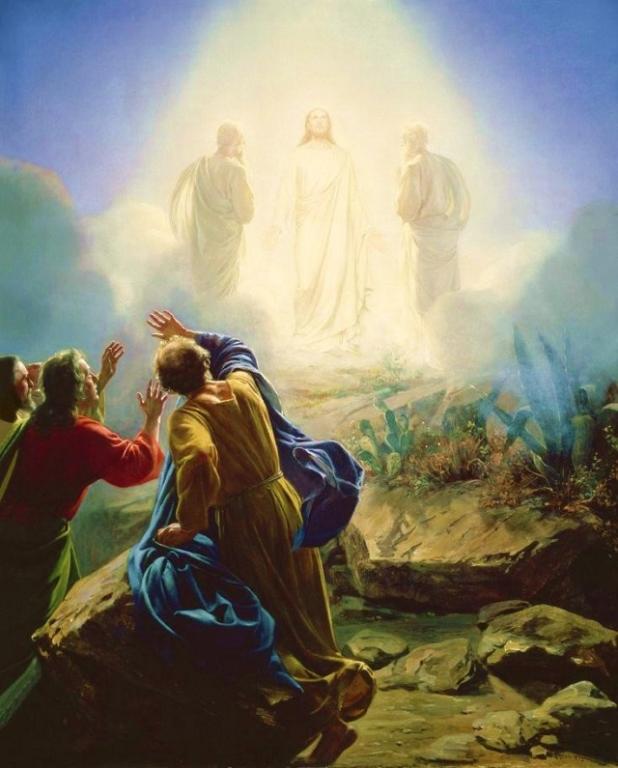
Photo credit: Transfiguration of Jesus [Elijah and Moses also appearing], by Carl Heinrich Bloch (1834-1890) [public domain / Wikimedia Commons]

Summary: One of a series of posts documenting the Catholic apologetics efforts of Johann Eck (1486-1543) against Protestantism. This entry addresses veneration of saints.
Previous Post
June 4, 2024
Eck vs. Protestantism Chronicles: Satisfaction
Next Post
June 5, 2024 Luther: I Was a Better Christian as a Catholic
Recent Comments
"Special pleading, and not a serious response to my arguments . . ."
Is Venerating Men & Angels Worship? ..."
""no man needs to teach us."Didn't you just teach us?"
Is Venerating Men & Angels Worship? ..."
""Catholics say they are the only church that can lead people into heaven."In fact, we ..."
Is Venerating Men & Angels Worship? ..."
"And lastly, I belong to no denomination and am free to serve God as He ..."
Is Venerating Men & Angels Worship? ..."
Browse Our Archives
Select a Category & Last Things About Me Anti-Catholicism Atheism & Agnosticism Baptism and Sacramentalism Bible and Tradition Blessed Virgin Mary Books by Dave Armstrong C. S. Lewis Calvinism & General Protestantism Catholic Apologetics Catholic Apologists Catholic conversion Catholic converts Christmas Church (Ecclesiology) Church History Conversion and Converts Development of Doctrine Eastern Orthodoxy Ecumenism & Christian Unity Eucharist & Liturgy Fathers of the Church French Translations G. K. Chesterton Hell Hell & Satan Hell & Satan & Last Things Heresies & Comparative Religion Holistic Health Inquisition & Crusades & Scandals James White Jews & Judaism & Old Testament John Calvin John Henry Newman Liberal / Modernist Theology Life Issues Literary Resume Lutheranism Mariology Martin Luther Music Orthodoxy Papacy & Infallibility Personal Page Philosophy & Science Political & Ethical & Moral Issues Protestant Persecution & Intolerance Protestantism Purgatory Purgatory & Penance Romantic & Imaginative Theology Saints & Purgatory & Penance Salvation Salvation & Justification Satan & Last Things Sexuality and Gender Issues Spanish Translations Traditionalism vs. Radical Catholic Reactionaries Traducciones al español / tradução para português Trinitarianism & Christology Uncategorized Videos
Select a Month October 2026 September 2026 August 2026 July 2026 June 2026 May 2026 April 2026 March 2026 February 2026 January 2026 December 2025 November 2025 October 2025 September 2025 August 2025 July 2025 June 2025 May 2025 April 2025 March 2025 February 2025 January 2025 December 2024 November 2024 October 2024 September 2024 August 2024 July 2024 June 2024 May 2024 April 2024 March 2024 February 2024 January 2024 December 2023 November 2023 October 2023 September 2023 August 2023 July 2023 June 2023 May 2023 April 2023 March 2023 February 2023 January 2023 December 2022 November 2022 October 2022 September 2022 August 2022 July 2022 June 2022 May 2022 April 2022 March 2022 February 2022 January 2022 December 2021 November 2021 October 2021 September 2021 August 2021 July 2021 June 2021 May 2021 April 2021 March 2021 February 2021 January 2021 December 2020 November 2020 October 2020 September 2020 August 2020 July 2020 June 2020 May 2020 April 2020 March 2020 February 2020 January 2020 December 2019 November 2019 October 2019 September 2019 August 2019 July 2019 June 2019 May 2019 April 2019 March 2019 February 2019 January 2019 December 2018 November 2018 October 2018 September 2018 August 2018 July 2018 June 2018 May 2018 April 2018 March 2018 February 2018 January 2018 December 2017 November 2017 October 2017 September 2017 August 2017 July 2017 June 2017 May 2017 April 2017 March 2017 February 2017 January 2017 December 2016 November 2016 October 2016 September 2016 August 2016 July 2016 June 2016 May 2016 April 2016 March 2016 February 2016 January 2016 December 2015 November 2015 October 2015 September 2015 August 2015 July 2015 June 2015 May 2015 April 2015 March 2015 February 2015 January 2015 December 2014 November 2014 October 2014 September 2014 August 2014 July 2014 June 2014 April 2014 March 2014 February 2014 January 2014 December 2013 November 2013 October 2013 September 2013 August 2013 July 2013 June 2013 April 2013 March 2013 February 2013 January 2013 December 2012 November 2012 October 2012 September 2012 August 2012 July 2012 June 2012 May 2012 April 2012 March 2012 February 2012 January 2012 December 2011 November 2011 October 2011 September 2011 August 2011 July 2011 June 2011 April 2011 March 2011 February 2011 October 2010 September 2010 August 2010 July 2010 April 2010 March 2010 December 2009 October 2009 August 2009 July 2009 June 2009 May 2009 March 2009 February 2009 October 2008 September 2008 April 2008 March 2008 February 2008 January 2008 December 2007 November 2007 October 2007 May 2007 March 2007 February 2007 January 2007 November 2006 October 2006 September 2006 August 2006 July 2006 June 2006 May 2006 April 2006 March 2006 February 2006 October 2005 June 2005 April 2005 February 2005 July 2004 May 2004 April 2004
Follow Us!
TAKE THE
Religious Wisdom Quiz
What does the Bible say about greed?
Select your answer to see how you score.
It leads to ruin It is always wise It is best It helps you win
Books by This Author Books by Dave Armstrong
Related posts from Biblical Evidence for Catholicism

Bible & Catholicism on Mortal Sin (vs. John...
Biblical Evidence for Catholicism

Does Catholic Intercession of Saints Require Omniscience?
Biblical Evidence for Catholicism

Capabilities of Heavenly Saints: Protestant Commentaries
Biblical Evidence for Catholicism

Revelation 5 & 8 (Intercession of Saints &...
Biblical Evidence for Catholicism
TRENDING AT PATHEOS Catholic

Janie Learns the Way of the Cross: A...
Teaching children about Jesus' Passion can be challenging. Many parents and educators...

Looking For Good Catholic Writing - October 2026
He alone extends the heavens, and he walks upon the waves of...

In "Irreplaceable," our book on vocation and technology, Trevor Sutton and I...

I was strolling through the top floor of the brand new Parthenon...

What Does Gêvâh Mean For Kimberley Guifoyle &...
This week, a lot of the news is focused on Kimberly Guilfoyle....

INNER CIRCLE: Profound Mystery (Of Christ In All...
Ephesians 5:31-32 “For this reason, a man will leave his father and...
view all Catholic blogs
What Are Your Thoughts?leave a comment
Ad-Free & Subscriber Log-In Subscription Support
- About Us
- 2026 Calendar
- Videos
- Podcasts
- Library of World Religions
- Faith In Media Tracker
- Advertise With Us
- Write for Us
- Privacy Policy
- Terms of Service
- Do Not Sell My Data
- Contact Us
- Radiant Digital
- Manage Newsletter Subscriptions
- Unsubscribe From Notifications
- Sitemap
Copyright 2008-2026, Patheos. All rights reserved.
Subscription Support Ad-Free & Subscriber Log-In
Follow Patheos