
BuddhistCatholicContemplativeEvangelicalGeneral ChristianHinduJewishLatter-day SaintMuslimNew VisionsProgressive Christian
Beliefs
- Buddhist
- Catholic
- Contemplative
- Evangelical
- General Christian
- Hindu
- Jewish
- Latter-day Saint
- More Voices
- Muslim
- New Visions
- Pagan
- Progressive Christian
Topics
- Religion News
- Food and Religion
- Sports and Religion
- Religious Art
- Religious Music and Entertainment
- Religious Events
- History and Religion
- Style and Religion
- Politics and Religion
- Women in Religion
- Recreation Outdoors and Religion
- Business Finance and Religion
- Careers Workplace and Religion
- Education and Religion
- Family Parenting and Religion
- Health Fitness and Religion
- Home and Religion
- Relationships and Religion
- Technology and Religion
- Travel and Religion
Columnists
- Buddhist Columnists
- Business Finance and Religion Columnists
- Careers Workplace and Religion Columnists
- Catholic Columnists
- Contemplative Columnists
- Education and Religion Columnists
- Evangelists Columnists
- Family Parenting and Religion Columnists
- General Christian Columnists
- Health Fitness and Religion Columnists
- Hindu Columnists
- History and Religion Columnists
- Home and Religion Columnists
- Jewish Columnists
- More Voices Columnists
- Latter Day Columnists
- Muslim Columnists
- New Visions Columnists
- Nonreligious Columnists
- Pagan Columnists
- Politics and Religion Columnists
- Progressive Columnists
- Recreation Outdoors and Religion Columnists
- Relationships and Religion Columnists
- Religion News Columnists
- Religious Art Columnists
- Religious Events Columnists
- Religious Music and Entertainment Columnists
- Sports and Religion Columnists
- Style and Religion Columnists
- Technology and Religion Columnists
- Travel and Religion Columnists
- Women in Religion Columnists
Resource Library
- 2026 Calendar
- Library of World Religions
- The 100 Most Holy Places on Earth
- Patheos Answers
- Podcasts
- Videos
- Faith Leaders Database
- Anglican Episcopalian
- Bahai
- Baptist
- Buddhism
- Christianity
- Confucianism
- Eastern Orthodoxy
- Hinduism
- Holiness and Pentecostal
- ISKCON
- Islam
- Judaism
- Lutheran
- Methodist
- The Church of Jesus Christ of Latter-day Saints
- New Age
- Paganism
- Presbytarian and Reformed
- Protestantism
- Religion Behind the Scenes
- Roman Catholic
- Scientology
- Shia Islam
- Sikhism
- Sufism
- Sunni Islam
- Taoism
- Zen
- See all religions
Research Tools
 Ad-Free & Subscriber Log-In Subscription Support
Ad-Free & Subscriber Log-In Subscription Support
Follow Patheos 

- Trending:
- Forgiveness
- |
- Marriage
- |
- Consciousness
- |
- Death Penalty
- |
- Election
- |
- Halloween

-
About
-
Catholic Apologetics
-
Church History
-
Great Apologists
-
Christian Worldview
-
Protestantism & Misc.
- Home
- Catholic
- History and Religion
- Eck vs. Protestantism Chronicles: Satisfaction
Eck vs. Protestantism Chronicles: Satisfaction
Last updated on: June 4, 2024 at 5:46 pm by Dave Armstrong
Eck vs. Protestantism Chronicles: Satisfaction 2024-06-04T17:46:33-04:00 Dave Armstrong
Patheos Explore the world's faith through different perspectives on religion and spirituality! Patheos has the views of the prevalent religions and spiritualities of the world.
“Please Hit ‘Subscribe’”! If you have received benefit from this or any of my other 4,600+ articles, please follow this blog by signing up (with your email address) on the sidebar to the right (you may have to scroll down a bit), above where there is an icon bar, “Sign Me Up!”: to receive notice when I post a new blog article. This is the equivalent of subscribing to a YouTube channel. Please also consider following me on Twitter / X and purchasing one or more of my 55 books. All of this helps me get more exposure, and (however little!) more income for my full-time apologetics work. Thanks so much and happy reading!
Johann Eck (1486-1543) was a German Catholic theologian, who was arguably one of Martin Luther’s two most important and formidable debate opponents, along with Erasmus (I’ve compiled several of his devastating replies to Luther as well). He was ordained as a priest in 1508 and in 1510 was installed as a professor of theology at the University of Ingolstadt in Bavaria: which lasted for thirty years. He mastered both Greek and Hebrew and had a prodigious memory, boundless energy, and very considerable debating skills. He famously engaged Luther for eighteen days in the Leipzig Disputation of July 1519.
Eck’s argumentation might be said to be one of the quintessential examples of the Catholic theological and polemical response to the Protestant Revolt up to the opening of the Council of Trent in 1545. This is one of many excerpts from his best-known and principal volume, Enchiridion of Commonplaces Against Luther and Other Enemies of the Church. It first appeared in 1529 and eventually went through 91 editions. I will be using a later edition from 1541 (translated by Ford Lewis Battles, Grand Rapids, Michigan: Baker Book House, 1979; now in the public domain).
Eck’s words will be in black; my interjections in blue, and citations from Luther and other famous Protestants in green. I use RSV for scriptural citations.
***
Axiom 1: After guilt has been forgiven through contrition and absolution, the penitent ought to make satisfaction for penalty.
Adam doubtless was repentant after guilt, yet at that point he was not threatened with a penalty by God. “In whatever day you shall eat of it, you shall die the death” [Gen 2:17]. Indeed after his transgression of the divine commandment, God added over and above the threatened penalty of death something else, saying to Adam: “Because you have hearkened to the voice of your wife and have eaten of the tree of which I commanded you that you should not eat, cursed is the earth in your work; with labor and toil shall you eat thereof all the days of your life. Thorns and thistles shall it bring forth to you; and you shall eat the herbs of the earth. In the sweat of your face shall you eat bread until you return to earth out of which you were taken, for dust you are, and into dust you shall return” [Gen 3:17-19].
“To the woman also he said: I will multiply your sorrow and your conception; in sorrow shall you bring forth children, and you shall be under your husband’s power,” [Gen 3:16] etc. And just as all of us have sinned in Adam so all of us die in him [cf Rom 5:12], also with the guilt of original sin, for which death and the other penalties were inflicted, remitted in baptism.
“David, after having committed adultery and murder, repentant, said to Nathan: ‘I have sinned against the Lord.’ And Nathan said to him: ‘The Lord also has put away your sin'” [2 K 12:13]. Now sin is put away, not in order to put away guilt, but for penalty. . . .
And there are many other examples, which point out and prove the same thing: Miriam, Moses’ sister, after her guilt in murmuring against Moses was forgiven, was stricken with leprosy; nor on that very spot when Moses prayed to the Lord for her that she might be healed, was she cleansed, but when the Lord commanded that for seven days, as a penalty for her sin, she be excluded from the camp, for that time the leprosy remained [Num 12:10-15].
God foretold that Moses and Aaron would not enter or lead the Israelite people into the promised land, on account of the sin of disbelief at the water of contradiction [Num 20:24] although doubtless this sin was forgiven these holy men. Joseph’s brothers confessed that they had justly suffered for their misdeed committed against their brother, “saying among themselves: We have deservedly suffered, because we have sinned against our brother,” etc. [Gen 42:21], Eli, because he reproved the sins of his sons less than he ought, “fell from his stool backwards and broke his neck, and died” [1 Kings 4:18]. David’s guilt, incurred by taking a census of the people, although forgiven him by the mercy of God for which he prayed, was attended by a very savage pestilence. He, being penitent, and commanded by the prophet, Gad, to make satisfaction, erected an altar and made an offering of fifty shekels [2 Sam 24:10ff; cf 1 Chr 21:7ff],
The Ninevites fasted and covered themselves with sackcloth, etc. [Jonah 3:5]. “Ahab . . . fasted, covered himself with goat’s hair, slept in sackcloth, walked with his head bowed down and placated the Lord” [1 K 21:27]. “If that nation shall repent of their evil, I also will repent of the evil that I have thought to do to them” [Jer 18:8].
According to the measure of the sin shall the measure also of the stripes be” [Deut 25:2].
“As much as she has glorified herself and lived in delicacies, so much torment and sorrow give to her” [Rev 18:7].
“Be not without fear about sin forgiven and say not: The mercy of the Lord is great, he will have mercy on the multitude of my sins” [Ecclus 5:5f].
Christ said to the cured paralytic who had been in his infirmity for thirty-eight years: “Behold, you have been made whole. Now sin no more, lest anything worse come upon you” [Jn 5:14]. In this Jesus manifestly hints that this infirmity lasting so many years was inflicted as a penalty for a sin long ago (something by no means incredible) wiped out through the patience of the infirm man and the mercy of God.
Axiom 2: Works of Satisfaction, pure prayer, fasting, alms, [and the restitution which is] enjoined upon the confessant, pertain to the sacrament of penance: these one manifestly comes upon from the Holy Scriptures.
In Leviticus [c. 4, 5, 6] the Lord commands various sacrifices to be offered for the various sins of priest, leader and people.
“Turn to me with your whole heart, in fasting and weeping” [Joel 2:12]. Daniel advised Nebuchadnezzar: “Make recompense for your sins with alms, and your iniquities with merciful acts toward the poor” [Dan 4:24].
The Ninevites repentant at the preaching of Jonah,” . . . putting on sackcloth, fasted together with their animals, and praying, cried out to the Lord . . . And God saw their works . . . and had mercy upon them” [Jonah 5:5, 10]. Our Savior Christ, praising them, prefers them to the unrepentant Jews, saying: “The men of Nineveh shall rise in the judgment with this generation, (that is, of those obstinate ones not making satisfaction for their sins) and shall condemn it, because they repented at the preaching of Jonah …” [Lk 11:32].
John the Baptist urged the people saying: “Bring forth fruits worthy of penance” [Lk 3:8]. Christ upbraided the cities in which very many miracles, were done because they had not repented: “Woe to you, Corozaim Woe to you Bethsaida, for if in Tyre and Sidon had been wrought the miracles that have been wrought in you they had long ago done penance in sackcloth and ashes” [Mt 11:21].
“Unless you do penance, you shall all likewise perish,” just as “those eighteen upon whom the tower fell in Siloe and killed them” [Lk 13:4f]. “In all things let us exhibit ourselves as the ministers of God, in much fasting,” etc. [2 Cor 6:4]. Therefore it is clear that satisfaction is truly necessary for the penitent. [This also is effectively proved by the same scriptures by which Luther in vain tries to disprove it.]
[Objection] John the Baptist, sent to preach repentance, taught only the observance of God’s commandments, saying: “Do nothing more than that which is appointed you” [Lk 3:13], making no mention of satisfaction.
*
[Reply] First of all we deny that John did not teach satisfaction. Surely he enjoined alms which pertain to satisfaction, saying, He who has two coats, let him give to him who has none and he who has food, let him do in like manner” [Lk 3:11]. Indeed those baptized by John confess their sins that according to the quality of the sins penance might be determined for them. Hence he taught, bring forth fruits worthy of penance which fruits arise through works of satisfaction. John did not preach mere repentance but a baptism of repentance, not his own, but of Christ for the remission of sins. Therefore he was not obligated to make more express mention of satisfaction to those baptized by him and those thereafter to be baptized by the baptism of Christ (in which at the same time both guilt and penalty are remitted).
[Objection] Micah says: “I will show you, 0 man, what is good, and what the Lord requires of you: Verily, to do judgment, and to love mercy, and to walk carefully with your God,” etc. [Mic 6:8]. And he corroborates this, because the Prophet here makes fun of those who wish to make satisfaction through works, saying: “What shall I offer to the Lord that is worthy? . . . Shall I offer holocausts unto him, and yearling calves? Can the Lord be appeased with thousands of rams, or with many thousands of he-goats?” etc. [Mic 6:6f] . As if he did not say this.
[Reply] Micah in these words does not exclude but rather includes works of satisfaction. That is, by judgment is understood the severe condemnation of oneself, through loving mercy, through exercising works of alms and piety out of love for the poor, and through walking carefully with God, the observance of divine commandments. Augustine agrees, saying: “In this repentance each one ought to exercise greater severity in himself in order that having been judged by himself he may not be judged by the Lord; so speaks the Apostle [1 Cor 11:31f]” (De Poenitentlae Medicina, c. 2].
*
Nor does Micah make fun of those who wish to make satisfaction to God through good works, but he means that sacrifices and holocausts of animals were not sufficient nor did they avail for the wiping out of sins. “For it is impossible with the blood of goats and bullocks sin should be taken away” [Heb 10:4]. And in themselves these were not pleasing or acceptable to God. For through the prophet he says “I desire not holocausts of rams and of bullocks and blood of calves and lambs” [Is 1:11]. Yet he wished and indeed commanded these things to be offered to him also for sins, not because these sacrifices themselves cleansed from sins, but because certain ones served as witnesses to the faith concerning Christ who was to suffer, which cleansed from sins. And the law itself hints at this from the manner of speaking, for it says that in the offering of victims for sin the priest will pray for it and it will be forgiven him as if the sin were forgiven, not from the force of the sacrifices, but from the faith and devotion of those making the offering.
*
[Objection] Christ by his passion and death made satisfaction for our sins. Yet the passion of Christ was sufficient not only for removing sins, but also for wiping out punishments. “For he has borne our infirmities,” says the prophet, “and carried our sorrows” [Is 53:4]. Therefore, etc.
*
[Reply] The passion of Christ is sufficient to remove all guilt of punishment not only eternal but also temporal and according to the mode whereby man participates in the power of Christ’s passion and receives also absolution from the guilt of punishment.
*
Moreover in baptism man participates totally in the power of Christ s passion (as through water and the Holy Spirit having died together with Christ to sin, and in him regenerated to new life). And for that reason in baptism man obtains remission of all guilt of punishment, but in penance man obtains the power of Christ’s passion according to the mode of his very own acts which are the matter of penance. Hence the Apostle urges the penitent ones saying: “For as you have yielded your members to serve uncleanness and iniquity, unto iniquity, so now yield your members to serve justice unto sanctification” [Rom 6:19]. And the prophet says: “For as it was your mind to go astray from God, so when you return again you shall seek him ten times as much” [Bar 4:28], And for this reason, not immediately through the first act of penitence whereby blame is remitted, is the guilt of punishment released. But you complete all the parts of penance. Yet we admit how much contrition anyone can have in order to wipe away at one and the same time all blame and punishment. But this, as yet given to few, is not certain to whom it is given.
*
It is to be said that God perfectly cures the whole man. Moreover sometimes he did this suddenly as when he restored Peter’s mother-in-law immediately to perfect health [Lk 4:38f]. But sometimes he did so consecutively as for example, the blind man enlightened by the Lord was first restored to imperfect vision whereupon he said: “I see men walking like trees,” then he was perfectly restored so that he saw all things clearly [Mk 8:24]. And thus also he nevertheless spiritually converts the heart of men with such great agitation, that suddenly it perfectly achieves spiritual health, not only with guilt forgiven, but with all the rest of sin removed, as is clear concerning Mary Magdalene [Lk 7:7]. He previously forgives guilt through operating grace and afterwards through cooperating grace he removes in succession the guilt of the penalty and the other remnants of sins. It. does not come about therefore from Christ’s act that when guilt is forgiven, at the same time all punishment is forgiven, but rather the contrary, etc.
*
*
***
*
Practical Matters: Perhaps some of my 4,600+ free online articles (the most comprehensive “one-stop” Catholic apologetics site) or fifty-five books have helped you (by God’s grace) to decide to become Catholic or to return to the Church, or better understand some doctrines and why we believe them.
Or you may believe my work is worthy to support for the purpose of apologetics and evangelism in general. If so, please seriously consider a much-needed financial contribution. I’m always in need of more funds: especially monthly support. “The laborer is worthy of his wages” (1 Tim 5:18, NKJV). 1 December 2021 was my 20th anniversary as a full-time Catholic apologist, and February 2022 marked the 25th anniversary of my blog.
PayPal donations are the easiest: just send to my email address: [email protected]. Here’s also a second page to get to PayPal. You’ll see the term “Catholic Used Book Service”, which is my old side-business. To learn about the different methods of contributing (including Zelle), see my page: About Catholic Apologist Dave Armstrong / Donation Information. Thanks a million from the bottom of my heart!
*
***
*
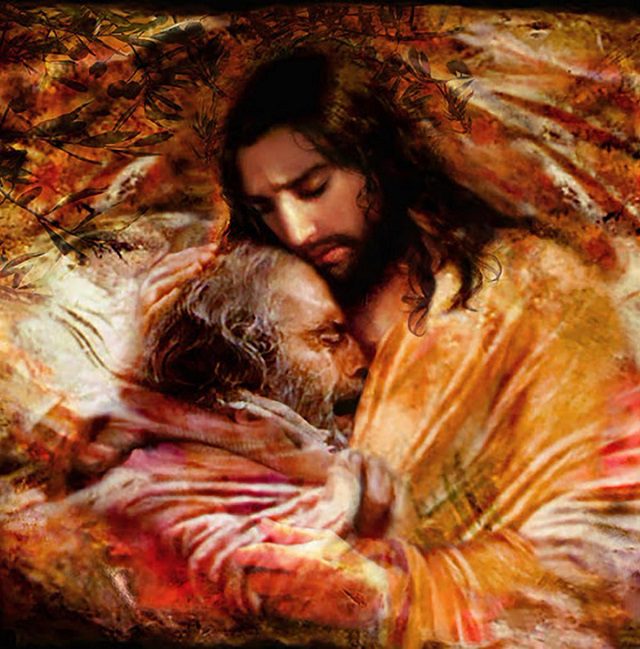
Photo credit: painting on the “Reconciliation” page for St. Helena Catholic Church, Amite, Louisiana.
Summary: One of a series of posts documenting the Catholic apologetics efforts of Johann Eck (1486-1543) against various Protestants. This entry addresses satisfaction.
Previous Post

June 3, 2024
Eck Vs. Protestantism Chronicles: Confession
Next Post
June 4, 2024 Eck Vs. Protestantism Chronicles: Veneration of Saints
Recent Comments
"And lastly, I belong to no denomination and am free to serve God as He ..."
Is Venerating Men & Angels Worship? ..."
"And obeisance doesn't mean "worship". It means "respect", "obey", or "submission". Very weird that you ..."
Is Venerating Men & Angels Worship? ..."
"Many of these scriptures you have noted have been taken out of context. With Daniel, ..."
Is Venerating Men & Angels Worship? ..."
""Protestants often point out that Jesus is now triumphant in heaven and object to Catholics ..."
Three More Anti-Catholic Lies About Catholicism ..."
Browse Our Archives
Select a Category & Last Things About Me Anti-Catholicism Atheism & Agnosticism Baptism and Sacramentalism Bible and Tradition Blessed Virgin Mary Books by Dave Armstrong C. S. Lewis Calvinism & General Protestantism Catholic Apologetics Catholic Apologists Catholic conversion Catholic converts Christmas Church (Ecclesiology) Church History Conversion and Converts Development of Doctrine Eastern Orthodoxy Ecumenism & Christian Unity Eucharist & Liturgy Fathers of the Church French Translations G. K. Chesterton Hell Hell & Satan Hell & Satan & Last Things Heresies & Comparative Religion Holistic Health Inquisition & Crusades & Scandals James White Jews & Judaism & Old Testament John Calvin John Henry Newman Liberal / Modernist Theology Life Issues Literary Resume Lutheranism Mariology Martin Luther Music Orthodoxy Papacy & Infallibility Personal Page Philosophy & Science Political & Ethical & Moral Issues Protestant Persecution & Intolerance Protestantism Purgatory Purgatory & Penance Romantic & Imaginative Theology Saints & Purgatory & Penance Salvation Salvation & Justification Satan & Last Things Sexuality and Gender Issues Spanish Translations Traditionalism vs. Radical Catholic Reactionaries Traducciones al español / tradução para português Trinitarianism & Christology Uncategorized Videos
Select a Month October 2026 September 2026 August 2026 July 2026 June 2026 May 2026 April 2026 March 2026 February 2026 January 2026 December 2025 November 2025 October 2025 September 2025 August 2025 July 2025 June 2025 May 2025 April 2025 March 2025 February 2025 January 2025 December 2024 November 2024 October 2024 September 2024 August 2024 July 2024 June 2024 May 2024 April 2024 March 2024 February 2024 January 2024 December 2023 November 2023 October 2023 September 2023 August 2023 July 2023 June 2023 May 2023 April 2023 March 2023 February 2023 January 2023 December 2022 November 2022 October 2022 September 2022 August 2022 July 2022 June 2022 May 2022 April 2022 March 2022 February 2022 January 2022 December 2021 November 2021 October 2021 September 2021 August 2021 July 2021 June 2021 May 2021 April 2021 March 2021 February 2021 January 2021 December 2020 November 2020 October 2020 September 2020 August 2020 July 2020 June 2020 May 2020 April 2020 March 2020 February 2020 January 2020 December 2019 November 2019 October 2019 September 2019 August 2019 July 2019 June 2019 May 2019 April 2019 March 2019 February 2019 January 2019 December 2018 November 2018 October 2018 September 2018 August 2018 July 2018 June 2018 May 2018 April 2018 March 2018 February 2018 January 2018 December 2017 November 2017 October 2017 September 2017 August 2017 July 2017 June 2017 May 2017 April 2017 March 2017 February 2017 January 2017 December 2016 November 2016 October 2016 September 2016 August 2016 July 2016 June 2016 May 2016 April 2016 March 2016 February 2016 January 2016 December 2015 November 2015 October 2015 September 2015 August 2015 July 2015 June 2015 May 2015 April 2015 March 2015 February 2015 January 2015 December 2014 November 2014 October 2014 September 2014 August 2014 July 2014 June 2014 April 2014 March 2014 February 2014 January 2014 December 2013 November 2013 October 2013 September 2013 August 2013 July 2013 June 2013 April 2013 March 2013 February 2013 January 2013 December 2012 November 2012 October 2012 September 2012 August 2012 July 2012 June 2012 May 2012 April 2012 March 2012 February 2012 January 2012 December 2011 November 2011 October 2011 September 2011 August 2011 July 2011 June 2011 April 2011 March 2011 February 2011 October 2010 September 2010 August 2010 July 2010 April 2010 March 2010 December 2009 October 2009 August 2009 July 2009 June 2009 May 2009 March 2009 February 2009 October 2008 September 2008 April 2008 March 2008 February 2008 January 2008 December 2007 November 2007 October 2007 May 2007 March 2007 February 2007 January 2007 November 2006 October 2006 September 2006 August 2006 July 2006 June 2006 May 2006 April 2006 March 2006 February 2006 October 2005 June 2005 April 2005 February 2005 July 2004 May 2004 April 2004
Follow Us!
TAKE THE
Religious Wisdom Quiz
What was Paul’s profession before becoming an apostle?
Select your answer to see how you score.
Tentmaker Tax Collector Fisherman Carpenter
Books by This Author Books by Dave Armstrong
Related posts from Biblical Evidence for Catholicism

Bible & Catholicism on Mortal Sin (vs. John...
Biblical Evidence for Catholicism

Does Catholic Intercession of Saints Require Omniscience?
Biblical Evidence for Catholicism

Capabilities of Heavenly Saints: Protestant Commentaries
Biblical Evidence for Catholicism

Revelation 5 & 8 (Intercession of Saints &...
Biblical Evidence for Catholicism
TRENDING AT PATHEOS Catholic

I was strolling through the top floor of the brand new Parthenon...

What Does Gêvâh Mean For Kimberley Guifoyle &...
This week, a lot of the news is focused on Kimberly Guilfoyle....

INNER CIRCLE: Profound Mystery (Of Christ In All...
Ephesians 5:31-32 “For this reason, a man will leave his father and...

Do Not Rejoice When Your Enemy Falls: The...
Turning an execution into a public spectacle is a disturbing expression of...

'The Chosen' S6 Trailer: The Passion Gets Very...
Not many watching 'The Chosen' worry about spoilers, but just because they...

The purpose-driven labor priest
A labor activist reads Rick Warren and it gets me wondering about...
view all Catholic blogs
What Are Your Thoughts?leave a comment
Ad-Free & Subscriber Log-In Subscription Support
- About Us
- 2026 Calendar
- Videos
- Podcasts
- Library of World Religions
- Faith In Media Tracker
- Advertise With Us
- Write for Us
- Privacy Policy
- Terms of Service
- Do Not Sell My Data
- Contact Us
- Radiant Digital
- Manage Newsletter Subscriptions
- Unsubscribe From Notifications
- Sitemap
Copyright 2008-2026, Patheos. All rights reserved.
Subscription Support Ad-Free & Subscriber Log-In
Follow Patheos