
BuddhistCatholicContemplativeEvangelicalGeneral ChristianHinduJewishLatter-day SaintMuslimNew VisionsProgressive Christian
Beliefs
- Buddhist
- Catholic
- Contemplative
- Evangelical
- General Christian
- Hindu
- Jewish
- Latter-day Saint
- More Voices
- Muslim
- New Visions
- Pagan
- Progressive Christian
Topics
- Religion News
- Food and Religion
- Sports and Religion
- Religious Art
- Religious Music and Entertainment
- Religious Events
- History and Religion
- Style and Religion
- Politics and Religion
- Women in Religion
- Recreation Outdoors and Religion
- Business Finance and Religion
- Careers Workplace and Religion
- Education and Religion
- Family Parenting and Religion
- Health Fitness and Religion
- Home and Religion
- Relationships and Religion
- Technology and Religion
- Travel and Religion
Columnists
- Buddhist Columnists
- Business Finance and Religion Columnists
- Careers Workplace and Religion Columnists
- Catholic Columnists
- Contemplative Columnists
- Education and Religion Columnists
- Evangelists Columnists
- Family Parenting and Religion Columnists
- General Christian Columnists
- Health Fitness and Religion Columnists
- Hindu Columnists
- History and Religion Columnists
- Home and Religion Columnists
- Jewish Columnists
- More Voices Columnists
- Latter Day Columnists
- Muslim Columnists
- New Visions Columnists
- Nonreligious Columnists
- Pagan Columnists
- Politics and Religion Columnists
- Progressive Columnists
- Recreation Outdoors and Religion Columnists
- Relationships and Religion Columnists
- Religion News Columnists
- Religious Art Columnists
- Religious Events Columnists
- Religious Music and Entertainment Columnists
- Sports and Religion Columnists
- Style and Religion Columnists
- Technology and Religion Columnists
- Travel and Religion Columnists
- Women in Religion Columnists
Resource Library
- 2026 Calendar
- Library of World Religions
- The 100 Most Holy Places on Earth
- Patheos Answers
- Podcasts
- Videos
- Faith Leaders Database
- Anglican Episcopalian
- Bahai
- Baptist
- Buddhism
- Christianity
- Confucianism
- Eastern Orthodoxy
- Hinduism
- Holiness and Pentecostal
- ISKCON
- Islam
- Judaism
- Lutheran
- Methodist
- The Church of Jesus Christ of Latter-day Saints
- New Age
- Paganism
- Presbytarian and Reformed
- Protestantism
- Religion Behind the Scenes
- Roman Catholic
- Scientology
- Shia Islam
- Sikhism
- Sufism
- Sunni Islam
- Taoism
- Zen
- See all religions
Research Tools
 Ad-Free & Subscriber Log-In Subscription Support
Ad-Free & Subscriber Log-In Subscription Support
Follow Patheos 

- Trending:
- Forgiveness
- |
- Marriage
- |
- Consciousness
- |
- Death Penalty
- |
- Election
- |
- Halloween

-
About
-
Catholic Apologetics
-
Church History
-
Great Apologists
-
Christian Worldview
-
Protestantism & Misc.
- Home
- Catholic
- History and Religion
- Did Grisar Characterize Luther as a “Psychopath”?
Did Grisar Characterize Luther as a “Psychopath”?
Last updated on: June 6, 2026 at 12:04 am by Dave Armstrong
Did Grisar Characterize Luther as a “Psychopath”? 2026-06-06T00:04:17-04:00 Dave Armstrong
Patheos Explore the world's faith through different perspectives on religion and spirituality! Patheos has the views of the prevalent religions and spiritualities of the world.
James Swan’s Utterly Unfounded, Outrageous Misrepresentations of the Great Catholic Historian
“Please Hit ‘Subscribe’”! If you have received benefit from this or any of my other 4,600+ articles, please follow this blog by signing up (with your email address) on the sidebar to the right (you may have to scroll down a bit), above where there is an icon bar, “Sign Me Up!”: to receive notice when I post a new blog article. This is the equivalent of subscribing to a YouTube channel. Please also consider following me on Twitter / X and purchasing one or more of my 55 books. All of this helps me get more exposure, and (however little!) more income for my full-time apologetics work. Thanks so much and happy reading!
***
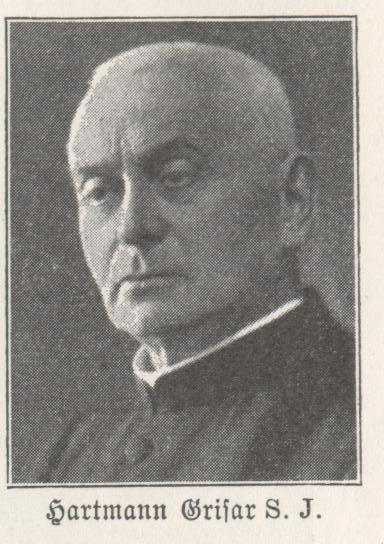
Anti-Catholic Reformed Protestant polemicist and self-proclaimed Luther expert James Swan made the following ludicrous remark about the Catholic historian Hartmann Grisar (1845-1932), author of the six-volume biography, Luther [see volumes one / two / three / four / five / six]:
Grisar basically categorizes Luther[‘s] neurosis with pathological manic-depressive psychology. . . . Grisar wants you to pity him for being a psychopath. (“Using Psychohistory to Interpret Luther,” Boors All, 6-6-06)
The remarkable thing here is the equation of manic-depression (now usually known as bipolar disorder) with being a “psychopath.” One wonders whether this flows from Swan’s ignorance of psychology and mental illness or if he actually believes this is what Grisar held (or both). As one who majored in sociology, minored in psychology, and who has a long personal experience with many people who suffer from bipolar disorder, I know a little bit about this. I certainly know enough to not equate bipolar with being a psychopath or sociopath. We know that it is mostly caused by a chemical imbalance, which is why it’s successfully treated with many different drugs. Swan’s extreme characterization was likely parroting someone else whom he cited in another article specifically about Grisar: Leonard Swidler, who wrote:
For the Jesuit Hartmann Grisar, Luther was not so much a morally evil man as a mentally sick man. We should turn not our hate but our pity toward Luther the psychopath, who was subject to illusory visits by the devil and terrible fits of depression. (“Catholic Reformation Scholarship in Germany,” Journal of Ecumenical Studies, 2 1965; 190-191)
Swan claimed that Grisar was a psychopath three other times, too:
Grisar was a Jesuit historian who used Freudian psychology to arrive at the assessment that Luther was a monk obsessed with the lust of the flesh and a pathological manic-depressive personality. Luther’s view of justification by faith alone came from his own immorality—that in order to justify his loose life and to excuse his renunciation of the monastic ideal, Luther denied salvation with works. Luther was a neurasthenic and a psychopath. (5-29-06)
a psychopath (Grisar), (6-17-06)
men like . . . Grisar (Luther was a psychopath), . . . (6-24-06)
Merriam-Webster defines psychopath as:
a person having an egocentric and antisocial personality marked by a lack of remorse for one’s actions, an absence of empathy for others, and often criminal tendencies
It offers the following synonyms, among others: loon, maniac, nutter, sicko, loony, nut, psycho, wacko, crazy, lunatic, nutcase, and notes that the word dates back to 1885. Therefore, Grisar could have used the German equivalent of it (and presumably, Swidler and Swan thought that he did, in order to arrive at this opinion that he thought Luther was one). The term manic-depressive dates from 1902, according to Merriam-Webster, so Grisar could have used it as well, if this was what he thought.
*
Swan, in his article on Hartmann Grisar, cites and agrees with the assessment of Grisar made by the late well-known Luther scholar Eric Gritsch, who opined that Grisar deemed Luther to be “manic-depressive” (God’s Court Jester: Luther in Retrospect, Fortress Press, 1983, 146).
*
What I will do now is actually cite Grisar (what a novelty, huh?), rather than bloviate about his supposed beliefs, in order to see exactly how he characterized Luther in this respect. Is it warranted to claim that he classified Luther as a psychopath and treated him with contempt as some sort of lunatic or nut? No; and I will now proceed to prove that, over against Swan’s bigoted anti-Catholic nonsense and made-up fantasies.
*
Before I do that, I wanted to note that it’s nothing unusual for non-Catholic historians and biographers to express the notion that Luther suffered from — at the very least, severe recurring attacks of depression. I’ve addressed the topic several times:
*
Luther’s Projection of His Depression & Crises Onto St. Paul [6-1-06]
*
Did Luther Suffer from Recurring Depression? [7-4-07]
*
Was Luther a Neurotic? Protestant Biographers Say Yes [4-28-10]
*
David C. Steinmetz writes that “Luther continued to suffer periods of severe spiritual anxiety.” Roland Bainton, Luther’s most famous biographer, notes that “the recognition is inescapable that he had persistent . . . depressions . . . [which] may have had some physical basis . . . His whole life was a struggle against them, a fight for faith.” Richard Marius thinks Luther was “prone to melancholy — we would say depression, even . . . “clinical” depression . . .” Michael A. Mullett mentions Luther’s “recurrent bouts of depression.” The Cambridge Companion to Martin Luther, by Donald K. MacKim, cites “occasional bouts with what may tentatively be identified as clinical depression.”
Martin Brecht thinks that he was “an unstable man” who suffered repeated bouts of “emotional depression, combined with his spiritual Anfechtungen.” Martin E. Marty refers to “the decade [1535-1545] of his disease and depression.” Robert Herndon Fife cites Luther’s own words: “When I was first inducted into the monastery, it happened that I would always go about sad and depressed and could not shake off this melancholy,” and (in 1532) “Am I the only one to suffer the spirit of sadness?,” and writes about Luther’s “attacks of depression” and “hysterical symptoms” and “severe attacks of despair” that “followed him through life.” James MacKinnon refers to Luther’s “fits of dejection to which he was temperamentally subject.” Mark U. Edwards concludes: “That Luther suffered from severe illnesses and depression cannot be denied.” And he called him “a neurotic man.” R. C. Sproul makes reference to his “neurotic phobias.”
Certainly many more opinions along these lines could be produced. This is not “anti-Protestant prejudice”: although several older and far more polemical Catholic writers sadly fell into that (just as the extreme faction of anti-Catholic Protestants then and now were and are filled with rank insults and slanders towards Catholics). Such is the human condition. People lie about things that they don’t understand. So now back to Grisar and what he actually believed about Luther’s “psychology”:
Volume 1 of Luther:
*
In the monastery, . . . he no doubt remained subject to such fits of depression, . . . It is difficult to say how far the feeling of self-despair, which he mentions, had mastered him . . . (p. 8)
His state of fear, however, as already indicated, proceeded not merely from the numerous temptations of which he himself speaks, but also from his own inward depression, from an affection, partly psychical and partly physical, which often prostrated him in terror. . . . He imagined that during these fits, in which troubles of conscience also intervened, and which, according to his description, were akin to the pains of hell, he was forsaken by God, and sunk in the eerie night of the soul of which the mystics treat. He also considered them at an early period as a trial sent by God and intended to prepare him for higher things. (p. 125)
He also suffered greatly at times from inward commotion and darkening of the soul, due to fears regarding predestination, to a troubled conscience or to morbid depression, of which the cause was perhaps bodily rather than mental. (p. 237; my italics)
The last statement closely approaches a remarkably modern understanding of mental disorders (from a man writing in 1914, when psychology was in its infancy), as ultimately stemming primarily from bodily chemistry, as opposed to being purely a moral / mental phenomenon (lunatic / nutcase, etc.). This is why it’s such an outrage for Swan and others to characterize this great scholar as supposedly classifying Luther as a “psychopath.” Grisar is compassionate and understanding towards Luther; not derogatory and insulting. Swan does him a great injustice. Slander is a very serious sin. It’s the “bearing of false witness” in the Ten Commandments. Blessedly, we can see for ourselves what Grisar wrote, and not have to be dependent on Swan’s outlandish twisted distortions of same.
*
The word “manic” never appears; nor does “psychopath.”
*
Volume 2 of Luther:
In addition to his bodily ailments, the result more particularly of extreme nervous agitation, the indefatigable worker was over and again tormented with severe attacks of depression and sadness. They were in part due to the sad experiences with his followers and to the estrangement — now becoming more and more pronounced — of his party from the fanatical Anabaptists ; in part also to the alarming reports of the seditious risings of the peasants . . . (p. 165)
He was at that time dominated by fear and dread, partly owing to the proceedings at the Reichstag, partly on account of the unfortunate termination of the religious conference with Zwingli at Marburg, where no understanding had been reached regarding the chief point under dispute, and partly also because in his solitude his old inward ” temptations ” and mental depression were again tormenting him. He was also suffering much from the result of over-work. A malady due to nervous exhaustion had, in 1527, so enfeebled him as to bring him to the verge of the grave. The malady now returned with similar, though less severe, symptoms. The spiritual desolation and fear, which were the consequence of his doubts, now again assailed him as they had done after his previous illness in 1527. Of this condition, Melanchthon, to whom it was familiar enough, wrote to Dietrich, that one could not hope to dispel it by human means, but only by recourse to prayer. (p. 390)
The words “manic” and “psychopath” never appear.
*
Volume 3 of Luther:
In 1530, Luther, . . . was himself then struggling with the most acute mental anxiety. (p. 175)
. . . the state of habitual depression in which he lived. (p. 225)
. . . depression caused by bad news, cares and gloomy thoughts, pressure of work, temptations to sadness and doubts, sleeplessness and mental exhaustion. (p. 312)
Again, Grisar suggests non-moral, non-judgmental reasons for Luther’s depression: bad news, work, sleeplessness, etc. This is the furthest thing from characterizing him as some kind of raving lunatic or psychopath.
*
The words “manic” and “psychopath” never appear in this volume.
*
Volume 4 of Luther:
[Due to internal Lutheran problems, detailed] Luther gradually became a victim to habitual discouragement and melancholy, particularly towards the end of his life. (p. 218)
The real reason for the depression against which he was struggling is, however, clearer in other letters dating from that time. In them we get a glimpse of his grievous vexation and annoyance with the false teachers within the Evangelical fold: “New prophets are arising one after the other. I almost long to be delivered [by death] so as not to have to go on seeing so much mischief, and to be free at last from this kingdom of the devil. I implore you to pray to God that He would grant me this.” [footnote: To the preacher, Balthasar Rhaide, Jan. 17, 1536] (p. 312)
The words “manic” and “psychopath” never appear in this volume.
*
Volume 5 of Luther:
. . . the depression, nay despair, which overwhelmed him. (p. 199)
The depression which is laying its hand on him manifests itself in the hopeless, pessimistic tone of his complaints to his friends, . . . (p. 226)
During such a period of depression his fears are redoubled when he hears of the atrocities perpetrated by the Turks at Stuhlweissenburg . . . (p. 227)
Luther is so communicative that it is easy enough to fix on the various reasons for his depression, which indeed he himself assigns. To Melanchthon Luther wrote: “The enmity of Satan is too Satanic for him not to be plotting something for our undoing. He feels that we are attacking him in a vital spot with the eternal truth.” [Dec. 7, 1540] Here it is his gloomy forebodings concerning the outcome of the religious negotiations, particularly those of Worms, which lead him so to write. (p. 230)
It is not unlikely that pathology played some part in the depression from which he suffered. (p. 251)
Again, Grisar identifies physical “pathology” — not moral turpitude or degeneracy — as a likely cause of Luther’s serious depression. This word had been in use since 1611, according to Merriam-Webster, in the sense of “the study of the essential nature of diseases and especially of the structural and functional changes produced by them.” Likewise, Dictionary.com defines pathology as “the science or the study of the origin, nature, and course of diseases.” Thus, Grisar shows himself to be very advanced indeed as to the physical causes of depression, which is now common knowledge.
Joking was a permanent element of Luther’s psychology. Often, even in his old age, his love of fun struggles through the lowering clouds of depression and has its fling against the gloomy anxiety that fills his mind, and against the world and the devil. (p. 306)
. . . we frequently find Luther using jocularity as an antidote against depression. (p. 314)
“I have lived long enough,” he said in 1542; “the devil is weary of my life and I am sick of hating the devil.” Terrible thoughts of the “Judgment of God ” repeatedly rose up before him and caused him great fear. Before this, according to other notes, he had said to his table companions, that he was daily “at grips with Satan “; that during the attacks of the devil he had often not known whether he were “dead or alive.” “The devil,” so he assures them, ” brought me to such a pitch of despair that I did not even know if there was a God.” (p. 320)
I myself experienced many instances of severe anxiety during a recent exceedingly serious family crisis, including what I know for certain were many attacks from the devil, which any Christian ought to expect to receive, as part and parcel of being a disciple of Jesus (1 Cor 7:5; 2 Cor 2:11; 1 Thess 2:18; Eph 4:27; 6:11; Jas 4:7; 1 Pet 5:8; Rev 2:10). Thus, I can relate much more than I ever have to such fear and existential angst, and can fully understand how a person could temporarily be subjected to this agitated, disturbing, frightening — even faith-challenging — state. I also experienced clinical depression for six months in 1977, and my initial evangelical conversion came about in part because of that.
*
For all we know, Grisar may have experienced these things, too, so that he is compassionate in addressing Luther’s agonies. Empathy and shared experience go a long way. In any event, Grisar is not at all the way Swan portrays him. He is simply reporting on a well-known phenomenon in Luther’s life: one that many Christians and saints have also suffered.
. . . there can remain no doubt that a heavy mist of doubts and anxieties overshadowed Luther’s inner life. (p. 321)
If we glance at the history of Luther’s so-called “temptations” throughout the whole course of his career, we shall find that they were very marked at the beginning of his enterprise. Before 1525 they had fallen off, but they became again more frequent during the terrors of the Peasant War and then reasserted themselves with great violence in 1527. After abating somewhat for the next two years they again assumed alarming proportions in 1530 in the solitude of the Coburg and thus continue, with occasional breaks, until 1538. From that time until the end of his life he seemed to enjoy greater peace, at least from doubts regarding his own salvation, though, on the other hand, gloomy depression undoubtedly darkened the twilight of his days, and he complains more than ever of the weakness of his own faith; . . . (pp. 330-331)
. . . deep depression which un questionably underlies many of his utterances. (p. 373)
The words “agonies” and “nocturnal combats” which Luther so often used to describe his struggles of conscience remain to testify to their severity. (p. 374)
The words “manic” and “psychopath” never appear in this volume.
*
Volume 6 of Luther:
*
This volume provides Grisar’s most extensive and lengthy analysis of Luther’s struggles with depression and anxiety, tied into (in his mind and likely as a matter of fact) spiritual warfare with the devil, which again, is the normal course in any Christian life; Satan opposes and attacks us.
Profound depression can alone account for the step he took in 1530, when, for a while, he discontinued his sermons at Wittenberg because he was sick of the indifference of his hearers to the Word of God and disgusted with their conduct. The editor of the sermons of this year, which have only recently been published, remarks justly, that “the only possible explanation of this step is a pathological one.” Luther even went so far as to declare from the pulpit that he was “not going to be a swine-herd.” Yet, a little after, during the journey to the Coburg, a sudden change occurred, and we find Luther making jokes and writing in a quite optimistic vein, and, no sooner had he reached his new abode, than he plunged into new literary labours. Nevertheless, whilst at the Castle, he was again a victim of intense depression, was visited by Satan’s “embassy” and even vouchsafed a glimpse of the enemy of God. On his departure from the Coburg good humour again got the better of him, as we see from his jovial letter to Baumgartner of Oct. 4, 1530, . . . The facility with which his moods altered is again apparent when, in his last days, he left Wittenberg in disgust only to return again forthwith in the best of spirits.
[Footnote: Paul Pietsch, in the preface (p. xxi. f.) to vol. 32 of the Weim[ar]. ed. [the standard German edition of Luther’s works]: “His annoyance and his tendency to see only the darker side of things show plainly enough . . . that Luther was suffering from that deep depression to which great men are sometimes liable. In later life, for instance in 1544, this depression again overtook Luther, and he even resolved to quit Wittenberg, and it was only with difficulty that he was dissuaded from doing so. In 1545 again something similar occurred. Yet in 1544 and 1545 his discouragement had again no real cause.”] (p. 168)
No disturbance of Luther’s intellectual functions or mental malady amounting to actual “psychosis” can be assumed at any period of his life. This, however, is a quite different thing from admitting that his case was not entirely normal. (p. 172)
Here is an undeniable declaration of a “diagnosis” of Luther’s problem with melancholia and anxiety — which denies psychosis — that cannot be misunderstood, and it absolutely rules out any thought of Grisar allegedly classifying Luther as a “psychopath”.
No Protestant hitherto has used terms so strong to describe Luther’s overwrought nerves as his most recent biographer, Hausrath, . . . For instance, he even ventures to hint expressly at the nature of the malady: “The regularity with which the attacks return during all the years spent in the monastery and after he had commenced his public career, leads us to infer a recurrent psychosis, the attacks of which became less frequent after his marriage, but never altogether ceased.” (pp. 172-173)
Note again that Grisar had just denied that ongoing “psychosis” in Luther’s life can be proven. But here he cites a Protestant theologian and biographer, Adolph Hausrath, asserting exactly that. Once again, Swan should be disabused of his myth that only [to varying degrees] “hostile” Catholics arrive at such a psychological classification as regards Luther.
Wilhelm Ebstein, a Professor of Medicine, recently, and not without reason, registered a protest against the view of those who maintain that Luther was actually out of his mind. Himself interested in the treatment of cases of gout and calculus, he comes to the conclusion that Luther’s chief sufferings were caused by uric acid and faulty digestion, the two together constituting the principal trouble, and being accompanied, as is so often the case with gout, by “neurasthenic symptoms which at times recall psychosis”; his “hypochondriacal depression which passed all bounds” was entirely due to these ailments. (p. 176)
Grisar then vigorously opposes another Catholic who classified Luther as “mentally deranged” and “insane”:
In 1874 Bruno Schon, of Vienna, published an essay in which he depicted Luther as mentally deranged.
The author, who was chaplain to a lunatic asylum, was not merely no historian and still less an expert in mental disease, but lacked even a proper acquaintance with Luther’s life and writings. His historical groundwork he took from second-rate works, and his opinion was biased by his conviction that Luther could not but be insane. He makes no real attempt to prove such a thing; all he does is to give us an account, clothed in psychiatric terminology, of the different forms of madness from which Luther suffered; in the first place he was afflicted with megalomania and the mania of persecution, two forms of insanity frequently found together. — But nervous irritability, anxiety, moodiness, excitability, a too high opinion of himself, perversion of judgment and even hallucinations — could such be proved in Luther’s case — all these would not entitle us to say that he was ever really insane. Nervous derangement, says Kirchhoff, is not psychosis, and people subject to hallucinations are not always insane. (p. 179)
After mentioning a few more Catholic examples of poor analysis, he reiterates in even stronger terms:
As against Kerz, Schon and even Prechtl, we must urge that we have no proof that Luther was actually the slave of his morbid fancies, or mentally diseased; no such proof to support the hypothesis of insanity is adduced by any of the writers named. Of the temporary clouding of the mind they make no mention.
As for the kind of megalomania met with in Luther, when he insists on his being the mouthpiece of revelation, this is not the sort usual in the case of the mentally deranged, when the patient appears to be held captive under the spell of his delusion. Luther often wavered in his statements regarding his special revelation, indeed sometimes went so far as to deny it; in other words he was open to doubt. Moreover, at the very times when he clung (or professed to cling) to it with the greatest self-complacency, he was suffering from severe attacks of depression, whereas it is not usual for megalomania and depression to exist side by side. As for the periodic fits of insanity suggested by Hausrath his moods alternated too rapidly. His morbid ideas do not constitute a paranoiac system of madness, and still less is it possible to attribute everything to mere hypochondriacal lunacy. . . .
In view of Luther’s aptitude to pass rapidly from craven fear to humorous self-confidence it would be necessary in order to prove his insanity, to show clearly as far as possible — a demonstration which has not yet been attempted — that periods of depression or fear really alternated with periods of exaltation, and what the duration of these periods was.
We cannot too much impress on those who may be inclined to assume that, at least at times, Luther was not in his right mind the huge and truly astounding powers of work displayed by the man. Only comparatively seldom do we hear of his being disinclined to labour or incapable of work, and almost always the reason is clear. Even were the advocates of intermittent insanity ready to allow the existence of lengthy lucid intervals still so extraordinary a power for work would prevent our agreeing with them any more than with Schon, Mobius, Hausrath and the older authors referred to above.
As to the question of the possibility of such a disability having been inherited either from his father or his mother — a matter into which modern psychiaters are always anxious to inquire: Here, again, we find nothing to support the theory of mental derangement. (pp. 181-182)
Yet Swan wants to assert that Grisar thought Luther was a “manic-depressive” and “a psychopath”? The actual truth is quite otherwise. Grisar flatly and repeatedly denies that he is insane and comes nowhere remotely close to thinking he is a psychopath. It’s ridiculous. His words above also — notably — rule out a bipolar / manic-depressive diagnosis, since he denies that anyone has demonstrated (or even attempted to show) that Luther had “periods of depression or fear . . . alternated with periods of exaltation”: that is, the classic symptoms of bipolar disorder.
*
So in the end Grisar — without question — simply holds the same view that virtually all non-Catholic and also Catholic biographers today adhere to: Luther suffered from recurring depression and was a very anxious-type person, and he wrestled with the devil, which St. Paul and hundreds of saints all did, and which the New Testament confidently predicts will be our lot.
. . . certain of Luther’s symptoms . . . which were put down to mental derangement may have been due rather to a form of neurasthenia. (p. 183)
. . . his depression of mind, due primarily to physical causes, . . . (p. 227)
Once again, Grisar exhibits a very modern outlook: that most depression stems from physiological causes (as opposed to moral, etc.).
*
The words “manic” and “psychopath” never appear in this volume, either, which means that they did not in the entire six-volume biography of Luther. Where, then, does Swan get the idea that Grisar thinks Luther was a psychopath, or even just bipolar? Well, it looks like he simply grabbed the epithet from another writer whom he cited, without doing adequate research of the sort that I have done in this article. Swan is aware that the six-volume work is available online (he provides the links himself, after all), and (presumably) that it can easily be word-searched. It’s just shoddy, unethical research: what we have come to expect from him; as I know well from 22 ragged, wearisome years of experience with his tactics.
*
James Swan is full of hot air and ought to offer a full public retraction and apology with regard to this dead scholar. But the likelihood of that is about as high as hell freezing over.
*
***
*
Practical Matters: Perhaps some of my 4,600+ free online articles (the most comprehensive “one-stop” Catholic apologetics site) or fifty-five books have helped you (by God’s grace) to decide to become Catholic or to return to the Church, or better understand some doctrines and why we believe them.
Or you may believe my work is worthy to support for the purpose of apologetics and evangelism in general. If so, please seriously consider a much-needed financial contribution. I’m always in need of more funds: especially monthly support. “The laborer is worthy of his wages” (1 Tim 5:18, NKJV). 1 December 2021 was my 20th anniversary as a full-time Catholic apologist, and February 2022 marked the 25th anniversary of my blog.
PayPal donations are the easiest: just send to my email address: [email protected]. Here’s also a second page to get to PayPal. You’ll see the term “Catholic Used Book Service”, which is my old side-business. To learn about the different methods of contributing (including Zelle), see my page: About Catholic Apologist Dave Armstrong / Donation Information. Thanks a million from the bottom of my heart!
*
***
*
Photo credit: Hartmann Grisar, S. J.: photo from 1931 [public domain / Wikimedia Commons]

Summary: Anti-Catholic zealot James Swan claimed that Catholic historian Hartmann Grisar (1845-1932) classified Luther as a psychopath & bipolar. He did neither, as I prove.
Luther's psychological struggles
Previous Post
June 5, 2024
Luther: I Was a Better Christian as a Catholic
Next Post
June 7, 2024 End of Mary's Life & James Swan's Ignorance of Catholicism
Recent Comments
"Special pleading, and not a serious response to my arguments . . ."
Is Venerating Men & Angels Worship? ..."
""no man needs to teach us."Didn't you just teach us?"
Is Venerating Men & Angels Worship? ..."
""Catholics say they are the only church that can lead people into heaven."In fact, we ..."
Is Venerating Men & Angels Worship? ..."
"And lastly, I belong to no denomination and am free to serve God as He ..."
Is Venerating Men & Angels Worship? ..."
Browse Our Archives
Select a Category & Last Things About Me Anti-Catholicism Atheism & Agnosticism Baptism and Sacramentalism Bible and Tradition Blessed Virgin Mary Books by Dave Armstrong C. S. Lewis Calvinism & General Protestantism Catholic Apologetics Catholic Apologists Catholic conversion Catholic converts Christmas Church (Ecclesiology) Church History Conversion and Converts Development of Doctrine Eastern Orthodoxy Ecumenism & Christian Unity Eucharist & Liturgy Fathers of the Church French Translations G. K. Chesterton Hell Hell & Satan Hell & Satan & Last Things Heresies & Comparative Religion Holistic Health Inquisition & Crusades & Scandals James White Jews & Judaism & Old Testament John Calvin John Henry Newman Liberal / Modernist Theology Life Issues Literary Resume Lutheranism Mariology Martin Luther Music Orthodoxy Papacy & Infallibility Personal Page Philosophy & Science Political & Ethical & Moral Issues Protestant Persecution & Intolerance Protestantism Purgatory Purgatory & Penance Romantic & Imaginative Theology Saints & Purgatory & Penance Salvation Salvation & Justification Satan & Last Things Sexuality and Gender Issues Spanish Translations Traditionalism vs. Radical Catholic Reactionaries Traducciones al español / tradução para português Trinitarianism & Christology Uncategorized Videos
Select a Month October 2026 September 2026 August 2026 July 2026 June 2026 May 2026 April 2026 March 2026 February 2026 January 2026 December 2025 November 2025 October 2025 September 2025 August 2025 July 2025 June 2025 May 2025 April 2025 March 2025 February 2025 January 2025 December 2024 November 2024 October 2024 September 2024 August 2024 July 2024 June 2024 May 2024 April 2024 March 2024 February 2024 January 2024 December 2023 November 2023 October 2023 September 2023 August 2023 July 2023 June 2023 May 2023 April 2023 March 2023 February 2023 January 2023 December 2022 November 2022 October 2022 September 2022 August 2022 July 2022 June 2022 May 2022 April 2022 March 2022 February 2022 January 2022 December 2021 November 2021 October 2021 September 2021 August 2021 July 2021 June 2021 May 2021 April 2021 March 2021 February 2021 January 2021 December 2020 November 2020 October 2020 September 2020 August 2020 July 2020 June 2020 May 2020 April 2020 March 2020 February 2020 January 2020 December 2019 November 2019 October 2019 September 2019 August 2019 July 2019 June 2019 May 2019 April 2019 March 2019 February 2019 January 2019 December 2018 November 2018 October 2018 September 2018 August 2018 July 2018 June 2018 May 2018 April 2018 March 2018 February 2018 January 2018 December 2017 November 2017 October 2017 September 2017 August 2017 July 2017 June 2017 May 2017 April 2017 March 2017 February 2017 January 2017 December 2016 November 2016 October 2016 September 2016 August 2016 July 2016 June 2016 May 2016 April 2016 March 2016 February 2016 January 2016 December 2015 November 2015 October 2015 September 2015 August 2015 July 2015 June 2015 May 2015 April 2015 March 2015 February 2015 January 2015 December 2014 November 2014 October 2014 September 2014 August 2014 July 2014 June 2014 April 2014 March 2014 February 2014 January 2014 December 2013 November 2013 October 2013 September 2013 August 2013 July 2013 June 2013 April 2013 March 2013 February 2013 January 2013 December 2012 November 2012 October 2012 September 2012 August 2012 July 2012 June 2012 May 2012 April 2012 March 2012 February 2012 January 2012 December 2011 November 2011 October 2011 September 2011 August 2011 July 2011 June 2011 April 2011 March 2011 February 2011 October 2010 September 2010 August 2010 July 2010 April 2010 March 2010 December 2009 October 2009 August 2009 July 2009 June 2009 May 2009 March 2009 February 2009 October 2008 September 2008 April 2008 March 2008 February 2008 January 2008 December 2007 November 2007 October 2007 May 2007 March 2007 February 2007 January 2007 November 2006 October 2006 September 2006 August 2006 July 2006 June 2006 May 2006 April 2006 March 2006 February 2006 October 2005 June 2005 April 2005 February 2005 July 2004 May 2004 April 2004
Follow Us!
TAKE THE
Religious Wisdom Quiz
Who was stoned to death for preaching about Jesus?
Select your answer to see how you score.
Peter Paul Stephen James
Books by This Author Books by Dave Armstrong
Related posts from Biblical Evidence for Catholicism

Three More Anti-Catholic Lies About Catholicism (#6-4)
Biblical Evidence for Catholicism

Top Ten Anti-Catholic Lies (#10-7)
Biblical Evidence for Catholicism

"Baptism" & Romans 10 (Engwer's Silly Word Games)
Biblical Evidence for Catholicism

Book: Martin Luther: Dissenter and Defender
Biblical Evidence for Catholicism
TRENDING AT PATHEOS Catholic

Janie Learns the Way of the Cross: A...
Teaching children about Jesus' Passion can be challenging. Many parents and educators...

Looking For Good Catholic Writing - October 2026
He alone extends the heavens, and he walks upon the waves of...

In "Irreplaceable," our book on vocation and technology, Trevor Sutton and I...

I was strolling through the top floor of the brand new Parthenon...

What Does Gêvâh Mean For Kimberley Guifoyle &...
This week, a lot of the news is focused on Kimberly Guilfoyle....

INNER CIRCLE: Profound Mystery (Of Christ In All...
Ephesians 5:31-32 “For this reason, a man will leave his father and...
view all Catholic blogs
What Are Your Thoughts?leave a comment
Ad-Free & Subscriber Log-In Subscription Support
- About Us
- 2026 Calendar
- Videos
- Podcasts
- Library of World Religions
- Faith In Media Tracker
- Advertise With Us
- Write for Us
- Privacy Policy
- Terms of Service
- Do Not Sell My Data
- Contact Us
- Radiant Digital
- Manage Newsletter Subscriptions
- Unsubscribe From Notifications
- Sitemap
Copyright 2008-2026, Patheos. All rights reserved.
Subscription Support Ad-Free & Subscriber Log-In
Follow Patheos