
BuddhistCatholicContemplativeEvangelicalGeneral ChristianHinduJewishLatter-day SaintMuslimNew VisionsProgressive Christian
Beliefs
- Buddhist
- Catholic
- Contemplative
- Evangelical
- General Christian
- Hindu
- Jewish
- Latter-day Saint
- More Voices
- Muslim
- New Visions
- Pagan
- Progressive Christian
Topics
- Religion News
- Food and Religion
- Sports and Religion
- Religious Art
- Religious Music and Entertainment
- Religious Events
- History and Religion
- Style and Religion
- Politics and Religion
- Women in Religion
- Recreation Outdoors and Religion
- Business Finance and Religion
- Careers Workplace and Religion
- Education and Religion
- Family Parenting and Religion
- Health Fitness and Religion
- Home and Religion
- Relationships and Religion
- Technology and Religion
- Travel and Religion
Columnists
- Buddhist Columnists
- Business Finance and Religion Columnists
- Careers Workplace and Religion Columnists
- Catholic Columnists
- Contemplative Columnists
- Education and Religion Columnists
- Evangelists Columnists
- Family Parenting and Religion Columnists
- General Christian Columnists
- Health Fitness and Religion Columnists
- Hindu Columnists
- History and Religion Columnists
- Home and Religion Columnists
- Jewish Columnists
- More Voices Columnists
- Latter Day Columnists
- Muslim Columnists
- New Visions Columnists
- Nonreligious Columnists
- Pagan Columnists
- Politics and Religion Columnists
- Progressive Columnists
- Recreation Outdoors and Religion Columnists
- Relationships and Religion Columnists
- Religion News Columnists
- Religious Art Columnists
- Religious Events Columnists
- Religious Music and Entertainment Columnists
- Sports and Religion Columnists
- Style and Religion Columnists
- Technology and Religion Columnists
- Travel and Religion Columnists
- Women in Religion Columnists
Resource Library
- 2026 Calendar
- Library of World Religions
- The 100 Most Holy Places on Earth
- Patheos Answers
- Podcasts
- Videos
- Faith Leaders Database
- Anglican Episcopalian
- Bahai
- Baptist
- Buddhism
- Christianity
- Confucianism
- Eastern Orthodoxy
- Hinduism
- Holiness and Pentecostal
- ISKCON
- Islam
- Judaism
- Lutheran
- Methodist
- The Church of Jesus Christ of Latter-day Saints
- New Age
- Paganism
- Presbytarian and Reformed
- Protestantism
- Religion Behind the Scenes
- Roman Catholic
- Scientology
- Shia Islam
- Sikhism
- Sufism
- Sunni Islam
- Taoism
- Zen
- See all religions
Research Tools
 Ad-Free & Subscriber Log-In Subscription Support
Ad-Free & Subscriber Log-In Subscription Support
Follow Patheos 

- Trending:
- Forgiveness
- |
- Marriage
- |
- Consciousness
- |
- Death Penalty
- |
- Election
- |
- Halloween

-
About
-
Catholic Apologetics
-
Church History
-
Great Apologists
-
Christian Worldview
-
Protestantism & Misc.
- Home
- Catholic
- History and Religion
- John 6 & the Eucharist: Reply to Collin Brooks
John 6 & the Eucharist: Reply to Collin Brooks
Last updated on: May 27, 2024 at 2:19 pm by Dave Armstrong
John 6 & the Eucharist: Reply to Collin Brooks 2024-05-27T14:19:23-04:00 Dave Armstrong
Patheos Explore the world's faith through different perspectives on religion and spirituality! Patheos has the views of the prevalent religions and spiritualities of the world.
“Please Hit ‘Subscribe’”! If you have received benefit from this or any of my other 4,600+ articles, please follow this blog by signing up (with your email address) on the sidebar to the right (you may have to scroll down a bit), above where there is an icon bar, “Sign Me Up!”: to receive notice when I post a new blog article. This is the equivalent of subscribing to a YouTube channel. Please also consider following me on Twitter / X and purchasing one or more of my 55 books. All of this helps me get more exposure, and (however little!) more income for my full-time apologetics work. Thanks so much and happy reading!
***
Collin Brooks runs a YouTube page devoted to defending Reformed Protestant theology and critiquing Catholicism and Orthodoxy. His words will be in blue.
***
I will be critiquing his video, “John 6 Does NOT Support Roman Catholicism” (4-19-24). He’s one of the very few Protestant apologists on YouTube who has ever responded back to my critiques, so perhaps he will again! In the meantime (whatever he chooses to do), the topic is of great interest to me and I have addressed it several times.
0:51 I want to provide additional reasons for the bread of life discourse being antithetical to Roman Catholic theology, includ[ing] the fact that it’s supposed to be read metaphorically.
The first part is metaphorical, but the second part is not. That’s probably where a lot of Protestant confusion originates. The following portion is among the literal sections:
John 6:53-56 (RSV) So Jesus said to them, “Truly, truly, I say to you, unless you eat the flesh of the Son of man and drink his blood, you have no life in you; [54] he who eats my flesh and drinks my blood has eternal life, and I will raise him up at the last day. [55] For my flesh is food indeed, and my blood is drink indeed. [56] He who eats my flesh and drinks my blood abides in me, and I in him.
2:33 Jesus tells us ad nauseam that we have to perform both of these acts to be saved. Both of them must be done for eternal life. We must eat his flesh and drink his blood. Now, why is that a problem for Roman Catholicism? [It’s] because they don’t drink the blood. This debate [is] called the communion in both kinds debate. Rome does not practice communion in both kinds.
*
Well, actually we do. The practice of how to receive communion is not a dogma. It’s a discipline (which can change). Since the time of Vatican II in the 60s, it was decided to make the cup available to the laity at Mass, and in most parishes this is the practice. But for a long time it was not allowed, for perfectly reasons which I have explained:
*
Bible on Receiving One Species in Communion [3-11-08 and 6-24-11]
*
Does Communion in One Kind “Trivialize” the Sacrament? [1-31-12]
*
Chalice or Host Only Contain the Body & Blood of Christ (Reply to Two Direct Challenges from the Calvinist Anti-Catholic Sophist and Polemicist, “Turretinfan”) [11-21-19]
*
The Host and Chalice Both Contain Christ’s Body and Blood [National Catholic Register, 12-10-19]
*
Augsburg Confession Dialogues: Communion In One Kind [5-6-24]
*
The other answer to this critique is that Jesus is fully contained in both the consecrated wafer and the consecrated wine, because He can’t be divided. This isn’t just “Catholic rationalizing” or Aristotelianism or some such. It’s expressly biblical, from the Apostle Paul:
*
1 Corinthians 11:27 Whoever, therefore, eats the bread or drinks the cup of the Lord in an unworthy manner will be guilty of profaning the body and blood of the Lord.
Note the bolded and italicized “or” and “and.” The way that Paul phrases this proves that he believes that the Body and Blood are present in both species. It’s all in the word “or”. The logic and grammar require it, so that the above can also be expressed in the following two propositions:
Whoever, therefore, eats the bread of the Lord in an unworthy manner will be guilty of profaning the body and blood of the Lord.
Whoever, therefore, drinks the cup of the Lord in an unworthy manner will be guilty of profaning the body and blood of the Lord.
With this additional scriptural knowledge, Collin’s argument above completely collapses, since receiving either kind is both eating and drinking, because both are the whole Christ (the above Scripture also being an excellent biblical proof for the Real Presence itself and for transubstantiation). It’s for this very reason, and also hygienic considerations, that I myself always receive the host alone. The only exceptions were when I was received into the Church in 1991, one time when the priest ran out of consecrated hosts, and at a few Byzantine or other Eastern Catholic Masses (more on that below).
2:59 if you’re not a Roman Catholic you should know that in the Roman Catholic Church you do not ever drink the blood of Christ. They do
not give you the cup. You’re not allowed to drink. They have stolen the cup from you.
*
Again, the cup has been widely available these past sixty or so years. But if it isn’t in a specific parish, the faithful still receive the whole Christ in the consecrated wafer, including His blood.
*
3:21 Rome decided they know better than the gospels. They know better than the early church. They’re not going to let people drink anymore.
*
It’s Protestantism, I submit, that claims to know better than the Bible and early Church, insofar as the vast majority of Protestants don’t believe in the Real Presence that was taught by the Bible and the Church fathers. Martin Luther, the founder of Protestantism, believed in a slightly weakened form of the Real Presence, in which the body and blood of Christ are present together with the bread and the wine, and he made excellent exegetical arguments in favor of it, over against Zwingli, whom he regarded as damned.
*
4:43 it’s possible that there are some different rites, [that] there are some traditions and churches that are in union with Rome but [have] a different liturgy, and they do drink of the cup, so I don’t know enough to know that one way or the other.
*
It would be good to study up more on these matters before making a video about it. In debate teams in middle school, the first thing that is learned is to know and understand the view one is opposing at least as thoroughly as those who hold it. Eastern Catholics usually receive Holy Communion by intinction. The Wikipedia article explains:
*
Intinction is the Eucharistic practice of partly dipping the consecrated bread, or host, into the consecrated wine before consumption by the communicant. . . .
It is one of the four ways approved in the Latin liturgical rites of the Catholic Church for administering Holy Communion under the form of wine as well as of bread: “The norms of the Roman Missal admit the principle that in cases where Communion is administered under both kinds, ‘the Blood of the Lord may be received either by drinking from the chalice directly, or by intinction, or by means of a tube or a spoon’ (General Instruction of the Roman Missal, 245). . . .
Some of the Byzantine-rite Eastern Catholic Churches in communion with the Church of Rome adopted intinction during the early 20th century, dividing the bread into pieces long enough to be partially dipped in the consecrated wine and placed on the communicant’s tongue. This is the practice at least of the Melkite Greek Catholic Church and the Greek Byzantine Catholic Church.
Some Eastern Catholic Churches (for instance, the Ethiopic Rite Catholics of Ethiopia and Eritrea) have adopted the use of unleavened bread, justifying it by reference to the ancient Jewish practice of using only unleavened bread at Passover meals, and give Communion by intinction.
I myself have received Holy Communion in this fashion on a few occasions.
*
5:10 for the vast majority of Roman Catholics, they do not drink
*
This is simply not true, as explained.
*
5:17 which means that they either don’t take John 6 literally or seriously, and I don’t know which one, but either way it’s inconsistent and it’s a problem for them
*
Not in the slightest. Collin presents a false dilemma. These aren’t the only choices. We can take the latter part of John 6 literally (as we do), but we interpret it in light of 1 Corinthians 11:27 (seen above). All relevant Scripture must be taken into account.
*
5:30 another problem is eating and drinking save
*
I’ve already been through this. What the real problem is here, is the Protestant disbelief in the salvific power of the Holy Eucharist. We believe in that, based mainly on John 6; they do not.
*
7:56 Rome doesn’t practice paedo-communion [infant communion]
*
Eastern Catholics are as Catholic as anyone else and many of them (if not all) practice this.
*
9:02 Rome teaches even an adult is is saved by baptism so when it comes to every single human being you’re actually saved well before you eat the body of Christ
*
Baptism brings about regeneration in our view; not a once-for-all salvation that can never be lost. Collin is describing something much more akin to the Lutheran view of baptism, and the reformed view of instance salvation that can never be lost, rather than the Catholic position. But then a little later he does more accurately express our true view.
*
10:20 here’s the ironic thing: literally in Roman Catholicism you’re not even allowed to go to mass if you’re in a state of mortal sin
*
False. Anyone can attend a Catholic Mass. To receive Holy Communion one must be a professed Catholic (which includes baptism, and that includes, incidentally, Protestant baptism). What a novelty! One must actually believe in the Holy Eucharist and the doctrine of the church in which it is received before partaking!
*
10:27 if you’ve not been baptized or if you’ve not gone to confession you are not permitted to the Lord’s Supper. In other words you have to be saved before you eat Jesus’s body and blood . . .
*
Once again, Collin is confused. Catholics don’t believe in instant, once-for-all salvation, because it’s not biblical. Neither baptism nor the Eucharist nor a profession of faith in Jesus Christ bring that about. One must persevere. What these sacraments and professions do is put us in good graces with God and out of mortal sin that separates us from Him, and in a good spiritual state in which we possess a moral assurance of salvation.
*
11:40 historically, the Eucharist hasn’t been established at this point in time when Jesus is actually preaching the bread of life discourse to the people, telling them to eat and be saved . . . which means Jesus would be giving them a false hope. . . . the Eucharist had not been established yet so that cannot be what Jesus is talking about
*
I deny the hidden premise. It didn’t have to be established yet. He is in effect explaining what it would mean when it was instituted as the central rite of Christian worship. Jesus talked similarly regarding the indwelling Holy Spirit that was yet to come (it occurred on Pentecost):
*
John 16:7-8, 13-14 Nevertheless I tell you the truth: it is to your advantage that I go away, for if I do not go away, the Counselor will not come to you; but if I go, I will send him to you. [8] And when he comes, he will convince the world concerning sin and righteousness and judgment: . . . [13] When the Spirit of truth comes, he will guide you into all the truth; for he will not speak on his own authority, but whatever he hears he will speak, and he will declare to you the things that are to come. [14] He will glorify me, for he will take what is mine and declare it to you.
13:30 throughout the bread of life discourse Jesus utilizes metaphors that we all agree on. Everybody agrees that there is metaphoric language all throughout the bread of life discourse
*
We agree that it is metaphorical from 6:1-52. But from 6:53-71 it’s literal.
*
15:42 our physical hunger is representing a spiritual hunger; our physical thirst is representing a kind of spiritual thirst
*
Yes, that’s in the first section which is metaphorical. I explain why we believe the second part is literal in several articles:
*
Debate with a Protestant on John 6 & the Eucharist (vs. C. Michael Patton) [12-4-08]
*
*
John 6, the Eucharist, & Parables (Dialogue) [8-16-09]
*
*
*
Transubstantiation, John 6, Faith and Rebellion [National Catholic Register, 12-3-17]
*
Did Jesus’ “Hard Saying” (Jn 6) Make Disciples Leave? [3-5-19]
*
Vs. James White #5: Real Eucharistic Presence or Symbolism? [9-20-19]
*
Apostasy of Disciples (Jn 6:66) & Protestant Commentaries [1-28-21]
*
Was Jesus Unclear in John 6 (Eucharist)? (vs. Jason Engwer) [11-16-21]
*
Was Jesus Unclear in John Chapter 6? [National Catholic Register, 1-25-22]
*
Implausibility of Non-Literal, Non-Eucharistic Exegesis of John 6 [Catholic 365, 11-3-23]
*
*
***
*
Practical Matters: Perhaps some of my 4,600+ free online articles (the most comprehensive “one-stop” Catholic apologetics site) or fifty-five books have helped you (by God’s grace) to decide to become Catholic or to return to the Church, or better understand some doctrines and why we believe them.
Or you may believe my work is worthy to support for the purpose of apologetics and evangelism in general. If so, please seriously consider a much-needed financial contribution. I’m always in need of more funds: especially monthly support. “The laborer is worthy of his wages” (1 Tim 5:18, NKJV). 1 December 2021 was my 20th anniversary as a full-time Catholic apologist, and February 2022 marked the 25th anniversary of my blog.
PayPal donations are the easiest: just send to my email address: [email protected]. Here’s also a second page to get to PayPal. You’ll see the term “Catholic Used Book Service”, which is my old side-business. To learn about the different methods of contributing (including Zelle), see my page: About Catholic Apologist Dave Armstrong / Donation Information. Thanks a million from the bottom of my heart!
*
***
*
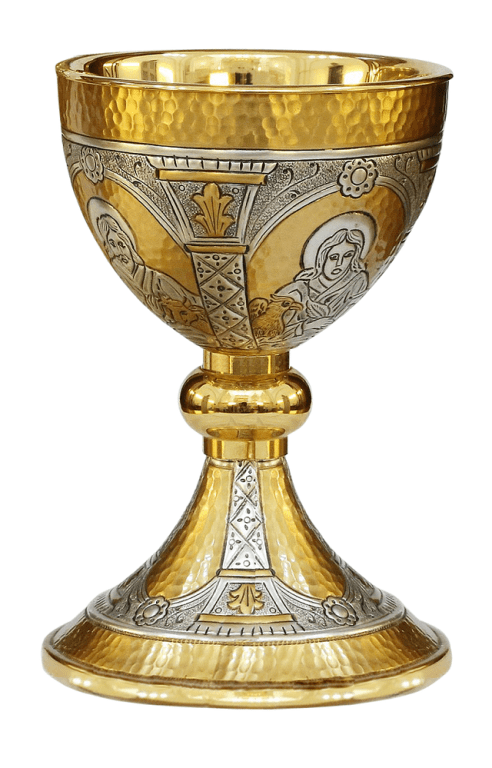
Photo credit: photograph by SunflowerGUY (February 2018) [Pixabay / CC0 Creative Commons license]
Summary: Reply to several weak arguments from Reformed Protestant apologist Collin Brooks defending his false contention that John 6 is not describing the Real Presence.
Previous Post
May 27, 2024
The Deuterocanon: 27-Point Catholic Summary
Next Post

May 28, 2024 Luther's "Tower" Justification Idea & Catholicism
Recent Comments
"And lastly, I belong to no denomination and am free to serve God as He ..."
Is Venerating Men & Angels Worship? ..."
"And obeisance doesn't mean "worship". It means "respect", "obey", or "submission". Very weird that you ..."
Is Venerating Men & Angels Worship? ..."
"Many of these scriptures you have noted have been taken out of context. With Daniel, ..."
Is Venerating Men & Angels Worship? ..."
""Protestants often point out that Jesus is now triumphant in heaven and object to Catholics ..."
Three More Anti-Catholic Lies About Catholicism ..."
Browse Our Archives
Select a Category & Last Things About Me Anti-Catholicism Atheism & Agnosticism Baptism and Sacramentalism Bible and Tradition Blessed Virgin Mary Books by Dave Armstrong C. S. Lewis Calvinism & General Protestantism Catholic Apologetics Catholic Apologists Catholic conversion Catholic converts Christmas Church (Ecclesiology) Church History Conversion and Converts Development of Doctrine Eastern Orthodoxy Ecumenism & Christian Unity Eucharist & Liturgy Fathers of the Church French Translations G. K. Chesterton Hell Hell & Satan Hell & Satan & Last Things Heresies & Comparative Religion Holistic Health Inquisition & Crusades & Scandals James White Jews & Judaism & Old Testament John Calvin John Henry Newman Liberal / Modernist Theology Life Issues Literary Resume Lutheranism Mariology Martin Luther Music Orthodoxy Papacy & Infallibility Personal Page Philosophy & Science Political & Ethical & Moral Issues Protestant Persecution & Intolerance Protestantism Purgatory Purgatory & Penance Romantic & Imaginative Theology Saints & Purgatory & Penance Salvation Salvation & Justification Satan & Last Things Sexuality and Gender Issues Spanish Translations Traditionalism vs. Radical Catholic Reactionaries Traducciones al español / tradução para português Trinitarianism & Christology Uncategorized Videos
Select a Month October 2026 September 2026 August 2026 July 2026 June 2026 May 2026 April 2026 March 2026 February 2026 January 2026 December 2025 November 2025 October 2025 September 2025 August 2025 July 2025 June 2025 May 2025 April 2025 March 2025 February 2025 January 2025 December 2024 November 2024 October 2024 September 2024 August 2024 July 2024 June 2024 May 2024 April 2024 March 2024 February 2024 January 2024 December 2023 November 2023 October 2023 September 2023 August 2023 July 2023 June 2023 May 2023 April 2023 March 2023 February 2023 January 2023 December 2022 November 2022 October 2022 September 2022 August 2022 July 2022 June 2022 May 2022 April 2022 March 2022 February 2022 January 2022 December 2021 November 2021 October 2021 September 2021 August 2021 July 2021 June 2021 May 2021 April 2021 March 2021 February 2021 January 2021 December 2020 November 2020 October 2020 September 2020 August 2020 July 2020 June 2020 May 2020 April 2020 March 2020 February 2020 January 2020 December 2019 November 2019 October 2019 September 2019 August 2019 July 2019 June 2019 May 2019 April 2019 March 2019 February 2019 January 2019 December 2018 November 2018 October 2018 September 2018 August 2018 July 2018 June 2018 May 2018 April 2018 March 2018 February 2018 January 2018 December 2017 November 2017 October 2017 September 2017 August 2017 July 2017 June 2017 May 2017 April 2017 March 2017 February 2017 January 2017 December 2016 November 2016 October 2016 September 2016 August 2016 July 2016 June 2016 May 2016 April 2016 March 2016 February 2016 January 2016 December 2015 November 2015 October 2015 September 2015 August 2015 July 2015 June 2015 May 2015 April 2015 March 2015 February 2015 January 2015 December 2014 November 2014 October 2014 September 2014 August 2014 July 2014 June 2014 April 2014 March 2014 February 2014 January 2014 December 2013 November 2013 October 2013 September 2013 August 2013 July 2013 June 2013 April 2013 March 2013 February 2013 January 2013 December 2012 November 2012 October 2012 September 2012 August 2012 July 2012 June 2012 May 2012 April 2012 March 2012 February 2012 January 2012 December 2011 November 2011 October 2011 September 2011 August 2011 July 2011 June 2011 April 2011 March 2011 February 2011 October 2010 September 2010 August 2010 July 2010 April 2010 March 2010 December 2009 October 2009 August 2009 July 2009 June 2009 May 2009 March 2009 February 2009 October 2008 September 2008 April 2008 March 2008 February 2008 January 2008 December 2007 November 2007 October 2007 May 2007 March 2007 February 2007 January 2007 November 2006 October 2006 September 2006 August 2006 July 2006 June 2006 May 2006 April 2006 March 2006 February 2006 October 2005 June 2005 April 2005 February 2005 July 2004 May 2004 April 2004
Follow Us!
TAKE THE
Religious Wisdom Quiz
Who asked Jesus, "What is truth?"
Select your answer to see how you score.
Caiaphas Pilate Nicodemus Herod
Books by This Author Books by Dave Armstrong
Related posts from Biblical Evidence for Catholicism

Top Ten Anti-Catholic Lies (#10-7)
Biblical Evidence for Catholicism

The Mass & Development of Doctrine (vs. Wes...
Biblical Evidence for Catholicism

Miraculous Eucharist (vs. Francois Turretin #4)
Biblical Evidence for Catholicism

God's Presence, the Ark, the Eucharist, & Death
Biblical Evidence for Catholicism
TRENDING AT PATHEOS Catholic

I was strolling through the top floor of the brand new Parthenon...

What Does Gêvâh Mean For Kimberley Guifoyle &...
This week, a lot of the news is focused on Kimberly Guilfoyle....

INNER CIRCLE: Profound Mystery (Of Christ In All...
Ephesians 5:31-32 “For this reason, a man will leave his father and...

Do Not Rejoice When Your Enemy Falls: The...
Turning an execution into a public spectacle is a disturbing expression of...

'The Chosen' S6 Trailer: The Passion Gets Very...
Not many watching 'The Chosen' worry about spoilers, but just because they...

The purpose-driven labor priest
A labor activist reads Rick Warren and it gets me wondering about...
view all Catholic blogs
What Are Your Thoughts?leave a comment
Ad-Free & Subscriber Log-In Subscription Support
- About Us
- 2026 Calendar
- Videos
- Podcasts
- Library of World Religions
- Faith In Media Tracker
- Advertise With Us
- Write for Us
- Privacy Policy
- Terms of Service
- Do Not Sell My Data
- Contact Us
- Radiant Digital
- Manage Newsletter Subscriptions
- Unsubscribe From Notifications
- Sitemap
Copyright 2008-2026, Patheos. All rights reserved.
Subscription Support Ad-Free & Subscriber Log-In
Follow Patheos