
BuddhistCatholicContemplativeEvangelicalGeneral ChristianHinduJewishLatter-day SaintMuslimNew VisionsProgressive Christian
Beliefs
- Buddhist
- Catholic
- Contemplative
- Evangelical
- General Christian
- Hindu
- Jewish
- Latter-day Saint
- More Voices
- Muslim
- New Visions
- Pagan
- Progressive Christian
Topics
- Religion News
- Food and Religion
- Sports and Religion
- Religious Art
- Religious Music and Entertainment
- Religious Events
- History and Religion
- Style and Religion
- Politics and Religion
- Women in Religion
- Recreation Outdoors and Religion
- Business Finance and Religion
- Careers Workplace and Religion
- Education and Religion
- Family Parenting and Religion
- Health Fitness and Religion
- Home and Religion
- Relationships and Religion
- Technology and Religion
- Travel and Religion
Columnists
- Buddhist Columnists
- Business Finance and Religion Columnists
- Careers Workplace and Religion Columnists
- Catholic Columnists
- Contemplative Columnists
- Education and Religion Columnists
- Evangelists Columnists
- Family Parenting and Religion Columnists
- General Christian Columnists
- Health Fitness and Religion Columnists
- Hindu Columnists
- History and Religion Columnists
- Home and Religion Columnists
- Jewish Columnists
- More Voices Columnists
- Latter Day Columnists
- Muslim Columnists
- New Visions Columnists
- Nonreligious Columnists
- Pagan Columnists
- Politics and Religion Columnists
- Progressive Columnists
- Recreation Outdoors and Religion Columnists
- Relationships and Religion Columnists
- Religion News Columnists
- Religious Art Columnists
- Religious Events Columnists
- Religious Music and Entertainment Columnists
- Sports and Religion Columnists
- Style and Religion Columnists
- Technology and Religion Columnists
- Travel and Religion Columnists
- Women in Religion Columnists
Resource Library
- 2026 Calendar
- Library of World Religions
- The 100 Most Holy Places on Earth
- Patheos Answers
- Podcasts
- Videos
- Faith Leaders Database
- Anglican Episcopalian
- Bahai
- Baptist
- Buddhism
- Christianity
- Confucianism
- Eastern Orthodoxy
- Hinduism
- Holiness and Pentecostal
- ISKCON
- Islam
- Judaism
- Lutheran
- Methodist
- The Church of Jesus Christ of Latter-day Saints
- New Age
- Paganism
- Presbytarian and Reformed
- Protestantism
- Religion Behind the Scenes
- Roman Catholic
- Scientology
- Shia Islam
- Sikhism
- Sufism
- Sunni Islam
- Taoism
- Zen
- See all religions
Research Tools
 Ad-Free & Subscriber Log-In Subscription Support
Ad-Free & Subscriber Log-In Subscription Support
Follow Patheos 

- Trending:
- Forgiveness
- |
- Marriage
- |
- Consciousness
- |
- Death Penalty
- |
- Election
- |
- Halloween

-
About
-
Catholic Apologetics
-
Church History
-
Great Apologists
-
Christian Worldview
-
Protestantism & Misc.
- Home
- Catholic
- History and Religion
- Celibate Clergy: Reply to a Methodist Polemic
Celibate Clergy: Reply to a Methodist Polemic
Last updated on: May 20, 2024 at 6:05 pm by Dave Armstrong
Celibate Clergy: Reply to a Methodist Polemic 2024-05-20T18:05:21-04:00 Dave Armstrong
Patheos Explore the world's faith through different perspectives on religion and spirituality! Patheos has the views of the prevalent religions and spiritualities of the world.
“Please Hit ‘Subscribe’”! If you have received benefit from this or any of my other 4,600+ articles, please follow this blog by signing up (with your email address) on the sidebar to the right (you may have to scroll down a bit), above where there is an icon bar, “Sign Me Up!”: to receive notice when I post a new blog article. This is the equivalent of subscribing to a YouTube channel. Please also consider following me on Twitter / X and purchasing one or more of my 55 books. All of this helps me get more exposure, and (however little!) more income for my full-time apologetics work. Thanks so much and happy reading!
***
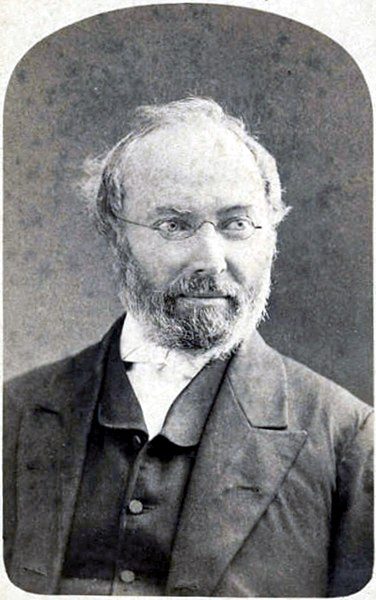
I am critiquing Lecture X (pp. 235-255) in the book, Errors and Persecutions of the Roman Catholic Church, published in 1881 by J. H. Chambers & Co. (St. Louis), which is entitled, “Celibacy of the Clergy.” It was written by Rev. Thomas O. Summers, S.T.D. (Doctor of Sacred Theology, 1812-1882), an American Methodist clergymen and theologian. In 1875, he was Professor of Systematic Theology at Vanderbilt University in Nashville and in 1878, he became Dean of the Biblical Department at Vanderbilt University, later known as the Vanderbilt University Divinity School. He was known as one of the foremost Methodist theologians of the nineteenth century, and authored many books. His words will be in blue.
***
According to the discipline of the Church of Rome, the clergy are forced to remain in a state of celibacy.
I love how this is always framed by Catholic critics as an issue of folks being “forced.” It’s an abuse of language. But Dr. Summers sort of contradicts himself by noting that it is a “discipline.” I could just as well say, substituting the synonym, “rule,” that “the NBA has a rule that one must be able to shoot baskets in order to be in the league,” or “it’s a rule that a chemist must obtain a degree in chemistry,” or “an accountant must be good with numbers.”
No one describes those things in terms of being “forced.” How ridiculous would it be to say, “the NBA forces all of its players to shoot baskets well,” or, “chemists are forced to master the periodic table of elements,” or “accountants are forced to be good at arithmetic”? No one ever talks like that. Any task or job requiring a certain skill set or ability automatically narrows down the range of applicants, according to their match with the requirements. It’s no different with the Catholic Church.
Catholics have solid reasons from Holy Scripture itself — that I will get into — for requiring this: explicit passages from Jesus and Paul. If they are valid, then it is absurd to insinuate (by logical deduction), “Jesus and Paul forced Catholic priests to be celibate!” Moreover, it’s rarely ever noted that Eastern Catholic priests are not required to be celibate. They are as Catholic as any other Catholic. There are also some exceptions made even in the western, Latin rite, such as married Anglican priests who convert and are allowed to be married Catholic priests. I myself have known two of these priests.
Siricius, Bishop of Rome (A. D. 385), held that the marriage rites, which he stigmatized as obscoenae cupiditates [“obscene desires”], are inconsistent with the clerical state.
It didn’t take long for the sheer nonsense and fact-challenged polemics to set in. The two Latin words — in context [see an English translation of the papal decretal] — are not referring to legitimate sacramental matrimony (nice try), but rather, to immoral “forbidden liaisons whose manifest incontinence was shown by children born after absolution”: which are later referred to in the same section as “obscene desires.” The next section continues the same theme:
[C]ertain monks and nuns, having thrown off the life of sanctity, plunged into so much wantonness that they tangled themselves up in illicit and sacrilegious intercourse, first in secret, as it were under cover of the monasteries, but afterward, led on precipitously by abandonment of conscience they freely produced children with illicit partners, which both civil laws and ecclesiastical regulations condemn.
But Dr. Summers, who certainly should have known better, as a scholar, deliberately left the impression that a pope “stigmatized” the marriage ceremony as “obscene desires.” It’s outrageous. And it happens all the time in the anti-Catholic literature. Here it occurred in the second sentence of the chapter! Anything goes, in order to bash the Catholic Church: lie or not. It’s the old sin and rationalization of “the end justifies the means.” If one must lie and deceive in order to make a particular case, how strong can it be, I ask?
Dr. Summers then accounts the alleged horrors that made Catholic clergy “restive under these unnatural restrictions,“ and then cited the Council of Trent (1545-1563), which decreed that “if a married man wants to become a priest he must leave his wife, who must of her own free will take the vow of chastity.” He seems to be citing Canon IX on matrimony, which actually doesn’t say this particular thing. But even if it did imply that, or if somewhere else in the documents of Trent it states this, the problem with the insinuated contempt towards such a (voluntary) scenario is that it was espoused by our Lord Jesus Himself:
Luke 18:28-30 (RSV) And Peter said, “Lo, we have left our homes and followed you.” [29] And he said to them, “Truly, I say to you, there is no man who has left house or wife or brothers or parents or children, for the sake of the kingdom of God, [30] who will not receive manifold more in this time, and in the age to come eternal life.”
Accordingly, Trent states, following this model:
CANON VIII.-If any one saith, that the Church errs, in that she declares that, for many causes, a separation may take place between husband and wife, in regard of bed, or in regard of cohabitation, for a determinate or for an indeterminate period; let him be anathema.
He then cites Trent again:
Whoever shall affirm that the conjugal state is to be preferred to a life of virginity or celibacy, and that it is not better and more conducive to happiness to remain in virginity or celibacy, than to be married; let him be accursed. [Canon X on matrimony]
Again, this notion — in the correctly understood, somewhat qualified sense — is explicitly scriptural straight from the Apostle Paul:
1 Corinthians 7:28 But if you marry, you do not sin, and if a girl marries she does not sin. Yet those who marry will have worldly troubles, and I would spare you that.
1 Corinthians 7:32-35, 38 I want you to be free from anxieties. The unmarried man is anxious about the affairs of the Lord, how to please the Lord; [33] but the married man is anxious about worldly affairs, how to please his wife, [34] and his interests are divided. And the unmarried woman or girl is anxious about the affairs of the Lord, how to be holy in body and spirit; but the married woman is anxious about worldly affairs, how to please her husband. [35] I say this for your own benefit, not to lay any restraint upon you, but to promote good order and to secure your undivided devotion to the Lord. . . . [38] So that he who marries his betrothed does well; and he who refrains from marriage will do better.
Paul says that celibacy is “better” and can “secure” an “undivided devotion to the Lord.” That’s why, in a nutshell, the Catholic Church — for the most part — prefers celibate priests. We want those whos “interests” are not “divided” to be our pastors: totally devoted to their flocks, in heroic self-sacrifice. It’s remarkable to me that a Methodist minister and professor of theology — in all likelihood a fine Christian man — can be seemingly unacquainted with relevant plain Scripture on this topic.
*
Even Martin Luther admired the Catholic priests in his region who went out to serve the sick during one particular plague, risking possible death, whereas the Lutheran married pastors were too scared to do so, and understandably so, because they had families to care for. One sees here the practical utility of the celibate priest. He has but one flock, and he serves it fully, without distraction. The advantage seems self-evident, yet so many are inexplicably blind to it.
*
In passing, we must denounce the Tridentine sophism, insinuated in the contrast between marriage and chastity. Everybody knows that the Scriptures never oppose the one to the other. Those who are true to their marriage vows are as chaste as those who live continually in a state of celibacy. It ill becomes those who make matrimony one of the seven Sacraments, to say otherwise.
*
Trent did no such thing. Dr. Summers refers to Canon IX: “all who do not feel that they have the gift of chastity, even though they have made a vow thereof, may contract marriage.” This statement is using “chastity” as a synonym of celibacy, which is perfectly in accord with the use in English. Dictionary.com states the definition of “chaste” as follows:
*
-
refraining from sexual intercourse that is regarded as contrary to morality or religion; virtuous.
Synonyms: continent
Antonyms: immoral
-
virgin.
-
not engaging in sexual relations; celibate.
Hence, earlier in this canon it refers to “clerics constituted in sacred orders, or Regulars, who have solemnly professed chastity.” That’s clearly being used as a synonym of “taking a vow of celibacy.” The word “chastity” (like most words) also has a larger meaning of being sexually pure, which applies to all people, married and celibate alike. And of course, the Catholic Church agrees that marriage should be chaste as well in this larger sense. After all, as Dr. Summers notes, we regard sacrament as a sacrament. Methodism and larger Protestantism do not. We also regard a lawful marriage between two never-married Protestants as a sacrament. Sacraments give grace.
*
The superior sanctity supposed to reside in the clerical character and profession, does not therefore require that ministers should be celibates . . .
*
Yes: that which Paul called “better” (1 Cor 7:38): a heroic sanctity of renouncing things that are in and of themselves good for the sake of the kingdom (a practice that Paul heroically chose in many ways, for many years) . . . Clerical celibacy is a specimen of a larger category of those who voluntarily remains single so as to have full devotion to the Lord, according to Paul. As I have pointed out many times, the Catholic Church simply draws most of its priests from this pre-existing “pool” of men who have been called by God Himself to be celibate.
*
Paul wrote: “let every one lead the life which the Lord has assigned to him, and in which God has called him” (1 Cor 7:17). Thus, the Catholic Church (western Latin rite, not the eastern rites) chooses to ordain those who have been called by God to singleness and celibacy. They’re not “forced” to do anything. They want to do this, otherwise they wouldn’t “sign up.” Duh!
*
indeed it rather requires that they should enter “the holy estate of matrimony.”
*
Now Dr. Summers becomes most unbiblical and unPauline and “requires” clergy to be married. Paul teaches that one should live in the way that the Lord called him to live, whether single or married. But now Protestant tradition wants to thumb its nose at Paul’s wise advice and make out that all clergy must be married. Even Paul’s own example and that of Jesus and most of the original disciples contradicts that. They were single. But the unspoken, unbiblical rule in Protestantism, is that pastors ought to be married.
*
Our Lord wrought a miracle to cure Peter’s wife’s mother of a fever, and said not one word about his putting away of his wife in order to become a Pope!
*
This is untrue. Peter had already voluntarily separated from his wife in order to be Jesus’ disciple (and Jesus was fine with that), as seen in Luke 18:28-30, which I already cited above. And Peter said, “we have left our homes . . .” That is, it wasn’t just him. It was several of the disciples.
*
John seems to have had a house in Jerusalem, and it might be inferred that he had a family there. John xix.
*
Having a house (whether rented or bought) is no proof of being married. Dr. Summers then notes that according to Church historian Eusebius, citing others, Philip and Jude were married, and that Church father Epiphanius thought that Andrew, Matthew, and Bartholomew were also. That would be six of twelve (including Peter), if so, and many or all of those may have voluntarily separated, as Peter did.
*
It’s no problem for our position at all. Celibacy is a mere discipline, not a dogma. As such, it can even change in the future. Our point is to note that celibacy for the sake of the kingdom and/or leaving existing wives, with mutual consent, have strong scriptural evidence in their favor. The fact that some of these men were married (at the very least two, judging by Jesus’ own words) doesn’t defeat that argument. We never denied it.
*
Now, we attach no importance to the statements of the Fathers, . . .
*
That’s a fascinating statement, coming from a Methodist: a tradition that has relatively more respect for Church history. He doesn’t even follow established aspects of his own denomination. John Wesley, from whom Methodism derived, wrote:
. . . the primitive Fathers; I mean particularly Clemens Romanus, Ignatius, Polycarp, Justin Martyr, Irenaeus, Origen, Clemens Alexandrinus, Cyprian; to whom I would add Macarius and Ephraim Syrus. . . . I exceedingly reverence them, as well as their writings, and esteem them very highly in love. I reverence them, because they were Christians, such Christians as are above described. And I reverence their writings, because they describe true, genuine Christianity, and direct us to the strongest evidence of the Christian doctrine. . . . I reverence these ancient Christians (with all their failings) the more, because I see so few Christians now; because I read so little in the writings of later times, and hear so little, of genuine Christianity; . . . (A Letter to the Rev. Dr. Conyers Middleton Occasioned by His Late Free Inquiry [4 Jan. 1749)
the Fathers never dreamed that the apostles or other ministers were debarred from matrimony.
*
Having just stated that the Church fathers are of “no importance,” he goes on to erroneously cite them en masse against Catholicism. See: “Early Church Fathers on Celibacy” (Practical Apologetics, 7-8-13).
*
Paul himself says : ” Have we not power to lead about a sister, a wife, as well as other apostles and as the brethren of the Lord, and Cephas?” (1 Cor. ix. 5.)
*
Barnes’ Notes on the Bible states: “A sister, a wife – Margin, ‘or woman.’ This phrase has much perplexed [Protestant] commentators.” So it’s not a cut-and-dried passage, even from a Protestant perspective. I would note that Paul is referring primarily to the right to have a wife while being an apostle and a missionary, as opposed to stating a fact that many of the apostles were married. It’s two different things. Paul argues that they all had the “right” to be married, and to “food and drink” (9:4, 9-10, 13) and “material benefits” (9:11) and wages (9:7, 14).
*
The wives of these married disciples — including Peter’s — could have joined them at certain times. One would expect that. After all, Jesus is thought to have lived for a time in Peter’s house in Capernaum on the shores of the Sea of Galilee (implied by Mk 1:29; Mt 8:14, 16; Lk 4:38; cf. similar Jn 11:54), where Peter could fish and still make a living. Presumably his wife lived with him at that time, and his mother-in-law, it appears, lived in the house with them (Mt 8:14), which was common Jewish practice.
*
Peter is shown throughout the Gospels working as a fisherman. Thus, plausibly, he continued to support his wife and family by simply sending them money earned by plying his trade. They wouldn’t have been that far away, as Israel is a small country. After Jesus’ resurrection and appearances to the disciples, Peter and other disciples were still fishing on the Sea of Galilee (Jn 21:1-14). So up to that time, at least, Peter seems to have never ceased being a fisherman, just as Paul made tents to support himself (Acts 18:3).
*
For the married disciples, it might have been a bit like musicians going out on tour. Often they leave their families, for months at a time. At other times (while touring), they are joined by their wife and maybe children. Our view incorporates all the relevant passages. Peter (along with one or more other disciples) left his family to serve (outside of Capernaum) with Jesus – or so it seems from his own statement, unless one illogically assumes that “everything” (Mt 19:27; Mk 10:28) and “nets” (Mt 4:20; Mk 1:18) are identical. But he seems to have been later accompanied by his wife on at least some missionary trips (1 Corinthians 9:5).
*
The late great Billy Graham often publicly regretted how he had to leave his wife and family for long periods of time, for his evangelistic crusades. But all eventually regarded it as a heroic sacrifice. Same thing with Catholic priests and monks and nuns . . .
*
In his First Epistle to Timothy (o. iii. ) he says, ‘ ‘A bishop, then, must be blameless, the husband of one wife — one that ruleth well his own house, having his children in subjection with all gravity.” So of the deacons: ”Even so must their wives be grave. Let the deacons be the husbands of one wife, ruling their children and their own houses well.” . . . one thing is very certain, it does not exclude monogamists. It has been variously construed to forbid celibacy — successive or simultaneous bigamy or polygamy — and second marriages. As the rule obtains in the case of “the widows” mentioned (1 Tim. V. 9), who must have been each “the wife of one man,” it cannot mean that bishops and deacons must be married, . . .
*
Does that mean (if we are interpreting hyper-literally and disallowing any exceptions) that every bishop must be married, and also must have children? What about widowers who became bishops (they must marry again?), or who couldn’t have children (low sperm count), or whose wives couldn’t, or were post-menopausal? Obviously, then, qualifications have to be made. I think the passage is generalized language, meaning, “if a bishop is married, it should only be once [no divorce or deceased wife followed by remarriage], and to one wife [no polygamy], and if he has children, he must have the ability to manage them well.” Again, this was the teaching, then. As a disciplinary matter (as opposed to dogmatic), it could and did change later.
*
After a while, however, exaggerated notions of the superior sanctity of celibacy crept into the Church, derived largely from the Jewish Essenes, the Gnostics, Montanists, Encratites, and others, whose ascetic notions . . .
*
Um, that was St. Paul who taught this, as part of inspired revelation, as I have documented above.
*
But the imperious Hildebrand, Pope Gregory VII., set himself to stop it effectually. He held a Council at Rome, A. D. 1074, in which the marriage of priests was considered as concubinage; and from that time to the present, the Romish Church has not allowed its clergy to live in the holy estate of matrimony.
*
The “Romish Church” in fact has allowed married priests in its 23 eastern rites (which contain some 18 million people), and in exceptional cases in the western rites, as already alluded to.
*
And experience has abundantly proved how vain is the attempt to alter the nature, or meliorate the character, of God’s creatures by mere human purposes or vows, without a peculiar gift or grace of God.
*
That’s the whole point. The Catholic Church selects those men who already have such a long-discerned vocation (or “peculiar gift” if you will) from God, to be priests.
*
They refer to Matt. xix. 11, 12 : ”But he said unto them, All men cannot receive this saying, save they to whom it is given. For there are some eunuchs which were so born from their mother’s womb; and there are some eunuchs which were made eunuchs of men; and there be eunuchs which have made themselves eunuchs for the kingdom of heaven’s sake. He that is able to receive it, let him receive it.” But what bearing has this on the subject? Is that any command for the clergy, or any others, to take the vow of celibacy?
*
The “eunuchs which have made themselves eunuchs for the kingdom of heaven’s sake” are those who voluntary abide by a life of celibacy, to which God has called them. They’re the ones whom the Church selects as priests. It’s because they have the calling and vocation from God, that they are able to live in that way. Those who aren’t, should never have become priests. But we know some priests are not truly called, or were and fell away due to their own rebellion. Some folks are serious sinners? Like this comes as a surprise?
*
Then there is a third class constituted of those who made themselves eunuchs, not in a literal sense . . ., but metaphorically, in the sense of subduing natural inclinations, so as to be at liberty to promote the cause of the gospel in such a way as cannot be done in the married state. Cf. 1 Cor. vii. 26, 34 ; ix. 5, 15, 16. . . . concurring however with divine aid. Now, our Lord says, “He that is able to receive it, let him receive it” — implying that some cannot live in celibacy, but permitting those to do so, who can and are willing to do it for the kingdom of heaven’s sake; otherwise it seems to be the duty of all to marry. Heb. xiii. 4.
*
Exactly! I couldn’t have said it better, myself. This is the often-seen practice of critics of the Catholic Church accurately explaining the biblical rationale for one of our beliefs or practices, but then simply denying that it applies in our case. And so Dr. Summers writes, “This passage . . . gives no . . . countenance to the enforced celibacy of the clergy, or of monks and nuns.” It’s a remarkable blindness due to a strong prior bias.
*
So of 1 Cor. vii., which is pressed into the argument for the celibacy of the priesthood. There is no reference to ministers apart from others in that chapter.
*
It’s not required. Paul lays down a general principle of the difference between marriage and the single state, which is the background of the requirement of clerical celibacy. Priests ideally are chosen from the larger class of folks who are already called to celibacy by God.
*
The apostle counsels those of the Corinthians who could do so, to remain single, ”because of the present distress,” — the persecutions and trials through which the Church was passing, when there was frequently but a step between the font and the stake. (1 Cor. xv. 29-32. ) They would thus be saved from many cares and anxieties, and would attend upon the Lord without distraction. But if they had not the special gift of continence, he advises them to enter the conjugal state; ”for,” says he, ”it is better to marry than to burn.”
*
Exactly. So what — again — is the objection to having priests who are characterized by — and enabled to be, by being single — able to “attend upon the Lord without distraction”? We can’t have that! Clergy must never be solely devoted to the Lord! The hostile view collapses of its own weight. Dr. Summers virtually refutes it himself, but seems not to realize that he is doing so.
*
They are bound by no domestic ties, restrained to no locality, ready at a moment’s notice to go whithersoever their services are needed.
*
Exactly! We see this as a good thing, based on Scripture. Dr. Summers sees it as a bad thing, and has not produced any Scripture to counter or contradict it.
***
See many more articles on this topic in the “Clerical Celibacy” section (near the bottom) on my [Catholic] Church and Ecclesiology web page.
**
*
***
*
Practical Matters: Perhaps some of my 4,600+ free online articles (the most comprehensive “one-stop” Catholic apologetics site) or fifty-five books have helped you (by God’s grace) to decide to become Catholic or to return to the Church, or better understand some doctrines and why we believe them.
Or you may believe my work is worthy to support for the purpose of apologetics and evangelism in general. If so, please seriously consider a much-needed financial contribution. I’m always in need of more funds: especially monthly support. “The laborer is worthy of his wages” (1 Tim 5:18, NKJV). 1 December 2021 was my 20th anniversary as a full-time Catholic apologist, and February 2022 marked the 25th anniversary of my blog.
PayPal donations are the easiest: just send to my email address: [email protected]. Here’s also a second page to get to PayPal. You’ll see the term “Catholic Used Book Service”, which is my old side-business. To learn about the different methods of contributing (including Zelle), see my page: About Catholic Apologist Dave Armstrong / Donation Information. Thanks a million from the bottom of my heart!
*
***
Photo credit: Thomas Osmond Summers, 1881, photo by R. Poole [source] [public domain / Wikimedia Commons]

Summary: I critique the (weak!) arguments against priestly celibacy made by a prominent 19th century Methodist clergyman and professor of theology, Thomas O. Summers.
Previous Post
May 16, 2024
Sola Scriptura: Reply to James White (Akin Debate)
Next Post

May 21, 2024 Catholicism = Unbiblical Idolatrous Worship?
Recent Comments
"Special pleading, and not a serious response to my arguments . . ."
Is Venerating Men & Angels Worship? ..."
""no man needs to teach us."Didn't you just teach us?"
Is Venerating Men & Angels Worship? ..."
""Catholics say they are the only church that can lead people into heaven."In fact, we ..."
Is Venerating Men & Angels Worship? ..."
"And lastly, I belong to no denomination and am free to serve God as He ..."
Is Venerating Men & Angels Worship? ..."
Browse Our Archives
Select a Category & Last Things About Me Anti-Catholicism Atheism & Agnosticism Baptism and Sacramentalism Bible and Tradition Blessed Virgin Mary Books by Dave Armstrong C. S. Lewis Calvinism & General Protestantism Catholic Apologetics Catholic Apologists Catholic conversion Catholic converts Christmas Church (Ecclesiology) Church History Conversion and Converts Development of Doctrine Eastern Orthodoxy Ecumenism & Christian Unity Eucharist & Liturgy Fathers of the Church French Translations G. K. Chesterton Hell Hell & Satan Hell & Satan & Last Things Heresies & Comparative Religion Holistic Health Inquisition & Crusades & Scandals James White Jews & Judaism & Old Testament John Calvin John Henry Newman Liberal / Modernist Theology Life Issues Literary Resume Lutheranism Mariology Martin Luther Music Orthodoxy Papacy & Infallibility Personal Page Philosophy & Science Political & Ethical & Moral Issues Protestant Persecution & Intolerance Protestantism Purgatory Purgatory & Penance Romantic & Imaginative Theology Saints & Purgatory & Penance Salvation Salvation & Justification Satan & Last Things Sexuality and Gender Issues Spanish Translations Traditionalism vs. Radical Catholic Reactionaries Traducciones al español / tradução para português Trinitarianism & Christology Uncategorized Videos
Select a Month October 2026 September 2026 August 2026 July 2026 June 2026 May 2026 April 2026 March 2026 February 2026 January 2026 December 2025 November 2025 October 2025 September 2025 August 2025 July 2025 June 2025 May 2025 April 2025 March 2025 February 2025 January 2025 December 2024 November 2024 October 2024 September 2024 August 2024 July 2024 June 2024 May 2024 April 2024 March 2024 February 2024 January 2024 December 2023 November 2023 October 2023 September 2023 August 2023 July 2023 June 2023 May 2023 April 2023 March 2023 February 2023 January 2023 December 2022 November 2022 October 2022 September 2022 August 2022 July 2022 June 2022 May 2022 April 2022 March 2022 February 2022 January 2022 December 2021 November 2021 October 2021 September 2021 August 2021 July 2021 June 2021 May 2021 April 2021 March 2021 February 2021 January 2021 December 2020 November 2020 October 2020 September 2020 August 2020 July 2020 June 2020 May 2020 April 2020 March 2020 February 2020 January 2020 December 2019 November 2019 October 2019 September 2019 August 2019 July 2019 June 2019 May 2019 April 2019 March 2019 February 2019 January 2019 December 2018 November 2018 October 2018 September 2018 August 2018 July 2018 June 2018 May 2018 April 2018 March 2018 February 2018 January 2018 December 2017 November 2017 October 2017 September 2017 August 2017 July 2017 June 2017 May 2017 April 2017 March 2017 February 2017 January 2017 December 2016 November 2016 October 2016 September 2016 August 2016 July 2016 June 2016 May 2016 April 2016 March 2016 February 2016 January 2016 December 2015 November 2015 October 2015 September 2015 August 2015 July 2015 June 2015 May 2015 April 2015 March 2015 February 2015 January 2015 December 2014 November 2014 October 2014 September 2014 August 2014 July 2014 June 2014 April 2014 March 2014 February 2014 January 2014 December 2013 November 2013 October 2013 September 2013 August 2013 July 2013 June 2013 April 2013 March 2013 February 2013 January 2013 December 2012 November 2012 October 2012 September 2012 August 2012 July 2012 June 2012 May 2012 April 2012 March 2012 February 2012 January 2012 December 2011 November 2011 October 2011 September 2011 August 2011 July 2011 June 2011 April 2011 March 2011 February 2011 October 2010 September 2010 August 2010 July 2010 April 2010 March 2010 December 2009 October 2009 August 2009 July 2009 June 2009 May 2009 March 2009 February 2009 October 2008 September 2008 April 2008 March 2008 February 2008 January 2008 December 2007 November 2007 October 2007 May 2007 March 2007 February 2007 January 2007 November 2006 October 2006 September 2006 August 2006 July 2006 June 2006 May 2006 April 2006 March 2006 February 2006 October 2005 June 2005 April 2005 February 2005 July 2004 May 2004 April 2004
Follow Us!
TAKE THE
Religious Wisdom Quiz
Who was the strongest man mentioned in the Bible?
Select your answer to see how you score.
David Saul Goliath Samson
Books by This Author Books by Dave Armstrong
Related posts from Biblical Evidence for Catholicism

Jesus Founded the [Catholic] Church. If Not Him,...
Biblical Evidence for Catholicism

Jerusalem Council vs. James White & Sola Scriptura
Biblical Evidence for Catholicism

Apostolic Succession: 40 Biblical Arguments
Biblical Evidence for Catholicism

350 Bible Passages vs. Sola Scriptura
Biblical Evidence for Catholicism
TRENDING AT PATHEOS Catholic

The Sermon on the Mount, Part I: Matthew...
The Sermon on the Mount, Part I (Matthew 4:12-5:12) St. Matthew moves...

What's up from Crossway: Reviewing some of their latest A few weeks...

Janie Learns the Way of the Cross: A...
Teaching children about Jesus' Passion can be challenging. Many parents and educators...

Looking For Good Catholic Writing - October 2026
He alone extends the heavens, and he walks upon the waves of...

In "Irreplaceable," our book on vocation and technology, Trevor Sutton and I...

I was strolling through the top floor of the brand new Parthenon...
view all Catholic blogs
What Are Your Thoughts?leave a comment
Ad-Free & Subscriber Log-In Subscription Support
- About Us
- 2026 Calendar
- Videos
- Podcasts
- Library of World Religions
- Faith In Media Tracker
- Advertise With Us
- Write for Us
- Privacy Policy
- Terms of Service
- Do Not Sell My Data
- Contact Us
- Radiant Digital
- Manage Newsletter Subscriptions
- Unsubscribe From Notifications
- Sitemap
Copyright 2008-2026, Patheos. All rights reserved.
Subscription Support Ad-Free & Subscriber Log-In
Follow Patheos