
BuddhistCatholicContemplativeEvangelicalGeneral ChristianHinduJewishLatter-day SaintMuslimNew VisionsProgressive Christian
Beliefs
- Buddhist
- Catholic
- Contemplative
- Evangelical
- General Christian
- Hindu
- Jewish
- Latter-day Saint
- More Voices
- Muslim
- New Visions
- Pagan
- Progressive Christian
Topics
- Religion News
- Food and Religion
- Sports and Religion
- Religious Art
- Religious Music and Entertainment
- Religious Events
- History and Religion
- Style and Religion
- Politics and Religion
- Women in Religion
- Recreation Outdoors and Religion
- Business Finance and Religion
- Careers Workplace and Religion
- Education and Religion
- Family Parenting and Religion
- Health Fitness and Religion
- Home and Religion
- Relationships and Religion
- Technology and Religion
- Travel and Religion
Columnists
- Buddhist Columnists
- Business Finance and Religion Columnists
- Careers Workplace and Religion Columnists
- Catholic Columnists
- Contemplative Columnists
- Education and Religion Columnists
- Evangelists Columnists
- Family Parenting and Religion Columnists
- General Christian Columnists
- Health Fitness and Religion Columnists
- Hindu Columnists
- History and Religion Columnists
- Home and Religion Columnists
- Jewish Columnists
- More Voices Columnists
- Latter Day Columnists
- Muslim Columnists
- New Visions Columnists
- Nonreligious Columnists
- Pagan Columnists
- Politics and Religion Columnists
- Progressive Columnists
- Recreation Outdoors and Religion Columnists
- Relationships and Religion Columnists
- Religion News Columnists
- Religious Art Columnists
- Religious Events Columnists
- Religious Music and Entertainment Columnists
- Sports and Religion Columnists
- Style and Religion Columnists
- Technology and Religion Columnists
- Travel and Religion Columnists
- Women in Religion Columnists
Resource Library
- 2026 Calendar
- Library of World Religions
- The 100 Most Holy Places on Earth
- Patheos Answers
- Podcasts
- Videos
- Faith Leaders Database
- Anglican Episcopalian
- Bahai
- Baptist
- Buddhism
- Christianity
- Confucianism
- Eastern Orthodoxy
- Hinduism
- Holiness and Pentecostal
- ISKCON
- Islam
- Judaism
- Lutheran
- Methodist
- The Church of Jesus Christ of Latter-day Saints
- New Age
- Paganism
- Presbytarian and Reformed
- Protestantism
- Religion Behind the Scenes
- Roman Catholic
- Scientology
- Shia Islam
- Sikhism
- Sufism
- Sunni Islam
- Taoism
- Zen
- See all religions
Research Tools
 Ad-Free & Subscriber Log-In Subscription Support
Ad-Free & Subscriber Log-In Subscription Support
Follow Patheos 

- Trending:
- Forgiveness
- |
- Marriage
- |
- Consciousness
- |
- Death Penalty
- |
- Election
- |
- Halloween

-
About
-
Catholic Apologetics
-
Church History
-
Great Apologists
-
Christian Worldview
-
Protestantism & Misc.
- Home
- Catholic
- History and Religion
- Catholicism = Unbiblical Idolatrous Worship?
Catholicism = Unbiblical Idolatrous Worship?
Last updated on: May 21, 2024 at 10:10 am by Dave Armstrong
Catholicism = Unbiblical Idolatrous Worship? 2024-05-21T10:10:41-04:00 Dave Armstrong
Patheos Explore the world's faith through different perspectives on religion and spirituality! Patheos has the views of the prevalent religions and spiritualities of the world.
“Please Hit ‘Subscribe’”! If you have received benefit from this or any of my other 4,600+ articles, please follow this blog by signing up (with your email address) on the sidebar to the right (you may have to scroll down a bit), above where there is an icon bar, “Sign Me Up!”: to receive notice when I post a new blog article. This is the equivalent of subscribing to a YouTube channel. Please also consider following me on Twitter / X and purchasing one or more of my 55 books. All of this helps me get more exposure, and (however little!) more income for my full-time apologetics work. Thanks so much and happy reading!
***
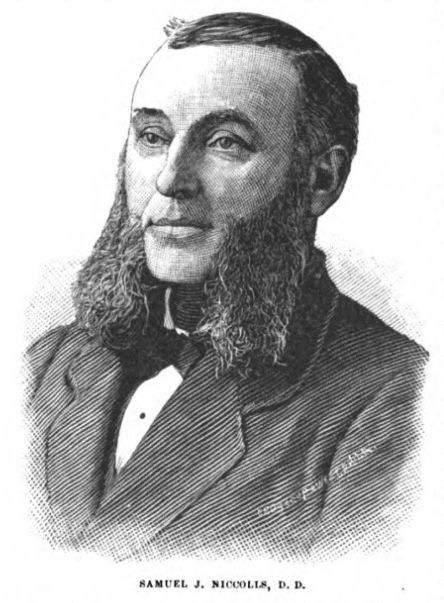
I am critiquing Lecture XII (pp. 299-320) in the book, Errors and Persecutions of the Roman Catholic Church, published in 1881 by J. H. Chambers & Co. (St. Louis), which is entitled, “The Charge of Idolatrous Worship made against the Roman Church: Is it True?” It was written by a Presbyterian: Rev. Samuel J. Niccolls, D.D. (1838-1915). He was a chaplain during the Civil War, a pastor, and moderator at the 1872 meeting of the General Assembly of the Presbyterian Church in Detroit. The organization of the Young Men’s Christian Association (YMCA) owes its success largely to his influence and perseverance. Dr. Niccolls was selected to receive special honors by Princeton University in its Sesquicentennial Celebration in 1896. His words will be in blue.
***
Protestants, ever since the time of the Reformation, have asserted that the worship of the church of Rome is idolatrous in its nature and tendencies. This charge constitutes one of the chief reasons of their opposition to that church. They claim that the usages of worship which prevail in it, are not only contrary to the practice of the primitive church, but that they are in direct contradiction to the positive commands of the Word of God.
On the other hand, the adherents of the church of Rome have most strenuously denied this charge as slanderous in the extreme; they have complained that they have been misrepresented in this matter, and that their true belief is the very reverse of what has been charged against them. . . .
If it is not true, one party is a slanderer of the church of God, and a chief reason for its existence turns out to be a lie.
Very true!
If it is true, the other against whom the accusation is made, is branded with guilt and dishonor.
Yes, if true. The key word is if.
It is proposed to set the facts of this controversy plainly and fairly before the intelligent reader, that he may judge for himself.
Fair enough! Let’s see what he can come up with.
First of all, in order to reach a right decision, it is necessary to know what constitutes idolatry. Both Protestants and Romanists are agreed that it is a most heinous sin; that the word of God condemns it; and that idolatrous worship is hateful in the sight of God. But what is idolatry? What are the characteristics of an idolatrous worship? These questions are to be answered by the Scriptures, and by them alone.
The Bible is what we both revere as God’s inspired revelation, so it’s where the “battle” must be fought.
The internal act of worship consists in giving to God the supreme reverence, love and confidence of our hearts. Whatever usurps His place in the soul of man, is an idol, a false god; . . .
The external act of idolatry consists in worshipping false gods, or in giving to other objects than God that homage and worship which are due to Him alone. Any form of worship which robs God of the supreme homage due Him, by ascribing divine attributes and offices to creatures; or which sets before the worshipper as the object of his trust and adoration, a being who is not God, is plainly idolatrous. It is a violation of the first commandment.
We agree.
But it is also taught in the Scriptures that God must not be worshipped by the use of images or pictures.
This is where we start to disagree.
The second commandment clearly forbids this, and stamps such worship as idolatrous. The precise thing forbidden by it, is the making of images or pictures as objects of worship, and bowing down to them and serving them, that is, performing acts of religious worship before them.
The “graven image” of Exodus 20:4 has to do with God’s forbidding of idolatry: making a stone or block of wood or a mere image God, and worshiping it. The Jews were forbidden to have idols (like all their neighbors had), and God told them not to make an image of Him because He revealed Himself as a spirit. The KJV and RSV Bible versions use the term graven image at Exodus 20:4, but many of the more recent translations render the word as idol (e.g., NASB, NRSV, NIV, CEV).
*
Context makes it very clear that idolatry is being condemned. The next verse states: “You shall not bow down to them or worship them” (NIV, NRSV), or “serve” them as if they were literally God (Ex 20:5; Dt 5:9). In other words, mere blocks of stone or wood (“them”) are not to be worshiped, as that is gross idolatry, and the inanimate objects are not God:
Revelation 9:20 (RSV) The rest of mankind, who were not killed by these plagues, did not repent of the works of their hands nor give up worshiping demons and idols of gold and silver and bronze and stone and wood, which cannot either see or hear or walk;
This does not absolutely preclude, however, the notion of worshiping the true God with the help of a visual aid, as I will show in due course. Idolatry is a matter of disobedience in the heart towards the one true God. We don’t always need an image to have an idol. Most idols today are non-visual: money, lust for power, convenience, our own pride or intellects; there are all sorts of idols. Anything that replaces God as the most important thing in our life and the universe, is an idol.
The Hebrew word translated ”serve” includes all kinds of external homage, such as burning incense, making offerings, and kissing in token of subjection.
I’ll take his word for that, but the point is to what or to Whom these acts are directed. This still doesn’t absolutely preclude all images and religious objects, properly used.
. . . terrible judgments . . . fell upon the people whenever they attempted to worship God by images. When in the wilderness the people demanded of Aaron that he should introduce image- worship among them, their purpose was not to renounce Jehovah as their God; they only asked a symbol of Him, as the heathen had their symbols.
I don’t think the text teaches this at all. They weren’t trying to worship the true God via an image. Aaron and the mob were after something entirely different:
Exodus 32:1, 4, 7-8 When the people saw that Moses delayed to come down from the mountain, the people gathered themselves together to Aaron, and said to him, “Up, make us gods, who shall go before us; . . .” [4] And he received the gold at their hand, and fashioned it with a graving tool, and made a molten calf; and they said, “These are your gods, O Israel, who brought you up out of the land of Egypt! . . .” [7] And the LORD said to Moses, “Go down; for your people, whom you brought up out of the land of Egypt, have corrupted themselves; [8] they have turned aside quickly out of the way which I commanded them; they have made for themselves a molten calf, and have worshiped it and sacrificed to it . . .”
That’s not only rank idolatry and blasphemy, but polytheism as well. Dr. Niccolls completely misrepresents the nature of what was going on there. God said that He would “blot out of” His “book” (Ex 32:33) whoever engaged in this idolatry, and He “sent a plague” to judge them (Ex 33:35. This was not just using an image improperly in worship; it was much more serious: pretending that a golden calf was actually a “god” who had brought them out of Egypt. Dr. Niccolls vainly tries to force-fit this into a scenario that would include all religious images, and it just doesn’t fly.
. . . one essential mark of the true worship of Jehovah, as contrasted with idolatrous worship, was that in it no images or visible objects representing the invisible object of worship were to be used. The Jews from the time of Moses until now, have always considered the worship of the true God by images as much an act of idolatry as the worship of false gods . . . Indeed, the scriptures make little or no difference between the worshipping of God by images, and the worshipping of false gods. Both are idolatrous.
This simply isn’t true. Moses had worshiped God in the burning bush on Mt. Sinai (Ex 3:2-6). It was not only fire, but also called an “angel of the Lord” (Ex 3:2), yet also “God” (3:4, 6, 11, 13-16, 18; 4:5, 7-8) and “the LORD” (3:7, 16, 18; 4:2, 4-6, 10-11, 14) interchangeably. The wandering Hebrews worshiped Him in the pillars of fire and cloud: all images of God, by God’s own design. One of the most striking and undeniable passages about such worship-of God-through-an-image appears in the very next chapter:
Exodus 33:10 And when all the people saw the pillar of cloud standing at the door of the tent, all the people would rise up and worship, every man at his tent door.
Note that the pillar of cloud is:
- a creation (water, if a literal cloud);
2) visual, hence an image;
and
- thought to directly represent God Himself.
It’s also a supernatural manifestation, which is a major difference compared to any true idol made by the hands of men; but that would make no difference for those who mistakenly hold that any image whatsoever associated with God is impermissible. The Bible mentions a pillar of cloud and also a pillar of fire (by night), representing God (see: Ex 13:21-22; 14:24; Num 14:14; Neh 9:12, 19). The Bible specifically makes it clear that God was “in” the two pillars:
Exodus 13:21 And the LORD went before them by day in a pillar of cloud . . . and by night in a pillar of fire . . .
Exodus 14:24 . . . the LORD in the pillar of fire and of cloud looked down upon the host of the Egyptians . . .
Exodus 33:9 When Moses entered the tent, the pillar of cloud would descend and stand at the door of the tent, and the LORD would speak with Moses.
Numbers 12:5 And the LORD came down in a pillar of cloud, and stood at the door of the tent . . .
Numbers 14:14 . . . thou, O LORD, art in the midst of this people; for thou, O LORD, art seen face to face, and thy cloud stands over them and thou goest before them, in a pillar of cloud by day and in a pillar of fire by night.
Deuteronomy 31:15 And the LORD appeared in the tent in a pillar of cloud . . .
Psalm 99:7 He spoke to them in the pillar of cloud;
This represented God, and His people worshiped Him in the cloud, which we know with certainty from Exodus 33:10. It doesn’t always state that the people worshiped God through the supernatural image-pillars, but we know from Exodus 33:8-10 that it was entirely permissible to do so (no hint of condemnation in the biblical text); certainly not “idolatry.” Moreover, the Jews “worshiped” God as represented by fire — or God in the fire — in an additional way:
2 Chronicles 7:1-4 When Solomon had ended his prayer, fire came down from heaven and consumed the burnt offering and the sacrifices, and the glory of the LORD filled the temple. [2] And the priests could not enter the house of the LORD, because the glory of the LORD filled the LORD’s house. [3] When all the children of Israel saw the fire come down and the glory of the LORD upon the temple, they bowed down with their faces to the earth on the pavement, and worshiped and gave thanks to the LORD, saying, “For he is good, for his steadfast love endures for ever.” [4] Then the king and all the people offered sacrifice before the LORD.
God Himself expressly sanctions such images (cloud and fire), and worship in conjunction with them. Therefore, not all images of God are idolatrous. Case closed. Game, set, match . . .
God made Himself specially present in or near material objects, too. He states repeatedly that He is present above the “mercy seat” on the ark of the covenant, between the two carved cherubim (Ex 25:22; 30:6; Lev 16:2; Num 7:89; 1 Sam 4:4; 2 Sam 6:2; 2 Kg 19:15; 1 Chr 13:6; Ps 80:1; 99:1; Is 37:16; Ezek 10:4; Heb 9:5). Therefore, we are informed that the Jews would bow before the ark to pray or worship:
Joshua 7:6 Then Joshua rent his clothes, and fell to the earth upon his face before the ark of the LORD until the evening . . . [proceeds to pray in 7:7-8]
1 Chronicles 16:4 Moreover he appointed certain of the Levites as ministers before the ark of the LORD, to invoke, to thank, and to praise the LORD, the God of Israel.
Some of the early Calvinists were so fanatical that they smashed not only statues of saints, but also organs, stained glass, even statues of Jesus Christ and crucifixes. They ignored all the distinctions that the Bible plainly makes. We reject such clear biblical teaching at our peril. Iconoclasm (opposition to images) is a false tradition of men that was officially condemned by the Church long ago.
*
If, then, we find any church which in its teachings or practice, gives to men, or saints, or angels, the homage and praise which are due to God alone, we are right in calling it idolatrous;
*
Indeed. The mistake, however, is in claiming that the Catholic Church teaches that creatures should receive the same “homage and praise” as God. This is a damnable lie. You’ll notice that Dr. Niccolls produces no official magisterial text along these lines, to back himself up. There’s a good reason for that: there are none. So on what does he base his charge in the first place? Just because that’s what he wants to project onto Catholic worship, as if he can read our hearts and conjure up some supposed teaching of ours that is nonexistent? That‘s all he has?
*
or if we find a church which claims to worship the living God alone, and yet uses images or symbols to represent Him, and bows down to them, and serves them, we have a right to say, that such worship is idolatrous.
*
No we do not, if God is being worshiped in the same way as He is in the Bible, through the symbols of cloud and fire. Those are “images and symbols,” too, after all. We go by the Bible on this score. Dr. Niccolls and his Presbyterians do not. We’re much more biblical. They ignore things in the Bible that don’t conform to their unbiblical traditions of men.
*
There are, in general, four things taught and practised by the church of Rome against which Protestants bring the charge of idolatry. These are the invocation of saints and angels; the worship of the Virgin Mary; the use of images in the worship of God; and the adoration of the Host.
*
None of these charges succeed, as I will proceed to show, as he addresses each one in turn. I’ve already disposed of the third one from clear and undeniable biblical teaching.
*
As to the first — the invocation of saints — the doctrine of the Roman church, as declared by the council of Trent, is as follows: ”That the saints who reign together with Christ, offer to God their prayers for men; that it is good and useful suppliantly to invoke them, and to flee to their prayers, help, and assistance, on account of the benefits to be obtained from God, through His Son, our Lord Jesus Christ, who is our only Redeemer and Savior.”
*
None of those involve worship or idolatry. It’s simply asking the saints to pray for us, just as we ask each other on earth to do so. This is expressly sanctioned by Jesus in his story of the rich man petitioning Abraham (Luke 16:19-31). We’re not placing anyone in God’s position. As Niccolls’ own citation from Trent states, it’s “on account of the benefits to be obtained from God, through His Son, our Lord Jesus Christ.” That’s not idolatry! It’s shoddy, incoherent, woefully insufficient “logic” that claims that it is idolatry.
*
Saints and angels are confessedly the objects of worship in the Roman church; but a distinction is made between the worship offered to them, and to God. The worship of douleia is due to saints and angels, while that of latreia belongs to God alone. It is on this distinction that the Romanist relies to defend himself from the charge of idolatry. It has, however, been well remarked by a distinguished theologian, that this distinction is of little use.
*
This is laughably ridiculous. Having declared that the Catholic Church is idolatrous, he then immediately dismisses the crucial distinctions we make, — which prevent the charge from possibly being made –, as if they don’t matter. After all, some “distinguished theologian” said it made no difference! See how it works? The anti-Catholic critic can’t prove that we endorse rank idolatry, so he goes after our distinction between adoration of God and veneration of saints, which ought to altogether solve the problem that they have with us, by making crystal clear that it is not idolatry at all.
*
But in the nick of time the absurd charge is salvaged by merely proclaiming that we are — bottom line — lying through our teeth and that, in fact, there is no distinction. It’s desperation, folks. Know lousy arguments when you see them. As a veteran of probably 1500 written debates by now, believe me, I know ’em when I see ’em: and right away, too.
*
Any homage, internal or external, which involves the ascription of divine attributes to its object, if that object be a creature, is idolatrous.
*
We agree. We completely disagree that anything in our teaching espouses this. We don’t teach that any saint isn’t a creature, or is omniscient or omnipotent or omnipresent, or immutable, or answers prayers on their own without God, etc. It’s a lie; a bum rap. And where do these people get off making these claims; thinking that they don’t have to document them from our own theology and our official “books”?
*
It is easy to say that the saints are not to be honored as God is honored, but this does not alter the case, if the homage rendered them assumes that they possess the attributes of God . . .
*
We don’t teach this. That’s all that matters. Any layman can potentially practice it in a way that doesn’t conform to the teaching. That is not the teaching itself. Heresies and cults and theologically uneducated or miseducated people butcher the Bible itself (to use but one example of countless ones) all the time. Does it follow that the Bible is to blame for that? No, of course not. Nor is our teaching to blame for those who distort it. We don’t throw the baby out with the bathwater. One bad apple doesn’t make all the apples in the cart bad or destroy the ideal or concept of the apple itself.
*
The facts are, as can readily be learned from the books of devotion in common and authorized use in the Roman church, that blessings are sought from the saints, which God alone can bestow, and that they are relied upon to obtain these blessings for their worshippers
*
Really? Again, we don’t worship them; we honor them. I again cite Dr. Niccoll’s own citation from rent, as to where the answers to prayer and the blessings come from: “benefits [are] obtained from God, through His Son, our Lord Jesus Christ, who is our only Redeemer and Savior.” This is presupposed in all such prayers or petitions.
*
All blessings, temporal and spiritual, are sought for at the hands of the saints.
*
Basically, he is attacking the concept of “patron saints.” But a biblical argument can be made for it. Protestants object that certain saints have special or particular influence with God, and more efficacious prayers in specific area. I don’t see why. The Bible clearly teaches that different people have different levels of grace (Acts 4:33; 2 Cor 8:7; Eph 4:7; 1 Pet 1:2; 2 Pet 3:18).
*
From this it follows, it seems to me, that some might specialize in certain areas more so than others, according to different parts of the Body of Christ (there is much Pauline teaching on that). I don’t see why this should be either controversial or objectionable. It’s usually objected to because of observed excesses, while an ironclad argument against it from Scripture is rarely made.
*
The fact remains that “The prayer of a righteous man has great power in its effects” (James 5:16). In the larger context of that passage, James states:
James 5:17-18 Elijah was a man of like nature with ourselves and he prayed fervently that it might not rain, and for three years and six months it did not rain on the earth. [18] Then he prayed again and the heaven gave rain, and the earth brought forth its fruit.
Would it not follow, then, that Elijah seemed to have a particular influence over weather? Therefore, why couldn’t someone ask him to pray to God about the weather, rather than someone else, since he had this record of asking for rain to cease, and it did for three and-a-half years? So he became, in effect, the “patron saint of meteorological petitions.” We do roughly the same in this life with friends, on the level of empathy. So, for example, if a woman has difficulty with miscarriage or difficult pregnancies or deliveries, she might go to a woman who has experienced the same thing and ask her to pray to God for her.
I don’t see any intrinsic difficulty here. Catholics don’t ever deny anyone the ability to “go straight to God.” But we assert with James that certain prayers of certain people have more power (also with regard to certain specificities); therefore it is sensible to go to them as intermediaries. And this includes those in heaven, of whom Jesus said that they were more alive than we are. The Bible massively teaches that we can and should go to the most holy person we know and ask them to pray to God for us or for some cause. So once again, we are being more biblical than our Protestant critics.
Thus the saints are asked to give that which God alone can bestow,
We don’t ask them to bestow the answer, but rather, to ask God to do so; to intercede.
and as they are addressed by their worshippers from every part of the earth,
We don’t worship them.
and by many thousands at the same hour, the mind of the worshipper must clothe them with the attributes of omniscience and omnipresence.
This doesn’t follow, either. See:
*
*
The second ground for the charge of idolatry is the worship of the Virgin Mary. . . . as the spirituality of the church declined, this feeling degenerated into a superstitious regard, and at last culminated in her worship as an object of divine honors. . . . the deification of the Virgin . . .
*
The burden of this slanderer (and we must conclude that he is that by now) is to prove it from our documents. Needless to say, he doesn’t. He merely assumes that everyone knows this. It needs no proof. Why should I even bother arguing it if he gives no evidence that the Catholic Church actually teaches this in the first place? Some ignorant people may do it — even many –, but that’s not the Church, and it’s irrelevant to comparative theology and practice.
*
. . . the first step was the declaration of her “perpetual virginity,”
*
Which Luther and Calvin and virtually all of the early Protestant founders and leaders believed . . . So did John Wesley, the founder of Dr. Niccoll’s denomination:
I believe… he [Jesus Christ] was born of the blessed Virgin, who, as well after as she brought him forth, continued a pure and unspotted virgin. (“Letter to a Roman Catholic,” quoted in A. C. Coulter, John Wesley, New York: Oxford University Press, 1964, 495)
Were they all filthy idolaters, t00?
*
the last act in the series was to declare her “immaculate conception”
*
How is that making her like God? The belief is that God performed a special miracle at her conception, to make her free or original sin. That doesn’t make her like God at all. It makes her like Eve before the fall of man: sinless, and like all of the angels that didn’t fall and rebel against God. Angels aren’t God, either. They are creatures. Martin Luther believed in this, too, until he modified it a bit later in life (still thinking she was sinless). Was he an idolater as well?
*
She was, according to this dogma, born without the least stain of original sin, and is thus placed, as to complete sinlessness, on an equality with her adorable Son.
*
This is cluelessly stupid and grossly unbiblical. As I just noted, if this were true, Adam and Eve before the fall and all of the unfallen angels would be equal to Jesus, too.
*
Dr. Niccolls then goes on to recite the usual litany of prayers addressed to Mary for her intercession, that sound horrible to Protestant ears because they are uniformly and essentially misunderstood. I’ve dealt with this several times:
*
St. Alphonsus de Liguori: Mary-Worshiper & Idolater? [8-9-02]
*
Was St. Louis de Montfort a Blasphemous Mariolater? (cf. abridged, National Catholic Register version) [2009]
*
Maximilian Kolbe’s “Flowery” Marian Veneration & the Bible [2010]
*
Defense of Allegedly “Idolatrous” Marian Devotions [1-11-13]
*
The doctrine of the council of Trent on this point [the Mass] is, that the bread and wine are changed by the power of God into Christ’s body and blood. They do not represent, but they actually become the real Christ, and remain so. The consecrated wafer becomes the whole Christ — body, soul and divinity. . . . This worship is given in the belief that, as the bread has been changed into the true body of Christ,
*
How, then, can it possibly be idolatry, if we are worshiping God Himself and not wafers or wine? It can’t be, by definition, because that would require replacing God with something else, whereas we believe that the bread and wine are God after consecration. Therefore, we are consciously worshiping God in the consecrated elements. I did so yesterday at church. Martin Luther also believed in the Real Presence and in adoration of the consecrated host.
*
If such a change has indeed taken place, and the whole Christ is locally present in the wafer, then indeed the worship would be proper.
*
Exactly! And that is the bottom line. We believe in the miracle; so did Luther. Therefore it can’t possibly be idolatry, precisely because we believe it to be God, not mere bread and wine, and idolatry always resides in the heart and interior disposition. If one doesn’t believe in the miracle of transubstantiation or something similar (like Luther), then (obviously) they think it is bread-worship, but that can’t be the case for Catholics who believe in it, by definition.
*
When men place before themselves a piece of bread — a wafer made of flour — and give to it the homage due to God alone, as the Romanist confessedly does,
*
This is asinine! We do not do that, and what he already wrote shows that he knows this. So why does he now go back and claim that we “confessedly” and supposedly give a “piece of bread” the “homage due to God alone”? It’s dishonest and deceitful! And it’s an utterly incoherent argument.
*
The arguments which are drawn from the Scriptures to defend the Romish doctrine of the Mass are contradictory, unsatisfactory, and in positive violation of well known and established laws of interpretation.
*
Easy to say. I provide extensive biblical arguments on my Eucharist and Sacrifice of the Mass web page.
*
The notion that the Lord’s Supper is a true sacrifice ”offered up for the living and the dead,” is in plain violation of the teachings of the New Testament, which declare that Christ’s once offering up himself a sacrifice, has made a complete atonement, and “by one offering he hath perfected forever those that are sanctified.” It is a remembrance, a memorial of a sacrifice already made once for all, and not a repetition of that sacrifice.
*
We don’t believe that it is a new sacrifice every Mass, but rather, a miracle by which the one historical sacrifice of Christ on the cross is supernaturally made present at each Mass.
*
It is also an insuperable objection to this doctrine, that it involves impossibilities and contradictions. It requires us to believe that a material object should be completely changed, and at the same time not changed. The bread remains bread, and the wine — wine; and yet we are required to believe that they are something else. It requires us to disbelieve and set aside the well authenticated evidences of our senses.
*
See:
*
The Eucharist: This is My Body[3-8-92; rev. May 1996]
*
Transubstantiation: A Philosophical & Rational Defense [1996]
*
“Is This God?” (Treatise on the Eucharist) [January 2000, Envoy Magazine cover story]
*
The Eucharist: A Different Kind of Miracle? [Seton Magazine, 7-2-14]
*
Transubstantiation, John 6, Faith and Rebellion [National Catholic Register, 12-3-17]
*
Transubstantiation is No More Inscrutable Than Many Doctrines [National Catholic Register, 9-26-18]
*
*
If You Believe in Miracles, You Should Believe in the Real Presence [National Catholic Register, 12-31-21]
*
***
*
Practical Matters: Perhaps some of my 4,600+ free online articles (the most comprehensive “one-stop” Catholic apologetics site) or fifty-five books have helped you (by God’s grace) to decide to become Catholic or to return to the Church, or better understand some doctrines and why we believe them.
Or you may believe my work is worthy to support for the purpose of apologetics and evangelism in general. If so, please seriously consider a much-needed financial contribution. I’m always in need of more funds: especially monthly support. “The laborer is worthy of his wages” (1 Tim 5:18, NKJV). 1 December 2021 was my 20th anniversary as a full-time Catholic apologist, and February 2022 marked the 25th anniversary of my blog.
PayPal donations are the easiest: just send to my email address: [email protected]. Here’s also a second page to get to PayPal. You’ll see the term “Catholic Used Book Service”, which is my old side-business. To learn about the different methods of contributing (including Zelle), see my page: About Catholic Apologist Dave Armstrong / Donation Information. Thanks a million from the bottom of my heart!
*
***
Photo credit: sketch of Samuel J. Nichols. Source: Alfred Nevin, David Robert Bruce Nevin, editors, Encyclopaedia of the Presbyterian Church in the United States of America (Philadelphia: Presbyterian Encyclopaedia Publishing Co., 1884), 576. [Find a Grave website]
Summary: I respond to the anti-Catholic arguments of the Presbyterian Rev. Samuel J. Niccolls, D.D. (1838-1915), concerning alleged idolatrous worship & piety in Catholicism.
Previous Post

May 20, 2024
Celibate Clergy: Reply to a Methodist Polemic
Next Post
May 22, 2024 Peter the Pope: Early Patristic Evidence
Recent Comments
"Special pleading, and not a serious response to my arguments . . ."
Is Venerating Men & Angels Worship? ..."
""no man needs to teach us."Didn't you just teach us?"
Is Venerating Men & Angels Worship? ..."
""Catholics say they are the only church that can lead people into heaven."In fact, we ..."
Is Venerating Men & Angels Worship? ..."
"And lastly, I belong to no denomination and am free to serve God as He ..."
Is Venerating Men & Angels Worship? ..."
Browse Our Archives
Select a Category & Last Things About Me Anti-Catholicism Atheism & Agnosticism Baptism and Sacramentalism Bible and Tradition Blessed Virgin Mary Books by Dave Armstrong C. S. Lewis Calvinism & General Protestantism Catholic Apologetics Catholic Apologists Catholic conversion Catholic converts Christmas Church (Ecclesiology) Church History Conversion and Converts Development of Doctrine Eastern Orthodoxy Ecumenism & Christian Unity Eucharist & Liturgy Fathers of the Church French Translations G. K. Chesterton Hell Hell & Satan Hell & Satan & Last Things Heresies & Comparative Religion Holistic Health Inquisition & Crusades & Scandals James White Jews & Judaism & Old Testament John Calvin John Henry Newman Liberal / Modernist Theology Life Issues Literary Resume Lutheranism Mariology Martin Luther Music Orthodoxy Papacy & Infallibility Personal Page Philosophy & Science Political & Ethical & Moral Issues Protestant Persecution & Intolerance Protestantism Purgatory Purgatory & Penance Romantic & Imaginative Theology Saints & Purgatory & Penance Salvation Salvation & Justification Satan & Last Things Sexuality and Gender Issues Spanish Translations Traditionalism vs. Radical Catholic Reactionaries Traducciones al español / tradução para português Trinitarianism & Christology Uncategorized Videos
Select a Month October 2026 September 2026 August 2026 July 2026 June 2026 May 2026 April 2026 March 2026 February 2026 January 2026 December 2025 November 2025 October 2025 September 2025 August 2025 July 2025 June 2025 May 2025 April 2025 March 2025 February 2025 January 2025 December 2024 November 2024 October 2024 September 2024 August 2024 July 2024 June 2024 May 2024 April 2024 March 2024 February 2024 January 2024 December 2023 November 2023 October 2023 September 2023 August 2023 July 2023 June 2023 May 2023 April 2023 March 2023 February 2023 January 2023 December 2022 November 2022 October 2022 September 2022 August 2022 July 2022 June 2022 May 2022 April 2022 March 2022 February 2022 January 2022 December 2021 November 2021 October 2021 September 2021 August 2021 July 2021 June 2021 May 2021 April 2021 March 2021 February 2021 January 2021 December 2020 November 2020 October 2020 September 2020 August 2020 July 2020 June 2020 May 2020 April 2020 March 2020 February 2020 January 2020 December 2019 November 2019 October 2019 September 2019 August 2019 July 2019 June 2019 May 2019 April 2019 March 2019 February 2019 January 2019 December 2018 November 2018 October 2018 September 2018 August 2018 July 2018 June 2018 May 2018 April 2018 March 2018 February 2018 January 2018 December 2017 November 2017 October 2017 September 2017 August 2017 July 2017 June 2017 May 2017 April 2017 March 2017 February 2017 January 2017 December 2016 November 2016 October 2016 September 2016 August 2016 July 2016 June 2016 May 2016 April 2016 March 2016 February 2016 January 2016 December 2015 November 2015 October 2015 September 2015 August 2015 July 2015 June 2015 May 2015 April 2015 March 2015 February 2015 January 2015 December 2014 November 2014 October 2014 September 2014 August 2014 July 2014 June 2014 April 2014 March 2014 February 2014 January 2014 December 2013 November 2013 October 2013 September 2013 August 2013 July 2013 June 2013 April 2013 March 2013 February 2013 January 2013 December 2012 November 2012 October 2012 September 2012 August 2012 July 2012 June 2012 May 2012 April 2012 March 2012 February 2012 January 2012 December 2011 November 2011 October 2011 September 2011 August 2011 July 2011 June 2011 April 2011 March 2011 February 2011 October 2010 September 2010 August 2010 July 2010 April 2010 March 2010 December 2009 October 2009 August 2009 July 2009 June 2009 May 2009 March 2009 February 2009 October 2008 September 2008 April 2008 March 2008 February 2008 January 2008 December 2007 November 2007 October 2007 May 2007 March 2007 February 2007 January 2007 November 2006 October 2006 September 2006 August 2006 July 2006 June 2006 May 2006 April 2006 March 2006 February 2006 October 2005 June 2005 April 2005 February 2005 July 2004 May 2004 April 2004
Follow Us!
TAKE THE
Religious Wisdom Quiz
Who prayed in a den of lions?
Select your answer to see how you score.
Elijah Noah Daniel David
Books by This Author Books by Dave Armstrong
Related posts from Biblical Evidence for Catholicism

Bible & Catholicism on Mortal Sin (vs. John...
Biblical Evidence for Catholicism

Top Ten Anti-Catholic Lies (#10-7)
Biblical Evidence for Catholicism

Does Catholic Intercession of Saints Require Omniscience?
Biblical Evidence for Catholicism

Capabilities of Heavenly Saints: Protestant Commentaries
Biblical Evidence for Catholicism
TRENDING AT PATHEOS Catholic

Swimfan: Forgotten Aughts Pleasures
This is a recovery effort. In 2002, My Big Fat Greek Wedding...

Top Three Anti-Catholic Lies About Catholicism
This is my initial transcript for the video, "THE 3 WORST...

Pope Leo Celebrates Mass for Nurses & Docs...
I don't have any idea how he did it, but Pope Leo...

The Sermon on the Mount, Part I: Matthew...
The Sermon on the Mount, Part I (Matthew 4:12-5:12) St. Matthew moves...

What's up from Crossway: Reviewing some of their latest A few weeks...

Janie Learns the Way of the Cross: A...
Teaching children about Jesus' Passion can be challenging. Many parents and educators...
view all Catholic blogs
What Are Your Thoughts?leave a comment
Ad-Free & Subscriber Log-In Subscription Support
- About Us
- 2026 Calendar
- Videos
- Podcasts
- Library of World Religions
- Faith In Media Tracker
- Advertise With Us
- Write for Us
- Privacy Policy
- Terms of Service
- Do Not Sell My Data
- Contact Us
- Radiant Digital
- Manage Newsletter Subscriptions
- Unsubscribe From Notifications
- Sitemap
Copyright 2008-2026, Patheos. All rights reserved.
Subscription Support Ad-Free & Subscriber Log-In
Follow Patheos