
BuddhistCatholicContemplativeEvangelicalGeneral ChristianHinduJewishLatter-day SaintMuslimNew VisionsProgressive Christian
Beliefs
- Buddhist
- Catholic
- Contemplative
- Evangelical
- General Christian
- Hindu
- Jewish
- Latter-day Saint
- More Voices
- Muslim
- New Visions
- Pagan
- Progressive Christian
Topics
- Religion News
- Food and Religion
- Sports and Religion
- Religious Art
- Religious Music and Entertainment
- Religious Events
- History and Religion
- Style and Religion
- Politics and Religion
- Women in Religion
- Recreation Outdoors and Religion
- Business Finance and Religion
- Careers Workplace and Religion
- Education and Religion
- Family Parenting and Religion
- Health Fitness and Religion
- Home and Religion
- Relationships and Religion
- Technology and Religion
- Travel and Religion
Columnists
- Buddhist Columnists
- Business Finance and Religion Columnists
- Careers Workplace and Religion Columnists
- Catholic Columnists
- Contemplative Columnists
- Education and Religion Columnists
- Evangelists Columnists
- Family Parenting and Religion Columnists
- General Christian Columnists
- Health Fitness and Religion Columnists
- Hindu Columnists
- History and Religion Columnists
- Home and Religion Columnists
- Jewish Columnists
- More Voices Columnists
- Latter Day Columnists
- Muslim Columnists
- New Visions Columnists
- Nonreligious Columnists
- Pagan Columnists
- Politics and Religion Columnists
- Progressive Columnists
- Recreation Outdoors and Religion Columnists
- Relationships and Religion Columnists
- Religion News Columnists
- Religious Art Columnists
- Religious Events Columnists
- Religious Music and Entertainment Columnists
- Sports and Religion Columnists
- Style and Religion Columnists
- Technology and Religion Columnists
- Travel and Religion Columnists
- Women in Religion Columnists
Resource Library
- 2026 Calendar
- Library of World Religions
- The 100 Most Holy Places on Earth
- Patheos Answers
- Podcasts
- Videos
- Faith Leaders Database
- Anglican Episcopalian
- Bahai
- Baptist
- Buddhism
- Christianity
- Confucianism
- Eastern Orthodoxy
- Hinduism
- Holiness and Pentecostal
- ISKCON
- Islam
- Judaism
- Lutheran
- Methodist
- The Church of Jesus Christ of Latter-day Saints
- New Age
- Paganism
- Presbytarian and Reformed
- Protestantism
- Religion Behind the Scenes
- Roman Catholic
- Scientology
- Shia Islam
- Sikhism
- Sufism
- Sunni Islam
- Taoism
- Zen
- See all religions
Research Tools
 Ad-Free & Subscriber Log-In Subscription Support
Ad-Free & Subscriber Log-In Subscription Support
Follow Patheos 

- Trending:
- Forgiveness
- |
- Marriage
- |
- Consciousness
- |
- Death Penalty
- |
- Election
- |
- Halloween

-
About
-
Catholic Apologetics
-
Church History
-
Great Apologists
-
Christian Worldview
-
Protestantism & Misc.
- Home
- Catholic
- History and Religion
- I Never Regarded Bp. Strickland or Cdl. Burke as “Heretics”
I Never Regarded Bp. Strickland or Cdl. Burke as “Heretics”
Last updated on: March 10, 2024 at 1:15 am by Dave Armstrong
I Never Regarded Bp. Strickland or Cdl. Burke as “Heretics” 2024-03-10T01:15:11-04:00 Dave Armstrong
Patheos Explore the world's faith through different perspectives on religion and spirituality! Patheos has the views of the prevalent religions and spiritualities of the world.
Contra John Martignoni’s Repeated Claims to the Contrary
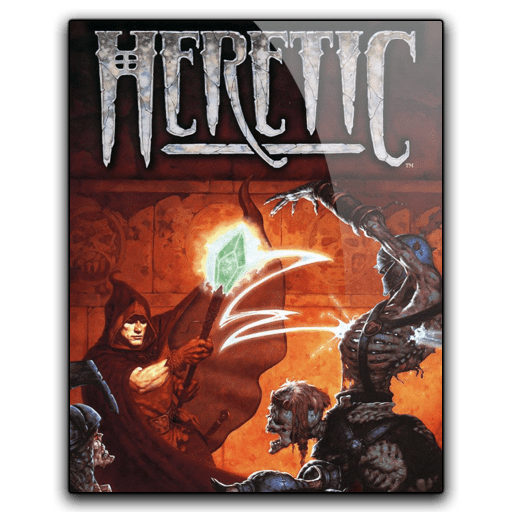
Catholic apologist John Martignoni has stated no less than seven times in public (in his newsletter, which he told me has 70,000 subscribers, and on his website) that I classified Bishop Strickland and/or Cardinal Burke as “heretics” or called them that term or thought it (line breaks represent a break in the text):
. . . essentially accusing Bp. Strickland of being a heretic . . .
So, here was Dave Armstrong essentially calling Bp. Strickland, and Cardinal Burke, a couple of heretics.
There is no need for all the public rancor and the public attacks and calling people reactionaries and heretics and the like. Does absolutely no good.
. . . there is absolutely no reason to call Bp. Strickland a heretic, or to even strongly imply it. (“Apologetics for the Masses #466 – Pope Francis, Bp. Strickland, Papal Indefectibility, and…Dave Armstrong”)
Okay, so why am I saying that Armstrong appears to be misunderstanding the Church’s teaching on Papal Indefectibility (and/or Papal Infallibility) based on his FB posts that I’ve quoted above? It’s because he is disagreeing with Cdl. Burke’s tweet. Again, Cdl. Burke said the following: “If your bishop, or the supreme pastor of the Church, is affirming things not in accord with Sacred Tradition/the deposit of the faith, that can’t command your obedience. You can’t command obedience to do something against faith & morals.” Armstrong disagrees with that. In fact, he disagrees with that so strongly that he is, for all intents and purposes, saying anyone who agrees with that statement is rejecting the Church’s dogmatic teaching on the Pope. I.e., that person is a heretic.
That’s where he started begging off about the questions being too complex, and matters of canon law, and that he defers to others who are more qualified in such matters. Well, if you aren’t qualified enough to answer these questions, then how can you be qualified enough to essentially deem Bp. Strickland and Cdl. Burke to be heretics who deny Papal Indefectibility and the authority of the Pope?!
So, Dave is, essentially, accusing Bp. Strickland and Cdl. Burke of heresy…of rejecting Papal Indefectibility. (“Apologetics for the Masses #469 – Pope Francis, Bp. Strickland, Papal Indefectibility, and…Dave Armstrong (Part 4)”; see also Part 2 and Part 3 of the ongoing soap opera)
In fact, I did no such thing. One can consult my Facebook thread where this disagreement began, or a second part, or a third, and the words “heresy” or “heretic” never appear at all (from me) in them, let alone as applied to either of these two men. I never made the claim. I have exactly two articles about Bp. Strickland on my blog:
Tragic Bp. Strickland & Reaction from the Usual Suspects [11-14-23]
Bishop Strickland: The Writing Was on the Wall [Catholic365, 11-16-23]
To the best of my recollection, I had never written about him prior to this time (I scarcely even knew who he was). In the article above dated 11-14-23, the word “heresy” appears once, and it’s describing Strickland’s view of the pope (not mine of him). I cited Mike Lewis writing, “He also signed an open letter [dated 9-16-22] last year accusing Pope Francis of teaching heresy“. In the second, which Martignoni has cited as evidence of his mythical belief in alleged claims that I made, the words “heresy” or “heretic” never appear at all. It’s pretty difficult and foolish to claim that someone classified another as a heretic, when they never even used the word.
Martignoni contends that the following statement of mine on my Facebook page (the title of the post and thread where this tempest in a teapot began) proves that I classified Strickland as a heretic:
What is the difference between Bishop Strickland and Martin Luther? The first claims to acknowledge papal authority but then rejects it at his convenience; the second is honest and not conflicted about rejecting papal authority.
One can make an analogy without intending (nor is it logically necessary to conclude) that the two things or persons being compared are absolutely the same in all respects. My (I think, obvious) point was that one man was consistent with regard to popes and the other was not. One rejected papal authority altogether (as a Protestant); the second only did inconsistently, as a Catholic who ought to obey papal authority. That was my point. It wasn’t a point about papal infallibility or indefectibility, but about papal authority: a much broader area. “Say what you mean and mean what you say.” That’s what I always try to do. It was a million miles away from claiming that the Catholic man is a heretic, as Luther was, because one can disobey papal authority in several ways without being a heretic (some might involve, for example, schism rather than heresy).
If I thought Bp. Strickland was a heretic, I certainly would have called him one. Pretty much anyone, I think, who has read much of my writing at all knows that I am not the type who minces words or is reluctant to express even a “controversial” opinion. I try to be charitable at all times, but that’s a different thing from being straightforward or a “straight shooter.” I am those things, too. James wrote “let your yes be yes and your no be no” (Jas 5:12). Good traits for an apologist and for all Christians!
Martignoni’s strongest statement on the topic is “he is [yours truly!], for all intents and purposes, saying anyone who agrees with that statement is rejecting the Church’s dogmatic teaching on the Pope. I.e., that person is a heretic.” Here he is claiming that I have classified papal indefectibility as a dogma. But in my article at Catholic365 (linked above, and that he presumably read, since he mentioned it), I specifically differentiated the two teachings on the pope and error:
. . . the doctrine of papal indefectibility, which was proclaimed at Vatican I (One) in 1870, at the same time it decreed papal infallibility as a de fide dogma.
Catholic dogmatic theologian Robert Fastiggi (translator and editor of the latest 2012 edition of Denzinger’s Enchiridion: the standard source for determining what the Church teaches) — and a personal friend of mine — has again helpfully clarified the issue of papal indefectibility, in a piece that will shortly be hosted and posted on my own blog. He wrote about this question:
I never claimed that Vatican I defined the indefectibility of the Roman Pontiff. I believe, though, that it affirms this teaching in Pastor Aeternus, chapter IV, when it teaches that “in the Apostolic See the Catholic religion has always been preserved immaculate and sacred doctrine honored” (Denz.-H, 3066). In the same chapter of Vatican I, it is likewise stated that “this See of St. Peter always remains untainted by any error, according to the divine promise of our Lord and Savior made to the prince of the disciples: ‘But I have prayed for you that your faith may not fail; and when you have turned again, strengthen your brethren’ (Lk 22:32)” [Denz.-H. 3070]. The possibility of a heretical pope is likewise rejected by Vatican I, when it affirms that the “charism of truth and never-failing faith was conferred upon Peter and his successors in this chair in order that they may perform their supreme office for the salvation of all” [Denz.-H, 3071]. (emphasis added).
What seemed true to Suárez and Bellarmine has been affirmed by an ecumenical council. How can these words of Vatican I be reconciled with a Pope teaching heresy? Some claim the pope is protected from heresy only when he teaches ex cathedra. But this is not what Vatican I says. . . . Heresy is the denial or calling into doubt a truth that must be believed with divine and Catholic faith. . . . I do agree that we need to give a benevolent interpretation of what Bishop Strickland and Cardinal Burke have said. They seem to assume that a pope can teach heresy. Well, that is their opinion, and their opinion is not infallible, and I argue that their opinion is not that of Vatican I. Unfortunately, the affirmation of papal indefectibility and the divine protection of popes from teaching heresy does seem to not be adequately understood today. . . . The simple fact remains that the Magisterium has never affirmed that popes can teach heresy, and the letter of Pope Agatho and Vatican I seem to rule out that possibility.
The late great Servant of God Fr. John A. Hardon, S. J., my mentor, who received me into the Church, wrote the glowing Foreword to my first book, A Biblical Defense of Catholicism, and baptized my first two sons, wrote a reference work called Modern Catholic Dictionary (Garden City, New York: Doubleday & Co., 1980). I often use it for the sake of producing solid, orthodox Catholic definitions. It defines “Doctrine” as follows (p. 168):
Any truth taught by the Church as necessary for acceptance by the faithful. The truth may be either formally revealed (as the Real Presence), or a theological conclusion (as the canonization of a saint), or part of the natural law (as the sinfulness of contraception). In any case, what makes it doctrine is that the Church authority teaches that it is to be believed. This teaching may be done either solemnly in ex cathedra pronouncements or ordinarily in the perennial exercise of the Church’s magisterium or teaching authority.
An ecumenical council, ratified by the pope, is certainly “the Church’s magisterium or teaching authority.” In fact it is the extraordinary magisterium. Vatican I teaches papal indefectibility. It’s just not at the highest level of authority (ex cathedra or de fide dogma). Nonetheless, it is to be adhered to by Catholics, as an official teaching of the magisterium (which has never taught otherwise, if we accept Dr. Fastiggi’s word on that). This is according to Canon 752 in the Code of Canon Law:
Although not an assent of faith, a religious submission of the intellect and will must be given to a doctrine which the Supreme Pontiff or the college of bishops declares concerning faith or morals when they exercise the authentic magisterium, even if they do not intend to proclaim it by definitive act; therefore, the Christian faithful are to take care to avoid those things which do not agree with it.
This is why radical Catholic reactionaries (especially Peter Kwasniewski and the folks at the website One Peter Five) are at present trying to delegitimize the authority of Vatican I, precisely because they don’t like its teachings on papal infallibility and indefectibility (yet they are required to give the latter “a religious submission of the intellect and will”). Dogmas are on a higher level still. Here is Fr. Hardon’s definition:
Doctrine taught by the Church to be believed by all the faithful as part of divine revelation. All dogmas, therefore, are formally revealed truths and promulgated as such by the Church. they are revealed either in Scripture or tradition, either explicitly (as the Incarnation) or implicitly (as the Assumption). Moreover, their acceptance by the faithful must be proposed as necessary for salvation. They may be taught by the Church in a solemn manner, as with the definition of the Immaculate Conception, or in an ordinary way, as with the constant teaching on the malice of taking innocent human life. (pp. 168-169)
This distinction has a relation to what it means to be classified as a “heretic.” It specifically has to do with rejection of dogmas. Fr. Hardon defines “heresy”:
In the Roman Catholic Church, heresy has a very specific meaning. Anyone who, after receiving baptism, while remaining nominally a Christian, pertinaciously denies or doubts any of the truths that must be believed with divine and Catholic faith is considered a heretic. Accordingly four elements must be verified to constitute formal heresy; previous valid baptism, which need not have been in the Catholic Church; external profession of still being a Christian, otherwise a person becomes an apostate; outright denial or positive doubt regarding a truth that the Catholic Church has actually proposed as revealed by God; and the disbelief must be morally culpable, where a nominal Christian refuses to accept what he knows is a doctrinal imperative.
Objectively, therefore, to become a heretic in the strict canonical sense and be excommunicated from the faithful, one must deny or question a truth that is taught not merely on the authority of the Church but on the word of God revealed in the Scriptures or sacred tradition. Subjectively a person must recognize his obligation to believe. If he acts in good faith, as with most persons brought up in non-Catholic surroundings, the heresy is only material and implies neither guilt nor sin against faith. (p. 247)
Likewise, Canon 751 in Book III of the Code of Canon Law: “Heresy is the obstinate denial or obstinate doubt after the reception of baptism of some truth which is to be believed by divine and Catholic faith . . .” I simply have not accused either Bp. Strickland or Cdl. Burke of being heretics. Moreover, I have written very critically of the group that I have myself coined “radical Catholic reactionaries,” but am very careful not to call them even schismatics. I always try to be very meticulous and consistent in these matters of proper terminology. I will usually use the term “quasi-schismatics.” That is, ones who are arguably getting dangerously close to schism, but have not yet crossed that canonical line. So, for example, here is a typical broad statement from a past article of mine concerning Catholic reactionaries:
I define “radical Catholic reactionaries” as a rigorist, divisive group completely separate from mainstream “traditionalism” that continually, vociferously, and vitriolically (as a marked characteristic or defining trait) bashes and trashes popes, Vatican II, the New Mass, and ecumenism (the “big four”): going as far as they can go without technically crossing over the canonical line of schism.
In other words, I don’t even call those on the right side of the ecclesiastical spectrum (ones who call themselves — rightly or wrongly — Catholic traditionalists) “schismatics” let alone “heretics.” Anyone who has followed my writings about them, which have been published for over 25 years (including two books on the topic) knows that.
A Google Advanced Search of my blog for the word “heretic” reveals how rarely and specifically I use the term. I have used it, for example, with regard to Eastern Patriarchs in the early centuries who were guilty of serious Christological errors such as Arianism, Monophysitism, or Monothelitism, and for the “pantheist heretic” Michael Servetus. I rarely use it of any living person, except for maybe Mormons or Jehovah’s Witnesses, because of their denial of the Holy Trinity. It’s simply not the way that I talk, and it’s ludicrous for anyone to imply that it is, or to make the charge that I allegedly applied the term to Strickland or Burke.
If John Martignoni continues with this misguided accusation he will only harm himself and his readers. The ones freely slinging the word “heretic” around are the vitriolic critics of the pope, not myself. Projecting their tragically mistaken mentality onto me doesn’t solve anything. Even Catholic philosopher Ed Feser, no big friend of the pope, wrote on his blog on 3-5-24: “No one has succeeded in showing that Pope Francis is a formal heretic.”
***
See the related articles:
Papal Indefectibility: Dr. Fastiggi vs. Fr. Z [3-11-21]
*
***
*
Practical Matters: Perhaps some of my 4,500+ free online articles (the most comprehensive “one-stop” Catholic apologetics site) or fifty-five books have helped you (by God’s grace) to decide to become Catholic or to return to the Church, or better understand some doctrines and why we believe them.
Or you may believe my work is worthy to support for the purpose of apologetics and evangelism in general. If so, please seriously consider a much-needed financial contribution. I’m always in need of more funds: especially monthly support. “The laborer is worthy of his wages” (1 Tim 5:18, NKJV). 1 December 2021 was my 20th anniversary as a full-time Catholic apologist, and February 2022 marked the 25th anniversary of my blog.
PayPal donations are the easiest: just send to my email address: [email protected]. Here’s also a second page to get to PayPal. You’ll see the term “Catholic Used Book Service”, which is my old side-business. To learn about the different methods of contributing (including Zelle), see my page: About Catholic Apologist Dave Armstrong / Donation Information. Thanks a million from the bottom of my heart!
*
***
Photo credit: Image by rarenux [Deviant Art / Creative Commons Attribution-Noncommercial 3.0 License]
Summary: Catholic apologist John Martignoni insists that I regard Bp. Strickland & Cdl. Burke as “heretics.” This is patently, utterly false & I provide several reasons for why it is.
Traditionalism vs. Radical Catholic Reactionaries
Previous Post
March 7, 2024
Church Fathers & Sola Fide (vs. Jordan Cooper)
Next Post
March 9, 2024 Papal Authority in the NT and the Fathers (vs. Mike Winger)
Recent Comments
"And lastly, I belong to no denomination and am free to serve God as He ..."
Is Venerating Men & Angels Worship? ..."
"And obeisance doesn't mean "worship". It means "respect", "obey", or "submission". Very weird that you ..."
Is Venerating Men & Angels Worship? ..."
"Many of these scriptures you have noted have been taken out of context. With Daniel, ..."
Is Venerating Men & Angels Worship? ..."
""Protestants often point out that Jesus is now triumphant in heaven and object to Catholics ..."
Three More Anti-Catholic Lies About Catholicism ..."
Browse Our Archives
Select a Category & Last Things About Me Anti-Catholicism Atheism & Agnosticism Baptism and Sacramentalism Bible and Tradition Blessed Virgin Mary Books by Dave Armstrong C. S. Lewis Calvinism & General Protestantism Catholic Apologetics Catholic Apologists Catholic conversion Catholic converts Christmas Church (Ecclesiology) Church History Conversion and Converts Development of Doctrine Eastern Orthodoxy Ecumenism & Christian Unity Eucharist & Liturgy Fathers of the Church French Translations G. K. Chesterton Hell Hell & Satan Hell & Satan & Last Things Heresies & Comparative Religion Holistic Health Inquisition & Crusades & Scandals James White Jews & Judaism & Old Testament John Calvin John Henry Newman Liberal / Modernist Theology Life Issues Literary Resume Lutheranism Mariology Martin Luther Music Orthodoxy Papacy & Infallibility Personal Page Philosophy & Science Political & Ethical & Moral Issues Protestant Persecution & Intolerance Protestantism Purgatory Purgatory & Penance Romantic & Imaginative Theology Saints & Purgatory & Penance Salvation Salvation & Justification Satan & Last Things Sexuality and Gender Issues Spanish Translations Traditionalism vs. Radical Catholic Reactionaries Traducciones al español / tradução para português Trinitarianism & Christology Uncategorized Videos
Select a Month October 2026 September 2026 August 2026 July 2026 June 2026 May 2026 April 2026 March 2026 February 2026 January 2026 December 2025 November 2025 October 2025 September 2025 August 2025 July 2025 June 2025 May 2025 April 2025 March 2025 February 2025 January 2025 December 2024 November 2024 October 2024 September 2024 August 2024 July 2024 June 2024 May 2024 April 2024 March 2024 February 2024 January 2024 December 2023 November 2023 October 2023 September 2023 August 2023 July 2023 June 2023 May 2023 April 2023 March 2023 February 2023 January 2023 December 2022 November 2022 October 2022 September 2022 August 2022 July 2022 June 2022 May 2022 April 2022 March 2022 February 2022 January 2022 December 2021 November 2021 October 2021 September 2021 August 2021 July 2021 June 2021 May 2021 April 2021 March 2021 February 2021 January 2021 December 2020 November 2020 October 2020 September 2020 August 2020 July 2020 June 2020 May 2020 April 2020 March 2020 February 2020 January 2020 December 2019 November 2019 October 2019 September 2019 August 2019 July 2019 June 2019 May 2019 April 2019 March 2019 February 2019 January 2019 December 2018 November 2018 October 2018 September 2018 August 2018 July 2018 June 2018 May 2018 April 2018 March 2018 February 2018 January 2018 December 2017 November 2017 October 2017 September 2017 August 2017 July 2017 June 2017 May 2017 April 2017 March 2017 February 2017 January 2017 December 2016 November 2016 October 2016 September 2016 August 2016 July 2016 June 2016 May 2016 April 2016 March 2016 February 2016 January 2016 December 2015 November 2015 October 2015 September 2015 August 2015 July 2015 June 2015 May 2015 April 2015 March 2015 February 2015 January 2015 December 2014 November 2014 October 2014 September 2014 August 2014 July 2014 June 2014 April 2014 March 2014 February 2014 January 2014 December 2013 November 2013 October 2013 September 2013 August 2013 July 2013 June 2013 April 2013 March 2013 February 2013 January 2013 December 2012 November 2012 October 2012 September 2012 August 2012 July 2012 June 2012 May 2012 April 2012 March 2012 February 2012 January 2012 December 2011 November 2011 October 2011 September 2011 August 2011 July 2011 June 2011 April 2011 March 2011 February 2011 October 2010 September 2010 August 2010 July 2010 April 2010 March 2010 December 2009 October 2009 August 2009 July 2009 June 2009 May 2009 March 2009 February 2009 October 2008 September 2008 April 2008 March 2008 February 2008 January 2008 December 2007 November 2007 October 2007 May 2007 March 2007 February 2007 January 2007 November 2006 October 2006 September 2006 August 2006 July 2006 June 2006 May 2006 April 2006 March 2006 February 2006 October 2005 June 2005 April 2005 February 2005 July 2004 May 2004 April 2004
Follow Us!
TAKE THE
Religious Wisdom Quiz
What is the meaning of the word "Golgotha"?
Select your answer to see how you score.
Peaceful Garden River of Blood City of Bread Place of the Skull
Books by This Author Books by Dave Armstrong
Related posts from Biblical Evidence for Catholicism

Why Wes Huff (and Everyone) Should Be Catholic
Biblical Evidence for Catholicism

Invocation of Saints: Catholic Scholars vs. Me? Nope!
Biblical Evidence for Catholicism
Foreword: "Ignorance of Things Divine" (Andrew Mioni)
Biblical Evidence for Catholicism

My “Number Articles”: Alphabetized by Topic
Biblical Evidence for Catholicism
TRENDING AT PATHEOS Catholic

I was strolling through the top floor of the brand new Parthenon...

What Does Gêvâh Mean For Kimberley Guifoyle &...
This week, a lot of the news is focused on Kimberly Guilfoyle....

INNER CIRCLE: Profound Mystery (Of Christ In All...
Ephesians 5:31-32 “For this reason, a man will leave his father and...

Do Not Rejoice When Your Enemy Falls: The...
Turning an execution into a public spectacle is a disturbing expression of...

'The Chosen' S6 Trailer: The Passion Gets Very...
Not many watching 'The Chosen' worry about spoilers, but just because they...

The purpose-driven labor priest
A labor activist reads Rick Warren and it gets me wondering about...
view all Catholic blogs
What Are Your Thoughts?leave a comment
Ad-Free & Subscriber Log-In Subscription Support
- About Us
- 2026 Calendar
- Videos
- Podcasts
- Library of World Religions
- Faith In Media Tracker
- Advertise With Us
- Write for Us
- Privacy Policy
- Terms of Service
- Do Not Sell My Data
- Contact Us
- Radiant Digital
- Manage Newsletter Subscriptions
- Unsubscribe From Notifications
- Sitemap
Copyright 2008-2026, Patheos. All rights reserved.
Subscription Support Ad-Free & Subscriber Log-In
Follow Patheos