
BuddhistCatholicContemplativeEvangelicalGeneral ChristianHinduJewishLatter-day SaintMuslimNew VisionsProgressive Christian
Beliefs
- Buddhist
- Catholic
- Contemplative
- Evangelical
- General Christian
- Hindu
- Jewish
- Latter-day Saint
- More Voices
- Muslim
- New Visions
- Pagan
- Progressive Christian
Topics
- Religion News
- Food and Religion
- Sports and Religion
- Religious Art
- Religious Music and Entertainment
- Religious Events
- History and Religion
- Style and Religion
- Politics and Religion
- Women in Religion
- Recreation Outdoors and Religion
- Business Finance and Religion
- Careers Workplace and Religion
- Education and Religion
- Family Parenting and Religion
- Health Fitness and Religion
- Home and Religion
- Relationships and Religion
- Technology and Religion
- Travel and Religion
Columnists
- Buddhist Columnists
- Business Finance and Religion Columnists
- Careers Workplace and Religion Columnists
- Catholic Columnists
- Contemplative Columnists
- Education and Religion Columnists
- Evangelists Columnists
- Family Parenting and Religion Columnists
- General Christian Columnists
- Health Fitness and Religion Columnists
- Hindu Columnists
- History and Religion Columnists
- Home and Religion Columnists
- Jewish Columnists
- More Voices Columnists
- Latter Day Columnists
- Muslim Columnists
- New Visions Columnists
- Nonreligious Columnists
- Pagan Columnists
- Politics and Religion Columnists
- Progressive Columnists
- Recreation Outdoors and Religion Columnists
- Relationships and Religion Columnists
- Religion News Columnists
- Religious Art Columnists
- Religious Events Columnists
- Religious Music and Entertainment Columnists
- Sports and Religion Columnists
- Style and Religion Columnists
- Technology and Religion Columnists
- Travel and Religion Columnists
- Women in Religion Columnists
Resource Library
- 2026 Calendar
- Library of World Religions
- The 100 Most Holy Places on Earth
- Patheos Answers
- Podcasts
- Videos
- Faith Leaders Database
- Anglican Episcopalian
- Bahai
- Baptist
- Buddhism
- Christianity
- Confucianism
- Eastern Orthodoxy
- Hinduism
- Holiness and Pentecostal
- ISKCON
- Islam
- Judaism
- Lutheran
- Methodist
- The Church of Jesus Christ of Latter-day Saints
- New Age
- Paganism
- Presbytarian and Reformed
- Protestantism
- Religion Behind the Scenes
- Roman Catholic
- Scientology
- Shia Islam
- Sikhism
- Sufism
- Sunni Islam
- Taoism
- Zen
- See all religions
Research Tools
 Ad-Free & Subscriber Log-In Subscription Support
Ad-Free & Subscriber Log-In Subscription Support
Follow Patheos 

- Trending:
- Forgiveness
- |
- Marriage
- |
- Consciousness
- |
- Death Penalty
- |
- Election
- |
- Halloween

-
About
-
Catholic Apologetics
-
Church History
-
Great Apologists
-
Christian Worldview
-
Protestantism & Misc.
- Home
- Catholic
- History and Religion
- Last Day: What Jesus Says to the Elect (vs. Gavin Ortlund)
Last Day: What Jesus Says to the Elect (vs. Gavin Ortlund)
Last updated on: February 16, 2024 at 3:10 pm by Dave Armstrong
Last Day: What Jesus Says to the Elect (vs. Gavin Ortlund) 2024-02-16T15:10:02-04:00 Dave Armstrong
Patheos Explore the world's faith through different perspectives on religion and spirituality! Patheos has the views of the prevalent religions and spiritualities of the world.
+ Bible Passages On the Organic Relationship of Faith, Works, Grace, Obedience, & Salvation
Dr. Gavin Ortlund is a Reformed Baptist author, speaker, pastor, scholar, and apologist for the Christian faith. He has a Ph.D. from Fuller Theological Seminary in historical theology, and an M.Div from Covenant Theological Seminary. Gavin is the author of seven books as well as numerous academic and popular articles. For a list of publications, see his CV. He runs the very popular YouTube channel Truth Unites, which seeks to provide an “irenic” voice on theology, apologetics, and the Christian life. See also his website, Truth Unites and his blog.
In my opinion, he is currently the best and most influential popular-level Protestant apologist, who (especially) interacts with and offers thoughtful critiques of Catholic positions, from a refreshing ecumenical (not anti-Catholic), but nevertheless solidly Protestant perspective. That’s what I want to interact with, so I have done many replies to Gavin and will continue to do so. His words will be in blue. I use RSV for all Bible passages unless otherwise specified.
All of my replies to Gavin are collected in one place on my Calvinism & General Protestantism web page, near the top in the section, “Replies to Reformed Baptist Gavin Ortlund.”
This is my 20th reply to his material.
*****
This is a response to a statement in Gavin’s video, “Why Reformation Was Needed” (10-20-23). He stated at 38:10: “when you die and you stand before God he will say to you ‘righteous in my sight’ because you are clothed in the righteousness of Christ.”
Protestants frequently preach about “if you die tonight and Jesus asks you why you should be saved and allowed into heaven, what will you say?” and what Jesus supposedly says to the elect believer who is proclaimed to be saved once and for all at the Last Judgment (“eschatological salvation”).
Ironically (and even remarkably, given this background),when I looked into this, I discovered that Jesus never says any such thing. What Gavin states here is technically not biblical (in terms of Jesus saying it at that time). Jesus doesn’t say that on the Last Day to the elect about to enter heaven. But first, let me respond to what Gavin did claim.
To be sure, there is indeed a scriptural motif of being “clothed” in His righteousness. That’s justification by faith, and Catholics agree with it. What we disagree with is the notion of faith alone, completely and categorically separated from works, which James — in line with the entire Bible — says is an essential, intertwined aspect or characteristic of this faith (“faith without works is dead”). And when we look at one passage that describes the process of being “clothed” this is what we find:
Ephesians 6:5-8, 11, 13-17 Slaves, be obedient to those who are your earthly masters, with fear and trembling, in singleness of heart, as to Christ; [6] not in the way of eye-service, as men-pleasers, but as servants of Christ, doing the will of God from the heart, [7] rendering service with a good will as to the Lord and not to men, [8] knowing that whatever good any one does, he will receive the same again from the Lord, whether he is a slave or free. . . . [11] Put on the whole armor of God, that you may be able to stand against the wiles of the devil. . . . [13] Therefore take the whole armor of God, that you may be able to withstand in the evil day, and having done all, to stand. [14] Stand therefore, having girded your loins with truth, and having put on the breastplate of righteousness, [15] and having shod your feet with the equipment of the gospel of peace; [16] besides all these, taking the shield of faith, with which you can quench all the flaming darts of the evil one. [17] And take the helmet of salvation, and the sword of the Spirit, which is the word of God.
Note first of all that faith is not alone at all. Paul even states, almost nonchalantly, “besides all these [including righteousness], taking the shield of faith . . .” This is not merely God declaring us righteous (imputed righteousness). St. Paul doesn’t describe our relationship with righteousness as being granted by mere declaration (with us being totally passive); on the contrary, we have to do all sorts of good works and make the effort to be righteous and to receive God’s grace, justification, and salvation.
And so we see above in the highlighted green texts, how much human effort is made in the whole process. In this passage, God doesn’t “clothe” us with the “armor of God”; rather, we “put [it] on” and “take” it. We “put on the breastplate of righteousness”; we “shod” our “feet” with the “gospel” and we take the shield of faith (which — again — is not alone). It’s the language of human action; not passivity. The acquisition of these “clothing” items is surrounded by all these works and actions, precisely as James highlights in his epistle, and as Isaiah also does (as we will see below).
All of this involves our actions; it’s not merely a proclamation that a second ago we were lost, and now we’re saved because God did all these things. It’s entirely originated and enabled by His grace, to be sure (Catholics believe in sola gratia, too), but not without our participation through works enabled by His grace. That’s the true biblical gospel of salvation; not “faith alone.” Gavin in this five-minute video presents at the end what he construes to be the biblical gospel of salvation. I am now doing so in a little more depth, from a Catholic — and I contend, even more deeply biblical — perspective.
Calvinist Randall Van Meggelen, in an article about being “clothed in righteousness,” offered two Bible passages that most closely resemble that phrase: Isaiah 1:18 and 61:10. I love the book of Isaiah. It’s always been my favorite Old Testament book. What’s interesting, again, is how much the notion of being “clothed” or “covered” in the first passage, is literally surrounded by good works that seem to play a crucial and necessary causal role in bringing about this state of affairs. Once again, the Catholic view is much more supported than the Protestant “faith alone” outlook, and we don’t have to ignore the actual context:
Isaiah 1:16-20 Wash yourselves; make yourselves clean; remove the evil of your doings from before my eyes; cease to do evil, [17] learn to do good; seek justice, correct oppression; defend the fatherless, plead for the widow. [18] “Come now, let us reason together, says the LORD: though your sins are like scarlet, they shall be as white as snow; though they are red like crimson, they shall become like wool. [19] If you are willing and obedient, you shall eat the good of the land; [20] But if you refuse and rebel, you shall be devoured by the sword; for the mouth of the LORD has spoken.”
Clearly, works cannot possibly be separated from the blessing of justification and forgiveness. They partially bring about the result of God’s grace working together with our participatory action and obedience: our sins being “white as snow”; that is, forgiven. God lists no less than nine good works in Isaiah 1:16. It’s certainly strongly implied that if one does all those good works, then their sins will be made “white as snow.” Then God reiterates “If you are willing and obedient” you get the reward, and that, conversely, if we “refuse and rebel” we don’t get it. It’s a conditional promise, which is very typical in the Old Testament period.
Whereas Isaiah 1:16-20 emphasizes our part in the process of salvation, Isaiah 61:10 is more about God’s grace and the justification He blesses us with:
Isaiah 60:10 I will greatly rejoice in the LORD, my soul shall exult in my God; for he has clothed me with the garments of salvation, he has covered me with the robe of righteousness, as a bridegroom decks himself with a garland, and as a bride adorns herself with her jewels.
Both things are true, and must be accepted together, in harmony. We can’t simply pull out texts that teach one side of the equation, and ignore the other biblical side of it. Isaiah 60 still mentions good works, too. We are to “bind up the brokenhearted” and open “the prison to those who are bound” and “comfort all who mourn” (60:1-2), and work for “justice” (60:8).
I wrote a paper entitled, “Isaiah’s Catholic & UnProtestant Soteriology” [8-1-23]. In it, I highlighted 26 passages (with many additional cross-references), where Catholics and Protestants fully agree, as to their meaning. Then I noted 19 others where Isaiah teaches a Catholic “faith without works is dead” soteriology. I have made similar analyses of the book of Jeremiah and the books of the twelve minor prophets.
But now we go back to the original topic, and what I allude to in the title of this article. What does the Bible teach us about what Jesus actually says to His elect on the Last Day when they stand before Him? Gavin claimed that He will say, “righteous in my sight” and that He will do so because we “are clothed in the righteousness of Christ.” The elect certainly will be clothed in Christ’s righteousness and justified due to His death on the cross on our behalf. All agree with that. I’m not disagreeing with it.
My point is that this is not what Jesus says, according to what we know, based on God’s inspired revelation, the Bible. And I am protesting that Gavin completely removes the central role of our works in the whole scenario. That’s not just my Catholic bias. It’s Holy Scripture. I found no less than fifty passages proving it. Of the fifty passages, only one mentions faith at all (Rev 21:8 refers to the “faithless” who will be damned, alongside the absence of good works). The most directly relevant passage, where we find the answer to the question, is the following:
Matthew 25:31-36 “When the Son of man comes in his glory, and all the angels with him, then he will sit on his glorious throne. [32] Before him will be gathered all the nations, and he will separate them one from another as a shepherd separates the sheep from the goats, [33] and he will place the sheep at his right hand, but the goats at the left. [34] Then the King will say to those at his right hand, `Come, O blessed of my Father, inherit the kingdom prepared for you from the foundation of the world; [35] for I was hungry and you gave me food, I was thirsty and you gave me drink, I was a stranger and you welcomed me, [36] I was naked and you clothed me, I was sick and you visited me, I was in prison and you came to me.’
We see not a word about faith or being clothed in righteousness here. According to our Lord Jesus, they are saved and will enter into heaven because they did six listed good works. This is what Jesus actually says on the Last Day to the elect. It’s not a mere projection of distinctive (and unbiblical) Protestant soteriology of faith alone. If we know what He says on the Last Day, from the Bible, we do! A=A. We need not speculate any further about it. It’s biblically settled beyond any discussion. Here’s the second most relevant passage about what Jesus actually says:
Matthew 7:16-27 You will know them by their fruits. Are grapes gathered from thorns, or figs from thistles? So every sound tree bears good fruit; but the bad tree bears evil fruit. A sound tree cannot bear evil fruit, nor can a bad tree bear good fruit. Every tree that does not bear good fruit is cut down and thrown into the fire. Thus you will know them by their fruits. Not every one who says to me, “Lord, Lord,” shall enter the kingdom of heaven, but he who does the will of my Father who is in heaven. On that day many will say to me, “Lord, Lord, did we not prophesy in your name, and cast out demons in your name, and do many mighty works in your name?” And then will I declare to them, “I never knew you; depart from me, you evildoers.” Every one then who hears these words of mine, and does them will be like a wise man who built his house upon the rock; and the rain fell, and the floods came, and the winds blew and beat upon that house, but it did not fall, because it had been founded on the rock. And every one who hears these words of mine, and does not do them will be like a foolish man who built his house upon the sand; and the rain fell, and the floods came, and the winds blew and beat against that house, and it fell; and great was the fall of it.
Jesus says many other things along the same lines, that express the same idea, regarding how one is saved in the end. In the parable of the talents (i.e., coins, not abilities), in Matthew 25:14-30, right before the primary passage on this topic above, the saved person did a work of increasing the talents, and so Jesus says to him, “Well done, good and faithful servant; you have been faithful over a little, I will set you over much; enter into the joy of your master.” In Matthew 7:16-27, Jesus likewise states about he ones who are saved: “You will know them by their fruits” and “Every tree that does not bear good fruit is cut down and thrown into the fire.”
The saved person is the one “who does the will of my Father who is in heaven” and Jesus reiterates: “Every one then who hears these words of mine, and does them will be like a wise man who built his house upon the rock.” Jesus talks about what He will do on the Last Day, as well as what He will say: “the Son of man is to come with his angels in the glory of his Father, and then he will repay every man for what he has done” (Mt 16:27).
Similarly, He said that “every tree therefore that does not bear good fruit is cut down and thrown into the fire” (Lk 3:9; cf. Mt 3:10; 7:19). Jesus says that He has “authority to execute judgment ” and that “those who have done good” will gain “the resurrection of life” and that “those who have done evil” will incur “the resurrection of judgment” (Jn 5:26-29).
This is just from Jesus. There are many more passages with the same teaching (fifty in all) from the Old Testament and the epistles. All of it is completely harmonious with Catholic soteriology, and in conflict with Protestant “faith alone” soteriology. Protestants, if they are being honest with themselves, and seeking to be “biblical” (as they always claim they are doing, and that we Catholics are supposedly not doing) need to grapple with these passages that sure seem to be in conflict with their beliefs. I issue the challenge, with all due respect to my esteemed and respected Protestant brethren in Christ.
**
See some additional related thoughts of mine and discussion with a Protestant friend on my Facebook page.
*
***
*
Practical Matters: Perhaps some of my 4,500+ free online articles (the most comprehensive “one-stop” Catholic apologetics site) or fifty-five books have helped you (by God’s grace) to decide to become Catholic or to return to the Church, or better understand some doctrines and why we believe them.
Or you may believe my work is worthy to support for the purpose of apologetics and evangelism in general. If so, please seriously consider a much-needed financial contribution. I’m always in need of more funds: especially monthly support. “The laborer is worthy of his wages” (1 Tim 5:18, NKJV). 1 December 2021 was my 20th anniversary as a full-time Catholic apologist, and February 2022 marked the 25th anniversary of my blog.
PayPal donations are the easiest: just send to my email address: [email protected]. Here’s also a second page to get to PayPal. You’ll see the term “Catholic Used Book Service”, which is my old side-business. To learn about the different methods of contributing (including Zelle), see my page: About Catholic Apologist Dave Armstrong / Donation Information. Thanks a million from the bottom of my heart!
*
***
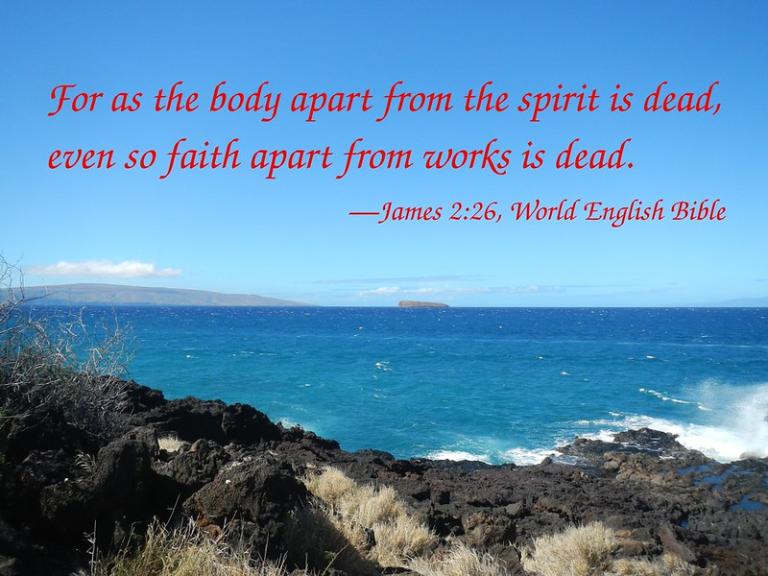
Photo credit: Kahunapule Michael Johnson (1-22-16) [Flickr / CC BY-SA 2.0 DEED license]
Summary: The Bible doesn’t verify that Jesus will say “righteous in my sight” to the elect. It does indicate in several places that He talks solely about good works on the Last Day.
Calvinism & General Protestantism
Previous Post
February 15, 2024
Questioning the Bible & Jesus: Where Does it End?
Next Post
February 16, 2024 Indulgences: Luther's View & the Catholic Encyclopedia
Recent Comments
"And lastly, I belong to no denomination and am free to serve God as He ..."
Is Venerating Men & Angels Worship? ..."
"And obeisance doesn't mean "worship". It means "respect", "obey", or "submission". Very weird that you ..."
Is Venerating Men & Angels Worship? ..."
"Many of these scriptures you have noted have been taken out of context. With Daniel, ..."
Is Venerating Men & Angels Worship? ..."
""Protestants often point out that Jesus is now triumphant in heaven and object to Catholics ..."
Three More Anti-Catholic Lies About Catholicism ..."
Browse Our Archives
Select a Category & Last Things About Me Anti-Catholicism Atheism & Agnosticism Baptism and Sacramentalism Bible and Tradition Blessed Virgin Mary Books by Dave Armstrong C. S. Lewis Calvinism & General Protestantism Catholic Apologetics Catholic Apologists Catholic conversion Catholic converts Christmas Church (Ecclesiology) Church History Conversion and Converts Development of Doctrine Eastern Orthodoxy Ecumenism & Christian Unity Eucharist & Liturgy Fathers of the Church French Translations G. K. Chesterton Hell Hell & Satan Hell & Satan & Last Things Heresies & Comparative Religion Holistic Health Inquisition & Crusades & Scandals James White Jews & Judaism & Old Testament John Calvin John Henry Newman Liberal / Modernist Theology Life Issues Literary Resume Lutheranism Mariology Martin Luther Music Orthodoxy Papacy & Infallibility Personal Page Philosophy & Science Political & Ethical & Moral Issues Protestant Persecution & Intolerance Protestantism Purgatory Purgatory & Penance Romantic & Imaginative Theology Saints & Purgatory & Penance Salvation Salvation & Justification Satan & Last Things Sexuality and Gender Issues Spanish Translations Traditionalism vs. Radical Catholic Reactionaries Traducciones al español / tradução para português Trinitarianism & Christology Uncategorized Videos
Select a Month October 2026 September 2026 August 2026 July 2026 June 2026 May 2026 April 2026 March 2026 February 2026 January 2026 December 2025 November 2025 October 2025 September 2025 August 2025 July 2025 June 2025 May 2025 April 2025 March 2025 February 2025 January 2025 December 2024 November 2024 October 2024 September 2024 August 2024 July 2024 June 2024 May 2024 April 2024 March 2024 February 2024 January 2024 December 2023 November 2023 October 2023 September 2023 August 2023 July 2023 June 2023 May 2023 April 2023 March 2023 February 2023 January 2023 December 2022 November 2022 October 2022 September 2022 August 2022 July 2022 June 2022 May 2022 April 2022 March 2022 February 2022 January 2022 December 2021 November 2021 October 2021 September 2021 August 2021 July 2021 June 2021 May 2021 April 2021 March 2021 February 2021 January 2021 December 2020 November 2020 October 2020 September 2020 August 2020 July 2020 June 2020 May 2020 April 2020 March 2020 February 2020 January 2020 December 2019 November 2019 October 2019 September 2019 August 2019 July 2019 June 2019 May 2019 April 2019 March 2019 February 2019 January 2019 December 2018 November 2018 October 2018 September 2018 August 2018 July 2018 June 2018 May 2018 April 2018 March 2018 February 2018 January 2018 December 2017 November 2017 October 2017 September 2017 August 2017 July 2017 June 2017 May 2017 April 2017 March 2017 February 2017 January 2017 December 2016 November 2016 October 2016 September 2016 August 2016 July 2016 June 2016 May 2016 April 2016 March 2016 February 2016 January 2016 December 2015 November 2015 October 2015 September 2015 August 2015 July 2015 June 2015 May 2015 April 2015 March 2015 February 2015 January 2015 December 2014 November 2014 October 2014 September 2014 August 2014 July 2014 June 2014 April 2014 March 2014 February 2014 January 2014 December 2013 November 2013 October 2013 September 2013 August 2013 July 2013 June 2013 April 2013 March 2013 February 2013 January 2013 December 2012 November 2012 October 2012 September 2012 August 2012 July 2012 June 2012 May 2012 April 2012 March 2012 February 2012 January 2012 December 2011 November 2011 October 2011 September 2011 August 2011 July 2011 June 2011 April 2011 March 2011 February 2011 October 2010 September 2010 August 2010 July 2010 April 2010 March 2010 December 2009 October 2009 August 2009 July 2009 June 2009 May 2009 March 2009 February 2009 October 2008 September 2008 April 2008 March 2008 February 2008 January 2008 December 2007 November 2007 October 2007 May 2007 March 2007 February 2007 January 2007 November 2006 October 2006 September 2006 August 2006 July 2006 June 2006 May 2006 April 2006 March 2006 February 2006 October 2005 June 2005 April 2005 February 2005 July 2004 May 2004 April 2004
Follow Us!
TAKE THE
Religious Wisdom Quiz
Who lived in Ur of the Chaldeans before God called him?
Select your answer to see how you score.
Jacob Abram Isaac Lot
Books by This Author Books by Dave Armstrong
Related posts from Biblical Evidence for Catholicism

On Protestant Explanations of Catholic Conversion
Biblical Evidence for Catholicism

Bible & Catholicism on Mortal Sin (vs. John...
Biblical Evidence for Catholicism

Dialogue on Eternal Security / Absolute Assurance
Biblical Evidence for Catholicism

Protestant Confessions & "Ever-Virgin" Mary
Biblical Evidence for Catholicism
TRENDING AT PATHEOS Catholic

In "Irreplaceable," our book on vocation and technology, Trevor Sutton and I...

I was strolling through the top floor of the brand new Parthenon...

What Does Gêvâh Mean For Kimberley Guifoyle &...
This week, a lot of the news is focused on Kimberly Guilfoyle....

INNER CIRCLE: Profound Mystery (Of Christ In All...
Ephesians 5:31-32 “For this reason, a man will leave his father and...

Do Not Rejoice When Your Enemy Falls: The...
Turning an execution into a public spectacle is a disturbing expression of...

'The Chosen' S6 Trailer: The Passion Gets Very...
Not many watching 'The Chosen' worry about spoilers, but just because they...
view all Catholic blogs
What Are Your Thoughts?leave a comment
Ad-Free & Subscriber Log-In Subscription Support
- About Us
- 2026 Calendar
- Videos
- Podcasts
- Library of World Religions
- Faith In Media Tracker
- Advertise With Us
- Write for Us
- Privacy Policy
- Terms of Service
- Do Not Sell My Data
- Contact Us
- Radiant Digital
- Manage Newsletter Subscriptions
- Unsubscribe From Notifications
- Sitemap
Copyright 2008-2026, Patheos. All rights reserved.
Subscription Support Ad-Free & Subscriber Log-In
Follow Patheos