
BuddhistCatholicContemplativeEvangelicalGeneral ChristianHinduJewishLatter-day SaintMuslimNew VisionsProgressive Christian
Beliefs
- Buddhist
- Catholic
- Contemplative
- Evangelical
- General Christian
- Hindu
- Jewish
- Latter-day Saint
- More Voices
- Muslim
- New Visions
- Pagan
- Progressive Christian
Topics
- Religion News
- Food and Religion
- Sports and Religion
- Religious Art
- Religious Music and Entertainment
- Religious Events
- History and Religion
- Style and Religion
- Politics and Religion
- Women in Religion
- Recreation Outdoors and Religion
- Business Finance and Religion
- Careers Workplace and Religion
- Education and Religion
- Family Parenting and Religion
- Health Fitness and Religion
- Home and Religion
- Relationships and Religion
- Technology and Religion
- Travel and Religion
Columnists
- Buddhist Columnists
- Business Finance and Religion Columnists
- Careers Workplace and Religion Columnists
- Catholic Columnists
- Contemplative Columnists
- Education and Religion Columnists
- Evangelists Columnists
- Family Parenting and Religion Columnists
- General Christian Columnists
- Health Fitness and Religion Columnists
- Hindu Columnists
- History and Religion Columnists
- Home and Religion Columnists
- Jewish Columnists
- More Voices Columnists
- Latter Day Columnists
- Muslim Columnists
- New Visions Columnists
- Nonreligious Columnists
- Pagan Columnists
- Politics and Religion Columnists
- Progressive Columnists
- Recreation Outdoors and Religion Columnists
- Relationships and Religion Columnists
- Religion News Columnists
- Religious Art Columnists
- Religious Events Columnists
- Religious Music and Entertainment Columnists
- Sports and Religion Columnists
- Style and Religion Columnists
- Technology and Religion Columnists
- Travel and Religion Columnists
- Women in Religion Columnists
Resource Library
- 2026 Calendar
- Library of World Religions
- The 100 Most Holy Places on Earth
- Patheos Answers
- Podcasts
- Videos
- Faith Leaders Database
- Anglican Episcopalian
- Bahai
- Baptist
- Buddhism
- Christianity
- Confucianism
- Eastern Orthodoxy
- Hinduism
- Holiness and Pentecostal
- ISKCON
- Islam
- Judaism
- Lutheran
- Methodist
- The Church of Jesus Christ of Latter-day Saints
- New Age
- Paganism
- Presbytarian and Reformed
- Protestantism
- Religion Behind the Scenes
- Roman Catholic
- Scientology
- Shia Islam
- Sikhism
- Sufism
- Sunni Islam
- Taoism
- Zen
- See all religions
Research Tools
 Ad-Free & Subscriber Log-In Subscription Support
Ad-Free & Subscriber Log-In Subscription Support
Follow Patheos 

- Trending:
- Forgiveness
- |
- Marriage
- |
- Consciousness
- |
- Death Penalty
- |
- Election
- |
- Halloween

-
About
-
Catholic Apologetics
-
Church History
-
Great Apologists
-
Christian Worldview
-
Protestantism & Misc.
- Home
- Catholic
- History and Religion
- Gavin Ortlund’s Sola Scriptura Proofs Prove Tradition
Gavin Ortlund’s Sola Scriptura Proofs Prove Tradition
Last updated on: February 12, 2024 at 8:14 pm by Dave Armstrong
Gavin Ortlund’s Sola Scriptura Proofs Prove Tradition 2024-02-12T20:14:01-04:00 Dave Armstrong
Patheos Explore the world's faith through different perspectives on religion and spirituality! Patheos has the views of the prevalent religions and spiritualities of the world.
Including an In-Depth Analysis of the Term “Oracles of God” (Gk., Logion, Romans 3:2)
Dr. Gavin Ortlund is a Reformed Baptist author, speaker, pastor, scholar, and apologist for the Christian faith. He has a Ph.D. from Fuller Theological Seminary in historical theology, and an M.Div from Covenant Theological Seminary. Gavin is the author of seven books as well as numerous academic and popular articles. For a list of publications, see his CV. He runs the very popular YouTube channel Truth Unites, which seeks to provide an “irenic” voice on theology, apologetics, and the Christian life. See also his website, Truth Unites and his blog.
In my opinion, he is currently the best and most influential popular-level Protestant apologist, who (especially) interacts with and offers thoughtful critiques of Catholic positions, from a refreshing ecumenical (not anti-Catholic), but nevertheless solidly Protestant perspective. That’s what I want to interact with, so I have done many replies to Gavin and will continue to do so. His words will be in blue. I use RSV for all Bible passages unless otherwise specified.
This is my 18th reply to his material.
*****
This is a response to an erroneous portion in Gavin’s video, “The 5 Minute Case for Protestantism” (6-8-23).
0:39 Only the words of Scripture are “God-breathed” (2 Tim 3:16), “carried along by the Holy Spirit” (2 Pet 1:21), “the oracles of God” (Rom 3:2).
*
Here, Gavin is attempting to prove sola Scriptura (Scripture as the only infallible authority in Christianity) in his summary five-minute presentation, with three quick New Testament passages. 2 Timothy 3:16 is the classic Protestant “prooftext” for sola Scriptura. It proves nothing of the sort, as I have written about several times:
*
Sola Scriptura, 2 Tim 3:16-17, & “Man of God” [1-27-12]
*
Answer to Sola Scriptura “Prooftexts” 2 Timothy 3:16-17 & Romans 16:15-16 (vs. David T. King) [6-26-12]
*
Reply to Lucas Banzoli: 2 Tim 3:16 & Sola Scriptura [5-31-22]
*
I addressed 2 Peter 1:21 in my article, Reply To Gavin Ortlund’s 6-Minute Sola Scriptura Defense (Including the Biblical Case for Prophets as Inspired and Infallible Authorities Besides Holy Scripture) [1-26-24]. In that piece I noted how St. Peter stated that prophecy in the New Testament was inspired revelation (“no prophecy of scripture is a matter of one’s own interpretation”: 2 Pet 1:20). All agree on that. But in the next verse, the one that Gavin cites, Peter also refers to the larger category of prophecies, whether recorded in Scripture or not (“no prophecy ever came by the impulse of man, but men moved by the Holy Spirit spoke from God”; or his chosen translation, “carried along by the Holy Spirit”).
*
That statement is not confined to prophecies that are included in Holy Scripture. It’s a blanket statement about all prophecies. Gavin is assuming that it’s not a larger category because of the previous verse, but it clearly is, because prophecy is a larger category than simply the prophecies that are mentioned or presented in the Bible. This is why this passage doesn’t prove the truthfulness of sola Scriptura. In other words, inspired utterance which is “moved by the Holy Spirit” (i.e., inspired”) exists outside of the Bible, too, and is authoritative by the very fact that it originated from the Holy Spirit.
*
There is no way out of that. It’s airtight. And of course, this directly contradicts sola Scriptura, because it entails infallible (and even inspired) utterance outside of the Bible. In that paper — along the same lines — I gave a summary of how many times prophets, prophecy, and prophesying were mentioned in the New Testament. Every time they spoke with the “word of the LORD” it was inspired utterance. How could such prophecies not be? After all, they came from God! All of His words are inspired or “God-breathed” (the literal meaning of “inspired”).
*
But the rest of my present analysis will be devoted to Romans 3:2: “the oracles of God.” What does that mean? Must it mean “only the words of Scripture” as Gavin claims? It’s the usual Protestant “either/or” dichotomous mentality that is the culprit once again. “Oracles of God” is no more confined to the Bible itself than “word of God” or “Word of the LORD” are. Protestants simply assume the equation, but the Bible itself clearly teaches that there is no such equation. Those phrases have a much larger (usually prophetic) application. We can look at the word involved and see what the biblical linguists say about it. The word for “oracles” is lógia or lógion: (Strong’s word #3051, related to logos, #3056).
*
HELPS Word-studies defines it as “a divine declaration; a statement originating from God.” That can clearly go beyond the Bible. Strong’s Concordance defines it as “oracles, divine responses or utterances (it can include the entire Old Testament).” “Can” include is not the same thing as “must only be.” In other words, it can definitely mean or “include” the Old Testament but it’s not confined to that. If the Old Testament were its sole meaning, then the definition would simply say, “Old Testament.” Likewise, NAS Exhaustive Concordance of the Bible (“a saying, an oracle”).
*
Liddell-Scott-Jones define the use at Romans 3:2 itself as “the sayings of the Lord” and compare it to Psalms 12:6 (“The promises of the LORD”). No one I know of would ever argue that “the promises” of God = (and can only equal) the Bible. Abbott-Smith Manual Greek Lexicon of the New Testament defines it as simply “oracle” and makes the comparison with the word used in the Septuagint for Psalms 18:30 (“the promise of the LORD”) and Isaiah 28:13 (“the word of the LORD”). Kittel’s Theological Dictionary of the New Testament (one-volume, p. 514) states about the usage in Romans 3:2: “the divine lógia are specifically but not exclusively God’s promises to Israel (cf. the promises of Rom. 15:8).” Paul in the latter verse refers to “the promises given to the patriarchs”.
*
The very fact that lógia / lógion are routinely translated as “oracles of God” in Bible translations proves that it has a larger meaning; else they would simply have used Scripture[s], just as 2 Timothy 3:16 does, and I wouldn’t be making this argument, because it wouldn’t apply. If we look at various translations of Romans 3:2, we find “oracles” used 31 times. We never find Scripture[s] as the chosen rendering. Terms besides oracles used are word[s], revelations, messages, teachings, utterances, law[s], sayings, spoke to: all of which can be and are used of phenomena beyond just Holy Scripture.
*
Scripture[s] is used 51 times in the NT, including 14 times by Paul himself (with six of those in the book of Romans alone). If that’s what he meant in Romans 3:2 he certainly — it sure seems to me — would have used that word. But he didn’t, and so the case against Romans 3:2 being a prooftext for sola Scriptura is airtight, since it clearly doesn’t only refer to the Bible. The word in four different forms appears in the Greek Septuagint (LXX) 34 times. Here is a summary:
*
“oracle”: Num 24:4, 16.
“thy word[s]”: Dt 33:9; Ps 119:11, 67, 103, 162, 169, 170, 172; 138:2.
“promises of the LORD”: Ps 12:6; 18:30.
“words of my [i.e., David’s] mouth”: Ps 19:14.
“word of the LORD”: Ps 105:19; Is 28:13.
“words of God”: Ps 107:11.
“thy promise”: Ps 119:38, 41, 50, 58, 76, 82, 116, 133, 140, 148.
“thy righteous promise”: Ps 119:123.
“thy commands”: Ps 119:158.
“his command”: Ps 147:15.
“the word of [God]”: Is 5:24.
“his lips”: Is 30:27.
“his tongue”: Is 30:27.
Again, this usage clearly goes far beyond only the Bible. This is the background in St. Paul’s mind when he chose to use the word oracle in Romans 3:2. It’s the only time he used it, whereas he used Scripture[s] 14 times, as I already noted. St. Peter uses it as originating wholly from man: “As each has received a gift, employ it for one another, as good stewards of God’s varied grace: whoever speaks, as one who utters oracles of God . . .” (1 Pet 4:10-11). It only appears two other times in the NT. One is from St. Stephen: “the angel who spoke to him at Mount Sinai, and with our fathers; and he received living oracles to give to us” (Acts 7:38). This could very well include the oral Torah as well as the written. See my articles:
*
Biblical Evidence For The Oral Torah & Oral Apostolic Tradition [10-18-11]
*
Two Quick Old Testament Proofs for the Oral Torah [11-8-23]
*
The fourth use in the NT is in Hebrews 5:12 (“God’s word”). We know that “word of God” and “word of the LORD” etc. have a very wide latitude of meaning beyond Holy Scripture.
*
Conclusion: Gavin’s prooftext from Romans 3:2 and his other two in this particular video utterly fail in their purpose.
*
***
*
Practical Matters: Perhaps some of my 4,500+ free online articles (the most comprehensive “one-stop” Catholic apologetics site) or fifty-five books have helped you (by God’s grace) to decide to become Catholic or to return to the Church, or better understand some doctrines and why we believe them.
Or you may believe my work is worthy to support for the purpose of apologetics and evangelism in general. If so, please seriously consider a much-needed financial contribution. I’m always in need of more funds: especially monthly support. “The laborer is worthy of his wages” (1 Tim 5:18, NKJV). 1 December 2021 was my 20th anniversary as a full-time Catholic apologist, and February 2022 marked the 25th anniversary of my blog.
PayPal donations are the easiest: just send to my email address: [email protected]. Here’s also a second page to get to PayPal. You’ll see the term “Catholic Used Book Service”, which is my old side-business. To learn about the different methods of contributing (including Zelle), see my page: About Catholic Apologist Dave Armstrong / Donation Information. Thanks a million from the bottom of my heart!
*
***
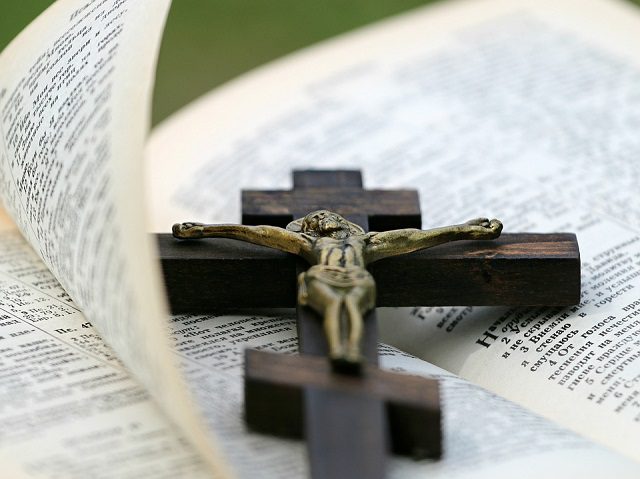
Photo credit: Photograph by “klimkin” (7-19-16) [Pixabay / CC0 public domain]
Summary: Gavin Ortlund’s three quick prooftexts for sola Scriptura fail. I concentrate especially on “oracles of God” (Romans 3:2) & prove that it goes well beyond the Bible.
Calvinism & General Protestantism
Previous Post

February 9, 2024
Catholicism & Non-Catholic Salvation (vs. Gavin Ortlund)
Next Post
February 13, 2024 Bible / Faith "Alone" vs. the Fathers (vs. Gavin Ortlund)
Recent Comments
"Special pleading, and not a serious response to my arguments . . ."
Is Venerating Men & Angels Worship? ..."
""no man needs to teach us."Didn't you just teach us?"
Is Venerating Men & Angels Worship? ..."
""Catholics say they are the only church that can lead people into heaven."In fact, we ..."
Is Venerating Men & Angels Worship? ..."
"And lastly, I belong to no denomination and am free to serve God as He ..."
Is Venerating Men & Angels Worship? ..."
Browse Our Archives
Select a Category & Last Things About Me Anti-Catholicism Atheism & Agnosticism Baptism and Sacramentalism Bible and Tradition Blessed Virgin Mary Books by Dave Armstrong C. S. Lewis Calvinism & General Protestantism Catholic Apologetics Catholic Apologists Catholic conversion Catholic converts Christmas Church (Ecclesiology) Church History Conversion and Converts Development of Doctrine Eastern Orthodoxy Ecumenism & Christian Unity Eucharist & Liturgy Fathers of the Church French Translations G. K. Chesterton Hell Hell & Satan Hell & Satan & Last Things Heresies & Comparative Religion Holistic Health Inquisition & Crusades & Scandals James White Jews & Judaism & Old Testament John Calvin John Henry Newman Liberal / Modernist Theology Life Issues Literary Resume Lutheranism Mariology Martin Luther Music Orthodoxy Papacy & Infallibility Personal Page Philosophy & Science Political & Ethical & Moral Issues Protestant Persecution & Intolerance Protestantism Purgatory Purgatory & Penance Romantic & Imaginative Theology Saints & Purgatory & Penance Salvation Salvation & Justification Satan & Last Things Sexuality and Gender Issues Spanish Translations Traditionalism vs. Radical Catholic Reactionaries Traducciones al español / tradução para português Trinitarianism & Christology Uncategorized Videos
Select a Month October 2026 September 2026 August 2026 July 2026 June 2026 May 2026 April 2026 March 2026 February 2026 January 2026 December 2025 November 2025 October 2025 September 2025 August 2025 July 2025 June 2025 May 2025 April 2025 March 2025 February 2025 January 2025 December 2024 November 2024 October 2024 September 2024 August 2024 July 2024 June 2024 May 2024 April 2024 March 2024 February 2024 January 2024 December 2023 November 2023 October 2023 September 2023 August 2023 July 2023 June 2023 May 2023 April 2023 March 2023 February 2023 January 2023 December 2022 November 2022 October 2022 September 2022 August 2022 July 2022 June 2022 May 2022 April 2022 March 2022 February 2022 January 2022 December 2021 November 2021 October 2021 September 2021 August 2021 July 2021 June 2021 May 2021 April 2021 March 2021 February 2021 January 2021 December 2020 November 2020 October 2020 September 2020 August 2020 July 2020 June 2020 May 2020 April 2020 March 2020 February 2020 January 2020 December 2019 November 2019 October 2019 September 2019 August 2019 July 2019 June 2019 May 2019 April 2019 March 2019 February 2019 January 2019 December 2018 November 2018 October 2018 September 2018 August 2018 July 2018 June 2018 May 2018 April 2018 March 2018 February 2018 January 2018 December 2017 November 2017 October 2017 September 2017 August 2017 July 2017 June 2017 May 2017 April 2017 March 2017 February 2017 January 2017 December 2016 November 2016 October 2016 September 2016 August 2016 July 2016 June 2016 May 2016 April 2016 March 2016 February 2016 January 2016 December 2015 November 2015 October 2015 September 2015 August 2015 July 2015 June 2015 May 2015 April 2015 March 2015 February 2015 January 2015 December 2014 November 2014 October 2014 September 2014 August 2014 July 2014 June 2014 April 2014 March 2014 February 2014 January 2014 December 2013 November 2013 October 2013 September 2013 August 2013 July 2013 June 2013 April 2013 March 2013 February 2013 January 2013 December 2012 November 2012 October 2012 September 2012 August 2012 July 2012 June 2012 May 2012 April 2012 March 2012 February 2012 January 2012 December 2011 November 2011 October 2011 September 2011 August 2011 July 2011 June 2011 April 2011 March 2011 February 2011 October 2010 September 2010 August 2010 July 2010 April 2010 March 2010 December 2009 October 2009 August 2009 July 2009 June 2009 May 2009 March 2009 February 2009 October 2008 September 2008 April 2008 March 2008 February 2008 January 2008 December 2007 November 2007 October 2007 May 2007 March 2007 February 2007 January 2007 November 2006 October 2006 September 2006 August 2006 July 2006 June 2006 May 2006 April 2006 March 2006 February 2006 October 2005 June 2005 April 2005 February 2005 July 2004 May 2004 April 2004
Follow Us!
TAKE THE
Religious Wisdom Quiz
I made a rash vow that cost me my only child after a military victory. Who am I?
Select your answer to see how you score.
Jephthah Samson Gideon Barak
Books by This Author Books by Dave Armstrong
Related posts from Biblical Evidence for Catholicism

On Protestant Explanations of Catholic Conversion
Biblical Evidence for Catholicism

Protestant Confessions & "Ever-Virgin" Mary
Biblical Evidence for Catholicism

A Few "Worst" & "Best" Arguments vs. Protestantism
Biblical Evidence for Catholicism

Jerusalem Council vs. James White & Sola Scriptura
Biblical Evidence for Catholicism
TRENDING AT PATHEOS Catholic

The Sermon on the Mount, Part I: Matthew...
The Sermon on the Mount, Part I (Matthew 4:12-5:12) St. Matthew moves...

What's up from Crossway: Reviewing some of their latest A few weeks...

Janie Learns the Way of the Cross: A...
Teaching children about Jesus' Passion can be challenging. Many parents and educators...

Looking For Good Catholic Writing - October 2026
He alone extends the heavens, and he walks upon the waves of...

In "Irreplaceable," our book on vocation and technology, Trevor Sutton and I...

I was strolling through the top floor of the brand new Parthenon...
view all Catholic blogs
What Are Your Thoughts?leave a comment
Ad-Free & Subscriber Log-In Subscription Support
- About Us
- 2026 Calendar
- Videos
- Podcasts
- Library of World Religions
- Faith In Media Tracker
- Advertise With Us
- Write for Us
- Privacy Policy
- Terms of Service
- Do Not Sell My Data
- Contact Us
- Radiant Digital
- Manage Newsletter Subscriptions
- Unsubscribe From Notifications
- Sitemap
Copyright 2008-2026, Patheos. All rights reserved.
Subscription Support Ad-Free & Subscriber Log-In
Follow Patheos