
BuddhistCatholicContemplativeEvangelicalGeneral ChristianHinduJewishLatter-day SaintMuslimNew VisionsProgressive Christian
Beliefs
- Buddhist
- Catholic
- Contemplative
- Evangelical
- General Christian
- Hindu
- Jewish
- Latter-day Saint
- More Voices
- Muslim
- New Visions
- Pagan
- Progressive Christian
Topics
- Religion News
- Food and Religion
- Sports and Religion
- Religious Art
- Religious Music and Entertainment
- Religious Events
- History and Religion
- Style and Religion
- Politics and Religion
- Women in Religion
- Recreation Outdoors and Religion
- Business Finance and Religion
- Careers Workplace and Religion
- Education and Religion
- Family Parenting and Religion
- Health Fitness and Religion
- Home and Religion
- Relationships and Religion
- Technology and Religion
- Travel and Religion
Columnists
- Buddhist Columnists
- Business Finance and Religion Columnists
- Careers Workplace and Religion Columnists
- Catholic Columnists
- Contemplative Columnists
- Education and Religion Columnists
- Evangelists Columnists
- Family Parenting and Religion Columnists
- General Christian Columnists
- Health Fitness and Religion Columnists
- Hindu Columnists
- History and Religion Columnists
- Home and Religion Columnists
- Jewish Columnists
- More Voices Columnists
- Latter Day Columnists
- Muslim Columnists
- New Visions Columnists
- Nonreligious Columnists
- Pagan Columnists
- Politics and Religion Columnists
- Progressive Columnists
- Recreation Outdoors and Religion Columnists
- Relationships and Religion Columnists
- Religion News Columnists
- Religious Art Columnists
- Religious Events Columnists
- Religious Music and Entertainment Columnists
- Sports and Religion Columnists
- Style and Religion Columnists
- Technology and Religion Columnists
- Travel and Religion Columnists
- Women in Religion Columnists
Resource Library
- 2026 Calendar
- Library of World Religions
- The 100 Most Holy Places on Earth
- Patheos Answers
- Podcasts
- Videos
- Faith Leaders Database
- Anglican Episcopalian
- Bahai
- Baptist
- Buddhism
- Christianity
- Confucianism
- Eastern Orthodoxy
- Hinduism
- Holiness and Pentecostal
- ISKCON
- Islam
- Judaism
- Lutheran
- Methodist
- The Church of Jesus Christ of Latter-day Saints
- New Age
- Paganism
- Presbytarian and Reformed
- Protestantism
- Religion Behind the Scenes
- Roman Catholic
- Scientology
- Shia Islam
- Sikhism
- Sufism
- Sunni Islam
- Taoism
- Zen
- See all religions
Research Tools
 Ad-Free & Subscriber Log-In Subscription Support
Follow Patheos 

- Trending:
- Advent
- |
- Forgiveness
- |
- Thanksgiving
- |
- Election
- |
- Seasonal Holidays
- |
- Marriage

-
About
-
Catholic Apologetics
-
Church History
-
Great Apologists
-
Christian Worldview
-
Protestantism & Misc.
- Home
- Catholic
- History and Religion
- Denominationalism & the Bible: Reply to Gavin Ortlund
Denominationalism & the Bible: Reply to Gavin Ortlund
Last updated on: June 6, 2026 at 12:50 am by Dave Armstrong
Denominationalism & the Bible: Reply to Gavin Ortlund 2026-06-06T00:50:56-04:00 Dave Armstrong
Patheos Explore the world's faith through different perspectives on religion and spirituality! Patheos has the views of the prevalent religions and spiritualities of the world.
+ Does the New Testament Present an Ecclesiology of “The Church”?

Dr. Gavin Ortlund is a Reformed Baptist author, speaker, pastor, scholar, and apologist for the Christian faith. He has a Ph.D. from Fuller Theological Seminary in historical theology, and an M.Div from Covenant Theological Seminary. Gavin is the author of seven books as well as numerous academic and popular articles. For a list of publications, see his CV. He runs the very popular YouTube channel Truth Unites, which seeks to provide an “irenic” voice on theology, apologetics, and the Christian life. See also his website, Truth Unites and his blog.
In my opinion, he is currently the best and most influential popular-level Protestant apologist, who (especially) interacts with and offers thoughtful critiques of Catholic positions, from a refreshing ecumenical (not anti-Catholic), but nevertheless solidly Protestant perspective. That’s what I want to interact with, so I have issued many replies to Gavin and will continue to do so. I use RSV for all Bible passages unless otherwise specified.
All of my replies to Gavin are collected in one place on my Calvinism & General Protestantism web page, near the top in the section, “Replies to Reformed Baptist Gavin Ortlund.” Gavin’s words will be in blue.
This is my 24th reply to his material.
*****
I am responding to one of the central claims made in Gavin’s video, “Which Denomination Should You Choose?” (3-17-23). To anticipate one objection: I’m not seeking to be “triumphalistic” or arrogant in defending Catholic claims or critiquing Protestant ones. Everyone (and that includes Catholics!) defends their own view, whatever it is; they may change later, but they are defending one particular thing at any given point of time. I’m seeking to be, rather, “biblical”: as I always try to be in these disputes.
So I will bring a lot of the New Testament to the table and wonder aloud how Protestants interpret and apply these passages; challenge them a bit. I love to be challenged, myself. Catholics interpret the Bible regarding these matters in a certain way and so do Protestants. We ought to and can discuss them as brethren in Christ, and let folks decide — as best we can, hopefully led by the Holy Spirit’s guidance — what the Bible actually teaches in matters of ecclesiology. But we need to have this important discussion.
0:00 one of the questions I get very frequently is, “suppose I’m convinced of Protestantism; which particular denomination should I choose and how do I know in which particular local church?”
This is a very important question, because if we seek Christian truth, we want all of it that we can get, and since Protestant denominations contradict each other in literally hundreds of ways, it follows logically that someone is wrong in those instances (teaching falsehood) and that different denominations represent different degrees of biblical truth. Protestantism by nature is not one unified whole, but an amalgam of mutually contradictory systems, that have no way of unifying, because of how they have defined authority and the seeking of Christian, biblical truth.
Of course, there is quite bit of common ground among Protestants, too, but what they have in common tends to be also what Protestants share in common with Catholics (trinitarianism, salvation by grace and so forth). The fact remains that they still massively contradict one another. I submit that this is neither a desirable state of affairs nor biblical.
0:24 [the] first [thing] is to realize that the stakes are not as high in choosing between two Protestant traditions, because the Protestant traditions recognize [that] the church does not begin and end with them. We’re not saying we’re the one true church, so if you make the wrong decision, . . . let’s say you become Anglican and you should have been Presbyterian, or you become Presbyterian and you should have been Methodist or something like this, the difference will not be that you’re not in the one true Church.
The problem with this is that the Bible doesn’t seem to ever teach that all this error can be present among Christians, and that it’s fine and dandy and of no concern (even encouraged). I mentioned in another reply recently that the NT mentions the phrase “the truth” 70 times. It’s presupposing that this entity called “the truth” is out there and can be identified. It does not teach (as far as I can tell) that everyone must somehow grasp for the highest degree of truth they can find (in their subjective, fallible judgment) in one given assembly of several thousand Protestant choices: all of which massively contradict the other groups.
The New Testament (St. Paul) refers to “one faith” (Eph 4:5). Jesus prayed three times during the Last Supper that Christians “may [all] be one” (Jn 17:11, 21-22). And what did He mean by that? Would it include massive doctrinal self-contradiction, as we find in Protestantism? It seems not, since Jesus defines this oneness as being “one, even as we are one” (Jn 17:11, 22) and “one; even as thou, Father, art in me, and I in thee” (Jn 17:21) and “perfectly one” (Jn 17:23). This is the oneness and unity that God the Father and God the Son enjoy. Do they disagree with each other? Never. See, for one example of many, John 8:28-29: “. . . I do nothing on my own authority but speak thus as the Father taught me. And he who sent me is with me; he has not left me alone, for I always do what is pleasing to him.”
It seems to me that Gavin and Protestantism generally deny that this question of doctrinal and moral unity (including an institution to support such unity) is supremely important. They have given up on seeking it. They take a pass, so to speak. I submit that the New Testament assumes or presupposes that “the one true Church” is a discernible, objective fact (the very thing that Gavin says is not the case with any given Protestant denomination). Protestants act as if the very search for the one Church is impossible; it can’t be found. Otherwise they would identify it (as Catholics and Orthodox do), instead of being quick to deny that they even claim such a thing.
How is it, then, that Protestants can think that this matter is so unimportant that Gavin flat-out denies its crucial and non-optional nature by stating, “We’re not saying we’re the one true church”? This is “The Protestant ‘Non-Quest’ for Certainty”, as I have called it.
The New Testament appears to me to take a very different view. If we look up the phrase “the church” we find that it occurs 91 times in the NT. But most of these refer to a local congregation; we also find the term, “churches” (e.g., Acts 15:41; Rom 16:4 and 33 other times). But in the following 21 passages, it seems clear to me that “the church” or “church” refers — as determined by context — to the one true Church:
Matthew 16:18 And I tell you, you are Peter, and on this rock I will build my church, and the powers of death shall not prevail against it.
Acts 5:11 And great fear came upon the whole church, . . .
Acts 20:28 Take heed to yourselves and to all the flock, in which the Holy Spirit has made you overseers, to care for the church of God which he obtained with the blood of his own Son.
1 Corinthians 10:32 Give no offense to Jews or to Greeks or to the church of God,
1 Corinthians 11:22 . . . the church of God . . .
1 Corinthians 12:28 And God has appointed in the church first apostles, second prophets, third teachers, then workers of miracles, then healers, helpers, administrators, speakers in various kinds of tongues.
1 Corinthians 15:9 . . . I persecuted the church of God. (same phrase at Gal 1:13)
Ephesians 1:22-23 and he has put all things under his feet and has made him the head over all things for the church, [23] which is his body, the fulness of him who fills all in all.
Ephesians 3:10 that through the church the manifold wisdom of God might now be made known to the principalities and powers in the heavenly places.
Ephesians 3:21 to him be glory in the church . . .
Ephesians 5:23-25 . . . Christ is the head of the church, his body . . . [24] . . . the church is subject to Christ . . . [25] Husbands, love your wives, as Christ loved the church and gave himself up for her,
Ephesians 5:27, 29, 32 [“the church” appears three times]
Philippians 3:6 . . . [Paul was] a persecutor of the church . . .
Colossians 1:18 He is the head of the body, the church . . .
Colossians 1:24 Now I rejoice in my sufferings for your sake, and in my flesh I complete what is lacking in Christ’s afflictions for the sake of his body, that is, the church,
1 Timothy 3:15 . . . the household of God, which is the church of the living God, the pillar and bulwark of the truth.
What does the Protestant do with that data? Well, usually they reply (I used to argue this myself in my Protestant days) that they have a general doctrinal unity, and allow differences on what they call “secondary doctrines” (another notion difficult if not impossible to find in the NT). Jesus urged us to “observe all that I have commanded you” (Mt 28:19), without distinguishing between lesser and more central doctrines. The Protestant “solution” for ecclesiology seems, with all due respect, biblically implausible, in light of the fact that in 295 Bible passages (that I have collected in one of my books) notions like “the faith” and “the truth” and “the doctrine” and “teaching” and “the message” are presented as all essentially synonymous.
In other words, again, the “one faith” (Eph 4:5) is assumed in the NT to be an objective entity — a unified body of teaching or “apostolic deposit” that can be identified. It certainly can be on the local level, but it also can be on a churchwide level, such as at the Jerusalem Council (Acts 15), which made a decree, led by St. Peter and St. James, and by the Holy Spirit (hence, infallible), that applied to the entire Church (very much like later ecumenical councils). Hence, the Apostle Paul shared the decree as binding to local churches all through Asia Minor (Turkey; see Acts 16:4).
We see all this Bible above, yet Gavin describes quintessential Protestant ecclesiology as: “We’re not saying we’re the one true church.” Why, then, I ask in all sincerity (trying to understand this), would anyone want to join one mere denomination, which is (by its own self-description) not the one true Church: the one that Jesus Himself set up, with one of His disciples, Peter, as the leader (the pope?), and the other disciples as, in effect, bishops (Mt 16:18)? How can this one true Church be said to be “the pillar and bulwark of the truth” (1 Tim 3:15) if all it is, is a confusingly self-contradictory collection of thousands of individual denominations?
These inherently entail many hundreds of internal contradictions, and hence, inevitably, doctrinal errors all over the place, even if we can’t immediately determine which denomination is wrong, in terms of doctrine, when it contradicts another, and many others. But we know there are many errors in Protestantism (literally hundreds) by virtue of the nature of a logical contradiction. When two denominations contradict on some point of theology, both can’t be right. At least one is necessarily wrong, and both may be wrong. Error is present, in any event. This must be the case if we accept the laws of logic and of contradiction.
How does this state of affairs bring about the extraordinary oneness — including profound doctrinal agreement — that Jesus prayed for: like the Father and the Son being one? We Catholics contend that the Bible teaches that there is one Church only, with one truth and one unified apostolic tradition (granted, then we must determine how to find it in today’s world). Doctrinal contradiction of any sort is absolutely at odds with biblical teaching, which repeatedly urges unity and forbids divisions of any kind among Christians. Our Lord Jesus viewed His Church as being “one flock” (Jn. 10:16). St. Luke described the earliest Christians as being “of one heart and soul” (Acts 4:32). Luke 2:42 casually mentions “the apostles’ teaching” without any hint that there were competing interpretations of it, or variations of the teaching. St. Peter warned about “false teachers” among Christians, who would “secretly bring in destructive heresies,” which go against “the way of truth” (2 Pet. 2:1-2).
St. Paul, above all, repeatedly condemns “dissensions” (Rom 16:17), “quarreling” (1 Cor 1:11), “jealousy and strife” (1 Cor 3:3), “divisions” and “factions” (1 Cor 11:18-19), “discord” (1 Cor 12:25), “enmity” and “party spirit” (Gal 5:20), and calls for Christians to be “united in the same mind and the same judgment” (1 Cor 1:10; cf. Phil 2:2). He expressly condemns party affiliations associated with persons (1 Cor 1:12-13: “Is Christ divided?”; cf. 3:4-7).
He regards Christian tradition as of one piece; not an amalgam of permissible competing theories: “the tradition that you received from us” (2 Thess 3:6); “the truth which has been entrusted to you by the Holy Spirit” (2 Tim 1:14); “the doctrine which you have been taught” (Rom 16:17); “being in full accord and of one mind” (Phil 2:2); “stand firm in one spirit, with one mind striving side by side for the faith of the gospel” (Phil 1:27). He, like Jesus, ties doctrinal unity together with the one God: “. . . maintain the unity of the Spirit in the bond of peace. There is one body and one Spirit, . . . one Lord, one faith, one baptism, . . .” (Eph 4:3-5). His strong and certain teaching on this topic is well summed up in the following two passages:
1 Timothy 6:3-5 If any one teaches otherwise and does not agree with the sound words of our Lord Jesus Christ and the teaching which accords with godliness, he is puffed up with conceit, he knows nothing; he has a morbid craving for controversy and for disputes about words, which produce envy, dissension, slander, base suspicions, and wrangling among men who are depraved in mind and bereft of the truth, imagining that godliness is a means of gain.
Titus 3:9-11 But avoid stupid controversies, genealogies, dissensions, and quarrels over the law, for they are unprofitable and futile. As for a man who is factious, after admonishing him once or twice, have nothing more to do with him, knowing that such a person is perverted and sinful; he is self-condemned.
Protestant theologian H. Richard Niebuhr (1894-1962) wrote:
Denominationalism thus represents the moral failure of Christianity. And unless the ethics of brotherhood can gain the victory over this divisiveness within the body of Christ it is useless to expect it to be victorious in the world. But before the church can hope to overcome its fatal division it must learn to recognize and to acknowledge the secular character of its denominationalism. (The Social Sources of Denominationalism, New York: The World Publishing Co. / Meridian Books, 1957; originally 1929, 25)
That’s what a famous Protestant theologian wrote, mind you. It’s arguably far more critical than anything I have written above. But I fully agree that Protestants have to grapple with the question of denominationalism, which is extraordinarily difficult to justify based on biblical teaching. I freely admitted this when I was a Protestant, too, by the way. I thought it was scandalous and that it made evangelism very difficult to undertake, seeing that Christians disagreed about so much. I didn’t have a definitive “answer” to that (other than that sin brought about seemingly unsolvable division). My solution in the long run was to accept that the Catholic option made more biblical and historical sense: that it tied everything together in a way that no Protestant option could or ever would.
*
***
*
Practical Matters: Perhaps some of my 4,500+ free online articles (the most comprehensive “one-stop” Catholic apologetics site) or fifty-five books have helped you (by God’s grace) to decide to become Catholic or to return to the Church, or better understand some doctrines and why we believe them.
Or you may believe my work is worthy to support for the purpose of apologetics and evangelism in general. If so, please seriously consider a much-needed financial contribution. I’m always in need of more funds: especially monthly support. “The laborer is worthy of his wages” (1 Tim 5:18, NKJV). 1 December 2021 was my 20th anniversary as a full-time Catholic apologist, and February 2022 marked the 25th anniversary of my blog.
PayPal donations are the easiest: just send to my email address: [email protected]. Here’s also a second page to get to PayPal. You’ll see the term “Catholic Used Book Service”, which is my old side-business. To learn about the different methods of contributing (including Zelle), see my page: About Catholic Apologist Dave Armstrong / Donation Information. Thanks a million from the bottom of my heart!
*
***
Photo credit: see book and purchase information for this volume of mine.
Summary: Protestant apologist Gavin Ortlund notes that Protestants are “not saying we’re the one true church.” I reply that the Bible makes it impossible to avoid this issue.
Calvinism & General Protestantism
Previous Post

February 27, 2024
"The Day" (1 Cor 3:13) & Purgatory (vs. James White)
Next Post
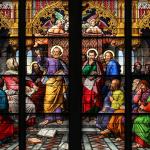
February 28, 2024 Jerusalem Council Disproves Sola Scriptura (vs. James White)
Recent Comments
"Special pleading, and not a serious response to my arguments . . ."
Is Venerating Men & Angels Worship? ..."
""no man needs to teach us."Didn't you just teach us?"
Is Venerating Men & Angels Worship? ..."
""Catholics say they are the only church that can lead people into heaven."In fact, we ..."
Is Venerating Men & Angels Worship? ..."
"And lastly, I belong to no denomination and am free to serve God as He ..."
Is Venerating Men & Angels Worship? ..."
Browse Our Archives
Select a Category & Last Things About Me Anti-Catholicism Atheism & Agnosticism Baptism and Sacramentalism Bible and Tradition Blessed Virgin Mary Books by Dave Armstrong C. S. Lewis Calvinism & General Protestantism Catholic Apologetics Catholic Apologists Catholic conversion Catholic converts Christmas Church (Ecclesiology) Church History Conversion and Converts Development of Doctrine Eastern Orthodoxy Ecumenism & Christian Unity Eucharist & Liturgy Fathers of the Church French Translations G. K. Chesterton Hell Hell & Satan Hell & Satan & Last Things Heresies & Comparative Religion Holistic Health Inquisition & Crusades & Scandals James White Jews & Judaism & Old Testament John Calvin John Henry Newman Liberal / Modernist Theology Life Issues Literary Resume Lutheranism Mariology Martin Luther Music Orthodoxy Papacy & Infallibility Personal Page Philosophy & Science Political & Ethical & Moral Issues Protestant Persecution & Intolerance Protestantism Purgatory Purgatory & Penance Romantic & Imaginative Theology Saints & Purgatory & Penance Salvation Salvation & Justification Satan & Last Things Sexuality and Gender Issues Spanish Translations Traditionalism vs. Radical Catholic Reactionaries Traducciones al español / tradução para português Trinitarianism & Christology Uncategorized Videos
Select a Month November 2026 October 2026 September 2026 August 2026 July 2026 June 2026 May 2026 April 2026 March 2026 February 2026 January 2026 December 2025 November 2025 October 2025 September 2025 August 2025 July 2025 June 2025 May 2025 April 2025 March 2025 February 2025 January 2025 December 2024 November 2024 October 2024 September 2024 August 2024 July 2024 June 2024 May 2024 April 2024 March 2024 February 2024 January 2024 December 2023 November 2023 October 2023 September 2023 August 2023 July 2023 June 2023 May 2023 April 2023 March 2023 February 2023 January 2023 December 2022 November 2022 October 2022 September 2022 August 2022 July 2022 June 2022 May 2022 April 2022 March 2022 February 2022 January 2022 December 2021 November 2021 October 2021 September 2021 August 2021 July 2021 June 2021 May 2021 April 2021 March 2021 February 2021 January 2021 December 2020 November 2020 October 2020 September 2020 August 2020 July 2020 June 2020 May 2020 April 2020 March 2020 February 2020 January 2020 December 2019 November 2019 October 2019 September 2019 August 2019 July 2019 June 2019 May 2019 April 2019 March 2019 February 2019 January 2019 December 2018 November 2018 October 2018 September 2018 August 2018 July 2018 June 2018 May 2018 April 2018 March 2018 February 2018 January 2018 December 2017 November 2017 October 2017 September 2017 August 2017 July 2017 June 2017 May 2017 April 2017 March 2017 February 2017 January 2017 December 2016 November 2016 October 2016 September 2016 August 2016 July 2016 June 2016 May 2016 April 2016 March 2016 February 2016 January 2016 December 2015 November 2015 October 2015 September 2015 August 2015 July 2015 June 2015 May 2015 April 2015 March 2015 February 2015 January 2015 December 2014 November 2014 October 2014 September 2014 August 2014 July 2014 June 2014 April 2014 March 2014 February 2014 January 2014 December 2013 November 2013 October 2013 September 2013 August 2013 July 2013 June 2013 April 2013 March 2013 February 2013 January 2013 December 2012 November 2012 October 2012 September 2012 August 2012 July 2012 June 2012 May 2012 April 2012 March 2012 February 2012 January 2012 December 2011 November 2011 October 2011 September 2011 August 2011 July 2011 June 2011 April 2011 March 2011 February 2011 October 2010 September 2010 August 2010 July 2010 April 2010 March 2010 December 2009 October 2009 August 2009 July 2009 June 2009 May 2009 March 2009 February 2009 October 2008 September 2008 April 2008 March 2008 February 2008 January 2008 December 2007 November 2007 October 2007 May 2007 March 2007 February 2007 January 2007 November 2006 October 2006 September 2006 August 2006 July 2006 June 2006 May 2006 April 2006 March 2006 February 2006 October 2005 June 2005 April 2005 February 2005 July 2004 May 2004 April 2004
Follow Us!
TAKE THE
Religious Wisdom Quiz
Who was Paul's companion on his first missionary journey?
Select your answer to see how you score.
Timothy Silas Luke Barnabas
Books by This Author Books by Dave Armstrong
Related posts from Biblical Evidence for Catholicism
Denominationalism: 50 Biblical Condemnations
Biblical Evidence for Catholicism
On Protestant Explanations of Catholic Conversion
Biblical Evidence for Catholicism
Protestant Confessions & "Ever-Virgin" Mary
Biblical Evidence for Catholicism
Jesus Founded the [Catholic] Church. If Not Him,...
Biblical Evidence for Catholicism
TRENDING AT PATHEOS Catholic

Happy Thanksgiving! I published this Thanksgiving column back in 2017 in...

More Than a Meal: A Messianic Thanksgiving
A Messianic Thanksgiving What if Thanksgiving became more than a meal to...

The Darkening of the Sun, Moon, and Stars
The darkening of the sun and moon and the falling of stars...

Gratitude as the Parent of All Virtues
Giving thanks stems from gratitude. Cicero said that gratitude is the parent...

Make Thanksgiving Bring Family Closer
Written by Dr. David K. Ewen from Eternal Truth Bible College Start...

Ghosts, Spirits, and Wizards in Post-Puritan New England
As it is Thanksgiving, I have a seasonal post concerned with New...
view all Catholic blogs
What Are Your Thoughts?leave a comment
Ad-Free & Subscriber Log-In Subscription Support
- About Us
- 2026 Calendar
- Videos
- Podcasts
- Library of World Religions
- Faith In Media Tracker
- Advertise With Us
- Write for Us
- Privacy Policy
- Terms of Service
- Do Not Sell My Data
- Contact Us
- Radiant Digital
- Manage Newsletter Subscriptions
- Unsubscribe From Notifications
- Sitemap
Copyright 2008-2026, Patheos, part of the Radiant Digital network of media brands. All rights reserved.
Subscription Support Ad-Free & Subscriber Log-In
Follow Patheos