
BuddhistCatholicContemplativeEvangelicalGeneral ChristianHinduJewishLatter-day SaintMuslimNew VisionsProgressive Christian
Beliefs
- Buddhist
- Catholic
- Contemplative
- Evangelical
- General Christian
- Hindu
- Jewish
- Latter-day Saint
- More Voices
- Muslim
- New Visions
- Pagan
- Progressive Christian
Topics
- Religion News
- Food and Religion
- Sports and Religion
- Religious Art
- Religious Music and Entertainment
- Religious Events
- History and Religion
- Style and Religion
- Politics and Religion
- Women in Religion
- Recreation Outdoors and Religion
- Business Finance and Religion
- Careers Workplace and Religion
- Education and Religion
- Family Parenting and Religion
- Health Fitness and Religion
- Home and Religion
- Relationships and Religion
- Technology and Religion
- Travel and Religion
Columnists
- Buddhist Columnists
- Business Finance and Religion Columnists
- Careers Workplace and Religion Columnists
- Catholic Columnists
- Contemplative Columnists
- Education and Religion Columnists
- Evangelists Columnists
- Family Parenting and Religion Columnists
- General Christian Columnists
- Health Fitness and Religion Columnists
- Hindu Columnists
- History and Religion Columnists
- Home and Religion Columnists
- Jewish Columnists
- More Voices Columnists
- Latter Day Columnists
- Muslim Columnists
- New Visions Columnists
- Nonreligious Columnists
- Pagan Columnists
- Politics and Religion Columnists
- Progressive Columnists
- Recreation Outdoors and Religion Columnists
- Relationships and Religion Columnists
- Religion News Columnists
- Religious Art Columnists
- Religious Events Columnists
- Religious Music and Entertainment Columnists
- Sports and Religion Columnists
- Style and Religion Columnists
- Technology and Religion Columnists
- Travel and Religion Columnists
- Women in Religion Columnists
Resource Library
- 2026 Calendar
- Library of World Religions
- The 100 Most Holy Places on Earth
- Patheos Answers
- Podcasts
- Videos
- Faith Leaders Database
- Anglican Episcopalian
- Bahai
- Baptist
- Buddhism
- Christianity
- Confucianism
- Eastern Orthodoxy
- Hinduism
- Holiness and Pentecostal
- ISKCON
- Islam
- Judaism
- Lutheran
- Methodist
- The Church of Jesus Christ of Latter-day Saints
- New Age
- Paganism
- Presbytarian and Reformed
- Protestantism
- Religion Behind the Scenes
- Roman Catholic
- Scientology
- Shia Islam
- Sikhism
- Sufism
- Sunni Islam
- Taoism
- Zen
- See all religions
Research Tools
 Ad-Free & Subscriber Log-In Subscription Support
Ad-Free & Subscriber Log-In Subscription Support
Follow Patheos 

- Trending:
- Forgiveness
- |
- Marriage
- |
- Consciousness
- |
- Death Penalty
- |
- Election
- |
- Halloween

-
About
-
Catholic Apologetics
-
Church History
-
Great Apologists
-
Christian Worldview
-
Protestantism & Misc.
- Home
- Catholic
- History and Religion
- Vs. Turretin #8: Church #1 (Infallibility 1)
Vs. Turretin #8: Church #1 (Infallibility 1)
Last updated on: June 6, 2026 at 12:50 am by Dave Armstrong
Vs. Turretin #8: Church #1 (Infallibility 1) 2026-06-06T00:50:36-04:00 Dave Armstrong
Patheos Explore the world's faith through different perspectives on religion and spirituality! Patheos has the views of the prevalent religions and spiritualities of the world.
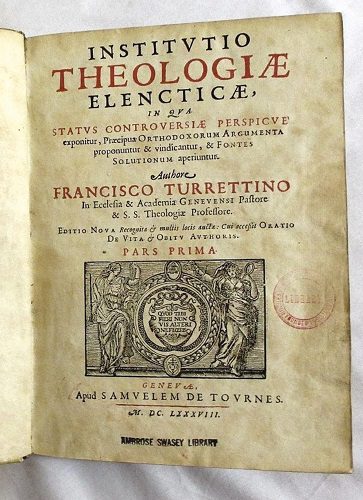
François Turretin (1623-1687) was a Genevan-Italian Reformed scholastic theologian and renowned defender of the Calvinistic (Reformed) orthodoxy represented by the Synod of Dort, and was one of the authors of the Helvetic Consensus (1675). He is generally considered to be the best Calvinist apologist besides John Calvin himself. His Institutes of Elenctic Theology (three volumes, Geneva, 1679–1685) used the scholastic method. “Elenctic” means “refuting an argument by proving the falsehood of its conclusion.” Turretin contended against the conflicting Christian perspectives of Catholicism and Arminianism. It was a popular textbook; notably at Princeton Theological Seminary, until it was replaced by Charles Hodge‘s Systematic Theology in the late 19th century. Turretin also greatly influenced the Puritans.
This is a reply to a portion of Institutes of Elenctic Theology (Vol. 2, 18th Topic: The Church; XI. The Infallibility of the Church). I utilize the edition translated by George Musgrave Giger and edited by James T. Dennison, Jr. (Presbyterian and Reformed Publishing Company, Phillipsburg, New Jersey: 1992 / 1994 / 1997; 2320 pages). It uses the KJV for Bible verses. I will use RSV unless otherwise indicated. All installments of this series of replies can be found on my Calvinism & General Protestantism web page, under the category, “Replies to Francois Turretin (1632-1687).” Turretin’s words will be in blue.
*****
The question concerning the infallibility of the church is the most agitated of all which lie between us and Romanists
It is indeed supremely important. How do we attain certainty about Christian doctrines? How did God intend for us to do that? We can hardly belief in something wholeheartedly when we’re not even sure what it is that we believe.
about the church and of so great importance that the papacy seems to rest upon it as its principal fulcrum. For no other reason do they fight so sharply for the infallibility of the church than that they may attach this privilege to their own, which they hold to be the only true church.
We fight for it because it’s clearly taught in the inspired, inerrant revelation of the Bible, which teaches the existence of one Church alone and not hundreds of competing, relativistic denominations.
The visible church, which is collected in particular assemblies through the whole world, whether it is regarded collectively or representatively in its rulers; either considered by individuals apart or all joined together in a council, is not infallible, but is liable to deadly error as well in faith as in practice, in questions of right as well as in questions of fact. The privilege of freedom from error (anamartēsias) was not given nor does it any longer belong to any church or person after the apostolic time.
There you have it, folks. This amounts to every Christian being their own pope, since they can’t trust a Church which (so says Turretin) God has not protected from error. Then when you have hundreds of denominations with hundreds of specific contradictory beliefs, very little authority or obtainable certainty exists at all. This is the chaos that the “Reformation” has brought about.
Infallibility supposes a perfect knowledge of things and excludes all ignorance, which is the mother of error. And yet to no church or believer does this perfection belong, as long as they are upon earth.
1 Timothy 3:15 . . . the church of the living God, the pillar and bulwark of the truth.
John 14:26 But the Counselor, the Holy Spirit, whom the Father will send in my name, he will teach you all things, and bring to your remembrance all that I have said to you.
John 16:13 When the Spirit of truth comes, he will guide you into all the truth; . . .
The phrase “the truth” appears 70 times in the New Testament. This presupposes that there is a set of true teachings that exists “out there”, which further presupposes that there is some authoritative body (as well as an inspired book) through which and by which it can be ascertained. I’ve compiled the instances of reference to truth in my book, Bible Proofs for Catholic Truths (now available free online):
Luke 1:1-4 Inasmuch as many have undertaken to compile a narrative of the things which have been accomplished among us, just as they were delivered to us by those who from the beginning were eyewitnesses and ministers of the word, it seemed good to me also, having followed all things closely for some time past, to write an orderly account for you, most excellent The-oph’ilus, that you may know the truth concerning the things of which you have been informed.
John 1:17 For the law was given through Moses; grace and truth came through Jesus Christ.
John 4:23 But the hour is coming, and now is, when the true worshipers will worship the Father in spirit and truth, for such the Father seeks to worship him.
John 8:31-32 Jesus then said to the Jews who had believed in him, “If you continue in my word, you are truly my disciples, and you will know the truth, and the truth will make you free.”
John 14:6 Jesus said to him, “I am the way, and the truth, and the life; no one comes to the Father, but by me.”
John 15:26 But when the Counselor comes, whom I shall send to you from the Father, even the Spirit of truth, who proceeds from the Father, he will bear witness to me;
John 16:13 When the Spirit of truth comes, he will guide you into all the truth; for he will not speak on his own authority, but whatever he hears he will speak, and he will declare to you the things that are to come.
John 17:17, 19 Sanctify them in the truth; thy word is truth. . . . And for their sake I consecrate myself, that they also may be consecrated in truth.
John 18:37 Pilate said to him, “So you are a king?” Jesus answered, “You say that I am a king. For this I was born, and for this I have come into the world, to bear witness to the truth. Every one who is of the truth hears my voice.”
John 19:35 He who saw it has borne witness — his testimony is true, and he knows that he tells the truth — that you also may believe.
Romans 2:8 but for those who are factious and do not obey the truth, but obey wickedness, there will be wrath and fury.
1 Corinthians 2:13 And we impart this in words not taught by human wisdom but taught by the Spirit, interpreting spiritual truths to those who possess the Spirit.
2 Corinthians 4:2 We have renounced disgraceful, underhanded ways; we refuse to practice cunning or to tamper with God’s word, but by the open statement of the truth we would commend ourselves to every man’s conscience in the sight of God.
2 Corinthians 11:10 . . . the truth of Christ is in me . . .
2 Corinthians 13:8 For we cannot do anything against the truth, but only for the truth.
Galatians 5:7 You were running well; who hindered you from obeying the truth?
Ephesians 1:13 In him you also, who have heard the word of truth, the gospel of your salvation, and have believed in him, were sealed with the promised Holy Spirit, (cf. 6:14)
Colossians 1:5 because of the hope laid up for you in heaven. Of this you have heard before in the word of the truth, the gospel
2 Thessalonians 2:10-13 and with all wicked deception for those who are to perish, because they refused to love the truth and so be saved. Therefore God sends upon them a strong delusion, to make them believe what is false, so that all may be condemned who did not believe the truth but had pleasure in unrighteousness. But we are bound to give thanks to God always for you, brethren beloved by the Lord, because God chose you from the beginning to be saved, through sanctification by the Spirit and belief in the truth.
1 Timothy 2:4 who desires all men to be saved and to come to the knowledge of the truth.
1 Timothy 3:15 if I am delayed, you may know how one ought to behave in the household of God, which is the church of the living God, the pillar and bulwark of the truth.
1 Timothy 4:3 . . . those who believe and know the truth.
2 Timothy 1:13-14 Follow the pattern of the sound words which you have heard from me . . . guard the truth which has been entrusted to you by the Holy Spirit who dwells within us.
2 Timothy 2:18 who have swerved from the truth by holding that the resurrection is past already. . . .
2 Timothy 2:25 . . . God may perhaps grant that they will repent and come to know the truth,
2 Timothy 3:7-8 who will listen to anybody and can never arrive at a knowledge of the truth. As Jannes and Jambres opposed Moses, so these men also oppose the truth, men of corrupt mind and counterfeit faith;
2 Timothy 4:4 and will turn away from listening to the truth and wander into myths.
Titus 1:1 Paul, a servant of God and an apostle of Jesus Christ, to further the faith of God’s elect and their knowledge of the truth which accords with godliness, (cf. 1:14)
Hebrews 10:26 For if we sin deliberately after receiving the knowledge of the truth, there no longer remains a sacrifice for sins,
James 5:19 My brethren, if any one among you wanders from the truth and some one brings him back,
1 Peter 1:22 Having purified your souls by your obedience to the truth for a sincere love of the brethren, love one another earnestly from the heart.
2 Peter 1:12 Therefore I intend always to remind you of these things, though you know them and are established in the truth that you have.
1 John 1:6 If we say we have fellowship with him while we walk in darkness, we lie and do not live according to the truth;
1 John 2:21 I write to you, not because you do not know the truth, but because you know it, and know that no lie is of the truth.
1 John 3:19 By this we shall know that we are of the truth, and reassure our hearts before him
1 John 4:6 We are of God. Whoever knows God listens to us, and he who is not of God does not listen to us. By this we know the spirit of truth and the spirit of error.
1 John 5:7 And the Spirit is the witness, because the Spirit is the truth.
2 John 1:1-4 The elder to the elect lady and her children, whom I love in the truth, and not only I but also all who know the truth, because of the truth which abides in us and will be with us for ever: Grace, mercy, and peace will be with us, from God the Father and from Jesus Christ the Father’s Son, in truth and love. I rejoiced greatly to find some of your children following the truth, just as we have been commanded by the Father.
3 John 1:1, 3-4 The elder to the beloved Ga’ius, whom I love in the truth. . . . indeed you do follow the truth. No greater joy can I have than this, to hear that my children follow the truth.
3 John 1:8, 12 . . . that we may be fellow workers in the truth. . . . Deme’trius has testimony from every one, and from the truth itself; I testify to him too, and you know my testimony is true.
And that’s not all. The NT also refers to the synonymous terms, “The Faith” and “The commandment” and “The doctrine” and “Teaching” and “The message” etc. (see those passages in the same chapter). I would maintain that all of this terminology and mindset presupposes a teaching body that can declare exactly what these truths and doctrines and teachings are in the first place, just as the extent and parameters of Bible had to be declared by an authoritative Church when it determined the canon.
We can’t just go to Joe Blow Protestant (Turretin as it were) and ask them what this “truth” is: obviously because they massively disagree with each other. The very thought of it is immediately ludicrous and the folly is evident to one and all, if they will give it just a moment’s thought. This is why God willed there to be one Church and one final authority in Christianity.
Therefore, as there is no one who does not sin, so there is no one who does not err or who cannot err. “Who can understand his errors? Cleanse thou me from secret faults” (Ps. 19:12).
Yes, individuals, unless given a special gift from God (the pope, prophets, apostles, etc.) are obviously fallible. But the Church, supernaturally guided by God, per the above examples given from the Bible, is a different category from that. Hence, even in the inspired revelation of the Old Testament, there was infallible teaching from the prophets, which is why we see the phrase “word of the Lord” 243 times in the OT, and “Thus says the Lord” 417 times (!). This is authority, and it’s infallibility. The prophet couldn’t be wrong when he delivered such a word. He was protected by God in two ways: infallibility of message, and (when the message became part of the Bible) by inspiration.
From the nature of the promises given to the church, which always include the tacit or expressed condition of perseverance in the faith: “If ye continue in my word, then are ye my disciples indeed” (Jn. 8:31); “He that hath my commandments, and keepeth them, he it is that loveth me: and he that loveth me shall be loved of my Father, and I will love him, and will manifest myself to him” (Jn. 14:21); “If a man love me, he will keep my words: and my Father will love him, and we will come unto him” (v. 23). Thus to the church at Rome the kindness of God is promised, provided she continues in it; otherwise excision is threatened: “Behold therefore the goodness and severity of God: on them which fell, severity; but toward thee, goodness, if thou continue in his goodness: otherwise thou also shalt be cut off” (Rom. 11:22). Therefore, as these promises are conditional, they cannot have a place unless the condition is fulfilled and since this is wanting in various cases, this privilege also must necessarily cease.
All of these are about individuals, and warn against apostasy based on rebellious, sinful behavior, not departures from true doctrine. They have nothing to do with an institutional Church, which adheres to set of doctrines. So this is a non sequitur.
The church, according to Romanists, consists not only of true believers, but also of unbelievers and reprobates, who can be destitute of all internal virtues, faith, hope and love
Not only according to “Romanists” but also the Bible. The parable of the wheat and tares (Mt 13:24-30, 36-43) reads (to me, anyway) as if the tares (weeds) are at least equal in number to the wheat. A moment’s reflection on the proliferation of uncontrolled weeds (13:30) in any lawn will bring this point home, I think. This is also apparent in the similar pronouncements about wheat and chaff (Mt 3:12, Lk 3:17): a parable of the saved and the damned. Since every wheat plant has chaff, too (the worthless part of it), then it would seem that we are talking about a 50/50 proposition here.
Matthew 7:21-23 implies that there are many counterfeit believers, since even some of those who “prophesy,” “cast out demons,” and “do many mighty works” in Jesus’ name will be cast from Jesus’ presence at the Judgment, where He will say to them, “I never knew you; depart from me, you evildoers.” Since most of us are doing far less than acts of this magnitude (which outwardly suggest a commitment to Christ), it stands to reason that there are many people who go to Mass, etc., who will not be saved, and hence are “tares.” Cf. Lk 13:25-28.
Jesus Himself rebuked six of the seven churches of Asia that He addressed (Rev 2:4-3:18). Yet simultaneous with His rebukes He referred to them all as “church[es]”, in 2:1, 8, 12, 18; 3:1, 14, just as He also referred to the one body that He didn’t rebuke (Philadelphia: 3:7) as a “church.” This absolutely proves that the Church contains unbelievers and reprobates.
Likewise, with St. Paul and the Galatians. He excoriates them or various sins (Gal 1:6; 3:1-4; 4:9-11, 16, 20; 5:1-4, 7), yet at the same time regards them as believers and Christians (Gal 1:2, 11; 3:25-27; 4:4-7, 9, 12, 19, 28, 31; 5:1; 6:1, 18). It’s the same with the Corinthians, whom he rebukes for serious sin (1 Cor 3:3; 5:1; 6:8; 11:17-18; 2 Cor 11:4; 12:20-21), while still calling the Corinthian assembly the “church of God” (1 Cor 1:2; 2 Cor 1:1-2).
From the fallibility of individuals. Individual pastors and rulers of churches are fallible, as our opponents confess; therefore also the whole.
For what individuals apart from each other do not possess, they cannot have when gathered together; nor can an assembly or council, which is composed of fallible members, be infallible.
Again, this doesn’t apply to those given a special charism. As for councils, the one NT model we have, the Jerusalem Council, assumes its own infallibility, in the words, “it has seemed good to the Holy Spirit and to us to lay upon you no greater burden than these necessary things” (Acts 15:28). Once the Holy Spirit is directly involved, it must be without error, because now we’re talking about God, Who has no error.
The only way out of this would be to deny that the Bible was inerrant in this verse, And I don’t think Turretin would want to go that route. As far as I am concerned, this is a direct application of John 16:13: “When the Spirit of truth comes, he will guide you into all the truth”. Here we see the Holy Spirit doing precisely that, in helping resolve an issue that was divisive, in the first council in the history of Christianity.
From the silence of Scripture. For if the church ought to be infallible, the Holy Spirit would undoubtedly somewhere have told believers of it, as of a thing of the greatest importance to confirm the faith of the pious and to guard them against all seductions.
It has done that, as I have shown above. This is particularly true of 1 Timothy 3:15, if thought through in all its implications, as I have done.
But nowhere is mention made of this privilege having been given to any certain church; for it will be shown hereafter that the many passages adduced by our opponents to prove this thing do not prove it.
In the Bible we have the term, “the church.” Catholic isn’t a biblical word, just as Trinity isn’t. Therefore, we have to use the usual arguments to contend that the Catholic Church of history is a continuation of the church begun by Christ by commissioning Peter. The alternatives are so absurd and insubstantial in historical support that it’s rather easy to do.
“Because of unbelief they were broken off, and thou standest by faith. Be not highminded, but fear: For if God spared not the natural branches, take heed lest he also spare not thee” (Rom. 11:20, 21). Now why should the apostle have said this if he believed the gift of infallibility had been bestowed upon it?
That refers to the Jews rejecting Christianity en masse. But this is different to a gift of infallibility and indefectibility given to the Church under the guidance of the Holy Spirit in the New Covenant. But there is even a certain sense in which the OT “pre-Church” had a level of indefectibility, as I have written about.
And he urges them “to mark them which cause divisions and offenses contrary to the doctrine which they had learned; and avoid them” (Rom. 16:17).
Again, those are stray individuals, which doesn’t disprove a protected infallible Church.
*
*****
*
Practical Matters: Perhaps some of my 4,500+ free online articles (the most comprehensive “one-stop” Catholic apologetics site) or fifty-five books have helped you (by God’s grace) to decide to become Catholic or to return to the Church, or better understand some doctrines and why we believe them.
Or you may believe my work is worthy to support for the purpose of apologetics and evangelism in general. If so, please seriously consider a much-needed financial contribution. I’m always in need of more funds: especially monthly support. “The laborer is worthy of his wages” (1 Tim 5:18, NKJV). 1 December 2021 was my 20th anniversary as a full-time Catholic apologist, and February 2022 marked the 25th anniversary of my blog.
PayPal donations are the easiest: just send to my email address: [email protected]. Here’s also a second page to get to PayPal. You’ll see the term “Catholic Used Book Service”, which is my old side-business. To learn about the different methods of contributing (including Zelle), see my page: About Catholic Apologist Dave Armstrong / Donation Information. Thanks a million from the bottom of my heart!
*
***
Photo credit: manuscript cover of the book I am critiquing: Turretin’s Institutes of Elenctic Theology [public domain]
Summary: As part of my series of replies to Calvinist Francois Turretin, I provide the biblical basis for the infallibility of the [Catholic] Church, and counter-reply to objections.
Calvinism & General Protestantism
Previous Post
December 31, 2023
Nebuchadnezzar as a Cow: Curable or Not?
Next Post
January 6, 2024 Debate on Miracles vs. an Atheist
Recent Comments
"Special pleading, and not a serious response to my arguments . . ."
Is Venerating Men & Angels Worship? ..."
""no man needs to teach us."Didn't you just teach us?"
Is Venerating Men & Angels Worship? ..."
""Catholics say they are the only church that can lead people into heaven."In fact, we ..."
Is Venerating Men & Angels Worship? ..."
"And lastly, I belong to no denomination and am free to serve God as He ..."
Is Venerating Men & Angels Worship? ..."
Browse Our Archives
Select a Category & Last Things About Me Anti-Catholicism Atheism & Agnosticism Baptism and Sacramentalism Bible and Tradition Blessed Virgin Mary Books by Dave Armstrong C. S. Lewis Calvinism & General Protestantism Catholic Apologetics Catholic Apologists Catholic conversion Catholic converts Christmas Church (Ecclesiology) Church History Conversion and Converts Development of Doctrine Eastern Orthodoxy Ecumenism & Christian Unity Eucharist & Liturgy Fathers of the Church French Translations G. K. Chesterton Hell Hell & Satan Hell & Satan & Last Things Heresies & Comparative Religion Holistic Health Inquisition & Crusades & Scandals James White Jews & Judaism & Old Testament John Calvin John Henry Newman Liberal / Modernist Theology Life Issues Literary Resume Lutheranism Mariology Martin Luther Music Orthodoxy Papacy & Infallibility Personal Page Philosophy & Science Political & Ethical & Moral Issues Protestant Persecution & Intolerance Protestantism Purgatory Purgatory & Penance Romantic & Imaginative Theology Saints & Purgatory & Penance Salvation Salvation & Justification Satan & Last Things Sexuality and Gender Issues Spanish Translations Traditionalism vs. Radical Catholic Reactionaries Traducciones al español / tradução para português Trinitarianism & Christology Uncategorized Videos
Select a Month October 2026 September 2026 August 2026 July 2026 June 2026 May 2026 April 2026 March 2026 February 2026 January 2026 December 2025 November 2025 October 2025 September 2025 August 2025 July 2025 June 2025 May 2025 April 2025 March 2025 February 2025 January 2025 December 2024 November 2024 October 2024 September 2024 August 2024 July 2024 June 2024 May 2024 April 2024 March 2024 February 2024 January 2024 December 2023 November 2023 October 2023 September 2023 August 2023 July 2023 June 2023 May 2023 April 2023 March 2023 February 2023 January 2023 December 2022 November 2022 October 2022 September 2022 August 2022 July 2022 June 2022 May 2022 April 2022 March 2022 February 2022 January 2022 December 2021 November 2021 October 2021 September 2021 August 2021 July 2021 June 2021 May 2021 April 2021 March 2021 February 2021 January 2021 December 2020 November 2020 October 2020 September 2020 August 2020 July 2020 June 2020 May 2020 April 2020 March 2020 February 2020 January 2020 December 2019 November 2019 October 2019 September 2019 August 2019 July 2019 June 2019 May 2019 April 2019 March 2019 February 2019 January 2019 December 2018 November 2018 October 2018 September 2018 August 2018 July 2018 June 2018 May 2018 April 2018 March 2018 February 2018 January 2018 December 2017 November 2017 October 2017 September 2017 August 2017 July 2017 June 2017 May 2017 April 2017 March 2017 February 2017 January 2017 December 2016 November 2016 October 2016 September 2016 August 2016 July 2016 June 2016 May 2016 April 2016 March 2016 February 2016 January 2016 December 2015 November 2015 October 2015 September 2015 August 2015 July 2015 June 2015 May 2015 April 2015 March 2015 February 2015 January 2015 December 2014 November 2014 October 2014 September 2014 August 2014 July 2014 June 2014 April 2014 March 2014 February 2014 January 2014 December 2013 November 2013 October 2013 September 2013 August 2013 July 2013 June 2013 April 2013 March 2013 February 2013 January 2013 December 2012 November 2012 October 2012 September 2012 August 2012 July 2012 June 2012 May 2012 April 2012 March 2012 February 2012 January 2012 December 2011 November 2011 October 2011 September 2011 August 2011 July 2011 June 2011 April 2011 March 2011 February 2011 October 2010 September 2010 August 2010 July 2010 April 2010 March 2010 December 2009 October 2009 August 2009 July 2009 June 2009 May 2009 March 2009 February 2009 October 2008 September 2008 April 2008 March 2008 February 2008 January 2008 December 2007 November 2007 October 2007 May 2007 March 2007 February 2007 January 2007 November 2006 October 2006 September 2006 August 2006 July 2006 June 2006 May 2006 April 2006 March 2006 February 2006 October 2005 June 2005 April 2005 February 2005 July 2004 May 2004 April 2004
Follow Us!
TAKE THE
Religious Wisdom Quiz
Who denied Jesus three times before the rooster crowed?
Select your answer to see how you score.
Paul John Peter Judas
Books by This Author Books by Dave Armstrong
Related posts from Biblical Evidence for Catholicism

On Protestant Explanations of Catholic Conversion
Biblical Evidence for Catholicism

Protestant Confessions & "Ever-Virgin" Mary
Biblical Evidence for Catholicism

Jesus Founded the [Catholic] Church. If Not Him,...
Biblical Evidence for Catholicism

A Few "Worst" & "Best" Arguments vs. Protestantism
Biblical Evidence for Catholicism
TRENDING AT PATHEOS Catholic

The Sermon on the Mount, Part I: Matthew...
The Sermon on the Mount, Part I (Matthew 4:12-5:12) St. Matthew moves...

What's up from Crossway: Reviewing some of their latest A few weeks...

Janie Learns the Way of the Cross: A...
Teaching children about Jesus' Passion can be challenging. Many parents and educators...

Looking For Good Catholic Writing - October 2026
He alone extends the heavens, and he walks upon the waves of...

In "Irreplaceable," our book on vocation and technology, Trevor Sutton and I...

I was strolling through the top floor of the brand new Parthenon...
view all Catholic blogs
What Are Your Thoughts?leave a comment
Ad-Free & Subscriber Log-In Subscription Support
- About Us
- 2026 Calendar
- Videos
- Podcasts
- Library of World Religions
- Faith In Media Tracker
- Advertise With Us
- Write for Us
- Privacy Policy
- Terms of Service
- Do Not Sell My Data
- Contact Us
- Radiant Digital
- Manage Newsletter Subscriptions
- Unsubscribe From Notifications
- Sitemap
Copyright 2008-2026, Patheos. All rights reserved.
Subscription Support Ad-Free & Subscriber Log-In
Follow Patheos