
BuddhistCatholicContemplativeEvangelicalGeneral ChristianHinduJewishLatter-day SaintMuslimNew VisionsProgressive Christian
Beliefs
- Buddhist
- Catholic
- Contemplative
- Evangelical
- General Christian
- Hindu
- Jewish
- Latter-day Saint
- More Voices
- Muslim
- New Visions
- Pagan
- Progressive Christian
Topics
- Religion News
- Food and Religion
- Sports and Religion
- Religious Art
- Religious Music and Entertainment
- Religious Events
- History and Religion
- Style and Religion
- Politics and Religion
- Women in Religion
- Recreation Outdoors and Religion
- Business Finance and Religion
- Careers Workplace and Religion
- Education and Religion
- Family Parenting and Religion
- Health Fitness and Religion
- Home and Religion
- Relationships and Religion
- Technology and Religion
- Travel and Religion
Columnists
- Buddhist Columnists
- Business Finance and Religion Columnists
- Careers Workplace and Religion Columnists
- Catholic Columnists
- Contemplative Columnists
- Education and Religion Columnists
- Evangelists Columnists
- Family Parenting and Religion Columnists
- General Christian Columnists
- Health Fitness and Religion Columnists
- Hindu Columnists
- History and Religion Columnists
- Home and Religion Columnists
- Jewish Columnists
- More Voices Columnists
- Latter Day Columnists
- Muslim Columnists
- New Visions Columnists
- Nonreligious Columnists
- Pagan Columnists
- Politics and Religion Columnists
- Progressive Columnists
- Recreation Outdoors and Religion Columnists
- Relationships and Religion Columnists
- Religion News Columnists
- Religious Art Columnists
- Religious Events Columnists
- Religious Music and Entertainment Columnists
- Sports and Religion Columnists
- Style and Religion Columnists
- Technology and Religion Columnists
- Travel and Religion Columnists
- Women in Religion Columnists
Resource Library
- 2026 Calendar
- Library of World Religions
- The 100 Most Holy Places on Earth
- Patheos Answers
- Podcasts
- Videos
- Faith Leaders Database
- Anglican Episcopalian
- Bahai
- Baptist
- Buddhism
- Christianity
- Confucianism
- Eastern Orthodoxy
- Hinduism
- Holiness and Pentecostal
- ISKCON
- Islam
- Judaism
- Lutheran
- Methodist
- The Church of Jesus Christ of Latter-day Saints
- New Age
- Paganism
- Presbytarian and Reformed
- Protestantism
- Religion Behind the Scenes
- Roman Catholic
- Scientology
- Shia Islam
- Sikhism
- Sufism
- Sunni Islam
- Taoism
- Zen
- See all religions
Research Tools
 Ad-Free & Subscriber Log-In Subscription Support
Ad-Free & Subscriber Log-In Subscription Support
Follow Patheos 

- Trending:
- Forgiveness
- |
- Marriage
- |
- Consciousness
- |
- Death Penalty
- |
- Election
- |
- Halloween

-
About
-
Catholic Apologetics
-
Church History
-
Great Apologists
-
Christian Worldview
-
Protestantism & Misc.
- Home
- Catholic
- History and Religion
- Lutherans & Invocation #2
Lutherans & Invocation #2
Last updated on: June 6, 2026 at 12:03 am by Dave Armstrong
Lutherans & Invocation #2 2026-06-06T00:03:19-04:00 Dave Armstrong
Patheos Explore the world's faith through different perspectives on religion and spirituality! Patheos has the views of the prevalent religions and spiritualities of the world.
Definitions of Prayer & Intercession; God Sharing His Glory; Views of St. Augustine & Many Other Church Fathers
Seth Kasten (see his blog) is a member of the Lutheran Church–Missouri Synod. This is one of a series of replies to his book, Against the Invocation of Saints: An Apology for the Protestant Doctrine of Prayer over and against the Doctrine of the Eastern Orthodox Church (Royal Oak, Michigan: Scholastic Lutherans, 2023). I will be using RSV for Bible passages unless otherwise noted. Words from his book will be in blue.
***
See other installments:
Lutherans & Invocation #1 (Intro) [1-11-24]
*
Lutherans & Invocation #3 (Necromancy; Can Saints Hear Us?) [1-12-24]
*
Lutherans & Invocation #4 (Revelation; Luke 16) [1-17-24]
*
If prayer is worship or is exclusively directed toward God by definition, then prayers to saints should be considered idolatrous and forbidden. (p. 32)
The premise is wrong, and assumes what needs to be demonstrated. Prayer directed to God is unique for the obvious reason: He is God, and He is the One Who ultimately answers all prayers, or delegates the answer to a messenger on His behalf. In that sense it has some of the same characteristics, but is not identical to worship and adoration, which also belong to God alone. But this doesn’t preclude asking someone else to go to God and intercede on our behalf, including departed saints and angels.
It’s simply intercession, which isn’t contrary to worship of God alone. It’s not idolatry. To assert that is simply Protestant boilerplate rhetoric, that was there from the beginning. John Calvin thought Martin Luther was “half-papist” and guilty of idolatry because Luther bowed down and worshiped and adored Jesus in what he believed to be the consecrated host. In the Apology of the Augsburg Confession [1531], Article XXIV: The Mass, it is absurdly claimed:
in the papal realm the worship of Baal clings — namely, the abuse of the Mass . . . And it seems that this worship of Baal will endure together with the papal realm until Christ comes to judge and by the glory of his coming destroys the kingdom of Antichrist. (translated and edited by Theodore Tappert, St. Louis: Concordia Publishing House / Muhlenberg Press, 1959, p. 268)
prayer is linked to worship in such a way that it cannot be categorized as mere veneration. (p. 32)
It’s not even veneration, in the Catholic view, when we ask a saint or angel to intercede. It’s intercession, which St. Paul taught ought to be “made for all men” (1 Tim 2:1). Paul takes note of Christians praying for each other (2 Cor 9:14), and he says that he is praying for others (2 Cor 13:9; Col 1:3, 9; 2 Thess 1:11), and asks for prayer for himself (Col 4:3; 1 Thess 5:25; 2 Thess 3:1). The departed saints are not excluded from the Body of Christ. That’s the other major false premise that Protestantism arbitrarily adheres to: as if all that saints in heaven do is float on clouds and play harps for all eternity, with no love or concern anymore for those on earth. It’s ludicrous.
it becomes clear that prayer is to God as an act of worship, for if it were not so, it would not be associated with burning incense and bowing. (p. 33)
This is an obvious logical fallacy. Because prayer to God is often accompanied (especially in public services) with worship, it’s wrongly assumed that all prayer must be so accompanied by worship. That’s not even true with God, since all of us pray to God while not simultaneously worshiping Him. It’s like saying, “I ate popcorn while watching the football game yesterday; therefore, everyone always eats popcorn at all times while watching a football game.” But asking saints to intercede is not technically or strictly prayer in the first place. It’s just like our asking each other on earth to pray. Protestants don’t like the fact that it is directed people who are dead.
Perhaps the closest scripture comes to giving an explicit definition of prayer is in the Lord’s Prayer, for Christ says, “In this manner, therefore, pray” (Matthew 6:9). It goes without saying that the saints are unmentioned. (p. 34)
Of course they are, because this is specifically describing prayer to God. It doesn’t exclude our asking someone else to pray for us to God. To not mention something is not the same thing — logically — as excluding it.
the kingdom, the power, and the glory are given to God, . . . To attribute such things to others would be idolatry. (p. 34)
Then Seth has a big problem, because the Bible repeatedly teaches that God shares His glory with His creatures:
Isaiah 60:1-2 Arise, shine; for your light has come, and the glory of the LORD has risen upon you. [2] For behold, darkness shall cover the earth, and thick darkness the peoples; but the LORD will arise upon you, and his glory will be seen upon you.
John 5:44 How can you believe, who receive glory from one another and do not seek the glory that comes from the only God?
John 17:22 The glory which thou hast given me I have given to them, that they may be one even as we are one,
Romans 5:2 Through him we have obtained access to this grace in which we stand, and we rejoice in our hope of sharing the glory of God.
Romans 9:23 in order to make known the riches of his glory for the vessels of mercy, which he has prepared beforehand for glory,
2 Corinthians 3:18 And we all, with unveiled face, beholding the glory of the Lord, are being changed into his likeness from one degree of glory to another; for this comes from the Lord who is the Spirit.
1 Thessalonians 2:12 to lead a life worthy of God, who calls you into his own kingdom and glory.
2 Thessalonians 2:14 To this he called you through our gospel, so that you may obtain the glory of our Lord Jesus Christ.
2 Peter 1:3 His divine power has granted to us all things that pertain to life and godliness, through the knowledge of him who called us to his own glory and excellence,
Therefore sharing glory with God (by His express choice) is not idolatry. Game, set, match.
The fathers also give many definitions of prayer which exclude the possibility of praying to saints. Augustine and Cyprian say that in our prayers, we cannot exceed the Lord’s Prayer, which excludes invocation of saints since neither saints nor their invocation are mentioned in the Lord’s Prayer and since we are commanded to pray things that may only be said to God: Augustine:
If we pray rightly, and as becomes our wants, we say nothing but what is already contained in the Lord’s Prayer. And whoever says in prayer anything which cannot find its place in that gospel prayer, is praying in a way which, if it be not unlawful, is at least not spiritual; and I know not how carnal prayers can be lawful, since it becomes those who are born again by the Spirit to pray in no other way than spiritually.…. And if you go over all the words of holy prayers, you will, I believe, find nothing which cannot be comprised and summed up in the petitions of the Lord’s Prayer. Wherefore, in praying, we are free to use different words to any extent, but we must ask the same things; in this we have no choice. [Letters of St. Augustine 130.12.22 (NPNF 1/1:466). (pp. 44-45)
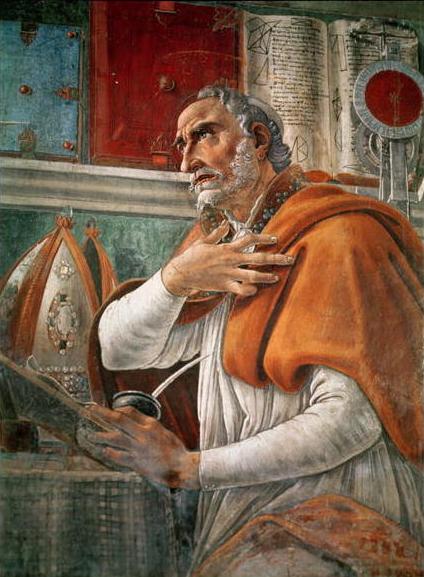
No Protestant apologetic is complete without questionable claims that St. Augustine — widely believed to be the greatest Church father — supports their view more so than ours. He doesn’t. His statement above doesn’t contradict invocation of saints or angels. And St. Augustine himself taught the latter doctrine:
There was a fellow-townsman of ours at Hippo, Florentius, an old man, religious and poor, who supported himself as a tailor. Having lost his coat, and not having means to buy another, he prayed to the Twenty Martyrs, who have a very celebrated memorial shrine in our town, begging in a distinct voice that he might be clothed. . . . he, walking on in silence, saw on the shore 200 a great fish, gasping as if just cast up, . . . on cutting up the fish, the cook found a gold ring in its belly; . . . (City of God xxii, 8)
[U]pon recollection of the place in which are deposited the bodies of those whom they love, they should by prayer commend them to those same Saints, who have as patrons taken them into their charge to aid them before the Lord. . . . When therefore the mind recollects where the body of a very dear friend lies buried, and thereupon there occurs to the thoughts a place rendered venerable by the name of a Martyr, to that same Martyr does it commend the soul in affection of heartfelt recollection and prayer. And when this affection is exhibited to the departed by faithful men who were most dear to them, there is no doubt that it profits them who while living in the body merited that such things should profit them after this life. But even if some necessity should through absence of all facility not allow bodies to be interred, or in such places interred, yet should there be no pretermitting of supplications for the spirits of the dead: which supplications, that they should be made for all in Christian and catholic fellowship departed, even without mentioning of their names, under a general commemoration, the Church has charged herself withal; . . . (On the Care of the Dead, 6)
For, even when His angels hear us, it is He Himself who hears us in them . . . (City of God x, 12)
Whence, also, when the same apostle says, Let your requests be made known unto God, [Philippians 4:6] this is not to be understood as if thereby they become known to God, who certainly knew them before they were uttered, but in this sense, that they are to be made known to ourselves in the presence of God by patient waiting upon Him, not in the presence of men by ostentatious worship. Or perhaps that they may be made known also to the angels that are in the presence of God, that these beings may in some way present them to God, and consult Him concerning them, and may bring to us, either manifestly or secretly, that which, hearkening to His commandment, they may have learned to be His will, and which must be fulfilled by them according to that which they have there learned to be their duty; for the angel said to Tobias: “Now, therefore, when you prayed, and Sara your daughter-in-law, I brought the remembrance of your prayers before the Holy One.” [Tobit 12:12] (Ep. 130 [9, 18]: to Proba [412] )
Augustine infers from the interest which the rich man in hell still had in the fate of his five surviving brothers (Luke xvi. 27), that the pious dead in heaven must have even far more interest in the kindred and friends whom they have left behind. He also calls the saints our intercessors, yet under Christ, the proper and highest Intercessor, as Peter and the other apostles are shepherds under the great chief Shepherd. In a memorial discourse on Stephen, he imagines that martyr, and St. Paul who stoned him, to be present, and begs them for their intercessions with the Lord with whom they reign. He attributes miraculous effects, even the raising of the dead, to the intercessions of Stephen. (in Philip Schaff, History of the Christian Church, Vol. 3, 441)
And though Origen, Tertullian, Clement of Alexandria, Cyprian, Cyril of Alexandria, Cyril of Jerusalem [?], Chrysostom [?], Augustine [?], and Cassian all write entire works or dedicate ample portions of larger works to discussion of prayer, none mention invocation of saints in these works apart from forbidding such a practice, either by implication or by explicit condemnation, yet they speak continually of putting off all distractions and focusing the entire soul on God and of contemplation of God and of supplications, prayers, intercessions, and thanksgivings being made toward God at all times. God is the recipient of prayers in all these works, without any consideration of other recipients, except when the practice is condemned. (p. 57)
I provided five undeniable proofs above that St. Augustine taught the invocation of saints and angels. Here is another proof from St. John Chrysostom (I provided two in my previous installment):
At the close of his memorial discourse on Sts. Bernice and Prosdoce—two saints who have not even a place in the Roman calendar—he exhorts his hearers not only on their memorial days but also on other days to implore these saints to be our protectors: “For they have great boldness not merely during their life but also after death, yea, much greater after death. For they now bear the stigmata of Christ [the marks of martyrdom], and when they show these, they can persuade the King to anything.” He relates that once, when the harvest was endangered by excessive rain, the whole population of Constantinople flocked to the church of the Apostles, and there elected the apostles Peter and Andrew, Paul and Timothy, patrons and intercessors before the throne of grace. Christ, says he on Heb. i. 14, redeems us as Lord and Master, the angels redeem us as ministers. (in Philip Schaff, History of the Christian Church, Vol. 3, 439-440)
St. Cyril of Jerusalem — contrary to Seth’s claims above — wrote:
Then we commemorate also those who have fallen asleep before us, first Patriarchs, Prophets, Apostles, Martyrs, that at their prayers and intercessions God would receive our petition. (Catechetical Lecture XXIII: 9; NPNF 2, Vol. VII)
Other Church fathers simply were wrong about this doctrine. The fathers rarely exhibit 100% universal unanimous opinions. Usually they achieve a strong consensus; other times it’s a very mixed bag. And this is because all doctrines develop; therefore are incorrectly or only partially understood by some, often more so when they lived earlier in history. At length the Church decides which strain of opinion is the correct one. The “buck” stops there.
St. Ephraim asks the intercession of departed saints, in words such as: “Remember me, ye heirs of God, ye brethren of Christ, pray to the Saviour for me, that I through Christ may be delivered” and “O holy, true, and blessed mother, plead for me with the saints, and pray: ‘Ye triumphant martyrs of Christ, pray for Ephraim, the least, the miserable,’ that I may find grace, and through the grace of Christ may be saved.” (Schaff, ibid., 438). St. Basil the Great referred to forty martyrs as “common patrons of the human family, helpers of our prayers and most mighty intercessors with God” (Schaff, ibid., 438; see another citation from him in my previous article in this series).
Gregory Nazianzen is convinced that the departed Cyprian guides and protects his church in Carthage more powerfully by his intercessions than he formerly did by his teachings, because he now stands so much nearer the Deity; he addresses him as present, and implores his favor and protection. [Orat. In laud. Cypr.] In his eulogy on Athanasius, who was but a little while dead, he prays: “Look graciously down upon us, and dispose this people to be perfect worshippers of the perfect Trinity; and when the times are quiet, preserve us—when they are troubled, remove us, and take us to thee in thy fellowship.” (Schaff, ibid., 439; my bolding)
Gregory of Nyssa asks of St. Theodore, whom he thinks invisibly present at his memorial feast, intercessions for his country, for peace, for the preservation of orthodoxy, and begs him to arouse the apostles Peter and Paul and John to prayer for the church planted by them . . . In his Life of St. Ephraim, he tells of a pilgrim who lost himself among the barbarian posterity of Ishmael, but by the prayer, “St. Ephraim, help me!” and the protection of the saint, happily found his way home. He himself thus addresses him at the close: “Thou who standest at the holy altar, and with angels servest the life-giving and most holy Trinity, remember us all, and implore for us the forgiveness of sins and the enjoyment of the eternal kingdom.” (Schaff, ibid., 438-439; my bolding)
Schaff cites the views of St. Ambrose and St. Jerome:
“The angels, who are appointed to guard us, must be invoked for us; the martyrs, to whose intercession we have claim by the pledge of their bodies, must be invoked. They who have washed away their sins by their own blood, may pray for our sins. For they are martyrs of God, our high priests, spectators of our life and our acts. We need not blush to use them as intercessors for our weakness; . . .” (Schaff, ibid., 440)
Jerome disputes the opinion of Vigilantius, that we should pray for one another in this life only, and that the dead do not hear our prayers, . . . He thinks that their prayers are much more effectual in heaven than they were upon earth. If Moses implored the forgiveness of God for six hundred thousand men, and Stephen, the first martyr, prayed for his murderers after the example of Christ, should they cease to pray, and to be heard, when they are with Christ? (Schaff, ibid., 440-441)
While later fathers, Augustine and Chrysostom included, speak of invocation of saints, it appears not in their works dedicated to the discussion of prayer. (p. 58)
This is irrelevant. What they wrote, they wrote. The discourses on prayer would obviously overwhelmingly focus on direct prayer to God. This statement is also partially contradictory to the previous section from Seth that I cited above, from page 57.
It remains on the outskirts of their theology, not central to faith and practice, nor part of instructional works for catechumens and parishioners. (p. 58)
This is merely a subjective opinion, which would be difficult to absolutely prove. But would we say, for example, that the doctrine of original sin is on the “outskirts” of St. Paul’s theology because he only mentions it briefly a few times?
*
***
*
Practical Matters: Perhaps some of my 4,500+ free online articles (the most comprehensive “one-stop” Catholic apologetics site) or fifty-five books have helped you (by God’s grace) to decide to become Catholic or to return to the Church, or better understand some doctrines and why we believe them.
Or you may believe my work is worthy to support for the purpose of apologetics and evangelism in general. If so, please seriously consider a much-needed financial contribution. I’m always in need of more funds: especially monthly support. “The laborer is worthy of his wages” (1 Tim 5:18, NKJV). 1 December 2021 was my 20th anniversary as a full-time Catholic apologist, and February 2022 marked the 25th anniversary of my blog.
PayPal donations are the easiest: just send to my email address: [email protected]. Here’s also a second page to get to PayPal. You’ll see the term “Catholic Used Book Service”, which is my old side-business. To learn about the different methods of contributing (including Zelle), see my page: About Catholic Apologist Dave Armstrong / Donation Information. Thanks a million from the bottom of my heart!
*
***
Photo credit: Portrait of St. Augustine (c. 1480) by Sandro Botticelli (1445-1510) [public domain / Wikimedia Commons]

Summary: One of my series of replies to Lutheran Seth Kasten on the invocation of saints. I address his objections and biblical and patristic arguments against the practice.
Lutherans & invocation of the saints
Previous Post

January 11, 2024
Lutherans & Invocation #1 (Intro)
Next Post
January 12, 2024 Lutherans & Invocation #3
Recent Comments
Browse Our Archives
Select a Category & Last Things About Me Anti-Catholicism Atheism & Agnosticism Baptism and Sacramentalism Bible and Tradition Blessed Virgin Mary Books by Dave Armstrong C. S. Lewis Calvinism & General Protestantism Catholic Apologetics Catholic Apologists Catholic conversion Catholic converts Christmas Church (Ecclesiology) Church History Conversion and Converts Development of Doctrine Eastern Orthodoxy Ecumenism & Christian Unity Eucharist & Liturgy Fathers of the Church French Translations G. K. Chesterton Hell Hell & Satan Hell & Satan & Last Things Heresies & Comparative Religion Holistic Health Inquisition & Crusades & Scandals James White Jews & Judaism & Old Testament John Calvin John Henry Newman Liberal / Modernist Theology Life Issues Literary Resume Lutheranism Mariology Martin Luther Music Orthodoxy Papacy & Infallibility Personal Page Philosophy & Science Political & Ethical & Moral Issues Protestant Persecution & Intolerance Protestantism Purgatory Purgatory & Penance Romantic & Imaginative Theology Saints & Purgatory & Penance Salvation Salvation & Justification Satan & Last Things Sexuality and Gender Issues Spanish Translations Traditionalism vs. Radical Catholic Reactionaries Traducciones al español / tradução para português Trinitarianism & Christology Uncategorized Videos
Select a Month October 2026 September 2026 August 2026 July 2026 June 2026 May 2026 April 2026 March 2026 February 2026 January 2026 December 2025 November 2025 October 2025 September 2025 August 2025 July 2025 June 2025 May 2025 April 2025 March 2025 February 2025 January 2025 December 2024 November 2024 October 2024 September 2024 August 2024 July 2024 June 2024 May 2024 April 2024 March 2024 February 2024 January 2024 December 2023 November 2023 October 2023 September 2023 August 2023 July 2023 June 2023 May 2023 April 2023 March 2023 February 2023 January 2023 December 2022 November 2022 October 2022 September 2022 August 2022 July 2022 June 2022 May 2022 April 2022 March 2022 February 2022 January 2022 December 2021 November 2021 October 2021 September 2021 August 2021 July 2021 June 2021 May 2021 April 2021 March 2021 February 2021 January 2021 December 2020 November 2020 October 2020 September 2020 August 2020 July 2020 June 2020 May 2020 April 2020 March 2020 February 2020 January 2020 December 2019 November 2019 October 2019 September 2019 August 2019 July 2019 June 2019 May 2019 April 2019 March 2019 February 2019 January 2019 December 2018 November 2018 October 2018 September 2018 August 2018 July 2018 June 2018 May 2018 April 2018 March 2018 February 2018 January 2018 December 2017 November 2017 October 2017 September 2017 August 2017 July 2017 June 2017 May 2017 April 2017 March 2017 February 2017 January 2017 December 2016 November 2016 October 2016 September 2016 August 2016 July 2016 June 2016 May 2016 April 2016 March 2016 February 2016 January 2016 December 2015 November 2015 October 2015 September 2015 August 2015 July 2015 June 2015 May 2015 April 2015 March 2015 February 2015 January 2015 December 2014 November 2014 October 2014 September 2014 August 2014 July 2014 June 2014 April 2014 March 2014 February 2014 January 2014 December 2013 November 2013 October 2013 September 2013 August 2013 July 2013 June 2013 April 2013 March 2013 February 2013 January 2013 December 2012 November 2012 October 2012 September 2012 August 2012 July 2012 June 2012 May 2012 April 2012 March 2012 February 2012 January 2012 December 2011 November 2011 October 2011 September 2011 August 2011 July 2011 June 2011 April 2011 March 2011 February 2011 October 2010 September 2010 August 2010 July 2010 April 2010 March 2010 December 2009 October 2009 August 2009 July 2009 June 2009 May 2009 March 2009 February 2009 October 2008 September 2008 April 2008 March 2008 February 2008 January 2008 December 2007 November 2007 October 2007 May 2007 March 2007 February 2007 January 2007 November 2006 October 2006 September 2006 August 2006 July 2006 June 2006 May 2006 April 2006 March 2006 February 2006 October 2005 June 2005 April 2005 February 2005 July 2004 May 2004 April 2004
Follow Us!
TAKE THE
Religious Wisdom Quiz
What city was known as the City of David?
Select your answer to see how you score.
Jerusalem Bethlehem Nazareth Jericho
Books by This Author Books by Dave Armstrong
Related posts from Biblical Evidence for Catholicism

Bible & Catholicism on Mortal Sin (vs. John...
Biblical Evidence for Catholicism

Does Catholic Intercession of Saints Require Omniscience?
Biblical Evidence for Catholicism

Capabilities of Heavenly Saints: Protestant Commentaries
Biblical Evidence for Catholicism

Revelation 5 & 8 (Intercession of Saints &...
Biblical Evidence for Catholicism
TRENDING AT PATHEOS Catholic

Pope Leo Celebrates Mass for Nurses & Docs...
I don't have any idea how he did it, but Pope Leo...

The Sermon on the Mount, Part I: Matthew...
The Sermon on the Mount, Part I (Matthew 4:12-5:12) St. Matthew moves...

What's up from Crossway: Reviewing some of their latest A few weeks...

Janie Learns the Way of the Cross: A...
Teaching children about Jesus' Passion can be challenging. Many parents and educators...

Looking For Good Catholic Writing - October 2026
He alone extends the heavens, and he walks upon the waves of...

In "Irreplaceable," our book on vocation and technology, Trevor Sutton and I...
view all Catholic blogs
What Are Your Thoughts?leave a comment
Ad-Free & Subscriber Log-In Subscription Support
- About Us
- 2026 Calendar
- Videos
- Podcasts
- Library of World Religions
- Faith In Media Tracker
- Advertise With Us
- Write for Us
- Privacy Policy
- Terms of Service
- Do Not Sell My Data
- Contact Us
- Radiant Digital
- Manage Newsletter Subscriptions
- Unsubscribe From Notifications
- Sitemap
Copyright 2008-2026, Patheos. All rights reserved.
Subscription Support Ad-Free & Subscriber Log-In
Follow Patheos