
BuddhistCatholicContemplativeEvangelicalGeneral ChristianHinduJewishLatter-day SaintMuslimNew VisionsProgressive Christian
Beliefs
- Buddhist
- Catholic
- Contemplative
- Evangelical
- General Christian
- Hindu
- Jewish
- Latter-day Saint
- More Voices
- Muslim
- New Visions
- Pagan
- Progressive Christian
Topics
- Religion News
- Food and Religion
- Sports and Religion
- Religious Art
- Religious Music and Entertainment
- Religious Events
- History and Religion
- Style and Religion
- Politics and Religion
- Women in Religion
- Recreation Outdoors and Religion
- Business Finance and Religion
- Careers Workplace and Religion
- Education and Religion
- Family Parenting and Religion
- Health Fitness and Religion
- Home and Religion
- Relationships and Religion
- Technology and Religion
- Travel and Religion
Columnists
- Buddhist Columnists
- Business Finance and Religion Columnists
- Careers Workplace and Religion Columnists
- Catholic Columnists
- Contemplative Columnists
- Education and Religion Columnists
- Evangelists Columnists
- Family Parenting and Religion Columnists
- General Christian Columnists
- Health Fitness and Religion Columnists
- Hindu Columnists
- History and Religion Columnists
- Home and Religion Columnists
- Jewish Columnists
- More Voices Columnists
- Latter Day Columnists
- Muslim Columnists
- New Visions Columnists
- Nonreligious Columnists
- Pagan Columnists
- Politics and Religion Columnists
- Progressive Columnists
- Recreation Outdoors and Religion Columnists
- Relationships and Religion Columnists
- Religion News Columnists
- Religious Art Columnists
- Religious Events Columnists
- Religious Music and Entertainment Columnists
- Sports and Religion Columnists
- Style and Religion Columnists
- Technology and Religion Columnists
- Travel and Religion Columnists
- Women in Religion Columnists
Resource Library
- 2026 Calendar
- Library of World Religions
- The 100 Most Holy Places on Earth
- Patheos Answers
- Podcasts
- Videos
- Faith Leaders Database
- Anglican Episcopalian
- Bahai
- Baptist
- Buddhism
- Christianity
- Confucianism
- Eastern Orthodoxy
- Hinduism
- Holiness and Pentecostal
- ISKCON
- Islam
- Judaism
- Lutheran
- Methodist
- The Church of Jesus Christ of Latter-day Saints
- New Age
- Paganism
- Presbytarian and Reformed
- Protestantism
- Religion Behind the Scenes
- Roman Catholic
- Scientology
- Shia Islam
- Sikhism
- Sufism
- Sunni Islam
- Taoism
- Zen
- See all religions
Research Tools
 Ad-Free & Subscriber Log-In Subscription Support
Ad-Free & Subscriber Log-In Subscription Support
Follow Patheos 

- Trending:
- Forgiveness
- |
- Marriage
- |
- Consciousness
- |
- Death Penalty
- |
- Election
- |
- Halloween

-
About
-
Catholic Apologetics
-
Church History
-
Great Apologists
-
Christian Worldview
-
Protestantism & Misc.
- Home
- Catholic
- History and Religion
- Pope Francis HAS Answered the Five Dubia in His Teachings
Pope Francis HAS Answered the Five Dubia in His Teachings
Last updated on: June 6, 2026 at 12:02 am by Dave Armstrong
Pope Francis HAS Answered the Five Dubia in His Teachings 2026-06-06T00:02:43-04:00 Dave Armstrong
Patheos Explore the world's faith through different perspectives on religion and spirituality! Patheos has the views of the prevalent religions and spiritualities of the world.
+ Legitimate Biblical & Spiritual Reasons for His Not Directly Answering Particularly Accusatory, Ill-Willed, & Wrongminded Critics
If we’ve heard it once, we’ve heard it a thousand times; something along the lines of: “the pope must answer the five dubia [questions concerning doctrine] that have been put to him, and if he doesn’t, he is encouraging severe doctrinal confusion and/or [in the eyes of his severest critics], heresy.” This has been a key mantra and “slogan” among many such unfortunate polemical attacks against this pope.
First, let me happily note that even strong critics of many aspects of this papacy and Pope Francis himself (like Ed Feser and Phil Lawler) have strongly maintained that he is not a heretic, and that continuing to claim that he is, isn’t helping things at all. Secondly, it may surprise some readers to know that I myself have argued that it would be a good thing for him to answer the dubia, in the pages of National Catholic Register in September 2017.
To that extent I have some common ground with the pope’s relentless critics (which is always good to find). But I was approaching it as a general proposition, along the lines of, “is it better to clarify and further explain theological or liturgical issues when questions are directed towards one?” As an apologist myself, I think the answer — again, broadly speaking — is yes, and this is how I almost always act when asked questions.
Having granted and argued that, nevertheless, it’s a different question to consider whether a pope must answer all such questions, and, specifically, that he must do so when most or all of the ones asking the question are accusatory, ill-willed, or wrongminded in their questioning. And, as with all general propositions or proverbial-type expressions, there can be — and almost always are — exceptions to the rule.
There are two ways to approach this question, in defense of the Holy Father. The first is to contend and document that he has already answered the substance of the dubia in his teachings. The second is to appeal to legitimate biblical and spiritual reasons for not directly answering the particular critics in play in the present instance. I reiterate that the Holy Father is not obligated to reply to any particular person about anything, if he deems it imprudent or unnecessary to do so. Even most (if not almost all) of his critics grant this last point, so I won’t pursue it further.
It’s also interesting to note that Pope Benedict XVI directly answered the dubia after he was pope, hence showing that he would have done so while he was pope. But it doesn’t follow that any and every other pope must also do the same. He deemed it helpful and prudent to do so, but Pope Francis has taken a different course. People can differ as to the relative wisdom of each approach (given the choice I would prefer Pope Benedict’s approach), but they can’t demand that every pope must act as they prefer. In any event, I shall contend that Pope Francis has made the same five answers as Pope Benedict in various places in his magisterial writings. So there is no theological disagreement between the two popes, as is often wrongly imagined.
Moreover, if indeed the traditionalists and reactionaries and other pope-critics, papal nitpickers, or pope-bashers, who keep endlessly carping about the dubia would have been satisfied had they received an answer, then the reply to the dubia provided by Pope Emeritus Benedict XVI, their darling (until he retired, at which point many of these folks turned on him), — which was identical to the answers provided by Pope Francis in his own writings, including Amoris itself –, should have put the matter to rest. But of course it didn’t. And it didn’t because of factors having to do with the critics’ larger goals, examined at length by Dr. Pedro Gabriel, which can be seen further below in this article.
And they also should have been satisfied by the clarifications made by Cardinal Müller before the dubia were even published, since the request was sent to him, as well as to the pope. But again, they weren’t, and this was perfectly predictable. They kept on asking and asking that the pope directly reply (and if he doesn’t, they immediately conclude that he is somehow negligent, or has “suspended the magisterium”: which comes from a distortion of St. John Henry Cardinal Newman’s teaching), as they do to this day. For the reasons why this was predictable and well-nigh inevitable, read Dr. Gabriel’s insightful comments below. The “never-satisfied” spirit of the inveterate pope-critics brings to mind the Bible verse, “You ask and do not receive, because you ask wrongly . . .” (James 4:3; KJV renders it, “ye ask amiss.”).
The argument that Pope Francis has already answered the dubia in his teachings has been made by Catholic theologian (of impeccable orthodoxy), Dr. Robert Fastiggi:
Responding to the Five Dubia from Amoris Laetitia Itself (Dr. Robert Fastiggi, Vatican Insider / La Stampa, 3-9-18)
Moreover, many have argued that Pope Francis’ Apostolic Exhortation, Amoris Laetitia (which is at the center of this controversy) is completely orthodox and in line with the thinking of Pope Benedict XVI and Pope St. John Paul II. In effect this also provides an answer to those who want to get replies to the five dubia:
Pope Francis’s New Document on Marriage: 12 Things to Know and Share (Jimmy Akin, National Catholic Register, 4-8-16)
Interpreting Amoris Laetitia ‘through the lens of Catholic tradition’ (Andrea Gagliarducci, Catholic News Agency, 4-8-16)
First Thoughts on “Amoris Laetitia” (Bishop Robert Barron, Aleteia, 4-8-16)
“True Innovations but Not Ruptures”: Cardinal Christoph Schönborn Presents “Amoris Laetitia” (Diane Montagna, Aleteia, 4-8-16)
Amoris Laetitia and the Progressive Pope Myth (Anthony S. Layne, Catholic Stand, 4-23-16)
Cardinal Müller: Magisterium on Remarried Divorcees Unchanged by Amoris Laetitia [cites precedent in both Pope St. John Paul II and Pope Benedict XVI] (Edward Pentin, National Catholic Register, 5-4-16)
Cardinal Müller: Amoris Laetitia is in line with previous teaching on Communion (Catholic Herald, 5-4-16)
Pope okays Argentine doc on Communion for divorced and remarried (Inés San Martín, Crux, 9-12-16)
What Pope Francis said about Communion for the divorced-and-remarried (Catholic News Agency, 9-13-16)
Not heretical: Pope Francis’ approval of the Argentine bishops’ policy on invalid marriages (Dr. Jeff Mirus, Catholic Culture, 9-15-16)
Amoris Laetitia Has Already Been Clarified Many Times, Including by High-Ranking Cardinals (Dave Armstrong, Biblical Evidence for Catholicism) [11-16-16]
Amoris Laetitia – An Apologia for its Orthodoxy (Scott Smith, Reduced Culpability, 1-19-17)
Does Amoris Laetitia 303 Really Undermine Catholic Moral Teaching? (Robert Fastiggi & Dawn Eden Goldstein, La Stampa / Vatican Insider, 9-26-17)
The document against the Pope’s “heresies”: it happened to Wojtyla too (Andrea Tornielli, La Stampa / Vatican Insider, 9-27-17)
Dr. Robert Fastiggi Defends Amoris Laetitia Against Critics (hosted at Biblical Evidence for Catholicism, 10-3-17)
Defending Pope Francis (Amoris Laetitia) [+ Part Two] (Tim Staples, unknown date)
Critics of Amoris laetitia ignore Ratzinger’s rules for faithful theological discourse (Robert Fastiggi & Dawn Eden Goldstein, La Stampa / Vatican Insider, 10-4-17)
Dr. Fastiggi Replies to Dr. Brugger Regarding Amoris Laetitia (hosted at Biblical Evidence for Catholicism, 10-12-17)
Recent Comments of Pope Francis Should Help to Quiet Papal Critics (Robert Fastiggi, La Stampa / Vatican Insider, 11-28-17)
Pastoral Charity is the Key to Pope Francis’s Endorsement of the Buenos Aires Bishops’ Document (Robert Fastiggi, La Stampa / Vatican Insider, 11-28-17)
Dr. Fastiggi on Amoris Laetitia, Pope Francis, & Aquinas (Dr. Robert Fastiggi & Dave Armstrong; hosted on Biblical Evidence for Catholicism, 2-1-21)
Does Amoris Laetitia untie the knots in Veritatis Splendor? (Pedro Gabriel, Where Peter Is, 7-4-22)
*
Amoris, Veritatis, and things left unsaid (Pedro Gabriel, Where Peter Is, 7-22-22)
*
Amoris Laetitia and St. John Paul II [Pedro Gabriel interviews Rocco Buttiglione] (The City and the World, 12-6-22)
*
The Orthodoxy of Amoris Laetitia (2022 book by Dr. Pedro Gabriel)
*
The five dubia were sent to the pope and also to Cardinal Gerhard Müller, then the prefect of the Congregation for the Doctrine of the Faith, on 19 September 2016. As we see in the links provided above [one / two], Cardinal Müller had already clarified the orthodoxy of Amoris Laetitia and addressed the same sorts of questions that the dubia asked, in May 2016, four months before the dubia were presented. Cardinal Christoph Schönborn had also done so, a month before that.
The Congregation for the Doctrine of the Faith was Pope Benedict XVI’s office before becoming pope. This congregation was founded in order to defend the church from heresy, and is the body responsible for promulgating and defending Catholic doctrine. When the former Joseph Cardinal Ratzinger clarified things in that office, it was always quite sufficient for the more “traditional” folks in the Church, concerned about questions of orthodoxy and liturgy.
So why wasn’t it sufficient when Cardinal Müller confirmed the orthodoxy of Amoris Laetitia? Pope Francis is absolutely justified in thinking that the document’s orthodoxy (and his) have been sufficiently clarified by the Cardinal tasked with doing that very thing. In other words, the dubia were already answered, and he didn’t need to add anything to what had already been stated. See more specific details about the defenses of Cardinals Müller and Schönborn.
Now we move on to the question of whether Pope Francis is obliged to answer his more virulent critics, who keep submitting documents designed to elicit direct replies from him. The first thing that is striking to notice is the high percentage of radical Catholic reactionaries (see my carefully formulated definition of that term) among these critics. I have thoroughly documented this:
*
Radical Reactionary Affinities in “Filial Correction” Signatories [9-28-17]
*
Reactionary Influence: Correctio & June 2016 Criticism of the Pope [1-24-18]
*
Reactionary Signees of Easter “Heresy” Letter (13 of 19) [5-6-19]
*
How Catholic professor and “papal nitpicker” (as I have called him) Ed Feser (who regards Pope Francis as one of the worst popes ever) recently referred to the dubia controversy is instructive:
To be sure, there may nevertheless be particular cases where the “suspended Magisterium” characterization is plausible. Consider the heated controversy that followed upon Amoris Laetitia, and in particular the dubia issued by four cardinals asking the pope to reaffirm several points of irreformable doctrine that Amoris seems to conflict with. As Fr. John Hunwicke has noted, because Pope Francis has persistently refused to answer these dubia, he can plausibly be said at least to that extent to have suspended the exercise of his Magisterium. Again, this does not mean that he has lost his teaching authority. The point is rather that, insofar as he has refused to answer these five specific questions put to him, he has not, at least with respect to those particular questions, actually exercised that authority. As Fr. Hunwicke notes, he could do so at any time, so that his teaching authority remains.
Again, though, it doesn’t follow that the “suspended Magisterium” thesis is correct as a general description of Pope Francis’s pontificate up to now.
I reply that Pope Francis has in effect replied, in choosing to let the Cardinal who headed the Congregation for the Doctrine of the Faith exercise the very purpose of his office and clarify Amoris, four months before he was asked the questions. Why isn’t that sufficient? We’re now to believe that the pope is wrong to ever let Cardinals clarify something that he has taught? It’s ludicrous. To claim that these things haven’t been clarified, and by Cardinals, is a lie. And if we are to believe Dr. Robert Fastiggi, the pope himself already answered the five dubia in Amoris itself. Hence, he is well within his prerogatives to believe that the teachings are already out there.
Dr. Feser in this article cites Fr. John Hunwicke, a known reactionary. This supports my point as to the nature of many of the pope’s most virulent critics. Fr. Hunwicke has written things like the following:
So much, then for Bergoglianist autocracy, . . . if the hyperuebersuperultrapapalism of Bergoglianity will not serve God’s People, what will? Conciliarism? You just have to be joking. After the fiasco of Vatican II (yes; genuine, valid, canonical Ecumenical Councils can be disasters for the Church, . . .), . . .
No auctoritas can subsist in enactments which manifestly subvert Holy Tradition. (16 July 2021)
Fr. Hunwicke wrote on his own blog (9-19-17): “Clearly, we have now definitively (irreversibly?) moved out of the dark shadow of Vatican II. ” He wrote (2-17-07): “Vatican II, like so many of its predecessor councils, is obsolete or, at the very least, obsolescent.” On 9-23-17, Fr. Hunwicke compared Pope Francis to Pope Honorius: the most notorious example of an actually or allegedly [Catholic historians and theologians differ] “heretical” pope in history. Note the outright disrespect of the Holy Father and his office in these comments:
The current pope is neither learned nor intelligent. . . . Given a world so sadly unappreciative of eccentricity, in most other organisations this side of North Korea the Men in White Coats would have been sent in to hustle such a CEO out of public view. (8-29-17)
Having compared Pope Francis to Honorius, he then analogizes today’s situation (on 6-19-17) to the Arian crisis (in which the divinity of Jesus was denied):
The time has surely come for the Four Cardinals who intervened last year with their Dubia to revisit the question. And the time for Bishops, Successors of the Apostles according to the teaching of Leo XIII and of Vatican II and not mere vicars of the Roman Pontiff, to speak with courage, clarity and unanimity. And for clergy, laity, and academics to do the same. Remember that, at the height of the Arian Crisis, it was not among the Bishops or even in Rome that the Faith was most conspicuously preserved and defended.
Fr. Hunwicke wrote an outrageous piece entitled “Amoris laetitia and Auschwitz” (8-23-17), in which he stated:
It is also my view that a mortal sin is a mortal sin is a mortal sin is a mortal sin. And Mortal Sin is the area into which, like several fair-sized and unstable bulls in a very tiny china shop, Bergoglio and his cronies have strayed. And by sanctioning what Fr Aidan Nichols has neatly called “tolerated concubinage”, I do not think they will bring a single murdered Jew back to life or even save a single victim in future genocides. In fact, quite the contrary. Do we save lives … or marriages … by chipping away at the Decalogue, or by shoring it up when it comes under threat? . . .
Bergoglio’s ‘jesuitical’ campaign to circumvent Veritatis splendor paragraph 80, as well as Familiaris consortio, is both a moral and an ecclesial disaster. If Bergoglian ‘moral principles’ prevail, then, as Fr Aidan Nichols has accurately put it, “no area of Christian morality can remain unscathed”.
Ed Feser (as far as I know) thinks Vatican II is perfectly orthodox. For example:
My view is that Vatican II’s teaching on religious liberty can and should be reconciled with the teaching of the pre-Vatican II popes on the subject. (My favored way of doing so is the one developed by Thomas Pink.) (7-23-21)
So why would Feser want to cite an extremist reactionary like Fr. Hunwicke on his blog and in The Catholic World Report? Is he even aware that the illustrious priest has characterized Vatican II as a “disaster” and a “fiasco” and “obsolete” and “obsolescent” and that it cast a “dark shadow”? In charity, I will assume that he wasn’t aware. But if he reads this article, he will be.
I shall now move on to a second and different defense of the Holy Father; what I described above as an “appeal to legitimate biblical and spiritual reasons for not directly answering the particular critics in play in the present instance.” A strong biblical argument can be made from many examples in the behavior of Our Lord Jesus Himself. Many times He did answer critics. But other times He did not, in at least four different ways:
By giving no answer at all.
By appealing to His past teachings, heard by the people.
By replying with another question, a la Socrates.
By replying in a deliberately cryptic or parabolic or “deflecting” way, in conjunction with His knowledge that any answer would not be accepted anyway by the ones asking. They didn’t have “ears to hear”: as Jesus mentioned five times.
I’ll now provide plain and undeniable examples of all four approaches from Jesus.
Matthew 26:62-63 (RSV) And the high priest stood up and said, “Have you no answer to make? What is it that these men testify against you?” [63] But Jesus was silent. . . . (cf. Mk 14:61)
***
John 18:19-21 The high priest then questioned Jesus about his disciples and his teaching. [20] Jesus answered him, “I have spoken openly to the world; I have always taught in synagogues and in the temple, where all Jews come together; I have said nothing secretly. [21] Why do you ask me? Ask those who have heard me, what I said to them; they know what I said.”
***
Matthew 12:1-5 At that time Jesus went through the grainfields on the sabbath; his disciples were hungry, and they began to pluck heads of grain and to eat. [2] But when the Pharisees saw it, they said to him, “Look, your disciples are doing what is not lawful to do on the sabbath.” [3] He said to them, “Have you not read what David did, when he was hungry, and those who were with him: [4] how he entered the house of God and ate the bread of the Presence, which it was not lawful for him to eat nor for those who were with him, but only for the priests? [5] Or have you not read in the law how on the sabbath the priests in the temple profane the sabbath, and are guiltless?
Matthew 12:10-11 And behold, there was a man with a withered hand. And they asked him, “Is it lawful to heal on the sabbath?” so that they might accuse him. [11] He said to them, “What man of you, if he has one sheep and it falls into a pit on the sabbath, will not lay hold of it and lift it out?”
Matthew 21:23-27 And when he entered the temple, the chief priests and the elders of the people came up to him as he was teaching, and said, “By what authority are you doing these things, and who gave you this authority?” [24] Jesus answered them, “I also will ask you a question; and if you tell me the answer, then I also will tell you by what authority I do these things. [25] The baptism of John, whence was it? From heaven or from men?” And they argued with one another, “If we say, `From heaven,’ he will say to us, `Why then did you not believe him?’ [26] But if we say, `From men,’ we are afraid of the multitude; for all hold that John was a prophet.” [27] So they answered Jesus, “We do not know.” And he said to them, “Neither will I tell you by what authority I do these things.
Matthew 22:41-45 [esp. 22:42] Now while the Pharisees were gathered together, Jesus asked them a question, [42] saying, “What do you think of the Christ? Whose son is he?” They said to him, “The son of David.” [43] He said to them, “How is it then that David, inspired by the Spirit, calls him Lord, saying, [44] `The Lord said to my Lord, Sit at my right hand, till I put thy enemies under thy feet’? [45] If David thus calls him Lord, how is he his son?”
***
Matthew 13:10-13 Then the disciples came and said to him, “Why do you speak to them in parables?” [11] And he answered them, “To you it has been given to know the secrets of the kingdom of heaven, but to them it has not been given. [12] For to him who has will more be given, and he will have abundance; but from him who has not, even what he has will be taken away. [13] This is why I speak to them in parables, because seeing they do not see, and hearing they do not hear, nor do they understand.
Luke 8:9-10 And when his disciples asked him what this parable meant, [10] he said, “To you it has been given to know the secrets of the kingdom of God; but for others they are in parables, so that seeing they may not see, and hearing they may not understand.
Luke 10:21 In that same hour he rejoiced in the Holy Spirit and said, “I thank thee, Father, Lord of heaven and earth, that thou hast hidden these things from the wise and understanding and revealed them to babes; yea, Father, for such was thy gracious will.”
Luke 22:67-68 “If you are the Christ, tell us.” But he said to them, “If I tell you, you will not believe; [68] and if I ask you [some versions: “. . . a question”], you will not answer.
John 2:18-21 The Jews then said to him, “What sign have you to show us for doing this?” [19] Jesus answered them, “Destroy this temple, and in three days I will raise it up.” [20] The Jews then said, “It has taken forty-six years to build this temple, and will you raise it up in three days?” [21] But he spoke of the temple of his body.
But is it the case that Pope Francis consciously thinks about why he has chosen not to answer his most virulent critics; that he has some spiritual reason for not doing so? It can be plausibly argued that he does. Catholic apologist and defender of this pope and popes in general, Dr. Pedro Gabriel (who is an oncologist in his “day job”), wrote two articles, entitled, “Silence according to Pope Francis” (12-5-18) and “Silence: the shield against Suspicious Man” (12-10-18). He lays out his case. I cite the first article:
Pope Francis, as the Vicar of Christ, can help us better understand the depths of meaning conveyed by the concept of silence. In fact, Francis has produced some impressive theological reflections on this topic. On the other hand, it is interesting, also regarding Pope Francis, that silence can be viewed as a source of scandal for those who do not understand him. After all, his critics attack him for his silence, ranging from not answering the dubia, to not answering Archbishop Viganò’s testimony against him.
However, if Pope Francis keeps silent in those situations, maybe we can better understand why by studying his reflections on silence. Hence the question: what does silence mean to Pope Francis? . . .
[I]f we really try to understand Francis, instead of playing “gotcha” with the Pope in order to trap him in his words (a strategy first undertaken against Christ by the Pharisees,) we should, in charity, assume that Francis is not being inconsistent. Maybe there are alternative explanations as to why Francis has chosen the silent route to address these charges. . . .
The answer lies in a silence that is also a part of Francis’ theology, but which I have yet to talk about: the silence used to resist the accusations of what he terms “the suspicious man.”
Dr. Gabriel goes on to explain the second aspect in his follow-up article:
I believe that Francis’ silence is a dignified silence too. Even if it scandalizes people, it is sadly needed in order for him not to be manipulated as well. For such is the intention of many of those who are sowing scandal by (among other things) accusing the Pope of silence in the face of great evils. They want him to break his silence in order to ensnare him and, in doing so, force him to comply with their ideas for the Church. . . .
The format of the dubia, demanding yes-or-no answers, does not take into account the nuance demanded by this document, and the way the questions are framed tries to force Francis to chose between open heresy or forfeiting his manifest will. In this way, answering the dubia on their own terms would actually cause more harm than good. . . .
As for Archbishop Viganò’s testimony, it is even more egregious. Viganò accuses the pope of mishandling a serious case of sexual abuse, and in a shameful display of inversion of the burden of proof, tries to force Francis to prove his innocence by telling him to release documents allegedly proving his point instead of substantiating his accusations himself. “Release the documents” has become an anti-Francis mantra, just like “answer the dubia.” It is meant to shut Francis up whenever he says something his critics disagree with.
But even here we see an urge to control. Interspersed with Viganò’s charges regarding the sexual abuse crisis, we also see accusations of doctrinal laxity and ambiguity. These are codewords for Pope Francis’ clear and magisterial teachings which are utterly rejected by his critics. . . .
However, just like the dubia, Francis reacted to Viganò’s accusations with silence. On a plane interview in the aftermath of the testimony’s release, the pontiff said: “I read the statement this morning, and I must tell you sincerely that, I must say this, to you and all those who are interested: Read the statement carefully and make your own judgment (…) I will not say a single word on this.“
Nevertheless, how can we understand Francis’ silent reaction in the face of these crises? Is there something in his theology or history that may give us a clue? Yes, in fact, there is. Before his election to the papacy, Jorge Mario Bergoglio had already experienced the effects of being publicly calumniated. As reported by Austen Ivereigh here, back in the 1970s, Father Bergoglio was accused by left-wing Catholics of being a collaborationist with the Argentinian dictatorship. In the 1980s, such accusations resurfaced again “against the background of widespread shock and indignation at revelations of bishops’ failures to protect their flocks from the army’s torture chambers.” In fact, these accusations also resurfaced fleetingly at the time of his election as Pope Francis.
At the time, as in today, Fr. Bergoglio’s answer to these baseless accusations from “a backdrop of anxiety and anger verging at times on hysteria” was… silence. Denying those charges to people who were hell-bent on their truthfulness would not convince anyone. On the contrary, it would only give credibility to those allegations and stoke the flames of gossip. But if Francis was innocent, then time would vindicate him, for truth can’t be hidden for long. And in fact, that’s exactly what happened.
This life experience surely inspired Bergoglio later when, in the 1990s (during a time period Ivereigh dubs as one of his “desert” periods) he wrote a reflection called “Silencio y Palabra” (“Silence and Word“). I have taken the opportunity to read it in full and was taken aback at the striking (prophetic?) parallels between what Fr. Bergoglio wrote then and what we are seeing today. Only by reading that essay can we truly grasp the meaning of Pope Francis’ silence today.
“Silencio y Palabra” talks mostly about internal strife within religious orders (what Bergoglio calls “internas” in Spanish.) Those internas are the result of individual sins, when the brothers of the order fall into common temptations Fr. Bergoglio expounds throughout the essay. For the purpose of this article, I will talk mostly about the temptations of Self-Sufficiency and Suspicion.
In my last article, I wrote about how silence can become rotten when it turns into an excuse for self-centeredness. But Fr. Bergoglio goes to further lengths to teach us what a self-centered religious man looks like, juxtaposing his image to the one of Our Lady, Untier of Knots (all quotes from now on are from “Silencio y Palabra” and have been translated by me from the original Spanish): . . .
The other temptation is also evident in today’s insurgence against St. Peter: the temptation of suspicion (emphasis from now on is always mine):
“Suspicion is an old bug. It creates in the heart a certain uneasiness toward any behavior of my brother that I do not fully understand. This uneasiness grows in intensity and ends by seeing as a menace everything that it doesn’t understand and control (…) The suspicious man sins against the light, he has enamored himself of this attitude of wanting everything clarified, because his life consists in confusing the conspiracy for reality. There is always, in the suspicious man, an area that resists God’s light. If such light would come, he could not have suspicions any longer. He manipulates half-truths, as “truthful” lies**. The ambiguous is his field of action and he imposes it on others as if it was clarity**. (…) Suspicion is the clinging to an area of penumbra, feeding the man who has opted for the partiality of the internas over the totality of the institution as a body.”
This is so appropriate to what we’re experiencing right now, it’s scary. We see this in the way some “Catholic” media outlets have been propagandizing sensationalistic pieces about major conspiracies in the Vatican, from the St. Galen mafia to the lavender mafia, in a way that mimics any other conspiracy theorist. No wonder so many have embarked on the Viganò bandwagon: he validates their conspiratorial suspicions. And no debunking will be sufficient: for them, the refutations are part of the conspiracy.
More striking even, is the way the above quote is worded. The way papal critics manipulate the concepts of “ambiguity,” “clarity,” and “confusion” correspond exactly with the patterns described by Fr. Bergoglio. They will claim, even to the point of irrationality, that AL (a magisterial document they disagree with) is ambiguous, even when it is not. They will then demand clarity over and over and over, while ignoring every single clarification that doesn’t appeal to them. “Confusion” is a codeword for everything they disagree with (even if it is the Pope’s manifest will) and “clarity” means the predefined answer they want (which has already been proven, it’s not the Pope’s manifest will.) When they decry “confusion” and demand “clarity,” they are actually requiring the Church to do what they want it to do. “Ambiguity” is a way for them to avoid facing the reality of their dissent, and so they will cling to it no matter what. . . .
Bergoglio’s words in this astonishing reflection clarify in an amazing way what Pope Francis is getting at with his silence. It is true that feeding the controversy has not helped to quell it, quite the contrary.
So, for instance, when Pope Francis clarified the meaning of his apostolic exhortation AL, by publishing the Buenos Aires guidelines as the only possible interpretation, both in the Vatican website and in the Acta Apostolicae Sedes, the dissenters just doubled down on their narrative that the Pope was ambiguous and still needed to clarify, playing games to avoid the reality staring them in the face. Only answering the dubia would do, since they were framed in their own terms, as I have explained before.
Also with Viganò’s testimony, which has been completely discredited to any objective onlooker, we see that each successive debunking is followed by another letter, uncritically cheered by papal critics. When Catholics showed that Viganò’s letters were full of inconsistencies — like showing allegedly sanctioned McCarrick in a gala being complimented by Viganò, or appearing in Rome to greet Pope Benedict — the papal critics just doubled down and, surprisingly, declared that those inconsistencies actually proved Viganò’s point. When Viganò asked Cardinal Ouellet to testify, and he issued a vocal refutation of Viganò’s charges, the papal critics just doubled down and, surprisingly, declared that Ouellet actually was proving Viganò’s point. Of course, this happened after a kneejerk reaction where Ouellet was accused of lying, since he contradicted Viganò. . . .
The dubia and Viganò’s letter are not meant to achieve truth, no matter how much lip-service anti-Francis critics pay to the love of truth. No. The dubia and Viganò’s testimony are not instruments of truth, they are pretexts. They are used as excuses to feed the suspicions of the suspicious men. If light was allowed to shine in their suspicions, they would have to come to terms with a painful reality: that they are dissenters, just like all those sinners they have, for years, catalogued as CINOs and Cafeteria Catholics.
In other words, clarifying won’t help. This is why Pope Francis’ strategy is different: “To the sectarian, after one or two admonitions, leave him be. Do not indulge in internas*. In there, enmity flourishes. In there, it is enmity that sets the rhythm.*“ . . .
Is it not true, however, that people keep going on and on and on with the dubia and with Viganò’s testimony? Indeed, they do. However, these are the people under the temptations of self-sufficiency and suspicion. Those are the ones who were already convinced in the first place, since they disliked Francis from the beginning. And there is no evidence that anything will make them budge, either way. So, they are not going to change, except through a supernatural grace that may make the scales fall off from their spiritual eyes. But, no matter how much racket they gather inside their limited virtual turf, Pope Francis’ silence speaks more eloquently and more forcefully than their constant nagging. And, just as he predicted, their flashy light gradually dims away as the light of the Holy Spirit shines through the passing of time, vindicating St. Peter’s successor.
A year and a half later, Dr. Gabriel wrote similarly in his article, “Why the Vatican is silent on Viganò” (7-7-20):
When a person is attacked in a way that “cannot be clarified,” then that person’s best response is to keep silent. Truth will eventually come to the surface, because the “weakness” shown by this person inevitably emboldens the Devil, who will then manifest himself, revealing the evil motivations he had concealed until that time.
In other words, by letting the accuser talk, the person who suffers in silence will give this accuser enough rope to hang himself. Let him talk. Sooner or later he will reveal the inconsistencies and lies in his accusations.
This is precisely what happened with Viganò. [JD] Flynn correctly notes that “the archbishop has changed his topic, from the McCarrick affair to conspiracy theories about the coronavirus pandemic, the Marian apparition at Fatima, and the Second Vatican Council.“
In other words, Viganò is letting it all out now. His accusations do not serve the legitimate aim of doing justice for the McCarrick victims anymore, as they once appeared to do. Viganò’s accusations now seem to be ends in themselves; they seek to transform the Church according to the agenda of certain Catholics who pit themselves as the guardians of orthodoxy against the Vicar of Christ and an ecumenical council.
Not only that, but Viganò’s missives have become so unhinged, conspiratorial, and detached from reality, that at this moment, there is no excuse for a Catholic to follow him. By now, it is as clear as day: Viganò’s best refutation is Viganò himself. This is a much stronger argument than if Pope Francis had issued a point-by-point refutation of every single one of his claims. If someone is still following Viganò at this point, then I don’t know what the Vatican could say that would convince them. They are simply too far off. I believe that for this subset of our Church, only prayers, not arguments, will help. . . .
The answer to JD Flynn’s question, “Why is the Vatican silent on McCarrick?” is to begin to know Francis. I answered this very same question in October 2018, in fact, when I wrote:
“Viganò’s testimony is accepted at face value, no matter how many inconsistencies and denials contradict it. If someone with authority and knowledge states Viganò is wrong, then it must be because that person is lying. If someone categorically rejects the existence of sanctions, then what that person said is spun in order to prove the sanctions existed. And so there were sanctions, even when they were not sanctions, but they were still sanctions insofar as they validate Viganò’s testimony. Viganò can invert the burden of proof and demand that Francis prove his innocence by releasing documents whose existence is uncertain, apart from Viganò’s own testimony (in other words, circular reasoning and petitio principii). If those documents are not released, then that is proof that Viganò is right (the archbishop states so in his second testimony). If they are released but do not prove what Viganò says they prove, then this is because the documents were tainted. In other words, Viganò’s testimony is non-falsifiable.
To this, I can only once again commend Pope Francis’s wisdom in maintaining silence before this crowd. All those who have asked for years that the Pope would clarify his teachings have now shown what they would have done if Francis had given them a clear answer (as Ouellet did) that they disagreed with. They would just spin the pope’s clarifications in a way better suited for their ideological narrative, just as they have done now. And all those insistent cries for an investigation are paradoxical, since they have proven they are not open to be led to “wherever truth may lead them” (as the Vatican statement puts it), but are rather searching for an “investigation” that will corroborate their pre-made conclusions.
Above all, if Pope Francis’s guilt has already been proven in their minds in a non-falsifiable way, why should Francis waste his time answering them? Silence is the appropriate answer. Whatever Francis might say in response to Viganò’s accusations would just feed the controversy, without satisfying his detractors in the least.”
So there you have it, folks. I have provided several distinct arguments as to why the pope usually chooses not to directly answer his most severe, relentless, never-satisfied critics. Yet he does answer in his own way, just as Jesus’ various techniques of deflecting questions asked in bad faith were indeed also “answers” of a sort. They were simply deeper than the naysayers could comprehend. And so it is also the case today with this pope (the Vicar of Christ, after all) and his disturbingly numerous worst critics: whose miserable, ultra-uncharitable, unCatholic and impious spirit Dr. Gabriel, in my opinion, has correctly diagnosed and analyzed.
***
For more about Archbishop Viganò’s continuing descent into madness and lunacy and arguably even schism, see:
Bishops Viganò & Schneider Reject Authority of Vatican II [11-22-19]
Abp. Viganò Descends into Fanatical Reactionary Nuthood (. . . Declares Pope Francis a Heretical Narcissist Who “Desacralized” & “Impugned” & “Attack[ed]” Mary) [12-20-19]
Dr. Fastiggi: Open Letter Re Abp. Viganò, Pope Francis, & Mary [2-22-20]
Is Archbishop Viganò in Schism? [Dr. Robert Fastiggi, Where Peter Is, 6-13-20]
What’s So Bad About Abp. Viganò? (Traditionalists Ask) [7-14-20]
A Response to Archbishop Viganò’s Letter about Vatican II (Fr. Thomas G. Weinandy, OFM., Cap., The Catholic World Report, 8-13-20)
Archbishop Viganò got so ridiculous and conspiratorial that I simply stopped writing blog papers about him three years ago. I figured that anyone gullible and uninformed and closed-minded enough to accept his reactionary nonsense and endless inanities was beyond all reason to reach.
Pope Francis apparently knew this all along, and Archbishop Viganò is a rather spectacular Exhibit #1 in the effort to understand why the pope chooses silence in the face of ill-willed, never satisfied opposition.
***
Practical Matters: Perhaps some of my 4,300+ free online articles (the most comprehensive “one-stop” Catholic apologetics site) or fifty-three books have helped you (by God’s grace) to decide to become Catholic or to return to the Church, or better understand some doctrines and why we believe them.
*
Or you may believe my work is worthy to support for the purpose of apologetics and evangelism in general. If so, please seriously consider a much-needed financial contribution. I’m always in need of more funds: especially monthly support. “The laborer is worthy of his wages” (1 Tim 5:18, NKJV). 1 December 2021 was my 20th anniversary as a full-time Catholic apologist, and February 2022 marked the 25th anniversary of my blog.
*
PayPal donations are the easiest: just send to my email address: [email protected]. You’ll see the term “Catholic Used Book Service”, which is my old side-business. To learn about the different methods of contributing, including 100% tax deduction, etc., see my page: About Catholic Apologist Dave Armstrong / Donation Information. Thanks a million from the bottom of my heart!
***
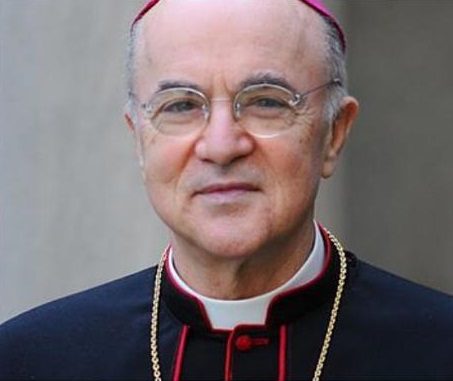
Photo credit: Archbishop Carlo Maria Viganò (3 December 2013) [public domain / Wikimedia Commons]

***
Summary: I lay out three distinct arguments with regard to Pope Francis and the five dubia, and explain why he is not obliged to interact with every virulent critic in every case.
prudence of sometimes not answering questions
reactionary critics of Pope Francis
Previous Post
August 2, 2023
Minor Prophets: Their Theology of Salvation
Next Post
August 7, 2023 Moses, Eyewitnesses, & 1st-Person Torah References
Recent Comments
"And lastly, I belong to no denomination and am free to serve God as He ..."
Is Venerating Men & Angels Worship? ..."
"And obeisance doesn't mean "worship". It means "respect", "obey", or "submission". Very weird that you ..."
Is Venerating Men & Angels Worship? ..."
"Many of these scriptures you have noted have been taken out of context. With Daniel, ..."
Is Venerating Men & Angels Worship? ..."
""Protestants often point out that Jesus is now triumphant in heaven and object to Catholics ..."
Three More Anti-Catholic Lies About Catholicism ..."
Browse Our Archives
Select a Category & Last Things About Me Anti-Catholicism Atheism & Agnosticism Baptism and Sacramentalism Bible and Tradition Blessed Virgin Mary Books by Dave Armstrong C. S. Lewis Calvinism & General Protestantism Catholic Apologetics Catholic Apologists Catholic conversion Catholic converts Christmas Church (Ecclesiology) Church History Conversion and Converts Development of Doctrine Eastern Orthodoxy Ecumenism & Christian Unity Eucharist & Liturgy Fathers of the Church French Translations G. K. Chesterton Hell Hell & Satan Hell & Satan & Last Things Heresies & Comparative Religion Holistic Health Inquisition & Crusades & Scandals James White Jews & Judaism & Old Testament John Calvin John Henry Newman Liberal / Modernist Theology Life Issues Literary Resume Lutheranism Mariology Martin Luther Music Orthodoxy Papacy & Infallibility Personal Page Philosophy & Science Political & Ethical & Moral Issues Protestant Persecution & Intolerance Protestantism Purgatory Purgatory & Penance Romantic & Imaginative Theology Saints & Purgatory & Penance Salvation Salvation & Justification Satan & Last Things Sexuality and Gender Issues Spanish Translations Traditionalism vs. Radical Catholic Reactionaries Traducciones al español / tradução para português Trinitarianism & Christology Uncategorized Videos
Select a Month October 2026 September 2026 August 2026 July 2026 June 2026 May 2026 April 2026 March 2026 February 2026 January 2026 December 2025 November 2025 October 2025 September 2025 August 2025 July 2025 June 2025 May 2025 April 2025 March 2025 February 2025 January 2025 December 2024 November 2024 October 2024 September 2024 August 2024 July 2024 June 2024 May 2024 April 2024 March 2024 February 2024 January 2024 December 2023 November 2023 October 2023 September 2023 August 2023 July 2023 June 2023 May 2023 April 2023 March 2023 February 2023 January 2023 December 2022 November 2022 October 2022 September 2022 August 2022 July 2022 June 2022 May 2022 April 2022 March 2022 February 2022 January 2022 December 2021 November 2021 October 2021 September 2021 August 2021 July 2021 June 2021 May 2021 April 2021 March 2021 February 2021 January 2021 December 2020 November 2020 October 2020 September 2020 August 2020 July 2020 June 2020 May 2020 April 2020 March 2020 February 2020 January 2020 December 2019 November 2019 October 2019 September 2019 August 2019 July 2019 June 2019 May 2019 April 2019 March 2019 February 2019 January 2019 December 2018 November 2018 October 2018 September 2018 August 2018 July 2018 June 2018 May 2018 April 2018 March 2018 February 2018 January 2018 December 2017 November 2017 October 2017 September 2017 August 2017 July 2017 June 2017 May 2017 April 2017 March 2017 February 2017 January 2017 December 2016 November 2016 October 2016 September 2016 August 2016 July 2016 June 2016 May 2016 April 2016 March 2016 February 2016 January 2016 December 2015 November 2015 October 2015 September 2015 August 2015 July 2015 June 2015 May 2015 April 2015 March 2015 February 2015 January 2015 December 2014 November 2014 October 2014 September 2014 August 2014 July 2014 June 2014 April 2014 March 2014 February 2014 January 2014 December 2013 November 2013 October 2013 September 2013 August 2013 July 2013 June 2013 April 2013 March 2013 February 2013 January 2013 December 2012 November 2012 October 2012 September 2012 August 2012 July 2012 June 2012 May 2012 April 2012 March 2012 February 2012 January 2012 December 2011 November 2011 October 2011 September 2011 August 2011 July 2011 June 2011 April 2011 March 2011 February 2011 October 2010 September 2010 August 2010 July 2010 April 2010 March 2010 December 2009 October 2009 August 2009 July 2009 June 2009 May 2009 March 2009 February 2009 October 2008 September 2008 April 2008 March 2008 February 2008 January 2008 December 2007 November 2007 October 2007 May 2007 March 2007 February 2007 January 2007 November 2006 October 2006 September 2006 August 2006 July 2006 June 2006 May 2006 April 2006 March 2006 February 2006 October 2005 June 2005 April 2005 February 2005 July 2004 May 2004 April 2004
Follow Us!
TAKE THE
Religious Wisdom Quiz
What was Paul’s profession before becoming an apostle?
Select your answer to see how you score.
Tentmaker Tax Collector Fisherman Carpenter
Books by This Author Books by Dave Armstrong
Related posts from Biblical Evidence for Catholicism

Was Peter "Any Old" Apostle? 10 Anti-Papal Arguments
Biblical Evidence for Catholicism

11 Protestant Objections to Papal Authority Debunked
Biblical Evidence for Catholicism

Matthew 16 & the Papacy (vs. Patrick O'Brien)
Biblical Evidence for Catholicism
Inspired Prophets: An Analogy to Infallible Popes
Biblical Evidence for Catholicism
TRENDING AT PATHEOS Catholic

I was strolling through the top floor of the brand new Parthenon...

What Does Gêvâh Mean For Kimberley Guifoyle &...
This week, a lot of the news is focused on Kimberly Guilfoyle....

INNER CIRCLE: Profound Mystery (Of Christ In All...
Ephesians 5:31-32 “For this reason, a man will leave his father and...

Do Not Rejoice When Your Enemy Falls: The...
Turning an execution into a public spectacle is a disturbing expression of...

'The Chosen' S6 Trailer: The Passion Gets Very...
Not many watching 'The Chosen' worry about spoilers, but just because they...

The purpose-driven labor priest
A labor activist reads Rick Warren and it gets me wondering about...
view all Catholic blogs
What Are Your Thoughts?leave a comment
Ad-Free & Subscriber Log-In Subscription Support
- About Us
- 2026 Calendar
- Videos
- Podcasts
- Library of World Religions
- Faith In Media Tracker
- Advertise With Us
- Write for Us
- Privacy Policy
- Terms of Service
- Do Not Sell My Data
- Contact Us
- Radiant Digital
- Manage Newsletter Subscriptions
- Unsubscribe From Notifications
- Sitemap
Copyright 2008-2026, Patheos. All rights reserved.
Subscription Support Ad-Free & Subscriber Log-In
Follow Patheos