
BuddhistCatholicContemplativeEvangelicalGeneral ChristianHinduJewishLatter-day SaintMuslimNew VisionsProgressive Christian
Beliefs
- Buddhist
- Catholic
- Contemplative
- Evangelical
- General Christian
- Hindu
- Jewish
- Latter-day Saint
- More Voices
- Muslim
- New Visions
- Pagan
- Progressive Christian
Topics
- Religion News
- Food and Religion
- Sports and Religion
- Religious Art
- Religious Music and Entertainment
- Religious Events
- History and Religion
- Style and Religion
- Politics and Religion
- Women in Religion
- Recreation Outdoors and Religion
- Business Finance and Religion
- Careers Workplace and Religion
- Education and Religion
- Family Parenting and Religion
- Health Fitness and Religion
- Home and Religion
- Relationships and Religion
- Technology and Religion
- Travel and Religion
Columnists
- Buddhist Columnists
- Business Finance and Religion Columnists
- Careers Workplace and Religion Columnists
- Catholic Columnists
- Contemplative Columnists
- Education and Religion Columnists
- Evangelists Columnists
- Family Parenting and Religion Columnists
- General Christian Columnists
- Health Fitness and Religion Columnists
- Hindu Columnists
- History and Religion Columnists
- Home and Religion Columnists
- Jewish Columnists
- More Voices Columnists
- Latter Day Columnists
- Muslim Columnists
- New Visions Columnists
- Nonreligious Columnists
- Pagan Columnists
- Politics and Religion Columnists
- Progressive Columnists
- Recreation Outdoors and Religion Columnists
- Relationships and Religion Columnists
- Religion News Columnists
- Religious Art Columnists
- Religious Events Columnists
- Religious Music and Entertainment Columnists
- Sports and Religion Columnists
- Style and Religion Columnists
- Technology and Religion Columnists
- Travel and Religion Columnists
- Women in Religion Columnists
Resource Library
- 2026 Calendar
- Library of World Religions
- The 100 Most Holy Places on Earth
- Patheos Answers
- Podcasts
- Videos
- Faith Leaders Database
- Anglican Episcopalian
- Bahai
- Baptist
- Buddhism
- Christianity
- Confucianism
- Eastern Orthodoxy
- Hinduism
- Holiness and Pentecostal
- ISKCON
- Islam
- Judaism
- Lutheran
- Methodist
- The Church of Jesus Christ of Latter-day Saints
- New Age
- Paganism
- Presbytarian and Reformed
- Protestantism
- Religion Behind the Scenes
- Roman Catholic
- Scientology
- Shia Islam
- Sikhism
- Sufism
- Sunni Islam
- Taoism
- Zen
- See all religions
Research Tools
 Ad-Free & Subscriber Log-In Subscription Support
Ad-Free & Subscriber Log-In Subscription Support
Follow Patheos 

- Trending:
- Forgiveness
- |
- Marriage
- |
- Consciousness
- |
- Death Penalty
- |
- Election
- |
- Halloween

-
About
-
Catholic Apologetics
-
Church History
-
Great Apologists
-
Christian Worldview
-
Protestantism & Misc.
- Home
- Catholic
- History and Religion
- Abraham: Justified Twice by Works & Once by Faith
Abraham: Justified Twice by Works & Once by Faith
Last updated on: October 2, 2023 at 10:41 pm by Dave Armstrong
Abraham: Justified Twice by Works & Once by Faith 2023-10-02T22:41:18-04:00 Dave Armstrong
Patheos Explore the world's faith through different perspectives on religion and spirituality! Patheos has the views of the prevalent religions and spiritualities of the world.
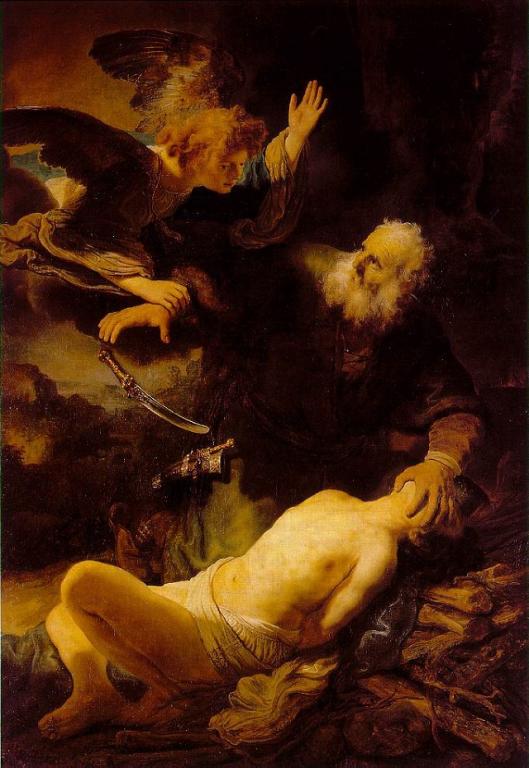
Our Protestant brethren say that one is justified by faith once for all and not at all by works. We say that initial justification is monergistic and by faith only, but ongoing justification is by faith + works. The Bible backs this up, as I shall now show from the example of Abraham.
*
Initial justification can be described as being “justified” just as we say of someone who got their license to drive a car for the first time: “she got her license.” But it has to be renewed (every four years in the US). So we “get” it more than once. We can also lose it due to drunk driving or excessive traffic violations (breaking of the law being similar to sins), and get it back again.
*
James 2:20-26 refers back to Genesis 15:6 (as well as Genesis 22), and gives an explicit interpretation of the Old Testament passage, by stating, “and the scripture was fulfilled which says, . . .” (2:23, RSV, as throughout). The previous three verses were all about justification, faith, and works, all tied in together, and this is what James says “fulfilled” Genesis 15:6. The next verse then condemns Protestant soteriology by disagreeing the notion of “faith alone” in the clearest way imaginable. Moreover, Nehemiah 9:8 states, “thou didst find his heart faithful before thee, and didst make with him the covenant to give to his descendants the land of the Canaanite . . .”
*
James 2 is usually applied by Protestants to sanctification, but that is not what the passage says. It mentions “justified” (dikaioo: Strong’s word #1344) three times (2:21, 24-25): the same Greek word used in Romans 4:2, as well as 2:13; 3:20, 24, 28; 5:1, 9; 8:30; 1 Corinthians 6:11; Galatians 2:16-17; 3:11, 24; 5:4; and Titus 3:7. If James actually meant sanctification, on the other hand, he could have used one of two Greek words (hagiazo / hagiasmos: Strong’s #37-38) that appear (together) 38 times in the New Testament (the majority of times by Paul himself).
*
The Catholic position is that justification is ongoing, and can be by faith or by faith + works (where works are mentioned as the cause, while assuming the presence of faith also). As Jimmy Akin has convincingly argued, Abraham was justified in Genesis 12, again in Genesis 15, and in Genesis 22, “by works.” Genesis 12 is really by faith and works together. God told him to leave his home and trust him for the future, and he did so (a work): “So Abram went, as the LORD had told him” (12:4). Then he built two altars to the Lord (good works again): 12:7-8.
*
Hebrews states that “By faith Abraham obeyed when he was called to go out to a place which he was to receive as an inheritance; and he went out, not knowing where he was to go” (11:8), so it was faith and works. Abraham had the faith to believe God (faith), and he obeyed Him (a work). Genesis 15 describes justification by faith, and Genesis 22, justification by works. Both/and.
*
We can say that Abraham’s good works flowed from and were intrinsic to, his faith. None of this poses any problem for the Catholic view. But it’s a huge problem for the Protestant view, since it can only accept justification by faith and not by works, and because these three incidents in Abraham’s life reveal three instances of justification, by both faith and works.
*
If it’s denied that Genesis 12 is a justification, then it has to be explained how Hebrews 11:8 describes it as Abraham exercising faith. This must be justification in the Reformed sense because totally depraved man (the “T” in “TULIP”) cannot have or exercise true faith. So Abraham was justified then, and again three chapters later (the one Paul takes note of, and Protestants, in an exclusive sense) and again by works seven chapters after that. Extremely unProtestant!
*
Hebrews 11 is about the heroes of the faith. Faith is described as leading to men receiving God’s “divine approval” (11:2), which sounds a lot like justification to me. Abel “received approval as righteous” (11:4). Enoch is described as “having pleased God” (11:5). Noah “became an heir of the righteousness which comes by faith” (11:7).
*
Then Abraham is mentioned. The overall thought is obviously the same as what came before. Works with regard to Abraham, are mentioned by the text asserting, “By faith Abraham obeyed” (11:8) and “By faith he sojourned in the land of promise . . .” (11:9) and “By faith Abraham . . . offered up Isaac” (11:17). The Bible also refers twice to “the obedience of faith” (Rom 1:5; 16:26) and twice to “work of faith” (1 Thess 1:3; 2 Thess 1:11). Works are always present where true faith exists.
*
Whether Paul uses the term justification for Genesis 12 or not, does not determine what is being described in Genesis 12. This is an important factor to consider. The argument about Abraham and justification is a deductive one, incorporating systematic theology. It doesn’t only look for the words, “justification” or “justified.” The word “Trinity” isn’t in the Bible, either. It doesn’t follow that the doctrine is absent. Concepts are present in texts as well as words. The question is whether Genesis 12 describes a justified man who possesses faith or not. I say it clearly does do so. Therefore, Abraham must have been justified by then.
*
What does Genesis 12 teach about Abraham’s justification? Well, God says to him, “I will make of you a great nation, and I will bless you, and make your name great . . . by you all the families of the earth shall bless themselves” (12:2-3). Do Protestants wish to argue that God said all this about and to an unregenerate, unjustified, “totally depraved” heathen? That makes no sense.
*
In Genesis 12, Abraham was obedient and “went, as the LORD told him” (12:4). That was a good work of obedience, and as a result, God blessed him greatly (12:2-3). Faith is never mentioned in the chapter. I would say that Abraham clearly exercised it when he obeyed God’s instructions. But it seems to me that if the point of the narrative is to highlight faith as opposed to works, it’s odd that Abraham’s work is mentioned and commended, but not his faith.
*
In Genesis 15:6 Abraham was justified as a result of having “believed the Lord.” “Justification” doesn’t appear there, but it does in Romans 4, where Paul offers an extensive interpretation of Genesis 15:6. Just as Paul does, so does James offer an authoritative interpretation of the events recorded in Genesis 22. Abraham was in the process of performing another work of obedience (sacrificing his son, per God’s command).
*
Paul uses the example of Abraham in Romans 4, in emphasizing faith, over against the Jewish works of circumcision as a supposed means of faith and justification (hence, he mentions circumcision in 4:9-12, and salvation to the Gentiles as well as Jews in 4:13-18).
*
The Bible states in context (God speaking through the angel of the LORD), “because you have done this . . . I will indeed bless you, and I will multiply your descendants . . . because you have obeyed my voice” (Gen 22:16-18). Thus, it’s firmly established in Genesis 22 that it was a work of Abraham that brought about God’s renewed covenant with him.
*
Knowing this, James simply called it what it was:, using different but conceptually equivalent terminology:
*
James 2:21-24 Was not Abraham our father justified by works, when he offered his son Isaac upon the altar? [22] You see that faith was active along with his works, and faith was completed by works, [23] and the scripture was fulfilled which says, “Abraham believed God, and it was reckoned to him as righteousness”; and he was called the friend of God. [24] You see that a man is justified by works and not by faith alone.
*
James — take note — doesn’t deny that Abraham also had faith, which was part of his justification as well (2:18, 20, 22-24, 26). We already knew Abraham was justified by a work in Genesis 22 because God rewarded him for something he had “done” and because he “obeyed” him.
*
Also, God reiterates that works are central to Abraham’s justification (and anyone’s) — without faith or belief being mentioned — in Genesis 18:
Genesis 18:17-19 The LORD said, “Shall I hide from Abraham what I am about to do, [18] seeing that Abraham shall become a great and mighty nation, and all the nations of the earth shall bless themselves by him? [19] No, for I have chosen him, that he may charge his children and his household after him to keep the way of the LORD by doing righteousness and justice; so that the LORD may bring to Abraham what he has promised him.”
God repeats the same sort of thing again, in speaking to Isaac:
Genesis 26:3-5 “Sojourn in this land, and I will be with you, and will bless you; for to you and to your descendants I will give all these lands, and I will fulfil the oath which I swore to Abraham your father. [4] I will multiply your descendants as the stars of heaven, and will give to your descendants all these lands; and by your descendants all the nations of the earth shall bless themselves: [5] because Abraham obeyed my voice and kept my charge, my commandments, my statutes, and my laws.”
It’s interesting that Genesis never mentions the “faith” of Abraham (at least in terms of using that word), even though he is considered the exemplar and “father” of monotheistic faith. But it does mention plenty of his works. Nor does the entire Protestant Old Testament do so. But in the Deuterocanon it states:
*
1 Maccabees 2:52 Was not Abraham found faithful when tested, and it was reckoned to him as righteousness?
2 Maccabees 1:2 May God do good to you, and may he remember his covenant with Abraham and Isaac and Jacob, his faithful servants.
*
The great faithfulness of Abraham is predominantly highlighted in the New Testament (Rom 4; Gal 3; Heb 11; Jas 2), which doesn’t ignore the fact that works also played a key role in Abraham’s justification. Scripture asserts that Abraham, Phinehas (Num 25:11-13), Rahab (Jas 2:25), Abel, and Noah were all justified by works.
*
***
Practical Matters: Perhaps some of my 4,300+ free online articles (the most comprehensive “one-stop” Catholic apologetics site) or fifty-three books have helped you (by God’s grace) to decide to become Catholic or to return to the Church, or better understand some doctrines and why we believe them.
Or you may believe my work is worthy to support for the purpose of apologetics and evangelism in general. If so, please seriously consider a much-needed financial contribution. I’m always in need of more funds: especially monthly support. “The laborer is worthy of his wages” (1 Tim 5:18, NKJV). 1 December 2021 was my 20th anniversary as a full-time Catholic apologist, and February 2022 marked the 25th anniversary of my blog.
PayPal donations are the easiest: just send to my email address: [email protected]. You’ll see the term “Catholic Used Book Service”, which is my old side-business. To learn about the different methods of contributing, including 100% tax deduction, etc., see my page: About Catholic Apologist Dave Armstrong / Donation Information. Thanks a million from the bottom of my heart!
***
Photo credit: Sacrifice of Isaac (1635), by Rembrandt (1606-1669) [public domain / Wikimedia Commons]

***
Summary: Abraham is shown in the Bible to have been justified on three separate occasions, & by works, as well as by faith, even before we consider the data in James.
Jews & Judaism & Old Testament
Previous Post
August 30, 2023
Justification: vs. Francisco Tourinho (Rd. 3, Pt. 3)
Next Post
September 1, 2023 On the Last Three Popes' Appointments of Cardinals
Recent Comments
"And lastly, I belong to no denomination and am free to serve God as He ..."
Is Venerating Men & Angels Worship? ..."
"And obeisance doesn't mean "worship". It means "respect", "obey", or "submission". Very weird that you ..."
Is Venerating Men & Angels Worship? ..."
"Many of these scriptures you have noted have been taken out of context. With Daniel, ..."
Is Venerating Men & Angels Worship? ..."
""Protestants often point out that Jesus is now triumphant in heaven and object to Catholics ..."
Three More Anti-Catholic Lies About Catholicism ..."
Browse Our Archives
Select a Category & Last Things About Me Anti-Catholicism Atheism & Agnosticism Baptism and Sacramentalism Bible and Tradition Blessed Virgin Mary Books by Dave Armstrong C. S. Lewis Calvinism & General Protestantism Catholic Apologetics Catholic Apologists Catholic conversion Catholic converts Christmas Church (Ecclesiology) Church History Conversion and Converts Development of Doctrine Eastern Orthodoxy Ecumenism & Christian Unity Eucharist & Liturgy Fathers of the Church French Translations G. K. Chesterton Hell Hell & Satan Hell & Satan & Last Things Heresies & Comparative Religion Holistic Health Inquisition & Crusades & Scandals James White Jews & Judaism & Old Testament John Calvin John Henry Newman Liberal / Modernist Theology Life Issues Literary Resume Lutheranism Mariology Martin Luther Music Orthodoxy Papacy & Infallibility Personal Page Philosophy & Science Political & Ethical & Moral Issues Protestant Persecution & Intolerance Protestantism Purgatory Purgatory & Penance Romantic & Imaginative Theology Saints & Purgatory & Penance Salvation Salvation & Justification Satan & Last Things Sexuality and Gender Issues Spanish Translations Traditionalism vs. Radical Catholic Reactionaries Traducciones al español / tradução para português Trinitarianism & Christology Uncategorized Videos
Select a Month October 2026 September 2026 August 2026 July 2026 June 2026 May 2026 April 2026 March 2026 February 2026 January 2026 December 2025 November 2025 October 2025 September 2025 August 2025 July 2025 June 2025 May 2025 April 2025 March 2025 February 2025 January 2025 December 2024 November 2024 October 2024 September 2024 August 2024 July 2024 June 2024 May 2024 April 2024 March 2024 February 2024 January 2024 December 2023 November 2023 October 2023 September 2023 August 2023 July 2023 June 2023 May 2023 April 2023 March 2023 February 2023 January 2023 December 2022 November 2022 October 2022 September 2022 August 2022 July 2022 June 2022 May 2022 April 2022 March 2022 February 2022 January 2022 December 2021 November 2021 October 2021 September 2021 August 2021 July 2021 June 2021 May 2021 April 2021 March 2021 February 2021 January 2021 December 2020 November 2020 October 2020 September 2020 August 2020 July 2020 June 2020 May 2020 April 2020 March 2020 February 2020 January 2020 December 2019 November 2019 October 2019 September 2019 August 2019 July 2019 June 2019 May 2019 April 2019 March 2019 February 2019 January 2019 December 2018 November 2018 October 2018 September 2018 August 2018 July 2018 June 2018 May 2018 April 2018 March 2018 February 2018 January 2018 December 2017 November 2017 October 2017 September 2017 August 2017 July 2017 June 2017 May 2017 April 2017 March 2017 February 2017 January 2017 December 2016 November 2016 October 2016 September 2016 August 2016 July 2016 June 2016 May 2016 April 2016 March 2016 February 2016 January 2016 December 2015 November 2015 October 2015 September 2015 August 2015 July 2015 June 2015 May 2015 April 2015 March 2015 February 2015 January 2015 December 2014 November 2014 October 2014 September 2014 August 2014 July 2014 June 2014 April 2014 March 2014 February 2014 January 2014 December 2013 November 2013 October 2013 September 2013 August 2013 July 2013 June 2013 April 2013 March 2013 February 2013 January 2013 December 2012 November 2012 October 2012 September 2012 August 2012 July 2012 June 2012 May 2012 April 2012 March 2012 February 2012 January 2012 December 2011 November 2011 October 2011 September 2011 August 2011 July 2011 June 2011 April 2011 March 2011 February 2011 October 2010 September 2010 August 2010 July 2010 April 2010 March 2010 December 2009 October 2009 August 2009 July 2009 June 2009 May 2009 March 2009 February 2009 October 2008 September 2008 April 2008 March 2008 February 2008 January 2008 December 2007 November 2007 October 2007 May 2007 March 2007 February 2007 January 2007 November 2006 October 2006 September 2006 August 2006 July 2006 June 2006 May 2006 April 2006 March 2006 February 2006 October 2005 June 2005 April 2005 February 2005 July 2004 May 2004 April 2004
Follow Us!
TAKE THE
Religious Wisdom Quiz
What city did David capture and make the capital of Israel?
Select your answer to see how you score.
Bethlehem Samaria Jerusalem Hebron
Books by This Author Books by Dave Armstrong
Related posts from Biblical Evidence for Catholicism

Bible & Catholicism on Mortal Sin (vs. John...
Biblical Evidence for Catholicism

Dialogue on Eternal Security / Absolute Assurance
Biblical Evidence for Catholicism

"Faith Alone" Dialogue with a Calvinist
Biblical Evidence for Catholicism

Exegesis of 75 NT Faith [Alone?] & Works...
Biblical Evidence for Catholicism
TRENDING AT PATHEOS Catholic

I was strolling through the top floor of the brand new Parthenon...

What Does Gêvâh Mean For Kimberley Guifoyle &...
This week, a lot of the news is focused on Kimberly Guilfoyle....

INNER CIRCLE: Profound Mystery (Of Christ In All...
Ephesians 5:31-32 “For this reason, a man will leave his father and...

Do Not Rejoice When Your Enemy Falls: The...
Turning an execution into a public spectacle is a disturbing expression of...

'The Chosen' S6 Trailer: The Passion Gets Very...
Not many watching 'The Chosen' worry about spoilers, but just because they...

The purpose-driven labor priest
A labor activist reads Rick Warren and it gets me wondering about...
view all Catholic blogs
What Are Your Thoughts?leave a comment
Ad-Free & Subscriber Log-In Subscription Support
- About Us
- 2026 Calendar
- Videos
- Podcasts
- Library of World Religions
- Faith In Media Tracker
- Advertise With Us
- Write for Us
- Privacy Policy
- Terms of Service
- Do Not Sell My Data
- Contact Us
- Radiant Digital
- Manage Newsletter Subscriptions
- Unsubscribe From Notifications
- Sitemap
Copyright 2008-2026, Patheos. All rights reserved.
Subscription Support Ad-Free & Subscriber Log-In
Follow Patheos