
BuddhistCatholicContemplativeEvangelicalGeneral ChristianHinduJewishLatter-day SaintMuslimNew VisionsProgressive Christian
Beliefs
- Buddhist
- Catholic
- Contemplative
- Evangelical
- General Christian
- Hindu
- Jewish
- Latter-day Saint
- More Voices
- Muslim
- New Visions
- Pagan
- Progressive Christian
Topics
- Religion News
- Food and Religion
- Sports and Religion
- Religious Art
- Religious Music and Entertainment
- Religious Events
- History and Religion
- Style and Religion
- Politics and Religion
- Women in Religion
- Recreation Outdoors and Religion
- Business Finance and Religion
- Careers Workplace and Religion
- Education and Religion
- Family Parenting and Religion
- Health Fitness and Religion
- Home and Religion
- Relationships and Religion
- Technology and Religion
- Travel and Religion
Columnists
- Buddhist Columnists
- Business Finance and Religion Columnists
- Careers Workplace and Religion Columnists
- Catholic Columnists
- Contemplative Columnists
- Education and Religion Columnists
- Evangelists Columnists
- Family Parenting and Religion Columnists
- General Christian Columnists
- Health Fitness and Religion Columnists
- Hindu Columnists
- History and Religion Columnists
- Home and Religion Columnists
- Jewish Columnists
- More Voices Columnists
- Latter Day Columnists
- Muslim Columnists
- New Visions Columnists
- Nonreligious Columnists
- Pagan Columnists
- Politics and Religion Columnists
- Progressive Columnists
- Recreation Outdoors and Religion Columnists
- Relationships and Religion Columnists
- Religion News Columnists
- Religious Art Columnists
- Religious Events Columnists
- Religious Music and Entertainment Columnists
- Sports and Religion Columnists
- Style and Religion Columnists
- Technology and Religion Columnists
- Travel and Religion Columnists
- Women in Religion Columnists
Resource Library
- 2026 Calendar
- Library of World Religions
- The 100 Most Holy Places on Earth
- Patheos Answers
- Podcasts
- Videos
- Faith Leaders Database
- Anglican Episcopalian
- Bahai
- Baptist
- Buddhism
- Christianity
- Confucianism
- Eastern Orthodoxy
- Hinduism
- Holiness and Pentecostal
- ISKCON
- Islam
- Judaism
- Lutheran
- Methodist
- The Church of Jesus Christ of Latter-day Saints
- New Age
- Paganism
- Presbytarian and Reformed
- Protestantism
- Religion Behind the Scenes
- Roman Catholic
- Scientology
- Shia Islam
- Sikhism
- Sufism
- Sunni Islam
- Taoism
- Zen
- See all religions
Research Tools
 Ad-Free & Subscriber Log-In Subscription Support
Follow Patheos 

- Trending:
- Advent
- |
- Forgiveness
- |
- Thanksgiving
- |
- Election
- |
- Seasonal Holidays
- |
- Marriage

-
About
-
Catholic Apologetics
-
Church History
-
Great Apologists
-
Christian Worldview
-
Protestantism & Misc.
- Home
- Catholic
- History and Religion
- Reply to Hays’ “Biblical Calvinism” #3
Reply to Hays’ “Biblical Calvinism” #3
Last updated on: June 6, 2026 at 12:48 am by Dave Armstrong
Reply to Hays’ “Biblical Calvinism” #3 2026-06-06T00:48:42-04:00 Dave Armstrong
Patheos Explore the world's faith through different perspectives on religion and spirituality! Patheos has the views of the prevalent religions and spiritualities of the world.
Does God “Micromanage” Every Intent?; God Judges Assyria; Israel Judged in Isaiah 6; Predestined Crucifixion; Acts 13:48: “Ordained to Eternal Life”; Catholic Church & God’s Providence
The late Steve Hays (1959-2020) was a Calvinist (and anti-Catholic) apologist, who was very active on his blog, called Triablogue . His 819-page self-published book, Biblical Calvinism has graciously been made available for free. On 9 September 2006, Hays was extraordinarily charitable towards me (seeing that almost all anti-Catholics have treated me like Vlad the Impaler). He wrote then:
I don’t think I’ve ever accused him of being a traitor or apostate or infidel. . . . I have nothing to say, one way or the other, regarding his state of grace. But his sincerity is unquestionable. I also don’t dislike him. . . . I don’t think there’s anything malicious about Armstrong—unlike some people who come to mind. In addition, I don’t think I’ve ever said he was unintelligent. For the record, it’s obvious that Armstrong has a quick, nimble mind.
Sadly, two-and-a-half years later, starting in April 2009 and up through December 2011 (in the following quotations) his opinion radically changed, and he claimed that I have “an evil character,” am “actually evil,” an “ego-maniac, narcissist,” “idolater,” “self-idolater,” “hack who pretends to be a professional apologist,” given to “chicanery,” one who doesn’t “do any real research,” “a stalwart enemy of the faith . . . no better than [the atheists] Richard Dawkins or Christopher Hitchens,” with an intent to “destroy faith in God’s word,” “schizophrenic,” “emotionally unhinged,” one who “doesn’t trust in the merit of Christ alone for salvation,” “has no peace of mind,” “a bipolar solipsist,” “split-personality,” and a “bad” man. See more gory details.
I feel no need whatsoever to reciprocate these silly and sinful insults. I just wanted the record to be known, and to show how apologetics can too often descend to such atrocious “soul-reading” ad hominem inanities. Hopefully, Hays took to heart his own criticism of some Arminians, from this book (p. 54): “They are so caught up in the momentum of the debate that they issue intemperate threats which, after a cooling off period, they’d realize are foolhardy.” I hope and pray so.
For my part, I’ve always maintained that Hays was a very intelligent, sincere, and well-meaning man, and I believe that I can and have learned a great deal from Reformed Protestants: my brethren in Christ. We have a lot in common, but we also have honest disagreements, and this series will mostly be concerned with those. They can be discussed without acrimony or disrespect. This is one of many planned critiques of Hays’ book. I will be focusing solely on Section II: “Exegetical Considerations”. It runs from pages 20 to 186. See also the 29 installments of my Reply to Hays’ “Catholicism” series: listed on my Anti-Catholicism web page, under “Steve Hays”. My Bible citations are from the RSV. Steve Hays’ words will be in blue. Unlike the previous series, I won’t list his subtitles.
Related Reading:
Calvinism & General Protestantism: Catholic Critique web page (where all of these replies will be listed: search “Hays'”)
John Calvin: Catholic Appraisal web page
A Biblical Critique of Calvinism (book: 2012, 178 pages; includes replies to exegetical arguments in Books I-III of John Calvin’s Institutes of the Christian Religion)
Biblical Catholic Answers for John Calvin (book: 2010, 388 pages; includes line-by-line replies to Book IV of John Calvin’s Institutes of the Christian Religion)
Biblical Catholic Salvation: “Faith Working Through Love” (book: 2010, 187 pages; includes 71 pages of rebuttals of four of the five Calvinist distinctives in “TULIP”; minus the “U”)
64 Critiques of John Calvin: Introduction & Master List (more in-depth replies than what was eventually compiled in my book about John Calvin. Most were completed for his 500th birthday in 2009)
Salvation, Justification, & “Faith Alone” web page (contains many articles relevant to Calvinist soteriology and “TULIP”)
*****
Psalm 33:10-11, 15 The Lord brings the counsel of the nations to nothing; he frustrates the plans of the peoples. 11 The counsel of the Lord stands forever, the plans of his heart to all generations. 15 he who fashions the hearts of them all and observes all their deeds. [p. 26]
Proverbs 19:21 Many are the plans in the mind of a man, but it is the purpose of the Lord that will stand. [p. 27]
These are statements of God’s sovereignty and providence. We have no disagreement with it, of course. A Calvinist like Hays sees this as antithetical to human free will choices (which is the purpose he produces it). It’s not. As I have already shown in several examples in my previous two installments, God works around sinful human choices (allowed in His permissive will) and is able to work out His perfect will in the long run. All of the relevant biblical data has to be considered and harmonized.
Proverbs 21:1 The king’s heart is a stream of water in the hand of the Lord; he turns it wherever he will. [p. 28] [cf. Prov 20:24]
First of all, the nature of proverbial literature is that it states general truths, which can admit of exceptions. If the Calvinist wishes to assert that God directs the hearts and minds and will of every ruler and political leader to do whatever He wants them to do, in every minute particular, then they have a huge problem, since it would follow that evil leaders were always directed by God to do His will right along with the good rulers. Thus, Lenin, Stalin, Mao, Hitler, Nero, Attila the Hun, Pol Pot, the wicked rulers of the Assyrians and Babylonians, Caligula, Diocletian, and all the other myriads of evil rulers only did what God wanted (in effect, forced) them to do. That can’t be because God’s perfect will never includes intrinsically evil ends.
These wicked rulers acted of their own free will, just as the Pharaoh of Moses’ time did (“Pharaoh . . . hardened his heart”: Ex 8:15; cf. 8:19, 32; 9:7, 34-35). The Bible then states that God hardened his heart (see Reply #1), but it was because Pharaoh already had done so in his free will, and God in His providence “gave him up” to it (cf. Romans 1). His actions, then, cannot be chalked up to foreordained decrees of God (so that he could not have possibly acted otherwise). When Moses and Aaron said “Let my people go” to Pharaoh (Ex 5:1), he could have said “okay.” His response was not foreordained or predetermined. The Bible says several times after this first encounter that God “hardened his heart,” but note that in the end, Pharaoh did let the Israelites go; therefore, the entire scenario involved his free will to do as he wished:
Exodus 12:31-32 And he summoned Moses and Aaron by night, and said, “Rise up, go forth from among my people, both you and the people of Israel; and go, serve the LORD, as you have said. [32] Take your flocks and your herds, as you have said, and be gone; and bless me also!”
Then, as we all know, Pharaoh changed his mind again, and pursued the Hebrews, until his army was drowned in the sea:
Exodus 14:5-8 When the king of Egypt was told that the people had fled, the mind of Pharaoh and his servants was changed toward the people, and they said, “What is this we have done, that we have let Israel go from serving us?” [6] So he made ready his chariot and took his army with him, [7] and took six hundred picked chariots and all the other chariots of Egypt with officers over all of them. [8] And the LORD hardened the heart of Pharaoh king of Egypt and he pursued the people of Israel as they went forth defiantly.
It’s always the same dynamic, as I have repeatedly shown in this series. Man makes up his mind to do evil, then it is said non-literally that God in His providence and use of evil to bring about good, “hardened” him; or He allows Satan to afflict Job for a time, etc. The Calvinist interpretation doesn’t fly. It dies the death of a thousand cuts. God in His providence eventually defeats tremendous evil but sometimes it takes centuries. We defeated Hitler and Hirohito in World War II (after having allowed, in our stupidity and naivete, Hitler to build up his military), but Stalin’s and Mao’s evils continued. Once that crisis passed, human beings decided to start murdering preborn children by the hundreds of millions: far more deaths than occurred in the World War (God hasn’t yet caused that extreme wickedness to cease). So the more things change, the more they stay the same.
Isaiah 14:24-27 The Lord of hosts has sworn: “As I have planned, so shall it be, and as I have purposed, so shall it stand, 25 that I will break the Assyrian in my land, and on my mountains trample him underfoot; and his yoke shall depart from them, and his burden from their shoulder.” 26 This is the purpose that is purposed concerning the whole earth, and this is the hand that is stretched out over all the nations. 27 For the Lord of hosts has purposed, and who will annul it? His hand is stretched out, and who will turn it back? [p. 29]
God promised to defeat and judge nations who came against His chosen people, Israel. For example:
Zephaniah 2:13 And he will stretch out his hand against the north, and destroy Assyria; and he will make Nineveh a desolation, a dry waste like the desert.
And that’s exactly what happened. As always, God incorporated free human choices. Assyria was an empire from the 14th century to the 7th century BC. In the late 7th century BC, it was conquered by a coalition of the Babylonians and Medes. Nineveh was the largest city in the world for about fifty years (with 100-120,000 population) until it was sacked in 612 BC. The Assyrians had their chance to repent and reform themselves, with the preaching of the prophet Jonah in Nineveh in the 8th century BC. They did for a time (at least in Nineveh), but must have descended back into wickedness and their notorious cruelty towards enemies, leading to their God-ordained judgment.
John 12:39-40 Therefore they could not believe. For again Isaiah said, 40 “He has blinded their eyes and hardened their heart, lest they see with their eyes, and understand with their heart, and turn, and I would heal them.” [pp. 33-34]
Here is the Old Testament passage cited:
Isaiah 6:9-10 And he said, “Go, and say to this people: `Hear and hear, but do not understand; see and see, but do not perceive.’ [10] Make the heart of this people fat, and their ears heavy, and shut their eyes; lest they see with their eyes, and hear with their ears, and understand with their hearts, and turn and be healed.”
The prophet Isaiah (c. 740- c. 681 BC) lived during the reign of King Hezekiah. Encyclopedia Britannica (“Hezekiah”) states that the “dates of his reign are often given as about 715 to about 686 BC.” New Bible Dictionary (“Hezekiah”: p. 524) states that at the beginning of Hezekiah’s reign, “the religious life of the nation had been contaminated by heathen influences . . . superstition, idolatry, and spiritual blindness . . .”
On page 121, Hays wrote: “Reformed theological method is based less on snappy one-liners than tracing out the flow of argument or narrative arc in larger blocks of Scripture,” and he gave Isaiah chapters 40-48 as an example. Very well, then. If we are to better understand what God wanted to communicate in Isaiah 6:9-10, that was cited in John 12:39-40, we need to understand the situation in Israel, as described by Isaiah in chapters 1-5, that led God to proclaim what he did through Isaiah, in a pungent, sarcastic way:
Isaiah 1:4 Ah, sinful nation, a people laden with iniquity, offspring of evildoers, sons who deal corruptly! They have forsaken the LORD, they have despised the Holy One of Israel, they are utterly estranged.
Isaiah 1:7, 9 Your country lies desolate, your cities are burned with fire; in your very presence aliens devour your land; it is desolate, as overthrown by aliens. . . . If the LORD of hosts had not left us a few survivors, we should have been like Sodom, and become like Gomorrah.
Isaiah 1:13, 15 Bring no more vain offerings; incense is an abomination to me. New moon and sabbath and the calling of assemblies — I cannot endure iniquity and solemn assembly. . . . When you spread forth your hands, I will hide my eyes from you; even though you make many prayers, I will not listen; your hands are full of blood.
Isaiah 1:21, 25 How the faithful city has become a harlot, she that was full of justice! Righteousness lodged in her, but now murderers. . . . I will turn my hand against you and will smelt away your dross as with lye and remove all your alloy.
Isaiah 2:8 Their land is filled with idols; they bow down to the work of their hands, to what their own fingers have made.
Isaiah 3:8-9 For Jerusalem has stumbled, and Judah has fallen; because their speech and their deeds are against the LORD, defying his glorious presence. [9] Their partiality witnesses against them; they proclaim their sin like Sodom, they do not hide it. Woe to them! For they have brought evil upon themselves.
Isaiah 5:12, 20, 24-25 . . . they do not regard the deeds of the LORD, or see the work of his hands. . . . [20] Woe to those who call evil good and good evil, who put darkness for light and light for darkness, . . . [24] . . . they have rejected the law of the LORD of hosts, and have despised the word of the Holy One of Israel. [25] Therefore the anger of the LORD was kindled against his people,
and he stretched out his hand against them and smote them, . . .
All of that and more sets the stage for Isaiah 6 and the words under consideration. Again, Israel caused its own judgment to come about. The text explicitly explains this. They “brought evil upon themselves” (Is 3:9), and as a result, the Bible states, “Therefore the anger of the LORD was kindled against his people . . .” God didn’t cause this to happen or ordain it. He allowed it to happen and judged the wicked (even among His chosen people) when it did. If the Calvinist take were correct, on the other hand, Isaiah 5:25 would have to read something like, “Therefore the LORD preordained the sin of His people and made them as wicked as Sodom, so that his anger was kindled against them.” With all due respect, that’s not the God of the Bible that I have studied for 45 years, but rather, a capricious God Who acts in irrational, senseless, and unjust ways.
Acts 2:23 this Jesus, delivered up according to the definite plan and foreknowledge of God, you crucified and killed by the hands of lawless men. [p. 34]
Acts 4:28 to do whatever your hand and your plan had predestined to take place. [p. 35]
Acts 4:27 reads: “for truly in this city there were gathered together against thy holy servant Jesus, whom thou didst anoint, both Herod and Pontius Pilate, with the Gentiles and the peoples of Israel,”
Jacob Arminius (1560-1609), the Dutch Protestant theologian, from whose name “Arminianism” derives, wrote about these two passages:
Let us see now what can be proved from these passages. The passage in Acts 2:23, teaches, not that God willed that the Jews should slay Christ, but, that he was “delivered by the determinate counsel and foreknowledge of God” into the power of those who wished to slay him. Nothing more can be inferred from Acts 4:28. For God predetermined to deliver His own Son into the hands of his enemies, that He might suffer from them that which God had laid upon him, and which the Jews, of their own wickedness and hatred against Christ, had determined to inflict upon him.
God, indeed, “determined before” that death should be inflicted on Christ by them; but in what character did God consider them when He “determined before” that this should be done by them? In that character, surely, which they had at the time when they inflicted death upon Christ, that is, in the character of sworn enemies of Christ, of obstinate enemies and contemners of God and the truth; who could be led to repentance by no admonitions, prayers, threats or miracles; who wished to inflict every evil on Christ, if they could only obtain the power over him, which they had often sought in vain.
It is evident, then, that there was here no other action of God in this case than that He delivered His own Son into their hands, and permitted them to do their pleasure in reference to him, . . .
But there appears here no action of God by which they were impelled or moved to will and to do what they willed and did; but He used those who wished, of their own malice and envy, to put Christ to death, in a mode, which, He knew, would conduce to His own glory and the salvation of men. (“Allegation 3“, from Works, Vol. 3 [1853], 387-388)
Acts 13:48 And when the Gentiles heard this, they began rejoicing and glorifying the word of the Lord, and as many as were appointed to eternal life believed. [p. 35]
John Wesley exegeted this text as follows:
As many as were ordained to eternal life – St. Luke does not say fore – ordained. He is not speaking of what was done from eternity, but of what was then done, through the preaching of the Gospel. He is describing that ordination, and that only, which was at the very time of hearing it. During this sermon those believed, says the apostle, to whom God then gave power to believe. It is as if he had said, “They believed, whose hearts the Lord opened;” as he expresses it in a clearly parallel place, speaking of the same kind of ordination, Acts 16:14, &c [“The Lord opened her heart to give heed to what was said by Paul”]. It is observable, the original word is not once used in Scripture to express eternal predestination of any kind [Strong’s word #5021: tassó]. The sum is, all those and those only, who were now ordained, now believed. Not that God rejected the rest: it was his will that they also should have been saved: but they thrust salvation from them. Nor were they who then believed constrained to believe. But grace was then first copiously offered them. And they did not thrust it away, so that a great multitude even of Gentiles were converted. In a word, the expression properly implies, a present operation of Divine grace working faith in the hearers. (Explanatory Notes Upon the New Testament, 5th ed., 1788, 398-399; bracketed additions my own)
Acts 17:26 And he made from one man every nation of mankind to live on all the face of the earth, having determined allotted periods and the boundaries of their dwelling place [p. 35]
This is part of God’s providence, which the Catholic Church accepts as enthusiastically as any Protestant, and I dare say, any Calvinist, too. Calvinists don’t “own” the notions of providence and predestination. St. Thomas Aquinas wrote about providence in the 13th century, contending that the regulation of all things to an end (ratio ordinis rerum in finem) exists from all eternity (see Summa Theologica, I, 22, 1) and that every human being is adapted to an end through God’s providence (S.th. I, 22, 2). The First Vatican Council in 1870 taught:
Everything that God has brought into being he protects and governs by his providence, which reaches from one end of the earth to the other and orders all things well. (Dogmatic Constitution on the Catholic Faith, Ch. 1: On God the Creator of All Things, 4; cites the deuterocanonical Wisdom of Solomon 8:1 in support: “She reaches mightily from one end of the earth to the other, and she orders all things well.”)
The Catholic Encyclopedia has a magnificent article, “Divine Providence,” dated 1911. I cite about half of the section entitled, “The testimony of Scripture”:
Though the term Providence is applied to God only three times in Scripture (Ecclesiastes 5:5; Wisdom 14:3; Judith 9:5), and once to Wisdom (Wisdom 6:17), the general doctrine of Providence is consistently taught throughout both the Old and New Testaments. God not only implants in the nature of things the potentiality of future development (Genesis 1:7, 12, 22, 28; 8:17; 9:1, 7; 12:2; 15:5), but in this development, as in all the operations of nature, He co-operates; so that in Scriptural language what nature does, God is said to do (Genesis 2:5, cf. 9; 7:4, cf. 10; 7:19-22, cf. 23; 8:1-2, cf. 5 sq.). Seed time and harvest, cold and heat, summer and winter, the clouds and the rain, the fruits of the earth, life itself alike are His gift (Genesis 2:7; 8:2; Psalm 146:8, 9; 28; 103; 148; Job 38:37; Joel 2:21 sq.; Sirach 11:14). So too with man. Man tills the ground (Genesis 3:17 sq.; 4:12; 9:20), but human labours without Divine assistance are of no avail (Psalm 126:1; 59:13; Proverbs 21:31). . . . God is the sole ruler of the world (Job 34:13). His will governs all things (Psalm 148:8; Job 9:7; Isaiah 40:22-6; 44:24-8; Sirach 16:18-27; Esther 13:9). He loves all men (Wisdom 11:25, 27), desires the salvation of all (Isaiah 45:22; Wisdom 12:16), and His providence extends to all nations (Deuteronomy 2:19; Wisdom 6:8; Isaiah 66:18). He desires not the death of a sinner, but rather that he should repent (Ezekiel 18:20-32; 33:11; Wisdom 11:24); for He is above all things a merciful God and a God of much compassion (Exodus 34:6; Numbers 14:18; Deuteronomy 5:10; Psalm 32:5; 102:8-17; 144:9; Sirach 2:23). Yet He is a just God, as well as a Saviour (Isaiah 45:21). Hence both good and evil [i.e., judgment] proceed from Him (Lamentations 3:38; Amos 3:6; Isaiah 45:7; Ecclesiastes 7; 15; Sirach 11:14), good as a bounteous gift freely bestowed (Psalm 144:16; Ecclesiastes 5:18; 1 Chronicles 29:12-4), evil as the consequence of sin (Lamentations 3:39; Joel 2:20; Amos 3:10, 11; Isaiah 5:4, 5). For God rewards men according to their works (Lamentations 3:64; Job 34:10-7; Psalm 17:27; Sirach 16:12, 13; 11:28; 1 Samuel 26:23), their thoughts, and their devices (Jeremiah 17:10; 32:19; Psalm 7:10). From His anger there is no escape (Job 9:13; Psalm 32:16, 17; Wisdom 16:13-8); and none can prevail against Him (Sirach 18:1; Wisdom 11:22-3; Proverbs 21:30; Psalm 2:1-4; 32:10; Judith 16:16, 17). If the wicked are spared for a time (Jeremiah 12:1; Job 21:7-15; Psalm 72:12-3; Ecclesiastes 8:12), they will ultimately receive their deserts if they do not repent (Jeremiah 12:13-7; Job 21:17, 18; 27:13-23); while the good, though they may suffer for a time, are comforted by God (Psalm 90:15; Isaiah 51:12), who will build them up, and will not cease to do them good (Jeremiah 31:28 sq.; 32:41). For in spite of the wicked, God’s counsels are never changed or thwarted (Isaiah 14:24-7; 43:13; 46:10; Psalm 32:11; 148:6). Evil He converts into good (Genesis 1:20; cf. Psalm 90:10); and suffering He uses as an instrument whereby to train men up as a father traineth up his children (Deuteronomy 8:1-6; Psalm 65:10-2; Wisdom 12:1, 2); so that in very truth the world fighteth for the just (Wisdom 16:17). . . .
To the Athenians in the Areopagus Paul declares:
- that God made the universe and is its supreme Lord (Acts 17:24);
- that He sustains the universe in its existence, giving life and breath to all things (verse 25), and hence, as the source whence they all proceed, must Himself lack nothing nor stand in need of any human service;
- that He has directed the growth of nations and their distribution (verse 26), and
- this to the end that they should seek Him (verse 27) in Whom we live and move and have our being, and whose offspring we are (verse 28).
Anyone who thinks that the Catholic Church doesn’t believe in God’s providence ought to read this section (and the entire article) three times.
***
Practical Matters: Perhaps some of my 4,300+ free online articles (the most comprehensive “one-stop” Catholic apologetics site) or fifty-one books have helped you (by God’s grace) to decide to become Catholic or to return to the Church, or better understand some doctrines and why we believe them.
Or you may believe my work is worthy to support for the purpose of apologetics and evangelism in general. If so, please seriously consider a much-needed financial contribution. I’m always in need of more funds: especially monthly support. “The laborer is worthy of his wages” (1 Tim 5:18, NKJV). 1 December 2021 was my 20th anniversary as a full-time Catholic apologist, and February 2022 marked the 25th anniversary of my blog.
PayPal donations are the easiest: just send to my email address: [email protected]. You’ll see the term “Catholic Used Book Service”, which is my old side-business. To learn about the different methods of contributing, including 100% tax deduction, etc., see my page: About Catholic Apologist Dave Armstrong / Donation Information. Thanks a million from the bottom of my heart!
***
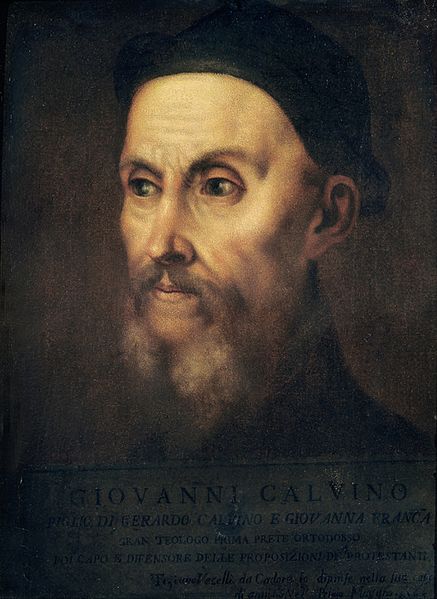
Photo credit: Portrait of John Calvin by Titian (1490-1576) [public domain / Wikimedia Commons]

***
Summary: This is one of my many (often point-by-point) replies to the “Exegetical Considerations” section (pp. 20-186) of Steve Hays’ “Biblical Calvinism” book.
Calvinism & General Protestantism
Previous Post

June 13, 2023
Reply to Hays' "Biblical Calvinism" #2
Next Post
June 15, 2023 On Catholic Bodily Mortification & Penance
Recent Comments
"Special pleading, and not a serious response to my arguments . . ."
Is Venerating Men & Angels Worship? ..."
""no man needs to teach us."Didn't you just teach us?"
Is Venerating Men & Angels Worship? ..."
""Catholics say they are the only church that can lead people into heaven."In fact, we ..."
Is Venerating Men & Angels Worship? ..."
"And lastly, I belong to no denomination and am free to serve God as He ..."
Is Venerating Men & Angels Worship? ..."
Browse Our Archives
Select a Category & Last Things About Me Anti-Catholicism Atheism & Agnosticism Baptism and Sacramentalism Bible and Tradition Blessed Virgin Mary Books by Dave Armstrong C. S. Lewis Calvinism & General Protestantism Catholic Apologetics Catholic Apologists Catholic conversion Catholic converts Christmas Church (Ecclesiology) Church History Conversion and Converts Development of Doctrine Eastern Orthodoxy Ecumenism & Christian Unity Eucharist & Liturgy Fathers of the Church French Translations G. K. Chesterton Hell Hell & Satan Hell & Satan & Last Things Heresies & Comparative Religion Holistic Health Inquisition & Crusades & Scandals James White Jews & Judaism & Old Testament John Calvin John Henry Newman Liberal / Modernist Theology Life Issues Literary Resume Lutheranism Mariology Martin Luther Music Orthodoxy Papacy & Infallibility Personal Page Philosophy & Science Political & Ethical & Moral Issues Protestant Persecution & Intolerance Protestantism Purgatory Purgatory & Penance Romantic & Imaginative Theology Saints & Purgatory & Penance Salvation Salvation & Justification Satan & Last Things Sexuality and Gender Issues Spanish Translations Traditionalism vs. Radical Catholic Reactionaries Traducciones al español / tradução para português Trinitarianism & Christology Uncategorized Videos
Select a Month November 2026 October 2026 September 2026 August 2026 July 2026 June 2026 May 2026 April 2026 March 2026 February 2026 January 2026 December 2025 November 2025 October 2025 September 2025 August 2025 July 2025 June 2025 May 2025 April 2025 March 2025 February 2025 January 2025 December 2024 November 2024 October 2024 September 2024 August 2024 July 2024 June 2024 May 2024 April 2024 March 2024 February 2024 January 2024 December 2023 November 2023 October 2023 September 2023 August 2023 July 2023 June 2023 May 2023 April 2023 March 2023 February 2023 January 2023 December 2022 November 2022 October 2022 September 2022 August 2022 July 2022 June 2022 May 2022 April 2022 March 2022 February 2022 January 2022 December 2021 November 2021 October 2021 September 2021 August 2021 July 2021 June 2021 May 2021 April 2021 March 2021 February 2021 January 2021 December 2020 November 2020 October 2020 September 2020 August 2020 July 2020 June 2020 May 2020 April 2020 March 2020 February 2020 January 2020 December 2019 November 2019 October 2019 September 2019 August 2019 July 2019 June 2019 May 2019 April 2019 March 2019 February 2019 January 2019 December 2018 November 2018 October 2018 September 2018 August 2018 July 2018 June 2018 May 2018 April 2018 March 2018 February 2018 January 2018 December 2017 November 2017 October 2017 September 2017 August 2017 July 2017 June 2017 May 2017 April 2017 March 2017 February 2017 January 2017 December 2016 November 2016 October 2016 September 2016 August 2016 July 2016 June 2016 May 2016 April 2016 March 2016 February 2016 January 2016 December 2015 November 2015 October 2015 September 2015 August 2015 July 2015 June 2015 May 2015 April 2015 March 2015 February 2015 January 2015 December 2014 November 2014 October 2014 September 2014 August 2014 July 2014 June 2014 April 2014 March 2014 February 2014 January 2014 December 2013 November 2013 October 2013 September 2013 August 2013 July 2013 June 2013 April 2013 March 2013 February 2013 January 2013 December 2012 November 2012 October 2012 September 2012 August 2012 July 2012 June 2012 May 2012 April 2012 March 2012 February 2012 January 2012 December 2011 November 2011 October 2011 September 2011 August 2011 July 2011 June 2011 April 2011 March 2011 February 2011 October 2010 September 2010 August 2010 July 2010 April 2010 March 2010 December 2009 October 2009 August 2009 July 2009 June 2009 May 2009 March 2009 February 2009 October 2008 September 2008 April 2008 March 2008 February 2008 January 2008 December 2007 November 2007 October 2007 May 2007 March 2007 February 2007 January 2007 November 2006 October 2006 September 2006 August 2006 July 2006 June 2006 May 2006 April 2006 March 2006 February 2006 October 2005 June 2005 April 2005 February 2005 July 2004 May 2004 April 2004
Follow Us!
TAKE THE
Religious Wisdom Quiz
What does "Pentecost" mean?
Select your answer to see how you score.
Twelfth Twentieth Fiftieth First
Books by This Author Books by Dave Armstrong
Related posts from Biblical Evidence for Catholicism
Denominationalism: 50 Biblical Condemnations
Biblical Evidence for Catholicism
On Protestant Explanations of Catholic Conversion
Biblical Evidence for Catholicism
Protestant Confessions & "Ever-Virgin" Mary
Biblical Evidence for Catholicism
A Few "Worst" & "Best" Arguments vs. Protestantism
Biblical Evidence for Catholicism
TRENDING AT PATHEOS Catholic

Smart people saying smart things (11.24.26)
Please take time to listen to Perry Bacon, Sarah Posner, Adam Serwer,...

The Contingency of Our Technology
Last week we were hit with a raft of massive technology outages....

In 1939, President Franklin D. Roosevelt moved Thanksgiving from November 30 to...

Reasons for Restraint: Ricardo Gonzalez, Florida and Dec...
The Morning of January 3 I begin with the dead. On the...

I published this column for Thanksgiving 2012 in the Deseret News....

For many years, Catholicism has been caught up in division over the...
view all Catholic blogs
What Are Your Thoughts?leave a comment
Ad-Free & Subscriber Log-In Subscription Support
- About Us
- 2026 Calendar
- Videos
- Podcasts
- Library of World Religions
- Faith In Media Tracker
- Advertise With Us
- Write for Us
- Privacy Policy
- Terms of Service
- Do Not Sell My Data
- Contact Us
- Radiant Digital
- Manage Newsletter Subscriptions
- Unsubscribe From Notifications
- Sitemap
Copyright 2008-2026, Patheos, part of the Radiant Digital network of media brands. All rights reserved.
Subscription Support Ad-Free & Subscriber Log-In
Follow Patheos