
BuddhistCatholicContemplativeEvangelicalGeneral ChristianHinduJewishLatter-day SaintMuslimNew VisionsProgressive Christian
Beliefs
- Buddhist
- Catholic
- Contemplative
- Evangelical
- General Christian
- Hindu
- Jewish
- Latter-day Saint
- More Voices
- Muslim
- New Visions
- Pagan
- Progressive Christian
Topics
- Religion News
- Food and Religion
- Sports and Religion
- Religious Art
- Religious Music and Entertainment
- Religious Events
- History and Religion
- Style and Religion
- Politics and Religion
- Women in Religion
- Recreation Outdoors and Religion
- Business Finance and Religion
- Careers Workplace and Religion
- Education and Religion
- Family Parenting and Religion
- Health Fitness and Religion
- Home and Religion
- Relationships and Religion
- Technology and Religion
- Travel and Religion
Columnists
- Buddhist Columnists
- Business Finance and Religion Columnists
- Careers Workplace and Religion Columnists
- Catholic Columnists
- Contemplative Columnists
- Education and Religion Columnists
- Evangelists Columnists
- Family Parenting and Religion Columnists
- General Christian Columnists
- Health Fitness and Religion Columnists
- Hindu Columnists
- History and Religion Columnists
- Home and Religion Columnists
- Jewish Columnists
- More Voices Columnists
- Latter Day Columnists
- Muslim Columnists
- New Visions Columnists
- Nonreligious Columnists
- Pagan Columnists
- Politics and Religion Columnists
- Progressive Columnists
- Recreation Outdoors and Religion Columnists
- Relationships and Religion Columnists
- Religion News Columnists
- Religious Art Columnists
- Religious Events Columnists
- Religious Music and Entertainment Columnists
- Sports and Religion Columnists
- Style and Religion Columnists
- Technology and Religion Columnists
- Travel and Religion Columnists
- Women in Religion Columnists
Resource Library
- 2026 Calendar
- Library of World Religions
- The 100 Most Holy Places on Earth
- Patheos Answers
- Podcasts
- Videos
- Faith Leaders Database
- Anglican Episcopalian
- Bahai
- Baptist
- Buddhism
- Christianity
- Confucianism
- Eastern Orthodoxy
- Hinduism
- Holiness and Pentecostal
- ISKCON
- Islam
- Judaism
- Lutheran
- Methodist
- The Church of Jesus Christ of Latter-day Saints
- New Age
- Paganism
- Presbytarian and Reformed
- Protestantism
- Religion Behind the Scenes
- Roman Catholic
- Scientology
- Shia Islam
- Sikhism
- Sufism
- Sunni Islam
- Taoism
- Zen
- See all religions
Research Tools
 Ad-Free & Subscriber Log-In Subscription Support
Ad-Free & Subscriber Log-In Subscription Support
Follow Patheos 

- Trending:
- Forgiveness
- |
- Marriage
- |
- Consciousness
- |
- Death Penalty
- |
- Election
- |
- Halloween

-
About
-
Catholic Apologetics
-
Church History
-
Great Apologists
-
Christian Worldview
-
Protestantism & Misc.
- Home
- Catholic
- History and Religion
- Reply to Hays’ “Biblical Calvinism” #1
Reply to Hays’ “Biblical Calvinism” #1
Last updated on: June 6, 2026 at 12:48 am by Dave Armstrong
Reply to Hays’ “Biblical Calvinism” #1 2026-06-06T00:48:42-04:00 Dave Armstrong
Patheos Explore the world's faith through different perspectives on religion and spirituality! Patheos has the views of the prevalent religions and spiritualities of the world.
Preliminaries; God “Hardens” Hearts?; Few or Many Saved?
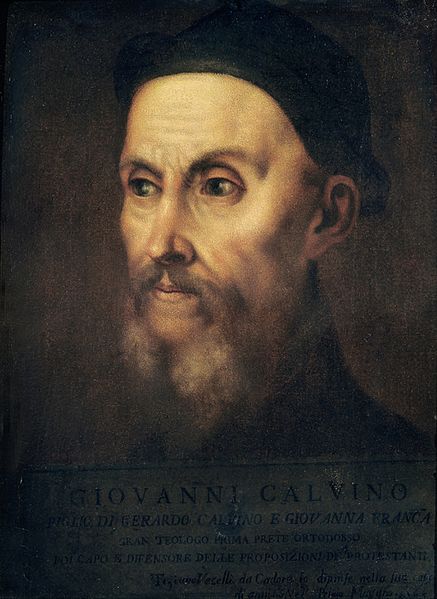
The late Steve Hays (1959-2020) was a Calvinist (and anti-Catholic) apologist, who was very active on his blog, called Triablogue . His 819-page self-published book, Biblical Calvinism has graciously been made available for free. On 9 September 2006, Hays was extraordinarily charitable towards me (seeing that almost all anti-Catholics have treated me like Vlad the Impaler). He wrote then:
I don’t think I’ve ever accused him of being a traitor or apostate or infidel. . . . I have nothing to say, one way or the other, regarding his state of grace. But his sincerity is unquestionable. I also don’t dislike him. . . . I don’t think there’s anything malicious about Armstrong—unlike some people who come to mind. In addition, I don’t think I’ve ever said he was unintelligent. For the record, it’s obvious that Armstrong has a quick, nimble mind.
Sadly, two-and-a-half years later, starting in April 2009 and up through December 2011 (in the following quotations) his opinion radically changed, and he claimed that I have “an evil character,” am “actually evil,” an “ego-maniac, narcissist,” “idolater,” “self-idolater,” “hack who pretends to be a professional apologist,” given to “chicanery,” one who doesn’t “do any real research,” “a stalwart enemy of the faith . . . no better than [the atheists] Richard Dawkins or Christopher Hitchens,” with an intent to “destroy faith in God’s word,” “schizophrenic,” “emotionally unhinged,” one who “doesn’t trust in the merit of Christ alone for salvation,” “has no peace of mind,” “a bipolar solipsist,” “split-personality,” and a “bad” man. See more gory details.
I feel no need whatsoever to reciprocate these silly and sinful insults. I just wanted the record to be known, and to show how apologetics can too often descend to such atrocious “soul-reading” ad hominem inanities. Hopefully, Hays took to heart his own criticism of some Arminians, from this book (p. 54): “They are so caught up in the momentum of the debate that they issue intemperate threats which, after a cooling off period, they’d realize are foolhardy.” I hope and pray so.
For my part, I’ve always maintained that Hays was a very intelligent, sincere, and well-meaning man, and I believe that I can and have learned a great deal from Reformed Protestants: my brethren in Christ. We have a lot in common, but we also have honest disagreements, and this series will mostly be concerned with those. They can be discussed without acrimony or disrespect. This is one of many planned critiques of Hays’ book. I will be focusing solely on Section II: “Exegetical Considerations”. It runs from pages 20 to 186. See also the 29 installments of my Reply to Hays’ “Catholicism” series: listed on my Anti-Catholicism web page, under “Steve Hays”. My Bible citations are from the RSV. Steve Hays’ words will be in blue. Unlike the previous series, I won’t list his subtitles.
Related Reading:
Calvinism & General Protestantism: Catholic Critique web page (where all of these replies will be listed: search “Hays'”)
John Calvin: Catholic Appraisal web page
A Biblical Critique of Calvinism (book: 2012, 178 pages; includes replies to exegetical arguments in Books I-III of John Calvin’s Institutes of the Christian Religion)
Biblical Catholic Answers for John Calvin (book: 2010, 388 pages; includes line-by-line replies to Book IV of John Calvin’s Institutes of the Christian Religion)
Biblical Catholic Salvation: “Faith Working Through Love” (book: 2010, 187 pages; includes 71 pages of rebuttals of four of the five Calvinist distinctives in “TULIP”; minus the “U”)
64 Critiques of John Calvin: Introduction & Master List (more in-depth replies than those which were eventually compiled in my book about John Calvin. Most were completed for his 500th birthday in 2009)
Salvation, Justification, & “Faith Alone” web page (contains many articles relevant to Calvinist soteriology and “TULIP”)
*****
Taken by themselves, Reformed prooftexts might seem to beg the question by presupposing a Reformed interpretation thereof. (Arminian prooftexting is open to the same objection.) I’ve gone beyond bare prooftexting to provide exegetical arguments for the Reformed
interpretation. [p. 21]
Good! And I will provide a countering Catholic (often similar or identical to an Arminian) interpretation. One of my favorite things — and one of my favorite activities in theology and apologetics — is engaging in exegetical dialogue. Hays loved this, too, but he wasn’t much interested in dialoguing with Catholics about it. He didn’t think he had much to learn from them (since he classified Catholicism as a “counterfeit”). I have a very different outlook.
Although both Calvinists and Arminians have their one-verse prooftexts, Reformed theological method is based less on snappy one-liners than tracing out the flow of argument or narrative arc in larger blocks of Scripture (e.g. Gen 37-50; Exod 4-14; Isa 40-48; Jn 6, 10-12, 17; Rom 9-11; Eph 1-2, 4). [p. 121]
This is a good thing; the more context and more Scripture considered overall, the better. I still think that Calvinists are prone to trotting out the same prooftexts (or scriptural sections like those above), and largely disregarding others which might be construed as counter-arguments, or at the very least, relevant to a particular topic. I hasten to add, however, that every theological group tends to do this (the Bible being a very long and multi-faceted collection of books).
Why do Calvinists keep bringing the issue back to Scripture? Because Christianity is a revealed religion. Because only God knows his own mind. We lack direct access to the mind of God. Intentions are hidden. We don’t know God’s intentions unless he tells us. That’s not something we can intuit or infer from the natural order. [p. 54]
All good reasons. I agree! In my apologetics, I cite as much or more Scripture than anyone I am aware of. Often in dialogues with Protestants I cite probably ten times or more more Bible passages than they do: all relevant to the discussion. So we have this desire very much in common. And it’s really the bottom-line, in discussions of Catholics and Protestants, since we both equally revere God’s inspired, inerrant revelation.
Good, constructive dialogues begin with what both parties agree with, and then move on to differences (in this case, exegetical and doctrinal ones). Hays and I could have truly had some great dialogues on biblical exegesis, but it takes two! He wasn’t interested in that with me, even before he decided to trash my character and work. As it is, you my readers can see what an able Reformed exponent has to say, and I think I can hold my own, too. You’ll get both sides presented: enabling you to make up your minds as to which is more believable and plausible. This is the beauty and utility of dialogue as a wonderful teaching tool.
Arminians typically recast the issue in philosophical categories like “causation,” “determinism,” or “causal determinism,” then proceed to attack these categories. Although there’s a place for framing the issue philosophically, that’s not where we should begin. It makes the debate too abstract, as if this is just a debate over competing ideas or philosophical models. It’s important to start with revealed truths. [p. 54]
I agree again.
Hays, on pages 55-61, presents Bible passages on predestination, God’s providence, and related notions. Catholics and Arminians don’t disagree with any of these (being all inspired revelation!). Our problem with Calvinism is how it incorrectly incorporates the role of human free will and choice into the mix. Many (including Calvinists) aren’t aware that Catholics fully believe in predestination of the elect, and so did someone like John Wesley. Two thematic examples from his list of Scriptures will very nicely illustrate my point about the free will of man:
And the Lord said to Moses, “When you go back to Egypt, see that you do before Pharaoh all the miracles that I have put in your power. But I will harden his heart, so that he will not let the people go (Exod 4:21).
But I will harden Pharaoh’s heart, and though I multiply my signs and wonders in the land of Egypt (Exod 7:3). [p. 58]
I addressed this topic at length over fourteen years ago. The Bible does indeed state several times that “God hardened” Pharaoh’s heart. No one denies that. But if one reads only those passage it sure does sound like some sort of Calvinist determinism or “fatalism” doesn’t it? The problem is that this is not all the Bible says about it. Hays neglected the many verses that discussed how Pharaoh hardened his own heart (and as such has not presented the whole truth), and others — including the Israelites themselves — also doing so. Here they are:
Exodus 8:15 But when Pharaoh saw that there was a respite, he hardened his heart, . . . (cf. 8:19)
Exodus 8:32 But Pharaoh hardened his heart this time also, and did not let the people go.
Exodus 9:34 But when Pharaoh saw that the rain and the hail and the thunder had ceased, he sinned yet again, and hardened his heart, he and his servants. (cf. 9:7, 35)
1 Samuel 6:6 Why should you harden your hearts as the Egyptians and Pharaoh hardened their hearts? . . . (cf. additional general examples: Dt 15:7; 2 Chr 36:13; Job 9:4; Ps 95:8; Prov 28:14; Heb 3:8, 15; 4:7
How these two motifs are harmonized is by holding that Pharaoh rebelled of his own will, and that God in His providence allowed that for His own providential purposes. The Bible then attributes the attitude to God in the sense that in allowing it, He ultimately caused it. It’s a biblical “mode” of talking about God’s providence. Man can choose to follow God and His precepts and commands or not. When we do not, we become more and more hardened. Man is responsible for his own sin.
To assert that “God did so-and-so” when He simply allowed it to take place, is a proclamation of God’s overall Providence. God is communicating that He is ultimately in control. There is also a strong sarcastic element in this sort of biblical concept (that we see in Job and often in the prophets), as if God were saying, “okay; you don’t want to follow Me and do what is best for you? You know better than I do about that? Very well, then, I’ll let you become blind and deluded. See how well off you’ll be then.” Strictly speaking, that isn’t how God thinks or acts, but it was an anthropomorphism to help practical, concrete, non-philosophical Hebrew man be able to relate to the mysterious, transcendent God.
The bottom line is that men harden themselves in rebellion and God allows [without agreeing with] it. Hence we have in Scripture, many “if . . . then” conditional prophecies. If people rebel, God will withdraw His grace and protection from them, and so in a sense He did it. But it was always essentially man’s rebellion:
Joshua 24:20 If you forsake the LORD and serve foreign gods, then he will turn and do you harm, and consume you, after having done you good.”
1 Chronicles 28:9 “And you, Solomon my son, know the God of your father, and serve him with a whole heart and with a willing mind; for the LORD searches all hearts, and understands every plan and thought. If you seek him, he will be found by you; but if you forsake him, he will cast you off for ever.
2 Chronicles 7:17-20 And as for you, if you walk before me, as David your father walked, doing according to all that I have commanded you and keeping my statutes and my ordinances,[18] then I will establish your royal throne, as I covenanted with David your father, saying, `There shall not fail you a man to rule Israel.’ [19] “But if you turn aside and forsake my statutes and my commandments which I have set before you, and go and serve other gods and worship them, [20] then I will pluck you up from the land which I have given you; and this house, which I have consecrated for my name, I will cast out of my sight, and will make it a proverb and a byword among all peoples.
2 Chronicles 15:2 If you seek him, he will be found by you, but if you forsake him, he will forsake you.
[see many more examples]
See how much Scripture I bring to bear? Hays provided two passages. I provided more than nineteen to show that his two have to be understood within the framework of all these other ultra-relevant passages (in other words, ten times more, as I alluded to above). This is a constant characteristic of my methodology in dialogue. If the Protestant “wants Bible” I give them plenty of that: sometimes more than they would wish or want to deal with!
Therefore God sends them a strong delusion, so that they may believe what is false, 12 in order that all may be condemned who did not believe the truth but had pleasure in unrighteousness (2 Thes 2:11-12). [p. 60]
His prooftext starts with a connecting word, “therefore.” Clearly, then, the preceding verse ought to be incorporated in able to determine the thought expressed in context. “Therefore God” refers back to something that men did. And so, sure enough, the verse before makes it crystal clear that God sent the delusion because these people had already decided to rebel against Him. Accordingly, the last part of the preceding verse refers to “those who are to perish, because they refused to love the truth and so be saved.”
In fact, verse 12, which Hays did include, refutes his interpretation as well, because it also explains why God sent the delusion, just as verse 10 did: “all may be condemned who did not believe the truth.” This passage reminds me of another very similar but more explicit one with the same dynamic:
Romans 1:18-28 For the wrath of God is revealed from heaven against all ungodliness and wickedness of men who by their wickedness suppress the truth. [19] For what can be known about God is plain to them, because God has shown it to them. [20] Ever since the creation of the world his invisible nature, namely, his eternal power and deity, has been clearly perceived in the things that have been made. So they are without excuse; [21] for although they knew God they did not honor him as God or give thanks to him, but they became futile in their thinking and their senseless minds were darkened. [22] Claiming to be wise, they became fools, [23] and exchanged the glory of the immortal God for images resembling mortal man or birds or animals or reptiles. [24] Therefore God gave them up in the lusts of their hearts to impurity, to the dishonoring of their bodies among themselves, [25] because they exchanged the truth about God for a lie and worshiped and served the creature rather than the Creator, who is blessed for ever! Amen. [26] For this reason God gave them up to dishonorable passions. Their women exchanged natural relations for unnatural, [27] and the men likewise gave up natural relations with women and were consumed with passion for one another, men committing shameless acts with men and receiving in their own persons the due penalty for their error. [28] And since they did not see fit to acknowledge God, God gave them up to a base mind and to improper conduct.
Everything is there. Paul explains exactly why “God gave them up” (1:24, 26, 28). The explanation is in two preceding verses, and the first half of v. 28 (1:23, 25, 28: they “exchanged the glory of the immortal God for images” (idolatry) . . . “because they exchanged the truth about God for a lie and worshiped and served the creature” . . . “since they did not see fit to acknowledge God . . .” The causal flow is very clear: men rebel, and then God “gives them up”. Moreover, 1:18 sums up the dynamic of the whole passage: “the wrath of God” comes precisely because of the “wickedness of men who by their wickedness suppress the truth.” How could this be any more clear than it is? The theme is repeated over and over so that no one could possibly miss or misconstrue it.
I have color-coded the passage to show men’s evil acts in red, which cause God to judge them and give them up (in green), with the connecting clauses in purple, bolded and italicized.
On page 62, Hays presents biblical arguments for few being saved: Matthew 7:14 (“For the gate is narrow and the way is hard, that leads to life, and those who find it are few”) and Luke 13:23-30 (13:24: “Strive to enter by the narrow door . . .”). These are good, solid arguments. But there are other indications that half or more human beings may be saved. In the parable of the ten maidens with lamps (Mt 25:1-13), five were foolish and were damned (“the door was shut . . . I do not know you”: 25:10, 12) and five were wise and received eternal life (“went in with him to the marriage feast”: 25:10). It’s a 50-50 proposition. Hays referred to this parable in passing on page 63, but didn’t analyze it as I did.
The parable of the talents follows (25:14-30). Here, there are three servants, who are given five talents, two talents, and one talent [a form of money], respectively. The ones who are saved are the first two (“enter into the joy of your master”: 25:21, 23), while the servant with one talent, who did nothing with it, was damned (“cast the worthless servant into the outer darkness”: 25:30). So this parable suggests a 67% rate of final salvation and a 33% rate of damnation. If we take the average of the two, we arrive at a figure of 58.5% being saved in the end, and 41.5% damned. Who knows? Both are right from the lips of Jesus, and parables always mean something. It’s interesting to ponder the implications. Hays (I was happy to see) didn’t rule out the possibility that relatively more could be saved:
*
The version in Luke might suggest that the comparison is more specific. The point of contrast is not about the ratio lost and saved humanity in general, but the difference between the few Jews who respond to Jesus compared to many gentiles who respond to Jesus. On that view, perhaps the majority of the human race will be saved, but mostly drawn from gentile people-groups. [p. 63]
*
Jesus doesn’t answer the question of whether few be saved. He probably leaves it up in the air as a stimulus to the reader. Each reader needs to answer that question for himself by heeding the warning and taking appropriate action. . . . Does the passage imply that only a few will be saved? We need to compare that with the messianic banquet in Lk 13:28-29. That evokes a motif in Isaiah (e.g. Isa 25:6-9; 26:5; 43:5; 49:12; 55:1-2), including the image of Gentiles flooding into God’s kingdom (Isa 59:19). That envisions a multitude. [p. 66]
*
A popular trope that critics of Calvinism mechanically resort to is the allegation that according to Calvinism, God reprobates most human beings. Problem with that allegation is that Calvinism has no official statement on the percentages. [p. 65]
*
I’m glad to hear this. I thought that Calvinists taught that a small minority would be saved.
*
***
Practical Matters: Perhaps some of my 4,300+ free online articles (the most comprehensive “one-stop” Catholic apologetics site) or fifty-one books have helped you (by God’s grace) to decide to become Catholic or to return to the Church, or better understand some doctrines and why we believe them.
Or you may believe my work is worthy to support for the purpose of apologetics and evangelism in general. If so, please seriously consider a much-needed financial contribution. I’m always in need of more funds: especially monthly support. “The laborer is worthy of his wages” (1 Tim 5:18, NKJV). 1 December 2021 was my 20th anniversary as a full-time Catholic apologist, and February 2022 marked the 25th anniversary of my blog.
PayPal donations are the easiest: just send to my email address: [email protected]. You’ll see the term “Catholic Used Book Service”, which is my old side-business. To learn about the different methods of contributing, including 100% tax deduction, etc., see my page: About Catholic Apologist Dave Armstrong / Donation Information. Thanks a million from the bottom of my heart!
***
Photo credit: Portrait of John Calvin by Titian (1490-1576) [public domain / Wikimedia Commons]

***
Summary: This is one of my many (often point-by-point) replies to the “Exegetical Considerations” section (pp. 20-186) of Steve Hays’ “Biblical Calvinism” book.
Calvinism & General Protestantism
Previous Post
June 9, 2023
Reply to Hays’ “Catholicism” #29
Next Post
June 12, 2023 "Excesses" in Catholic Mariology & Devotion
Recent Comments
"And lastly, I belong to no denomination and am free to serve God as He ..."
Is Venerating Men & Angels Worship? ..."
"And obeisance doesn't mean "worship". It means "respect", "obey", or "submission". Very weird that you ..."
Is Venerating Men & Angels Worship? ..."
"Many of these scriptures you have noted have been taken out of context. With Daniel, ..."
Is Venerating Men & Angels Worship? ..."
""Protestants often point out that Jesus is now triumphant in heaven and object to Catholics ..."
Three More Anti-Catholic Lies About Catholicism ..."
Browse Our Archives
Select a Category & Last Things About Me Anti-Catholicism Atheism & Agnosticism Baptism and Sacramentalism Bible and Tradition Blessed Virgin Mary Books by Dave Armstrong C. S. Lewis Calvinism & General Protestantism Catholic Apologetics Catholic Apologists Catholic conversion Catholic converts Christmas Church (Ecclesiology) Church History Conversion and Converts Development of Doctrine Eastern Orthodoxy Ecumenism & Christian Unity Eucharist & Liturgy Fathers of the Church French Translations G. K. Chesterton Hell Hell & Satan Hell & Satan & Last Things Heresies & Comparative Religion Holistic Health Inquisition & Crusades & Scandals James White Jews & Judaism & Old Testament John Calvin John Henry Newman Liberal / Modernist Theology Life Issues Literary Resume Lutheranism Mariology Martin Luther Music Orthodoxy Papacy & Infallibility Personal Page Philosophy & Science Political & Ethical & Moral Issues Protestant Persecution & Intolerance Protestantism Purgatory Purgatory & Penance Romantic & Imaginative Theology Saints & Purgatory & Penance Salvation Salvation & Justification Satan & Last Things Sexuality and Gender Issues Spanish Translations Traditionalism vs. Radical Catholic Reactionaries Traducciones al español / tradução para português Trinitarianism & Christology Uncategorized Videos
Select a Month October 2026 September 2026 August 2026 July 2026 June 2026 May 2026 April 2026 March 2026 February 2026 January 2026 December 2025 November 2025 October 2025 September 2025 August 2025 July 2025 June 2025 May 2025 April 2025 March 2025 February 2025 January 2025 December 2024 November 2024 October 2024 September 2024 August 2024 July 2024 June 2024 May 2024 April 2024 March 2024 February 2024 January 2024 December 2023 November 2023 October 2023 September 2023 August 2023 July 2023 June 2023 May 2023 April 2023 March 2023 February 2023 January 2023 December 2022 November 2022 October 2022 September 2022 August 2022 July 2022 June 2022 May 2022 April 2022 March 2022 February 2022 January 2022 December 2021 November 2021 October 2021 September 2021 August 2021 July 2021 June 2021 May 2021 April 2021 March 2021 February 2021 January 2021 December 2020 November 2020 October 2020 September 2020 August 2020 July 2020 June 2020 May 2020 April 2020 March 2020 February 2020 January 2020 December 2019 November 2019 October 2019 September 2019 August 2019 July 2019 June 2019 May 2019 April 2019 March 2019 February 2019 January 2019 December 2018 November 2018 October 2018 September 2018 August 2018 July 2018 June 2018 May 2018 April 2018 March 2018 February 2018 January 2018 December 2017 November 2017 October 2017 September 2017 August 2017 July 2017 June 2017 May 2017 April 2017 March 2017 February 2017 January 2017 December 2016 November 2016 October 2016 September 2016 August 2016 July 2016 June 2016 May 2016 April 2016 March 2016 February 2016 January 2016 December 2015 November 2015 October 2015 September 2015 August 2015 July 2015 June 2015 May 2015 April 2015 March 2015 February 2015 January 2015 December 2014 November 2014 October 2014 September 2014 August 2014 July 2014 June 2014 April 2014 March 2014 February 2014 January 2014 December 2013 November 2013 October 2013 September 2013 August 2013 July 2013 June 2013 April 2013 March 2013 February 2013 January 2013 December 2012 November 2012 October 2012 September 2012 August 2012 July 2012 June 2012 May 2012 April 2012 March 2012 February 2012 January 2012 December 2011 November 2011 October 2011 September 2011 August 2011 July 2011 June 2011 April 2011 March 2011 February 2011 October 2010 September 2010 August 2010 July 2010 April 2010 March 2010 December 2009 October 2009 August 2009 July 2009 June 2009 May 2009 March 2009 February 2009 October 2008 September 2008 April 2008 March 2008 February 2008 January 2008 December 2007 November 2007 October 2007 May 2007 March 2007 February 2007 January 2007 November 2006 October 2006 September 2006 August 2006 July 2006 June 2006 May 2006 April 2006 March 2006 February 2006 October 2005 June 2005 April 2005 February 2005 July 2004 May 2004 April 2004
Follow Us!
TAKE THE
Religious Wisdom Quiz
What book of the Bible comes after Genesis?
Select your answer to see how you score.
Deuteronomy Exodus Leviticus Numbers
Books by This Author Books by Dave Armstrong
Related posts from Biblical Evidence for Catholicism

On Protestant Explanations of Catholic Conversion
Biblical Evidence for Catholicism

Protestant Confessions & "Ever-Virgin" Mary
Biblical Evidence for Catholicism

A Few "Worst" & "Best" Arguments vs. Protestantism
Biblical Evidence for Catholicism
Reply to Anglican Sean Luke on Denominationalism
Biblical Evidence for Catholicism
TRENDING AT PATHEOS Catholic

In "Irreplaceable," our book on vocation and technology, Trevor Sutton and I...

I was strolling through the top floor of the brand new Parthenon...

What Does Gêvâh Mean For Kimberley Guifoyle &...
This week, a lot of the news is focused on Kimberly Guilfoyle....

INNER CIRCLE: Profound Mystery (Of Christ In All...
Ephesians 5:31-32 “For this reason, a man will leave his father and...

Do Not Rejoice When Your Enemy Falls: The...
Turning an execution into a public spectacle is a disturbing expression of...

'The Chosen' S6 Trailer: The Passion Gets Very...
Not many watching 'The Chosen' worry about spoilers, but just because they...
view all Catholic blogs
What Are Your Thoughts?leave a comment
Ad-Free & Subscriber Log-In Subscription Support
- About Us
- 2026 Calendar
- Videos
- Podcasts
- Library of World Religions
- Faith In Media Tracker
- Advertise With Us
- Write for Us
- Privacy Policy
- Terms of Service
- Do Not Sell My Data
- Contact Us
- Radiant Digital
- Manage Newsletter Subscriptions
- Unsubscribe From Notifications
- Sitemap
Copyright 2008-2026, Patheos. All rights reserved.
Subscription Support Ad-Free & Subscriber Log-In
Follow Patheos