
BuddhistCatholicContemplativeEvangelicalGeneral ChristianHinduJewishLatter-day SaintMuslimNew VisionsProgressive Christian
Beliefs
- Buddhist
- Catholic
- Contemplative
- Evangelical
- General Christian
- Hindu
- Jewish
- Latter-day Saint
- More Voices
- Muslim
- New Visions
- Pagan
- Progressive Christian
Topics
- Religion News
- Food and Religion
- Sports and Religion
- Religious Art
- Religious Music and Entertainment
- Religious Events
- History and Religion
- Style and Religion
- Politics and Religion
- Women in Religion
- Recreation Outdoors and Religion
- Business Finance and Religion
- Careers Workplace and Religion
- Education and Religion
- Family Parenting and Religion
- Health Fitness and Religion
- Home and Religion
- Relationships and Religion
- Technology and Religion
- Travel and Religion
Columnists
- Buddhist Columnists
- Business Finance and Religion Columnists
- Careers Workplace and Religion Columnists
- Catholic Columnists
- Contemplative Columnists
- Education and Religion Columnists
- Evangelists Columnists
- Family Parenting and Religion Columnists
- General Christian Columnists
- Health Fitness and Religion Columnists
- Hindu Columnists
- History and Religion Columnists
- Home and Religion Columnists
- Jewish Columnists
- More Voices Columnists
- Latter Day Columnists
- Muslim Columnists
- New Visions Columnists
- Nonreligious Columnists
- Pagan Columnists
- Politics and Religion Columnists
- Progressive Columnists
- Recreation Outdoors and Religion Columnists
- Relationships and Religion Columnists
- Religion News Columnists
- Religious Art Columnists
- Religious Events Columnists
- Religious Music and Entertainment Columnists
- Sports and Religion Columnists
- Style and Religion Columnists
- Technology and Religion Columnists
- Travel and Religion Columnists
- Women in Religion Columnists
Resource Library
- 2026 Calendar
- Library of World Religions
- The 100 Most Holy Places on Earth
- Patheos Answers
- Podcasts
- Videos
- Faith Leaders Database
- Anglican Episcopalian
- Bahai
- Baptist
- Buddhism
- Christianity
- Confucianism
- Eastern Orthodoxy
- Hinduism
- Holiness and Pentecostal
- ISKCON
- Islam
- Judaism
- Lutheran
- Methodist
- The Church of Jesus Christ of Latter-day Saints
- New Age
- Paganism
- Presbytarian and Reformed
- Protestantism
- Religion Behind the Scenes
- Roman Catholic
- Scientology
- Shia Islam
- Sikhism
- Sufism
- Sunni Islam
- Taoism
- Zen
- See all religions
Research Tools
 Ad-Free & Subscriber Log-In Subscription Support
Follow Patheos 

- Trending:
- Advent
- |
- Forgiveness
- |
- Thanksgiving
- |
- Election
- |
- Seasonal Holidays
- |
- Marriage

-
About
-
Catholic Apologetics
-
Church History
-
Great Apologists
-
Christian Worldview
-
Protestantism & Misc.
- Home
- Catholic
- History and Religion
- Reply to Hays’ “Catholicism” #11
Reply to Hays’ “Catholicism” #11
Last updated on: June 6, 2026 at 12:02 am by Dave Armstrong
Reply to Hays’ “Catholicism” #11 2026-06-06T00:02:24-04:00 Dave Armstrong
Patheos Explore the world's faith through different perspectives on religion and spirituality! Patheos has the views of the prevalent religions and spiritualities of the world.
Visible Church; Eucharist in Acts 2:42; Ever-Changing Catholicism?
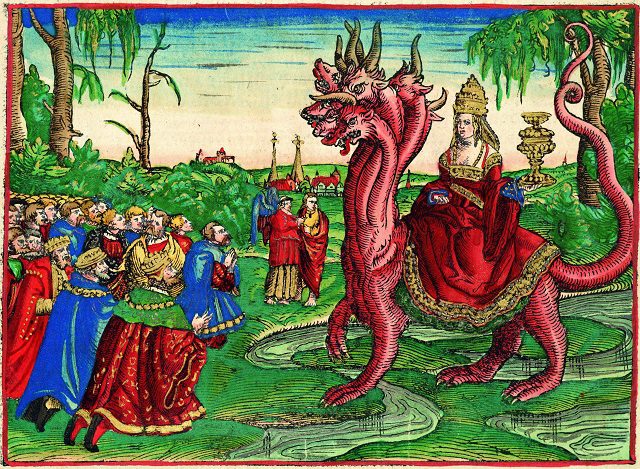
The late Steve Hays (1959-2020) was a Calvinist (and anti-Catholic) apologist, who was very active on his blog, called Triablogue (now continued by Jason Engwer). His 695-page self-published book, Catholicism — a collection of articles from his site — has graciously been made available for free. On 9 September 2006, knowing full well my history of being condemned and vilified by other anti-Catholics (and his buddies) like James White, Eric Svendsen, and James Swan, Hays was quite — almost extraordinarily — charitable towards me. He wrote then:
I don’t think I’ve ever accused him of being a traitor or apostate or infidel. . . . I have nothing to say, one way or the other, regarding his state of grace. But his sincerity is unquestionable. I also don’t dislike him. . . . I don’t think there’s anything malicious about Armstrong—unlike some people who come to mind. In addition, I don’t think I’ve ever said he was unintelligent. For the record, it’s obvious that Armstrong has a quick, nimble mind. . . . The term “apostasy” carries with it a heavy presumption that the apostate is a hell-bound reprobate. I think it’s unwarranted to assume that all Catholics or converts to Catholicism are damned.
Two-and-a-half years later, starting in April 2009 and up through December 2011 (in the following quotations) his opinion radically changed, and he claimed that I have “an evil character,” am “actually evil,” “ego-maniac, narcissist,” “idolater,” “self-idolater,” “hack who pretends to be a professional apologist,” given to “chicanery,” one who doesn’t “do any real research,” “a stalwart enemy of the faith . . . no better than [the atheists] Richard Dawkins or Christopher Hitchens,” with an intent to “destroy faith in God’s word,” “schizophrenic,” “emotionally unhinged,” one who “doesn’t trust in the merit of Christ alone for salvation,” “has no peace of mind,” “a bipolar solipsist,” “split-personality,” and a “bad” man. He wasn’t one to mince words! See more gory details.
I feel no need whatsoever to reciprocate these silly and sinful insults. I just wanted the record to be known. I’ve always maintained that Hays was a very intelligent man, but habitually a sophist in methodology; sincere and well-meaning, but tragically and systematically wrong and misguided regarding Catholicism. That’s what I’m addressing, not the state of his heart and soul (let alone his eternal destiny). It’s a theological discussion. This is one of many planned critiques of his book (see my reasons why I decided to do this). Rather than list them all here, interested readers are directed to the “Steve Hays” section of my Anti-Catholicism web page, where they will all be listed. My Bible citations are from the RSV. Steve’s words will be in blue.
*****
[Chapter 3: Competing Paradigms]
Finding the church
Catholic converts and apologists like Bryan Cross harp on “the visible church”. Where do you find the visible church? [p. 94]
In the Bible:
Visible, Hierarchical, Apostolic Church [1996]
1 Timothy 3:15: Sola Scriptura or Visible Church Authority? [10-2-07]
Debunking the Mythical Invisible Church [9-14-15]
Is the One True Church a Visible or Invisible Entity? [National Catholic Register, 9-12-18]
Protestants don’t have a visible church. [p. 94]
Then that is one of many ways in which they are unbiblical. But it’s incorrect for Hays to make such a blanket statement about all Protestants. Anglicans believe in a visible Church. Even Hays’ master John Calvin casually assumed that it existed:
How we are to judge the church visible, which falls within our knowledge, is, I believe, already evident from the above discussion. For we have said that Holy Scripture speaks of the church in two ways. Sometimes by the term “church” it means that which is actually in God’s presence, into which no persons are received but those who are children of God by grace of adoption and true members of Christ by sanctification of the Holy Spirit. Then, indeed, the church includes not only the saints presently living on earth, but all the elect from the beginning of the world. Often, however, the name “church” designates the whole multitude of men spread over the earth who profess to worship one God and Christ. By baptism we are initiated into faith in him; by partaking in the Lord’s Supper we attest our unity in true doctrine and love; in the Word of the Lord we have agreement, and for the preaching of the Word the ministry instituted by Christ is preserved. In this church are mingled many hypocrites who have nothing of Christ but the name and outward appearance. There are very many ambitious, greedy, envious persons, evil speakers, and some of quite unclean life. (Institutes of the Christian Religion [Philadelphia, 1960], Book IV, Chapter 1, Section 7: “Invisible and Visible Church”; italics my own)
Here’s another definition of the church:
They devoted themselves to the teaching of the apostles, to fellowship, to the breaking of bread, and prayer (Acts 2:42).
That’s a nifty compact definition. A functional definition. . . .
This is where you find “the church”. You find the church whenever and whenever you find groups of Christians who exemplify Acts 2:42, both inside and outside of church. [p. 94]
It’s not a definition of the Church at all. Rather, it’s a description of how one group of the earliest Christians (Acts 11:26) — in Jerusalem — acted. If I say, “these athletes warmed up by throwing the ball around, kept in physical shape, sat on the bench, ran around the bases, hit a pitched ball with a bat, and caught balls in the air,” that’s a description of baseball players: not the definition of baseball itself.
If Hays wants to argue in this fashion, I could just as well cite the actions of Christians in the seven churches of Revelation, too: “you have abandoned the love you had at first” (Rev 2:4; of the church in Ephesus); “you are dead” (Rev 3:1; of the church in Sardis); “you are lukewarm, . . . wretched, pitiable, poor, blind, and naked” (Rev 3:16-17; of the church in Laodicea).
Or how about the Galatian Christians, whom Paul calls his “brethren” in “the churches of Galatia” (Gal 1:2)? He also said that they were “quickly deserting him who called you in the grace of Christ and turning to a different gospel” (Gal 1:6), and “Are you so foolish? Having begun with the Spirit, are you now ending with the flesh?” (3:3), and “now that you have come to know God, or rather to be known by God, how can you turn back again to the weak and beggarly elemental spirits, whose slaves you want to be once more?” (4:9), and “I am afraid I have labored over you in vain” (4:11).
All of these people from four local churches are regarded in Scripture (and by Paul) as Christians and brothers and sisters in Christ, yet this is how they acted. Even Paul described himself — “the foremost of sinners” (1 Tim 1:15) — as follows:
Romans 7:15, 19, 23-24 I do not understand my own actions. For I do not do what I want, but I do the very thing I hate. . . . [19] For I do not do the good I want, but the evil I do not want is what I do. . . . [23] but I see in my members another law at war with the law of my mind and making me captive to the law of sin which dwells in my members. [24] Wretched man that I am! . . .
Therefore, it follows that we can’t define the church by how believers act, because it’s unbiblical. If we wanted to reason like Steve, it would follow that it’s just as biblical to define a Christian as “dead” or “lukewarm” or “wretched” or one who is “turning to a different gospel” than it is to describe them as Luke did in Acts 2:42. And that’s because the Church, which is visible, according to Holy Scripture, has wheat and weeds (or tares), as Jesus taught (Mt 13:24-30).
Does “breaking of bread” (cf. v46-47) allude to the eucharist or ordinary communal Christian meals? False dichotomy inasmuch as that formal distinction didn’t exist at the time. The eucharist was incorporated into common meals (cf. 1 Cor 10-11). [p. 94]
Many classic Protestant commentators, contrary to Hays, think it is referring to the Eucharist here (and it is the most prevalent historical view):
Ellicott’s Commentary for English Readers: And in breaking of bread, and in prayers.—(3) St. Luke uses the phrase, we must remember, in the sense which, when he wrote, it had acquired in St. Paul’s hands. It can have no meaning less solemn than the commemorative “breaking of bread,” of 1 Corinthians 10:16. From the very first what was afterwards known as the Lord’s Supper (see Note on 1 Corinthians 11:20) took its place with baptism as a permanent universal element in the Church’s life. At first, it would seem, the evening meal of every day was such a supper. Afterwards the two elements that had then been united were developed separately, the social into the Agapœ, or Feasts of Love (Jude 1:12, and—though here there is a various-reading—2 Peter 2:13), the other into the Communion, or Eucharistic Sacrifice.
Gill’s Exposition of the Entire Bible: and in breaking of bread; or “of the eucharist”: as the Syriac version renders it, which was [the] usual name with the ancients for the Lord’s supper; and which seems to be intended here, and not eating common bread, or a common meal; seeing it is here mentioned with religious exercises: and though the Jews used to begin their meals with breaking of bread, yet the whole repast, or meal, is never by them called by that name . . .
Expositor’s Greek Testament: no interpretation is satisfactory which forgets . . . that the author of Acts had behind him Pauline language and doctrine, and that we are justified in adducing the language of St. Paul in order to explain the words before us, cf. 1 Corinthians 10:16; 1 Corinthians 11:24, Acts 20:7 . . . But if we admit this, we cannot consistently explain the expression of a mere common meal. It may be true that every such meal in the early days of the Church’s first love had a religious significance, that it became a type and evidence of the kingdom of God amongst the believers, but St. Paul’s habitual reference of the words before us to the Lord’s Supper leads us to see in them here a reference to the commemoration of the Lord’s death, although we may admit that it is altogether indisputable that this commemoration at first followed a common meal.
Cambridge Bible for Schools and Colleges: The earliest title of the Holy Communion and that by which it is mostly spoken of in Scripture. (See Acts 20:7; 1 Corinthians 10:16, &c.)
Pulpit Commentary: in the Holy Eucharist (see Matthew 26:26; Mark 14:22; Luke 22:19; Luke 24:30; 1 Corinthians 11:24; 1 Corinthians 10:16; Acts 20:7).
Vincent’s Word Studies: Used by Luke only, and only in the phrase breaking of bread. The kindred verb κλάζω or κλάω, to break, occurs often, but, like the noun, only of breaking bread. Hence used to designate the celebration of the Lord’s Supper.
Alford’s Greek Testament Critical Exegetical Commentary: The interpretation of ἡ κλ. τ. ἄρτ. [here] as the celebration of the Lord’s Supper has been, both in ancient and modern times, the prevalent one. Chrysostom himself, in his 27th Hom. on 1 Cor., p. 422, interprets it, or at all events τῇ κοινωνίᾳ and it together, of the Holy Communion.
Calvin’s Commentaries: my reason why I would rather have breaking of bread to be understood of the Lord’s Supper in this place is this, because Luke doth reckon up those things wherein the public estate of the Church is contained. Yea, he expresseth in this place four marks whereby the true and natural face of the Church may be judged.
Rome’s house of cards
Catholicism, since about the time of Pius XII, has been undergoing drastic change–a trend accelerated by Pope Francis. So it’s unclear, after the dust settles, what Catholicism still represents. I pity someone attempting to write an introduction to the Catholic faith under the pontificate of Francis. That may be out of date before the ink is dry. Catholics must consult the daily newspaper to know what they’re still supposed to believe. [p. 95]
In fact, there have been no changes in doctrine or dogma at all. There are a good number of confused and undereducated Catholics flapping their mouths about supposed change in the Church or with Pope Francis, but they are wrong, and they can’t document that anything has actually changed. A Catholic doesn’t find the doctrines and beliefs of his or her Church by reading newspapers. They find it, rather, in the Catechism, the ecumenical councils, papal encyclicals and other utterances, and Denzinger’s Enchiridion (see the latest 2012 edition): the standard reference source for what the Catholic Church believes.
If someone thinks that some Catholic doctrine has changed, they are welcome to try to prove it by consulting these sources. I can save them the trouble. As a credentialed full-time Catholic apologist for 21 years (with several Imprimaturs, etc.), I can attest that no doctrine has changed or been thrown out. If someone thinks otherwise, they need to prove it “from the books”; not merely assert it with no proof at all (as Hays habitually does). He’s firing blanks. Much ado about nothing. If he actually could “produce the goods” and nail down his case, then he certainly would have. The fact that he doesn’t even attempt to do so is a roundabout concession that he has nothing and so can only indulge in empty rhetoric.
***
Practical Matters: Perhaps some of my 4,200+ free online articles (the most comprehensive “one-stop” Catholic apologetics site) or fifty-one books have helped you (by God’s grace) to decide to become Catholic or to return to the Church, or better understand some doctrines and why we believe them.
Or you may believe my work is worthy to support for the purpose of apologetics and evangelism in general. If so, please seriously consider a much-needed financial contribution. I’m always in need of more funds: especially monthly support. “The laborer is worthy of his wages” (1 Tim 5:18, NKJV). 1 December 2021 was my 20th anniversary as a full-time Catholic apologist, and February 2022 marked the 25th anniversary of my blog.
PayPal donations are the easiest: just send to my email address: [email protected]. You’ll see the term “Catholic Used Book Service”, which is my old side-business. To learn about the different methods of contributing, including 100% tax deduction, etc., see my page: About Catholic Apologist Dave Armstrong / Donation Information. Thanks a million from the bottom of my heart!
***
Photo credit: The Whore of Babylon (workshop of Lucas Cranach): colorized illustration from Martin Luther’s 1534 translation of the Bible [public domain / Wikimedia Commons]

***
Summary: The late Steve Hays was a Calvinist and anti-Catholic writer and apologist. This is one of my many critiques of Hays’ “Catholicism”: a 695-page self-published volume.
Previous Post
May 20, 2023
Reply to Hays’ “Catholicism” #10
Next Post
May 22, 2023 Reply to Hays’ “Catholicism” #12
Recent Comments
"Special pleading, and not a serious response to my arguments . . ."
Is Venerating Men & Angels Worship? ..."
""no man needs to teach us."Didn't you just teach us?"
Is Venerating Men & Angels Worship? ..."
""Catholics say they are the only church that can lead people into heaven."In fact, we ..."
Is Venerating Men & Angels Worship? ..."
"And lastly, I belong to no denomination and am free to serve God as He ..."
Is Venerating Men & Angels Worship? ..."
Browse Our Archives
Select a Category & Last Things About Me Anti-Catholicism Atheism & Agnosticism Baptism and Sacramentalism Bible and Tradition Blessed Virgin Mary Books by Dave Armstrong C. S. Lewis Calvinism & General Protestantism Catholic Apologetics Catholic Apologists Catholic conversion Catholic converts Christmas Church (Ecclesiology) Church History Conversion and Converts Development of Doctrine Eastern Orthodoxy Ecumenism & Christian Unity Eucharist & Liturgy Fathers of the Church French Translations G. K. Chesterton Hell Hell & Satan Hell & Satan & Last Things Heresies & Comparative Religion Holistic Health Inquisition & Crusades & Scandals James White Jews & Judaism & Old Testament John Calvin John Henry Newman Liberal / Modernist Theology Life Issues Literary Resume Lutheranism Mariology Martin Luther Music Orthodoxy Papacy & Infallibility Personal Page Philosophy & Science Political & Ethical & Moral Issues Protestant Persecution & Intolerance Protestantism Purgatory Purgatory & Penance Romantic & Imaginative Theology Saints & Purgatory & Penance Salvation Salvation & Justification Satan & Last Things Sexuality and Gender Issues Spanish Translations Traditionalism vs. Radical Catholic Reactionaries Traducciones al español / tradução para português Trinitarianism & Christology Uncategorized Videos
Select a Month November 2026 October 2026 September 2026 August 2026 July 2026 June 2026 May 2026 April 2026 March 2026 February 2026 January 2026 December 2025 November 2025 October 2025 September 2025 August 2025 July 2025 June 2025 May 2025 April 2025 March 2025 February 2025 January 2025 December 2024 November 2024 October 2024 September 2024 August 2024 July 2024 June 2024 May 2024 April 2024 March 2024 February 2024 January 2024 December 2023 November 2023 October 2023 September 2023 August 2023 July 2023 June 2023 May 2023 April 2023 March 2023 February 2023 January 2023 December 2022 November 2022 October 2022 September 2022 August 2022 July 2022 June 2022 May 2022 April 2022 March 2022 February 2022 January 2022 December 2021 November 2021 October 2021 September 2021 August 2021 July 2021 June 2021 May 2021 April 2021 March 2021 February 2021 January 2021 December 2020 November 2020 October 2020 September 2020 August 2020 July 2020 June 2020 May 2020 April 2020 March 2020 February 2020 January 2020 December 2019 November 2019 October 2019 September 2019 August 2019 July 2019 June 2019 May 2019 April 2019 March 2019 February 2019 January 2019 December 2018 November 2018 October 2018 September 2018 August 2018 July 2018 June 2018 May 2018 April 2018 March 2018 February 2018 January 2018 December 2017 November 2017 October 2017 September 2017 August 2017 July 2017 June 2017 May 2017 April 2017 March 2017 February 2017 January 2017 December 2016 November 2016 October 2016 September 2016 August 2016 July 2016 June 2016 May 2016 April 2016 March 2016 February 2016 January 2016 December 2015 November 2015 October 2015 September 2015 August 2015 July 2015 June 2015 May 2015 April 2015 March 2015 February 2015 January 2015 December 2014 November 2014 October 2014 September 2014 August 2014 July 2014 June 2014 April 2014 March 2014 February 2014 January 2014 December 2013 November 2013 October 2013 September 2013 August 2013 July 2013 June 2013 April 2013 March 2013 February 2013 January 2013 December 2012 November 2012 October 2012 September 2012 August 2012 July 2012 June 2012 May 2012 April 2012 March 2012 February 2012 January 2012 December 2011 November 2011 October 2011 September 2011 August 2011 July 2011 June 2011 April 2011 March 2011 February 2011 October 2010 September 2010 August 2010 July 2010 April 2010 March 2010 December 2009 October 2009 August 2009 July 2009 June 2009 May 2009 March 2009 February 2009 October 2008 September 2008 April 2008 March 2008 February 2008 January 2008 December 2007 November 2007 October 2007 May 2007 March 2007 February 2007 January 2007 November 2006 October 2006 September 2006 August 2006 July 2006 June 2006 May 2006 April 2006 March 2006 February 2006 October 2005 June 2005 April 2005 February 2005 July 2004 May 2004 April 2004
Follow Us!
TAKE THE
Religious Wisdom Quiz
How many days did Jesus fast in the wilderness?
Select your answer to see how you score.
7 40 30 12
Books by This Author Books by Dave Armstrong
Related posts from Biblical Evidence for Catholicism
Top Three Anti-Catholic Lies About Catholicism
Biblical Evidence for Catholicism
Three More Anti-Catholic Lies About Catholicism (#6-4)
Biblical Evidence for Catholicism
Top Ten Anti-Catholic Lies (#10-7)
Biblical Evidence for Catholicism
Jesus Founded the [Catholic] Church. If Not Him,...
Biblical Evidence for Catholicism
TRENDING AT PATHEOS Catholic

For many years, Catholicism has been caught up in division over the...

'Statements of Faith' never get shorter
Nothing demonstrates a conservative commitment to faith and faithfulness like a "statement...

Michele's Reviews - Future Grace by John Piper
In God's Place, at God's Pace, by Future Grace Impatience is...

Bama Gramma's Blackout Christmas: the Power of Light...
Another Christmas Skit: I have an alter ego: Bama Gramma. She shows...

Thanksgiving as a Way of Life: A Christian...
Each year, Thanksgiving brings families and friends together to share meals, stories,...

Two Women Doctors Who Went Against the Current
Women physicians who transformed healthcare for "Indians" “I shall have an advantage...
view all Catholic blogs
What Are Your Thoughts?leave a comment
Ad-Free & Subscriber Log-In Subscription Support
- About Us
- 2026 Calendar
- Videos
- Podcasts
- Library of World Religions
- Faith In Media Tracker
- Advertise With Us
- Write for Us
- Privacy Policy
- Terms of Service
- Do Not Sell My Data
- Contact Us
- Radiant Digital
- Manage Newsletter Subscriptions
- Unsubscribe From Notifications
- Sitemap
Copyright 2008-2026, Patheos, part of the Radiant Digital network of media brands. All rights reserved.
Subscription Support Ad-Free & Subscriber Log-In
Follow Patheos