
BuddhistCatholicContemplativeEvangelicalGeneral ChristianHinduJewishLatter-day SaintMuslimNew VisionsProgressive Christian
Beliefs
- Buddhist
- Catholic
- Contemplative
- Evangelical
- General Christian
- Hindu
- Jewish
- Latter-day Saint
- More Voices
- Muslim
- New Visions
- Pagan
- Progressive Christian
Topics
- Religion News
- Food and Religion
- Sports and Religion
- Religious Art
- Religious Music and Entertainment
- Religious Events
- History and Religion
- Style and Religion
- Politics and Religion
- Women in Religion
- Recreation Outdoors and Religion
- Business Finance and Religion
- Careers Workplace and Religion
- Education and Religion
- Family Parenting and Religion
- Health Fitness and Religion
- Home and Religion
- Relationships and Religion
- Technology and Religion
- Travel and Religion
Columnists
- Buddhist Columnists
- Business Finance and Religion Columnists
- Careers Workplace and Religion Columnists
- Catholic Columnists
- Contemplative Columnists
- Education and Religion Columnists
- Evangelists Columnists
- Family Parenting and Religion Columnists
- General Christian Columnists
- Health Fitness and Religion Columnists
- Hindu Columnists
- History and Religion Columnists
- Home and Religion Columnists
- Jewish Columnists
- More Voices Columnists
- Latter Day Columnists
- Muslim Columnists
- New Visions Columnists
- Nonreligious Columnists
- Pagan Columnists
- Politics and Religion Columnists
- Progressive Columnists
- Recreation Outdoors and Religion Columnists
- Relationships and Religion Columnists
- Religion News Columnists
- Religious Art Columnists
- Religious Events Columnists
- Religious Music and Entertainment Columnists
- Sports and Religion Columnists
- Style and Religion Columnists
- Technology and Religion Columnists
- Travel and Religion Columnists
- Women in Religion Columnists
Resource Library
- 2026 Calendar
- Library of World Religions
- The 100 Most Holy Places on Earth
- Patheos Answers
- Podcasts
- Videos
- Faith Leaders Database
- Anglican Episcopalian
- Bahai
- Baptist
- Buddhism
- Christianity
- Confucianism
- Eastern Orthodoxy
- Hinduism
- Holiness and Pentecostal
- ISKCON
- Islam
- Judaism
- Lutheran
- Methodist
- The Church of Jesus Christ of Latter-day Saints
- New Age
- Paganism
- Presbytarian and Reformed
- Protestantism
- Religion Behind the Scenes
- Roman Catholic
- Scientology
- Shia Islam
- Sikhism
- Sufism
- Sunni Islam
- Taoism
- Zen
- See all religions
Research Tools
 Ad-Free & Subscriber Log-In Subscription Support
Follow Patheos 

- Trending:
- Advent
- |
- Forgiveness
- |
- Thanksgiving
- |
- Election
- |
- Seasonal Holidays
- |
- Marriage

-
About
-
Catholic Apologetics
-
Church History
-
Great Apologists
-
Christian Worldview
-
Protestantism & Misc.
- Home
- Catholic
- History and Religion
- Reply to Hays’ “Catholicism” #10
Reply to Hays’ “Catholicism” #10
Last updated on: June 6, 2026 at 12:02 am by Dave Armstrong
Reply to Hays’ “Catholicism” #10 2026-06-06T00:02:04-04:00 Dave Armstrong
Patheos Explore the world's faith through different perspectives on religion and spirituality! Patheos has the views of the prevalent religions and spiritualities of the world.
Conversion Paradigms; Dispensers of Sacraments; Salvation Outside the Church; Catholicism: Bible Totally Inerrant
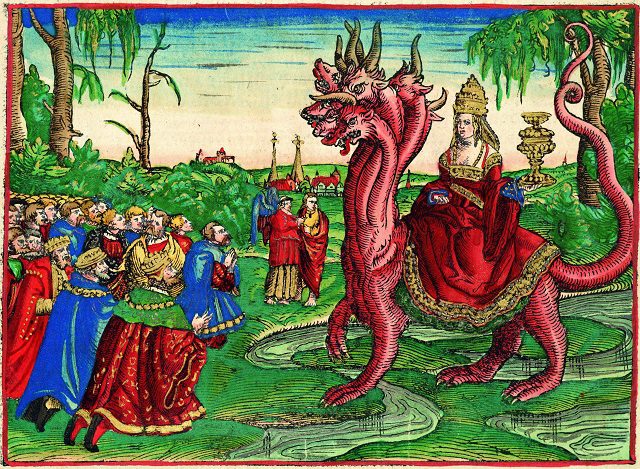
The late Steve Hays (1959-2020) was a Calvinist (and anti-Catholic) apologist, who was very active on his blog, called Triablogue (now continued by Jason Engwer). His 695-page self-published book, Catholicism — a collection of articles from his site — has graciously been made available for free. On 9 September 2006, knowing full well my history of being condemned and vilified by other anti-Catholics (and his buddies) like James White, Eric Svendsen, and James Swan, Hays was quite — almost extraordinarily — charitable towards me. He wrote then:
I don’t think I’ve ever accused him of being a traitor or apostate or infidel. . . . I have nothing to say, one way or the other, regarding his state of grace. But his sincerity is unquestionable. I also don’t dislike him. . . . I don’t think there’s anything malicious about Armstrong—unlike some people who come to mind. In addition, I don’t think I’ve ever said he was unintelligent. For the record, it’s obvious that Armstrong has a quick, nimble mind. . . . The term “apostasy” carries with it a heavy presumption that the apostate is a hell-bound reprobate. I think it’s unwarranted to assume that all Catholics or converts to Catholicism are damned.
Two-and-a-half years later, starting in April 2009 and up through December 2011 (in the following quotations) his opinion radically changed, and he claimed that I have “an evil character,” am “actually evil,” “ego-maniac, narcissist,” “idolater,” “self-idolater,” “hack who pretends to be a professional apologist,” given to “chicanery,” one who doesn’t “do any real research,” “a stalwart enemy of the faith . . . no better than [the atheists] Richard Dawkins or Christopher Hitchens,” with an intent to “destroy faith in God’s word,” “schizophrenic,” “emotionally unhinged,” one who “doesn’t trust in the merit of Christ alone for salvation,” “has no peace of mind,” “a bipolar solipsist,” “split-personality,” and a “bad” man. He wasn’t one to mince words! See more gory details.
I feel no need whatsoever to reciprocate these silly and sinful insults. I just wanted the record to be known. I’ve always maintained that Hays was a very intelligent man, but habitually a sophist in methodology; sincere and well-meaning, but tragically and systematically wrong and misguided regarding Catholicism. That’s what I’m addressing, not the state of his heart and soul (let alone his eternal destiny). It’s a theological discussion. This is one of many planned critiques of his book (see my reasons why I decided to do this). Rather than list them all here, interested readers are directed to the “Steve Hays” section of my Anti-Catholicism web page, where they will all be listed. My Bible citations are from the RSV. Steve’s words will be in blue.
*****
[Chapter 3: Competing Paradigms]
Paradigm shift
Converting from the Protestant faith to the Catholic faith, or vice versa, involves a paradigm-shift. I’m defining a theological paradigm as a comprehensive interpretive grid. A way of viewing, integrating, and simplifying a mass of issues by reference to a particular conceptual scheme. [p. 90]
Exactly right.
One impediment which prevents some Catholics from conversion is that they are used to filtering everything through their theological paradigm, and they can’t imagine an alternative. They don’t know the explanatory power of a Protestant paradigm. They don’t know how it answers the same questions. They don’t think it can answer the same questions. [p. 90]
One impediment which prevents some Protestants from conversion to Catholicism is that they are used to filtering everything through their theological paradigm, and they can’t imagine an alternative. They don’t know the explanatory power of a Catholic paradigm. They don’t know how it answers the same questions. They don’t think it can answer the same questions.
In addition, there’s no one Catholic paradigm. [p. 90]
This is where Hays is wrong. He never understood this. There is one Catholic paradigm in terms of doctrine. It’s called “the magisterium.” This is what infallibility is about. In practice, individual Catholics comply to more or less degrees (I completely comply, as all Catholics should, according to the nature of the system). It’s true of all religious groups that there are members of varying degrees of knowledge, moral conformity, commitment, and consistency. Hypocrites, nominal folks, and theological ignoramuses can always be found (including, sadly, massive numbers of these in Catholic circles). But to compare system to system, the “books” and confessions and creeds must be consulted. It’s the only honest, objective way to go about that.
So I’ll be selective and generalize. My analysis deliberately oversimplifies some issues, . . . [p. 90]
This sums up the general flaw and shortcoming seen in virtually all of Hays’ anti-Catholic efforts. He doesn’t analyze deeply enough: as suggested in visual terms by the constant annoying “lecture notes” / “outline” format of his writings. No one was ever more in need of an editor.
Sometimes we need to see the forest rather than the trees. [p. 90]
Sometimes we need to see the trees — and the DNA of the trees — rather than the forest.
We can revisit the trees at a later date. [p. 90]
But it seems that Hays rarely if ever got to that. This make his analyses fundamentally superficial and inadequate. He was capable of much better, so it seems to have been a problem of the will.
It’s natural for Catholics to use their paradigm as the standard of comparison. They contrast what they deem to be the theoretical advantages of their paradigm with what they deem to be the theoretical disadvantages of the Protestant alternative. [p. 90]
It’s natural for Protestants to use their paradigm as the standard of comparison. They contrast what they deem to be the theoretical advantages of their paradigm with what they deem to be the theoretical disadvantages of the Catholic alternative.
But at one level that begs the question, for unless your theological paradigm is true, it is illegitimate to use it as a yardstick to measure the competition. Even if one paradigm has theoretical advantages compared to another, that’s not the same thing as having factual advantages. [p. 90]
I agree. That’s why I think the “standard of comparison” ought to be the scriptural data and a determination of the consensus teaching of the Church fathers: Bible and history. Now, how we can best compare the two is to have debates: let the outside observer see how a Protestant apologist defends his view from Scripture and history and how a Catholic apologist defends his view from Scripture and history, and then how they counter-reply to each other. This seems to me the fairest and most intelligent way to go about it. Read and compare; determine which view is more in accord with the Bible and Church history, and read from each side’s passionate advocates, not one side with a biased summary of the other. That won’t do. . . . And of course I offer this very thing on my blog, for anyone who is willing to read the dialogues.
The Catholic priesthood has a monopoly on the sacraments. Valid sacraments depend on validly ordained priests, which in turn depends on apostolic succession. [p. 91]
This is largely true, but not wholly. Catholic deacons can baptize, and indeed, anyone (who has the right intention and uses a trinitarian formula) can baptize in emergency situations. Deacons can also preside over Catholic wedding ceremonies. And they can because that sacrament doesn’t flow from a priest or a deacon. The bride and groom confer the sacrament of matrimony upon each other. Catholics also accept trinitarian baptism among Protestants as a true, regenerative sacrament, and marriage between two lifelong Protestants as sacramental. Hays didn’t do his homework very well regarding this question.
To be saved, you must be a communicant member of the Roman Catholic church. [p. 91]
This is untrue as a blanket statement:
[T]he “pagan” Cornelius who, the Acts tell us, was “an upright and God-fearing man” even before baptism. Gradually, therefore, as it became clear that there were “God-fearing” people outside the Christian fold, and that some were deprived of their Catholic heritage without fault on their part, the parallel Tradition arose of considering such people open to salvation, although they were not professed Catholics or even necessarily baptized.
Ambrose and Augustine paved the way for making these distinctions. By the twelfth century, it was widely assumed that a person can be saved if some “invincible obstacle stands in the way” of his baptism and entrance into the Church. Thomas Aquinas restated the constant teaching about the general necessity of the Church. But he also conceded that a person may be saved extra sacramentally by a baptism of desire and therefore without actual membership by reason of his at least implicit desire to belong to the Church. (John A. Hardon, S.J., The Catholic Catechism [Garden City, New York: Doubleday & Co., 1975], 234-236)
The Catechism of the Catholic Church concurs:
818 “However, one cannot charge with the sin of the separation those who at present are born into these communities [that resulted from such separation] and in them are brought up in the faith of Christ, and the Catholic Church accepts them with respect and affection as brothers . . . . All who have been justified by faith in Baptism are incorporated into Christ; they therefore have a right to be called Christians, and with good reason are accepted as brothers in the Lord by the children of the Catholic Church.”
819 “Furthermore, many elements of sanctification and of truth” are found outside the visible confines of the Catholic Church: “the written Word of God; the life of grace; faith, hope, and charity, with the other interior gifts of the Holy Spirit, as well as visible elements.” Christ’s Spirit uses these Churches and ecclesial communities as means of salvation, whose power derives from the fullness of grace and truth that Christ has entrusted to the Catholic Church. All these blessings come from Christ and lead to him, and are in themselves calls to “Catholic unity.” [italics and bolding are my own]
There are certain strands of Catholic tradition that soften that paradigm, viz. invincible ignorance, implicit faith, Limbo. Those stand in tension with the austere inner logic of the primary paradigm. [p. 91]
*
They do not “stand in tension.” They “do” only granting beforehand the “either/or” false dichotomy mentality of many Protestants. Fr. Hardon (ibid.) wrote:
It would be inaccurate, however, to look upon these two traditions as in opposition. They represent the single mystery of the Church as universal sacrament of salvation, which the Church’s magisterium has explained in such a way that what seems to be a contradiction is really a paradox.
Fr. William G. Most added:
A diligent search in the Fathers shows a similar situation in regard to “no salvation outside the Church.” We find again two sets of assertions, very often by the same writers. One group of statements speaks very strongly, and almost stringently, about the need of membership; the other group softens this position by taking a remarkably broad view of what membership consists in. . . .
We found restrictive texts in Hermas, St. Justin, St. Irenaeus, Clement of Alexandria, Origen, St. Cyprian, Lactantius, St. Augustine, St. Cyril of Alexandria, and St. Fulgentius. There are also five Magisterium texts that seem restrictive. We found broad texts much more widely. Only three of the above ten Fathers who have restrictive texts lack broad texts: St. Cyprian, Lactantius, and
St. Fulgentius. All others, plus many more, do have them.Broad texts are found in: First Clement, St. Justin, Hermas, Second Clement, St. Irenaeus, Clement of Alexandria, Origen, Hegemonius, Arnobius, Eusebius of Caesarea, St. Gregory of Nazianzus, St. John Chrysostom, St. Ambrose, St. Augustine, St. Prosper, St. Nilus, St. Cyril of Alexandria, Theodoret, St. Leo the Great, St. Gregory the Great, Primasius, and St. John Damascene.(“Is There Salvation Outside the Church?”)
The Bible is only infallible in matters concerning salvation. [p. 92]
*
This is an inaccurate understanding of the Catholic position:
For all the books which the Church receives as sacred and canonical are written wholly and entirely, with all their parts, at the dictation of the Holy Ghost; and so far is it from being possible that any error can co-exist with inspiration, that inspiration not only is essentially incompatible with error but excludes and rejects it as absolutely and necessarily, as it is impossible that God Himself, the supreme Truth, can utter that which is not true. . . . It follows that those who maintain that an error is possible in any genuine passage of the sacred writings either pervert the Catholic notion of inspiration or make God the author of such error (Pope Leo XIII, Providentissimus Deus [1893], 20-21)
Pope St. Pius X in his 1907 Lamentabili Sane [11] condemned the proposition “Divine inspiration does not extend to all of Sacred Scriptures so that it renders its parts, each and every one, free from every error.”
*
Pope Benedict XV re-affirmed Pope Leo XIII’s teaching in his own encyclical Spiritus Paraclitus [18] in 1920.
*
Ven. Pope Pius XII’s 1943 encyclical Divino Afflante Spiritu also agreed: “For as the substantial Word of God became like to men in all things, except sin, so the words of God, expressed in human language, are made like to human speech in every respect, except error” [37]. [cf. his encyclical, Humani Generis (1950), section 22]
*
I remember reading The Battle for the Bible (1977) by Protestant scholar Harold Lindsell, back in the day (probably early 80s) when I was a fervent evangelical, and his making the point in the book that the Catholic Church had a doctrine of the inspiration and infallibility of Scripture — including after Vatican II, which changed no doctrines — that was as “high” as any Protestant view (it really struck me at the time, and I was delighted to learn of it).
*
Catholics must rely on fallible reason to arrive at their belief in Rome or defend it. Although they believe that Rome is infallible, that’s a fallible
belief in the infallibility of their denomination. A bottom-up process rather than a top-down process. Their conclusion regarding Catholicism is only as good as the fallible reasoning they use to reach that conclusion. Their conclusion is not infallible. They can’t escape the vicissitudes of errable judgment. The destination can’t rise higher than the process. Appeal to infallibility to retroactively validate their faith is illusory. [p. 92]
*
This is a fatally flawed argument known (at least in some Protestant circles) as the “infallibility regress.” I have refuted it several times:
*
Dialogue on the Logic of Catholic Infallible Authority [6-4-96]
Church Authority & Certainty (The “Infallibility Regress”) [July 2000; some revisions on 12-8-11]
Ecclesiological Certainty (?) & the “Infallibility Regress” [5-22-03 and 10-7-08]
Does Church Infallibility Require Infallible Catholics? [6-8-10]
“How Can we Find a List of Infallible Catholic Doctrines?” [12-15-18]
The Protestant paradigm doesn’t rely on historical continuity. It doesn’t depend on a chain of custody. So long as people have access to revealed truth, the Spirit can start or restart the church at any time and any place. [p. 93]
Note the almost self-evident absurdity of this statement. I wish I had a dime for every time a Protestant apologist claimed that Protestants weren’t “ahistorical.” They resent any indication to the contrary. Then we see a ludicrous expression like this one, by an influential and prolific Calvinist apologist. I’ve been contending for over thirty years that the Protestant Revolution (not “Reformation”) was just that: an introduction of novelties; disconnected from Church history in many (not all) ways, and not able to be confirmed by a consensus of the Church fathers. Thanks for the confirmation, Steve! The true Church is indefectible, and as such, it’s nonsensical to talk as if it “can start or restart . . . at any time and any place.”
***
Practical Matters: Perhaps some of my 4,200+ free online articles (the most comprehensive “one-stop” Catholic apologetics site) or fifty-one books have helped you (by God’s grace) to decide to become Catholic or to return to the Church, or better understand some doctrines and why we believe them.
Or you may believe my work is worthy to support for the purpose of apologetics and evangelism in general. If so, please seriously consider a much-needed financial contribution. I’m always in need of more funds: especially monthly support. “The laborer is worthy of his wages” (1 Tim 5:18, NKJV). 1 December 2021 was my 20th anniversary as a full-time Catholic apologist, and February 2022 marked the 25th anniversary of my blog.
PayPal donations are the easiest: just send to my email address: [email protected]. You’ll see the term “Catholic Used Book Service”, which is my old side-business. To learn about the different methods of contributing, including 100% tax deduction, etc., see my page: About Catholic Apologist Dave Armstrong / Donation Information. Thanks a million from the bottom of my heart!
***
Photo credit: The Whore of Babylon (workshop of Lucas Cranach): colorized illustration from Martin Luther’s 1534 translation of the Bible [public domain / Wikimedia Commons]

***
Summary: The late Steve Hays was a Calvinist and anti-Catholic writer and apologist. This is one of my many critiques of Hays’ “Catholicism”: a 695-page self-published volume.
Previous Post
May 18, 2023
Reply to Hays’ “Catholicism” #9
Next Post
May 22, 2023 Reply to Hays’ “Catholicism” #11
Recent Comments
"Special pleading, and not a serious response to my arguments . . ."
Is Venerating Men & Angels Worship? ..."
""no man needs to teach us."Didn't you just teach us?"
Is Venerating Men & Angels Worship? ..."
""Catholics say they are the only church that can lead people into heaven."In fact, we ..."
Is Venerating Men & Angels Worship? ..."
"And lastly, I belong to no denomination and am free to serve God as He ..."
Is Venerating Men & Angels Worship? ..."
Browse Our Archives
Select a Category & Last Things About Me Anti-Catholicism Atheism & Agnosticism Baptism and Sacramentalism Bible and Tradition Blessed Virgin Mary Books by Dave Armstrong C. S. Lewis Calvinism & General Protestantism Catholic Apologetics Catholic Apologists Catholic conversion Catholic converts Christmas Church (Ecclesiology) Church History Conversion and Converts Development of Doctrine Eastern Orthodoxy Ecumenism & Christian Unity Eucharist & Liturgy Fathers of the Church French Translations G. K. Chesterton Hell Hell & Satan Hell & Satan & Last Things Heresies & Comparative Religion Holistic Health Inquisition & Crusades & Scandals James White Jews & Judaism & Old Testament John Calvin John Henry Newman Liberal / Modernist Theology Life Issues Literary Resume Lutheranism Mariology Martin Luther Music Orthodoxy Papacy & Infallibility Personal Page Philosophy & Science Political & Ethical & Moral Issues Protestant Persecution & Intolerance Protestantism Purgatory Purgatory & Penance Romantic & Imaginative Theology Saints & Purgatory & Penance Salvation Salvation & Justification Satan & Last Things Sexuality and Gender Issues Spanish Translations Traditionalism vs. Radical Catholic Reactionaries Traducciones al español / tradução para português Trinitarianism & Christology Uncategorized Videos
Select a Month November 2026 October 2026 September 2026 August 2026 July 2026 June 2026 May 2026 April 2026 March 2026 February 2026 January 2026 December 2025 November 2025 October 2025 September 2025 August 2025 July 2025 June 2025 May 2025 April 2025 March 2025 February 2025 January 2025 December 2024 November 2024 October 2024 September 2024 August 2024 July 2024 June 2024 May 2024 April 2024 March 2024 February 2024 January 2024 December 2023 November 2023 October 2023 September 2023 August 2023 July 2023 June 2023 May 2023 April 2023 March 2023 February 2023 January 2023 December 2022 November 2022 October 2022 September 2022 August 2022 July 2022 June 2022 May 2022 April 2022 March 2022 February 2022 January 2022 December 2021 November 2021 October 2021 September 2021 August 2021 July 2021 June 2021 May 2021 April 2021 March 2021 February 2021 January 2021 December 2020 November 2020 October 2020 September 2020 August 2020 July 2020 June 2020 May 2020 April 2020 March 2020 February 2020 January 2020 December 2019 November 2019 October 2019 September 2019 August 2019 July 2019 June 2019 May 2019 April 2019 March 2019 February 2019 January 2019 December 2018 November 2018 October 2018 September 2018 August 2018 July 2018 June 2018 May 2018 April 2018 March 2018 February 2018 January 2018 December 2017 November 2017 October 2017 September 2017 August 2017 July 2017 June 2017 May 2017 April 2017 March 2017 February 2017 January 2017 December 2016 November 2016 October 2016 September 2016 August 2016 July 2016 June 2016 May 2016 April 2016 March 2016 February 2016 January 2016 December 2015 November 2015 October 2015 September 2015 August 2015 July 2015 June 2015 May 2015 April 2015 March 2015 February 2015 January 2015 December 2014 November 2014 October 2014 September 2014 August 2014 July 2014 June 2014 April 2014 March 2014 February 2014 January 2014 December 2013 November 2013 October 2013 September 2013 August 2013 July 2013 June 2013 April 2013 March 2013 February 2013 January 2013 December 2012 November 2012 October 2012 September 2012 August 2012 July 2012 June 2012 May 2012 April 2012 March 2012 February 2012 January 2012 December 2011 November 2011 October 2011 September 2011 August 2011 July 2011 June 2011 April 2011 March 2011 February 2011 October 2010 September 2010 August 2010 July 2010 April 2010 March 2010 December 2009 October 2009 August 2009 July 2009 June 2009 May 2009 March 2009 February 2009 October 2008 September 2008 April 2008 March 2008 February 2008 January 2008 December 2007 November 2007 October 2007 May 2007 March 2007 February 2007 January 2007 November 2006 October 2006 September 2006 August 2006 July 2006 June 2006 May 2006 April 2006 March 2006 February 2006 October 2005 June 2005 April 2005 February 2005 July 2004 May 2004 April 2004
Follow Us!
TAKE THE
Religious Wisdom Quiz
Who said, "To the pure, all things are pure"?
Select your answer to see how you score.
James Peter John Paul
Books by This Author Books by Dave Armstrong
Related posts from Biblical Evidence for Catholicism
Top Three Anti-Catholic Lies About Catholicism
Biblical Evidence for Catholicism
Three More Anti-Catholic Lies About Catholicism (#6-4)
Biblical Evidence for Catholicism
Top Ten Anti-Catholic Lies (#10-7)
Biblical Evidence for Catholicism
"Baptism" & Romans 10 (Engwer's Silly Word Games)
Biblical Evidence for Catholicism
TRENDING AT PATHEOS Catholic

For many years, Catholicism has been caught up in division over the...

'Statements of Faith' never get shorter
Nothing demonstrates a conservative commitment to faith and faithfulness like a "statement...

Michele's Reviews - Future Grace by John Piper
In God's Place, at God's Pace, by Future Grace Impatience is...

Bama Gramma's Blackout Christmas: the Power of Light...
Another Christmas Skit: I have an alter ego: Bama Gramma. She shows...

Thanksgiving as a Way of Life: A Christian...
Each year, Thanksgiving brings families and friends together to share meals, stories,...

Two Women Doctors Who Went Against the Current
Women physicians who transformed healthcare for "Indians" “I shall have an advantage...
view all Catholic blogs
What Are Your Thoughts?leave a comment
Ad-Free & Subscriber Log-In Subscription Support
- About Us
- 2026 Calendar
- Videos
- Podcasts
- Library of World Religions
- Faith In Media Tracker
- Advertise With Us
- Write for Us
- Privacy Policy
- Terms of Service
- Do Not Sell My Data
- Contact Us
- Radiant Digital
- Manage Newsletter Subscriptions
- Unsubscribe From Notifications
- Sitemap
Copyright 2008-2026, Patheos, part of the Radiant Digital network of media brands. All rights reserved.
Subscription Support Ad-Free & Subscriber Log-In
Follow Patheos