
BuddhistCatholicContemplativeEvangelicalGeneral ChristianHinduJewishLatter-day SaintMuslimNew VisionsProgressive Christian
Beliefs
- Buddhist
- Catholic
- Contemplative
- Evangelical
- General Christian
- Hindu
- Jewish
- Latter-day Saint
- More Voices
- Muslim
- New Visions
- Pagan
- Progressive Christian
Topics
- Religion News
- Food and Religion
- Sports and Religion
- Religious Art
- Religious Music and Entertainment
- Religious Events
- History and Religion
- Style and Religion
- Politics and Religion
- Women in Religion
- Recreation Outdoors and Religion
- Business Finance and Religion
- Careers Workplace and Religion
- Education and Religion
- Family Parenting and Religion
- Health Fitness and Religion
- Home and Religion
- Relationships and Religion
- Technology and Religion
- Travel and Religion
Columnists
- Buddhist Columnists
- Business Finance and Religion Columnists
- Careers Workplace and Religion Columnists
- Catholic Columnists
- Contemplative Columnists
- Education and Religion Columnists
- Evangelists Columnists
- Family Parenting and Religion Columnists
- General Christian Columnists
- Health Fitness and Religion Columnists
- Hindu Columnists
- History and Religion Columnists
- Home and Religion Columnists
- Jewish Columnists
- More Voices Columnists
- Latter Day Columnists
- Muslim Columnists
- New Visions Columnists
- Nonreligious Columnists
- Pagan Columnists
- Politics and Religion Columnists
- Progressive Columnists
- Recreation Outdoors and Religion Columnists
- Relationships and Religion Columnists
- Religion News Columnists
- Religious Art Columnists
- Religious Events Columnists
- Religious Music and Entertainment Columnists
- Sports and Religion Columnists
- Style and Religion Columnists
- Technology and Religion Columnists
- Travel and Religion Columnists
- Women in Religion Columnists
Resource Library
- 2026 Calendar
- Library of World Religions
- The 100 Most Holy Places on Earth
- Patheos Answers
- Podcasts
- Videos
- Faith Leaders Database
- Anglican Episcopalian
- Bahai
- Baptist
- Buddhism
- Christianity
- Confucianism
- Eastern Orthodoxy
- Hinduism
- Holiness and Pentecostal
- ISKCON
- Islam
- Judaism
- Lutheran
- Methodist
- The Church of Jesus Christ of Latter-day Saints
- New Age
- Paganism
- Presbytarian and Reformed
- Protestantism
- Religion Behind the Scenes
- Roman Catholic
- Scientology
- Shia Islam
- Sikhism
- Sufism
- Sunni Islam
- Taoism
- Zen
- See all religions
Research Tools
 Ad-Free & Subscriber Log-In Subscription Support
Ad-Free & Subscriber Log-In Subscription Support
Follow Patheos 

- Trending:
- Forgiveness
- |
- Marriage
- |
- Consciousness
- |
- Death Penalty
- |
- Election
- |
- Halloween

-
About
-
Catholic Apologetics
-
Church History
-
Great Apologists
-
Christian Worldview
-
Protestantism & Misc.
- Home
- Catholic
- History and Religion
- Dialogue w Atheist on the Borders of Science & Theology
Dialogue w Atheist on the Borders of Science & Theology
Last updated on: June 6, 2026 at 12:01 am by Dave Armstrong
Dialogue w Atheist on the Borders of Science & Theology 2026-06-06T00:01:24-04:00 Dave Armstrong
Patheos Explore the world's faith through different perspectives on religion and spirituality! Patheos has the views of the prevalent religions and spiritualities of the world.
“axelbeingcivil” is a cordial atheist who is a biologist. I’ve enjoyed many good dialogues with him. This one occurred in a combox of my blog. His words will be in blue. Citations of older words of mine will be in green.
*****
Think of, for example, the “missing links” in evolution. That didn’t stop people from believing in it. Folks believed in gradual Darwinian evolution even though prominent paleontologist and philosopher of science Stephen Jay Gould famously noted that “gradualism was never read from the rocks.” Even Einstein’s theories weren’t totally confirmed by scientific experiment at first (later they were). That a book like the Bible would have “difficulties” to work through should be perfectly obvious and unsurprising to all.
Just chipping in with what I hope is some constructive criticism here from a biologist. It’s correct to say that gradualism was never read from the rocks. Darwin actually read gradualism from observations of animals being domesticated. If you read On the Origin of Species, you’ll see that very little of Darwin’s evidences come from fossils (if any at all, really), but principally from studying living creatures and their adaptations to specific environments.
Very little of the actual evidence for evolutionary history actually comes from fossils, especially nowadays. Fossils are tiny snapshots and it’s a miracle we have as many as we do, and they provide a very strong evidence, but if you got rid of every single one, comparative anatomy and genetics, artificial selection, and ecogeography would all still be entirely sufficient to demonstrate the reality of evolution. This was true even in Darwin’s day, though his arguments were definitely supported by Buckland and Cuvier (and Anning, though, as a woman, she is rarely credited there).
Missing links, meanwhile, are something of an artifact of misunderstanding by those critical of evolution. You will not ever have a complete and perfect series of fossils representing every single ancestor between two species. You might get a handful, if you’re lucky, which demonstrate the gradual changes from one to the next, but you’ll never get all of them. There’s the old joke that, upon a scientist finding a missing link, a creationist will say “Aha! Now your theory is even weaker, because there are now two missing links between the three species!”.
I know all of this is criticism of the comparison, rather than the point you’re trying to make, but there are perhaps better analogies to make?
Thanks for your insightful and constructive comment, as always.
I think my comparison remains perfectly valid. In context, my comment that you cite came after the following:
All grand “theories” have components (“anomalies” / “difficulties”) that need to be worked out and explained. For example, scientific theories do not purport to perfectly explain everything. They often have large “mysterious” areas that have to be resolved.
And so I offered the missing links in the fossil record as one such particular anomaly in the theory of evolution. Then I cited the renowned (and great writer!) Gould to back up my contentions, to show that they are not simply my own. Whether there is other evidence to sufficiently establish evolution is really beside the point that I was making, because the lack of a complete or adequate fossil record remains an anomaly in and of itself, and it’s beyond dispute that evolutionists widely and publicly affirmed that the fossil record itself was sufficient to prove the theory, even though it clearly wasn’t. Gould merely pointed out the obvious: that the emperor (surprise!) had been naked all along.
Now, Gould’s theory of punctuated equilibrium, of course, attempted to explain the fossil gaps. But this doesn’t affect my logical point, either, which was that science, like the Bible, believes in things it can’t (and usually can’t) totally explain. So it is with Christians and the Bible. It’s not that different from what atheists do with regard to science, which for many of them functions as a sort of religion or Ultimate Allegiance, so to speak.
By the way, I am a theistic evolutionist. But I think that science continues to be unable to — and perhaps never will be able to — adequately explain all the fine points of evolution based on a materialistic scientific perspective alone and that a God is required in some sense for it to be able to “work” at all. In other words, it was His method of creation and couldn’t (based on present knowledge) have come about without Him.
Always happy to chat with you, Mr. Armstrong. And, to be clear, I think most people will understand your meaning perfectly. People like me probably don’t constitute much of the target audience.
I think a better example, though, might be something like “dark matter”; a piece of the puzzle in physics whereby large quantities of the universe’s mass appear to be “missing”. A great deal of effort has gone into exploring and explaining this problem; trying to identify where this missing mass is.
By comparison, “missing links” aren’t really much of an anomaly or point of contention amongst biologists. No-one expects there to ever be a complete fossil record; the world would be up to the stratosphere in fossils. The conditions for creating fossils are rare and uncommon; requiring large quantities of water, sudden burial, and the imposition of anoxic conditions that prevent decay but also sufficient mineralization to allow for fossil formation. All this then followed by millions of years – sometimes hundreds of millions! – during which geological processes do not destroy the fossil remains.
Gould’s explanation of punctuated equilibrium is not about evolution as a theory itself, but more about the assumption as to how organisms evolve; whether the shift in populations to see changes in traits or the development of new ones that then achieve fixation in the gene pool is more often a sudden thing or something that occurs very gradually over time at a more consistent rate. Nowadays, the idea of variable rates of evolution are much more accepted, in no small part thanks to increased availability to genetic evidence that Gould and his contemporaries did not have. It’s not “gradualism vs. punctuated equilibrium” so much as it is variable rates due to circumstances.
For the kind of analogy you seem to be wanting to make, dark matter – an anomaly that is not currently explained by current cosmological models – might be a better choice.
Setting aside critique of the comparison for the moment, I do want to ask you how you view theology as a discipline. You’re making a comparison here to how, as scientists explore the cosmos through careful study and routinely find their own ideas to be wrong in some way, religious believers ultimately do something at least similar enough to merit comparison. In the sciences, though, we operate from model investigation; generating models and testing hypotheses from those models. If an inconsistency exists, it means the model is wrong and must either be modified or scrapped.
Do you see that as a role that theologians like yourself play? Do you see yourself as trying to explore and test and seek out knowledge? It feels like there’s a fascinating world of experimental theology and philosophy out there, waiting to be explored; testing models of divinity against observations, but I’ve yet to encounter someone who sees their role as a kind of “natural theologian”.
And, while this is a rabbit hole that will probably consume more of both of our times than would be warranted, I am curious as to what barriers you see that would require divine intervention in evolution.
Another great comment! Actually, I have already made an extended “turn the tables” argument from dark energy and dark matter:
Seidensticker Folly #71: Spirit-God “Magic”; 68% Dark Energy Isn’t? [2-2-21]
Here is a good chunk of that:
Bob had a field day mocking Christians for believing that God is a spirit, immaterial, composed of spirit, which isn’t a physical thing (with atoms, etc.). Once again, Christians are made out to be anti-scientific ignoramuses, dummies, and imbeciles. . . .
Please keep the above in mind as I make my argument now (as my entire argument is an analogy). Scientists are currently quite excited about new phenomena called dark energy and dark matter. The very notions have only made their appearance over the last 25-30 years or so. . . . [I then document what scientists are saying about both]
So it’s considered to be 68% of the universe, yet it is almost a complete “mystery” and scientists are “clueless” about its origin. And “everything on Earth, everything ever observed with all of our instruments, all normal matter – adds up to less than 5% of the universe.” So if this is true, it turns out that science in all its glory (the atheist’s epistemological “god” and religion) has been dealing with a mere 1/20th of all that there is in the universe.
Likewise, dark matter (thought to make up 27% of the universe) is “completely invisible to light and other forms of electromagnetic radiation, making dark matter impossible to detect with current instruments” (National Geographic). . . .
Some think dark energy is “a property of space.” Others think space is “full of temporary (‘virtual’) particles that continually form and then disappear.” Some appeal to Greek philosophy and call the mystery “quintessence.” How interesting. So we have this phenomenon, and it is serious science (which I am not doubting at all; sure, bring it on!). The admitted ignorance is extraordinary.
Yet all that is fine and dandy, while Christians are mocked and derided and considered simpletons simply because we have believed all along that God is an eternal spirit, Who created the world? What is the difference? . . .
Lastly: if there is any reply at all [from Bob Seidensticker], we’ll almost certainly be told that “dark energy is just now being investigated by science. Give it time; science always discovers and explains things in due course.” I don’t disagree all that much. Science does do that: though not as completely as the average atheist would make out (it being his or her religion and idol and [usually] sole epistemological guide).
But even if dark energy and dark matter are adequately, plausibly explained and much better understood by science in the near future, it makes no difference at all as to my present argument. The fact remains that conventionally understood matter makes up only 5% of the universe: so they tell us. Science has had up till very recently, literally nothing to tell us about 95% of the universe: all of which is other (spirit? energy?) than what we have known up till now as “matter”: with protons and neutrons and the whole nine yards.
And yet Christians (along with many reputable philosophers through the centuries, and virtually all religious views) are faulted for having believed that there is such a thing as a non-material Spirit-Creator, for 2000 years: following the ancient Israelites, who believed it for some 18 or more centuries before we did? Obviously, non-material entities or whatever we call them, have been a far more important aspect of the universe than we (least of all materialist atheists) had ever imagined.
And so God fits into this “new” schema very well, just as He fit into Big Bang cosmology, and even quantum mechanics, examined more closely, as well as something like irreducible complexity. Present-day scientific consensus is perfectly consistent with the biblical teaching of creation out of nothing too. I think the Bible and Christianity are doing pretty darn good, in terms of being consistent with science, as the latter advances. It seems that Christianity understood things (derived from revelation, communicated by God) for 2000 years that science has only recently come to figure out.
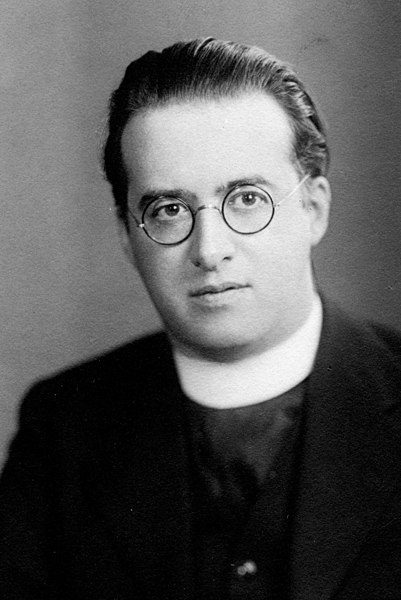
Albert Einstein and most scientists in the 1940s believed in an eternal universe (steady state). Einstein initially opposed the findings of the originator of the Big Bang theory: a Catholic priest. Now virtually no scientist denies that the present universe had a beginning (although some posit prior universes, with no hard evidence). Christians had said that the universe came into existence (by God) from nothing all along. And now science seems to be confirming that non-material spirit or “energy” is awfully important in the scheme of the universe as well: to the tune of 68% of all that exists. Better late than never.
In closing, I’ll mention another debate that was going on long before dark energy was posited: the nature of light: is it a particle or a wave? This has to do with the question of possible non-physical entities as well (the very thing that Bob mercilessly mocked above). . . .
Why then is Bob prattling on as if matter (good old-fashioned matter before we get to dark matter and dark energy) is all there is? He needs to crack open any scientific textbook written since Einstein and get up to speed before embarrassing himself . . . further.
Do you see yourself as trying to explore and test and seek out knowledge? It feels like there’s a fascinating world of experimental theology and philosophy out there, waiting to be explored; testing models of divinity against observations, but I’ve yet to encounter someone who sees their role as a kind of “natural theologian”.
Great question! I think the way I would answer it is to note that the thinking Christian is highly interested in the latest developments of science and how faith can be harmonized with it. When relativity came in, we at length saw that it has nothing in it to threaten Christianity, and we could accept it like everyone else. That was true even with evolution (though less so). Right near us, in Ann Arbor, Michigan, botanist Asa Gray lived and worked. He was a big ally of Darwin who was a prominent theistic evolutionist.
The same happened with quantum mechanics, which was used against us. But Christians thought about it, and realized that God’s providence can easily incorporate the “chance” and unpredictable, random aspects of it. Nothing is unpredictable to Him, because He’s omniscient and created the laws that govern quantum mechanics in the first place (and there will be laws, whether we have discovered them yet or not). Christian thinkers adopted the old earth from geology in the 18th-19th centuries, and the local Flood. Analyses of Adam and Eve are made, with regard to population genetics and evolution. I have linked to them.
We have shown a great willingness to follow science where it leads, but atheists are reluctant to give us any credit for that. Hence, my analysis of dark energy and dark matter and question to atheists: how is this very different (if at all) from what we theists have called spirit and soul for 4,000 years? I’m following it with interest, and I think it poses far more problems for conventional, big-majority materialist atheism than it does for us (which is no problem at all, as far as I can see).
So we’re moving with the times and modifying views where it is necessary. So far, it just hasn’t overthrown anything essential that we believe. The age of the earth is not essential to Christianity. How God created life and the earth and universe isn’t any kind of dogma: only the notion that He did create everything.
Even a discovery of life elsewhere doesn’t affect Christianity one whit. Nothing in the Bible rules out that possibility. C. S. Lewis wrote books about it 80 years ago.
It’s atheists who might be accused of being closed-minded, by ruling out that God can exist, and forbidding in their heads any possibility of any supernatural occurrence ever or anywhere.
I am curious as to what barriers you see that would require divine intervention in evolution.
That’s more easily answered. The notion that mutations, which are considered “mistakes” are the mechanism of natural selection and by extension every morphological change involved in evolution (which is massive and comprehensive) makes no sense to me. It never has. I don’t think this has been adequately explained at all. It seems to be a post-genetics ad hoc [supposed] explanation for lack of anything better, or adequate and sufficient.
I think it explains relatively little: maybe some or most of microevolution, but little else. I don’t believe scientists have adequately explained or understood in any detailed, truly scientific, empirical way, the origin of life or even the origin of its building blocks, like DNA. They just haven’t (at least as far as I can tell). I agree with microbiologist Michael Behe, who calls a spade a spade and suggests that science simply hasn’t explained even the incredible complexity of a cell: not even close.
I conclude as a result that God must have done something at some point (or in an ongoing sense) to allow evolution to proceed at all, because we don’t seem to understand how and why it could do so with our present knowledge. I don’t claim to have worked all of that out. I believe His input is necessary (but not in a creationist sense).
Mutations are not sufficient to explain every change. I think they function merely as a sort of slogan that is repeated so often that everyone accepts it without any protest, even though there is little or nothing there of explanatory value. Yes, I’m not a scientist. I’m merely saying that the evidence I’ve seen for a materialist explanation of evolutionary change (and I have read quite a bit at different times) hasn’t convinced me.
So Behe says perhaps a higher intelligence was involved, which is, of course, anathema to present materialistic science (even though science came out of an entirely Christian and theistic framework and from those minds).
I think the cosmological argument and especially the teleological theistic proof are stronger than ever: the more we know and learn.
Well, if you’re ever interested, I can offer what insight I can on the matter of mutations. I can’t speak to abiogenesis because it’s more organic chemistry than biology and thus outside my specialist area, but my particular work (novel protein function characterization) relies heavily on an understanding of how mutations produce novel functions, so it’s something I can actually talk about with confidence.
Thank you very much for your answers, as always!
Sure, I’d be interested in hearing more about that: especially if you could simplify the technical stuff a bit so that I could understand it. You seem to have the credentials to be able to explain what I am looking for. You’re actually a scientist and a professor?
Heh. Scientist, yes, and I have taught at the university level (introductory bioinformatics, molecular genetics) but I am not a professor. Sadly, there aren’t many tenure-track professorships these days. But I do have published research papers in a handful of journals and am on a chapter in the Handbook of Proteolytic Enzymes.
I can try and explain mutations in general and their relation to the evolutionary process but, if you have any specific questions, it might make it easier.
What I wrote already is the best way I can describe what I find unconvincing. But maybe you could take a shot at responding to Michael Behe’s many challenges to explain how even what we find in a cell could come about by mutation or whatever else is posited as its origin?
Are you saying that someone has made a step-by-step explanation of such things? Some (at least in my perception) simply pour on the technical language, knowing that laymen wouldn’t grasp what they are saying. All the big words look mighty impressive.
I’d like to see such an explanation that a layman can understand; that makes sense and actually explains the process of the thing. But everyone in every field has to be able to explain things to those less educated. I do it in theology to some extent (even though I’m not a scholar) in my capacity as an apologist and teacher of sorts.
[Go to Part II: Dialogue w Atheist on Mutations & Evolutionary Change, for the continuation of the discussion]
***
Practical Matters: Perhaps some of my 4,000+ free online articles (the most comprehensive “one-stop” Catholic apologetics site) or fifty books have helped you (by God’s grace) to decide to become Catholic or to return to the Church, or better understand some doctrines and why we believe them.
Or you may believe my work is worthy to support for the purpose of apologetics and evangelism in general. If so, please seriously consider a much-needed financial contribution. I’m always in need of more funds: especially monthly support. “The laborer is worthy of his wages” (1 Tim 5:18, NKJV). 1 December 2021 was my 20th anniversary as a full-time Catholic apologist, and February 2022 marked the 25th anniversary of my blog.
PayPal donations are the easiest: just send to my email address: [email protected]. You’ll see the term “Catholic Used Book Service”, which is my old side-business. To learn about the different methods of contributing, including 100% tax deduction, etc., see my page: About Catholic Apologist Dave Armstrong / Donation Information. Thanks a million from the bottom of my heart!
***
Photo credit: Fr. Georges Lemaître: father of Big Bang cosmology, around the mid 1930s [public domain / Wikimedia Commons]

***
Summary: Friendly, fun dialogue with an atheist biologist on the “borders” of science and Christian theology and philosophy: where they intersect with and influence each other.
Previous Post

January 9, 2023
How Do Atheists Define an Alleged "Biblical Contradiction"?
Next Post

January 16, 2023 Dialogue w Atheist on Mutations & Evolutionary Change
Recent Comments
"And lastly, I belong to no denomination and am free to serve God as He ..."
Is Venerating Men & Angels Worship? ..."
"And obeisance doesn't mean "worship". It means "respect", "obey", or "submission". Very weird that you ..."
Is Venerating Men & Angels Worship? ..."
"Many of these scriptures you have noted have been taken out of context. With Daniel, ..."
Is Venerating Men & Angels Worship? ..."
""Protestants often point out that Jesus is now triumphant in heaven and object to Catholics ..."
Three More Anti-Catholic Lies About Catholicism ..."
Browse Our Archives
Select a Category & Last Things About Me Anti-Catholicism Atheism & Agnosticism Baptism and Sacramentalism Bible and Tradition Blessed Virgin Mary Books by Dave Armstrong C. S. Lewis Calvinism & General Protestantism Catholic Apologetics Catholic Apologists Catholic conversion Catholic converts Christmas Church (Ecclesiology) Church History Conversion and Converts Development of Doctrine Eastern Orthodoxy Ecumenism & Christian Unity Eucharist & Liturgy Fathers of the Church French Translations G. K. Chesterton Hell Hell & Satan Hell & Satan & Last Things Heresies & Comparative Religion Holistic Health Inquisition & Crusades & Scandals James White Jews & Judaism & Old Testament John Calvin John Henry Newman Liberal / Modernist Theology Life Issues Literary Resume Lutheranism Mariology Martin Luther Music Orthodoxy Papacy & Infallibility Personal Page Philosophy & Science Political & Ethical & Moral Issues Protestant Persecution & Intolerance Protestantism Purgatory Purgatory & Penance Romantic & Imaginative Theology Saints & Purgatory & Penance Salvation Salvation & Justification Satan & Last Things Sexuality and Gender Issues Spanish Translations Traditionalism vs. Radical Catholic Reactionaries Traducciones al español / tradução para português Trinitarianism & Christology Uncategorized Videos
Select a Month October 2026 September 2026 August 2026 July 2026 June 2026 May 2026 April 2026 March 2026 February 2026 January 2026 December 2025 November 2025 October 2025 September 2025 August 2025 July 2025 June 2025 May 2025 April 2025 March 2025 February 2025 January 2025 December 2024 November 2024 October 2024 September 2024 August 2024 July 2024 June 2024 May 2024 April 2024 March 2024 February 2024 January 2024 December 2023 November 2023 October 2023 September 2023 August 2023 July 2023 June 2023 May 2023 April 2023 March 2023 February 2023 January 2023 December 2022 November 2022 October 2022 September 2022 August 2022 July 2022 June 2022 May 2022 April 2022 March 2022 February 2022 January 2022 December 2021 November 2021 October 2021 September 2021 August 2021 July 2021 June 2021 May 2021 April 2021 March 2021 February 2021 January 2021 December 2020 November 2020 October 2020 September 2020 August 2020 July 2020 June 2020 May 2020 April 2020 March 2020 February 2020 January 2020 December 2019 November 2019 October 2019 September 2019 August 2019 July 2019 June 2019 May 2019 April 2019 March 2019 February 2019 January 2019 December 2018 November 2018 October 2018 September 2018 August 2018 July 2018 June 2018 May 2018 April 2018 March 2018 February 2018 January 2018 December 2017 November 2017 October 2017 September 2017 August 2017 July 2017 June 2017 May 2017 April 2017 March 2017 February 2017 January 2017 December 2016 November 2016 October 2016 September 2016 August 2016 July 2016 June 2016 May 2016 April 2016 March 2016 February 2016 January 2016 December 2015 November 2015 October 2015 September 2015 August 2015 July 2015 June 2015 May 2015 April 2015 March 2015 February 2015 January 2015 December 2014 November 2014 October 2014 September 2014 August 2014 July 2014 June 2014 April 2014 March 2014 February 2014 January 2014 December 2013 November 2013 October 2013 September 2013 August 2013 July 2013 June 2013 April 2013 March 2013 February 2013 January 2013 December 2012 November 2012 October 2012 September 2012 August 2012 July 2012 June 2012 May 2012 April 2012 March 2012 February 2012 January 2012 December 2011 November 2011 October 2011 September 2011 August 2011 July 2011 June 2011 April 2011 March 2011 February 2011 October 2010 September 2010 August 2010 July 2010 April 2010 March 2010 December 2009 October 2009 August 2009 July 2009 June 2009 May 2009 March 2009 February 2009 October 2008 September 2008 April 2008 March 2008 February 2008 January 2008 December 2007 November 2007 October 2007 May 2007 March 2007 February 2007 January 2007 November 2006 October 2006 September 2006 August 2006 July 2006 June 2006 May 2006 April 2006 March 2006 February 2006 October 2005 June 2005 April 2005 February 2005 July 2004 May 2004 April 2004
Follow Us!
TAKE THE
Religious Wisdom Quiz
Who prayed for rain after a long drought and sent his servant to look seven times?
Select your answer to see how you score.
Elijah Isaiah Samuel Hosea
Books by This Author Books by Dave Armstrong
Related posts from Biblical Evidence for Catholicism

God, Modern Physics, & Dark Energy: An Analogy
Biblical Evidence for Catholicism

General Debate on Christianity with an Atheist
Biblical Evidence for Catholicism

Parting of the Red Sea & Lake Erie...
Biblical Evidence for Catholicism

Can Atheists Be Saved? Surprising Biblical Data
Biblical Evidence for Catholicism
TRENDING AT PATHEOS Catholic

I was strolling through the top floor of the brand new Parthenon...

What Does Gêvâh Mean For Kimberley Guifoyle &...
This week, a lot of the news is focused on Kimberly Guilfoyle....

INNER CIRCLE: Profound Mystery (Of Christ In All...
Ephesians 5:31-32 “For this reason, a man will leave his father and...

Do Not Rejoice When Your Enemy Falls: The...
Turning an execution into a public spectacle is a disturbing expression of...

'The Chosen' S6 Trailer: The Passion Gets Very...
Not many watching 'The Chosen' worry about spoilers, but just because they...

The purpose-driven labor priest
A labor activist reads Rick Warren and it gets me wondering about...
view all Catholic blogs
What Are Your Thoughts?leave a comment
Ad-Free & Subscriber Log-In Subscription Support
- About Us
- 2026 Calendar
- Videos
- Podcasts
- Library of World Religions
- Faith In Media Tracker
- Advertise With Us
- Write for Us
- Privacy Policy
- Terms of Service
- Do Not Sell My Data
- Contact Us
- Radiant Digital
- Manage Newsletter Subscriptions
- Unsubscribe From Notifications
- Sitemap
Copyright 2008-2026, Patheos. All rights reserved.
Subscription Support Ad-Free & Subscriber Log-In
Follow Patheos