
BuddhistCatholicContemplativeEvangelicalGeneral ChristianHinduJewishLatter-day SaintMuslimNew VisionsProgressive Christian
Beliefs
- Buddhist
- Catholic
- Contemplative
- Evangelical
- General Christian
- Hindu
- Jewish
- Latter-day Saint
- More Voices
- Muslim
- New Visions
- Pagan
- Progressive Christian
Topics
- Religion News
- Food and Religion
- Sports and Religion
- Religious Art
- Religious Music and Entertainment
- Religious Events
- History and Religion
- Style and Religion
- Politics and Religion
- Women in Religion
- Recreation Outdoors and Religion
- Business Finance and Religion
- Careers Workplace and Religion
- Education and Religion
- Family Parenting and Religion
- Health Fitness and Religion
- Home and Religion
- Relationships and Religion
- Technology and Religion
- Travel and Religion
Columnists
- Buddhist Columnists
- Business Finance and Religion Columnists
- Careers Workplace and Religion Columnists
- Catholic Columnists
- Contemplative Columnists
- Education and Religion Columnists
- Evangelists Columnists
- Family Parenting and Religion Columnists
- General Christian Columnists
- Health Fitness and Religion Columnists
- Hindu Columnists
- History and Religion Columnists
- Home and Religion Columnists
- Jewish Columnists
- More Voices Columnists
- Latter Day Columnists
- Muslim Columnists
- New Visions Columnists
- Nonreligious Columnists
- Pagan Columnists
- Politics and Religion Columnists
- Progressive Columnists
- Recreation Outdoors and Religion Columnists
- Relationships and Religion Columnists
- Religion News Columnists
- Religious Art Columnists
- Religious Events Columnists
- Religious Music and Entertainment Columnists
- Sports and Religion Columnists
- Style and Religion Columnists
- Technology and Religion Columnists
- Travel and Religion Columnists
- Women in Religion Columnists
Resource Library
- 2026 Calendar
- Library of World Religions
- The 100 Most Holy Places on Earth
- Patheos Answers
- Podcasts
- Videos
- Faith Leaders Database
- Anglican Episcopalian
- Bahai
- Baptist
- Buddhism
- Christianity
- Confucianism
- Eastern Orthodoxy
- Hinduism
- Holiness and Pentecostal
- ISKCON
- Islam
- Judaism
- Lutheran
- Methodist
- The Church of Jesus Christ of Latter-day Saints
- New Age
- Paganism
- Presbytarian and Reformed
- Protestantism
- Religion Behind the Scenes
- Roman Catholic
- Scientology
- Shia Islam
- Sikhism
- Sufism
- Sunni Islam
- Taoism
- Zen
- See all religions
Research Tools
 Ad-Free & Subscriber Log-In Subscription Support
Ad-Free & Subscriber Log-In Subscription Support
Follow Patheos 

- Trending:
- Forgiveness
- |
- Marriage
- |
- Consciousness
- |
- Death Penalty
- |
- Election
- |
- Halloween

-
About
-
Catholic Apologetics
-
Church History
-
Great Apologists
-
Christian Worldview
-
Protestantism & Misc.
- Home
- Catholic
- History and Religion
- Moses Wrote the Torah: 50 External Evidences
Moses Wrote the Torah: 50 External Evidences
Last updated on: June 6, 2026 at 12:01 am by Dave Armstrong
Moses Wrote the Torah: 50 External Evidences 2026-06-06T00:01:24-04:00 Dave Armstrong
Patheos Explore the world's faith through different perspectives on religion and spirituality! Patheos has the views of the prevalent religions and spiritualities of the world.
Reply to Atheist “Lex Lata”
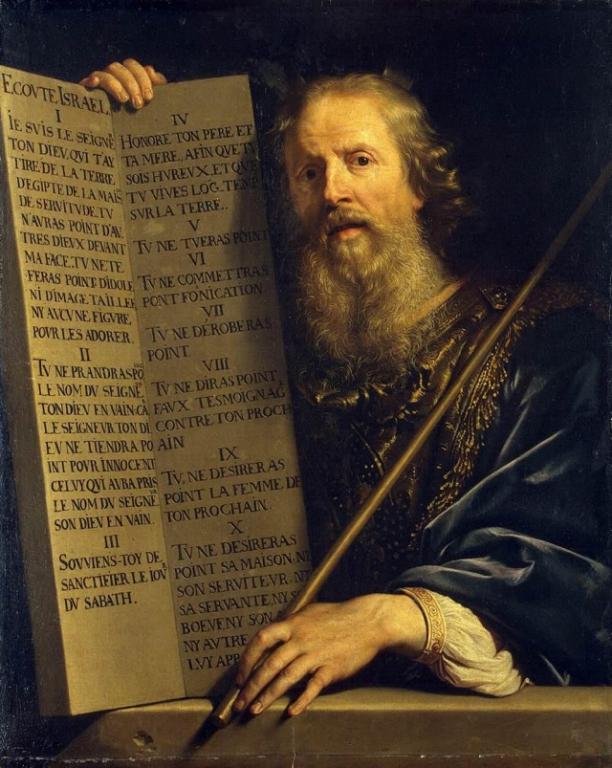
This is a reply to a guest article on Jonathan MS Pearce’s atheist blog, by “Lex Lata”: a sharp and fairly civil atheist commentator (a professor?), with whom I have had some stimulating dialogue now and then. It’s entitled, “A study in straw: Apologetics, alphabets, and the Torah” (11-30-22). His words will be in blue.
*****
The prevailing consensus among modern scholars of the Bible and Semitic philology (the study of structure and history of languages) is that the Torah—or Pentateuch, if Greek is your cuppa—was largely composed or compiled in its present form during the first millennium BCE.
“Composed” and “compiled” are two different things. The latter allows for the possibility of it having been written in the 13th century BC (the period of Moses), but later edited and translated according to the changes in language, sometime after King David’s reign (c. 1000 BC), when classic Hebrew was formulated. This is what I shall contend. The two things aren’t mutually exclusive.
This would place it compiled some centuries after the latest period depicted in it. . . .
Our earliest confirmed Old Testament manuscripts are papyrus fragments and scrolls dated to at least a thousand years after the time of Moses, and are written in first-millennium Hebrew with a late first-millennium script. We have zero extant inscriptions, tablets, or papyri of the Torah itself—not even fragmentary—from the second millennium.
It’s interesting that Lex exclusively uses the word “compiled” in the first excerpt above. He’s being very cautious and “academically nuanced.” Compilations, later editions, manuscripts, etc. are always relevant factors for ancient works: especially those that rely heavily or solely on oral traditions at their onset. This is nothing novel at all, even for biblical books (which can possibly undergo revision like any other books). If we compare the pentateuch or Torah (the first five books of the Old Testament) to secular works, this is readily apparent.
The oldest extant manuscript for the Histories of the Greek historian Herodotus (c. 484 – c. 425 BC), for example, is Codex Laurentianus LXX, from the 10th century (see more information on his manuscripts). By my math that is 1300-1500 years after it was written. The History of the Peloponnesian War was written at the end of the 5th century BC by Thucydides (c. 460 – c. 400 BC). The earliest manuscript for it dates from the 11th century (1400-1500 years later). The Geography by Strabo (c. 64 BC – c. 24 AD) was composed shortly before the birth of Christ. The best manuscript is from the end of the tenth century (900-1,000 years later).
I think readers get the idea, without need of further examples. The moral of the story is: “don’t try to make out that biblical manuscripts or editorial / linguistic revisions, etc., are something wholly unique, or uniquely problematic.” Lex clearly exhibits his bias in his next sentence:
Yet certain advocates of an orthodox or fundagelical bent cling to the tradition that Moses himself wrote the first five books of the Bible, ca. 1450-1250 BCE.
In other words (reading in-between the lines), “some fanatical, irrationally religious folks [complete with a derogatory term for them] ‘cling’ to the antiquated, thoroughly refuted notion that Moses actually wrote the pentateuch.” Following his line of reasoning, this appears to mean that Lex rules out as a virtual impossibility the scenario whereby Moses wrote the books, which were then subject to revision in later centuries (mostly due to evolving language). But it’s not impossible at all. Compilations and revisions do not change the fact that a human being or collection of people originally wrote what is being edited.
My own proposed dates for the life of Moses, by the way, that I utilize in my upcoming book, The Word Set in Stone: How Science, History, and Archaeology Prove Biblical Truth (Catholic Answers Press, 2023) are c. 1340 or 1330 B.C.-c. 1220 or 1210 B.C. (extrapolating from Egyptologist Kitchen A. Kitchen’s date for the Exodus: c. 1260-1250 BC). Some Christians (mostly Protestant) follow a chronology which is about two centuries earlier than the one I follow, and which most Christian archaeologists espouse.
Lex then goes into the analysis which forms the main thrust of his article: Christian apologists often assert a straw-man argument which is a protest against academics who have supposedly argued in recent times that Moses couldn’t have written these books because the precursors of Hebrew did not exist, and (in some instances) they claim he was also illiterate, etc. These were arguments that have indeed been made, but almost always a long time ago (18th-19th centuries), by the infallible, oh-so-intellectually-superior “higher critics”.
Christian apologetics does have a bad habit of “being stuck in the past” too often, and fighting against skeptical positions that have long since been modified or refined (but to be fair, it’s also true that skeptic-types often take many decades to admit that they were wrong about anything). I know, because I’ve been part of this community for forty years, both in evangelical and Catholic environments. Lex makes a big fuss about this:
most scholars across the spectrum of belief—Protestant, Catholic, Jewish, None, etc.—doubt Mosaic authorship for numerous other reasons that have nothing to do with any supposed absence of an adequate script.
Lex then provides what he thinks is an example of this error, citing Sean McDowell, son of the famous Protestant apologist Josh McDowell:
Let us look at a few such examples from the apologetics community. Sean McDowell states in this recent clip, “As an apologist, I’ve heard sometimes that there was not even an alphabet during the time of Moses, so he couldn’t have written the first five books of the Bible.”
Now look closely at what he stated (with the aid of my added italics and bolding). He simply said that he has “heard sometimes” this notion that the Hebrew alphabet didn’t yet exist. He didn’t claim it was even scholars saying this (and there is no further context to determine more precisely what he was referring to). Therefore, his reference could apply to any atheist or skeptical, theologically liberal Tom, Dick, or Harry: not solely the academic eggheads. Yet Lex later in his article makes a big deal about the scarcity of present skeptical scholars asserting this sort of thing. His example is scarcely even relevant to his overall argumentation. Hence, it turns out that he trots out a straw man, in his indignation about too many straw men in apologetics. The irony, if I do say so, is quite delicious and comical.
His next reference, from Scott Stripling of the Associates for Biblical Research, is much more to the point, since Scott mentioned “Our friends from the other side of the academic aisle . . .” Here, Lex has a valid point. If Dr. Stripling claims there are such opinions among academics, I fully agree, he ought to document them. Perhaps he did in the 57-minute video clip that Lex linked to. I don’t have time to spend an hour listening to that, to find out. If he didn’t, Lex’s gripe is valid in his case. And a third example he provides is of this second type. He complains:
We’re not even given names. Who are these “skeptics,” these “friends” from liberal academia, these “some” scholars? It’s a mystery.
Again, I agree. They should be named. These men could have brought up a guy like Bart Ehrman: the famous anti-theist atheist, who is indeed an academic: in the Dept. of Religious Studies at the University of North Carolina at Chapel Hill. He is so clueless that he stated the following, three days before the time of this writing:
One [“problem”] involves a reality that ancient Christians may not have taken into account, but that scholars today are keenly aware of. Most of the apostles were illiterate and could not in fact write. They could not have left an authoritative writing if their soul depended on it. (“Writing Forgeries to Show the Truth,” The Bart Ehrman Blog, 12-10-22)
Ehrman doesn’t even think that Jesus could read and write:
Could Jesus Read? Probably Not [sub-heading] My strong sense is that Jesus could not write. . . . I am slightly inclined to the view that Jesus could read. (“Could Jesus Read?,” The Bart Ehrman Blog, 4-20-21; bolding and italics in the original)
The next question from the atheist at this juncture would be: “what does Ehrman think about Moses’ literacy?” Ehrman doesn’t know, so he tells us:
Let’s find out a bit more about Moses. As you may have noticed, on a number of occasions I get asked questions that I simply can’t answer. I received one such question this week, about the history of the Hebrew language. Here is how the questioner phrased it:
What is our earliest evidence for Hebrew as a written language? I’ve been to apologetic seminars where they say it’s long been said by atheists that the Hebrew Bible can’t be trusted because the Hebrews didn’t have a written language until well after the stories in the OT would’ve taken place. . . .
It’s actually amazing how many topics I’m not familiar with at all! So, not knowing the answer, I asked a colleague of mine who is an expert in Hebrew philology, [who provided Ehrman with a nuanced explanation of evolving language, similar to my own beliefs: “It depends on what you define as Hebrew,” etc.] . . .
When Ehrman asked his colleague the question, he wrote:
Someone has asked me the question below. Damn if I know!
Ehrman then asked his friend a “follow-up” question:
The questioner was not a scholar, but an interested lay person, who was especially interested in the question of whether, if there was a Moses living in say the 13th c BCE, he would have been able to write. Do you have an opinion? (I myself don’t think there *was* a Moses, but still, assuming there was…) (“Could Moses Write Hebrew & What Language Could Moses Speak?,” The Bart Ehrman Blog, 8-25-17)
So there you have it: a present-day, widely-known atheist NT scholar, who denies that Moses existed, but thinks that if he did, he himself — remember, a widely published religious studies professor — can’t figure out whether he would have been able to read or write, or whether any form of “Hebrew” existed in his time. I used his example in my upcoming book. Lex wants names? I gave him one.
Then Ehrman cited his friend across the hall: Joseph Lam, who is Associate Professor in the Dept. of Religious Studies at the same college (see his curriculum vitae):
The texts of the Pentateuch, whoever wrote them, are NOT in the 13th-century language; they are in classical 1st millennium Hebrew. Whatever a hypothetical 13th century Moses wrote, whether, in Egyptian or Canaanite or something else, that’s NOT what we have preserved in the Pentateuch.
This gets to the crux of the issue! Rather than dealing with crackpot blowhards like Ehrman, we can sensibly, constructively discuss this serious issue, whatever our own beliefs are: how do we get to the classic Hebrew text of the Torah that we have, and explain the process by which Moses supposedly wrote the initial text, which was revised over time to a type of Hebrew that developed long after his death?” There is a way to preserve Mosaic authorship, while acknowledging an editorial and linguistic development. Egyptologist Kenneth A. Kitchen sums up this position:
The recently invented West Semitic alphabet [was] a vehicle deigned by and for Semitic speakers (and writers). The oldest known examples have been the Lachish dagger epigraph from a seventeenth-century tomb and the Tell Nagila sherd (Middle/Late Bronze, ca. 1600); we now have also the Wadi Hol graffiti in Egypt from northwest of Thebes, about the seventeenth century. . . . To these must be added the proto-Sinaitic inscriptions of disputed date—circa 1800 or circa 1500. This system of not more than thirty simple, semipictographic letters would have been very easy to use in writing up (on papyrus) a “first written edition” of the patriarchal traditions from Abraham to Jacob, to which a Joseph account could be added. This set of basic narratives could then be recopied from circa 1600 to the thirteenth century, then given a “late Canaanite” editing in that phase of the script, eventuating into early standard Hebrew language and script from the united monarchy [c. 1000 B.C.] onward. . . . This straightforward view is at least consistent with all the factual data that we currently possess, and keeps theorizing to a minimum. (On the Reliability of the Old Testament [Grand Rapids, Michigan and Cambridge: William B. Eerdmans Publishing Company, 2003], 370-371)
From the fourteenth/thirteenth century onward, the [Canaanite] alphabet could be freely used for any form of communication. The contemporary north Semitic texts found at Ugarit in north Phoenicia illustrate this to perfection. . . . The Amarna evidence [c. 1360-1332 B.C.] and handful of pottery finds prove clearly that Canaanite was the dominant local tongue and could be readily expressed in alphabetic writing. . . . During the two centuries that followed, circa 1200-1000, standard Hebrew evolved out of this form of Canaanite, probably being fully formed by David’s time. Copies of older works such as Deuteronomy or Joshua would be recopied, modernizing outdated grammatical forms and spellings, . . . (Ibid., 304-305)
Lex then goes on to what is, in effect “Part 2” of his article:
So if the existence of writing is not a problem, why does the modern consensus reject the traditional assumption that Moses himself wrote the Torah? The reasons are legion, and would—indeed, do—fill copious books and articles far longer than this article, as many readers here know. But perhaps a few key factors warrant mentioning. (What follows is by no means exhaustive.)
I know the feeling. Below, I will provide 50 reasons why we think a Mosaic authorship in the 13th century BC is suggested. The skeptics think they have their multitudinous reasons justifying their views. So do we. It’s just that very few ever seem to learn about ours, and our beloved skeptics are usually quite unfamiliar with them (hence, rarely interact with them). Maybe Lex will be the exception to the rule, if he ever reads this.
The Torah’s description of the Ancient Near East aligns far better with the perspective and archaeology of the first millennium BCE than the second. Certain elements of the narrative likely have their roots in events of the Bronze Age Collapse of the late second millennium, but numerous place names, peoples, geographical features, and other data “are most closely associated with the Saite and Persian periods, or about the seventh to fifth centuries BCE.” (Lester L. Grabbe, Ancient Israel: What Do We Know and How Do We Know It? (2017), p. 97.)
What I will provide below will be expressly contradictory to this outlook. Lex and others can and may interact with it if they so choose. But if my long experience attempting serious discussions with atheists (both online and in person) is any indication, no one will. But I’d never be more pleased to be wrong.
The books of the Torah contain several statements that make little sense coming from Moses. For example, the early story of Abram/Abraham tells us the Canaanites were still then in the land west of the Jordan (Genesis 12:6, 13:7), suggesting a date of composition after the Canaanites were displaced or replaced by the Israelites—in other words, years after the death of Moses.
This would be precisely the sort of thing that would have been a clarifying small addition later on. I have addressed several of those in my voluminous writings on alleged biblical contradictions (which I hope to make into my next book). In these cases, we agree: Moses didn’t write them.
Deuteronomy 1:1 depicts Moses speaking to the Israelites beyond (on the other/east side of) the River Jordan, a word choice indicating the author was writing from the west side, on which we’re told Moses never set foot.
This doesn’t prove that Moses wrote from west of the River Jordan, only that terminology is used that was later common: “beyond the Jordan.” That is, Moses was addressing folks east of the river, where he was: in the area that later was referred to as “beyond the Jordan”. See my previous response.
Deuteronomy 34 describes the death and interment of Moses, obviously a difficult passage for a deceased man to compose, no matter how well-educated he was at the Egyptian court.
This is typical, garden variety, intended “gotcha!” polemics from atheists. And the logical answer is that Joshua, Moses’ successor, wrote the obituary. Moreover, Lex assumes that Deuteronomy 34 makes statements suggesting that Moses was its author (hence, the basis for his mockery). It does not. The book of Deuteronomy starts out (1:1) by proclaiming: “These are the words that Moses spoke to all Israel beyond the Jordan in the wilderness, in the Arabah over against Suph, between Paran and Tophel, Laban, Haze’roth, and Di’-zahab.” Deuteronomy 34 is not Moses speaking to “all Israel.” It’s someone else describing his death and the circumstances leading up to it. It’s an obituary or memorial. Likewise, in the book of Jeremiah, at the end of chapter 51 (51:62), it states: “Thus far are the words of Jeremiah.” But the book has one more chapter.
Moreover, it’s impossible to overlook the brute grammatical reality that the Torah refers consistently to Moses in the third person, not the first.
So what? Julius Caesar did the same in the Gallic Wars. So did Thucydides in his History of the Peloponnesian War, where he wrote: “Thucydides, an Athenian, wrote the history of the war . . .”, and in 4.104.4: “The opponents of the betrayers . . . sent to the other commander of the areas in Thrace, Thucydides, son of Olorus . . .” Roman Jewish historian Josephus wrote in his work, The Jewish War: “John, son of Ananias, was appointed commander of Gophna and Acrabetta, and Josephus, son of Matthias, of each of the two Galilees” (2.568).
It’s also very common in the Bible. In the book of Jeremiah, both first person and third are used (I cite RSV):
First Person
Jeremiah 1:11 And the word of the LORD came to me, saying, “Jeremiah, what do you see?” . . . (cf. 1:12-14)
2:1 The word of the LORD came to me, saying, (cf. 13:3, 8; 16:1; 18:5; 24:4)
24:3 And the LORD said to me, “What do you see, Jeremiah?” . . .
Third Person
Jeremiah 7:1 The word that came to Jeremiah from the LORD: (cf. 11:1; 18:1; 21:1; 25:1-2; 27:1; 28:12; 30:1; 33:1)
14:1 The word of the LORD which came to Jeremiah concerning the drought:
19:14 Then Jeremiah came from Topheth, where the LORD had sent him to prophesy, and he stood in the court of the LORD’s house, and said to all the people: (cf. 20:1-3)
26:7 The priests and the prophets and all the people heard Jeremiah speaking these words in the house of the LORD.
And so on and so forth . . . Both forms occur in Ezekiel in the space of four verses (1st person, then 3rd person, then back to 1st):
Ezekiel 1:1 In the thirtieth year, in the fourth month, on the fifth day of the month, as I was among the exiles by the river Chebar, the heavens were opened, and I saw visions of God.
Ezekiel 1:3 the word of the LORD came to Ezekiel the priest, the son of Buzi, in the land of the Chalde’ans by the river Chebar; and the hand of the LORD was upon him there.
Ezekiel 1:4 As I looked, behold, a stormy wind came out of the north, . . .
The book of Ezra switches suddenly to first person, from its usual third person perspective; for example: Ezra 7:28; 8:1, 15-16; 9:1, 3-4.
Jesus frequently talks about Himself in the third person, such as when He refers to the “Son of Man” (which is a messianic title) and refers in context to this person (Himself) as “he” or “his”. “Son of Man” appears 82 times in the Gospels, so this is not an uncommon occurrence.
Matthew 9:6 But that you may know that the Son of man has authority on earth to forgive sins” — he then said to the paralytic — “Rise, take up your bed and go home.”
Matthew 17:22 As they were gathering in Galilee, Jesus said to them, “The Son of man is to be delivered into the hands of men,”
Matthew 20:28 “even as the Son of man came not to be served but to serve, and to give his life as a ransom for many.”
Matthew 26:2 “You know that after two days the Passover is coming, and the Son of man will be delivered up to be crucified.”
Luke 7:34 “The Son of man has come eating and drinking; and you say, `Behold, a glutton and a drunkard, a friend of tax collectors and sinners!’
Luke 9:58 And Jesus said to him, “Foxes have holes, and birds of the air have nests; but the Son of man has nowhere to lay his head.”
Luke 22:48 but Jesus said to him, “Judas, would you betray the Son of man with a kiss?”
John 9:35-37 Jesus heard that they had cast him out, and having found him he said, “Do you believe in the Son of man?” [36] He answered, “And who is he, sir, that I may believe in him?” [37] Jesus said to him, “You have seen him, and it is he who speaks to you.”
All of this shows that merely noting that Moses is referred to in the third person in the Torah is no unassailable argument against his authorship.
A few passages in the Torah depict Moses writing specific things down, but the “Pentateuch never claims divine or Mosaic authorship.” The books of the Torah are broadly anonymous on their face. The tradition of Mosaic authorship appears to be an extrinsic phenomenon that likely developed in ancient Hebrew culture during the middle or last half of the first millennium BCE.
Let me take the first of two separate claims first: does the Pentateuch “never” claim divine authorship (i.e., never assert that it is inspired revelation)? This is massively false, and it’s another notorious instance of the dumbest thing anyone can ever do in an argument (don’t do it!): assert a “universal negative.”
In Exodus, the phrase “The LORD said” appears 62 times. 54 of those times, it’s followed by “to Moses.” In Leviticus it’s even more clear: “The LORD said” appears 34 times, and every time it’s followed by “to Moses.” In Numbers, the same two figures are 72 and 64. In Deuteronomy, “The LORD said” appears 18 times, and “The LORD said to Moses” three times. But, “The LORD said to me” appears 14 times. And guess who is the “me” every time? You got it: Moses. That leaves one more instance of “the LORD” talking to someone in Deuteronomy: “And the LORD said to him, . . . ” (34:4). In context (34:1, 5-8), this, too, is directed to Moses.
From the textual facts we learn that these books claim to be inspired. Revelation is God’s communication to mankind. So “the LORD said” is a clear indication of this inspired revelation. The phrase occurs 186 times in Exodus, Leviticus, Numbers, and Deuteronomy combined. 170 of those instances (or 91%) are directed towards Moses. Therefore, it doesn’t take a rocket scientist to conclude that these books:
- claim to be inspired,
and
- claim to be communicated from God to us primarily by one man, who is relentlessly identified as its author and/or messenger: Moses.
So where does Lex get off claiming that “the Pentateuch never claims divine authorship”? What kind of convoluted, discombobulated “reasoning” is this? Whether one believes in the text or not, it clearly asserts certain things; and these books claim to be (at least 186 times) revelation from God, passed through Moses.
There are additional sorts of arguments within the Bible for Mosaic authorship (remember, Lex’s claim — agreeing with a link title, was, “the Pentateuch never claims . . . Mosaic authorship”):
Exodus 24:3-4 Moses came and told the people all the words of the LORD and all the ordinances; and all the people answered with one voice, and said, “All the words which the LORD has spoken we will do.” [4] And Moses wrote all the words of the LORD. . . .
Exodus 34:27 And the LORD said to Moses, “Write these words; in accordance with these words I have made a covenant with you and with Israel.”
Numbers 33:1-2 These are the stages of the people of Israel, when they went forth out of the land of Egypt by their hosts under the leadership of Moses and Aaron. [2] Moses wrote down their starting places, stage by stage, by command of the LORD; and these are their stages according to their starting places.
Deuteronomy 31:9 And Moses wrote this law, and gave it to the priests the sons of Levi, who carried the ark of the covenant of the LORD, and to all the elders of Israel.
Deuteronomy 31:22 So Moses wrote this song the same day, and taught it to the people of Israel.
Baruch 2:28 as thou didst speak by thy servant Moses on the day when thou didst command him to write thy law in the presence of the people of Israel, . . .
Mark 10:3-5 He answered them, “What did Moses command you?” [4] They said, “Moses allowed a man to write a certificate of divorce, and to put her away.” [5] But Jesus said to them, “For your hardness of heart he wrote you this commandment.
The phrase, “law of Moses” appears 14 times in the Old Testament books agreed to by all Christians. “written in the book of the law of Moses” occurs three times in these books. Nehemiah 8:1 states: “. . . they told Ezra the scribe to bring the book of the law of Moses which the LORD had given to Israel.” “Law of Moses” appears eight times in the New Testament, including two direct references from Jesus (Lk 24:44; Jn 7:23). The word “Moses” appears 80 times in the NT: many of these casually assuming that he wrote the books that are being cited or otherwise referred to as being written by him:
Matthew 8:4 And Jesus said to him, “. . . offer the gift that Moses commanded, . . .”
Matthew 19:7-8 They said to him, “Why then did Moses command one to give a certificate of divorce, and to put her away?” [8] He said to them, “For your hardness of heart Moses allowed you to divorce your wives, but from the beginning it was not so.
Mark 1:44 and [Jesus] said to him, “See that you say nothing to any one; but go, show yourself to the priest, and offer for your cleansing what Moses commanded, for a proof to the people.” (cf. Lk 5:14)
Mark 12:26 And as for the dead being raised, have you not read in the book of Moses, in the passage about the bush, how God said to him, `I am the God of Abraham, and the God of Isaac, and the God of Jacob’?
Luke 20:37 But that the dead are raised, even Moses showed, in the passage about the bush, where he calls the Lord the God of Abraham and the God of Isaac and the God of Jacob.
Luke 24:27, 44 And beginning with Moses and all the prophets, he interpreted to them in all the scriptures the things concerning himself. [44] Then he said to them, “These are my words which I spoke to you, while I was still with you, that everything written about me in the law of Moses and the prophets and the psalms must be fulfilled.”
John 1:45 Philip found Nathan’a-el, and said to him, “We have found him of whom Moses in the law and also the prophets wrote, Jesus of Nazareth, the son of Joseph.”
John 5:46-47 If you believed Moses, you would believe me, for he wrote of me. [47] But if you do not believe his writings, how will you believe my words?”
John 7:19, 23 Did not Moses give you the law? Yet none of you keeps the law. Why do you seek to kill me?” . . . [23] . . . so that the law of Moses may not be broken . . .
Acts 7:44 “Our fathers had the tent of witness in the wilderness, even as he who spoke to Moses directed him to make it, according to the pattern that he had seen.
Acts 26:22 . . . I stand here testifying both to small and great, saying nothing but what the prophets and Moses said would come to pass:
Hebrews 9:19 . . . every commandment of the law had been declared by Moses to all the people . . .
Additional biblical evidence:
Joshua 1:7-8 . . . being careful to do according to all the law which Moses my servant commanded you; . . . [8] This book of the law shall not depart out of your mouth, . . .
2 Kings 21:8 “. . . if only they will be careful to do according to all that I have commanded them, and according to all the law that my servant Moses commanded them.”
Malachi 4:4 “Remember the law of my servant Moses, the statutes and ordinances that I commanded him at Horeb for all Israel.”
It seems like there is not a single passage in the Bible which claims that the pentateuch was written by anyone but Moses. At any rate, I have not seen such a verse, to my knowledge (after 45 years of intense Bible study and apologetics). If anyone finds such a passage, please let me know.
Suffice it to say that practicing scholars explore any number of serious archaeological, geographical, historical, literary, paleographical, and philological reasons to think that the Torah as we know it is a comparatively late product of a complicated developmental process.
Great. Two can play at that game. So here are 50 external reasons from archaeology and history for why traditional Christians and scholars in general who maintain an open mind, believe that Moses originally wrote the lion’s share of the Pentateuch in the 13th century BC:
1) Third Millennium BC Egyptian Tabernacle Parallels: Kitchen (ibid., 275) noted that biblical skeptics and minimalistic archaeologists have long since decreed that “the tabernacle is an exilic or postexilic figment of the imagination of Jewish priests (ca. sixth to fourth centuries B.C.), seeking to glorify their cult . . . by projecting a ‘tented’ form of Solomon’s temple back to the time of Moses . . .” He then proceeded to discuss “clear analogues from earlier epochs, and in particular before the Hebrew monarchy” (p. 276). In the 1920s, the tomb of Queen Hetepheres, mother of Khufu, builder of the Great Pyramid (c. 2600 BC), yielded a “secular tabernacle” with a gold covered wooden framework, fitted together with tenon and socket joints, with vertical and horizontal beams or poles, corners with special fitments (Ex 26:23), draped with curtains. In the shaft down to her tomb, a more religious similar structure was found, with limestone socket-bases (cf. silver bases in the biblical tabernacle: Ex 26:19-25). Four different Egyptian tombs, c. 2500 BC. yielded large tents with poles linked by horizontal rods along the top (cf. Ex 26:26-28). Kitchen concluded: “Thus, in Egypt, most of the biblical tabernacle’s technology was literally ‘as old as the Pyramids,’ . . . a thousand years before even a Moses, never mind exilic priests” (p. 276). So much for this skeptical myth . . .
2) Mari [Syrian] Tabernacle Parallels: texts dated 18th-17th century BC (four or five centuries before Moses) describe “tents or ‘tabernacles’ borne on wooden frames, using the same term (but in form qersu) as the Hebrew qerahim, ‘frames'” (Kitchen, p. 277). The texts refer to 43 men needed to transport these portable tents, with its cover, frames, bases (cf. Ex 26:18-25), and seeming units of latticework, perhaps to form an enclosure, as in the Bible (Ex 27:9-10). One of the texts also references sacrifices of an ass within this tent.
3) Ugaritic [Syrian] Tabernacle Parallels: from the 13th century BC, but with archaic language hearkening back to much earlier times, discovered tablets describe the supreme god El dwelling in a tent “(qershu), using the same term as found at Mari and Exodus” (Kitchen, p. 277). “Tents” and “tabernacles” are described “using the words ahl and mishkan(atu) in parallel, precisely as in Hebrew . . . contemporary at latest . . . with our Sinai tabernacle” (p. 277).
4) No Mesopotamian Tabernacle Parallels: “Father east, by contrast, Mesopotamia proper (Assyria and Babylonia) shows almost no use at all of such tents/tabernacles, at any period” (Kitchen, ibid., p. 277).
5) Second Millennium BC Egyptian (Striking!) Tabernacle Parallels:
Tuthmosis III (cs. 1479-1425) built . . . at Karnak temple what was a translation into stone of a pillared tent. Throughout the New Kingdom, but famously illustrated by the finds in the tomb of Tutankhamun (ca. 1336-1327), the pharaohs had concentric tabernacle-like shrines nested over their coffins, like huge wooden “boxes,” gold-plated, dismountable, and fitted together with tenons in sockets like the Hebrew tabernacle . . . faded linen decorated with gilded bronze rosettes . . . (Kitchen, ibid., p. 278)
Pharaoh Ramesses II (c. 1275 BC) had a rectangular tent divided in two parts (like the biblical tabernacle). The smaller inner room had figures of divine falcons facing each other and shadowing the royal name with their wings, as the cherubim did in the biblical tabernacle (Ex 25:20, 22; Num 7:89; eight others). “The concept of an empty sacred throne for a present but invisible deity was already current long since in Egypt” (Kitchen, p. 280).
6) First Millennium Assyrian Camps Not Analogous to the Tabernacle: these were “regularly round or oval” (Kitchen, ibid., p. 278)
7) Tutankhamun’s Tomb Very Similar to the Ark of the Covenant: “[T]he ark of the covenant (Exod. 25:10-22; 37:1-9) . . . was essentially a gilded box on four feet, with four rings (two each side) to take two carrying poles. The arrangement is identical to that of a famous box from Tutankhamun’s tomb [c. 1336-1327], with just such rings and poles” (Kitchen, ibid., p. 280)
8) Silver Trumpets of Numbers 10:1-10:
In contrast to the curly ram’s-horn shofar, the silver trumpets (hasoseroth) were long tubes with flared mouths. These too were in type and use characteristic of New Kingdom Egypt. From Tutankhamun’s tomb (again!) we have two such trumpets, one of silver, one of copper or bronze overlaid with gold. Such instruments are commonly shown in scenes, used exactly in the functions decreed in Num. 10. (Kitchen, p. 280)
9) Tabernacle Workers Parallels: inside the biblical tabernacle’s sanctuary priests alone served; in the outer court the Levites worked (Num 18:1-7; cf. 3:7-10). This was the case at Hittite temples in the 14th and 13th centuries. Punishments were also analogous in Hatti, Israel, and Egypt during this period. (see Kitchen, p. 280)
10) Tabernacle Consecration Rituals: Exodus 20 and Leviticus 8-9 describe these rituals, lasting seven days, for appointing the high priest (originally Aaron, Moses’ brother) and other priests. These were formerly claimed (and maybe still: who knows?) to have originated from the postexilic period (6th c. BC or later), because parallels had not been found. Now that has changed. Findings at Emar: another present-day Syrian site, from the 1970s, revealed elaborate nine-day rites which included anointing with oil (cf. Lev 8:2, 12, 30). Also, the Hittite ritual of Ulippi for inducting a deity into a new shrine shows strong similarities, and lasted six or seven days. (Kitchen, pp. 280-281)
11) Animal Sacrifices Atoning for Human Sin: this can be found in Hittite rites in the 14th-13th centuries BC. (see Kitchen, p. 281)
12) Graded / Differential Offerings: this was common in Hittite and Emar offerings in the Late Bronze Age, compete with the disdain for blemished offerings: both aspects very familiar from the Bible. (see Kitchen, p. 282)
13) Seven-Year Cycles / Year of Jubilee (Lev 25): this is found in surrounding cultures from the early second millennium BC. The zukru festival at Emar was every seven years, with preparatory rites in the sixth. (see Kitchen, p. 282)
14) Mosaic Law: Especially in Deuteronomy (Hittite Parallels: 1380-1180 BC):
Sinai and its two renewals — especially the version in Deuteronomy — belong squarely . . . within 1400-1200 [BC], and no other date. The impartial and very extensive evidence (thirty Hittite-inspired documents and versions!) sets this matter beyond any further dispute. It is not my creation, it is inherent in the mass of original documents themselves, and so cannot be gainsaid, if the brute facts are to be respected. (Kitchen, pp. 287-288)
There can be no further squirming and wriggling away from the facts; old subterfuges must be discarded. . . . The Sinai documents have an indubitably fourteenth/thirteenth century format . . . (Ibid., p. 289)
The whole matter of treaty and covenant goes back most of half a century to a pair of seminal articles by G. E. Mendenhall published in the Biblical Archaeologist in 1954. There he pointed out the clear congruences between the format of the Hittite corpus of treaties and part of Exodus plus Josh. 24, suggesting that the Sinai covenant might well have had thirteenth-century roots. . . . However, this whole development was not acceptable to the “old guard”: in biblical studies, for whom a nineteenth-century belief in a late “law” (sixth/fifth centuries), after the prophets, and 621 as the definitive date of Deuteronomy were absolute dogmas to be fanatically defended, even at the cost of facts to their contrary. . . .
The “formulation of the Hittite treaties” is unique to the period between 1400 and 1200 (more exactly, ca. 1380-1180), precisely because the body of known documents from before 1400 is radically different in format — and so is the more limited group of documents from circa 900-650. And factually, that is the end of the matter. (Ibid., p. 289-290)
15) Prologues of Treaties:
The stark fact remains, that out of eighty or more documents, all known prologues (historical and otherwise) precede the twelfth century, and none is attested in the first millennium. . . . Biblicists must stop evading the clear mass of evidence, and face up to the facts as they are. (Kitchen, p. 291)
16) Ancient Pedigree of Deuteronomic Curses: it has been argued by the skeptics and minimalists that the curses in Deuteronomy derived from Neo-Assyrian treaties of the seventh century BC. But this tradition was widely in existence for almost two thousand years before the seventh century. (Kitchen, p. 291) “forty correlations with earlier periods (thirty before 1200)” . . . (Kitchen, p. 294)
17) Bonds and Oaths in Treaties: in late second-millennium documents and not in the first millennium, a “bond” was referred to “only before the oath element of blessings and curses, and then the joint expression of bond and oath after that feature (so in Deut. 29:12, 14, English text; Heb. is 29:11, 13); this could not be reinvented six hundred years later without its cultural context.” (Kitchen, p. 294)
18) The Term “People for His Own Possession” [RSV] in Deuteronomy (4:20; 7:6; 14:2; 26:18):
The term segulla, “especial treasure,” . . . is not some special, late term coined by seventh-century “Deuteronomists,” but is common coin throughout the Semitic world from the early second millennium onward. Old Babylonian examples (Akkad, sikiltu) occur in the laws of Hammurabi and at Alalakh (eighteenth century), and at Nuzi in the fifteenth century. It recurs (as sglt) at Ugarit in the thirteenth century, and occasionally thereafter. These usages are old, not late, and do not depend on strictly Hebraic “Deuteronomism,” be it real or illusory. (Kitchen, p. 294)
19) Egyptian Treaties with the Hittites: Kitchen notes how Pharaohs Sethos I (r. c. 1294-1279 B.C.) and Ramesses II (r. 1279-1213 B.C.) signed treaties with Hittite kings and that “scribes at both courts produced drafts to be exchanged for mutual approval or amendment”—which would in turn “explain how a Hebrew leader might later come to use this convenient and appropriate framework for the Sinai covenant.” (Kitchen, pp. 297-298)
20) Seasons in the Torah: these are Egyptian and not Palestinian; for example, the reference to crop sequence in Exodus 9:31-32: “(The flax and the barley were ruined, for the barley was in the ear and the flax was in bud. But the wheat and the spelt were not ruined, for they are late in coming up.)” (See, Gleason L. Archer, Jr., A Survey of Old Testament Introduction [Chicago: Moody Press, 1964], p. 105)
21) Non-Palestinian Acacia Tree in the Torah: the acacia tree is indigenous to Egypt and Sinai, but not Palestine. It’s a desert tree, used for tabernacle furniture (see 27 examples in the pentateuch). (see Archer, ibid., p. 105)
22) Non-Palestinian Geographical Terms and Descriptions: In Genesis 13:10, the “Jordan valley” was described as “like the land of Egypt, in the direction of Zo’ar.” In Genesis 23:2, Hebron is called by its Canaanite name, “Kir’iath-ar’ba (that is, Hebron).” Numbers 13:22 states: “Hebron was built seven years before Zo’an in Egypt.” Passages like these show a familiarity with Egyptian geography and events. (see Archer, p. 106)
23) Children By Handmaidens: “Notably in the legal documents discovered at Nuzi and dating from the fifteenth century we discover references top the custom of begetting legitimate children by handmaidens (as Abraham did with Hagar).” (Archer, p. 107)
24) Definite Article in Hebrew: it has been objected that the definite article would not have been used in Moses’ time. But it was precisely during the 18th Dynasty of Egypt (1550-1292 BC) that the definite article appeared, and the Torah exhibits a full-fledged use. (see Archer, pp. 107-108)
25) “Ishmaelites coming from Gilead, with their camels bearing gum, balm, and myrrh” (Gen 37:25): “gum” (tragacanth) and “the balm of Gilead” are acknowledged in secular science today as substances from ancient Israel or Palestine, including Gilead (modern-day Jordan), precisely as the Bible accurately states. The “balm of Gilead grew only around the Dead Sea Basin in ancient times. Archaeological and historiographical evidence massively shows that trade routes for at least myrrh (and likely also balm of Gilead and tragacanth) were long established by the time of Joseph (the larger passage referred to his being sold into slavery).
26) Price of Slaves: Kenneth A. Kitchen contends that we know from “ancient Near Eastern sources” the price of slaves in that region in significant detail, from 2400 B.C. to 400 B.C., and that we know “from the Laws of Hammurabi and documents from Mari and elsewhere” that the price was twenty shekels: precisely as the Bible states. I maintain, based on Kitchen’s extraordinary multi-faceted scholarship, that Joseph lived in the eighteenth century B.C., so these sources perfectly corroborate the biblical view, since they derive from the nineteenth and eighteenth centuries B.C. Kitchen goes on to note that Exodus 21:32 (in the Mosaic Law) required a payment of “thirty shekels” to a slave owner “if someone else’s ox gores the slave to death.” Sure enough, this was the price of slaves in the fourteenth and thirteenth centuries, when Moses lived. Kitchen concluded by asking a pointed question, in effect towards biblical skeptics:
If all these figures were invented during the Exile (sixth century B.C.) or in the Persian period by some fiction writer, why isn’t the price for Joseph 90 to 100 shekels, the cost of a slave at the time when that story was supposedly written? And why isn’t the price in Exodus also 90 to 100 shekels? It’s more reasonable to assume that the biblical data reflect reality in these cases. (“The Patriarchal Age: Myth or History?”, Biblical Archaeology Review 21:02, March/April 1995)
27) Famine Mentioned in Genesis: Another aspect of the story of Joseph that can be verified or questioned by means of archaeology and historical research is the alleged famine in Israel during the times of both Abraham and Joseph (Gen 12:10; 26:1-2; 42:5; 43:1 and the contrasting abundance of food in Egypt (Gen 12:10; 41:57; 42:1-2; 47:12), though, Egypt, too, suffered to a relatively lesser degree (Gen 47:13). Archaeologist James Hoffmeier noted that this lines up with what we know regarding Egypt, Canaan, and famine, as well as
migratory patterns:
For a period roughly from 1800 to 1540 B.C., Egypt was an attractive place for the Semitic-speaking people of western Asia to migrate. . . . This span of time coincides with the traditional “Patriarchal Period” and therefore fits the period and circumstances described in Genesis when Abraham, Isaac (almost), and Jacob went to Egypt in search of food, water, and green pastures. (James K. Hoffmeier, Israel in Egypt: The Evidence for the Authenticity of the Exodus Tradition [Oxford University Press, 1996], p. 68)
28) Joseph the “Overseer”: Genesis 39:4 informs us that Joseph was an “overseer” of the house of Potiphar (39:1), a high-ranking official under the Pharaoh. Hoffmeier backs up the existence of such an office at that time:
Papyrus Brooklyn 35.1446 [dated 1809-1743 B.C.] lists the Semitic names of dozens of male and female servants attached to a particular estate. The third column from the right on the papyrus contains their trade or occupation. Interestingly, a number of these servants are identified as hry-pr, literally, “he who is over the house,” which is translated “domestic servant.” (Ibid., p. 84)
29) Egyptian Names in the Joseph Story: The names in question are Potiphar, Joseph’s master (Gen. 39:1), his wife Asenath and father-in-law Potipherah, and Zaphenath-paneah, Joseph’s Egyptian name, given to him by the Pharaoh (41:45). Hoffmeier stated about these four names: “all agree that they are undeniably Egyptian” (ibid., p. 87). Kitchen believes that the dating of Zaphenath is “Middle Kingdom to early New Kingdom (early to mid-second millennium)” and Asenath also to the Middle Kingdom. (Kitchen, On the Reliability . . . p. 346). This scheme fits into the known time frame for the life of Joseph very nicely.
30) “Pharaoh” vs. “Pharaoh So-and-So”: “Pharaoh” is used by itself many times in Genesis and Exodus. Hoffmeier noted a change in this practice: “In subsequent periods [after 1100 B.C.], the name of the monarch was generally added on. This precise practice is found in the Old Testament . . . after Sheshak (ca. 925 B.C.), the title and name appear together (e.g., Pharaoh Neco, Pharaoh Hophra).” (Hoffmeier, ibid., p. 87)
31) Joseph’s “Investiture” in Egypt:
Genesis 41:41-43 And Pharaoh said to Joseph, “Behold, I have set you over all the land of Egypt.” [42] Then Pharaoh took his signet ring from his hand and put it on Joseph’s hand, and arrayed him in garments of fine linen, and put a gold chain about his neck;
This event is known as Joseph’s investiture. Over forty Egyptian depictions of this sort of investiture ceremony have been discovered, from 1479 to 950 B.C. showing a Pharaoh on a throne, with a prince figure wearing a gold necklace and white linen, and some sort of insignia (seal, staff, ring, etc.) (see Hoffmeier, ibid., pp. 91-92). Hoffmeier noted: “Huy, Viceroy of Cush under Tutankhamun [r. 1333-1323 B.C.] . . . [is shown] receiving a rolled-up linen object along with a gold signet ring.” (ibid., p. 92) Kitchen added: “Of the Egyptian nature of the trappings for royal appointments to high office — linen robe, gold collar, state seal, etc. – there can be no doubt whatever” (Kitchen, On the Reliability . . . p. 478). It all lines up with the biblical account, in quite striking detail.
32) Egyptian Embalming: Egyptian physicians “embalmed” Jacob (Gen. 50:1-3) and Joseph was “embalmed” and “put in a coffin in Egypt” (Gen. 50:26). Neither practice was known in the land of Canaan during this time or the entire Bronze Age. (see Hoffmeier, ibid., p. 95).
33) Joseph Obtaining High Egyptian Office?: Is it plausible to believe that a Semite or Israelite or Hebrew could have attained such a high office in Egypt as Joseph (and later Moses) did? Isn’t that stretching credulity too far? No; the evidence again corroborates the biblical narrative about Joseph in Egypt. A tomb was discovered in Saqqara (or Sakkara) in the 1980s that included a Semitic man, Aper-el. His titles included
“vizier,” “mayor of the city,” and “judge,” and he served Pharaoh Amenhotep III (r. c. 1387-c. 1350 B.C.) and Pharaoh Akhenaten (r. c. 1350-c. 1335 B.C.) as overseer or Lower Egypt.
34) Sodom Destroyed by a Meteor Blast During Abraham’s Time?: there is hard scientific evidence that this may indeed have been the case. A meteor is thought to have exploded in the air over Sodom and Gomorrah, in c. 1750-1650 BC. Yet more confirmation of biblical accuracy, and the ancient, Mosaic pedigree of the Torah.
35-45) Details of Hebrew Bondage Verified by Archaeology: in my upcoming book, The Word Set in Stone: How Science, History, and Archaeology Prove Biblical Truth (Catholic Answers Press, 2023). I write about eleven of these:
- the specific time frame of the city of Ram’eses / Raamses;
- the specific time frame of the city of Pithom;
- the name of the city of Pithom;
- the name of the city of Ram’eses / Raamses;
- Pithom being made [solely] of [mud] bricks;
- The function of Pithom as a store-city;
- The function of Ram’eses as a store-city;
- Pithom being built (or technically, rebuilt / fortified) at the same time as Ram’eses, during the time of Pharaoh Ramesses II;
- straw (or chaff) being an important cohesive ingredient in the bricks (bricks without straw were far inferior);
- A daily quota of brick-making for workers to meet;
- The extreme difficulty of finding enough straw without the Egyptians providing it for them.
Concerning #5, 9-10:
Egyptians collected top–soil because it had the right composition of clay, silt and sand and formed the hardest and most durable brick. . . . To create bricks capable of bearing the weight of large structures and surviving the elements, straw temper is added. . . .
Two New Kingdom Egyptian sources—a leather scroll from the fifth year of Ramesses II’s reign and Papyrus Anastasi III from the third year of Merneptah’s reign, both from the 13th century—refer to brick making. According to the former, the daily quota was 2,000 mudbricks. . . .
An Egyptian leather scroll in the Louvre, dated to year 5 of the reign of Ramesses II (1275 B.C.E.), relates that 40 stable masters (junior officers) were each responsible for a quota of 2,000 bricks produced by men under them. . . . (Robert J. Littman, Jay Silverstein, and Marta Lorenzon, “With & without straw: How Israelite slaves made bricks,” Biblical Archaeology Review (March 2014); citations from 60-61, 62, and 63)
This daily quota, documented from the time of Pharaoh Ramesses II, is reflected in the biblical texts Exodus 5:8: “number of bricks” and 5:19: “your daily number of bricks.”
46) The Egyptian Plague of Darkness (Ex 10:22-23): This plague has traditionally been associated with desert sandstorms, or khamsins that frequently occur in Egypt in March. These sorts of sandstorms that regularly occur in Egypt between March and May are likely similar to what happened during the famous “Dust Bowl” period in the Great Plains of the United States in the 1930s. One particularly frightening storm took place on what was called on “Black Sunday”: 14 April 1935 in Oklahoma and Texas. A National Weather Service article described it:
[A] mountain of blackness swept across the High Plains and instantly turned a warm, sunny afternoon into a horrible blackness that was darker than the darkest night. . . . a massive wall of blowing dust that resembled a land-based tsunami. Winds in the panhandle reached upwards of 60 MPH, and for at least a brief time, the blackness was so complete that one could not see their own hand in front of their face. (“The Black Sunday Dust Storm of April 14, 1935” [Norman, Oklahoma])
47) The Parting of the Red Sea: Possible Scientific Explanation?: Believe it or not, there is a serious, evidence-based, plausible and possible explanation, published in a peer-reviewed scientific journal.
48) Moses Drawing Water from a Rock?: We know that sandstone and limestone are porous and can contain water. The Bible refers to “flint” in this regard twice (Deut. 8:15; Ps. 114:8). It could be that this was a reference to it being mixed with limestone or chalk, since this is often how it occurs in nature. Sandstone, shale, and limestone are common in the Sinai Peninsula. Porous sandstone is “widespread in the northern Gulf area.” (see: “Sinai Peninsula: An Overview of Geology and Thermal Groundwater Potentialities”: pages 25-38 of the book by Mohamed Ragaie El Tahlawi, Thermal and Mineral Waters (New York: Springer, 2014).
49) Quails in the Desert: the Bible informs us that (again, positing a natural event), 1) quails migrate through the Sinai Peninsula, 2) particularly along the coastlines (Exod. 16:1) and 3) they do so in the spring (Exod. 16:1; Num. 10:11; 11:31, 34). Science has confirmed all of this. For example, Kitchen states,
Twice on their travels (down to, and up from, Mount Sinai), the Israelites got involved with migrating quail. . . . It is a fact that quails do migrate via Sinai twice a year. They fly from farther south up to Europe in the spring, going through the Suez and Aqaba gulfs in the evenings (hence their presence on the Sinai Peninsula’s west and east flanks then). (On the Reliability . . . p. 273)
50) Being Swallowed Up by the Earth (Num 16:33)?: Kenneth Kitchen notes a well-known phenomenon in the area involved:
There exists there kewirs, or mudflats. Over a deep mass of liquid mud and ooze is formed a hard crust of clayey mud overlying layers of hard salt and half-dry muds, about thirty centimeters thick. . . . increased humidity (especially with rainstorms) causes the crust to soften and break up, turning everything into gluey mud. (Ibid., pp. 191-192)
Another rather obvious natural possibility is an earthquake. In the article, “Seismic behavior of the Dead Sea fault along Araba valley, Jordan,” the authors state,
The Dead Sea fault zone is a major left-lateral strike-slip fault. South of the Dead Sea basin, the Wadi Araba fault extends over 160 km to the Gulf of Aqaba. The Dead Sea fault zone is known to have produced several relatively large historical earthquakes. . . .
We suggest that the Dead Sea fault along the Araba valley should produce an Mw 7 earthquake about every 200 years on average. (Y. Klinger et al, “Seismic behaviour of the Dead Sea fault along Araba valley, Jordan,” Geophysical Journal International Volume 142, Issue 3 (September 2000): 769-782)
***
Practical Matters: Perhaps some of my 4,000+ free online articles (the most comprehensive “one-stop” Catholic apologetics site) or fifty books have helped you (by God’s grace) to decide to become Catholic or to return to the Church, or better understand some doctrines and why we believe them.
Or you may believe my work is worthy to support for the purpose of apologetics and evangelism in general. If so, please seriously consider a much-needed financial contribution. I’m always in need of more funds: especially monthly support. “The laborer is worthy of his wages” (1 Tim 5:18, NKJV). 1 December 2021 was my 20th anniversary as a full-time Catholic apologist, and February 2022 marked the 25th anniversary of my blog.
PayPal donations are the easiest: just send to my email address: [email protected]. You’ll see the term “Catholic Used Book Service”, which is my old side-business. To learn about the different methods of contributing, including 100% tax deduction, etc., see my page: About Catholic Apologist Dave Armstrong / Donation Information. Thanks a million from the bottom of my heart!
***
Photo credit: Moses with the Ten Commandments (1648), by Philippe de Champaigne (1602-1674) [public domain / Wikimedia Commons]

***
Summary: I provide more than fifty massive and multi-faceted evidences in favor of the notion that Moses wrote the Torah (the first five books of the Bible), vs. atheist “Lex Lata.”
Jews & Judaism & Old Testament
Previous Post
December 13, 2022
King Hezekiah: Exciting New Archaeological Findings
Next Post

December 15, 2022 Reply to Seidensticker's 50 "2-Minute" Anti-Christian Arguments
Browse Our Archives
Select a Category & Last Things About Me Anti-Catholicism Atheism & Agnosticism Baptism and Sacramentalism Bible and Tradition Blessed Virgin Mary Books by Dave Armstrong C. S. Lewis Calvinism & General Protestantism Catholic Apologetics Catholic Apologists Catholic conversion Catholic converts Christmas Church (Ecclesiology) Church History Conversion and Converts Development of Doctrine Eastern Orthodoxy Ecumenism & Christian Unity Eucharist & Liturgy Fathers of the Church French Translations G. K. Chesterton Hell Hell & Satan Hell & Satan & Last Things Heresies & Comparative Religion Holistic Health Inquisition & Crusades & Scandals James White Jews & Judaism & Old Testament John Calvin John Henry Newman Liberal / Modernist Theology Life Issues Literary Resume Lutheranism Mariology Martin Luther Music Orthodoxy Papacy & Infallibility Personal Page Philosophy & Science Political & Ethical & Moral Issues Protestant Persecution & Intolerance Protestantism Purgatory Purgatory & Penance Romantic & Imaginative Theology Saints & Purgatory & Penance Salvation Salvation & Justification Satan & Last Things Sexuality and Gender Issues Spanish Translations Traditionalism vs. Radical Catholic Reactionaries Traducciones al español / tradução para português Trinitarianism & Christology Uncategorized Videos
Select a Month October 2026 September 2026 August 2026 July 2026 June 2026 May 2026 April 2026 March 2026 February 2026 January 2026 December 2025 November 2025 October 2025 September 2025 August 2025 July 2025 June 2025 May 2025 April 2025 March 2025 February 2025 January 2025 December 2024 November 2024 October 2024 September 2024 August 2024 July 2024 June 2024 May 2024 April 2024 March 2024 February 2024 January 2024 December 2023 November 2023 October 2023 September 2023 August 2023 July 2023 June 2023 May 2023 April 2023 March 2023 February 2023 January 2023 December 2022 November 2022 October 2022 September 2022 August 2022 July 2022 June 2022 May 2022 April 2022 March 2022 February 2022 January 2022 December 2021 November 2021 October 2021 September 2021 August 2021 July 2021 June 2021 May 2021 April 2021 March 2021 February 2021 January 2021 December 2020 November 2020 October 2020 September 2020 August 2020 July 2020 June 2020 May 2020 April 2020 March 2020 February 2020 January 2020 December 2019 November 2019 October 2019 September 2019 August 2019 July 2019 June 2019 May 2019 April 2019 March 2019 February 2019 January 2019 December 2018 November 2018 October 2018 September 2018 August 2018 July 2018 June 2018 May 2018 April 2018 March 2018 February 2018 January 2018 December 2017 November 2017 October 2017 September 2017 August 2017 July 2017 June 2017 May 2017 April 2017 March 2017 February 2017 January 2017 December 2016 November 2016 October 2016 September 2016 August 2016 July 2016 June 2016 May 2016 April 2016 March 2016 February 2016 January 2016 December 2015 November 2015 October 2015 September 2015 August 2015 July 2015 June 2015 May 2015 April 2015 March 2015 February 2015 January 2015 December 2014 November 2014 October 2014 September 2014 August 2014 July 2014 June 2014 April 2014 March 2014 February 2014 January 2014 December 2013 November 2013 October 2013 September 2013 August 2013 July 2013 June 2013 April 2013 March 2013 February 2013 January 2013 December 2012 November 2012 October 2012 September 2012 August 2012 July 2012 June 2012 May 2012 April 2012 March 2012 February 2012 January 2012 December 2011 November 2011 October 2011 September 2011 August 2011 July 2011 June 2011 April 2011 March 2011 February 2011 October 2010 September 2010 August 2010 July 2010 April 2010 March 2010 December 2009 October 2009 August 2009 July 2009 June 2009 May 2009 March 2009 February 2009 October 2008 September 2008 April 2008 March 2008 February 2008 January 2008 December 2007 November 2007 October 2007 May 2007 March 2007 February 2007 January 2007 November 2006 October 2006 September 2006 August 2006 July 2006 June 2006 May 2006 April 2006 March 2006 February 2006 October 2005 June 2005 April 2005 February 2005 July 2004 May 2004 April 2004
Follow Us!
TAKE THE
Religious Wisdom Quiz
What question did Jesus ask Saul on the road to Damascus?
Select your answer to see how you score.
Why do you hate me? Saul, Saul, why do you persecute me? Do you not know who I am? Why do you persecute my followers?
Books by This Author Books by Dave Armstrong
Related posts from Biblical Evidence for Catholicism

A Few "Worst" & "Best" Arguments vs. Protestantism
Biblical Evidence for Catholicism

Jerusalem Council vs. James White & Sola Scriptura
Biblical Evidence for Catholicism

Biblical Perspicuity: Absurd Anti-Catholic "Defense"
Biblical Evidence for Catholicism

50 Biblical Disproofs of "Evident Clearness" of the...
Biblical Evidence for Catholicism
TRENDING AT PATHEOS Catholic

Emotion in Early Christianity by Andrew Crislip
Andrew Crislip’s Emotion in Early Christianity examines an often overlooked dimension of...

16 Spiritual Touchstones for a More Grounded Life
After decades of spiritual study, here are 16 principles I try...

Catholic Evangelization: Sharing Your Faith Every Day
Welcome back to the Graceful Awakening mini-series called, “From Faith to Mission.” ...

The Pillar of the Boatmen: the Ancient Monument...
The Pillar of the Boatmen is a Romano-Gaulish sculpture that dates from...

In one sense walking into Westminster Abbey is like walking down the...

'Super Scam Me' Exposes AI Jon Bon Jovi...
Leslie Pickett believed she was in a relationship with Jon Bon Jovi....
view all Catholic blogs
Ad-Free & Subscriber Log-In Subscription Support
- About Us
- 2026 Calendar
- Videos
- Podcasts
- Library of World Religions
- Faith In Media Tracker
- Advertise With Us
- Write for Us
- Privacy Policy
- Terms of Service
- Do Not Sell My Data
- Contact Us
- Radiant Digital
- Manage Newsletter Subscriptions
- Unsubscribe From Notifications
- Sitemap
Copyright 2008-2026, Patheos. All rights reserved.
Subscription Support Ad-Free & Subscriber Log-In
Follow Patheos