
BuddhistCatholicContemplativeEvangelicalGeneral ChristianHinduJewishLatter-day SaintMuslimNew VisionsProgressive Christian
Beliefs
- Buddhist
- Catholic
- Contemplative
- Evangelical
- General Christian
- Hindu
- Jewish
- Latter-day Saint
- More Voices
- Muslim
- New Visions
- Pagan
- Progressive Christian
Topics
- Religion News
- Food and Religion
- Sports and Religion
- Religious Art
- Religious Music and Entertainment
- Religious Events
- History and Religion
- Style and Religion
- Politics and Religion
- Women in Religion
- Recreation Outdoors and Religion
- Business Finance and Religion
- Careers Workplace and Religion
- Education and Religion
- Family Parenting and Religion
- Health Fitness and Religion
- Home and Religion
- Relationships and Religion
- Technology and Religion
- Travel and Religion
Columnists
- Buddhist Columnists
- Business Finance and Religion Columnists
- Careers Workplace and Religion Columnists
- Catholic Columnists
- Contemplative Columnists
- Education and Religion Columnists
- Evangelists Columnists
- Family Parenting and Religion Columnists
- General Christian Columnists
- Health Fitness and Religion Columnists
- Hindu Columnists
- History and Religion Columnists
- Home and Religion Columnists
- Jewish Columnists
- More Voices Columnists
- Latter Day Columnists
- Muslim Columnists
- New Visions Columnists
- Nonreligious Columnists
- Pagan Columnists
- Politics and Religion Columnists
- Progressive Columnists
- Recreation Outdoors and Religion Columnists
- Relationships and Religion Columnists
- Religion News Columnists
- Religious Art Columnists
- Religious Events Columnists
- Religious Music and Entertainment Columnists
- Sports and Religion Columnists
- Style and Religion Columnists
- Technology and Religion Columnists
- Travel and Religion Columnists
- Women in Religion Columnists
Resource Library
- 2026 Calendar
- Library of World Religions
- The 100 Most Holy Places on Earth
- Patheos Answers
- Podcasts
- Videos
- Faith Leaders Database
- Anglican Episcopalian
- Bahai
- Baptist
- Buddhism
- Christianity
- Confucianism
- Eastern Orthodoxy
- Hinduism
- Holiness and Pentecostal
- ISKCON
- Islam
- Judaism
- Lutheran
- Methodist
- The Church of Jesus Christ of Latter-day Saints
- New Age
- Paganism
- Presbytarian and Reformed
- Protestantism
- Religion Behind the Scenes
- Roman Catholic
- Scientology
- Shia Islam
- Sikhism
- Sufism
- Sunni Islam
- Taoism
- Zen
- See all religions
Research Tools
 Ad-Free & Subscriber Log-In Subscription Support
Ad-Free & Subscriber Log-In Subscription Support
Follow Patheos 

- Trending:
- Forgiveness
- |
- Marriage
- |
- Consciousness
- |
- Death Penalty
- |
- Election
- |
- Halloween

-
About
-
Catholic Apologetics
-
Church History
-
Great Apologists
-
Christian Worldview
-
Protestantism & Misc.
- Home
- Catholic
- History and Religion
- Defense of Immortal, Conscious Souls (vs. Lucas Banzoli): #6
Defense of Immortal, Conscious Souls (vs. Lucas Banzoli): #6
Last updated on: February 21, 2023 at 4:18 pm by Dave Armstrong
Defense of Immortal, Conscious Souls (vs. Lucas Banzoli): #6 2023-02-21T16:18:26-04:00 Dave Armstrong
Patheos Explore the world's faith through different perspectives on religion and spirituality! Patheos has the views of the prevalent religions and spiritualities of the world.
6. Conspiracy Theories About Bibles and the Many Meanings of “Soul” in Holy Scripture
Lucas Banzoli is a very active Brazilian anti-Catholic polemicist, who holds to basically a Seventh-Day Adventist theology, whereby there is no such thing as a soul that consciously exists outside of a body, and no hell (soul sleep and annihilationism). He has a Master’s degree in theology, a degree and postgraduate work in history, a license in letters, and is a history teacher, author of 25 books, as well as blogmaster (but now inactive) for six blogs. He’s active on YouTube.
This is my 40th refutation of his articles (or portions of books). As of yet, I haven’t received a single word in reply to any of them (or if Banzoli has replied to anything, anywhere, he certainly hasn’t informed me of it). Readers may decide for themselves why that is the case.
My current effort is a major multi-part response to Banzoli’s 1900-page e-book, The Legend of the Immortality of the Soul [A Lenda da Imortalidade da Alma], published on 1 August 2022. He claims to have “cover[ed] in depth all the immortalist arguments” and to have “present[ed] all the biblical proofs of the death of the soul . . .” and he confidently asserted: “the immortality of the soul is at the root of almost all destructive deception and false religion.” He himself admits on page 18 of his Introduction that what he is opposing is held by “nearly all the Christians in the world.” A sincere unbiblical error (and I assume his sincerity) is no less dangerous than a deliberate lie, and we apologists will be “judged with greater strictness” for any false teachings that we spread (Jas 3:1).
I use RSV for the Bible passages (including ones that Banzoli cites) unless otherwise indicated. Google Translate is utilized to render Lucas’ Portugese into English. Occasionally I slightly modify clearly inadequate translations, so that his words will read more smoothly and meaningfully in English. His words will be in blue.
*****
See the other installments:
#1 Preliminaries [11-1-22]
*
#2 Genesis 2:7 and the Hebrew / Biblical Idiom of Synecdoche [11-4-22]
*
#3 Hebrew, Nephesh [Soul]: Massive Figurative Biblical Use [11-7-22]
*
#4 Revelation 6:9: “Souls” in Heaven / 16 Biblical Proofs for Conscious Souls After Death [11-9-22]
*
#5 Revelation 6:9: “Souls” in Heaven Redux [11-11-22]
*
#6 Conspiracy Theories About Bibles and the Many Meanings of “Soul” in Holy Scripture [11-12-22]
*
*
#8 Banzoli’s Soul Sleep Leads Him to Believe That the Soul of Jesus Christ “Died” — Didn’t Exist — Between His Death and Resurrection, and That He was Unconscious in His Human Nature During That Time [11-14-22]
*
#9 Matthew 10:28: Did Jesus Teach That a Soul Could be Annihilated? [11-18-22]
*
*
*
*
#13 Dead Biblical Heroes Return to Earth!: Samuel & Saul / Moses & Elijah at Jesus’ Transfiguration [12-1-22]
*
*
#15 Hebrews 12:23: “the spirits of just men made perfect” [12-3-22]
*
#16 Sheol (Hades): Merely the “Grave” or “Underground” or the Conscious Abode of Dead Souls? [12-5-22]
*
#17 Ecclesiastes 9:5: “The Dead Know Nothing” / Psalm 146:4: “His Thoughts Perish,” Etc. [12-6-22]
*
See also the related articles:
Seven Replies Re Interceding Saints (vs. Lucas Banzoli) [5-25-22]
Answer to Banzoli’s “Challenge” Re Intercession of Saints [9-20-22]
Bible on Praying Straight to God (vs. Lucas Banzoli) [9-21-22]
Reply to Banzoli’s “Analyzing the ‘evidence’ of saints’ intercession” [9-22-22]
*****
The true responsibility for the spread of ignorance that preserves the greatest deception of all time are the translators, who suppress the word “soul” without the slightest concern most (if not all) of the times it appears. Thus, although most of the texts that speak of someone’s death speak of the death of the soul in the originals, this is completely imperceptible to one who reads only the translations that we have access to. (p. 124)
[T]he syncretism of Christianity with Greek philosophy led many to endeavor to reconcile one doctrine with another, which ultimately resulted in the summary suppression of all texts that speak of the death of the soul in order to conform to the prevailing Platonic view. (p. 125)
So now Banzoli again goes back to the slop of a supposed conspiracy among Bible translators. This goes to show yet again a sociological observation that the more serious (and in Christian theology, unbiblical) an error becomes, the greater the likelihood in direct proportion that conspiratorialism will be part of the foolish and wrongheaded (sometimes downright emptyheaded) analysis. And so we see that this is the case here. Indeed, not only is a massive conspiracy supposedly taking place; but it’s also (gasp!) “the greatest deception of all time”! It’s a massive, gargantuan Big Lie (so Banzoli would have us believe) that has duped “nearly all the Christians in the world.”
In fact, the ignorance here is Banzoli’s inability and/or unwillingness to comprehend the widespread use of non-literal idiom in the Bible. If there is any conspiracy, it’s one of his own ignorance. I have already shown that the use of synecdoche (including for his big verse Genesis 2:7) will probably explain most of these instances where Banzoli is convinced that the nefarious conspirators are trying to cover up a latent soul sleep in the Bible. In other words, “soul” in those cases is intended to mean (by virtue of synecdoche) a human being or person.
Therefore, reference to a “soul” dying would simply mean a person dying. We do this in English today. We say, for example, “more than 1,500 souls perished when the Titanic sank.” That’s the short answer. Because Banzoli doesn’t get this, he has to resort to tin foil hat conspiratorialism to explain the thing he can’t comprehend. It’s tragi-comic to observe this pitiful spectacle.
Leviticus 24:17 . . . states that “He who kills a man shall be put to death” [RSV]. I bet you haven’t noticed much of anything in this text, and you probably imagined that it refers only to the death of the body, since, as has been taught, the soul is an immortal “ghost”. What you certainly must not have even suspected is that the Hebrew of this text reads ve’iysh kiy yakkeh kol-nephesh ‘âdhâm moth yumâth, where nephesh is soul, and moth is death. Literally translated, the text would read: “Whoever kills a soul will surely die”. Reading the Hebrew text, the situation changes dramatically. The verse in question is not talking about the death of the basar-body, but of the nephesh-soul. (p. 125)
Banzoli cites the Hebrew correctly (see an interlinear Bible for this verse; remember that Hebrew reads from right to left). But, ironically, after charging almost all Bible translators with outright deception, he goes on to ignore the presence of “man” (’ā·ḏām) in this passage: a Hebrew word universally translated in English as “man” or “human”. His “literal” translation of the passage excludes man, for some odd reason. Three literal English translations of Leviticus 24:17 do not do that at all:
Young’s Literal Translation ‘And when a man smiteth any soul of man, he is certainly put to death.
Literal Standard Version And when a man strikes any soul of man, he is certainly put to death.
Smith’s Literal Translation And when a man shall smite any soul of man, dying, he shall die.
Note that they don’t express the soul sleep notion that the soul is the man, but rather, it is “of” man. In other words, it’s the biblical dualism that Banzoli rejects. And that is the true literal rendering of the verse (I’m delighted that he brought up the Hebrew!). If he were correct, on the other hand, these three literal Bibles would and should have something like “soul-man”: where the two are identical. But instead all three render it “soul of man.”
So his argument collapses. If it were a conspiracy, these three Bibles wouldn’t include “soul” in the passage at all: just as Banzoli omits “man” from his supposed literal rendering of the Hebrew of the passage. But because they are honest, they present it as it actually is, and we see Banzoli blatantly ignoring the fact that ’ā·ḏām is also present in the verse.
God commands that “whoever of you has killed any person, and whoever has touched any slain, purify yourselves and your captives on the third day and on the seventh day” (Num 31:19 [RSV]). The part that says “killed any person” in the original Hebrew, is horêgh nephesh – “killed a soul”. (p. 126)
KJV also has “killed any person” here. As I noted in Part 3:
[I]f we examine the case of the KJV (no insignificant or inconsequential translation), we find no nefarious conspiracy to conceal the truth. Out of 753 appearances, nephesh is translated as soul in the KJV 475 times, or 63% of the time that it’s translated. That hardly sounds like a conspiracy to cover up a word that we both agree literally means soul. The same Bible, however, also translates it as the similar idea of life 117 times, person 29 times, creature 9 times, body 8 times, himself 8 times, yourselves 6 times, themselves 3 times, and man 3 times. Like almost all biblical words, it’s used different ways in different contexts.
Thus, in Numbers 31:19, nephesh is regarded by Bible scholars as connotating “person” rather than “soul.” It can have either meaning; again, like most words (in any language) have multiple meanings. If we look up “soul” at Dictionary.com, we find that it has no less than 13 definitions; the fifth on the list being “a human being; person.”
Hebrew is no different. Two of the three literal English Bibles render nephesh as “person” here, but Smith has “killing a soul”; so it must not be in on the conspiracy (at least not for this verse). Or does Banzoli now want to argue that every biblical word can only have one definition or meaning? He’s already neck-deep in alleged conspiracy regarding Bible translators; he may as well go down this ridiculous “linguistically insane” road too.
He goes on to provide several similar examples, but they are all based on the same presuppositional falsehood that nephesh = person literally, exclusively, and all the time, rather than having a meaning of an immaterial soul of a person (as often occurs in the Bible) or in terms of synecdoche (a person being called a soul). It doesn’t matter how many examples he can come up with if they all involve the same demonstrably false premise.
For this reason, a book as absurdly long as Banzoli’s (1900 pages!) mustn’t be thought to be unanswerable and profoundly compelling merely due to length and hundreds of “examples.” They simply multiply the same lie and falsehood over and over and prove nothing. That being the case, I’ll deal with a few of his supposed proofs (like the two above), but need not deal with all of them, because they’re all refuted by virtue of the fact that the same falsehood is present in each one. Once that falsehood is decisively refuted, all the examples built upon it go down with it.
David is . . . the author of the Psalm 141, where he declares that “my eyes are toward you, O Sovereign Lord; on thee I take refuge; do not give me over to death” (Psalm 141:8, Google translation of Banzoli’s words), in which “do not give me over to death” is the translation of the Hebrew nephesh `arah, which literally translated is “not deliver my soul to death.” This shows that to David the soul was as mortal as any part of the body. (p. 127)
The Hebrew Interlinear Bible at Bible Hub translates the phrase in question as (in English syntax) “do not leave my soul destitute.” Apart from whether the word means “death” or “destitute” we should also note the use of “my soul”: even in Banzoli’s rendering. Expressing it that way is not conducive to the belief that the soul is simply the person. It’s something the person possesses. A man is made up of both body and soul. But the meaning in this passage simply isn’t death. If we follow the word that in this verse is in the form of tə·‘ar (Strong’s word #6168: arah), we find that Strong’s Concordance defines it as “to be naked or bare.” The NASB translates it as:
defenseless* (1), emptied (1), empty (1), laid bare (2), lay him open (1), leave (1), made naked (1), make their bare (1), make yourself naked (1), poured (2), raze (2), spreading (1), uncovered (1).
We find nothing about death or dying there. The KJV (all instances also laid out on this web page) is similar; never translating it as death. The standard linguistic reference Brown-Driver-Briggs specifically defines the word as used in Psalm 141:8 as meaning “be naked, bare.” What more do we need? But to bring home the point even more, I’ll cite my three hyper-literal English translations:
Young’s Literal Translation . . . Make not bare my soul.
Literal Standard Version . . . Do not make my soul bare.
Smith’s Literal Translation . . . thou wilt not make my soul naked.
I see nothing about a soul (supposedly = a person) dying. So this is no proof at all of what Banzoli seeks to establish from the Bible.
Joshua “slew all the nephesh that lived in it with the sword” (Josh 10:30), as he did at Lachish (Josh 10:32) and Hazor (Josh 11:11). No Portuguese version consulted translated it by “alma” [soul], because the immortalist translators would never admit the idea of an immaterial and immortal soul being literally wounded and killed by the sword. Thus, they prefer to simply discard the nephesh of the texts. (p. 127)
I can’t speak to Portugese translations, but I do know that the most historically influential and widely-read Bible in English, the King James Version (1611) has for Joshua 11:11: “And they smote all the souls that were therein with the edge of the sword . . .” So the good ol’ KJV translators refused to join the supposed conspiracy. But of course, we know that “souls” here simply mean “people”: as I have already explained in a general sense. Joshua 10:30 and 10:32 also include “souls” in the same sense, as do Joshua 10:28, 35, 37 [2], 39. Also in the chapter we have examples of other descriptions, showing that “soul” in this context (through the beauty of cross-referencing) is simply a synonym for “people”:
Joshua 10:33 (KJV) Then Horam king of Gezer came up to help Lachish; and Joshua smote him and his people, until he had left him none remaining.
Joshua 11:17 . . . all their kings he took, and smote them, and slew them. (cf. 12:1, 7)
Other Old Testament examples of the same thing abound in the KJV:
Exodus 12:27 . . . he smote the Egyptians, . . .
Numbers 11:33 . . . the LORD smote the people with a very great plague.
Numbers 21:35 So they smote him, and his sons, and all his people, until there was none left him alive: and they possessed his land. (cf. Dt 2:33)
Deuteronomy 3:3 So the LORD our God delivered into our hands Og also, the king of Bashan, and all his people: and we smote him until none was left to him remaining.
[see many more examples at the above link, and 91 examples of “smote” in the OT in RSV]
In this way, we see that both ways of describing a conquest in which many or all enemies were killed mean the same thing: people were killed; sometimes they are called “souls.” It all means the same thing, and doesn’t prove that soul = person. It means that sometimes persons are called souls, on the basis of the literary idiom of synecdoche.
The biblical text most commonly used by mortalists is “the soul that sins shall die” (Ezekiel 18:4, 20), since it is one of the few where most of the versions do not omit soul from the text. (p. 128)
Banzoli overlooks the spiritual use of “death” or a profound separation from God in the Bible. For instance:
Luke 15:24 for this my son was dead, and is alive again; he was lost, and is found. . . .
Romans 5:17 If, because of one man’s trespass, death reigned through that one man, much more will those who receive the abundance of grace and the free gift of righteousness reign in life through the one man Jesus Christ.
Ephesians 2:1 And you he made alive, when you were dead through the trespasses and sins
Ephesians 5:14 Therefore it is said, “Awake, O sleeper, and arise from the dead, and Christ shall give you light.”
Colossians 2:13 And you, who were dead in trespasses and the uncircumcision of your flesh, God made alive together with him, having forgiven us all our trespasses,
1 Timothy 5:6 . . . she who is self-indulgent is dead even while she lives.
That Ezekiel 18:4, 20 refers to spiritual death (i.e., separation from God, not annihilation) is obvious from immediate context, too, since 18:21 declares:
But if a wicked man turns away from all his sins which he has committed and keeps all my statutes and does what is lawful and right, he shall surely live; he shall not die.
Since all men die physically, this must be talking about the spiritual, or “second” death. So much for this “proof” . . .
In other words, the idea that immortalist translators strive to convey is that the Bible only speaks of the death of the soul of the wicked in a “spiritual” way to refer to hell, not of the death of the soul of the righteous in this life with the same naturalness with which the Bible speaks of the death of the body. (p. 129)
Exactly! We believe this because the Bible teaches it, as I am painstakingly contending in this series of replies.
Banzoli spends several pages listing passages where nephesh (fairly obviously) usually has the meaning of “life” (e.g., on p. 133: Jer 38:17: “you and your house shall live”; 1 Kgs 2:23: “if this word does not cost Adoni’jah his life!”). This gets into various usages of nephesh in the Old Testament. Not understanding these leads Banzoli down many wrong paths, with his false premises leading to erroneous conclusions, as always. International Standard Bible Encyclopedia (“Soul”) explains the crucial distinctions:
(1) Soul, like spirit, has various shades of meaning in the Old Testament, which may be summarized as follows: “Soul,” “living being,” “life,” “self,” “person,” “desire,” “appetite,” “emotion” and “passion” (BDB under the word). In the first instance it meant that which breathes, and as such is distinguished from basar, “flesh” (Isa 10:18; De 12:23); from she’er, “the inner flesh,” next the bones (Pr 11:17, “his own flesh”); from beTen, “belly” (Ps 31:10, “My soul and my belly are consumed with grief”), etc.
- As the life-breath, it departs at death (Ge 35:18; Jer 15:2). Hence, the desire among Old Testament saints to be delivered from Sheol (Ps 16:10, “Thou wilt not leave my soul to Sheol”) and from shachath, “the pit” (Job 33:18, “He keepeth back his soul from the pit”; Isa 38:17, “Thou hast …. delivered it (my soul) from the pit of corruption”).
(3) By an easy transition the word comes to stand for the individual, personal life, the person, with two distinct shades of meaning which might best be indicated by the Latin anima and animus. As anima, “soul,” the life inherent in the body, the animating principle in the blood is denoted (compare De 12:23-24, `Only be sure that thou eat not the blood: for the blood is the soul; and thou shalt not eat the soul with the flesh’). As animus, “mind,” the center of our mental activities and passivities is indicated. Thus we read of `a hungry soul’ (Ps 107:9), `a weary soul’ (Jer 31:25), `a loathing soul’ (Le 26:11), `a thirsty soul’ (Ps 42:2), `a grieved soul’ (Job 30:25), `a loving soul’ (Song 1:7), and many kindred expressions. Cremer has characterized this use of the word in a sentence: “Nephesh (soul) in man is the subject of personal life, whereof pneuma or ruach (spirit) is the principle” (Lexicon, under the word, 795).
(4) This individuality of man, however, may be denoted by pneuma as well, but with a distinction. Nephesh or “soul” can only denote the individual life with a material organization or body. Pneuma or “spirit” is not so restricted. Scripture speaks of “spirits of just men made perfect” (Heb 12:23), where there can be no thought of a material or physical or corporeal organization. They are “spiritual beings freed from the assaults and defilements of the flesh” (Delitzsch, in the place cited.). For an exceptional use of psuche in the same sense see Re 6:9; 20:4, and (irrespective of the meaning of Ps 16:10) Ac 2:27.
Banzoli on page 134 brings up instances where “soul” clearly refers to a person (synecdoche again, which I discussed at length in Part 2). One of these is Leviticus 22:3. Let’s look at that verse in context:
Leviticus 22:3-6 (KJV) Say unto them, Whosoever he be of all your seed among your generations, that goeth unto the holy things, which the children of Israel hallow unto the LORD, having his uncleanness upon him, that soul shall be cut off from my presence: I am the LORD. [4] What man soever of the seed of Aaron is a leper, or hath a running issue; he shall not eat of the holy things, until he be clean. And whoso toucheth any thing that is unclean by the dead, or a man whose seed goeth from him; [5] Or whosoever toucheth any creeping thing, whereby he may be made unclean, or a man of whom he may take uncleanness, whatsoever uncleanness he hath; [6] The soul which hath touched any such shall be unclean until even, and shall not eat of the holy things, unless he wash his flesh with water. (cf. 4:2; 5:1-2, 4, 15, 17; 6:2; 7:20-21, 25, 27; 17:12, 15; 18:29; 19:8; 20:6; 23:29-30)
Here, “soul” and “person” (or suchlike) are clearly being used synonymously. I have highlighted “soul” in green and its equivalents in purple, and bolded them. We do this in English. We say, “he is a sensitive soul” or “Kathy is a brave soul.” “Soul” appears five times in this sense in Leviticus 29-30, and many other times in the book (see the references above), but then interestingly, it’s used in the other conventional sense, too:
Leviticus 23:22 (KJV) It shall be unto you a sabbath of rest, and ye shall afflict your souls: . . . (cf. 16:29, 31)
The sense here is that a person possesses a soul. The word is used in different ways. This isn’t rocket science. We find other similar uses in the book:
Leviticus 17:11 (KJV) For the life of the flesh is in the blood: and I have given it to you upon the altar to make an atonement for your souls: for it is the blood that maketh an atonement for the soul.
Leviticus 20:25 (KJV) . . . ye shall not make your souls abominable . . .
Leviticus 26:15-16 (KJV) And if ye shall despise my statutes, or if your soul abhor my judgments, so that ye will not do all my commandments, but that ye break my covenant: [16] I also will do this unto you; I will even appoint over you terror, . . .
Leviticus 26:43 (KJV) . . . their soul abhorred my statutes.
None of this is complicated, if a person is simply willing to learn and understand how biblical language works, and to accept in faith the biblical revelation that plainly spells out the orthodox understanding of the word “soul.”
***
Practical Matters: Perhaps some of my 4,000+ free online articles (the most comprehensive “one-stop” Catholic apologetics site) or fifty books have helped you (by God’s grace) to decide to become Catholic or to return to the Church, or better understand some doctrines and why we believe them.
Or you may believe my work is worthy to support for the purpose of apologetics and evangelism in general. If so, please seriously consider a much-needed financial contribution. I’m always in need of more funds: especially monthly support. “The laborer is worthy of his wages” (1 Tim 5:18, NKJV). 1 December 2021 was my 20th anniversary as a full-time Catholic apologist, and February 2022 marked the 25th anniversary of my blog.
PayPal donations are the easiest: just send to my email address: [email protected]. You’ll see the term “Catholic Used Book Service”, which is my old side-business. To learn about the different methods of contributing, including 100% tax deduction, etc., see my page: About Catholic Apologist Dave Armstrong / Donation Information. Thanks a million from the bottom of my heart!
***
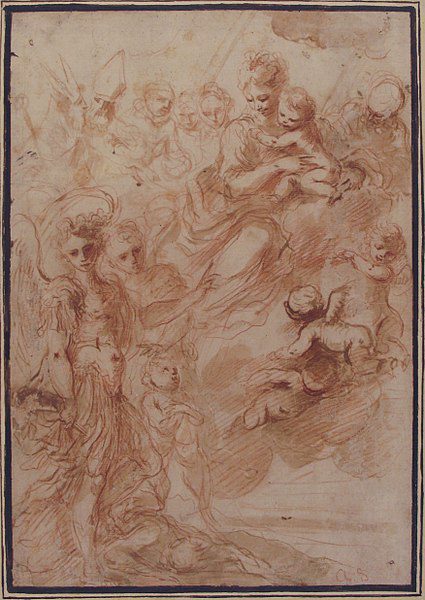
Photo credit: Saint Michael the Archangel and Another Figure Recommending a Soul to the Virgin and Child in Heaven, by Bartolomeo Biscaino (1629-1657) [public domain / Wikimedia Commons]

***
Summary: Part 6 of many responses to Lucas Banzoli’s 1900-page book, The Legend of the Immortality of the Soul: published on 1 August 2022. I defend historic Christianity.
A Lenda da Imortalidade da Alma
The Legend of the Immortality of the Soul
Previous Post

November 11, 2022
Defense of Immortal, Conscious Souls (vs. Lucas Banzoli): #5
Next Post
November 14, 2022 Defense of Immortal, Conscious Souls (vs. Lucas Banzoli): #7
Browse Our Archives
Select a Category & Last Things About Me Anti-Catholicism Atheism & Agnosticism Baptism and Sacramentalism Bible and Tradition Blessed Virgin Mary Books by Dave Armstrong C. S. Lewis Calvinism & General Protestantism Catholic Apologetics Catholic Apologists Catholic conversion Catholic converts Christmas Church (Ecclesiology) Church History Conversion and Converts Development of Doctrine Eastern Orthodoxy Ecumenism & Christian Unity Eucharist & Liturgy Fathers of the Church French Translations G. K. Chesterton Hell Hell & Satan Hell & Satan & Last Things Heresies & Comparative Religion Holistic Health Inquisition & Crusades & Scandals James White Jews & Judaism & Old Testament John Calvin John Henry Newman Liberal / Modernist Theology Life Issues Literary Resume Lutheranism Mariology Martin Luther Music Orthodoxy Papacy & Infallibility Personal Page Philosophy & Science Political & Ethical & Moral Issues Protestant Persecution & Intolerance Protestantism Purgatory Purgatory & Penance Romantic & Imaginative Theology Saints & Purgatory & Penance Salvation Salvation & Justification Satan & Last Things Sexuality and Gender Issues Spanish Translations Traditionalism vs. Radical Catholic Reactionaries Traducciones al español / tradução para português Trinitarianism & Christology Uncategorized Videos
Select a Month October 2026 September 2026 August 2026 July 2026 June 2026 May 2026 April 2026 March 2026 February 2026 January 2026 December 2025 November 2025 October 2025 September 2025 August 2025 July 2025 June 2025 May 2025 April 2025 March 2025 February 2025 January 2025 December 2024 November 2024 October 2024 September 2024 August 2024 July 2024 June 2024 May 2024 April 2024 March 2024 February 2024 January 2024 December 2023 November 2023 October 2023 September 2023 August 2023 July 2023 June 2023 May 2023 April 2023 March 2023 February 2023 January 2023 December 2022 November 2022 October 2022 September 2022 August 2022 July 2022 June 2022 May 2022 April 2022 March 2022 February 2022 January 2022 December 2021 November 2021 October 2021 September 2021 August 2021 July 2021 June 2021 May 2021 April 2021 March 2021 February 2021 January 2021 December 2020 November 2020 October 2020 September 2020 August 2020 July 2020 June 2020 May 2020 April 2020 March 2020 February 2020 January 2020 December 2019 November 2019 October 2019 September 2019 August 2019 July 2019 June 2019 May 2019 April 2019 March 2019 February 2019 January 2019 December 2018 November 2018 October 2018 September 2018 August 2018 July 2018 June 2018 May 2018 April 2018 March 2018 February 2018 January 2018 December 2017 November 2017 October 2017 September 2017 August 2017 July 2017 June 2017 May 2017 April 2017 March 2017 February 2017 January 2017 December 2016 November 2016 October 2016 September 2016 August 2016 July 2016 June 2016 May 2016 April 2016 March 2016 February 2016 January 2016 December 2015 November 2015 October 2015 September 2015 August 2015 July 2015 June 2015 May 2015 April 2015 March 2015 February 2015 January 2015 December 2014 November 2014 October 2014 September 2014 August 2014 July 2014 June 2014 April 2014 March 2014 February 2014 January 2014 December 2013 November 2013 October 2013 September 2013 August 2013 July 2013 June 2013 April 2013 March 2013 February 2013 January 2013 December 2012 November 2012 October 2012 September 2012 August 2012 July 2012 June 2012 May 2012 April 2012 March 2012 February 2012 January 2012 December 2011 November 2011 October 2011 September 2011 August 2011 July 2011 June 2011 April 2011 March 2011 February 2011 October 2010 September 2010 August 2010 July 2010 April 2010 March 2010 December 2009 October 2009 August 2009 July 2009 June 2009 May 2009 March 2009 February 2009 October 2008 September 2008 April 2008 March 2008 February 2008 January 2008 December 2007 November 2007 October 2007 May 2007 March 2007 February 2007 January 2007 November 2006 October 2006 September 2006 August 2006 July 2006 June 2006 May 2006 April 2006 March 2006 February 2006 October 2005 June 2005 April 2005 February 2005 July 2004 May 2004 April 2004
Follow Us!
TAKE THE
Religious Wisdom Quiz
Which prophet confronted David about his sin with Bathsheba?
Select your answer to see how you score.
Nathan Abiathar Samuel Gad
Books by This Author Books by Dave Armstrong
Related posts from Biblical Evidence for Catholicism

Top Three Anti-Catholic Lies About Catholicism
Biblical Evidence for Catholicism

Three More Anti-Catholic Lies About Catholicism (#6-4)
Biblical Evidence for Catholicism

Top Ten Anti-Catholic Lies (#10-7)
Biblical Evidence for Catholicism

No Hell? Dialogue on Conditional Immortality, Pt. 3
Biblical Evidence for Catholicism
TRENDING AT PATHEOS Catholic

Archdiocese Hosts Military Marriage Retreat in Germany
RASTATT, Germany — The transient military lifestyle, with its frequent deployments and...

Nearly every morning, I make the drive to Detroit with my high-school-age...

The Real AI Story Is Adoption Without Trust
Artificial intelligence has crossed a political threshold. It is no longer a...

A new article, written by Jeff Lindsay and Gale L. Pooley,...

Swimfan: Forgotten Aughts Pleasures
This is a recovery effort. In 2002, My Big Fat Greek Wedding...

Top Three Anti-Catholic Lies About Catholicism
This is my initial transcript for the video, "THE 3 WORST...
view all Catholic blogs
Ad-Free & Subscriber Log-In Subscription Support
- About Us
- 2026 Calendar
- Videos
- Podcasts
- Library of World Religions
- Faith In Media Tracker
- Advertise With Us
- Write for Us
- Privacy Policy
- Terms of Service
- Do Not Sell My Data
- Contact Us
- Radiant Digital
- Manage Newsletter Subscriptions
- Unsubscribe From Notifications
- Sitemap
Copyright 2008-2026, Patheos. All rights reserved.
Subscription Support Ad-Free & Subscriber Log-In
Follow Patheos