
BuddhistCatholicContemplativeEvangelicalGeneral ChristianHinduJewishLatter-day SaintMuslimNew VisionsProgressive Christian
Beliefs
- Buddhist
- Catholic
- Contemplative
- Evangelical
- General Christian
- Hindu
- Jewish
- Latter-day Saint
- More Voices
- Muslim
- New Visions
- Pagan
- Progressive Christian
Topics
- Religion News
- Food and Religion
- Sports and Religion
- Religious Art
- Religious Music and Entertainment
- Religious Events
- History and Religion
- Style and Religion
- Politics and Religion
- Women in Religion
- Recreation Outdoors and Religion
- Business Finance and Religion
- Careers Workplace and Religion
- Education and Religion
- Family Parenting and Religion
- Health Fitness and Religion
- Home and Religion
- Relationships and Religion
- Technology and Religion
- Travel and Religion
Columnists
- Buddhist Columnists
- Business Finance and Religion Columnists
- Careers Workplace and Religion Columnists
- Catholic Columnists
- Contemplative Columnists
- Education and Religion Columnists
- Evangelists Columnists
- Family Parenting and Religion Columnists
- General Christian Columnists
- Health Fitness and Religion Columnists
- Hindu Columnists
- History and Religion Columnists
- Home and Religion Columnists
- Jewish Columnists
- More Voices Columnists
- Latter Day Columnists
- Muslim Columnists
- New Visions Columnists
- Nonreligious Columnists
- Pagan Columnists
- Politics and Religion Columnists
- Progressive Columnists
- Recreation Outdoors and Religion Columnists
- Relationships and Religion Columnists
- Religion News Columnists
- Religious Art Columnists
- Religious Events Columnists
- Religious Music and Entertainment Columnists
- Sports and Religion Columnists
- Style and Religion Columnists
- Technology and Religion Columnists
- Travel and Religion Columnists
- Women in Religion Columnists
Resource Library
- 2026 Calendar
- Library of World Religions
- The 100 Most Holy Places on Earth
- Patheos Answers
- Podcasts
- Videos
- Faith Leaders Database
- Anglican Episcopalian
- Bahai
- Baptist
- Buddhism
- Christianity
- Confucianism
- Eastern Orthodoxy
- Hinduism
- Holiness and Pentecostal
- ISKCON
- Islam
- Judaism
- Lutheran
- Methodist
- The Church of Jesus Christ of Latter-day Saints
- New Age
- Paganism
- Presbytarian and Reformed
- Protestantism
- Religion Behind the Scenes
- Roman Catholic
- Scientology
- Shia Islam
- Sikhism
- Sufism
- Sunni Islam
- Taoism
- Zen
- See all religions
Research Tools
 Ad-Free & Subscriber Log-In Subscription Support
Ad-Free & Subscriber Log-In Subscription Support
Follow Patheos 

- Trending:
- Forgiveness
- |
- Marriage
- |
- Consciousness
- |
- Death Penalty
- |
- Election
- |
- Halloween

-
About
-
Catholic Apologetics
-
Church History
-
Great Apologists
-
Christian Worldview
-
Protestantism & Misc.
- Home
- Catholic
- History and Religion
- Defense of Immortal, Conscious Souls (vs. Lucas Banzoli): #3
Defense of Immortal, Conscious Souls (vs. Lucas Banzoli): #3
Last updated on: June 6, 2026 at 12:01 am by Dave Armstrong
Defense of Immortal, Conscious Souls (vs. Lucas Banzoli): #3 2026-06-06T00:01:24-04:00 Dave Armstrong
Patheos Explore the world's faith through different perspectives on religion and spirituality! Patheos has the views of the prevalent religions and spiritualities of the world.
3. Hebrew, Nephesh (Soul): Massive Figurative Biblical Use
Lucas Banzoli is a very active Brazilian anti-Catholic polemicist, who holds to basically a Seventh-Day Adventist theology, whereby there is no such thing as a soul that consciously exists outside of a body, and no hell (soul sleep and annihilationism). This leads him to a Christology which is deficient and heterodox in terms of Christ’s human nature after His death. He has a Master’s degree in theology, a degree and postgraduate work in history, a license in letters, and is a history teacher, author of 25 books, as well as blogmaster (but now inactive) for six blogs. He’s active on YouTube.
This is my 37th refutation of his articles (or portions of books). As of yet, I haven’t received a single word in reply to any of them (or if Banzoli has replied to anything, anywhere, he certainly hasn’t informed me of it). Readers may decide for themselves why that is the case.
My current effort is a major multi-part response to Banzoli’s 1900-page e-book, The Legend of the Immortality of the Soul [A Lenda da Imortalidade da Alma], published on 1 August 2022. He claims to have “cover[ed] in depth all the immortalist arguments” and to have “present[ed] all the biblical proofs of the death of the soul . . .” and confidently asserted: “the immortality of the soul is at the root of almost all destructive deception and false religion.” He himself admits on page 18 of his Introduction that what he is opposing is held by “nearly all the Christians in the world.” A sincere unbiblical error (and I assume his sincerity) is no less dangerous than a deliberate lie, and we apologists will be “judged with greater strictness” for any false teachings that we spread (Jas 3:1).
I use RSV for the Bible passages (including ones that Banzoli cites) unless otherwise indicated. Google Translate is utilized to render Lucas’ Portugese into English. Occasionally I slightly modify what appear to be inadequate translations. His words will be in blue.
*****
See the other installments:
#1 Preliminaries [11-1-22]
*
#2 Genesis 2:7 and the Hebrew / Biblical Idiom of Synecdoche [11-4-22]
*
#3 Hebrew, Nephesh [Soul]: Massive Figurative Biblical Use [11-7-22]
*
#4 Revelation 6:9: “Souls” in Heaven / 16 Biblical Proofs for Conscious Souls After Death [11-9-22]
*
#5 Revelation 6:9: “Souls” in Heaven Redux [11-11-22]
*
#6 Conspiracy Theories About Bibles and the Many Meanings of “Soul” in Holy Scripture [11-12-22]
*
*
#8 Banzoli’s Soul Sleep Leads Him to Believe That the Soul of Jesus Christ “Died” — Didn’t Exist — Between His Death and Resurrection, and That He was Unconscious in His Human Nature During That Time [11-14-22]
*
#9 Matthew 10:28: Did Jesus Teach That a Soul Could be Annihilated? [11-18-22]
*
*
*
*
#13 Dead Biblical Heroes Return to Earth!: Samuel & Saul / Moses & Elijah at Jesus’ Transfiguration [12-1-22]
*
*
#15 Hebrews 12:23: “the spirits of just men made perfect” [12-3-22]
*
#16 Sheol (Hades): Merely the “Grave” or “Underground” or the Conscious Abode of Dead Souls? [12-5-22]
*
#17 Ecclesiastes 9:5: “The Dead Know Nothing” / Psalm 146:4: “His Thoughts Perish,” Etc. [12-6-22]
*
See also the related articles:
Seven Replies Re Interceding Saints (vs. Lucas Banzoli) [5-25-22]
Answer to Banzoli’s “Challenge” Re Intercession of Saints [9-20-22]
Bible on Praying Straight to God (vs. Lucas Banzoli) [9-21-22]
Reply to Banzoli’s “Analyzing the ‘evidence’ of saints’ intercession” [9-22-22]
*****
When the Bible refers to the body, it usually alludes only to the physical structure itself, that is, to its external aspect (apart from the feelings, breathing and other non-visible aspects of man). That’s why so often when it refers to someone’s body it’s referring to a lifeless corpse (Luke 23:52; Mark 15:45; Luke 24:3; Acts 5:6). (p. 58)
A quick perusal of the 141 appearances of “body” in the New Testament (RSV) will quickly prove this summation false. It’s not the whole picture; it’s a partial truth, which is close to a falsehood. Banzoli picks out a few references about corpses. He ignores passages like, for example, the four that refer to the “body of Christ” (Rom 7:4; 1 Cor 10:16; 12:27; Eph 4:12). The latter would read (if St. Paul had Banzoli’s mentality): “to equip the saints for the work of ministry, for building up the lifeless corpse of Christ.”
Although all immortalists are dualists, in the sense of belief in the duality between an immortal and immaterial soul and a mortal and material body, they diverge from each other in the relationship between soul and spirit. While for the dichotomists the soul and the spirit are strictly the same thing, trichotomists differentiate between the two. (p. 60)
Catholics are dualists or dichotomists. See: “Difference Between Human Soul and Spirit?” (Tom Nash, Catholic Answers), and the reflections of Fr. Edward McIlmail, LC (Regnum Christi Spirituality Center). The Bible refers to both the “spirit” and “soul” of a man as that which survives death (the cessation of a biologically alive body):
Matthew 10:28 And do not fear those who kill the body but cannot kill the soul; rather fear him who can destroy both soul and body in hell.
Luke 23:46 Then Jesus, crying with a loud voice, said, “Father, into thy hands I commit my spirit!” And having said this he breathed his last. (cf. Ps 31:5)
John 19:30 When Jesus had received the vinegar, he said, “It is finished”; and he bowed his head and gave up his spirit.
Acts 7:59 And as they were stoning Stephen, he prayed, “Lord Jesus, receive my spirit.”
Hebrews 12:23 and to the assembly of the first-born who are enrolled in heaven, and to a judge who is God of all, and to the spirits of just men made perfect,
1 Peter 3:18-20 For Christ also died for sins once for all, the righteous for the unrighteous, that he might bring us to God, being put to death in the flesh but made alive in the spirit; [19] in which he went and preached to the spirits in prison, [20] who formerly did not obey, when God’s patience waited in the days of Noah, during the building of the ark, in which a few, that is, eight persons, were saved through water.
John Calvin commented about several of these passages as follows:
In like manner he exempts it [soul / spirit] from their power, when, in dying, he commends it into his Father’s hands, as Luke writes, and David had foretold. (Luke 23:4,6; Psalm 31:6.) And Stephen, after his example, says “Lord Jesus, receive my spirit!” (Acts 7:59.) Here they absurdly pretend that Christ commends his life to his Father, and Stephen his to Christ, to be kept against the day of Resurrection. But the words, especially those of Stephen, imply something very different from this. And the Evangelist adds, concerning Christ, that having bowed his head, he delivered his spirit. (John 19:30.) These words cannot refer to panting or action of the lungs.
Not less evidently does the Apostle Peter show that, After death, the soul both exists and lives, when he says (1 Peter 1:19) that Christ preached to the spirits in prison, not merely forgiveness for salvation to the spirits of the righteous, but also confusion to the spirits of the wicked. For so I interpret the passage, which has puzzled many minds; and I am confident that, under favorable auspices, I will make good my interpretation. (Psychopannychia, 1534)
Despite so many texts in which God speaks as if he had a soul, the theological consensus is that God does not “have” a soul, . . . (p. 81)
This is also non-literal, idiomatic language, which is called anthropopathism or anthropomorphism. Anthropopathism is a fancy word for the attribution of non-physical human emotions and passions to God. The related term, anthropomorphism, is the attribution of physical human properties (or animal properties such as wings) to God. See a paper of mine on this topic for many biblical examples. Once again, Banzoli describes (or, dances around, so to speak) a literary technique, but seems not to know what it actually is.
I searched his 1900-page book for “anthropomorphism” (antropomorfismo in Portugese) — with regard to God — and it never appears; it’s the same for anthropopathism (antropopatia). He does use “anthropomorphic” (antropomórficos) just once on page 1524, but it’s referring to Satan (commenting on Ezekiel 32:4-7). Therefore, it appears that Banzoli is unaware that biblical references to God having a “soul” are examples of anthropomorphism.
Banzoli cites the passages Leviticus 7:12, 14-15, 18, 20, 25, 27 (all of which contain nephesh: the Hebrew word for “soul”) and proclaims: “Of course, none of these texts is translated “soul” in the English versions” (p. 83). This is untrue. In the King James Version: by far the most historically influential English translation (from 1611), nephesh is translated as “soul” in Leviticus 7:18, 20-21, 25, and 27. And of course, in these instances, it is the use of synecdoche in the mind of the inspired writer (and the KJV translators): just as it is also analogously used in Genesis 2:7 (examined at length in Part 2).
A Bible reference page that searches many English translations reveals that, for Leviticus 7:20, reveals that eight other English translations do the same. A second web page of this nature provides several more examples. When such translations use “soul” they are translating nephesh literally. Other translations that use “person” or suchlike, do it with the understanding that that was the intended meaning of the synecdoche. Both are honest, reasonable, and permissible opinions on translation. But any differences here do not prove what Banzoli mistakenly thinks they “prove.”
Banzoli cites a passage from Jesus, which he thinks makes the same (erroneous) point:
Luke 12:19-20 And I will say to my soul, Soul, you have ample goods laid up for many years; take your ease, eat, drink, be merry.’ [20] But God said to him, ‘Fool! This night your soul is required of you; and the things you have prepared, whose will they be?’
He comments on this:
So certain was the fact that the soul eats and drinks that Jesus asked “do not be anxious about your life, what you shall eat or what you shall drink, nor about your body, what you shall put on.” (Mt 6:25). Although the NIV translates by “lives”, it is psyche (soul) which appears in the Greek. But what does the soul have to do with “eating or drinking”? In the dualistic perspective, nothing. In the Bible, all. As we have seen here, the soul biblically eats and drinks, which is why the concern for the soul is directly linked to eating and drinking. Although the traditional dualistic view completely discards any relationship of the soul with corporeal things, in the Bible the soul not only eats and drinks, but also feels hungry, has an appetite, and tastes what is digested by the body. (p. 84)
And all of this is again non-literalistic synecdoche, as E. W. Bullinger, in his 1104-page volume, Figures of Speech Used in the Bible (London: 1898; my hardcover copy was reprinted in 1968 by Baker Book House [Grand Rapids, Michigan]; see the online complete book link too, and the paginated Internet Archive version), noted with regard to Luke 12:19 on page 641: “The expression My soul, His soul, etc., becomes by Synecdoche the idiom for me, myself, himself, etc.” He provides twelve other biblical examples of the same thing: two of which even refer indirectly to food (fasting):
Psalm 35:13 (KJV) . . . I humbled my soul with fasting . . .
Isaiah 58:5 (KJV) Is it such a fast that I have chosen? a day for a man to afflict his soul? . . . [incorrectly identified as 57:5 in Bullinger]
In the KJV, there are many passages that connect a soul with eating, in the same non-literal manner (Lev 17:10, 12, 15; 22:6; Dt 12:15, 20-21; 14:26; Pr 13:25; Is 29:8; 55:2; Ezek 4:14; Hos 9:4; Mic 7:1). None of this refutes dualism, anymore than passages about God the Father (an immaterial spirit) having “wings” or an “arm” or “nostrils” and so forth “prove” that He literally possesses those. Both instances are non-literal and involve known literary techniques or idioms. Banzoli doesn’t understand this. So he continues to compound error upon error. John Calvin wrote about the gravely mistaken mindset and mentality of the soul sleep advocates:
It is impossible not to wonder at the presumption of these men, who have so high an opinion of themselves, and would fain be thought wise by others, though they require to be taught the use of figures and the first elements of speech. In this sense it was said that “the soul of Jonathan was knit to the soul of David” – the soul of Sychem (Shechem) “clave unto Dinah the daughter of Jacob;” and Luke says, that “the multitude of the believers was of one heart and soul.” (1 Samuel 18:1; Genesis 34:3; Acts 4:32.) Who sees not that there is much force in such Hebraisms as the following? “Bless the Lord, O my soul,” – “My soul doth magnify the Lord,” – “Say to my soul, I am thy salvation.” (Psalm 103:1; 104:1; Luke 1:46.) An indescribable something more is expressed than if it were said without addition, Bless the Lord; I magnify the Lord, Say to me, I am thy salvation! (Psychopannychia, 1534)
As I noted in Part 2, Banzoli is “not aware of the fact that a synecdoche is in play, since he never uses the word (sinédoque in Portugese) in his 1900-page book.” I would send him a copy of Bullinger’s book on biblical figures of speech (on me), to get him up to speed, but I don’t have to: it’s available for free online. So he can learn these rather elementary aspects of biblical exegesis, if he is willing to. Ah, there’s the rub . . .
But Banzoli goes on in this section, providing several more examples of what is synecdoche, vainly thinking that all prove his point, and making himself all the more foolish, in his folly. This is why getting one’s premises right is of supreme importance, because if they are wrong: everything deduced from them is also wrong.
Banzoli is so desperate to argue his impossible case from the Bible that he even stops to virtually asserting a conspiracy among Bible translators. He cites this passage:
Isaiah 29:8 As when a hungry man dreams he is eating and awakes with his hunger not satisfied, or as when a thirsty man dreams he is drinking and awakes faint, with his thirst not quenched, . . .
His argument is that the Hebrew employs nephesh (soul) for both hunger and thirst in this verse. I have explained why translations sometimes don’t translate nephesh as soul. They do so in instances of synecdoche. Banzoli notes a similar instance, Proverbs 13:25 and stated that one translation (I’m not sure if he refers to a Portugese or English Bible, or which one he means (“ACF”: he calls it) and starts getting conspiratorial:
[T]the common Hebrew parallelism between the soul and the womb is suppressed in the translation, perhaps because it would be absurd to admit a comparison between an immaterial and immortal soul with a part of the body, like the belly. Such an equation would never be tolerated from the point of view of dualistic view, where the soul contrasts with the body instead of identifying with it. (p. 87)
But again, the ultra-influential English King James Translation must not have been in on the conspiracy, since it translates Proverbs 13:25 as: “The righteous eateth to the satisfying of his soul: but the belly of the wicked shall want.” It’s followed in this rendering by the New King James Version, American Standard Version, English Revised Version, the Catholic Douay-Rheims Bible, and several others.
But Banzoli keeps repeating his error of not understanding synecdoche over and over, citing other passages (on pages 88-89) that connect the “soul” with hunger or other physical things (Ps 69:10; Is 32:6; 55:2; 56:11; Lam 1:11; Ezek 7:19). Here he is engaging in the practice that I noted and predicted in Part 1:
Soul sleep and annihilationist arguments are based on the same basic errors simply repeated again and again. One such error, for example, is often the basis of the “exegesis” (really, eisegesis) of many passages interpreted wrongly and vastly misconstrued based on the false premise.
He exclaims:
[T]he Hebrews did not hesitate to say that the nephesh was empty, despite obviously no immaterial and spiritual entity is a repository of food. This challenges, once again, the Greek dualism between body and soul, in which a soul could never be equated with something physical, like the stomach. (p. 87)
If we perceive anything by reading all these texts, it’s that the Hebrews understood the soul as something tangible, often identified with the body itself animated by the breath of life, . . . But what they definitely didn’t believe is that the soul was an invisible “ghost” hiding somewhere inside a person. In support for this conclusion, we have the various texts that speak of the soul related to something physical, which is difficult to understand from the point of view of the disembodied soul. (pp. 89-90)
Literally speaking, he is correct. But in terms of figurative language; he’s wrong, because that is an extremely common occurrence in the Bible. Until he understands this, he’ll simply repeat his basic category error ad nauseam and ad infinitum . . . Indeed, he goes on explicating several other examples in the next few pages, that involve synecdoche: taking them all literally and claiming that they prove that soul in the Bible is simply a synonym for person. There is no need whatsoever to go through each one, because they all involve the same boring, droning presuppositional error (that I have adequately explained), based on an ignorance of very common Hebrew idiom.
Banzoli waxes indignant about translators who don’t translate every instance of nephesh (753 times in the Old Testament) as “soul”:
A particularly curious case is that of Psalm 105, which says that when Jacob was sold into slavery “His feet were hurt with fetters, his neck was put in a collar of iron” (Ps 105:18 [RSV]). This verse would easily pass unnoticed were it not for the fact that in the Hebrew is the word nephesh, which is translated as “neck”. The translators found the idea of an immaterial and incorporeal soul being physically bound with an iron collar too absurd, and so took the freedom to translate by “neck” what in Hebrew is “soul”. This wouldn’t be a problem if translators abandoned their dualist bias once and for all and simply got it into their heads that “soul” in the Bible has nothing to do with Greek philosophy: which would in turn enable them to translate Hebrew honestly and without fear. (p. 92)
This is just emptyheaded and stupid. Once again, if we examine the case of the KJV (no insignificant or inconsequential translation), we find no nefarious conspiracy to conceal the truth. Out of 753 appearances, nephesh is translated as soul in the KJV 475 times, or 63% of the time that it’s translated. That hardly sounds like a conspiracy to cover up a word that we both agree literally means soul. The same Bible, however, also translates it as the similar idea of life 117 times, person 29 times, creature 9 times, body 8 times, himself 8 times, yourselves 6 times, themselves 3 times, and man 3 times. Like almost all biblical words, it’s used different ways in different contexts.
The KJV was simply more literal in its translations. There are different legitimate approaches to translation, having to do with how literal to be, or to render a “dynamic equivalent” or paraphrase, etc. Hence, the RSV from the 1940s and 1950s: a revision of the KJV, chose to be (in considering the development of the English language for 340 years since the KJV) less literal in translating nephesh, so that it rendered the word as soul in the Old Testament 200 times rather than 475 times.
But it’s still there 27% of the time, so it can hardly be a successful conspiracy of concealment: that being the case. Banzoli is simply out to sea. I don’t question his sincerity. He ought not make this accusation of Bible translators that know a thousand times more about biblical language and how to render it into different languages than he does.
***
Practical Matters: Perhaps some of my 4,000+ free online articles (the most comprehensive “one-stop” Catholic apologetics site) or fifty books have helped you (by God’s grace) to decide to become Catholic or to return to the Church, or better understand some doctrines and why we believe them.
Or you may believe my work is worthy to support for the purpose of apologetics and evangelism in general. If so, please seriously consider a much-needed financial contribution. I’m always in need of more funds: especially monthly support. “The laborer is worthy of his wages” (1 Tim 5:18, NKJV). 1 December 2021 was my 20th anniversary as a full-time Catholic apologist, and February 2022 marked the 25th anniversary of my blog.
PayPal donations are the easiest: just send to my email address: [email protected]. You’ll see the term “Catholic Used Book Service”, which is my old side-business. To learn about the different methods of contributing, including 100% tax deduction, etc., see my page: About Catholic Apologist Dave Armstrong / Donation Information. Thanks a million from the bottom of my heart!
***
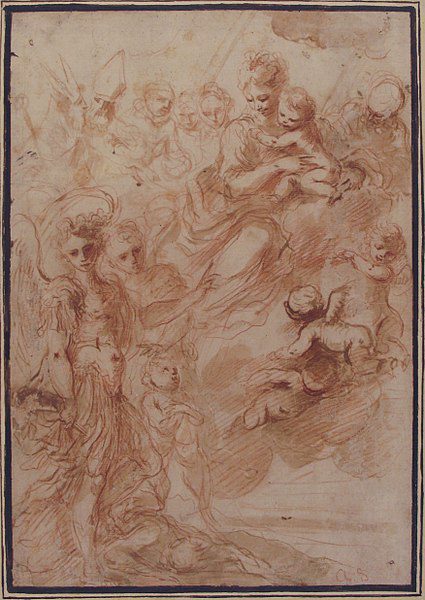
Photo credit: Saint Michael the Archangel and Another Figure Recommending a Soul to the Virgin and Child in Heaven, by Bartolomeo Biscaino (1629-1657) [public domain / Wikimedia Commons]

***
Summary: Part 3 of many responses to Lucas Banzoli’s 1900-page book, The Legend of the Immortality of the Soul: published on 1 August 2022. I defend historic Christianity.
A Lenda da Imortalidade da Alma
The Legend of the Immortality of the Soul
Previous Post
November 4, 2022
Defense of Immortal, Conscious Souls (vs. Lucas Banzoli): #2
Next Post

November 9, 2022 2022 Election: "My people are destroyed for lack of knowledge"
Browse Our Archives
Select a Category & Last Things About Me Anti-Catholicism Atheism & Agnosticism Baptism and Sacramentalism Bible and Tradition Blessed Virgin Mary Books by Dave Armstrong C. S. Lewis Calvinism & General Protestantism Catholic Apologetics Catholic Apologists Catholic conversion Catholic converts Christmas Church (Ecclesiology) Church History Conversion and Converts Development of Doctrine Eastern Orthodoxy Ecumenism & Christian Unity Eucharist & Liturgy Fathers of the Church French Translations G. K. Chesterton Hell Hell & Satan Hell & Satan & Last Things Heresies & Comparative Religion Holistic Health Inquisition & Crusades & Scandals James White Jews & Judaism & Old Testament John Calvin John Henry Newman Liberal / Modernist Theology Life Issues Literary Resume Lutheranism Mariology Martin Luther Music Orthodoxy Papacy & Infallibility Personal Page Philosophy & Science Political & Ethical & Moral Issues Protestant Persecution & Intolerance Protestantism Purgatory Purgatory & Penance Romantic & Imaginative Theology Saints & Purgatory & Penance Salvation Salvation & Justification Satan & Last Things Sexuality and Gender Issues Spanish Translations Traditionalism vs. Radical Catholic Reactionaries Traducciones al español / tradução para português Trinitarianism & Christology Uncategorized Videos
Select a Month October 2026 September 2026 August 2026 July 2026 June 2026 May 2026 April 2026 March 2026 February 2026 January 2026 December 2025 November 2025 October 2025 September 2025 August 2025 July 2025 June 2025 May 2025 April 2025 March 2025 February 2025 January 2025 December 2024 November 2024 October 2024 September 2024 August 2024 July 2024 June 2024 May 2024 April 2024 March 2024 February 2024 January 2024 December 2023 November 2023 October 2023 September 2023 August 2023 July 2023 June 2023 May 2023 April 2023 March 2023 February 2023 January 2023 December 2022 November 2022 October 2022 September 2022 August 2022 July 2022 June 2022 May 2022 April 2022 March 2022 February 2022 January 2022 December 2021 November 2021 October 2021 September 2021 August 2021 July 2021 June 2021 May 2021 April 2021 March 2021 February 2021 January 2021 December 2020 November 2020 October 2020 September 2020 August 2020 July 2020 June 2020 May 2020 April 2020 March 2020 February 2020 January 2020 December 2019 November 2019 October 2019 September 2019 August 2019 July 2019 June 2019 May 2019 April 2019 March 2019 February 2019 January 2019 December 2018 November 2018 October 2018 September 2018 August 2018 July 2018 June 2018 May 2018 April 2018 March 2018 February 2018 January 2018 December 2017 November 2017 October 2017 September 2017 August 2017 July 2017 June 2017 May 2017 April 2017 March 2017 February 2017 January 2017 December 2016 November 2016 October 2016 September 2016 August 2016 July 2016 June 2016 May 2016 April 2016 March 2016 February 2016 January 2016 December 2015 November 2015 October 2015 September 2015 August 2015 July 2015 June 2015 May 2015 April 2015 March 2015 February 2015 January 2015 December 2014 November 2014 October 2014 September 2014 August 2014 July 2014 June 2014 April 2014 March 2014 February 2014 January 2014 December 2013 November 2013 October 2013 September 2013 August 2013 July 2013 June 2013 April 2013 March 2013 February 2013 January 2013 December 2012 November 2012 October 2012 September 2012 August 2012 July 2012 June 2012 May 2012 April 2012 March 2012 February 2012 January 2012 December 2011 November 2011 October 2011 September 2011 August 2011 July 2011 June 2011 April 2011 March 2011 February 2011 October 2010 September 2010 August 2010 July 2010 April 2010 March 2010 December 2009 October 2009 August 2009 July 2009 June 2009 May 2009 March 2009 February 2009 October 2008 September 2008 April 2008 March 2008 February 2008 January 2008 December 2007 November 2007 October 2007 May 2007 March 2007 February 2007 January 2007 November 2006 October 2006 September 2006 August 2006 July 2006 June 2006 May 2006 April 2006 March 2006 February 2006 October 2005 June 2005 April 2005 February 2005 July 2004 May 2004 April 2004
Follow Us!
TAKE THE
Religious Wisdom Quiz
Who was stoned to death for preaching about Jesus?
Select your answer to see how you score.
Peter Paul Stephen James
Books by This Author Books by Dave Armstrong
Related posts from Biblical Evidence for Catholicism

Three More Anti-Catholic Lies About Catholicism (#6-4)
Biblical Evidence for Catholicism

Top Ten Anti-Catholic Lies (#10-7)
Biblical Evidence for Catholicism

No Hell? Dialogue on Conditional Immortality, Pt. 3
Biblical Evidence for Catholicism
No Hell? Dialogue on Conditional Immortality, Pt. 2
Biblical Evidence for Catholicism
TRENDING AT PATHEOS Catholic

Janie Learns the Way of the Cross: A...
Teaching children about Jesus' Passion can be challenging. Many parents and educators...

Looking For Good Catholic Writing - October 2026
He alone extends the heavens, and he walks upon the waves of...

In "Irreplaceable," our book on vocation and technology, Trevor Sutton and I...

I was strolling through the top floor of the brand new Parthenon...

What Does Gêvâh Mean For Kimberley Guifoyle &...
This week, a lot of the news is focused on Kimberly Guilfoyle....

INNER CIRCLE: Profound Mystery (Of Christ In All...
Ephesians 5:31-32 “For this reason, a man will leave his father and...
view all Catholic blogs
Ad-Free & Subscriber Log-In Subscription Support
- About Us
- 2026 Calendar
- Videos
- Podcasts
- Library of World Religions
- Faith In Media Tracker
- Advertise With Us
- Write for Us
- Privacy Policy
- Terms of Service
- Do Not Sell My Data
- Contact Us
- Radiant Digital
- Manage Newsletter Subscriptions
- Unsubscribe From Notifications
- Sitemap
Copyright 2008-2026, Patheos. All rights reserved.
Subscription Support Ad-Free & Subscriber Log-In
Follow Patheos