
BuddhistCatholicContemplativeEvangelicalGeneral ChristianHinduJewishLatter-day SaintMuslimNew VisionsProgressive Christian
Beliefs
- Buddhist
- Catholic
- Contemplative
- Evangelical
- General Christian
- Hindu
- Jewish
- Latter-day Saint
- More Voices
- Muslim
- New Visions
- Pagan
- Progressive Christian
Topics
- Religion News
- Food and Religion
- Sports and Religion
- Religious Art
- Religious Music and Entertainment
- Religious Events
- History and Religion
- Style and Religion
- Politics and Religion
- Women in Religion
- Recreation Outdoors and Religion
- Business Finance and Religion
- Careers Workplace and Religion
- Education and Religion
- Family Parenting and Religion
- Health Fitness and Religion
- Home and Religion
- Relationships and Religion
- Technology and Religion
- Travel and Religion
Columnists
- Buddhist Columnists
- Business Finance and Religion Columnists
- Careers Workplace and Religion Columnists
- Catholic Columnists
- Contemplative Columnists
- Education and Religion Columnists
- Evangelists Columnists
- Family Parenting and Religion Columnists
- General Christian Columnists
- Health Fitness and Religion Columnists
- Hindu Columnists
- History and Religion Columnists
- Home and Religion Columnists
- Jewish Columnists
- More Voices Columnists
- Latter Day Columnists
- Muslim Columnists
- New Visions Columnists
- Nonreligious Columnists
- Pagan Columnists
- Politics and Religion Columnists
- Progressive Columnists
- Recreation Outdoors and Religion Columnists
- Relationships and Religion Columnists
- Religion News Columnists
- Religious Art Columnists
- Religious Events Columnists
- Religious Music and Entertainment Columnists
- Sports and Religion Columnists
- Style and Religion Columnists
- Technology and Religion Columnists
- Travel and Religion Columnists
- Women in Religion Columnists
Resource Library
- 2026 Calendar
- Library of World Religions
- The 100 Most Holy Places on Earth
- Patheos Answers
- Podcasts
- Videos
- Faith Leaders Database
- Anglican Episcopalian
- Bahai
- Baptist
- Buddhism
- Christianity
- Confucianism
- Eastern Orthodoxy
- Hinduism
- Holiness and Pentecostal
- ISKCON
- Islam
- Judaism
- Lutheran
- Methodist
- The Church of Jesus Christ of Latter-day Saints
- New Age
- Paganism
- Presbytarian and Reformed
- Protestantism
- Religion Behind the Scenes
- Roman Catholic
- Scientology
- Shia Islam
- Sikhism
- Sufism
- Sunni Islam
- Taoism
- Zen
- See all religions
Research Tools
 Ad-Free & Subscriber Log-In Subscription Support
Ad-Free & Subscriber Log-In Subscription Support
Follow Patheos 

- Trending:
- Forgiveness
- |
- Marriage
- |
- Consciousness
- |
- Death Penalty
- |
- Election
- |
- Halloween

-
About
-
Catholic Apologetics
-
Church History
-
Great Apologists
-
Christian Worldview
-
Protestantism & Misc.
- Home
- Catholic
- History and Religion
- Who’s Ignorant: “Schizo Jesus” or Bishop James White?
Who’s Ignorant: “Schizo Jesus” or Bishop James White?
Last updated on: October 19, 2022 at 10:14 am by Dave Armstrong
Who’s Ignorant: “Schizo Jesus” or Bishop James White? 2022-10-19T10:14:20-04:00 Dave Armstrong
Patheos Explore the world's faith through different perspectives on religion and spirituality! Patheos has the views of the prevalent religions and spiritualities of the world.
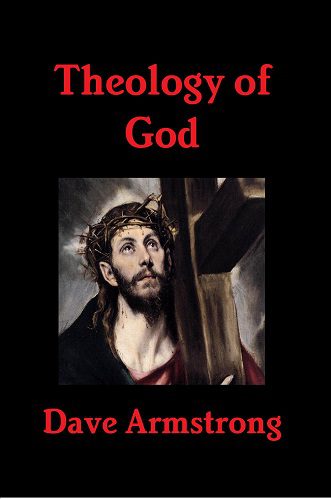
[subtitle: Biblical, Chalcedonian Trinitarianism and Christology; see book and purchase information]
Matthew 24:36 (RSV) But of that day and hour no one knows, not even the angels of heaven, nor the Son, but the Father only. (cf. Mk 13:32)
Reformed Baptist Bishop “Dr.” [???] James White: the most active and influential anti-Catholic apologist these past 25 years, has denied the distinction between Jesus’ Divine and human Natures with regard to knowing the “day and hour” of His Second Coming (Matthew 24:36).
*
Catholicism, Orthodoxy, and most historic Protestants (all “Chalcedonians”) have held that Jesus “didn’t know” some things only in His human nature (because in the incarnation He “emptied” Himself: what is known in Christology as the “kenosis”); but always did know everything (i.e., was omniscient) — including the time of His return — in His Divine Nature.
*
White denied this in at least two of his ubiquitous videos and essentially asserted that Jesus (in both natures), did not possess this knowledge — nor did the Holy Spirit –, but only God the Father. He basically mocked those who hold to the traditional view as fundamentally inconsistent and guilty of profound eisegesis and caring little about the biblical text. Before I go further, let’s examine exactly what he stated.
Mitchell Wygant, who describes himself on Twitter as “Seminary Student at IRBS Theological Seminary, Confessional Reformed Baptist, Classical Christian Theist” has documented two video excerpts from Bishop White. They’re short: just 1:02 and 2:14.
*
The first video excerpt is derived from the 57:08 time mark in White’s video, “Philippians 2, the Carmen Christi, and Accusations of Kenotic Heresy” (4-21-22). He states (57:50-58:53) — his words will be in blue henceforth:
At that point in time, in the incarnate state — it’s not that the Son did not know before the incarnation and would not know at His exaltation or anything like that — but that there was some reason why, at that point in time, it was profitable for the Messiah, the Son, to not know. Those are His words. You’ve got to deal with them. If you have to look at the words written by Matthew [24:36] and come up with an interpretation that could not have possibly been what Matthew intended or anyone Matthew wrote to, intended, and could not have been known for centuries, millennia, after the point of writing, we’re no longer dealing with the Scripture being any kind of meaningful foundation for our beliefs, right? Can we agree with that? I hope we can, because that’s pretty obvious. [my italics and bolding reflect his own vocal accentuations]
A little later in the video White grumbles about his Protestant critics objectionably engaging in “the New Baptist Thomist-speak” (1:01:45) and a newfound “an Aristotelian Thomist metaphysic” (1:02:39) that Bishop White rejects. But this is misguided ire since he claims that no one was talking about these things in the first thousand years of the Church (St. Thomas Aquinas lived in the 13th century).
*
In fact, there was robust discussion of these aspects of Christology in the patristic period and notably at the ecumenical Council of Chalcedon in 451 AD, where the doctrine of the Hypostatic Union or Two Natures of Christ was meticulously formulated and enshrined as dogma. White knows that most people will be unaware of that so he (there’s no other possible way to put it!) misrepresents the history of Christology for his own sophistical ends. This won’t do. It’s a falsehood (to put it mildly).
James 3:1 Let not many of you become teachers, my brethren, for you know that we who teach shall be judged with greater strictness.
The second video excerpt that Wygant documented is from the 1:22:18 time marker in White’s video, “Ninety Minutes of Biblical Exegesis and Theological Ruminations” (8-25-22). Here is what he pontificates about there (up through 1:25:56):
What we’re being told is [that] when it [Mt 24:36] says “nor the son” you have to take the fully developed later definitions of Christology, read them back in here, and do partitive exegesis. And that’s the easy way to do it. The easy out to Matthew 24:36 is to say, “well, that‘s the humanity and not the deity.” . . . And that’s normally how people try to respond to critics, and the critics go, “can you show me that from the text?”: especially since it says [cites the Greek wording] . . . “but the Father only.” But you’re saying it’s not the Father only. It’s the Father and the Son and the Spirit! . . . It’s this consistency thing, you know? [makes a mocking, grimacing expression] I know it’s a bit of a pain, . . . So if you wanna say, “well, to protect my formulations, I’m gonna go beyond what the text says, and I’m gonna say this is speaking of the Son only in His human incarnation, . . .” . . . You’re not gonna be able to prove it from the text. . . . You’re going beyond the text. You’re readin’ stuff into it that ain’t anywhere near it. You couldn’t exegete that if your life depended on it. But you’ve got your external systematic theology, and it tells you what the text says. [my italics and bolding reflect his own vocal accentuations]
It turns out that White (after years of explaining that sola Scriptura does not rule out all human or church tradition(s) whatever (as long as they aren’t infallible), is radically Scripture Only: the extreme distortion of sola Scriptura, which is already a viciously self-defeating falsehood. He appears to believe in what Presbyterian defender of sola Scriptura Keith Mathison famously called “SOLO Scriptura.” When it comes down to it, it appears that he couldn’t care less about what the Church fathers, his own theological ancestors, the Protestant founders, or anyone else has taught about this, these past nearly 2,000 years.
*
I wouldn’t have predicted this, and it’s a very sad thing. White gets a lot wrong (believe me, I know, after 27 years of following his antics and refuting his myriad errors), but I wouldn’t have thought that the Hypostatic Union would be one of them. Even his fellow Reformed Baptists are now giving him a hard time. He’s on the hot seat, and in his utterly defiant / “know-it-all” mode, as usual. It may be that he is obstinate, rather than ignorant of the history of orthodox Christology.
*
I sure hope not, for his sake, but mere ignorance and lack of knowledge of historic orthodox Christology hardly seems possible, since he is highly theologically educated (Masters degree, though not a legitimate, accredited doctorate, with the requisite work done to achieve that). Whatever is the case with him, when push comes to shove, he’s ready to “confidently” assert this serious Christological error, rather than bow to virtually universal received Christian belief. This doesn’t even involve Protestant-Catholic disputes, which is why his fellow Baptists and other Protestants are as shocked at these developments as any Catholic would be.
*
In the second excerpt, White waxes melodramatically about his critics supposedly eisegeting (improperly reading into the biblical text what isn’t actually there) all over the place. And he takes a gratuitous swipe at systematic theology. Well, I’ll let you in on a little secret: all Bible commentators and students have a systematic theology (to various degrees, but still . . .) and utilize it in interpreting the biblical text. Everyone does: without exception, which includes James White.
*
And that is true because it’s impossible not to have some notions of theology and various Christian beliefs, once having started to learn theology at all. If White doesn’t understand this elementary epistemological consideration, he’s living in a fantasy-world: a fairy tale and pipe dream. I won’t even argue this point further: it’s so utterly obvious.
*
That said, I would immediately point out (since he wants to be “Bible Only” at this juncture) that this same Bible that White claims to champion in almost a uniquely capable manner, definitely asserts over and over that Jesus is omniscient. That’s simply a fact. I copiously demonstrated it (follow the link). White has expressly denied that Jesus Himself is omniscient during His first sojourn on earth. Orthodoxy says that this applies to His human nature only. White denies that and also applies it to the Divine Nature of Jesus, which is a grave and blasphemous error.
*
Secondly, I’d note that the Bible often doesn’t spell things out explicitly, and will assume that the reader (at least the educated and relatively more theologically informed ones) can figure out in context what is being referred to. It doesn’t take the time to always spell out distinctions of the two natures in Jesus, just as it doesn’t always do the same for distinctions of persons within the Holy Trinity. One has to take all of the relevant passages together and form an interpretive grid, as it were, to know how it all fits together in a consistent trinitarianism.
*
And that is systematic theology: collecting passages on a particular theme and reaching overarching conclusions. Here, for example, are several passages that look prima facie as if God the Father is not specifically being referred to, and/or that Jesus is implying that He Himself is not God (or that the text does so). The Jehovah’s Witnesses and many other non-Christian cults have a field day with them:
Mark 10:18 And Jesus said to him, “Why do you call me good? No one is good but God alone.”
John 7:17 if any man’s will is to do his will, he shall know whether the teaching is from God or whether I am speaking on my own authority.
John 14:28 . . . the Father is greater than I,
Acts 7:55 But he, full of the Holy Spirit, gazed into heaven and saw the glory of God, and Jesus standing at the right hand of God;
Acts 10:38 how God anointed Jesus of Nazareth with the Holy Spirit and with power; how he went about doing good and healing all that were oppressed by the devil, for God was with him.
Acts 20:28 . . . the church of God which he obtained with the blood of his own Son.
1 Corinthians 11:3 . . . the head of Christ is God,
2 Corinthians 1:21 But it is God who establishes us with you in Christ, . . .
Galatians 4:6 . . . God has sent the Spirit of his Son into our hearts. . . .
There are no less than nine passages that refer to “God” having “raised” Jesus from the dead, which at first glance sound like Jesus is lower than God (Arianism). It’s understood that the passages are using “God” as a synonym for “God the Father.” The student of the Bible and one who does systematic theology, however, also knows that the Bible teaches that Jesus (being God) raised Himself, too:
John 2:19-21 Jesus answered them, “Destroy this temple, and in three days I will raise it up.” [20] The Jews then said, “It has taken forty-six years to build this temple, and will you raise it up in three days?” [21] But he spoke of the temple of his body.
John 10:17-18 For this reason the Father loves me, because I lay down my life, that I may take it again. [18] No one takes it from me, but I lay it down of my own accord. I have power to lay it down, and I have power to take it again; this charge I have received from my Father.”
In the mentality that White has expressed above, these would be clear-cut “obvious” examples teaching that Jesus is not God: going literally by the one text alone and ignoring other relevant ones in which to understand the interpretation of these. If we go by “logic only” and ignore systematic theology and cross-referencing and the necessary understanding of biblical culture, language, figures of speech, etc., we can easily fall into all sorts of heresies: including many concerning our Lord Jesus Christ.
*
Now James White has tragically fallen into one of those traps himself, by applying (irony of ironies) an extreme, irrational and radically incoherent version of sola Scriptura and thumbing his nose at ironclad historical theology: Protestant, Orthodox, and Catholic alike. It’s amazing and astonishing.
*
I can think of one passage along these lines that interprets itself, by showing that “Father” and God” were both used for God the Father: thus exhibiting trinitarianism:
John 20:17 Jesus said to her, “Do not hold me, for I have not yet ascended to the Father; but go to my brethren and say to them, I am ascending to my Father and your Father, to my God and your God.”
For readers just starting to learn Christian theology, see my articles that lay out the hundreds of biblical proofs of the divinity / Godhood of Jesus and of trinitarianism (God is three equal Persons: Father, Son, and Holy Spirit).
*
For Catholics, the doctrine has long been settled. The kenosis of Jesus as Messiah is described in Philippians:
Philippians 2:5-11 Have this mind among yourselves, which is yours in Christ Jesus, [6] who, though he was in the form of God, did not count equality with God a thing to be grasped, [7] but emptied himself, taking the form of a servant, being born in the likeness of men. [8] And being found in human form he humbled himself and became obedient unto death, even death on a cross. [9] Therefore God has highly exalted him and bestowed on him the name which is above every name, [10] that at the name of Jesus every knee should bow, in heaven and on earth and under the earth, [11] and every tongue confess that Jesus Christ is Lord, to the glory of God the Father.
This entails Jesus’ renunciation in His human nature of the divine dominion and majesty. But it doesn’t involve in any way the giving up of the Divine Essence or Attributes (including, in this instance, omniscience). Catholics believe (following the proclamations at the Council of Chalcedon in 451), at the highest level of infallibility or authority (called “de fide“) that the two natures of Christ subsist after their union without change or mixture, with their properties remaining intact.
*
Therefore, Jesus was always omniscient in His Divine Nature, even during His time on earth up to His crucifixion. This is what James White denies, by claiming that the Son qua Son did not know the day and the hour of His Second Coming.
*
I dealt with this particular issue of Christ’s knowledge over eleven years ago, in my article, Limitations of Christ’s Knowledge? Exegetical “Difficulties” Examined (4-8-11). The Church fathers had various ways of interpreting Matthew 24:36 and the broader question of expressed limitations in Christ Himself. What became the classic and “received” tradition was that Jesus qua man did not know the time of the day of judgment, but He knew it as the God-man. That is: He knew it in His Divine Nature, but not in His human nature.
*
This view was held, according to the great Jesuit exegete Cornelius à Lapide (1567-1637), by “St. Athanasius (Serm. 4, contra Arian.), Nazianzen (Orat. 4, de .Theolog.), Cyril (lib. 9, Thesaur. c. 4), [and] Ambrose (lib. 5, de Fide, c. 8).” I guess those are part of the massive collection of poor ignorant “eisegetes” that Bishop White in his infinite wisdom so roundly condemns.
*
Here is St. Gregory Nazianzen (c. 330-c. 390) writing about the issue at hand:
[O]ur second argument is as follows:-Just as we do in all other instances, so let us refer His knowledge of the greatest events, in honour of the Father, to The Cause. And I think that anyone, even if he did not read it in the way that one of our own Students did, would soon perceive that not even the Son knows the day or hour otherwise than as the Father does. For what do we conclude from this? That since the Father knows, therefore also does the Son, as it is evident that this cannot be known or comprehended by any but the First Nature. There remains for us to interpret the passage about His receiving commandment, and having kept His Commandments, and done always those things that please Him; and further concerning His being made perfect, and His exaltation, and His learning obedience by the things which He suffered; and also His High Priesthood, and His Oblation, and His Betrayal, and His prayer to Him That was able to save Him from death, and His Agony and Bloody Sweat and Prayer, and such like things; if it were not evident to every one that such words are concerned, not with That Nature Which is unchangeable and above all capacity of suffering, but with the passible Humanity. (Fourth Theological Oration [Oration 30]: The Second Concerning the Son, XVI)
St. Thomas Aquinas’ Catena Aurea: Commentary on the Gospels from the Works of the Fathers, presented the following citations for Matthew 24:36:
JEROME [c. 343-420]: Whereat Arius and Eunomius rejoice greatly; for say they, He who knows and He who is ignorant cannot be both equal. Against these we answer shortly; Seeing that Jesus, that is, The Word of God, made all times, (for “By him all things were made, and without him was not any thing made that was made, [1 John 1:3]) and that the day of judgment must be in all time, by what reasoning can He who knows the whole be shewn to be ignorant of a part? This we will further say; Which is the greater, the knowledge of the Father, or the knowledge of the judgment? If He knows the greater, how can He be ignorant of the less?
HILARY [of Poitiers: c. 315-368]: And has indeed God the Father denied the knowledge of that day to the Son, when He has declared, “All things are committed to me of my Father?” [Luke 10:22] but if any thing has been denied, all things are not committed to Him.
AUGUSTINE [354-430], Serm., 97, 1: That He says that the “Father knoweth,” implies that in the Father the Son also knows. For what can there be in time which was not made by the Word, seeing that time itself was made by the Word!
Another patristic strain of interpretation as to why Jesus said what He did is expressed by St. Jerome and St. Augustine (cited by St. Thomas Aquinas):
JEROME: Having then shewn that the Son of God cannot be ignorant of the day of the consummation, we must now show a cause why He should be said to be ignorant. When after the resurrection He is demanded concerning this day by the Apostles, He answers more openly; “It is not for you to know the times or the seasons which the Father has put in his own power.” [Acts 1:7] Wherein He shews that Himself knows, but that it was not expedient for the Apostles to know, . . .
AUGUSTINE, Lib. 83, Quaest. Q60: That the Father alone knows may be well understood in the above-mentioned manner of knowing, that He makes the Son to know; but the Son is said not to know, because be does not make men to know.
Dom Bernard Orchard’s Catholic Commentary of 1953 offers an interesting explanation of a constant technique or “style” of Jesus’ discourse that may possibly apply to — and offer insight concerning — Matthew 24:36:
[I]t is the constant practice of the incarnate Son to claim no knowledge beyond that which the Father has instructed him to use. This is true even of the gospel of John who indubitably teaches the divinity of Christ; cf. John 7:16; John 14:10.
Here are those two referenced passages:
John 7:16 So Jesus answered them, “My teaching is not mine, but his who sent me;
John 14:10 Do you not believe that I am in the Father and the Father in me? The words that I say to you I do not speak on my own authority; but the Father who dwells in me does his works.
There are many other passages in the same vein:
John 5:19-23 Jesus said to them, “Truly, truly, I say to you, the Son can do nothing of his own accord, but only what he sees the Father doing; for whatever he does, that the Son does likewise. [20] For the Father loves the Son, and shows him all that he himself is doing; and greater works than these will he show him, that you may marvel. [21] For as the Father raises the dead and gives them life, so also the Son gives life to whom he will. [22] The Father judges no one, but has given all judgment to the Son, [23] that all may honor the Son, even as they honor the Father. He who does not honor the Son does not honor the Father who sent him.
John 5:26-27 For as the Father has life in himself, so he has granted the Son also to have life in himself, [27] and has given him authority to execute judgment, because he is the Son of man.
John 5:36 . . . the works which the Father has granted me to accomplish, these very works which I am doing, bear me witness that the Father has sent me.
John 6:37 All that the Father gives me will come to me; . . .
John 6:44-45 No one can come to me unless the Father who sent me draws him; . . . [45] . . . Every one who has heard and learned from the Father comes to me.
John 6:65 And he said, “This is why I told you that no one can come to me unless it is granted him by the Father.”
John 8:28 . . . I do nothing on my own authority but speak thus as the Father taught me.
John 12:49-50 For I have not spoken on my own authority; the Father who sent me has himself given me commandment what to say and what to speak. [50] And I know that his commandment is eternal life. What I say, therefore, I say as the Father has bidden me.”
John 14:24 . . . the word which you hear is not mine but the Father’s who sent me.
John 14:31 . . . I do as the Father has commanded me . . .
John 15:9-10 As the Father has loved me, so have I loved you; abide in my love. [10] If you keep my commandments, you will abide in my love, just as I have kept my Father’s commandments and abide in his love.
John 18:11 . . . ” . . . shall I not drink the cup which the Father has given me?”
This is mostly in John but not absent from the synoptics; for example:
Matthew 11:27 All things have been delivered to me by my Father; . . .
Matthew 20:23 He said to them, “You will drink my cup, but to sit at my right hand and at my left is not mine to grant, but it is for those for whom it has been prepared by my Father.”
Matthew 26:39 And going a little farther he fell on his face and prayed, “My Father, if it be possible, let this cup pass from me; nevertheless, not as I will, but as thou wilt.”
John Calvin, in his Commentaries / Harmony of the Gospels, tackles Matthew 24:36, and agrees with the universal tradition, over against James White:
[M]any persons, thinking that this was unworthy of Christ, have endeavored to mitigate the harshness of this opinion by a contrivance of their own; and perhaps they were driven to employ a subterfuge by the malice of the Arians, who attempted to prove from it that Christ is not the true and only God. So then, according to those men, Christ did not know the last day, because he did not choose to reveal it to men. But since it is manifest that the same kind of ignorance is ascribed to Christ as is ascribed to the angels, we must endeavor to find some other meaning which is more suitable. Before stating it, however, I shall briefly dispose of the objections of those who think that it is an insult offered to the Son of God, if it be said that any kind of ignorance can properly apply to him.
As to the first objection, that nothing is unknown to God, the answer is easy. For we know that in Christ the two natures were united into one person in such a manner that each retained its own properties; and more especially the Divine nature was in a state of repose, and did not at all exert itself, whenever it was necessary that the human nature should act separately, according to what was peculiar to itself, in discharging the office of Mediator. There would be no impropriety, therefor in saying that Christ, who knew all things, (John 21:17) was ignorant of something in respect of his perception as a man; for otherwise he could not have been liable to grief and anxiety, and could not have been like us, (Hebrews 2:17.) Again, the objection urged by some–that ignorance cannot apply to Christ, because it is the punishment of sin — is beyond measure ridiculous. For, first, it is prodigious folly to assert that the ignorance which is ascribed to angels proceeds from sin; but they discover themselves to be equally foolish on another ground, by not perceiving that Christ clothed himself with our flesh, for the purpose of enduring the punishment due to our sins. And if Christ, as man, did not know the last day, that does not any more derogate from his Divine nature than to have been mortal. [my italics and bolding]
Pulpit Commentary explains the verse with great eloquence and insight:
The words have given occasion to some erroneous statements. It is said by Arians and semi-Arians, and modern disputants who have followed in their steps, that the Son cannot be equal to the Father, if he knows not what the Father knows. Alford says boldly, “This matter was hidden from him.” But when we consider such passages as “I and my Father are one;” “I am in the Father, and the Father in me” (John 10:30; John 14:11, etc.), we cannot believe that the time of the great consummation was unknown to him. What is meant, then, by this assertion? How is it true? Doubtless it is to be explained (if capable of explanation) by the hypostatic union of two natures in the Person of Christ, whereby the properties of the two natures are interchangeably predicated. From danger of error on this mysterious subject we are preserved by the precise terms of the Athanasian Creed, according to which we affirm that Christ is “equal to the Father, as touching his Godhead; and inferior to the Father, as touching his manhood … one altogether; not by confusion of substance, but by unity of Person,” etc. If, then, Christ asserts that he is ignorant of anything, it must be that in his human nature he hath, willed not to know that which in his Divine nature he was cognizant cf. This is a part of that voluntary self-surrender and self-limitation of which the apostle speaks when he says that Christ “emptied himself” (Philippians 2:7). He condescended to assume all the conditions of humanity, even willing to share the imperfection of our knowledge in some particulars. How the two natures thus interworked we know not, and need not conjecture; nor can we always divine why prominence at one time is given to the Divine, at another to the human. It is enough for us to know that, for reasons which seemed good unto him, he imposed restriction on his omniscience in this matter, and, to enhance the mysteriousness and awfulness of the great day, announced to his disciples his ignorance of the precise moment of its occurrence. This is a safer exposition than to say, with some, that Christ knew not the day so as to reveal it to us, that it was no part of his mission from the Father to divulge it to men, and therefore that he could truly say he knew it not. This seems rather an evasion than an explanation of the difficulty. But my Father only. The best manuscripts have “the Father.” “But” is εἰ μὴ, except. So Christ said to his inquiring apostles, “It is not for you to know the times or seasons, which the Father hath put in his own power” (Acts 1:7). These words do not exclude the Son’s participation in the knowledge, though he willed that it should not extend to his human nature. With this and such-like texts in view, how futile, presumptuous, and indeed profane, it is to attempt to settle the exact date and hour when the present age shall end!” Matthew 24:36
Bishop White even wrote a rare article on the same topic: “Just Too Long for a Twitter Thread!” (10-14-22). After condescendingly chiding those who disagree with him for (allegedly) being incompetently unfamiliar with “consistency” he does a bit of the same thing that he accuses others of doing:
[O]n a basic theological level, we must affirm in any context that the Spirit searches all things, even the deep things of God (1 Corinthians 2:10) and that, since the day and the hour is part of the divine decree from eternity past, Father, Son, and Spirit fully know that day and hour, always have, and always will.
This, of course, contradicts what the good bishop said in the second video that I cited above:
So if you wanna say, “well, to protect my formulations, I’m gonna go beyond what the text says, and I’m gonna say this is speaking of the Son only in His human incarnation, . . .” . . . You’re not gonna be able to prove it from the text. . . . You’re going beyond the text. You’re readin’ stuff into it that ain’t anywhere near it. You couldn’t exegete that if your life depended on it.
Very well, then. There are only so many options. If it’s not talking about Jesus’ human nature (White mockingly denied that), then it must include or reference His Divine Nature, which in turn means that He was somehow ignorant not in just His human nature, but also in His Divine Nature. And that contradicts the written statement above and the Hypostatic Union.*
To cite his own words: “It’s this consistency thing, you know? I know it’s a bit of a pain, . . .” Yes, it especially is a pain when White chides all who disagree with him for being woefully inconsistent, and then proceeds to so precisely the same thing himself.
I was curious if the illustrious bishop had written about Matthew 24:36 elsewhere on his site. I found the article, “James White is Teaching Heresy!” (7-1-22),in which he mocked the Hypostatic Union (or, Two Natures of Christ), decreed at the Council of Chalcedon in 451, and accepted by the vast majority of historic Christians (who haven’t watered-down and compromised their faith with the rotgut of theological liberalism), on his Dividing Line show:
Who’s speaking in Matthew chapter 24? Well, he [a critic of his] wants to divide Jesus up, so that you have a part of Jesus speaking. The other part of Jesus just goes . . . “I know exactly when that is. Ha ha ha ha ha!” Right? We got the schizo Jesus going on again . . . I don’t get to [as an evangelist] do the “flip the human side of Jesus on, flip that off [then] the divine side” . . . [makes silly mocking noises]. That’s fun! That’s fun; that’s easy. You expect someone to go along with that? . . . [this is] not taking the biblical foundations of Chalcedon seriously, and [it’s] giving us a schizo Jesus. . . . The real issue is whether we are going to root and ground our proclamation in the words of Scripture . . . that objective, Spirit-born reality . . . or whether we’re gonna subjugate that to our theological systems. . . . sometimes in the same sentence: “human divine” [chuckling]: this type of thing? That’s not gonna fly. (1:10:09-1:14:40; my italics and bolding reflect his own vocal accentuations)
This is how he views Chalcedon, which describes what White thinks is a “schizo Jesus” in the following terms:
. . . our Lord Jesus Christ, at once complete in Godhead and complete in manhood, truly God and truly man, . . . recognized in two natures, without confusion, without change, without division, without separation; the distinction of natures being in no way annulled by the union, but rather the characteristics of each nature being preserved and coming together to form one person and subsistence, not as parted or separated into two persons, but one and the same Son and Only-begotten God the Word, Lord Jesus Christ . . .
Kevin DeYoung, at The Gospel Coalition site, which included the above citation from Chalcedon, made a great summary of it:
At the heart of this definition are the four negative statements I’ve italicized above.
Without confusion: The Lord Jesus Christ is not what you get when you mix blue and yellow together and end up with green. He’s not a tertium quid (a third thing), the result of mixing a divine and human nature.
Without change: In assuming human flesh, the Logos did not cease to be what he had always been. The incarnation affected no substantial change in the divine Son.
Without division: The two natures of Christ do not represent a split in the divine Person. Jesus Christ is not half God and half man.
Without separation: The union of the human and divine in the person of Jesus Christ is a real, organic union, not simply a moral sympathy or relational partnership.
This may seem like needless theological wrangling, but Chalcedon’s careful definition is meant to preserve the biblical teaching that (1) the divine nature was united, in the person of the Son, with a human nature (John 1:14; Rom. 8:3; 1 Tim. 3:16; Heb. 2:11-14) and (2) the two natures are united in only one divine Person (Rom. 1:3-4; Gal. 4:4-5; Phil. 2:6-11). As Chalcedon puts it, the characteristics of each nature are preserved—in no way annulled by the union—even as they come together in one person (prospon) and one subsistence (hypostasis).
That’s Christianity, folks: expressed by a Protestant, in agreement with Catholicism and Eastern Orthodoxy. This is orthodox Christology. But how pathetic that James White — an educated man who knows much better than this — can only conceive of such necessary, Bible-based theological nuance and complexity as a “schizo Jesus.”
He’s never sunk this low. Pray for the man. He and his readers who gobble up this blasphemous garbage will both desperately need it, the longer he continues with this vain and outrageous, devil-inspired folly.
***
Practical Matters: Perhaps some of my 4,000+ free online articles (the most comprehensive “one-stop” Catholic apologetics site) or fifty books have helped you (by God’s grace) to decide to become Catholic or to return to the Church, or better understand some doctrines and why we believe them.
Or you may believe my work is worthy to support for the purpose of apologetics and evangelism in general. If so, please seriously consider a much-needed financial contribution. I’m always in need of more funds: especially monthly support. “The laborer is worthy of his wages” (1 Tim 5:18, NKJV). 1 December 2021 was my 20th anniversary as a full-time Catholic apologist, and February 2022 marked the 25th anniversary of my blog.
PayPal donations are the easiest: just send to my email address: [email protected]. You’ll see the term “Catholic Used Book Service”, which is my old side-business. To learn about the different methods of contributing, including 100% tax deduction, etc., see my page: About Catholic Apologist Dave Armstrong / Donation Information. Thanks a million from the bottom of my heart!
***
Summary: Bishop “Dr.” [???] James White despises & mocks the Hypostatic Union, declared at Chalcedon in 451: basically characterizing the Two Natures as a “schizo Jesus.”
Previous Post
October 14, 2022
Did Athanasius Accept Sola Scriptura? (vs. Bruno Lima)
Next Post
October 20, 2022 Biblical Justification: vs. Francisco Tourinho (Round 3, Pt. 1)
Browse Our Archives
Select a Category & Last Things About Me Anti-Catholicism Atheism & Agnosticism Baptism and Sacramentalism Bible and Tradition Blessed Virgin Mary Books by Dave Armstrong C. S. Lewis Calvinism & General Protestantism Catholic Apologetics Catholic Apologists Catholic conversion Catholic converts Christmas Church (Ecclesiology) Church History Conversion and Converts Development of Doctrine Eastern Orthodoxy Ecumenism & Christian Unity Eucharist & Liturgy Fathers of the Church French Translations G. K. Chesterton Hell Hell & Satan Hell & Satan & Last Things Heresies & Comparative Religion Holistic Health Inquisition & Crusades & Scandals James White Jews & Judaism & Old Testament John Calvin John Henry Newman Liberal / Modernist Theology Life Issues Literary Resume Lutheranism Mariology Martin Luther Music Orthodoxy Papacy & Infallibility Personal Page Philosophy & Science Political & Ethical & Moral Issues Protestant Persecution & Intolerance Protestantism Purgatory Purgatory & Penance Romantic & Imaginative Theology Saints & Purgatory & Penance Salvation Salvation & Justification Satan & Last Things Sexuality and Gender Issues Spanish Translations Traditionalism vs. Radical Catholic Reactionaries Traducciones al español / tradução para português Trinitarianism & Christology Uncategorized Videos
Select a Month October 2026 September 2026 August 2026 July 2026 June 2026 May 2026 April 2026 March 2026 February 2026 January 2026 December 2025 November 2025 October 2025 September 2025 August 2025 July 2025 June 2025 May 2025 April 2025 March 2025 February 2025 January 2025 December 2024 November 2024 October 2024 September 2024 August 2024 July 2024 June 2024 May 2024 April 2024 March 2024 February 2024 January 2024 December 2023 November 2023 October 2023 September 2023 August 2023 July 2023 June 2023 May 2023 April 2023 March 2023 February 2023 January 2023 December 2022 November 2022 October 2022 September 2022 August 2022 July 2022 June 2022 May 2022 April 2022 March 2022 February 2022 January 2022 December 2021 November 2021 October 2021 September 2021 August 2021 July 2021 June 2021 May 2021 April 2021 March 2021 February 2021 January 2021 December 2020 November 2020 October 2020 September 2020 August 2020 July 2020 June 2020 May 2020 April 2020 March 2020 February 2020 January 2020 December 2019 November 2019 October 2019 September 2019 August 2019 July 2019 June 2019 May 2019 April 2019 March 2019 February 2019 January 2019 December 2018 November 2018 October 2018 September 2018 August 2018 July 2018 June 2018 May 2018 April 2018 March 2018 February 2018 January 2018 December 2017 November 2017 October 2017 September 2017 August 2017 July 2017 June 2017 May 2017 April 2017 March 2017 February 2017 January 2017 December 2016 November 2016 October 2016 September 2016 August 2016 July 2016 June 2016 May 2016 April 2016 March 2016 February 2016 January 2016 December 2015 November 2015 October 2015 September 2015 August 2015 July 2015 June 2015 May 2015 April 2015 March 2015 February 2015 January 2015 December 2014 November 2014 October 2014 September 2014 August 2014 July 2014 June 2014 April 2014 March 2014 February 2014 January 2014 December 2013 November 2013 October 2013 September 2013 August 2013 July 2013 June 2013 April 2013 March 2013 February 2013 January 2013 December 2012 November 2012 October 2012 September 2012 August 2012 July 2012 June 2012 May 2012 April 2012 March 2012 February 2012 January 2012 December 2011 November 2011 October 2011 September 2011 August 2011 July 2011 June 2011 April 2011 March 2011 February 2011 October 2010 September 2010 August 2010 July 2010 April 2010 March 2010 December 2009 October 2009 August 2009 July 2009 June 2009 May 2009 March 2009 February 2009 October 2008 September 2008 April 2008 March 2008 February 2008 January 2008 December 2007 November 2007 October 2007 May 2007 March 2007 February 2007 January 2007 November 2006 October 2006 September 2006 August 2006 July 2006 June 2006 May 2006 April 2006 March 2006 February 2006 October 2005 June 2005 April 2005 February 2005 July 2004 May 2004 April 2004
Follow Us!
TAKE THE
Religious Wisdom Quiz
In Revelation, how many lampstands does John see?
Select your answer to see how you score.
Ten lampstands Seven golden lampstands Four lampstands Twelve lampstands
Books by This Author Books by Dave Armstrong
Related posts from Biblical Evidence for Catholicism

Jerusalem Council vs. James White & Sola Scriptura
Biblical Evidence for Catholicism
Mary Mother of God: Reply to Allie Beth...
Biblical Evidence for Catholicism

God, Modern Physics, & Dark Energy: An Analogy
Biblical Evidence for Catholicism
Jesus Proved He Was God in Six Ways...
Biblical Evidence for Catholicism
TRENDING AT PATHEOS Catholic

Letters on Living the Faith by C.S. Lewis
Most of us met C.S. Lewis as a public intellectual. Mere Christianity....

When Halloween Unmasks Married Hearts
Written by Dr. David K. Ewen from Eternal Truth Bible College Behind...

Aristotle. He’s been called the father of logic, the father of the...

Methodist Central Hall and Westminster Abbey
Situated on the same square is Methodist Central Hall and Westminster Abbey. ...

57th Dove Awards Honor Dolly Parton, Crown New...
On gospel music’s biggest night, the 57th annual GMA Dove Awards honored...

The First Eucharistic Controversy: Christ’s Real Presence
For Catholics, the Eucharist is the source and summit of the Christian...
view all Catholic blogs
Ad-Free & Subscriber Log-In Subscription Support
- About Us
- 2026 Calendar
- Videos
- Podcasts
- Library of World Religions
- Faith In Media Tracker
- Advertise With Us
- Write for Us
- Privacy Policy
- Terms of Service
- Do Not Sell My Data
- Contact Us
- Radiant Digital
- Manage Newsletter Subscriptions
- Unsubscribe From Notifications
- Sitemap
Copyright 2008-2026, Patheos. All rights reserved.
Subscription Support Ad-Free & Subscriber Log-In
Follow Patheos