
BuddhistCatholicContemplativeEvangelicalGeneral ChristianHinduJewishLatter-day SaintMuslimNew VisionsProgressive Christian
Beliefs
- Buddhist
- Catholic
- Contemplative
- Evangelical
- General Christian
- Hindu
- Jewish
- Latter-day Saint
- More Voices
- Muslim
- New Visions
- Pagan
- Progressive Christian
Topics
- Religion News
- Food and Religion
- Sports and Religion
- Religious Art
- Religious Music and Entertainment
- Religious Events
- History and Religion
- Style and Religion
- Politics and Religion
- Women in Religion
- Recreation Outdoors and Religion
- Business Finance and Religion
- Careers Workplace and Religion
- Education and Religion
- Family Parenting and Religion
- Health Fitness and Religion
- Home and Religion
- Relationships and Religion
- Technology and Religion
- Travel and Religion
Columnists
- Buddhist Columnists
- Business Finance and Religion Columnists
- Careers Workplace and Religion Columnists
- Catholic Columnists
- Contemplative Columnists
- Education and Religion Columnists
- Evangelists Columnists
- Family Parenting and Religion Columnists
- General Christian Columnists
- Health Fitness and Religion Columnists
- Hindu Columnists
- History and Religion Columnists
- Home and Religion Columnists
- Jewish Columnists
- More Voices Columnists
- Latter Day Columnists
- Muslim Columnists
- New Visions Columnists
- Nonreligious Columnists
- Pagan Columnists
- Politics and Religion Columnists
- Progressive Columnists
- Recreation Outdoors and Religion Columnists
- Relationships and Religion Columnists
- Religion News Columnists
- Religious Art Columnists
- Religious Events Columnists
- Religious Music and Entertainment Columnists
- Sports and Religion Columnists
- Style and Religion Columnists
- Technology and Religion Columnists
- Travel and Religion Columnists
- Women in Religion Columnists
Resource Library
- 2026 Calendar
- Library of World Religions
- The 100 Most Holy Places on Earth
- Patheos Answers
- Podcasts
- Videos
- Faith Leaders Database
- Anglican Episcopalian
- Bahai
- Baptist
- Buddhism
- Christianity
- Confucianism
- Eastern Orthodoxy
- Hinduism
- Holiness and Pentecostal
- ISKCON
- Islam
- Judaism
- Lutheran
- Methodist
- The Church of Jesus Christ of Latter-day Saints
- New Age
- Paganism
- Presbytarian and Reformed
- Protestantism
- Religion Behind the Scenes
- Roman Catholic
- Scientology
- Shia Islam
- Sikhism
- Sufism
- Sunni Islam
- Taoism
- Zen
- See all religions
Research Tools
 Ad-Free & Subscriber Log-In Subscription Support
Ad-Free & Subscriber Log-In Subscription Support
Follow Patheos 

- Trending:
- Forgiveness
- |
- Marriage
- |
- Consciousness
- |
- Death Penalty
- |
- Election
- |
- Halloween

-
About
-
Catholic Apologetics
-
Church History
-
Great Apologists
-
Christian Worldview
-
Protestantism & Misc.
- Home
- Catholic
- History and Religion
- Answer to Banzoli’s “Challenge” Re Intercession of Saints
Answer to Banzoli’s “Challenge” Re Intercession of Saints
Last updated on: February 21, 2023 at 4:03 pm by Dave Armstrong
Answer to Banzoli’s “Challenge” Re Intercession of Saints 2023-02-21T16:03:46-04:00 Dave Armstrong
Patheos Explore the world's faith through different perspectives on religion and spirituality! Patheos has the views of the prevalent religions and spiritualities of the world.
Lucas Banzoli is a very active Brazilian anti-Catholic polemicist, who holds to basically a Seventh-Day Adventist theology, whereby there is no such thing as a soul that consciously exists outside of a body, and no hell (soul sleep and annihilationism). This leads him to a Christology which is deficient and heterodox in terms of Christ’s human nature after His death. He has a Master’s degree in theology, a degree and postgraduate work in history, a license in letters, and is a history teacher, author of 25 books, as well as blogmaster (but now inactive) for six blogs. He’s active on YouTube.
This is my 28th refutation of articles written by Lucas Banzoli. As of yet, I haven’t received a single word in reply to any of them (or if Banzoli has replied to anything, anywhere, he certainly hasn’t informed me of it). Readers may decide for themselves why that is the case. I use RSV for the Bible passages unless otherwise indicated. Google Translate is utilized to render Lucas’ Portugese into English. His words will be in blue.
*****
I’m replying to Lucas’ article, “Desafio aos católicos sobre a intercessão dos santos” [Challenge to Catholics about the intercession of saints] (8-16-12).
This . . . [is] not exactly an article, but just a simple question, or, if you prefer, a challenge that I throw at any Catholic. It is basically very simple.
Cool! I love such challenges!
Just answer the following question:
– In what situation is it better or more advisable to pray to a saint than to pray directly to God? In which case would it be more efficient to address your prayers to a saint who has already died and not to the Creator of Heaven and Earth? In what circumstance, for example, is a prayer addressed to a saint answered, where in the same circumstance would the miracle not happen if the prayer were addressed to God?
All of a sudden one “simple question” becomes three not-so-simple questions. But whatever. I can easily answer all three of them.
It’s not technically praying to a saint, but to a living holy person. In essence, it’s the same thing:
James 5:16 (RSV) The prayer of a righteous man has great power in its effects. (KJV: . . . availeth much)
This is the principle that if you go to a more righteous or holy person and ask them to pray for x, then x is far more likely to happen than if we go to God directly (because we are less righteous). Therefore, it’s more “advisable” or “efficient” and “better” to do this in these instances rather than go directly to God. The surrounding context of James 5:16 elaborates, with a concrete example from the Old Testament and a prophet:
Is any among you sick? Let him call for the elders of the church, and let them pray over him, anointing him with oil in the name of the Lord; [15] and the prayer of faith will save the sick man, and the Lord will raise him up; and if he has committed sins, he will be forgiven. . . . [17] Eli’jah was a man of like nature with ourselves and he prayed fervently that it might not rain, and for three years and six months it did not rain on the earth. [18] Then he prayed again and the heaven gave rain, and the earth brought forth its fruit.
See the related passages:
Psalm 34:17 When the righteous cry for help, the LORD hears, and delivers them out of all their troubles.
1 Peter 3:12 For the eyes of the Lord are upon the righteous, and his ears are open to their prayer.
1 John 3:22 and we receive from him whatever we ask, because we keep his commandments and do what pleases him.
1 John 5:14 And this is the confidence which we have in him, that if we ask anything according to his will he hears us.
Righteous people know God’s will better than those who are not following God with a whole heart, with all their might. Therefore, their prayers are more effective. Accordingly, James 4:3 states about the opposite state of affairs: “You ask and do not receive, because you ask wrongly, to spend it on your passions.”
Moses was another such holy person, whose prayers were very effective:
Exodus 32:30 On the morrow Moses said to the people, “You have sinned a great sin. And now I will go up to the LORD; perhaps I can make atonement for your sin.”
Numbers 11:1-2 And the people complained in the hearing of the LORD about their misfortunes; and when the LORD heard it, his anger was kindled, and the fire of the LORD burned among them, and consumed some outlying parts of the camp. [2] Then the people cried to Moses; and Moses prayed to the LORD, and the fire abated.
Numbers 14:13, 19-20 But Moses said to the LORD, . . . [19] “Pardon the iniquity of this people, I pray thee, according to the greatness of thy steadfast love, and according as thou hast forgiven this people, from Egypt even until now.” [20] Then the LORD said, “I have pardoned, according to your word;
Numbers 21:7-9 And the people came to Moses, and said, “We have sinned, for we have spoken against the LORD and against you; pray to the LORD, that he take away the serpents from us.” So Moses prayed for the people. [8] And the LORD said to Moses, “Make a fiery serpent, and set it on a pole; and every one who is bitten, when he sees it, shall live.” [9] So Moses made a bronze serpent, and set it on a pole; and if a serpent bit any man, he would look at the bronze serpent and live.
Why was Moses different? He was set apart; he was holy, and had a direct, profound relationship with God:
Exodus 33:11 . . . the LORD used to speak to Moses face to face, as a man speaks to his friend. . . .
Deuteronomy 34:10-11 And there has not arisen a prophet since in Israel like Moses, whom the LORD knew face to face, [11] none like him for all the signs and the wonders which the LORD sent him to do . . .
Lucas’ second question was: “In which case would it be more efficient to address your prayers to a saint who has already died and not to the Creator of Heaven and Earth?”
The answer is: when our Lord Jesus says it is okay to do so. Where does He do that? Well, it’s in Luke 16, in the story (not parable!) of Lazarus and the rich man:
Luke 16:24 And he called out, ‘Father Abraham, have mercy upon me, and send Laz’arus to dip the end of his finger in water and cool my tongue; for I am in anguish in this flame.’
This is the Abraham of the Bible: long dead by that time, being asked to do something by a “rich man” (16:19, 22). His answer was, in effect, “no” (16:25-26). Thus failing in that request, he prays to him again for something else:
Luke 16:27-28 And he said, ‘Then I beg you, father [KJV: “I pray thee therefore, father”], to send him to my father’s house, [28] for I have five brothers, so that he may warn them, lest they also come into this place of torment.’
His request is again declined (16:29). So, like any good self-respecting Jew (Moses even “negotiated” with God), he argues with Abraham (16:30). But Abraham states again that his request is futile (16:31). God is never even mentioned in the entire story.
If we were not supposed to ask saints to pray for us, I think this story would be almost the very last way to make that supposed point. Abraham would simply have said, “you shouldn’t be asking me for anything; ask God!” If the true theology is that Abraham cannot be asked an intercessory request, then Abraham would have noted this and refused to even hear it. But instead he heard the request and said no.
The passage shows (in a fascinating way) that not only can dead saints hear our requests, they also have some measure of power to carry them out on their own. Abraham is asked to “send” a dead man to appear to the rich man’s brothers, in order for them to avoid damnation. Abraham doesn’t deny that he is able to potentially send Lazarus to do such a thing; he only denies that it would work, or that it is necessary (by the logic of “if they don’t respond to greater factor x, nor will they to lesser factor y”).
Therefore, it is assumed in the story that Abraham could have possibly done so on his own. And this is all told, remember, by our Lord Jesus. It is disputed whether it is a parable or not (several textual factors suggest that it is not; e.g., parables do not use proper names), but even if it is, it nevertheless cannot contain things that are untrue, lest Jesus be guilty of leading people into heresy by means of false illustrations or analogies within His common teaching tool: the parable.
So there we have it: Jesus Himself teaches a story in which a person prays to and makes intercessory requests of Abraham, not Himself or God the Father. If this were some terrible sin, obviously Jesus could have never taught and endorsed it. If the rich man could pray to Abraham in Hades, then we can pray to him from earth. The principle is already established: someone other than God can be prayed to or (more precisely) can be asked to intercede on our behalf.
Lucas’ third question is simply a variation of his first, and so has already been answered.
I believe that the question is very simple and very easy to assimilate. You don’t even need to stretch too much. Just respond promptly with a clear and direct example of some case where it would be better to pray to a saint than to go straight to God, or when going straight to God doesn’t work, but going to the saints works just fine.
I did so. I thank Lucas for the opportunity!
If any Catholic will be able to answer this question for me with a foundation and a solid basis of argument,
I used Scripture as the most rock-solid foundation anyone could find, and the logic was impeccable.
I will proceed right now to become the most enthusiastic devotee of the dead this world has ever seen, and I will preach the doctrine of the intercession of the saints . . .
Excellent! I’m delighted that Lucas will be joining us in asking saints to intercede for us. I love the enthusiasm! It’s a lot more rewarding when one is advocating and defending truth rather than falsehood. Perhaps (considering this change of mind and heart) he will become a Catholic, too.
But if no Catholic is even able to answer my question,
Too bad! Sorry to disappoint Lucas . . .
then I think the wisest thing would be to keep going straight to God.
Yes; it’s the best strategy for prayer, unless there happens to be a person more righteous than we are in the immediate vicinity, who is willing to make the same prayer request.
After all, I won’t be missing anything with this, will I? So why take the risk? Why pray to a dead man if I can achieve anything I ask Jesus Christ straight for?
In this case, the Bible has taught otherwise than Lucas assumed. Like so many Protestants (including myself when I was one), he didn’t go nearly deeply enough into the Bible.
Why, instead of taking the risk of knowing if this “saint” has omniscience to have knowledge of my inner being and my desires,
The saint need not be omniscient at all: only aware of earthly activities. We know that they are, from Hebrews 12:1, which described heavenly saints as keen observers and witnesses of the earth. And there is the following passage, which shows saints in heaven praying for those on the earth:
Revelation 6:9-11 When he opened the fifth seal, I saw under the altar the souls of those who had been slain for the word of God and for the witness they had borne; [10] they cried out with a loud voice, “O Sovereign Lord, holy and true, how long before thou wilt judge and avenge our blood on those who dwell upon the earth?” [11] Then they were each given a white robe and told to rest a little longer, until the number of their fellow servants and their brethren should be complete, who were to be killed as they themselves had been.
This is known as an imprecatory prayer: praying for judgment of one’s enemies by God. Wikipedia, “Imprecatory Psalms” states: “Major imprecatory Psalms include Psalm 69 and Psalm 109, while Psalms 5, 6, 11, 12, 35, 37, 40, 52, 54, 56, 57, 58, 59, 79, 83, 94, 137, 139 and 143 are also considered imprecatory.” king David asked: very similarly to these “souls” of Revelation 6 in heaven: “How long shall my enemy be exalted over me?” (Ps 13:2). And again, he cried to God: “How long, O LORD, wilt thou look on? Rescue me from their ravages, . . .” (Ps 35:17; cf. 74:10; 94:3; 119:84; see other OT instances of “how long . . . ?).
Revelation 6:10 is exactly this sort of prayer, made by those in heaven in relation to people on earth. God did answer it, in effect saying, “just wait a little while longer and be patient, and you will see that I will judge them in due course.” And the Book of Revelation shows how He will do precisely that. So these departed saints (as well as angels) are aware of our prayers and desires. We know that from the two Scriptures above and also the following ones:
Revelation 5:8 . . . the four living creatures and the twenty-four elders fell down before the Lamb, each holding a harp, and with golden bowls full of incense, which are the prayers of the saints;
Revelation 8:3-4 And another angel came and stood at the altar with a golden censer; and he was given much incense to mingle with the prayers of all the saints upon the golden altar before the throne; [4] and the smoke of the incense rose with the prayers of the saints from the hand of the angel before God.
if he has omnipresence to answer my prayer and at the same time the prayer of thousands of people on the other side? On the other side of the world,
Omnipresence is true only of God. They have great knowledge given to them by God, by virtue of being in heaven. The Bible says they are aware of earthy events and our prayers. I just gave four explicit Bible passages proving that, and it’s more than good enough for me to believe it. Part of being in heaven is functioning in a different time-frame than we have on the earth. That makes it possible for the saints there to have much more “time” or ability to devote themselves to particular things than we have or can do.
if you have pan-omnipotence to have power with God to perform miracles,
Omnipotence isn’t required to do a miracle, either. It sounds so dramatic, doesn’t it? But in fact, these are just stupid, clueless, attempted “gotcha!” questions. They’re non sequiturs and red herrings.
wouldn’t it be better to go straight to Christ Jesus, whose security of intercession is already guaranteed by his own attributes of divinity?
We are going to Jesus, but through a more righteous person to get to Him, just as the Bible teaches in many places that we ought to do in order to virtually guarantee an answered prayer. The Bible even goes so far as to explicitly communicate to us that dead saints are in possession of “the prayers of the saints” in heaven (Rev 5:8). Why do they have them in the first place? What do they do with them? Obviously God willed that this should be the case.
What they do with them is to present them to God, as Revelation 8:3-4 shows angels doing. That is, they have interceded for us before God: precisely as Catholics believe they do. As is always pointed out to us: we didn’t create the Bible. It’s the inspired, infallible, revelation of God. We’re absolutely delighted to follow it wherever it goes.
If you take a test and pass the above challenge to any Catholic, they will obviously not be able to answer the challenge or effectively show any circumstance where it is better or more efficient to pray to a saint than to go straight to God . . .
I’ve just proven otherwise, thank you.
It is common to see Catholic websites defending the prayer of the dead saints making use of a number of biblical passages that are always and only about the prayer of the living for the living, but never of a living person for a dead person or vice versa. I wonder why?
I don’t know. But I do know that I produced Scripture to back up Catholic theology in all of these areas. I just produced three Bible passages from Revelation showing that dead saints pray for and regarding those on earth and that angels and dead saints 1) somehow possess our prayers, and 2) present them to God. Hebrews 12:1 proves an intense interest of heavenly saints in our activities on earth. They have perfected love, and so certainly this includes prayers for us. I showed how Jesus Himself taught that Abraham (not God, the last time I checked) can both receive and have the power to answer prayers. All that would seem to be quite sufficient for the purpose, wouldn’t it?
I “wonder” about some things, too. I wonder why Lucas has absolutely refused to even attempt to answer any of my critiques of his work, now 27 times (and I’m quite confident that this reply will be the 28th example)? He seems very confident in making his accusations and charges against Catholicism. But when we return the favor, all of a sudden — for some odd reason — he’s nowhere to be found, and seems to not even exist!
Catholics grotesquely confuse prayer for the living with prayer for the dead. That is, we do not direct our prayer to the pastor or to any brother in the church.
We confuse nothing. We ask the living to pray for us and we do the same to dead saints and angels. Sometimes we say we are praying “to” them (meaning in that instance, “communicating with”), but in the final analysis it means asking them to go to God for us: just as we do with those on earth. In heaven they are more alive than we are now. Accordingly, Jesus told the Sadducees, “who say that there is no resurrection” (Mt 22:23):
Matthew 22:31-32 And as for the resurrection of the dead, have you not read what was said to you by God, [32] `I am the God of Abraham, and the God of Isaac, and the God of Jacob’? He is not God of the dead, but of the living.”
St. Paul talks about the wonders of heaven:
1 Corinthians 13:10-12 but when the perfect comes, the imperfect will pass away. [11] When I was a child, I spoke like a child, I thought like a child, I reasoned like a child; when I became a man, I gave up childish ways. [12] For now we see in a mirror dimly, but then face to face. Now I know in part; then I shall understand fully, even as I have been fully understood.
“Understand fully” is not the same as “omniscient” but it’s much more knowledge than what we have now.
The most we can do is ask him to pray for us directly to God, not a saint. It is necessary to make this very clear: we, evangelicals, never, never and under no circumstances pray to any saint (whether living or dead).
Then Protestants are thumbing their noses at the explicit biblical example — taught by Jesus Himself in Luke 16 — of a person asking Abraham to intercede for his brothers. And they have to explain why saints and angels in heaven have our prayers and present them to God. We go wherever the truth in the Bible leads. Protestants refuse to if and when the Bible contradicts some prior pet belief of theirs. Folks: that’s what Jesus and the Evangelists called “traditions of men”.
We are waiting. As long as no Catholic is brave enough to come up with a convincing answer, . . .
Lucas is the last person who should be crying crocodile tears about waiting so long for Catholics to answer his easily-answered questions. He wants to pompously lecture us about about “waiting” and being “brave”? What a scream, and what hilarious irony! I first critiqued one of his papers on May 25th of this year. In five days it’ll be four months, in which he has utterly ignored 27 such critiques from me. I say to him, “put up or shut up” and “if you can’t stand the heat, get out of the kitchen.”
If he thinks he can be (or is) in the “big leagues” of Protestant-Catholic apologetics and interaction and vainly imagines that he can refute to silence and shame every Catholic alive, then he now has a lot of work to get to, answering all of my refutations of his rather poor arguments. And if he can’t and/or won’t do so — not even one lousy time — then he should get out of apologetics altogether as a pretender and a sham. Any serious thinker in any field must be able to back up his or her claims under scrutiny and close examination. If they cannot or will not, they simply can’t be classified as serious thinkers. Rather, they are in actuality mere provocateurs and unserious sophists.
***
Practical Matters: Perhaps some of my 4,000+ free online articles (the most comprehensive “one-stop” Catholic apologetics site) or fifty books have helped you (by God’s grace) to decide to become Catholic or to return to the Church, or better understand some doctrines and why we believe them.
Or you may believe my work is worthy to support for the purpose of apologetics and evangelism in general. If so, please seriously consider a much-needed financial contribution. I’m always in need of more funds: especially monthly support. “The laborer is worthy of his wages” (1 Tim 5:18, NKJV). 1 December 2021 was my 20th anniversary as a full-time Catholic apologist, and February 2022 marked the 25th anniversary of my blog.
PayPal donations are the easiest: just send to my email address: [email protected]. You’ll see the term “Catholic Used Book Service”, which is my old side-business. To learn about the different methods of contributing, including 100% tax deduction, etc., see my page: About Catholic Apologist Dave Armstrong / Donation Information. Thanks a million from the bottom of my heart!
***
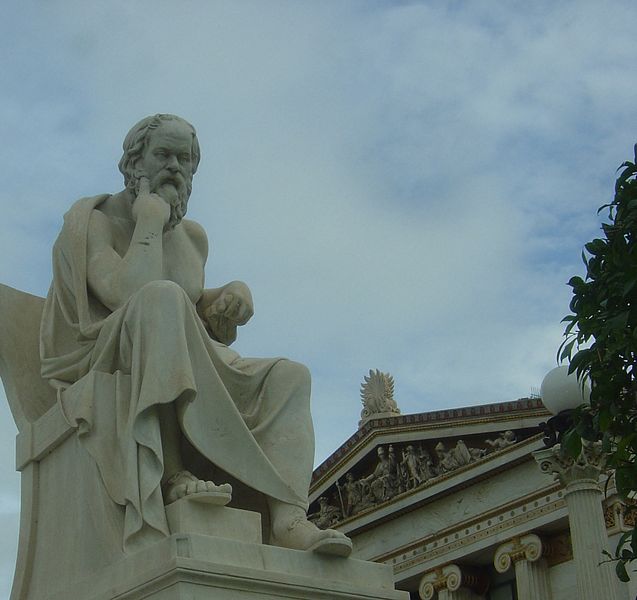
Photo credit: Socrates by Leonidas Drosis, at the Academy of Athens [Wikimedia Commons / Creative Commons Attribution-Share Alike 3.0 Unported license]

***
Summary: Brazilian Protestant apologist Lucas Banzoli’s “challenge” to Catholics re intercession of saints became a host of questions. But I systematically refuted all of ’em.
Previous Post

September 20, 2022
Refuting Lucas Banzoli's "Catholic Slanders of the Reformation"
Next Post

September 21, 2022 Bible on Praying Straight to God (vs. Lucas Banzoli)
Browse Our Archives
Select a Category & Last Things About Me Anti-Catholicism Atheism & Agnosticism Baptism and Sacramentalism Bible and Tradition Blessed Virgin Mary Books by Dave Armstrong C. S. Lewis Calvinism & General Protestantism Catholic Apologetics Catholic Apologists Catholic conversion Catholic converts Christmas Church (Ecclesiology) Church History Conversion and Converts Development of Doctrine Eastern Orthodoxy Ecumenism & Christian Unity Eucharist & Liturgy Fathers of the Church French Translations G. K. Chesterton Hell Hell & Satan Hell & Satan & Last Things Heresies & Comparative Religion Holistic Health Inquisition & Crusades & Scandals James White Jews & Judaism & Old Testament John Calvin John Henry Newman Liberal / Modernist Theology Life Issues Literary Resume Lutheranism Mariology Martin Luther Music Orthodoxy Papacy & Infallibility Personal Page Philosophy & Science Political & Ethical & Moral Issues Protestant Persecution & Intolerance Protestantism Purgatory Purgatory & Penance Romantic & Imaginative Theology Saints & Purgatory & Penance Salvation Salvation & Justification Satan & Last Things Sexuality and Gender Issues Spanish Translations Traditionalism vs. Radical Catholic Reactionaries Traducciones al español / tradução para português Trinitarianism & Christology Uncategorized Videos
Select a Month October 2026 September 2026 August 2026 July 2026 June 2026 May 2026 April 2026 March 2026 February 2026 January 2026 December 2025 November 2025 October 2025 September 2025 August 2025 July 2025 June 2025 May 2025 April 2025 March 2025 February 2025 January 2025 December 2024 November 2024 October 2024 September 2024 August 2024 July 2024 June 2024 May 2024 April 2024 March 2024 February 2024 January 2024 December 2023 November 2023 October 2023 September 2023 August 2023 July 2023 June 2023 May 2023 April 2023 March 2023 February 2023 January 2023 December 2022 November 2022 October 2022 September 2022 August 2022 July 2022 June 2022 May 2022 April 2022 March 2022 February 2022 January 2022 December 2021 November 2021 October 2021 September 2021 August 2021 July 2021 June 2021 May 2021 April 2021 March 2021 February 2021 January 2021 December 2020 November 2020 October 2020 September 2020 August 2020 July 2020 June 2020 May 2020 April 2020 March 2020 February 2020 January 2020 December 2019 November 2019 October 2019 September 2019 August 2019 July 2019 June 2019 May 2019 April 2019 March 2019 February 2019 January 2019 December 2018 November 2018 October 2018 September 2018 August 2018 July 2018 June 2018 May 2018 April 2018 March 2018 February 2018 January 2018 December 2017 November 2017 October 2017 September 2017 August 2017 July 2017 June 2017 May 2017 April 2017 March 2017 February 2017 January 2017 December 2016 November 2016 October 2016 September 2016 August 2016 July 2016 June 2016 May 2016 April 2016 March 2016 February 2016 January 2016 December 2015 November 2015 October 2015 September 2015 August 2015 July 2015 June 2015 May 2015 April 2015 March 2015 February 2015 January 2015 December 2014 November 2014 October 2014 September 2014 August 2014 July 2014 June 2014 April 2014 March 2014 February 2014 January 2014 December 2013 November 2013 October 2013 September 2013 August 2013 July 2013 June 2013 April 2013 March 2013 February 2013 January 2013 December 2012 November 2012 October 2012 September 2012 August 2012 July 2012 June 2012 May 2012 April 2012 March 2012 February 2012 January 2012 December 2011 November 2011 October 2011 September 2011 August 2011 July 2011 June 2011 April 2011 March 2011 February 2011 October 2010 September 2010 August 2010 July 2010 April 2010 March 2010 December 2009 October 2009 August 2009 July 2009 June 2009 May 2009 March 2009 February 2009 October 2008 September 2008 April 2008 March 2008 February 2008 January 2008 December 2007 November 2007 October 2007 May 2007 March 2007 February 2007 January 2007 November 2006 October 2006 September 2006 August 2006 July 2006 June 2006 May 2006 April 2006 March 2006 February 2006 October 2005 June 2005 April 2005 February 2005 July 2004 May 2004 April 2004
Follow Us!
TAKE THE
Religious Wisdom Quiz
What famous cathedral is in Paris, known for its flying buttresses and rose windows?
Select your answer to see how you score.
Notre Dame St. Paul's St. Peter's Canterbury
Books by This Author Books by Dave Armstrong
Related posts from Biblical Evidence for Catholicism

Three More Anti-Catholic Lies About Catholicism (#6-4)
Biblical Evidence for Catholicism

Bible & Catholicism on Mortal Sin (vs. John...
Biblical Evidence for Catholicism

Top Ten Anti-Catholic Lies (#10-7)
Biblical Evidence for Catholicism

Does Catholic Intercession of Saints Require Omniscience?
Biblical Evidence for Catholicism
TRENDING AT PATHEOS Catholic

In "Irreplaceable," our book on vocation and technology, Trevor Sutton and I...

I was strolling through the top floor of the brand new Parthenon...

What Does Gêvâh Mean For Kimberley Guifoyle &...
This week, a lot of the news is focused on Kimberly Guilfoyle....

INNER CIRCLE: Profound Mystery (Of Christ In All...
Ephesians 5:31-32 “For this reason, a man will leave his father and...

Do Not Rejoice When Your Enemy Falls: The...
Turning an execution into a public spectacle is a disturbing expression of...

'The Chosen' S6 Trailer: The Passion Gets Very...
Not many watching 'The Chosen' worry about spoilers, but just because they...
view all Catholic blogs
Ad-Free & Subscriber Log-In Subscription Support
- About Us
- 2026 Calendar
- Videos
- Podcasts
- Library of World Religions
- Faith In Media Tracker
- Advertise With Us
- Write for Us
- Privacy Policy
- Terms of Service
- Do Not Sell My Data
- Contact Us
- Radiant Digital
- Manage Newsletter Subscriptions
- Unsubscribe From Notifications
- Sitemap
Copyright 2008-2026, Patheos. All rights reserved.
Subscription Support Ad-Free & Subscriber Log-In
Follow Patheos