
BuddhistCatholicContemplativeEvangelicalGeneral ChristianHinduJewishLatter-day SaintMuslimNew VisionsProgressive Christian
Beliefs
- Buddhist
- Catholic
- Contemplative
- Evangelical
- General Christian
- Hindu
- Jewish
- Latter-day Saint
- More Voices
- Muslim
- New Visions
- Pagan
- Progressive Christian
Topics
- Religion News
- Food and Religion
- Sports and Religion
- Religious Art
- Religious Music and Entertainment
- Religious Events
- History and Religion
- Style and Religion
- Politics and Religion
- Women in Religion
- Recreation Outdoors and Religion
- Business Finance and Religion
- Careers Workplace and Religion
- Education and Religion
- Family Parenting and Religion
- Health Fitness and Religion
- Home and Religion
- Relationships and Religion
- Technology and Religion
- Travel and Religion
Columnists
- Buddhist Columnists
- Business Finance and Religion Columnists
- Careers Workplace and Religion Columnists
- Catholic Columnists
- Contemplative Columnists
- Education and Religion Columnists
- Evangelists Columnists
- Family Parenting and Religion Columnists
- General Christian Columnists
- Health Fitness and Religion Columnists
- Hindu Columnists
- History and Religion Columnists
- Home and Religion Columnists
- Jewish Columnists
- More Voices Columnists
- Latter Day Columnists
- Muslim Columnists
- New Visions Columnists
- Nonreligious Columnists
- Pagan Columnists
- Politics and Religion Columnists
- Progressive Columnists
- Recreation Outdoors and Religion Columnists
- Relationships and Religion Columnists
- Religion News Columnists
- Religious Art Columnists
- Religious Events Columnists
- Religious Music and Entertainment Columnists
- Sports and Religion Columnists
- Style and Religion Columnists
- Technology and Religion Columnists
- Travel and Religion Columnists
- Women in Religion Columnists
Resource Library
- 2026 Calendar
- Library of World Religions
- The 100 Most Holy Places on Earth
- Patheos Answers
- Podcasts
- Videos
- Faith Leaders Database
- Anglican Episcopalian
- Bahai
- Baptist
- Buddhism
- Christianity
- Confucianism
- Eastern Orthodoxy
- Hinduism
- Holiness and Pentecostal
- ISKCON
- Islam
- Judaism
- Lutheran
- Methodist
- The Church of Jesus Christ of Latter-day Saints
- New Age
- Paganism
- Presbytarian and Reformed
- Protestantism
- Religion Behind the Scenes
- Roman Catholic
- Scientology
- Shia Islam
- Sikhism
- Sufism
- Sunni Islam
- Taoism
- Zen
- See all religions
Research Tools
 Ad-Free & Subscriber Log-In Subscription Support
Ad-Free & Subscriber Log-In Subscription Support
Follow Patheos 

- Trending:
- Forgiveness
- |
- Marriage
- |
- Consciousness
- |
- Death Penalty
- |
- Election
- |
- Halloween

-
About
-
Catholic Apologetics
-
Church History
-
Great Apologists
-
Christian Worldview
-
Protestantism & Misc.
- Home
- Catholic
- History and Religion
- Turretin Lied About the Catholic View of Scripture
Turretin Lied About the Catholic View of Scripture
Last updated on: September 1, 2022 at 10:13 am by Dave Armstrong
Turretin Lied About the Catholic View of Scripture 2022-09-01T10:13:23-04:00 Dave Armstrong
Patheos Explore the world's faith through different perspectives on religion and spirituality! Patheos has the views of the prevalent religions and spiritualities of the world.
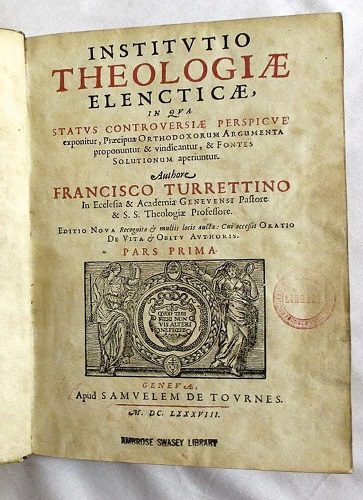
François Turretin (1623-1687) was a Genevan-Italian Reformed scholastic theologian, earnest defender of the Calvinistic orthodoxy represented by the Synod of Dort, and one of the authors of the Helvetic Consensus (1675). His Institutes of Elenctic Theology (three parts, Geneva, 1679–1685) used the scholastic method. It was a popular textbook; notably at Princeton Theological Seminary, until it was replaced by Charles Hodge‘s Systematic Theology in the late 19th century. Turretin also greatly influenced the Puritans.
*****
I am replying to a portion of a piece from Turretin simply entitled “The Scriptures”: from the website, A Puritan’s Mind. No further information was provided as to what work it is drawn from, but a search revealed that it is from Institutes of Elenctic Theology. His words will be in blue.
QUESTION 3: Was the Holy Scripture written because of the circumstances of the time (occasionaliter), and without divine command? Negative, against the Roman Catholics.
I. This question is debated between us and the Roman Catholics, who, in order to minimize the authority and perfection of Scripture, teach not only that it is less than necessary, and that the church could do without it, but even that it was written without any express divine commandment, and simply passed on to the church as a result of special circumstances. [my italics]
This is sheer nonsense. Here is what the Council of Trent taught about Holy Scripture, in its fourth session in 1546 (Decree Concerning the Canonical Scriptures):
. . . which (Gospel), before promised through the prophets in the holy Scriptures, our Lord Jesus Christ, the Son of God, first promulgated with His own mouth, and then commanded to be preached by His Apostles to every creature, as the fountain of all, both saving truth, and moral discipline; and seeing clearly that this truth and discipline are contained in the written books, and the unwritten traditions which, received by the Apostles from the mouth of Christ himself, or from the Apostles themselves, the Holy Ghost dictating, have come down even unto us, transmitted as it were from hand to hand; (the Synod) following the examples of the orthodox Fathers, receives and venerates with an equal affection of piety, and reverence, all the books both of the Old and of the New Testament–seeing that one God is the author of both –as also the said traditions, as well those appertaining to faith as to morals, as having been dictated, either by Christ’s own word of mouth, or by the Holy Ghost, and preserved in the Catholic Church by a continuous succession.
That was 77 years before Turretin was born, and so he was responsible for getting it right and not twisting and distorting what the Catholic Church had authoritatively proclaimed in an ecumenical council.
The First Vatican Council in 1870 reiterated this in even stronger terms, in its Dogmatic Constitution on the Catholic Faith, Chapter Two: On Revelation:
The complete books of the old and the new Testament with all their parts, as they are listed in the decree of the said council and as they are found in the old Latin Vulgate edition, are to be received as sacred and canonical.
These books the church holds to be sacred and canonical not because she subsequently approved them by her authority after they had been composed by unaided human skill, nor simply because they contain revelation without error, but because, being written under the inspiration of the holy Spirit, they have God as their author, and were as such committed to the church.
Likewise, the Second Vatican Council (in much greater depth and precise clarity) stated in its Dogmatic Constitution on Divine Revelation (Dei Verbum) on 18 November 1965:
In His goodness and wisdom God chose to reveal Himself and to make known to us the hidden purpose of His will (see Eph. 1:9) by which through Christ, the Word made flesh, man might in the Holy Spirit have access to the Father and come to share in the divine nature (see Eph. 2:18; 2 Peter 1:4). Through this revelation, therefore, the invisible God (see Col. 1;15, 1 Tim. 1:17) out of the abundance of His love speaks to men as friends (see Ex. 33:11; John 15:14-15) and lives among them (see Bar. 3:38), so that He may invite and take them into fellowship with Himself. This plan of revelation is realized by deeds and words having an inner unity: the deeds wrought by God in the history of salvation manifest and confirm the teaching and realities signified by the words, while the words proclaim the deeds and clarify the mystery contained in them. By this revelation then, the deepest truth about God and the salvation of man shines out for our sake in Christ, who is both the mediator and the fullness of all revelation. (Ch. 1, 2)
. . . Through the patriarchs, and after them through Moses and the prophets, He taught this people to acknowledge Himself the one living and true God, provident father and just judge, and to wait for the Savior promised by Him, and in this manner prepared the way for the Gospel down through the centuries. (Ch. 1, 3)
Through divine revelation, God chose to show forth and communicate Himself and the eternal decisions of His will regarding the salvation of men. That is to say, He chose to share with them those divine treasures which totally transcend the understanding of the human mind.
As a sacred synod has affirmed, God, the beginning and end of all things, can be known with certainty from created reality by the light of human reason (see Rom. 1:20); but teaches that it is through His revelation that those religious truths which are by their nature accessible to human reason can be known by all men with ease, with solid certitude and with no trace of error, even in this present state of the human race. (Ch. 1, 6)
In His gracious goodness, God has seen to it that what He had revealed for the salvation of all nations would abide perpetually in its full integrity and be handed on to all generations. Therefore Christ the Lord in whom the full revelation of the supreme God is brought to completion (see 2 Cor. 1:20; 3:13; 4:6), commissioned the Apostles to preach to all men that Gospel which is the source of all saving truth and moral teaching, (1) and to impart to them heavenly gifts. This Gospel had been promised in former times through the prophets, and Christ Himself had fulfilled it and promulgated it with His lips. This commission was faithfully fulfilled by the Apostles who, by their oral preaching, by example, and by observances handed on what they had received from the lips of Christ, from living with Him, and from what He did, or what they had learned through the prompting of the Holy Spirit. The commission was fulfilled, too, by those Apostles and apostolic men who under the inspiration of the same Holy Spirit committed the message of salvation to writing. (Ch. 2, 7)
. . . Sacred Scripture is the word of God inasmuch as it is consigned to writing under the inspiration of the divine Spirit, . . . (Ch. 2, 9)
Those divinely revealed realities which are contained and presented in Sacred Scripture have been committed to writing under the inspiration of the Holy Spirit. For holy mother Church, relying on the belief of the Apostles (see John 20:31; 2 Tim. 3:16; 2 Peter 1:19-20, 3:15-16), holds that the books of both the Old and New Testaments in their entirety, with all their parts, are sacred and canonical because written under the inspiration of the Holy Spirit, they have God as their author and have been handed on as such to the Church herself. In composing the sacred books, God chose men and while employed by Him they made use of their powers and abilities, so that with Him acting in them and through them, they, as true authors, consigned to writing everything and only those things which He wanted.
Therefore, since everything asserted by the inspired authors or sacred writers must be held to be asserted by the Holy Spirit, it follows that the books of Scripture must be acknowledged as teaching solidly, faithfully and without error that truth which God wanted put into sacred writings for the sake of salvation. Therefore “all Scripture is divinely inspired and has its use for teaching the truth and refuting error, for reformation of manners and discipline in right living, so that the man who belongs to God may be efficient and equipped for good work of every kind” (2 Tim. 3:16-17, Greek text). (Ch. 3, 11)
However, since God speaks in Sacred Scripture through men in human fashion, (6) the interpreter of Sacred Scripture, in order to see clearly what God wanted to communicate to us, should carefully investigate what meaning the sacred writers really intended, and what God wanted to manifest by means of their words. . . . (Ch. 3, 12)
. . . the words of God, expressed in human language, have been made like human discourse, . . . (Ch. 3, 13)
. . . The plan of salvation foretold by the sacred authors, recounted and explained by them, is found as the true word of God in the books of the Old Testament: these books, therefore, written under divine inspiration, remain permanently valuable. “For all that was written for our instruction, so that by steadfastness and the encouragement of the Scriptures we might have hope” (Rom. 15:4). (Ch. 4, 14)
God, the inspirer and author of both Testaments, . . . (Ch. 4, 16)
The word of God, which is the power of God for the salvation of all who believe (see Rom. 1:16), is set forth and shows its power in a most excellent way in the writings of the New Testament. . . . (Ch. 5, 17)
. . . The Church has always and everywhere held and continues to hold that the four Gospels are of apostolic origin. For what the Apostles preached in fulfillment of the commission of Christ, afterwards they themselves and apostolic men, under the inspiration of the divine Spirit, handed on to us in writing: the foundation of faith, namely, the fourfold Gospel, according to Matthew, Mark, Luke and John. (Ch. 5, 18)
Besides the four Gospels, the canon of the New Testament also contains the epistles of St. Paul and other apostolic writings, composed under the inspiration of the Holy Spirit, . . . (Ch. 5, 20)
The Church has always venerated the divine Scriptures just as she venerates the body of the Lord, . . . like the Christian religion itself, all the preaching of the Church must be nourished and regulated by Sacred Scripture.. . . (Ch. 6, 21)
Easy access to Sacred Scripture should be provided for all the Christian faithful. That is why the Church from the very beginning accepted as her own that very ancient Greek translation of the Old Testament which is called the septuagint; and she has always given a place of honor to other Eastern translations and Latin ones especially the Latin translation known as the vulgate. But since the word of God should be accessible at all times, the Church by her authority and with maternal concern sees to it that suitable and correct translations are made into different languages, especially from the original texts of the sacred books. And should the opportunity arise and the Church authorities approve, if these translations are produced in cooperation with the separated brethren as well, all Christians will be able to use them. (Ch. 6, 22)
Sacred theology rests on the written word of God, together with sacred tradition, as its primary and perpetual foundation. By scrutinizing in the light of faith all truth stored up in the mystery of Christ, theology is most powerfully strengthened and constantly rejuvenated by that word. For the Sacred Scriptures contain the word of God and since they are inspired, really are the word of God; and so the study of the sacred page is, as it were, the soul of sacred theology. . . . (Ch. 6, 24)
Therefore, all the clergy must hold fast to the Sacred Scriptures through diligent sacred reading and careful study, especially the priests of Christ and others, such as deacons and catechists who are legitimately active in the ministry of the word. This is to be done so that none of them will become “an empty preacher of the word of God outwardly, who is not a listener to it inwardly” since they must share the abundant wealth of the divine word with the faithful committed to them, especially in the sacred liturgy. The sacred synod also earnestly and especially urges all the Christian faithful, especially Religious, to learn by frequent reading of the divine Scriptures the “excellent knowledge of Jesus Christ” (Phil. 3:8). “For ignorance of the Scriptures is ignorance of Christ.” Therefore, they should gladly put themselves in touch with the sacred text itself, . . . (Ch. 6, 25)
In this way, therefore, through the reading and study of the sacred books “the word of God may spread rapidly and be glorified” (2 Thess. 3:1) and the treasure of revelation, entrusted to the Church, may more and more fill the hearts of men. Just as the life of the Church is strengthened through more frequent celebration of the Eucharistic mystery, similar we may hope for a new stimulus for the life of the Spirit from a growing reverence for the word of God, which “lasts forever” (Is. 40:8; see 1 Peter 1:23-25). (Ch. 6, 26)
There is no attempt whatsoever to “minimize the authority and perfection of Scripture” in any of these documents. It’s asserted over and over that the Scriptures came about by God’s will and that the Holy Spirit, working through willing holy apostles, produced the inspired revelation of the Bible. There is not the slightest hint that the Bible was “less than necessary” or that “the church could do without it.” or that it was “written without any express divine commandment.” All of this is lies and falsehood.
[They also] teach that Christ gave the apostles no commandment to write,
We know of no such command, if we go by what is recorded in Scripture, but that doesn’t rule out the possibility that He did so but that it wasn’t recorded in the Bible. Dei Verbum contradicts what Turretin claims that the Church teaches (though this was after his lifetime, so we take that into consideration):
Christ the Lord . . . commissioned the Apostles to preach to all men that Gospel which is the source of all saving truth and moral teaching, . . . The commission was fulfilled, too, by those Apostles and apostolic men who under the inspiration of the same Holy Spirit committed the message of salvation to writing. (Ch. 2, 7)
The Church has always and everywhere held and continues to hold that the four Gospels are of apostolic origin. For what the Apostles preached in fulfillment of the commission of Christ, afterwards they themselves and apostolic men, under the inspiration of the divine Spirit, handed on to us in writing: the foundation of faith, namely, the fourfold Gospel, according to Matthew, Mark, Luke and John. (Ch. 5, 18)
I would say that the above was already contained in less developed form in Trent’s declaration:
. . . which (Gospel), . . . our Lord Jesus Christ, the Son of God, first promulgated with His own mouth, and then commanded to be preached by His Apostles to every creature, as the fountain of all, both saving truth, and moral discipline; and seeing clearly that this truth and discipline are contained in the written books, and the unwritten traditions which, received by the Apostles from the mouth of Christ himself, or from the Apostles themselves, the Holy Ghost dictating, have come down even unto us, . . .
and that they had no intention of writing the gospel, except in a secondary sense and because of special circumstances, as Bellarmine argues (De Verbo Dei, book 4.3-4). [my italics]
I can’t examine what Bellarmine wrote (it may not be in English, and I couldn’t find it in a brief search), but I can say for sure that he is not the magisterium. He was allowed of course, to have his opinions, but that’s not magisterially binding on Catholics, like the decrees of ecumenical councils (ratified by popes) are.
The apostles certainly intended to write the Gospels. How could it be otherwise? Does Turretin think they were held at sword-point and forced to write down thoughts that the Catholic Church at Trent stated were “dictated, either by Christ’s own word of mouth, or by the Holy Ghost”? How silly can we get? Whatever Bellarmine wrote, I would virtually guarantee can’t possibly be the silliness that Turretin portrays it to be.
Since we have seen how our Protestant friend butchered and thoroughly distorted what Trent decreed, it’s somewhat likely that he did the same with Bellarmine. Bellarmine was, perhaps, merely noting that the apostles did not know at first that they were to write the Gospels, since they were extensively preaching, as the primary and most effective means (in a culture where not all could read) of spreading the gospel message at first; and that that was what we see recorded in Scripture:
Matthew 10:7 [RSV]: preach as you go . . .
Mark 3:14 And he appointed twelve, to be with him, and to be sent out to preach
Mark 6:12 So they went out and preached that men should repent.
Mark 13:10 And the gospel must first be preached to all nations.
Mark 16:15 . . . Go into all the world and preach the gospel to the whole creation.
Mark 16:20 they went forth and preached everywhere . . .
Luke 9:2 and he sent them out to preach the kingdom of God and to heal.
Luke 9:6 And they departed and went through the villages, preaching the gospel and healing everywhere.
Luke 24:47 and that repentance and forgiveness of sins should be preached in his name to all nations, beginning from Jerusalem.
Acts 5:42 And every day in the temple and at home they did not cease teaching and preaching Jesus as the Christ.
[cf. Acts 6:2; 8:4, 12, 25, 40; 9:27, 29; see many more instances in Acts and the books after that in the New Testament (link one / link two) ]
***
Practical Matters: Perhaps some of my 4,000+ free online articles (the most comprehensive “one-stop” Catholic apologetics site) or fifty books have helped you (by God’s grace) to decide to become Catholic or to return to the Church, or better understand some doctrines and why we believe them.
Or you may believe my work is worthy to support for the purpose of apologetics and evangelism in general. If so, please seriously consider a much-needed financial contribution. I’m always in need of more funds: especially monthly support. “The laborer is worthy of his wages” (1 Tim 5:18, NKJV). 1 December 2021 was my 20th anniversary as a full-time Catholic apologist, and February 2022 marked the 25th anniversary of my blog.
PayPal donations are the easiest: just send to my email address: [email protected]. You’ll see the term “Catholic Used Book Service”, which is my old side-business. To learn about the different methods of contributing, including 100% tax deduction, etc., see my page: About Catholic Apologist Dave Armstrong / Donation Information. Thanks a million from the bottom of my heart!
***
Photo credit: from the Brill page, “Francis Turretin (1623–87) and the Reformed Tradition”: chapter 6, publication history.
***
Summary: The 17th century Reformed / Calvinist theologian François Turretin engaged in wholesale lying & distortion with regard to the dogmatic Catholic view of Holy Scripture.
Institutes of Elenctic Theology
Previous Post
August 24, 2022
Turretin, 1 Timothy 3:15, Infallibility, & Eisegesis
Next Post
August 26, 2022 Pope Francis: Most Theological Errors? (Ed Feser)
Browse Our Archives
Select a Category & Last Things About Me Anti-Catholicism Atheism & Agnosticism Baptism and Sacramentalism Bible and Tradition Blessed Virgin Mary Books by Dave Armstrong C. S. Lewis Calvinism & General Protestantism Catholic Apologetics Catholic Apologists Catholic conversion Catholic converts Christmas Church (Ecclesiology) Church History Conversion and Converts Development of Doctrine Eastern Orthodoxy Ecumenism & Christian Unity Eucharist & Liturgy Fathers of the Church French Translations G. K. Chesterton Hell Hell & Satan Hell & Satan & Last Things Heresies & Comparative Religion Holistic Health Inquisition & Crusades & Scandals James White Jews & Judaism & Old Testament John Calvin John Henry Newman Liberal / Modernist Theology Life Issues Literary Resume Lutheranism Mariology Martin Luther Music Orthodoxy Papacy & Infallibility Personal Page Philosophy & Science Political & Ethical & Moral Issues Protestant Persecution & Intolerance Protestantism Purgatory Purgatory & Penance Romantic & Imaginative Theology Saints & Purgatory & Penance Salvation Salvation & Justification Satan & Last Things Sexuality and Gender Issues Spanish Translations Traditionalism vs. Radical Catholic Reactionaries Traducciones al español / tradução para português Trinitarianism & Christology Uncategorized Videos
Select a Month October 2026 September 2026 August 2026 July 2026 June 2026 May 2026 April 2026 March 2026 February 2026 January 2026 December 2025 November 2025 October 2025 September 2025 August 2025 July 2025 June 2025 May 2025 April 2025 March 2025 February 2025 January 2025 December 2024 November 2024 October 2024 September 2024 August 2024 July 2024 June 2024 May 2024 April 2024 March 2024 February 2024 January 2024 December 2023 November 2023 October 2023 September 2023 August 2023 July 2023 June 2023 May 2023 April 2023 March 2023 February 2023 January 2023 December 2022 November 2022 October 2022 September 2022 August 2022 July 2022 June 2022 May 2022 April 2022 March 2022 February 2022 January 2022 December 2021 November 2021 October 2021 September 2021 August 2021 July 2021 June 2021 May 2021 April 2021 March 2021 February 2021 January 2021 December 2020 November 2020 October 2020 September 2020 August 2020 July 2020 June 2020 May 2020 April 2020 March 2020 February 2020 January 2020 December 2019 November 2019 October 2019 September 2019 August 2019 July 2019 June 2019 May 2019 April 2019 March 2019 February 2019 January 2019 December 2018 November 2018 October 2018 September 2018 August 2018 July 2018 June 2018 May 2018 April 2018 March 2018 February 2018 January 2018 December 2017 November 2017 October 2017 September 2017 August 2017 July 2017 June 2017 May 2017 April 2017 March 2017 February 2017 January 2017 December 2016 November 2016 October 2016 September 2016 August 2016 July 2016 June 2016 May 2016 April 2016 March 2016 February 2016 January 2016 December 2015 November 2015 October 2015 September 2015 August 2015 July 2015 June 2015 May 2015 April 2015 March 2015 February 2015 January 2015 December 2014 November 2014 October 2014 September 2014 August 2014 July 2014 June 2014 April 2014 March 2014 February 2014 January 2014 December 2013 November 2013 October 2013 September 2013 August 2013 July 2013 June 2013 April 2013 March 2013 February 2013 January 2013 December 2012 November 2012 October 2012 September 2012 August 2012 July 2012 June 2012 May 2012 April 2012 March 2012 February 2012 January 2012 December 2011 November 2011 October 2011 September 2011 August 2011 July 2011 June 2011 April 2011 March 2011 February 2011 October 2010 September 2010 August 2010 July 2010 April 2010 March 2010 December 2009 October 2009 August 2009 July 2009 June 2009 May 2009 March 2009 February 2009 October 2008 September 2008 April 2008 March 2008 February 2008 January 2008 December 2007 November 2007 October 2007 May 2007 March 2007 February 2007 January 2007 November 2006 October 2006 September 2006 August 2006 July 2006 June 2006 May 2006 April 2006 March 2006 February 2006 October 2005 June 2005 April 2005 February 2005 July 2004 May 2004 April 2004
Follow Us!
TAKE THE
Religious Wisdom Quiz
What does Hebrews say is sharper than any double-edged sword?
Select your answer to see how you score.
Faith A righteous man's prayer The word of God The tongue
Books by This Author Books by Dave Armstrong
Related posts from Biblical Evidence for Catholicism

A Few "Worst" & "Best" Arguments vs. Protestantism
Biblical Evidence for Catholicism

Jerusalem Council vs. James White & Sola Scriptura
Biblical Evidence for Catholicism

Biblical Perspicuity: Absurd Anti-Catholic "Defense"
Biblical Evidence for Catholicism

50 Biblical Disproofs of "Evident Clearness" of the...
Biblical Evidence for Catholicism
TRENDING AT PATHEOS Catholic

Janie Learns the Way of the Cross: A...
Teaching children about Jesus' Passion can be challenging. Many parents and educators...

Looking For Good Catholic Writing - October 2026
He alone extends the heavens, and he walks upon the waves of...

In "Irreplaceable," our book on vocation and technology, Trevor Sutton and I...

I was strolling through the top floor of the brand new Parthenon...

What Does Gêvâh Mean For Kimberley Guifoyle &...
This week, a lot of the news is focused on Kimberly Guilfoyle....

INNER CIRCLE: Profound Mystery (Of Christ In All...
Ephesians 5:31-32 “For this reason, a man will leave his father and...
view all Catholic blogs
Ad-Free & Subscriber Log-In Subscription Support
- About Us
- 2026 Calendar
- Videos
- Podcasts
- Library of World Religions
- Faith In Media Tracker
- Advertise With Us
- Write for Us
- Privacy Policy
- Terms of Service
- Do Not Sell My Data
- Contact Us
- Radiant Digital
- Manage Newsletter Subscriptions
- Unsubscribe From Notifications
- Sitemap
Copyright 2008-2026, Patheos. All rights reserved.
Subscription Support Ad-Free & Subscriber Log-In
Follow Patheos