
BuddhistCatholicContemplativeEvangelicalGeneral ChristianHinduJewishLatter-day SaintMuslimNew VisionsProgressive Christian
Beliefs
- Buddhist
- Catholic
- Contemplative
- Evangelical
- General Christian
- Hindu
- Jewish
- Latter-day Saint
- More Voices
- Muslim
- New Visions
- Pagan
- Progressive Christian
Topics
- Religion News
- Food and Religion
- Sports and Religion
- Religious Art
- Religious Music and Entertainment
- Religious Events
- History and Religion
- Style and Religion
- Politics and Religion
- Women in Religion
- Recreation Outdoors and Religion
- Business Finance and Religion
- Careers Workplace and Religion
- Education and Religion
- Family Parenting and Religion
- Health Fitness and Religion
- Home and Religion
- Relationships and Religion
- Technology and Religion
- Travel and Religion
Columnists
- Buddhist Columnists
- Business Finance and Religion Columnists
- Careers Workplace and Religion Columnists
- Catholic Columnists
- Contemplative Columnists
- Education and Religion Columnists
- Evangelists Columnists
- Family Parenting and Religion Columnists
- General Christian Columnists
- Health Fitness and Religion Columnists
- Hindu Columnists
- History and Religion Columnists
- Home and Religion Columnists
- Jewish Columnists
- More Voices Columnists
- Latter Day Columnists
- Muslim Columnists
- New Visions Columnists
- Nonreligious Columnists
- Pagan Columnists
- Politics and Religion Columnists
- Progressive Columnists
- Recreation Outdoors and Religion Columnists
- Relationships and Religion Columnists
- Religion News Columnists
- Religious Art Columnists
- Religious Events Columnists
- Religious Music and Entertainment Columnists
- Sports and Religion Columnists
- Style and Religion Columnists
- Technology and Religion Columnists
- Travel and Religion Columnists
- Women in Religion Columnists
Resource Library
- 2026 Calendar
- Library of World Religions
- The 100 Most Holy Places on Earth
- Patheos Answers
- Podcasts
- Videos
- Faith Leaders Database
- Anglican Episcopalian
- Bahai
- Baptist
- Buddhism
- Christianity
- Confucianism
- Eastern Orthodoxy
- Hinduism
- Holiness and Pentecostal
- ISKCON
- Islam
- Judaism
- Lutheran
- Methodist
- The Church of Jesus Christ of Latter-day Saints
- New Age
- Paganism
- Presbytarian and Reformed
- Protestantism
- Religion Behind the Scenes
- Roman Catholic
- Scientology
- Shia Islam
- Sikhism
- Sufism
- Sunni Islam
- Taoism
- Zen
- See all religions
Research Tools
 Ad-Free & Subscriber Log-In Subscription Support
Ad-Free & Subscriber Log-In Subscription Support
Follow Patheos 

- Trending:
- Forgiveness
- |
- Marriage
- |
- Consciousness
- |
- Death Penalty
- |
- Election
- |
- Halloween

-
About
-
Catholic Apologetics
-
Church History
-
Great Apologists
-
Christian Worldview
-
Protestantism & Misc.
- Home
- Catholic
- History and Religion
- Semi-Pelagianism & Catholicism (vs. Francisco Tourinho)
Semi-Pelagianism & Catholicism (vs. Francisco Tourinho)
Last updated on: June 6, 2026 at 12:46 am by Dave Armstrong
Semi-Pelagianism & Catholicism (vs. Francisco Tourinho) 2026-06-06T00:46:58-04:00 Dave Armstrong
Patheos Explore the world's faith through different perspectives on religion and spirituality! Patheos has the views of the prevalent religions and spiritualities of the world.
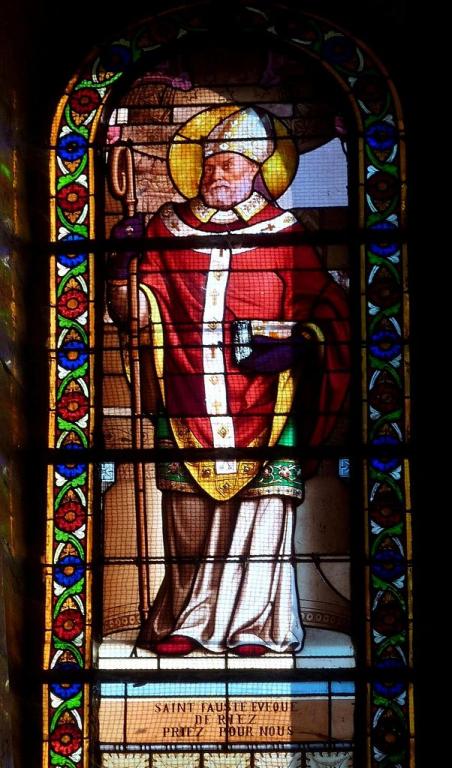
This is an exchange that occurred on the public Facebook page of Brazilian Calvinist apologist Francisco Tourinho. His words will be in blue. I utilized the Facebook translation to render his Portugese into English.
*****
There is no middle ground between Limited Expedition [limited atonement?] and Semi-Pelagianism.
The definition I will use will be that of Fr. Garrigou-Lagrange and Fr. Jose Maria Iraburu, who teach that it is Semi-Pelagianism to say that God wants to save all people equally.
Pelagius believed in grace, but that we are born with it: called grace of nature. Thus, the natural abilities of man were seen by Pelagius as divine grace. Pelagius’ problem was the nature of grace: not whether it was with or without grace. In Semi-Pelagianism: man needs to take the first step, but the Semi-Pelagianism of St. Faustus of Riez has also been condemned. He taught that God sends equal grace to all men, and that those who accept it would be saved. His thesis was condemned because if a free measure is poured out equally upon all men, and some are saved and others condemned, then the difference was in man; therefore, there are men more affected by original sin than others, and how not to be so incapable is Semi-Pelagianism. Likewise, it has been defined that equal grace upon all is Semi-Pelagianism.
*
Fr. Jose Maria Iraburu states:
St. Faustus of Riez is the most well-known exponent of Semi-Pelagianism (Free Dei: PL 58, 783-836). [He held that] God equally offers his saving grace to all men, and that those who receive it generously are the ones who are saved. Therefore, these are not really chosen of God (Rom 8:29), but rather, they are the ones who accept the grace,, thus deserving salvation. Predestination is, therefore, nothing but the divine prediction of those who will freely receive grace. And it is the human will that makes grace effective, and which determines the degree of ultimate holiness, according to the greatest or least degree of his generous personal effort: Regnorum cælorum vim patitur (“it is the effort that conquers the heavenly Kingdom”: Lk 16:16).
Fr. Garrigou-Lagrange never claimed that Arminianism is Semi-Pelagianism.
*
Here is the correct definition:
[Semi-Pelagianism], while not denying the necessity of Grace for salvation, maintained that the first steps towards the Christian life were ordinarily taken by the human will and that Grace supervened only later. (Oxford Dictionary of the Christian Church, edited by F. L. Cross, Oxford University Press, revised edition, 1983, 1258)
The Encyclopedia Britannica (1985 edition, vol. 10, 625) states:
The result of Semi-Pelagianism, however, was the denial of the necessity of God’s unmerited, supernatural, gracious empowering of man’s will for saving action . . . From [529] . . . Semi-Pelagianism was recognized as a heresy in the Roman Catholic Church.
Indeed, the Catholic Church – despite constant bogus and astonishingly uninformed claims by Calvinists – has vigorously opposed Pelagianism in all forms from the time of St. Augustine. The Second Council of Orange (529 A.D.), accepted as dogma by the Catholic Church, dogmatically taught in its Canon VII:
If anyone asserts that we can, by our natural powers, think as we ought, or choose any good pertaining to the salvation of eternal life . . . without the illumination and inspiration of the Holy Spirit . . . he is misled by a heretical spirit . . . [goes on to cite Jn 15:5, 2 Cor 3:5]
Likewise, the ecumenical Council of Trent (1545-63): Chapter V, Decree on Justification states: “Man . . . is not able, by his own free-will, without the grace of God, to move himself unto justice in His sight.” And Canon I on Justification agrees: “If anyone saith that man may be justified before God by his own works, whether done through the teaching of human nature or that of the law, without the grace of God through Jesus Christ; let him be anathema.”
*
John Wesley and the Methodists have long been a target of Calvinist suspicion and disdain. Wesley’s Twenty-Five Articles of Religion (1784), considered normative for Methodists, states in its Article VIII (“Of Free Will” – virtually the same as Article X of the Anglican Thirty-Nine Articles):
The condition of man after the fall of Adam is such that he can not turn and prepare himself, by his own natural strength and works, to faith and calling upon God; wherefore we have no power to do good works, pleasant and acceptable to God, without the grace of God by Christ preventing us, that we may have a good will, and working with us, when we have that good will. (in Creeds of the Churches, edited by John H. Leith, Garden City: New York: Doubleday Anchor, 1963, 356)
Likewise, in the Lutheran Formula of Concord (1580), the distinction between Melanchthonian Arminianism and semi-Pelagianism could not have been more clearly stated (emphasis added):
We also reject the error of the Semi-Pelagians who teach that man by virtue of his own powers could make a beginning of his conversion but could not complete it without the grace of the Holy Spirit. (Part I: Epitome, Article II: Free Will, Antitheses: Contrary False Doctrine, section 3; cf. Solid Declaration, Article II: Free Will, error #2: “coarse Pelagians”)
For more on this, see: Semi-Pelagianism and Arminianism: An Introduction [1997 and 12-4-02]
*
Faustus of Riez‘ heresy was condemned by the 2nd Council of Orange (529 AD), which soteriological view was followed by Trent.
*
Arminianism is not Semi-Pelagianism, nor is Catholic soteriology. This is the misconception that Calvinists labor under because of their extreme “either/or” outlook. Arminians (which I used to be) and Catholics alike condemn Semi-Pelagianism.
*
Your argument is with the priests cited above. And, indeed, I cannot speak of all of Roman Catholicism, but Thomism, in most of its versions, is not Semi-Pelagian. Semi-Pelagianism is, however, tolerated in the Roman Church.
*
It is not “tolerated” at all. It was condemned at Trent, following 2nd Orange. The resolutions of 2nd Orange were confirmed by Pope Boniface II (d. 532) and are included in Catholic dogmas, codified by Denzinger’s Compendium of Creeds (371 ff., 398 ff.; cf. 797, 1525 ff., 1553). My friend, systematic theologian Robert Fastiggi, helped edit and translate the latest 43rd version in English (2012). We base our opposition on Bible passages like Eph 2:8-10; Jn 6:65; Heb 12:2; Phil 1:6,29; 1 Cor 4:7.
*
The error of Semi-Pelagianism is discussed at great length in Ludwig Ott’s Fundamentals of Catholic Dogma (revised version of 2018 from Baronius Press, again translated by Robert Fastiggi, pp. 240-241, 247-250, 254-256, 260-261).
*
Molinism, as well as Thomism, are what is “tolerated” in the Church. They are both allowed as explanations of predestination, but neither is enshrined as dogma. Both are opposed to Semi-Pelagianism (I am contending as a Molinist myself, but one who also edited an abridged Summa Theologica and who used to have a Thomas Aquinas web page in the early days of my website / blog).
*
Some Thomists get it wrong and wrongly classify Congruist Molinists like myself as Semi-Pelagian. I am not obliged to argue with what any given Catholic scholar says. I’m bound to the official teachings of the Catholic Church. Garrigou-Lagrange (even St. Thomas Aquinas) and Thomists are not the equivalent of that, and can be wrong. They’re not the magisterium.
*
The Calvinist site Monergism.com states, in agreement with my definitions above:
The Council of Orange condemned the Semi-Pelagian doctrine that fallen creatures, although sinful, have an island of righteousness which made them morally competent enough to contribute toward their salvation by taking hold of the offer of the grace of God through an act of their unregenerate natural will. Orange upheld Augustine’s view that the will is evil by corruption of nature and becomes good only by a correction of grace.
For more on that, see: 2nd Council of Orange: Sola Gratia vs. Total Depravity [1-5-09].
*
Two points: the greatest of the Semi-Pelagians is a saint canonized by the Church of Rome. Secondly, to say that Molinism is not Semi-Pelagianism is the point of view of the Molinists, so there is no point in taking sides of one and not taking the other when everything is determined by Rome.
*
As explained, Molinism is allowable, not-yet-defined theology, as is Thomism. I think you refer to St. Vincent of Lérins? He was wrong in this regard, just as St. Augustine was wrong in some of his extreme, Calvinist-like views, and St. Thomas Aquinas was wrong regarding the Immaculate Conception of Mary (but primarily due to erroneous primitive 13th-century biology). No Church father individually is infallible or the magisterium. Nor do we make any of them “super-popes” like you guys do with Luther and Calvin (especially the latter with Calvinists: who take his every word virtually as Gospel Truth).
*
I also edited a book of St. Augustine quotations, and used to have a web page devoted to him, too. He got some things wrong. We would fully expect this of a 4th-5th century figure, early on in Christian development. But he was an amazing thinker and theologian. I love him and St. Thomas, but St. John Henry Cardinal Newman (my theological hero) even more.
*
The early canonizations were very different from today. There was no fastidious process. It was mostly due to spontaneous public acclamation. St. Vincent may be forgiven because he came early in Church history, when a lot of fine points of theology were still being worked out and worked-through. He was like Tertullian and Origen: brilliant theologians who wished to be faithful, orthodox Churchmen, but who were wrong in some respects (Semi-Montanism or tendencies to same, and universalism).
*
St. Vincent’s views were condemned as heresy at 2nd Orange in 529, about 84 years after he died. So, since the doctrines weren’t defined at the highest level in his lifetime, he was permitted to hold them and be in good relationship with the Church.
*
But he may not have been strictly a semi-Pelagian. His Wikipedia article states:
The currently accepted idea that Vincent was a semipelagian is attributed to a 17th-century Protestant theologian, Gerardus Vossius, and developed in the 17th century by Cardinal Henry Noris. Evidence of Vincent’s semipelagianism, according to Reginald Moxon, is Vincent’s, “great vehemence against” the doctrines of Augustine of Hippo . . .
Vincent was suspected of Semipelagianism but whether he actually held that doctrine is not clear as it is not found in the Commonitorium. But it is probable that his sympathies were with those who held it. Considering that the monks of the Lérins Islands – like the general body of clergy of Southern Gaul – were Semipelagians, it is not surprising that Vincent was suspected of Semipelagianism. It is also possible that Vincent held to a position closer to the Eastern Orthodox position of today, which they claim to have been virtually universal until the time of Augustine, and which may have been interpreted as Semipelagian by Augustine’s followers.
Vincent upheld tradition and seemed to have objected to much of Augustine’s work as “new” theology. He shared Cassian’s reservations about Augustine’s views on the role of grace. In the Commonitorium he listed theologians and teachers who, in his view, had made significant contributions to the defense and spreading of the Gospel; he omitted Augustine from that list. Some commentators have viewed Cassian and Vincent as “Semiaugustinian” rather than Semipelagian.
I was talking about St. Faustus of Riez.
*
It’s the same exact dynamic: he thought and taught in the era before Semi-Pelagianism was condemned (some 34-39 years after he died), and he seemed to have opposed even the predestination of the saved, which is not the Catholic dogmatic position (we fully affirm that). So this has no bearing on the overall debate today. He was simply an early figure who got some things wrong, as virtually all of them did in some way (as we would expect).
*
When was Faustus of Riez canonized?
*
I don’t know. I found this:
Faustus was of unimpeachably good character; of an earnest, active, ascetic life; orthodox on the central doctrine of the Christian faith and suffering exile for it as a confessor; but stigmatized as a semi-Pelagian, and consequently by many authorities, both ancient and modern, denied the title of saint. But his own flock at Riez, deeply moved by his life and preaching, and warmly attached to his memory, insisted on giving him a local canonization as Sanctus Faustus Reiensis; they erected a basilica, dedicated in his name, and kept Jan. 18 as his festival. (Encyclopedic Dictionary of Bible and Theology, “Faustus (11), sometimes called the Breton”)
Fr. Alban Butler, a Catholic expert on the saints, in his multi-volume book from 1866, does not refer to Faustus as a saint, while using the terminology of “St. Maximus” in the same context (though a later version does refer to him as a saint). Cardinal Wiseman does the same thing in 1889: not referring to him as a saint. One Catholic site confirms that his canonization was “Pre-Congregation”: i.e., before the strenuous process of canonization that we know today.
*
Wasn’t he canonized by the Pope?
*
As noted, he was canonized (probably by local acclamation only) before the current protocol of canonization began. On the other hand, it appears that the Church has not expressly stated that he should not be called a saint (like Origen and Tertullian). So he seems to be sort of “in-between”.
*
In any event, saints don’t have to have perfect theology, according to Catholic orthodoxy. Otherwise, that would take out Augustine and Aquinas. So your attempt to establish Catholic inconsistency and espousal of semi-Pelagianism doesn’t fly. The Church has spoken on it, and is firmly against it as heresy.
*
Calvinists also revere and hold up as great models folks they don’t totally agree with.
*
John Calvin believed in the perpetual virginity of Mary. Most Calvinists today don’t.
*
John Calvin thought contraception was a form of murder. Most Calvinists today practice it as fine and dandy and morally neutral.
*
John Calvin advocated the execution of Michael Servetus, a non-trinitarian heretic. Virtually all Calvinists today oppose such things.
*
John Calvin was (I contend) a supralapsarian. Most Calvinists today are infralapsarians.
*
John Calvin opposed the use of crosses in churches (Inst. I, 11, 7). Most Calvinists today would oppose such extreme iconoclasm.
*
That’s five things where he was wrong, according to the vast majority of Calvinists today, yet he is still The Master for you guys. So a Semi-Pelagian bishop in the 5th century (before 2nd Orange condemned it and a pope soon after made the condemnation part of Catholic dogma) poses no problem whatsoever for our system. But E for effort!
*
It depends. If the canonization of Saint Faustus was after the condemnation of Semi-Pelagianism, then it’s a problem. But it is important to bear in mind that I never, ever said that the Church of Rome was Semi-Pelagian. What I said is that it tolerates Semi-Pelagianism, which is quite different.
*
As to the points you made about Calvin, I only disagree that he was a supralapsarian, but the point is that our creeds have never condemned supralapsarianism, nor perpetual virginity, nor the power of the state to execute people (in the USA, the state still has that right).
*
It’s not a problem, as explained, because sainthood is not the same as 100% perfect orthodoxy according to the Church’s and Bible’s and apostolic tradition’s standard. Calvin’s your Guy and you disagree with him in at least five major ways.
*
And again, I say that we do not “tolerate” Semi-Pelagianism, as you claim. We condemn it in no uncertain terms. It couldn’t be any clearer than it is, so I wonder where you get your notion from? What Catholic magisterial document “tolerates” Semi-Pelagianism? Best wishes locating that! I’ll even look it up in Denzinger for you if you think you found one. We tolerate it (in terms of the magisterium and our stated dogmas) no more than Calvinists do (which is not at all). Calvinists and Catholics are in total agreement on this! Seems like that should be a cause for rejoicing.
*
The proposition, “Internal supernatural grace is absolutely necessary for the beginning of faith and of salvation” is De fide dogma, which is the highest level (revised Ott, p. 247; Denzinger 375 from 2nd Orange). Therefore, any opinion to the contrary is precluded; ergo (logically) there is no such thing as the Catholic Church officially or magisterially (authoritatively) “tolerating” semi-Pelagianism. And no one can show that this is the case. It’s a bald claim with no documentation. And that’s not impressive, to put it in the most mild terms.
*
Thanks for the exchange! I haven’t “done” the semi-Pelagian discussion for some years now. But I’ll wait for you to produce an official source for us supposedly tolerating this rank heresy.
*
The same Tradition that teaches that Christ died for all, does not teach that Christ effectively died for all. The standard doctrine of the Christian Church all along is that Christ dies sufficiently for all, but effectively for the elect. This is the Calvinist position too.
*
Why, then, did the Church grant a cardinal’s hat to Albert Pighius [link], who was openly Semi-Pelagian at the time of Reformation? Second point: If the Church of Rome condemns Semi-Pelagianism, then it is certain that it condemns that God wants to save all men equally, right?
*
I don’t know anything about Pighius in particular. But I have read in various places (I think, including Louis Bouyer and Karl Adam), that some important people the Catholic Church had a fuzzy doctrine of soteriology in the 15th-16th centuries, which is partially why the Protestants stressed justification so highly. These men were sadly ignorant of the soteriological teachings of their own Church, which had been (dogmatically) in place since the 6th century, and highly stressed by St. Thomas Aquinas in the 13th century.
*
It still doesn’t follow from that the Church didn’t condemn semi-Pelagianism. It did, which is why you can’t show me an official doctrine that states otherwise. Your second point deals with two different topics. Ludwig Ott wrote:
[T]he Scholastics distinguish between sufficientia (adequacy) and efficacia (efficacy, success) of the atonement, and teach that Christ offered atonement for all mankind, secundum sufficientiam, but not secundum efficaciam. In other words, in acto primo Christ’s atonement is universal; in actu secundo, it is particular. Cf. Summa contra Gentiles IV 55.” (Ibid., pp. 205-206)
Isn’t that the same as what you stated two comments above? If so, we are in essential agreement again. Ott also says it is De fide doctrine that “Christ did not die for the predestined only.” (p. 205) [Denzinger 2005, 2304] On the same page Ott gives the scriptural support: 1 Jn 2:2; John 3:16 ff.; 11:51 ff.; 2 Cor 5:15; 1 Tim 2:6; Rom 5:18.
***
Francisco then directed me to an article in Spanish by José María Iraburu, and opined: “The tolerance of Semi-Pelagianism within the Rome Church is the target of criticism within the Rome Church itself.” I replied:
I don’t see that this proves at all that “the Catholic Church tolerates Semi-Pelagianism.” I think two things are going on, or may be going on in this piece:
1) I’m not sure, but he seems to be condemning Molinism per se, as Semi-Pelagian. If so, this is the old saw that is repeated over and over by some misguided (and sometimes downright uncharitable and arrogant) Thomists. I’ve encountered this thinking myself in my extensive debates on the predestination issue. It’s false. And we know that it is because the Church formally allowed Molinism along with Thomism (seeing that the issues therein are some of the deepest and most mysterious in Christianity).
If Molinism is allowed (as it is) then it couldn’t possibly be Semi-Pelagian because the Church has already made it crystal clear that she condemns that. It would be blatantly and absurdly self-contradictory. If Molinism were in fact Semi-Pelagian, it would never have been allowed to be adhered to alongside good ol’ Thomism.
If in fact he is claiming this, no Catholic is required to heed or follow his opinion because it’s expressly contrary to the magisterium. Catholics are bound to follow official teachings of the Church, not what any one person says (save the pope, and his authority is limited by several criteria). The Church didn’t say, “we allow Semi-Pelagian views to be held.” Rather, it condemned that belief and said, “both Thomist and Molinist views on predestination may be held by faithful Catholics. Neither one is Semi-Pelagian.”
2) Secondly, he speaks of individuals in the Church (most unnamed and anonymous) who hold to Semi-Pelagian views. But one can always find individuals who don’t understand this or that in theology. Calvinism constantly struggles with 3-point and 4-point Calvinists within its midst. I would agree with the Calvinists that those having such views are inconsistent with “orthodox” 5-point, “TULIP” Calvinism, which is internally logically consistent (though containing several false premises, as I would contend).
The fact that so many 3- and 4-point Calvinists move in consistent Calvinist circles doesn’t prove to me that standard orthodox Calvinism “tolerates” such dissent. It clearly does not (going back particularly to the Synod of Dort).
The only sensible, objective way we can determine what is “tolerated” or “permissible” in Calvinism or Catholicism is to consult the official books: the dogmas, creeds, confessions, denominational membership requirements, catechisms, etc. Those show us what each body holds to. I’ve already shown from Denzinger and Ott what Catholics believe.
If indeed either side “tolerates” Semi-Pelagianism then that will show up in the “books.” You have made the claim about us: “Semi-Pelagianism is, however, tolerated in the Roman Church.” Yet you haven’t shown me a single citation from a Catholic magisterial source that does this. And you don’t because you have already conceded that point, in asserting: “I never, ever said that the Church of Rome was Semi-Pelagian. What I said is that it tolerates Semi-Pelagianism.”
I’m saying that in the end, claiming “toleration” is hopelessly subjective and virtually meaningless because the discussion inevitably goes back to the objectivity of official teachings. All you’re left with is the notion that “there are so many individual Catholics who have deficient notions of soteriology and who hold ignorantly to Semi-Pelagianism.” I’m sure there are. There are lots of liberal dissidents in our ranks. They’re the scourge of the earth. But they don’t represent Church teaching.
Thus the claim amounts to in the final analysis to saying: “there are so-called ‘Catholics’ walking around who hold beliefs contrary to various Catholic dogmas.” Absolutely; there certainly are. But all that tells us is that there are ignorant and nominal Catholics, who don’t accept all of Church teaching.
This is true of all Christian groups, so it’s not compelling in any way or any sort of proof of what you are contending. If we broaden the thought, it can be stated as: “there are dissidents / theological liberals / heterodox in all groups according to any given Christian group’s definition of what is orthodox and required belief.”
That tells me nothing about any of those groups’ official doctrines. You could, I suppose, make an argument about the need to discipline or censure these “dissidents” in both Catholicism and Protestantism. That would be a different issue, and one where we would likely agree quite a bit. I favor a “strong hand” in these matters: at least with professors and priests, and (in your case) professors and pastors. All who no longer hold to the required belief system should get honest and quit, or be fired / removed from ministry, defrocked or what-not.
In that limited sense, I could see that you might hold that “Catholicism tolerates Semi-Pelagianism [and any number of other errors].” But again, since that’s true to some degree of all Christian groups, it amounts to a wash. It’s the same as saying, “theological liberalism is the ‘thorn in the flesh’ of ‘orthodox’ Christian groups of all stripes.” It’s simply noting a sociological inevitability.
If we don’t discipline dissenters enough, the same thing is true of Protestants (and much more so). And so they should “clean their own house” instead of being so concerned about our dissidents.
*
***
Practical Matters: Perhaps some of my 4,000+ free online articles (the most comprehensive “one-stop” Catholic apologetics site) or fifty books have helped you (by God’s grace) to decide to become Catholic or to return to the Church, or better understand some doctrines and why we believe them.
*
Or you may believe my work is worthy to support for the purpose of apologetics and evangelism in general. If so, please seriously consider a much-needed financial contribution. I’m always in need of more funds: especially monthly support. “The laborer is worthy of his wages” (1 Tim 5:18, NKJV). 1 December 2021 was my 20th anniversary as a full-time Catholic apologist, and February 2022 marked the 25th anniversary of my blog.
*
PayPal donations are the easiest: just send to my email address: [email protected]. You’ll see the term “Catholic Used Book Service”, which is my old side-business. To learn about the different methods of contributing, including 100% tax deduction, etc., see my page: About Catholic Apologist Dave Armstrong / Donation Information. Thanks a million from the bottom of my heart!
*
***
*
Photo credit: Stained glass window in the church of Notre-Dame de l’Assomption in Riez, portraying St. Faustus of Riez [Wikimedia Commons / Creative Commons Attribution-Share Alike 3.0 Unported license]

*
***
Summary: Brazilian Calvinist apologist Francisco Tourinho argued that the Catholic Church “tolerates” the heresy of Semi-Pelagianism. I challenged him to document this.
Catholic
Religious Events
History and Religion
Education and Religion
Previous Post
August 4, 2022
St. Thomas More: Noble Heroism Amidst Treachery & Madness
Next Post
August 5, 2022 "Reformation" Anti-Catholic Theft: Apologetic "Blind Spot"?
Browse Our Archives
Select a Category & Last Things About Me Anti-Catholicism Atheism & Agnosticism Baptism and Sacramentalism Bible and Tradition Blessed Virgin Mary Books by Dave Armstrong C. S. Lewis Calvinism & General Protestantism Catholic Apologetics Catholic Apologists Catholic conversion Catholic converts Christmas Church (Ecclesiology) Church History Conversion and Converts Development of Doctrine Eastern Orthodoxy Ecumenism & Christian Unity Eucharist & Liturgy Fathers of the Church French Translations G. K. Chesterton Hell Hell & Satan Hell & Satan & Last Things Heresies & Comparative Religion Holistic Health Inquisition & Crusades & Scandals James White Jews & Judaism & Old Testament John Calvin John Henry Newman Liberal / Modernist Theology Life Issues Literary Resume Lutheranism Mariology Martin Luther Music Orthodoxy Papacy & Infallibility Personal Page Philosophy & Science Political & Ethical & Moral Issues Protestant Persecution & Intolerance Protestantism Purgatory Purgatory & Penance Romantic & Imaginative Theology Saints & Purgatory & Penance Salvation Salvation & Justification Satan & Last Things Sexuality and Gender Issues Spanish Translations Traditionalism vs. Radical Catholic Reactionaries Traducciones al español / tradução para português Trinitarianism & Christology Uncategorized Videos
Select a Month October 2026 September 2026 August 2026 July 2026 June 2026 May 2026 April 2026 March 2026 February 2026 January 2026 December 2025 November 2025 October 2025 September 2025 August 2025 July 2025 June 2025 May 2025 April 2025 March 2025 February 2025 January 2025 December 2024 November 2024 October 2024 September 2024 August 2024 July 2024 June 2024 May 2024 April 2024 March 2024 February 2024 January 2024 December 2023 November 2023 October 2023 September 2023 August 2023 July 2023 June 2023 May 2023 April 2023 March 2023 February 2023 January 2023 December 2022 November 2022 October 2022 September 2022 August 2022 July 2022 June 2022 May 2022 April 2022 March 2022 February 2022 January 2022 December 2021 November 2021 October 2021 September 2021 August 2021 July 2021 June 2021 May 2021 April 2021 March 2021 February 2021 January 2021 December 2020 November 2020 October 2020 September 2020 August 2020 July 2020 June 2020 May 2020 April 2020 March 2020 February 2020 January 2020 December 2019 November 2019 October 2019 September 2019 August 2019 July 2019 June 2019 May 2019 April 2019 March 2019 February 2019 January 2019 December 2018 November 2018 October 2018 September 2018 August 2018 July 2018 June 2018 May 2018 April 2018 March 2018 February 2018 January 2018 December 2017 November 2017 October 2017 September 2017 August 2017 July 2017 June 2017 May 2017 April 2017 March 2017 February 2017 January 2017 December 2016 November 2016 October 2016 September 2016 August 2016 July 2016 June 2016 May 2016 April 2016 March 2016 February 2016 January 2016 December 2015 November 2015 October 2015 September 2015 August 2015 July 2015 June 2015 May 2015 April 2015 March 2015 February 2015 January 2015 December 2014 November 2014 October 2014 September 2014 August 2014 July 2014 June 2014 April 2014 March 2014 February 2014 January 2014 December 2013 November 2013 October 2013 September 2013 August 2013 July 2013 June 2013 April 2013 March 2013 February 2013 January 2013 December 2012 November 2012 October 2012 September 2012 August 2012 July 2012 June 2012 May 2012 April 2012 March 2012 February 2012 January 2012 December 2011 November 2011 October 2011 September 2011 August 2011 July 2011 June 2011 April 2011 March 2011 February 2011 October 2010 September 2010 August 2010 July 2010 April 2010 March 2010 December 2009 October 2009 August 2009 July 2009 June 2009 May 2009 March 2009 February 2009 October 2008 September 2008 April 2008 March 2008 February 2008 January 2008 December 2007 November 2007 October 2007 May 2007 March 2007 February 2007 January 2007 November 2006 October 2006 September 2006 August 2006 July 2006 June 2006 May 2006 April 2006 March 2006 February 2006 October 2005 June 2005 April 2005 February 2005 July 2004 May 2004 April 2004
Follow Us!
TAKE THE
Religious Wisdom Quiz
Which Old Testament book is entirely written as a dialogue between God and a prophet?
Select your answer to see how you score.
Zechariah Malachi Amos Habakkuk
Books by This Author Books by Dave Armstrong
Related posts from Biblical Evidence for Catholicism

Bible & Catholicism on Mortal Sin (vs. John...
Biblical Evidence for Catholicism

Dialogue on Eternal Security / Absolute Assurance
Biblical Evidence for Catholicism

"Faith Alone" Dialogue with a Calvinist
Biblical Evidence for Catholicism

Exegesis of 75 NT Faith [Alone?] & Works...
Biblical Evidence for Catholicism
TRENDING AT PATHEOS Catholic

In "Irreplaceable," our book on vocation and technology, Trevor Sutton and I...

I was strolling through the top floor of the brand new Parthenon...

What Does Gêvâh Mean For Kimberley Guifoyle &...
This week, a lot of the news is focused on Kimberly Guilfoyle....

INNER CIRCLE: Profound Mystery (Of Christ In All...
Ephesians 5:31-32 “For this reason, a man will leave his father and...

Do Not Rejoice When Your Enemy Falls: The...
Turning an execution into a public spectacle is a disturbing expression of...

'The Chosen' S6 Trailer: The Passion Gets Very...
Not many watching 'The Chosen' worry about spoilers, but just because they...
view all Catholic blogs
Ad-Free & Subscriber Log-In Subscription Support
- About Us
- 2026 Calendar
- Videos
- Podcasts
- Library of World Religions
- Faith In Media Tracker
- Advertise With Us
- Write for Us
- Privacy Policy
- Terms of Service
- Do Not Sell My Data
- Contact Us
- Radiant Digital
- Manage Newsletter Subscriptions
- Unsubscribe From Notifications
- Sitemap
Copyright 2008-2026, Patheos. All rights reserved.
Subscription Support Ad-Free & Subscriber Log-In
Follow Patheos