
BuddhistCatholicContemplativeEvangelicalGeneral ChristianHinduJewishLatter-day SaintMuslimNew VisionsProgressive Christian
Beliefs
- Buddhist
- Catholic
- Contemplative
- Evangelical
- General Christian
- Hindu
- Jewish
- Latter-day Saint
- More Voices
- Muslim
- New Visions
- Pagan
- Progressive Christian
Topics
- Religion News
- Food and Religion
- Sports and Religion
- Religious Art
- Religious Music and Entertainment
- Religious Events
- History and Religion
- Style and Religion
- Politics and Religion
- Women in Religion
- Recreation Outdoors and Religion
- Business Finance and Religion
- Careers Workplace and Religion
- Education and Religion
- Family Parenting and Religion
- Health Fitness and Religion
- Home and Religion
- Relationships and Religion
- Technology and Religion
- Travel and Religion
Columnists
- Buddhist Columnists
- Business Finance and Religion Columnists
- Careers Workplace and Religion Columnists
- Catholic Columnists
- Contemplative Columnists
- Education and Religion Columnists
- Evangelists Columnists
- Family Parenting and Religion Columnists
- General Christian Columnists
- Health Fitness and Religion Columnists
- Hindu Columnists
- History and Religion Columnists
- Home and Religion Columnists
- Jewish Columnists
- More Voices Columnists
- Latter Day Columnists
- Muslim Columnists
- New Visions Columnists
- Nonreligious Columnists
- Pagan Columnists
- Politics and Religion Columnists
- Progressive Columnists
- Recreation Outdoors and Religion Columnists
- Relationships and Religion Columnists
- Religion News Columnists
- Religious Art Columnists
- Religious Events Columnists
- Religious Music and Entertainment Columnists
- Sports and Religion Columnists
- Style and Religion Columnists
- Technology and Religion Columnists
- Travel and Religion Columnists
- Women in Religion Columnists
Resource Library
- 2026 Calendar
- Library of World Religions
- The 100 Most Holy Places on Earth
- Patheos Answers
- Podcasts
- Videos
- Faith Leaders Database
- Anglican Episcopalian
- Bahai
- Baptist
- Buddhism
- Christianity
- Confucianism
- Eastern Orthodoxy
- Hinduism
- Holiness and Pentecostal
- ISKCON
- Islam
- Judaism
- Lutheran
- Methodist
- The Church of Jesus Christ of Latter-day Saints
- New Age
- Paganism
- Presbytarian and Reformed
- Protestantism
- Religion Behind the Scenes
- Roman Catholic
- Scientology
- Shia Islam
- Sikhism
- Sufism
- Sunni Islam
- Taoism
- Zen
- See all religions
Research Tools
 Ad-Free & Subscriber Log-In Subscription Support
Ad-Free & Subscriber Log-In Subscription Support
Follow Patheos 

- Trending:
- Forgiveness
- |
- Marriage
- |
- Consciousness
- |
- Death Penalty
- |
- Election
- |
- Halloween

-
About
-
Catholic Apologetics
-
Church History
-
Great Apologists
-
Christian Worldview
-
Protestantism & Misc.
- Home
- Catholic
- History and Religion
- “Reformation” Anti-Catholic Theft: Apologetic “Blind Spot”?
“Reformation” Anti-Catholic Theft: Apologetic “Blind Spot”?
Last updated on: August 5, 2022 at 1:20 pm by Dave Armstrong
“Reformation” Anti-Catholic Theft: Apologetic “Blind Spot”? 2022-08-05T13:20:57-04:00 Dave Armstrong
Patheos Explore the world's faith through different perspectives on religion and spirituality! Patheos has the views of the prevalent religions and spiritualities of the world.
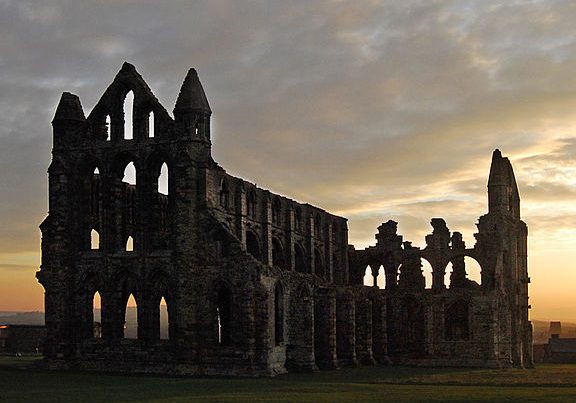
[originally posted on my blog on 20 April 2008. See my original post, “Reformation” Theft of Thousands of Catholic Churches (4-12-08). This article was a response to critiques of that earlier article]
I wrote:
It’s been the standard response through the years of Protestants to play up and grossly exaggerate the sins of the Catholic Church to justify the sins of the Reformers.
I wasn’t “lambasting” the Reformers per se here, but rather, historical revisionism (“standard response through the years”) of Protestants, up to the present period.
At the same time, anti-Catholic Protestants so often want to rail about historic Catholic sins that no one denies. I don’t care if they do, one way or the other; let them rail against sin. I have no problem with it. Yet if anyone dares make a similar analysis of Protestant scandals and sins, we hear cries of “foul.” This is rather common (almost a knee-jerk reaction) among those who set out to defend historic Protestantism, if I do say so.
I would like to suggest to those who love to highlight historic Catholic sins, and educate folks about them, to not be so reticent about doing the same regarding Protestant historic sins. No one is gonna buy the scenario that only one side is guilty of these. As for the “Reformers” themselves playing up Catholic sin, there is simply no question about this. Martin Luther, in particular, is notorious for these sins of bearing false witness. Examples are innumerable, but here are just a few examples for good measure:
[T]he popes . . . are bitter enemies of the church . . . Pope, cardinals, bishops, not a soul of them has read the Bible; ’tis a book unknown to them. (#429, p. 243)
The pope and his crew are mere worshippers of idols, and servants of the devil. (#446, p. 249) (Table-Talk, translated by William Hazlitt, Philadelphia: The Lutheran Publication Society: n.d.)
The sum of it all is that pope, devil, and his church hate the estate of matrimony, as Daniel says [17:37]; therefore he wants to bring it into such disgrace that a married man cannot fill a priest’s office. That is as much as to say that marriage is harlotry, sin, impure, and rejected by God; and although they say, at the same time, that it is holy and a sacrament, that is a lie of their false hearts, for if they seriously considered it holy, and a sacrament, they would not forbid the priests to marry. Because they do forbid them, they must consider it unclean, and a sin, as they plainly say . . .
[T]he noises made by monks and nuns and priests are not prayers or praises to God. They do not understand it and learn nothing from it; they do it like hard labor, for the belly’s sake, and seek thereby no improvement of life, no progress in holiness, no doing of God’s will. (On the Councils and the Churches [1539], Part II. From: Works of Martin Luther, Philadelphia: A.J. Holman Co. & The Castle Press, 1931, Vol. 5. Translation by Charles M. Jacobs)
See also:
Medieval Catholic Corruption: Main Cause of Protestant Revolt? [6-2-03; revised slightly: 1-20-04; 10-10-17]
Luther Film (2003): Detailed Catholic Critique [10-28-03; abridged with revised links on 3-6-17]
Myths and Facts Regarding Tetzel and Indulgences [11-25-16; published in Catholic Herald]
Critique of Ten Exaggerated Claims of the “Reformation” [10-31-17; its 500th anniversary date]
Martin Luther: “Our manner of life is as evil as is that of the papists” [12-29-07]
Luther on Early Lutherans: “Ingrates” Who Deserve God’s “Wrath” [2-28-10]
Luther’s Disgust Over Protestant Sectarianism and Radical Heresies [3-1-10; abridged and published in the National Catholic Register: 9-8-17]
Luther on Early Lutheran Degeneracy & Bad Witness [3-2-10]
Was Luther in His Old Age in Agony & Bitter About Lutheranism? [3-3-10]
Luther’s “Agony” Over Sectarianism (vs. a Lutheran) [3-10-10]
Luther: Monks & Priests More “Earnest” Than Lutherans [11-10-11]
It’s equally obvious and manifest that Thomas Cromwell and his ilk in the English “Reformation” offered similar ridiculous exaggerations of what was going on in the monasteries, as a pretense to seize them for their own (and the king’s) enrichment, as I documented in my paper. Many historians can be produced to back this up. This isn’t just “militant Catholic apologetics.” It’s historical fact.
No one (last of all, myself) denies that bad things were done by many Catholics. It doesn’t follow from this that Catholic Church properties were not Catholic, and that Protestants were perfectly justified to seize them. That makes no sense. Say, for example, that a church was built with funds obtained by sinful means, amounting to 38% of the total cost of the building. Okay, now the Protestant ragtag armies of righteousness and noble virtue come to steal this same property. But do the Protestants distribute 38% of its value to the Catholic parishioners? Of course not. Not a chance. That ain’t part of the plan. All of those ignorant people are idolaters and don’t deserve anything but to be banished from the territory.
Even Luther noted and decried the greed of some of the folks who “appropriated” property (with his usual naivete in denying that his own words played any role in bringing about such theft in the first place). So Protestants can rant and rave about corruption in building projects while under Catholic auspices, but it doesn’t justify Protestant theft and plunder: not in the least. This is elementary ethics: Christian Morality 0101. And by the same token, I have every “right” to highlight Protestant sins that virtually no one has ever heard about at all. Why is that so objectionable?
It’s an indisputable fact, especially in England, that the monasteries served as a vast network of social support for the peasants. This was all destroyed in the space of a year or less, and nothing replaced it. That’s not just my little old opinion: it is historiographical consensus. It was a similar situation in Germany, which is a major reason why the Peasants’ War took place. Once the bishops were replaced by the greedy princes (that Melanchthon so despised), the peasants were far worse off than before. This is part of the huge wickedness of the theft on a grand scale. The lives of many thousands of people were made a lot more miserable than before.
Evil bishops must be replaced with the pure and saintly Henry VIII and selfless German princes? That wasn’t the will of the English people, since the vast majority of them remained Catholic (even in 1558 when Elizabeth continued the revolution, even deepening it). Melanchthon realized the huge mistake of fleeing to princes rather than retaining the episcopacy. He regretted it to the end of his life.
I cited Erasmus in my paper, right at the beginning:
I greatly wonder, my dear Jonas, what god has stirred up the heart of Luther, in so far as he assails with such license of pen the Roman pontiff, all the universities, philosophy, and the mendicant orders . . .
Perhaps there were some who out of honest zeal favored calling the orders and princes of the Church to better things. But I do not know if they are those who under this pretext covet the wealth of the churchmen. I judge nothing to be more wicked and destructive of public tranquility than this . . . This certainly is a fine turn of affairs, if property is wickedly taken away from priests so that soldiers may make use of it in worse fashion; and the latter squander their own wealth, and sometimes that of others, so that no one benefits. (in Christian Humanism and the Reformation [selections from Erasmus], edited and translated by John C. Olin, New York: Harper & Row, 1965, 152, 157-159, 161-163; Letter to Jodocus Jonas, from Louvain, May 10, 1521)
Erasmus also wrote:
It is part of my unhappy fate, that my old age has fallen on these evil times when quarrels and riots prevail everywhere. . . .
This new gospel is producing a new set of men so impudent, hypocritical, and abusive, such liars and sycophants, who agree neither with one another nor with anybody else, so universally offensive and seditious, such madmen and ranters, and in short so utterly distasteful to me that if I knew of any city in which I should be free from them, I would remove there at once. (in Philip Schaff, The History of the Christian Church, Volume VII: History of Modern Christianity, Chapter IV, section 71, New York: Charles Scribner’s Sons, 1910)
Luther responded to Erasmus with his usual detached rationality and accuracy:
Erasmus of Rotterdam is the vilest miscreant that ever disgraced the earth . . . He is a very Caiaphas. (Table-Talk, translated by William Hazlitt, Philadelphia: The Lutheran Publication Society: n.d., #667, 350-351)
Shame upon thee, accursed wretch! . . . Whenever I pray, I pray a curse upon Erasmus. (Ibid., #668, 351)
Erasmus was poisoned at Rome and at Venice with epicurean doctrines. He extols the Arians more highly than the Papists . . . he died like an epicurean, without any one comfort of God. (Ibid., #675, 355)
This I do leave behind me as my will and testament . . . I hold Erasmus of Rotterdam to be Christ’s most bitter enemy . . . the enemy to true religion, the open adversary of Christ, the complete and faithful picture and image of Epicurus and of Lucian. (Ibid., #676, 355)
Erasmus writes nothing in which he does not show the impotence of his mind or rather the pains of the wounds he has received. I despise him, nor shall I honor the fellow by arguing with him any more . . . In future I shall only refer to him as some alien, rather condemning than refuting his ideas. He is a light-minded man, mocking all religion as his dear Lucian does, and serious about nothing but calumny and slander. (Letter to Montanus About Erasmus, May 28, 1529; from Preserved Smith, Letters of Martin Luther, New York: Houghton Mifflin Co., 1911, 211)
[see many examples of the Luther-Erasmus debates: Erasmus vs. Luther Disputes Documented (3-21-16) ]
Protestants love to cite Erasmus when he talks about Catholic corruptions and vices, but not when he turns his critique on Luther and the “Reformation.” Why the double standard? What is so difficult about admitting and openly acknowledging (and detesting) Protestant sin? We have no problem about admitting ours. This is a distressingly common hypocrisy in Protestant polemics that I will expose until the day I die.
It’s argued that the “Reformation” was God’s judgment against Catholic sins. That scenario is entirely possible (in a merely hypothetical sense). The only problem is that such agents of so-called “reformation” do not automatically become righteous. God used them for His plans, just like He uses the devil (in the case of Job, for example). But no one would assert that the devil became righteous simply because He was a pawn in God’s plan. Nebuchadnezzar was judged by God, after he was used as his agent of judgment against Israel. The Assyrian invasions involved nations warring against each other. In the “Reformation,” however, the Protestants were warring against fellow Christians. That is the sin of schism.
The people in England were, for the most part, perfectly content with the Church and all the social and spiritual benefits of the monasteries. So it has to be asserted against fact that the corruption was so great and intense that this would qualify as a plausible scenario for God’s judgment, with the bloodthirsty tyrant and Clintonian adulterer Henry VIII as God’s agent. St. Thomas More and St. John Fisher and St. Edmund Campion and the other hundreds of martyrs who were butchered were the “bad guys” being judged. Perhaps we can extend this hypothetical to the Russian Revolution too (the historical event that most resembles the English “Reformation”)? The Russian Orthodox Church and the czars were so corrupt that God had to enlist Lenin as His agent to come butcher priests and bishops and steal all the Orthodox churches? Makes about as much sense . . .
The monasteries in England were the charitable system of England at the time. Henry VIII didn’t give a damn about the fate of the peasants after all these properties were stolen. Cobbett (no Catholic) writes at the greatest length about these things. The Anglicans butchered at least 1375 innocent people, as I have documented. This is the sort of mentality that caused Luther to chuckle at the executions of More and Fisher, and wish that there were more kings who could murder saints as Henry VIII had done.
The “Reformers” stole thousands of Catholic properties. Henry and Elizabeth and other Protestant kings tortured and murdered well over 1300 pious Catholics. Henry was an adulterer. Luther sanctioned adultery in Philip of Hesse’s case, and said polygamy was not forbidden in the Bible. The Protestants watered down the criteria for divorce, and started allowing it, and removed matrimony as a sacrament. Henry VIII had to massively lie about the monasteries in order to seize them. He lied to the leaders of the massive Catholic social uprising, known as the Pilgrimage of Grace about beneficial promises, and had them all summarily executed. Luther had to massively lie about Catholic teachings and practices, and spread propaganda far and wide (including vulgar woodcuts) in order for his movement to succeed at all.
It is preciously ironic and pathetic that Protestants blow way out of proportion the abuses of indulgences and rant and rave about how this was exploiting poor people, then they turn around and try to justify the theft of thousands of Catholic churches and monasteries and the removal of a vast network of social services for the poor, as either justifiable outright or an instance of judgment analogous to Assyria or Babylonia judging idol-ridden ancient Israel. They decry theft in one instance and then defend and rationalize a theft a hundred or a thousand times greater magnitude than the first sin.
As we can see, every sin that is attributed to ancient Israel in this judgment prophecy is far more true of the “Reformers” than of the Catholic Church.
The monks of the English monasteries were all godless? This is the false claim made. I guess that justifies stealing their properties and ripping out their intestines and hearts while they are still alive, and chopping off their limbs and putting them up on city gates. Makes perfect sense to me. If they are “godless” then anything whatever can be done to them. They essentially become demons to be pitilessly slaughtered.
Those who have the audacity (or ignorance) to defend the outrages and hellish brutalities of the English “Reformation” act as if Bede would be right in league with Cromwell and Henry, standing there while Fisher and More were beheaded, etc. This is as ridiculous as it is outrageous. Nothing like this had ever happened, since the time of the pagan Viking pillaging, or Genghis Khan or the ancient Roman persecutions. And this had the added hypocrisy of Christians stealing from and slaughtering other Christians. Too often, however, Protestants will try to excuse and explain away absolutely anything that happened as part of their endlessly glorified and whitewashed “Reformation”.
Yet it doesn’t cost Protestants anything to admit historical wrongs. They don’t have to cease believing what they do in good faith, based on these factors alone. No Catholic is telling Protestants that they must become Catholics simply because Protestantism is guilty of institutionalized sin in the past. And we only have greater respect for those Protestants who freely admit that there were plenty of sins on both sides, rather than continue the pretense that Catholics were supposedly exponentially more sinful than Protestants.
The pretentious double standard is the reason why I write these sorts of papers: not as a result of any supposed desire to “bash” Protestants and make them out to be singularly wicked. I say over and over that sinfulness is universally to be found. That’s why we Christians believe in original sin: the most obviously demonstrable notion that one can find in the Bible.
***
Practical Matters: Perhaps some of my 4,000+ free online articles (the most comprehensive “one-stop” Catholic apologetics site) or fifty books have helped you (by God’s grace) to decide to become Catholic or to return to the Church, or better understand some doctrines and why we believe them.
*
Or you may believe my work is worthy to support for the purpose of apologetics and evangelism in general. If so, please seriously consider a much-needed financial contribution. I’m always in need of more funds: especially monthly support. “The laborer is worthy of his wages” (1 Tim 5:18, NKJV). 1 December 2021 was my 20th anniversary as a full-time Catholic apologist, and February 2022 marked the 25th anniversary of my blog.
*
PayPal donations are the easiest: just send to my email address: [email protected]. You’ll see the term “Catholic Used Book Service”, which is my old side-business. To learn about the different methods of contributing, including 100% tax deduction, etc., see my page: About Catholic Apologist Dave Armstrong / Donation Information. Thanks a million from the bottom of my heart!
*
***
*
Photo credit: Whitby Abbey in in North Yorkshire, England, had been a great center of learning since 657 AD. King Henry VIII destroyed it in 1540 and confiscated all its possessions. Photo by Ackers72 (4-12-09) [Wikimedia Commons / Creative Commons Attribution-Share Alike 3.0 Unported license]

*
***
Summary: I decry the double standard whereby outrageous wholesale “Reformation” anti-Catholic theft is winked at, while old Catholic sins are overwhelmingly emphasized.
Protestant Persecution & Intolerance
"Reformation" Anti-Catholic Theft
dissolution of the monasteries
Protestant theft of monasteries
Previous Post
August 5, 2022
Semi-Pelagianism & Catholicism (vs. Francisco Tourinho)
Next Post
August 8, 2022 "Eucharistic Pharisees" (Communion in the Hand)
Browse Our Archives
Select a Category & Last Things About Me Anti-Catholicism Atheism & Agnosticism Baptism and Sacramentalism Bible and Tradition Blessed Virgin Mary Books by Dave Armstrong C. S. Lewis Calvinism & General Protestantism Catholic Apologetics Catholic Apologists Catholic conversion Catholic converts Christmas Church (Ecclesiology) Church History Conversion and Converts Development of Doctrine Eastern Orthodoxy Ecumenism & Christian Unity Eucharist & Liturgy Fathers of the Church French Translations G. K. Chesterton Hell Hell & Satan Hell & Satan & Last Things Heresies & Comparative Religion Holistic Health Inquisition & Crusades & Scandals James White Jews & Judaism & Old Testament John Calvin John Henry Newman Liberal / Modernist Theology Life Issues Literary Resume Lutheranism Mariology Martin Luther Music Orthodoxy Papacy & Infallibility Personal Page Philosophy & Science Political & Ethical & Moral Issues Protestant Persecution & Intolerance Protestantism Purgatory Purgatory & Penance Romantic & Imaginative Theology Saints & Purgatory & Penance Salvation Salvation & Justification Satan & Last Things Sexuality and Gender Issues Spanish Translations Traditionalism vs. Radical Catholic Reactionaries Traducciones al español / tradução para português Trinitarianism & Christology Uncategorized Videos
Select a Month October 2026 September 2026 August 2026 July 2026 June 2026 May 2026 April 2026 March 2026 February 2026 January 2026 December 2025 November 2025 October 2025 September 2025 August 2025 July 2025 June 2025 May 2025 April 2025 March 2025 February 2025 January 2025 December 2024 November 2024 October 2024 September 2024 August 2024 July 2024 June 2024 May 2024 April 2024 March 2024 February 2024 January 2024 December 2023 November 2023 October 2023 September 2023 August 2023 July 2023 June 2023 May 2023 April 2023 March 2023 February 2023 January 2023 December 2022 November 2022 October 2022 September 2022 August 2022 July 2022 June 2022 May 2022 April 2022 March 2022 February 2022 January 2022 December 2021 November 2021 October 2021 September 2021 August 2021 July 2021 June 2021 May 2021 April 2021 March 2021 February 2021 January 2021 December 2020 November 2020 October 2020 September 2020 August 2020 July 2020 June 2020 May 2020 April 2020 March 2020 February 2020 January 2020 December 2019 November 2019 October 2019 September 2019 August 2019 July 2019 June 2019 May 2019 April 2019 March 2019 February 2019 January 2019 December 2018 November 2018 October 2018 September 2018 August 2018 July 2018 June 2018 May 2018 April 2018 March 2018 February 2018 January 2018 December 2017 November 2017 October 2017 September 2017 August 2017 July 2017 June 2017 May 2017 April 2017 March 2017 February 2017 January 2017 December 2016 November 2016 October 2016 September 2016 August 2016 July 2016 June 2016 May 2016 April 2016 March 2016 February 2016 January 2016 December 2015 November 2015 October 2015 September 2015 August 2015 July 2015 June 2015 May 2015 April 2015 March 2015 February 2015 January 2015 December 2014 November 2014 October 2014 September 2014 August 2014 July 2014 June 2014 April 2014 March 2014 February 2014 January 2014 December 2013 November 2013 October 2013 September 2013 August 2013 July 2013 June 2013 April 2013 March 2013 February 2013 January 2013 December 2012 November 2012 October 2012 September 2012 August 2012 July 2012 June 2012 May 2012 April 2012 March 2012 February 2012 January 2012 December 2011 November 2011 October 2011 September 2011 August 2011 July 2011 June 2011 April 2011 March 2011 February 2011 October 2010 September 2010 August 2010 July 2010 April 2010 March 2010 December 2009 October 2009 August 2009 July 2009 June 2009 May 2009 March 2009 February 2009 October 2008 September 2008 April 2008 March 2008 February 2008 January 2008 December 2007 November 2007 October 2007 May 2007 March 2007 February 2007 January 2007 November 2006 October 2006 September 2006 August 2006 July 2006 June 2006 May 2006 April 2006 March 2006 February 2006 October 2005 June 2005 April 2005 February 2005 July 2004 May 2004 April 2004
Follow Us!
TAKE THE
Religious Wisdom Quiz
Where was Paul's hometown?
Select your answer to see how you score.
Damascus Tarsus Antioch Jerusalem
Books by This Author Books by Dave Armstrong
Related posts from Biblical Evidence for Catholicism

A Few "Worst" & "Best" Arguments vs. Protestantism
Biblical Evidence for Catholicism

Book: Martin Luther: Dissenter and Defender
Biblical Evidence for Catholicism
"Martin Luther: Dissenter & Defender": Introduction
Biblical Evidence for Catholicism
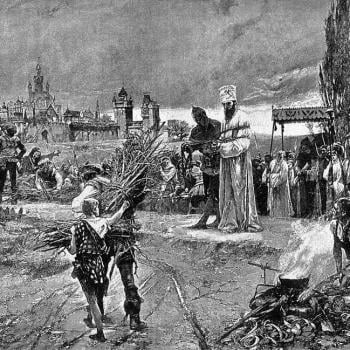
Gavin Ortlund, Hus's Burning, & Double Standards
Biblical Evidence for Catholicism
TRENDING AT PATHEOS Catholic

The Sermon on the Mount, Part I: Matthew...
The Sermon on the Mount, Part I (Matthew 4:12-5:12) St. Matthew moves...

What's up from Crossway: Reviewing some of their latest A few weeks...

Janie Learns the Way of the Cross: A...
Teaching children about Jesus' Passion can be challenging. Many parents and educators...

Looking For Good Catholic Writing - October 2026
He alone extends the heavens, and he walks upon the waves of...

In "Irreplaceable," our book on vocation and technology, Trevor Sutton and I...

I was strolling through the top floor of the brand new Parthenon...
view all Catholic blogs
Ad-Free & Subscriber Log-In Subscription Support
- About Us
- 2026 Calendar
- Videos
- Podcasts
- Library of World Religions
- Faith In Media Tracker
- Advertise With Us
- Write for Us
- Privacy Policy
- Terms of Service
- Do Not Sell My Data
- Contact Us
- Radiant Digital
- Manage Newsletter Subscriptions
- Unsubscribe From Notifications
- Sitemap
Copyright 2008-2026, Patheos. All rights reserved.
Subscription Support Ad-Free & Subscriber Log-In
Follow Patheos