
BuddhistCatholicContemplativeEvangelicalGeneral ChristianHinduJewishLatter-day SaintMuslimNew VisionsProgressive Christian
Beliefs
- Buddhist
- Catholic
- Contemplative
- Evangelical
- General Christian
- Hindu
- Jewish
- Latter-day Saint
- More Voices
- Muslim
- New Visions
- Pagan
- Progressive Christian
Topics
- Religion News
- Food and Religion
- Sports and Religion
- Religious Art
- Religious Music and Entertainment
- Religious Events
- History and Religion
- Style and Religion
- Politics and Religion
- Women in Religion
- Recreation Outdoors and Religion
- Business Finance and Religion
- Careers Workplace and Religion
- Education and Religion
- Family Parenting and Religion
- Health Fitness and Religion
- Home and Religion
- Relationships and Religion
- Technology and Religion
- Travel and Religion
Columnists
- Buddhist Columnists
- Business Finance and Religion Columnists
- Careers Workplace and Religion Columnists
- Catholic Columnists
- Contemplative Columnists
- Education and Religion Columnists
- Evangelists Columnists
- Family Parenting and Religion Columnists
- General Christian Columnists
- Health Fitness and Religion Columnists
- Hindu Columnists
- History and Religion Columnists
- Home and Religion Columnists
- Jewish Columnists
- More Voices Columnists
- Latter Day Columnists
- Muslim Columnists
- New Visions Columnists
- Nonreligious Columnists
- Pagan Columnists
- Politics and Religion Columnists
- Progressive Columnists
- Recreation Outdoors and Religion Columnists
- Relationships and Religion Columnists
- Religion News Columnists
- Religious Art Columnists
- Religious Events Columnists
- Religious Music and Entertainment Columnists
- Sports and Religion Columnists
- Style and Religion Columnists
- Technology and Religion Columnists
- Travel and Religion Columnists
- Women in Religion Columnists
Resource Library
- 2026 Calendar
- Library of World Religions
- The 100 Most Holy Places on Earth
- Patheos Answers
- Podcasts
- Videos
- Faith Leaders Database
- Anglican Episcopalian
- Bahai
- Baptist
- Buddhism
- Christianity
- Confucianism
- Eastern Orthodoxy
- Hinduism
- Holiness and Pentecostal
- ISKCON
- Islam
- Judaism
- Lutheran
- Methodist
- The Church of Jesus Christ of Latter-day Saints
- New Age
- Paganism
- Presbytarian and Reformed
- Protestantism
- Religion Behind the Scenes
- Roman Catholic
- Scientology
- Shia Islam
- Sikhism
- Sufism
- Sunni Islam
- Taoism
- Zen
- See all religions
Research Tools
 Ad-Free & Subscriber Log-In Subscription Support
Ad-Free & Subscriber Log-In Subscription Support
Follow Patheos 

- Trending:
- Forgiveness
- |
- Marriage
- |
- Consciousness
- |
- Death Penalty
- |
- Election
- |
- Halloween

-
About
-
Catholic Apologetics
-
Church History
-
Great Apologists
-
Christian Worldview
-
Protestantism & Misc.
- Home
- Catholic
- History and Religion
- C.S. Lewis vs. the Bible & Newman Re “Religion”
C.S. Lewis vs. the Bible & Newman Re “Religion”
Last updated on: June 6, 2026 at 12:01 am by Dave Armstrong
C.S. Lewis vs. the Bible & Newman Re “Religion” 2026-06-06T00:01:00-04:00 Dave Armstrong
Patheos Explore the world's faith through different perspectives on religion and spirituality! Patheos has the views of the prevalent religions and spiritualities of the world.
In his book, Roman but Not Catholic: What Remains at Stake 500 Years after the Reformation (2017), co-written with former Catholic Kenneth J. Collins, Jerry Walls wrote in the Introduction:
We have heard from lots of people who have read John Henry Newman’s famous essay on doctrinal development and found his arguments compelling. I thought it might be helpful to hear from persons who have read Newman but found his arguments deeply confused and his conclusions badly overstated. (p. xxii)
C. S. Lewis is cited no less than 26 times in this book, but not from his book, Letters to Malcolm: Chiefly on Prayer (1963), where he lobs an unfair potshot at Cardinal Newman. I discovered this today in a post by Anti-Catholic Ignoramus Extraordinaire John Bugay (“C.S. Lewis: ‘Newman makes my blood run cold …’ “: Tribalblogue, 9-11-17). Bugay points out a passage from chapter 6 of that volume (pp. 29-30 in the Harvest / HBJ Book edition of 1964):
I can well understand how a man who is trying to love God and his neighbour should come to dislike the very word religion; a word, by the way, which hardly ever appears in the New Testament. Newman makes my blood run cold when he says in one of the Parochial and Plain Sermons that Heaven is like a church because, in both, “one single sovereign subject — religion — is brought before us.” He forgets that there is no temple in the new Jerusalem.
He has substituted religion for God — as if navigation were substituted for arrival, or battle for victory, or wooing for marriage, or in general the means for the end.
Now, I love C. S. Lewis. He’s been my favorite writer for 45 years, ever since my evangelical conversion to Christ. I have all his books (proudly displayed in my living room); I’ve read most of them, along with biographies and two huge volumes of his letters. I’ve seen many documentaries and movies about him. So I have no fundamental animus against him.
But he was dead wrong in this instance; most unjust and unfair to St. Cardinal Newman, whom he cited out of context and contrary to his clear intent. This is shoddy citation: all the more surprising for a giant and brilliant Christian scholar like Lewis. Put of charity and immense respect, I’ll assume that he was citing from memory and forgot the context. That’s the best case scenario.
Lewis cites just nine of Newman’s words from Sermon 1 in Vol. 1 of 8, “Sermon 1. Holiness Necessary for Future Blessedness”. I’ve had the collection of these sermons in one hardcover (Ignatius, 1987) in my library since it was published (when I was still a Protestant). Volume 1 was published in 1834, which (it should be noted) was eleven years before Newman became a Catholic.
At this point he was a very popular [“High” or “Anglo-Catholic”] Anglican priest: in the same denomination that Lewis never left. Thus, his thoughts came from a widely admired and praised Anglican mind, not a fully Catholic one. For Lewis to treat him so shabbily is, I submit, most likely a manifestation of his incipient emotional distaste for Catholicism, left over from his Belfast upbringing.
The mistake that Lewis makes here is, sadly, a very common Protestant one. It’s an irrational hostility to the word “religion” as if it’s a bad word, and something to be avoided. It’s no more “bad” word in Holy Scripture than “tradition” is: though one would never know this, listening to so many Protestants who seen to have an irrational unbiblical bone-seep aversion to both.
Lewis seems to completely misunderstand Newman’s argument in this sermon and his use of the word “religion.” The words “religion” / “religious” / “irreligious” appear twelve times in the eight-page sermon, but “holy” and “holiness” appears 23 and 21 times, because that is what the sermon is about. It was devoted to the Bible passage: “”Holiness, without which no man shall see the Lord.” (Heb 12:14).
In the course of this sermon, Newman is clearly using the words “religion” “religious” / “irreligious” as synonyms for pious Christian observance and practice and reverence towards God, or lack thereof. Here is Lewis’ brief citation of St. Cdl. Newman (in blue below, and bolding added) in its complete context:
Heaven then is not like this world; I will say what it is much more like,—a church. For in a place of public worship no language of this world is heard; there are no schemes brought forward for temporal objects, great or small; no information how to strengthen our worldly interests, extend our influence, or establish our credit. These things indeed may be right in their way, so that we do not set our hearts upon them; still (I repeat), it is certain that we hear nothing of them in a church. Here we hear solely and entirely of God. We praise Him, worship Him, sing to Him, thank Him, confess to Him, give ourselves up to Him, and ask His blessing. And therefore, a church is like heaven; viz. because both in the one and the other, there is one single sovereign subject—religion—brought before us.
Supposing, then, instead of it being said that no irreligious man could serve and attend on God in heaven (or see Him, as the text expresses it), we were told that no irreligious man could worship, or spiritually see Him in church; should we not at once perceive the meaning of the doctrine? viz. that, were a man to come hither, who had suffered his mind to grow up in its own way, as nature or chance determined, without any deliberate habitual effort after truth and purity, he would find no real pleasure here, but would soon get weary of the place; because, in this house of God, he would hear only of that one subject which he cared little or nothing about, and nothing at all of those things which excited his hopes and fears, his sympathies and energies. If then a man without religion (supposing it possible) were admitted into heaven, doubtless he would sustain a great disappointment. Before, indeed, he fancied that he could be happy there; but when he arrived there, he would find no discourse but that which he had shunned on earth, no pursuits but those he had disliked or despised, nothing which bound him to aught else in the universe, and made him feel at home, nothing which he could enter into and rest upon. He would perceive himself to be an isolated being, cut away by Supreme Power from those objects which were still entwined around his heart. Nay, he would be in the presence of that Supreme Power, whom he never on earth could bring himself steadily to think upon, and whom now he regarded only as the destroyer of all that was precious and dear to him. Ah! he could not bear the face of the Living God; the Holy God would be no object of joy to him. “Let us alone! What have we to do with thee?” is the sole thought and desire of unclean souls, even while they acknowledge His majesty. None but the holy can look upon the Holy One; without holiness no man can endure to see the Lord.
When, then, we think to take part in the joys of heaven without holiness, we are as inconsiderate as if we supposed we could take an interest in the worship of Christians here below without possessing it in our measure. A careless, a sensual, an unbelieving mind, a mind destitute of the love and fear of God, with narrow views and earthly aims, a low standard of duty, and a benighted conscience, a mind contented with itself, and unresigned to God’s will, would feel as little pleasure, at the last day, at the words, “Enter into the joy of thy Lord,” as it does now at the words, “Let us pray.” Nay, much less, because, while we are in a church, we may turn our thoughts to other subjects, and contrive to forget that God is looking on us; but that will not be possible in heaven.
We see, then, that holiness, or inward separation from the world, is necessary to our admission into heaven, because heaven is not heaven, is not a place of happiness except to the holy.
Lewis was thus wrong in three significant ways, by insinuating 1) that Newman “substituted religion for God”, 2) in his general tone implying that religion is somehow (or more often than not) a negative thing, to be frowned upon, and 3) that heaven is supposedly unlike a “church”. The first is a wholesale distortion of Newman’s meaning, understood properly in context, and the second and third things are blatantly contrary to the Bible.
Newman is preaching about worship in heaven: which is (from what we know in the Bible: chiefly the book of Revelation) primarily what takes place there. We won’t simply be sitting on clouds playing harps and hiking all the cool, glorious trails of heavenly paradise. We’ll be worshiping God, in union with Him. In what I cited, “worship” is mentioned four times out of a total of five. In the portion immediately before what I cited, Newman wrote / preached:
[S]o far we are distinctly told, that that future life will be spent in God’s presence, in a sense which does not apply to our present life; so that it may be best described as an endless and uninterrupted worship of the Eternal Father, Son, and Spirit. “They serve Him day and night in His temple, and He that sitteth on the throne shall dwell among them … The Lamb which is in the midst of the throne shall feed them, and shall lead them unto living fountains of waters.” Again, “The city had no need of the sun, neither of the moon to shine in it, for the glory of God did lighten it, and the Lamb is the light thereof. And the nations of them which are saved shall walk in the light of it, and the kings of the earth do bring their glory and honour into it.” [Rev. vii. 15, 17; xxi. 23, 24.] These passages from St. John are sufficient to remind us of many others.
None of this should be in the least objectionable to Lewis or any Protestant. For Newman, “religion” was, precisely, holiness, which in turn is devoted in heaven to worship and adoration of God. But Lewis seemed intent on forcing Newman’s meaning and intent (which is a virtual celebration of the ecstatic, blissful worship of God in heaven) into an incorrect negative conception of what “religion” means (an idol set against God).
And to further analyze that, we must consult what the New Testament says about it. That’s easy for me, since I already addressed the topic over a year ago in my article for National Catholic Register: “The Bible Makes It Clear: Religion Means Relationship With God” (6-18-21). Lewis wants to falsely make out that religion is somehow inherently antithetical to relationship with and worship of God. The Bible and Newman teach the opposite.
Lewis in this chapter of his book makes good and valid points about excesses and distortions of “religion.” But of course, absolutely anything can be distorted, including religion (2 Tim 3:1-5; “holding the form of religion but denying the power of it. Avoid such people”). Paul is saying those who are lousy at religion should be avoided, not those who are religious, period.
We don’t “throw the baby out with the bathwater” because this is the case. And he seems all too ready to throw out “religion” in terms of pious practice. This is where the New Testament can fruitfully educate us. Lewis stated that the word religion “hardly ever appears in the New Testament.” In fact, it appears six times [in RSV], and “religious” appears three more.
And this is in a New Testament where the word Trinity never appears, nor God the Son nor incarnation nor faith alone in a positive sense (it’s condemned in James 2:24), nor Scripture alone nor grace alone nor virgin birth nor omniscient, omnipresent, omnipotent (and I could go on and on). In light of that, nine appearances of religion or religious seems to me to be a fairly large number!
St. Paul describes religion as typified by “good deeds” (1 Tim 2:10, RSV). It’s a positive thing, not a negative one. Paul states:
1 Timothy 3:16 Great indeed, we confess, is the mystery of our religion: He was manifested in the flesh, vindicated in the Spirit, seen by angels, preached among the nations, believed on in the world, taken up in glory.
Here “religion” has to do more with the doctrinal creed or confession that we accept; it’s also used by Paul to describe his own former Jewish religious belief in Acts 26:5. That’s part of it, too. We observe and do certain things because of what we believe in faith. Paul and James define religion as a good thing:
Acts 17:22 Paul, standing in the middle of the Are-op’agus, said: “Men of Athens, I perceive that in every way you are very religious“.
Paul was complimenting the pagan Athenians. They worshiped an “unknown god” (17:23), so Paul took the opportunity to proclaim the one true God to them — to preach the gospel (17:23-31). He built upon what they knew, citing their own pagan philosophers and poets (17:28).
1 Timothy 5:4 If a widow has children or grandchildren, let them first learn their religious duty to their own family and make some return to their parents; for this is acceptable in the sight of God.
James 1:26-27 If anyone thinks he is religious, and does not bridle his tongue but deceives his heart, this man’s religion is vain. Religion that is pure and undefiled before God and the Father is this: to visit orphans and widows in their affliction, and to keep oneself unstained from the world.
***
Practical Matters: Perhaps some of my 4,000+ free online articles (the most comprehensive “one-stop” Catholic apologetics site) or fifty books have helped you (by God’s grace) to decide to become Catholic or to return to the Church, or better understand some doctrines and why we believe them.
Or you may believe my work is worthy to support for the purpose of apologetics and evangelism in general. If so, please seriously consider a much-needed financial contribution. I’m always in need of more funds: especially monthly support. “The laborer is worthy of his wages” (1 Tim 5:18, NKJV). 1 December 2021 was my 20th anniversary as a full-time Catholic apologist, and February 2022 marked the 25th anniversary of my blog.
PayPal donations are the easiest: just send to my email address: [email protected]. You’ll see the term “Catholic Used Book Service”, which is my old side-business. To learn about the different methods of contributing, including 100% tax deduction, etc., see my page: About Catholic Apologist Dave Armstrong / Donation Information. Thanks a million from the bottom of my heart!
***
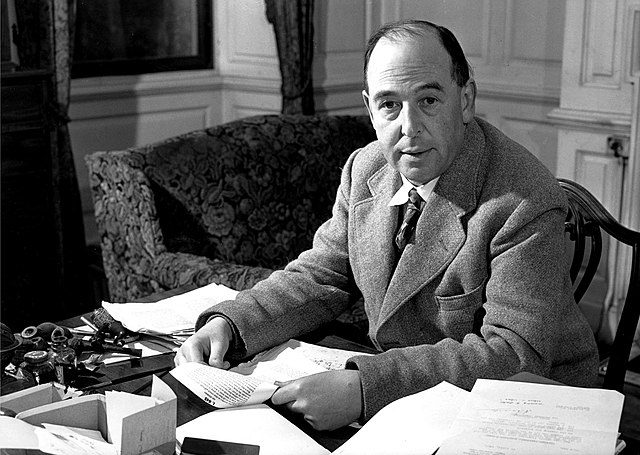
Photo credit: Aronsyne; C. S. Lewis in 1951 [Wikimedia Commons / Creative Commons Attribution-Share Alike 4.0 International license]

***
Summary: C. S. Lewis, whom I love, was dead wrong when he attacked St. Cardinal Newman falsely with regard to his use of the word “religion” in an 1834 Anglican sermon.
Letters to Malcolm: Chiefly on Prayer
Previous Post
August 19, 2022
Anti-Catholics: Sincere & Ignorant or Malicious?
Next Post
August 24, 2022 Turretin, 1 Timothy 3:15, Infallibility, & Eisegesis
Browse Our Archives
Select a Category & Last Things About Me Anti-Catholicism Atheism & Agnosticism Baptism and Sacramentalism Bible and Tradition Blessed Virgin Mary Books by Dave Armstrong C. S. Lewis Calvinism & General Protestantism Catholic Apologetics Catholic Apologists Catholic conversion Catholic converts Christmas Church (Ecclesiology) Church History Conversion and Converts Development of Doctrine Eastern Orthodoxy Ecumenism & Christian Unity Eucharist & Liturgy Fathers of the Church French Translations G. K. Chesterton Hell Hell & Satan Hell & Satan & Last Things Heresies & Comparative Religion Holistic Health Inquisition & Crusades & Scandals James White Jews & Judaism & Old Testament John Calvin John Henry Newman Liberal / Modernist Theology Life Issues Literary Resume Lutheranism Mariology Martin Luther Music Orthodoxy Papacy & Infallibility Personal Page Philosophy & Science Political & Ethical & Moral Issues Protestant Persecution & Intolerance Protestantism Purgatory Purgatory & Penance Romantic & Imaginative Theology Saints & Purgatory & Penance Salvation Salvation & Justification Satan & Last Things Sexuality and Gender Issues Spanish Translations Traditionalism vs. Radical Catholic Reactionaries Traducciones al español / tradução para português Trinitarianism & Christology Uncategorized Videos
Select a Month October 2026 September 2026 August 2026 July 2026 June 2026 May 2026 April 2026 March 2026 February 2026 January 2026 December 2025 November 2025 October 2025 September 2025 August 2025 July 2025 June 2025 May 2025 April 2025 March 2025 February 2025 January 2025 December 2024 November 2024 October 2024 September 2024 August 2024 July 2024 June 2024 May 2024 April 2024 March 2024 February 2024 January 2024 December 2023 November 2023 October 2023 September 2023 August 2023 July 2023 June 2023 May 2023 April 2023 March 2023 February 2023 January 2023 December 2022 November 2022 October 2022 September 2022 August 2022 July 2022 June 2022 May 2022 April 2022 March 2022 February 2022 January 2022 December 2021 November 2021 October 2021 September 2021 August 2021 July 2021 June 2021 May 2021 April 2021 March 2021 February 2021 January 2021 December 2020 November 2020 October 2020 September 2020 August 2020 July 2020 June 2020 May 2020 April 2020 March 2020 February 2020 January 2020 December 2019 November 2019 October 2019 September 2019 August 2019 July 2019 June 2019 May 2019 April 2019 March 2019 February 2019 January 2019 December 2018 November 2018 October 2018 September 2018 August 2018 July 2018 June 2018 May 2018 April 2018 March 2018 February 2018 January 2018 December 2017 November 2017 October 2017 September 2017 August 2017 July 2017 June 2017 May 2017 April 2017 March 2017 February 2017 January 2017 December 2016 November 2016 October 2016 September 2016 August 2016 July 2016 June 2016 May 2016 April 2016 March 2016 February 2016 January 2016 December 2015 November 2015 October 2015 September 2015 August 2015 July 2015 June 2015 May 2015 April 2015 March 2015 February 2015 January 2015 December 2014 November 2014 October 2014 September 2014 August 2014 July 2014 June 2014 April 2014 March 2014 February 2014 January 2014 December 2013 November 2013 October 2013 September 2013 August 2013 July 2013 June 2013 April 2013 March 2013 February 2013 January 2013 December 2012 November 2012 October 2012 September 2012 August 2012 July 2012 June 2012 May 2012 April 2012 March 2012 February 2012 January 2012 December 2011 November 2011 October 2011 September 2011 August 2011 July 2011 June 2011 April 2011 March 2011 February 2011 October 2010 September 2010 August 2010 July 2010 April 2010 March 2010 December 2009 October 2009 August 2009 July 2009 June 2009 May 2009 March 2009 February 2009 October 2008 September 2008 April 2008 March 2008 February 2008 January 2008 December 2007 November 2007 October 2007 May 2007 March 2007 February 2007 January 2007 November 2006 October 2006 September 2006 August 2006 July 2006 June 2006 May 2006 April 2006 March 2006 February 2006 October 2005 June 2005 April 2005 February 2005 July 2004 May 2004 April 2004
Follow Us!
TAKE THE
Religious Wisdom Quiz
Which Old Testament book is entirely written as a dialogue between God and a prophet?
Select your answer to see how you score.
Zechariah Malachi Amos Habakkuk
Books by This Author Books by Dave Armstrong
Related posts from Biblical Evidence for Catholicism

Bible & Catholicism on Mortal Sin (vs. John...
Biblical Evidence for Catholicism

Dialogue on Eternal Security / Absolute Assurance
Biblical Evidence for Catholicism

"Faith Alone" Dialogue with a Calvinist
Biblical Evidence for Catholicism

Exegesis of 75 NT Faith [Alone?] & Works...
Biblical Evidence for Catholicism
TRENDING AT PATHEOS Catholic

In "Irreplaceable," our book on vocation and technology, Trevor Sutton and I...

I was strolling through the top floor of the brand new Parthenon...

What Does Gêvâh Mean For Kimberley Guifoyle &...
This week, a lot of the news is focused on Kimberly Guilfoyle....

INNER CIRCLE: Profound Mystery (Of Christ In All...
Ephesians 5:31-32 “For this reason, a man will leave his father and...

Do Not Rejoice When Your Enemy Falls: The...
Turning an execution into a public spectacle is a disturbing expression of...

'The Chosen' S6 Trailer: The Passion Gets Very...
Not many watching 'The Chosen' worry about spoilers, but just because they...
view all Catholic blogs
Ad-Free & Subscriber Log-In Subscription Support
- About Us
- 2026 Calendar
- Videos
- Podcasts
- Library of World Religions
- Faith In Media Tracker
- Advertise With Us
- Write for Us
- Privacy Policy
- Terms of Service
- Do Not Sell My Data
- Contact Us
- Radiant Digital
- Manage Newsletter Subscriptions
- Unsubscribe From Notifications
- Sitemap
Copyright 2008-2026, Patheos. All rights reserved.
Subscription Support Ad-Free & Subscriber Log-In
Follow Patheos