
BuddhistCatholicContemplativeEvangelicalGeneral ChristianHinduJewishLatter-day SaintMuslimNew VisionsProgressive Christian
Beliefs
- Buddhist
- Catholic
- Contemplative
- Evangelical
- General Christian
- Hindu
- Jewish
- Latter-day Saint
- More Voices
- Muslim
- New Visions
- Pagan
- Progressive Christian
Topics
- Religion News
- Food and Religion
- Sports and Religion
- Religious Art
- Religious Music and Entertainment
- Religious Events
- History and Religion
- Style and Religion
- Politics and Religion
- Women in Religion
- Recreation Outdoors and Religion
- Business Finance and Religion
- Careers Workplace and Religion
- Education and Religion
- Family Parenting and Religion
- Health Fitness and Religion
- Home and Religion
- Relationships and Religion
- Technology and Religion
- Travel and Religion
Columnists
- Buddhist Columnists
- Business Finance and Religion Columnists
- Careers Workplace and Religion Columnists
- Catholic Columnists
- Contemplative Columnists
- Education and Religion Columnists
- Evangelists Columnists
- Family Parenting and Religion Columnists
- General Christian Columnists
- Health Fitness and Religion Columnists
- Hindu Columnists
- History and Religion Columnists
- Home and Religion Columnists
- Jewish Columnists
- More Voices Columnists
- Latter Day Columnists
- Muslim Columnists
- New Visions Columnists
- Nonreligious Columnists
- Pagan Columnists
- Politics and Religion Columnists
- Progressive Columnists
- Recreation Outdoors and Religion Columnists
- Relationships and Religion Columnists
- Religion News Columnists
- Religious Art Columnists
- Religious Events Columnists
- Religious Music and Entertainment Columnists
- Sports and Religion Columnists
- Style and Religion Columnists
- Technology and Religion Columnists
- Travel and Religion Columnists
- Women in Religion Columnists
Resource Library
- 2026 Calendar
- Library of World Religions
- The 100 Most Holy Places on Earth
- Patheos Answers
- Podcasts
- Videos
- Faith Leaders Database
- Anglican Episcopalian
- Bahai
- Baptist
- Buddhism
- Christianity
- Confucianism
- Eastern Orthodoxy
- Hinduism
- Holiness and Pentecostal
- ISKCON
- Islam
- Judaism
- Lutheran
- Methodist
- The Church of Jesus Christ of Latter-day Saints
- New Age
- Paganism
- Presbytarian and Reformed
- Protestantism
- Religion Behind the Scenes
- Roman Catholic
- Scientology
- Shia Islam
- Sikhism
- Sufism
- Sunni Islam
- Taoism
- Zen
- See all religions
Research Tools
 Ad-Free & Subscriber Log-In Subscription Support
Ad-Free & Subscriber Log-In Subscription Support
Follow Patheos 

- Trending:
- Forgiveness
- |
- Marriage
- |
- Consciousness
- |
- Death Penalty
- |
- Election
- |
- Halloween

-
About
-
Catholic Apologetics
-
Church History
-
Great Apologists
-
Christian Worldview
-
Protestantism & Misc.
- Home
- Catholic
- History and Religion
- Atheist Jonathan MS Pearce’s Straw Man Global Flood
Atheist Jonathan MS Pearce’s Straw Man Global Flood
Last updated on: December 14, 2022 at 1:19 pm by Dave Armstrong
Atheist Jonathan MS Pearce’s Straw Man Global Flood 2022-12-14T13:19:09-04:00 Dave Armstrong
Patheos Explore the world's faith through different perspectives on religion and spirituality! Patheos has the views of the prevalent religions and spiritualities of the world.

Atheist Jonathan MS Pearce runs the blog, A Tippling Philosopher. He has in the past encouraged me to visit his site and offer critiques, and wrote under a post dated 12-14-21: “I even need to thank the naysayers. . . . Dave, you are welcome at my new place. Come challenge me. . . . thanks for your critiques of my pieces.” Again, in a post dated 1-27-22, he stated: “I do welcome disagreements because I don’t want [my blog] to [be] just an echo chamber. . . . [S]omeone like Armstrong does give me ammunition for some of my pieces!”
I replied (usually point-by-point) to Pearce’s arguments 72 times. He made some sort of response to maybe one-quarter of those and our relations seemed cordial enough. But when I provided him with several “meaty” critiques in February 2022, he wrote on 3-1-22:
STOP IT STOP IT STOP IT. Please stop this. All you are doing is spouting the absolutely debunked drivel apologetics that my book takes to task. . . . I welcome your comments, but these are totally off-topic and you show absolutely no desire to interact with my own material . . . [caps his own]
Despite this disappointing display (at which point I quietly left his blog for good, out of consideration for him, lest he have a heart attack or a stroke), I continue to think that he’s basically a nice guy. I think we’d have a great time in a pub over beer.
*
Presently, I am critiquing Jonathan’s insistence on bashing the global or universal or worldwide conception of the Flood of Noah, as if it is the mainstream (or biblical) position. It’s not. In logic, we call that a straw man. Here is what he wrote in his article, “Noah’s flood is a heinous story” (OnlySky, 8-8-22):
And don’t get me started on how it [a global Flood] is not physically or practically possible by any stretch of the imagination. Moreover, there is simply no evidence for a global flood or even a large regional flood that some theists will try to argue [links to his replies to me on this topic] (a theory that makes equally little sense).
But let’s focus on the global flood. The one described in the Bible is a terrible event. Of course, this is mythology. It is obviously mythology. But an awful lot of people still believe that it is literally and historically true.
First of all, this involved the death of everyone on Earth bar eight. . . . the entire global population. . . .
And that doesn’t even begin to consider the sheer volume of animal death throughout the globe. Every animal bar two (or seven, depending on which source you read) dies.
Once again, I will provide basically the same argument that I already submitted to Jonathan and his buddies several times. I noted that the Catholic Encyclopedia way back in 1908, was already describing the global flood opinion as scientifically and exegetically obsolete:
Till about the seventeenth century, it was generally believed that the Deluge had been geographically universal, . . . But two hundred years of theological and scientific study devoted to the question have thrown so much light on it that we may now defend the following conclusions:
The geographical universality of the Deluge may be safely abandoned
Neither Sacred Scripture nor universal ecclesiastical tradition, nor again scientific considerations, render it advisable to adhere to the opinion that the Flood covered the whole surface of the earth. . . .
There are also certain scientific considerations which oppose the view that the Flood was geographically universal. Not that science opposes any difficulty insuperable to the power of God; but it draws attention to a number of most extraordinary, if not miraculous phenomena involved in the admission of a geographically universal Deluge. . . .
Some Christians (along with biblical skeptics and atheists) assume that the biblical account of Noah’s Flood, or the Deluge can only be interpreted hyper-literally; in other words, as referring to a global catastrophic event in which the entire world was literally covered with an amount of water so deep that every mountain (including Mt. Everest: 29,032 feet = 5.5 miles elevation above sea level) was covered.
The consensus of both Catholic and Protestant biblical scholars for well over a century has been that the interpretation of a local Flood is perfectly in accord with the best exegetical and hermeneutical principles of biblical interpretation. In other words, it’s not “biblical skepticism” or “liberal theology” to believe in the local Flood.
Baptist theologian Bernard Ramm’s immensely influential book, The Christian View of Science and Scripture (hardcover edition, published by Wm. B. Eerdmans Publishing Company, Grand Rapids, Michigan, in 1954; reprinted in 1966) represented mainstream evangelical (as opposed to “fundamentalist”) Protestant, post-World War II thinking. Ramm argued:
To cover the highest mountains would require eight times more water than we now have. It would have involved a great creation of water to have covered the entire globe, but no such creative act is hinted at in the Scriptures. (p. 244)
Getting rid of such a vast amount of water would have been as miraculous as providing it. If the entire world were under six miles of water, there would be no place for the water to drain off. Yet the record states that the water drained off with the help of the wind (Gen. 8:1). A local flood would readily account for this, but there is no answer if the entire world were under water. (p. 245)
The flood was local to the Mesopotamian valley. (p. 249)
Dr. Ramm discussed the question of frequent biblical non-literal, hyperbolic (exaggerated) language:
Fifteen minutes with a Bible concordance will reveal many instances in which universality of language is used but only a partial quantity is meant. All does not mean every last one in all of its usages. Psa. 22:17 reads: “I may tell all my bones,” and hardly means that every single bone of the skeleton stood out prominently. John 4:39 cannot mean that Jesus completely recited the woman’s biography. Matt. 3:5 cannot mean that every single individual from Judea and Jordan came to John the Baptist. There are cases where all means all, and every means every, but the context tells us where this is intended. Thus, special reference may be made to Paul’s statement in Romans about the universality of sin, yet even that “all” excludes Jesus Christ.
The universality of the flood simply means the universality of the experience of the man who reported it. When God tells the Israelites He will put the fear of them upon the people under the whole heaven, it refers to all the peoples known to the Israelites (Deut. 2:25). When Gen. 41:57 states that all countries came to Egypt to buy grain, it can only mean all peoples known to the Egyptians. Ahab certainly did not look for Elijah in every country of the earth even though the text says he looked for Elijah so thoroughly that he skipped no nation or kingdom (I Kings 18:10). From the vantage point of the observer of the flood all mountains were covered, and all flesh died. (pp. 240-241)
Presbyterian geologist Carol A. Hill’s brilliant article, “The Noachian Flood: Universal or Local?” (Perspectives on Science and Christian Faith, Volume 54, Number 3, September 2002), is a goldmine in terms of food for thought concerning a local Flood, in harmony with what we know from science. She impressively tackles the question of literal and non-literal biblical language at great length. I can only cite a small portion of it:
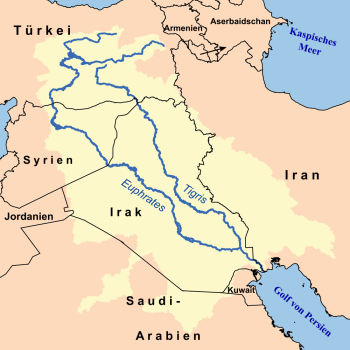
Earth. The Hebrew for “earth” used in Gen. 6–8 (and in Gen. 2:5–6) is eretz (‘erets) or adâmâh, both of which terms literally mean “earth, ground, land, dirt, soil, or country.” In no way can “earth” be taken to mean the planet Earth, as in Noah’s time and place, people (including the Genesis writer) had no concept of Earth as a planet and thus had no word for it. Their “world” mainly (but not entirely) encompassed the land of Mesopotamia—a flat alluvial plain enclosed by the mountains and high ground of Iran, Turkey, Syria, and Saudi Arabia (Fig. 1); i.e., the lands drained by the four rivers of Eden (Gen. 2:10–14). . . .
[I]n Mesopotamia, the concept of “the land” (kalam in Sumerian) seems to have included the entire alluvial plain. This is most likely the correct interpretation of the term “the earth,” which is used over and over again in Gen. 6-8: the entire alluvial plain of Mesopotamia was inundated with water. The clincher to the word “earth” meaning ground or land (and not the planet Earth) is Gen. 1:10: God called the dry land earth (eretz). If God defined “earth” as “dry land,” then so should we.
Regarding specifically the water covering “all the high mountains” (Gen 7:19), Dr. Hill states:
[T]he Hebrew word har for “mountain” in Gen. 7:20 . . . can also be translated as “a range of hills” or “hill country,” implying with Gen. 7:19 that it was “all the high hills” (also har) that were covered rather than high mountains.
This being the case, Genesis 7:19-20 could simply refer to “flood waters . . . fifteen cubits above the ‘hill country’ of Mesopotamia (located in the northern, Assyrian part)”. The Hebrew word har (Strong’s #2022) can indeed mean “hills” or “hill country”, as the Brown-Driver-Briggs Lexicon defines it. Specifically for Genesis 7:19-20, this lexicon classifies the word as following:
mountain, indefinite, Job 14:18 (“” צוּר); usually plural mountains, in General, or the mountains, especially in poetry & the higher style; often figurative; הָרִים, הֶהָרִים, covered by flood Genesis 7:20 compare Genesis 7:19; . . .
In the New American Standard Version, har is rendered as “hill country” (5) many times in the Hebrew Bible: Genesis 10:30; 14:10; 31:21, 23, 25; 36:8-9; Numbers 13:17, 29; 14:40, 44-45; Deuteronomy 1:7, 19-20, 24, 41, 43-44; 2:37; 3:12, 25; Joshua 2:16, 22-23; 9:1; 10:6, 40; 11:2-3, 16; 11:21; 12:8; 13:6; 14:12; 15:48; 16:1; 17:15-16, 18; 18:12; 19:50; 20:7; 21:11, 21; 24:30, 33; Judges 1:9, 19, 34; 2:9; 3:27; 4:5; 7:24; 10:1; 12:15; 17:1, 8; 18:2, 13; 19:1, 16, 18; 1 Samuel 1:1; 9:4; 13:2; 14:22; 23:14; 2 Samuel 20:21; 1 Kings 4:8; 12:25; 2 Kings 5:22; 1 Chronicles 6:67; 2 Chronicles 13:4; 15:8; 19:4.
The same version translates har as “hill” or “hills” nine times too: Deuteronomy 8:7; 11:11; Joshua 13:19; 18:13-14, 16; 1 Kings 16:24; 2 Kings 1:9; 4:27.
Lorence G. Collins is a geologist and petrologist. He wrote a fascinating article, “Yes, Noah’s flood may have happened but not over the whole earth” (Reports of the National Center for Science Education, 2009, 29(5): 38-41). It noted how the Bible habitually uses phenomenological language (including for the Flood):
Northeast and southwest of the nearly flat surface that contains the two rivers [Tigris and Euphrates], the topography rises to more than 455 m [1493 feet] in Saudi Arabia and in Iran. Calculations show that elevations of 455 m high cannot be seen beyond 86 km [53 miles] away, and these places are more than 160 km [99 miles] from the Euphrates or Tigris Rivers. Therefore, none of the high country in Saudi Arabia or Iran would be visible to a tribal chief (or Noah). On that basis, the “whole world” would definitely appear to be covered with water during the Flood, and that was the “whole world” for the people in this part of southeastern Mesopotamia at that time.
I found a good topographical map of Mesopotamia online; see also a second one. One can readily observe that there is a sort of “basin” in the alluvial floodplain in this area.
The question, then, is: why does Jonathan Pearce: an intelligent man, insist on warring against straw men? If he wants to debate the consensus position of Christian thinkers of all stripes, that would be the local Flood. But he derisively dismisses that as dishonest and goes right to the global Flood. It’s shoddy thinking to present the global Flood as undeniably the biblical view and that held by most Christians, when in fact it is held by only a tiny number of Christians: primarily among the sub-group commonly known as “fundamentalists.”
*
There are those (albeit a tiny — though very vocal and visible — number in Protestantism and even smaller number in Catholicism) who hold to older “Bible and science” traditions and so believe in a universal Flood (i.e., water covering the entire earth to a depth higher than Mt. Everest’s elevation), a young earth (6-10,000 years), flood geology (or “catastrophism”), a literal six-day creation, a complete denial of any aspect of evolution (even theistic evolution), etc. I have nothing against such people. Some are my personal friends. They are as sincere in their beliefs as anyone else and seek to hold a “high” view of biblical inspiration and the Christian faith (as I do). I simply think they are wrong on many levels.
But by no means can they be said (sociologically) to be “mainstream” or representative of the consensus of Christian thought or the entirety of Christianity regarding Noah’s Flood. And this is my point. Jonathan and many atheists pretend and falsely claim that they do represent that. Essentially, they attempt to collapse or reduce all of Christianity to the tiny number who hold to fundamentalism and “hyper-literal” views of biblical exegesis.
Atheists don’t speak for Christians, and almost never present accurately understand or convey in their critiques what the best thinkers in Christianity believe. We Christians speak for ourselves, thank you. If the best atheists can do is only battle against caricatures and straw men when they tackle Christianity and the Bible, then I suggest that they need to better understand the meaning of good dialogue and debate.
Every middle school debating team learns first of all that they must know their opponents’ views even better than their opponents do. Most atheists would spectacularly fail that test when it comes to properly understanding Christianity, and especially when it comes to offering critiques of the real thing, as opposed to cardboard caricatures of their own imaginations and fancies.
***
Practical Matters: Perhaps some of my 4,000+ free online articles (the most comprehensive “one-stop” Catholic apologetics site) or fifty books have helped you (by God’s grace) to decide to become Catholic or to return to the Church, or better understand some doctrines and why we believe them.
Or you may believe my work is worthy to support for the purpose of apologetics and evangelism in general. If so, please seriously consider a much-needed financial contribution. I’m always in need of more funds: especially monthly support. “The laborer is worthy of his wages” (1 Tim 5:18, NKJV). 1 December 2021 was my 20th anniversary as a full-time Catholic apologist, and February 2022 marked the 25th anniversary of my blog.
PayPal donations are the easiest: just send to my email address: [email protected]. You’ll see the term “Catholic Used Book Service”, which is my old side-business. To learn about the different methods of contributing, including 100% tax deduction, etc., see my page: About Catholic Apologist Dave Armstrong / Donation Information. Thanks a million from the bottom of my heart!
***
Photo credit: [PxFuel / free for commercial use]
***
Summary: Atheist Jonathan MS Pearce wrongly assumes that a global Flood is the mainstream Christian position and undeniably the biblical teaching. It’s neither.
Jews & Judaism & Old Testament
Previous Post
August 29, 2022
Self-Interpreting Bible & Protestant Chaos (vs. Turretin)
Next Post
September 1, 2022 Christ's Descent Into Hades (vs. Francois Turretin)
Browse Our Archives
Select a Category & Last Things About Me Anti-Catholicism Atheism & Agnosticism Baptism and Sacramentalism Bible and Tradition Blessed Virgin Mary Books by Dave Armstrong C. S. Lewis Calvinism & General Protestantism Catholic Apologetics Catholic Apologists Catholic conversion Catholic converts Christmas Church (Ecclesiology) Church History Conversion and Converts Development of Doctrine Eastern Orthodoxy Ecumenism & Christian Unity Eucharist & Liturgy Fathers of the Church French Translations G. K. Chesterton Hell Hell & Satan Hell & Satan & Last Things Heresies & Comparative Religion Holistic Health Inquisition & Crusades & Scandals James White Jews & Judaism & Old Testament John Calvin John Henry Newman Liberal / Modernist Theology Life Issues Literary Resume Lutheranism Mariology Martin Luther Music Orthodoxy Papacy & Infallibility Personal Page Philosophy & Science Political & Ethical & Moral Issues Protestant Persecution & Intolerance Protestantism Purgatory Purgatory & Penance Romantic & Imaginative Theology Saints & Purgatory & Penance Salvation Salvation & Justification Satan & Last Things Sexuality and Gender Issues Spanish Translations Traditionalism vs. Radical Catholic Reactionaries Traducciones al español / tradução para português Trinitarianism & Christology Uncategorized Videos
Select a Month October 2026 September 2026 August 2026 July 2026 June 2026 May 2026 April 2026 March 2026 February 2026 January 2026 December 2025 November 2025 October 2025 September 2025 August 2025 July 2025 June 2025 May 2025 April 2025 March 2025 February 2025 January 2025 December 2024 November 2024 October 2024 September 2024 August 2024 July 2024 June 2024 May 2024 April 2024 March 2024 February 2024 January 2024 December 2023 November 2023 October 2023 September 2023 August 2023 July 2023 June 2023 May 2023 April 2023 March 2023 February 2023 January 2023 December 2022 November 2022 October 2022 September 2022 August 2022 July 2022 June 2022 May 2022 April 2022 March 2022 February 2022 January 2022 December 2021 November 2021 October 2021 September 2021 August 2021 July 2021 June 2021 May 2021 April 2021 March 2021 February 2021 January 2021 December 2020 November 2020 October 2020 September 2020 August 2020 July 2020 June 2020 May 2020 April 2020 March 2020 February 2020 January 2020 December 2019 November 2019 October 2019 September 2019 August 2019 July 2019 June 2019 May 2019 April 2019 March 2019 February 2019 January 2019 December 2018 November 2018 October 2018 September 2018 August 2018 July 2018 June 2018 May 2018 April 2018 March 2018 February 2018 January 2018 December 2017 November 2017 October 2017 September 2017 August 2017 July 2017 June 2017 May 2017 April 2017 March 2017 February 2017 January 2017 December 2016 November 2016 October 2016 September 2016 August 2016 July 2016 June 2016 May 2016 April 2016 March 2016 February 2016 January 2016 December 2015 November 2015 October 2015 September 2015 August 2015 July 2015 June 2015 May 2015 April 2015 March 2015 February 2015 January 2015 December 2014 November 2014 October 2014 September 2014 August 2014 July 2014 June 2014 April 2014 March 2014 February 2014 January 2014 December 2013 November 2013 October 2013 September 2013 August 2013 July 2013 June 2013 April 2013 March 2013 February 2013 January 2013 December 2012 November 2012 October 2012 September 2012 August 2012 July 2012 June 2012 May 2012 April 2012 March 2012 February 2012 January 2012 December 2011 November 2011 October 2011 September 2011 August 2011 July 2011 June 2011 April 2011 March 2011 February 2011 October 2010 September 2010 August 2010 July 2010 April 2010 March 2010 December 2009 October 2009 August 2009 July 2009 June 2009 May 2009 March 2009 February 2009 October 2008 September 2008 April 2008 March 2008 February 2008 January 2008 December 2007 November 2007 October 2007 May 2007 March 2007 February 2007 January 2007 November 2006 October 2006 September 2006 August 2006 July 2006 June 2006 May 2006 April 2006 March 2006 February 2006 October 2005 June 2005 April 2005 February 2005 July 2004 May 2004 April 2004
Follow Us!
TAKE THE
Religious Wisdom Quiz
Who asked Jesus, "What is truth?"
Select your answer to see how you score.
Caiaphas Pilate Nicodemus Herod
Books by This Author Books by Dave Armstrong
Related posts from Biblical Evidence for Catholicism

God, Modern Physics, & Dark Energy: An Analogy
Biblical Evidence for Catholicism

God's Presence, the Ark, the Eucharist, & Death
Biblical Evidence for Catholicism
Garden of Eden’s Location Verified by Science
Biblical Evidence for Catholicism

Unregenerate Good Works in the Old Testament
Biblical Evidence for Catholicism
TRENDING AT PATHEOS Catholic

I was strolling through the top floor of the brand new Parthenon...

What Does Gêvâh Mean For Kimberley Guifoyle &...
This week, a lot of the news is focused on Kimberly Guilfoyle....

INNER CIRCLE: Profound Mystery (Of Christ In All...
Ephesians 5:31-32 “For this reason, a man will leave his father and...

Do Not Rejoice When Your Enemy Falls: The...
Turning an execution into a public spectacle is a disturbing expression of...

'The Chosen' S6 Trailer: The Passion Gets Very...
Not many watching 'The Chosen' worry about spoilers, but just because they...

The purpose-driven labor priest
A labor activist reads Rick Warren and it gets me wondering about...
view all Catholic blogs
Ad-Free & Subscriber Log-In Subscription Support
- About Us
- 2026 Calendar
- Videos
- Podcasts
- Library of World Religions
- Faith In Media Tracker
- Advertise With Us
- Write for Us
- Privacy Policy
- Terms of Service
- Do Not Sell My Data
- Contact Us
- Radiant Digital
- Manage Newsletter Subscriptions
- Unsubscribe From Notifications
- Sitemap
Copyright 2008-2026, Patheos. All rights reserved.
Subscription Support Ad-Free & Subscriber Log-In
Follow Patheos