
BuddhistCatholicContemplativeEvangelicalGeneral ChristianHinduJewishLatter-day SaintMuslimNew VisionsProgressive Christian
Beliefs
- Buddhist
- Catholic
- Contemplative
- Evangelical
- General Christian
- Hindu
- Jewish
- Latter-day Saint
- More Voices
- Muslim
- New Visions
- Pagan
- Progressive Christian
Topics
- Religion News
- Food and Religion
- Sports and Religion
- Religious Art
- Religious Music and Entertainment
- Religious Events
- History and Religion
- Style and Religion
- Politics and Religion
- Women in Religion
- Recreation Outdoors and Religion
- Business Finance and Religion
- Careers Workplace and Religion
- Education and Religion
- Family Parenting and Religion
- Health Fitness and Religion
- Home and Religion
- Relationships and Religion
- Technology and Religion
- Travel and Religion
Columnists
- Buddhist Columnists
- Business Finance and Religion Columnists
- Careers Workplace and Religion Columnists
- Catholic Columnists
- Contemplative Columnists
- Education and Religion Columnists
- Evangelists Columnists
- Family Parenting and Religion Columnists
- General Christian Columnists
- Health Fitness and Religion Columnists
- Hindu Columnists
- History and Religion Columnists
- Home and Religion Columnists
- Jewish Columnists
- More Voices Columnists
- Latter Day Columnists
- Muslim Columnists
- New Visions Columnists
- Nonreligious Columnists
- Pagan Columnists
- Politics and Religion Columnists
- Progressive Columnists
- Recreation Outdoors and Religion Columnists
- Relationships and Religion Columnists
- Religion News Columnists
- Religious Art Columnists
- Religious Events Columnists
- Religious Music and Entertainment Columnists
- Sports and Religion Columnists
- Style and Religion Columnists
- Technology and Religion Columnists
- Travel and Religion Columnists
- Women in Religion Columnists
Resource Library
- 2026 Calendar
- Library of World Religions
- The 100 Most Holy Places on Earth
- Patheos Answers
- Podcasts
- Videos
- Faith Leaders Database
- Anglican Episcopalian
- Bahai
- Baptist
- Buddhism
- Christianity
- Confucianism
- Eastern Orthodoxy
- Hinduism
- Holiness and Pentecostal
- ISKCON
- Islam
- Judaism
- Lutheran
- Methodist
- The Church of Jesus Christ of Latter-day Saints
- New Age
- Paganism
- Presbytarian and Reformed
- Protestantism
- Religion Behind the Scenes
- Roman Catholic
- Scientology
- Shia Islam
- Sikhism
- Sufism
- Sunni Islam
- Taoism
- Zen
- See all religions
Research Tools
 Ad-Free & Subscriber Log-In Subscription Support
Ad-Free & Subscriber Log-In Subscription Support
Follow Patheos 

- Trending:
- Forgiveness
- |
- Marriage
- |
- Consciousness
- |
- Death Penalty
- |
- Election
- |
- Halloween

-
About
-
Catholic Apologetics
-
Church History
-
Great Apologists
-
Christian Worldview
-
Protestantism & Misc.
- Home
- Catholic
- History and Religion
- Sinning Mary in the Bible? (vs. Jason Engwer)
Sinning Mary in the Bible? (vs. Jason Engwer)
Last updated on: June 21, 2022 at 1:59 pm by Dave Armstrong
Sinning Mary in the Bible? (vs. Jason Engwer) 2022-06-21T13:59:24-04:00 Dave Armstrong
Patheos Explore the world's faith through different perspectives on religion and spirituality! Patheos has the views of the prevalent religions and spiritualities of the world.
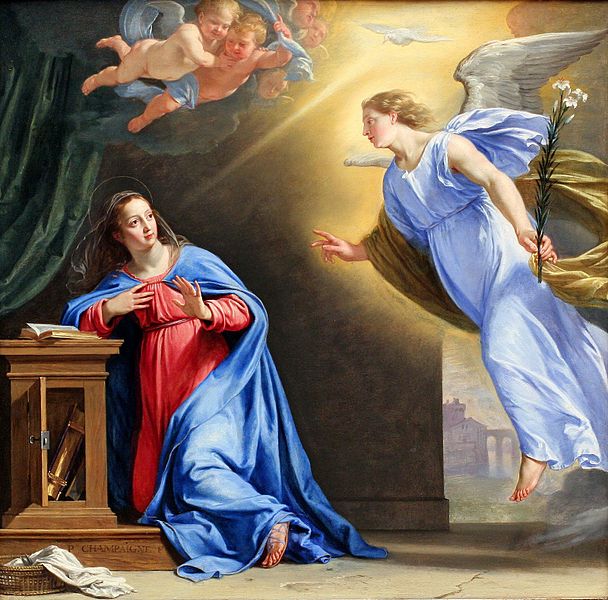
Protestant anti-Catholic apologist Jason Engwer, who runs the Tribalblogue site, again accuses the Blessed Virgin Mary of sin in his article, How Much The Conclusion Of Luke 2 Contradicts Roman Catholic Mariology (5-17-22). He has done this several times now. This is my reply. His words will be in blue.
*****
Luke 2:34-35 (RSV) and Simeon blessed them and said to Mary his mother, “Behold, this child is set for the fall and rising of many in Israel, and for a sign that is spoken against [35] (and a sword will pierce through your own soul also), that thoughts out of many hearts may be revealed.”
Protestants typically overlook or underestimate the closing verses of Luke 2 when addressing Catholic Mariology. There are several problems for the Catholic view of Mary in those verses, and the cumulative effect is highly significant.
I’ve discussed these issues in Luke 2 many times, but my comments are scattered across various posts over the years. I want to gather some of those comments in one place and supplement them with some other points: . . .
A reference to being pierced by a sword just after a reference to people rising or falling probably implies that Mary will be among those who fall. Being pierced by a sword isn’t something we’d normally associate with rising. It’s reminiscent of what we see elsewhere in Luke, in the reference to falling by the sword in 21:24. The individuals in Luke 21 are guilty and are being judged accordingly, and the same is likely true of Mary in Luke 2. The episode that occurred when Jesus was twelve years old follows shortly after 2:35, and it’s the first example we’re given of the fulfillment of Simeon’s comment. What Simeon said is better fulfilled by Mary’s conflicts with Jesus later in Luke 2 and elsewhere than by any alternative I’m aware of. For example, if the sword of 2:35 was meant to refer to Mary’s suffering in the context of the cross, why doesn’t Luke even mention Mary’s presence at the crucifixion (as John does)? Luke 2:48-50 probably illustrates the sword of division within families that Jesus refers to elsewhere (Matthew 10:34-36). Mary isn’t adversely affected by the sword to the extent that an unbeliever would be, but she is adversely affected by it to some extent.
If this is such a standard or straightforward interpretation of this text, how odd that the classic Protestant commentaries scarcely ever (if ever) assert such a thing. It seems to be largely a myth that originated between Jason Engwer’s ears. Actual Protestant Bible scholars quite agree with the Catholic “take” on the passage. This is not even a source of division as regards Mary:
Ellicott’s Commentary for English Readers: The announcement of the special sorrow that was to be the Virgin Mother’s portion, comes as the sequel to “the sign that is spoken against,” the antagonism which her Son would meet with. We may find fulfilments of it when the men of Nazareth sought to throw Him from the brow of their hill (Luke 4:29); when she came, as in anxious fear, to check His teaching as the Pharisees charged Him with casting out devils through Beelzebub (Matthew 12:46); when she stood by the cross, and heard the blasphemies and revilings of the priests and people (John 19:26).
Matthew Henry’s Concise Commentary: He shall be a suffering Jesus; his mother shall suffer with him, because of the nearness of her relation and affection.
Barnes’ Notes on the Bible: Yea, a sword … – The sufferings and death of thy Son shall deeply afflict thy soul. And if Mary had not been thus forewarned and sustained by strong faith, she could not have borne the trials which came upon her Son; but God prepared her for it, and the holy mother of the dying Saviour was sustained.
Jamieson-Fausset-Brown Bible Commentary: “Blessed as thou art among women, thou shalt have thine own deep share of the struggles and sufferings which this Babe is to occasion”
Gill’s Exposition of the Entire Bible: . . . the sorrows she met with on account of her son: as he was a man of sorrows, so was she a woman of sorrows, from his cradle to his cross; and his sorrows, like so many darts, or javelins, rebounded from him to her, and pierced her soul through; as when Herod sought his life, Matthew 2:13 . . . and when he was frequently exposed to danger among the spiteful and malicious Jews; but never more than when she stood at his cross, and saw him, in his agonies, extended on the tree, bleeding, gasping, and dying, John 19:25.
Meyer’s NT Commentary: See on Luke 1:76. This καί and αὐτῆς places the anguish of the mother herself on a parallel with the fate of her Son . . . Bleek is mistaken in referring it to doubts of the Messiahship of her Son, which for a while were to cause division in Mary’s heart. For this thought the forcible expression would be quite out of proportion, and, moreover, unintelligible; and the thought itself would be much too special and subordinate, even apart from the consideration that there is no direct evidence before us of temporary unbelief on the part of Mary . . .
Expositor’s Greek Testament: . . . singles out the mother for a special share in the sorrow connected with the tragic career of one destined to be much spoken against (ἀντιλεγόμενον); this inevitable because of a mother’s intense love.
Cambridge Bible for Schools and Colleges: Almost from the very birth of Christ the sword began to pierce the soul of the ‘Mater Dolorosa;’ and what tongue can describe the weight of mysterious anguish which she felt as she watched the hatred and persecution which followed Jesus and saw Him die in anguish on the cross amid the execrations of all classes of those whom He came to save!*
Pulpit Commentary: Christian art has well caught the spirit of her life who was, in spite of her untold suffering, “blessed among women,” in depicting her so often and so touchingly as the mother of sorrows (Mater Dolorosa). The childhood in the Nazareth home, and the early manhood in the Nazareth carpentry, were no doubt her happiest days, though, in those quiet years, expectation, fears, dread, curiously interwoven, must have ever torn that mother’s heart. The days of the public ministry for Mary must have been sad, and her heart full of anxious forebodings, as she watched the growing jealousies, the hatred, and the unbelief on the part of the leading men of her people. Then came the cross. We know she stood by it all the while. And, after the cross and the Resurrection, silence. Verily the words of Simeon were awfully fulfilled.
Vincent’s Word Studies: A figure of Mary’s pang when her son should be nailed to the cross.
Jason likes to ask a lot of skeptical (and often, downright stupid) questions. Let’s play his game for a moment and ask him several:
- if his interpretation is so plausible and evident, why is it that none of the ten classic Protestant commentaries above never even hint at it?
- What makes Jason look for sin in Mary (or anyone) when there seems to not be any insinuation of it at all in the biblical text (as indicated by these commentaries)?
- Is this not a lack of charity, to so vigorously look for sin: even if this were not concerned with Mary: considered sinless by the vast majority of Christians throughout history?
- Why does Jason place so much confidence in his own blasphemous speculations? If they are so plausible, why doesn’t he cite commentaries to back him up? Could it be because he couldn’t find any? And if that is actually the case, wouldn’t it be a good reason to refrain from such a slanderous (not to mention, ridiculously implausible) accusation?
- Almost to a person, the commentaries above see this passage as a foreshadowing of Mary’s agony at the foot of the cross, or at least to the opposition Jesus received before He was murdered. But Jason doesn’t. Why? Is he dense? Is he irrationally hostile towards the Blessed Virgin Mary, simply because the Catholic Church that he hates so much, venerates her as sinless; so that he “must” interpret differently, even going to the extreme lengths of a desperate eisegesis of this passage, that can scarcely be found in any commentary?
***
Luke 2:42-50 And when he was twelve years old, they went up according to custom; [43] and when the feast was ended, as they were returning, the boy Jesus stayed behind in Jerusalem. His parents did not know it, [44] but supposing him to be in the company they went a day’s journey, and they sought him among their kinsfolk and acquaintances; [45] and when they did not find him, they returned to Jerusalem, seeking him. [46] After three days they found him in the temple, sitting among the teachers, listening to them and asking them questions; [47] and all who heard him were amazed at his understanding and his answers. [48] And when they saw him they were astonished; and his mother said to him, “Son, why have you treated us so? Behold, your father and I have been looking for you anxiously.” [49] And he said to them, “How is it that you sought me? Did you not know that I must be in my Father’s house?” [50] And they did not understand the saying which he spoke to them.
– There are a few problems with how Mary addresses Jesus in Luke 2:48. Whatever alternative interpretation a Catholic or somebody else may propose for one or more of those problems, we need to keep the cumulative effect in view and ask how likely it is that Mary isn’t being portrayed as sinful in any of the contexts involved. Keep in mind that Luke and Mary could have used different language if she was sinless and Luke wanted her to be perceived that way.
And they also could have — and did! — use exactly the language we have, existing side-by-side with the fact of Mary’s sinlessness. We can do “coulda-woulda-shoulda” pseudo-exegesis and theology all day. It may sometimes be interesting to speculate upon, but it never proves anything. It’s just a variation of the perennially weak “argument from silence” fallacy.
– First of all, as James Edwards notes, “She addresses him not as pais (v. 43, ‘boy, young man’), but with a more juvenile and subservient term, teknon (v. 48; ‘child,’ NIV ‘Son’).” (The Gospel According To Luke [Grand Rapids, Michigan: Eerdmans, 2015], 95)
Yes, since He was twelve years old at the time . . .
I don’t know Greek and don’t know much about the accuracy of Edwards’ distinction between the terms. I don’t recall having seen anybody else differentiate between the terms the way Edwards does, which makes me doubt that he’s right.
Good for Jason. He’s actually thinking it through a bit . . .
But the fact that two different terms are used is significant, even if Edwards is wrong about what each term suggests. Given Luke’s high regard for Jesus and Mary’s more inconsistent interactions with him and her negative reaction to him in Luke 2:48-50 in particular, the difference between her terminology and Luke’s within the same account is noteworthy.
How does one distinguish between Mary’s terminology and Luke’s, when in fact, Luke is reporting (and translating into Greek) what her terminology was?
The different terminology may imply a negative reaction to Jesus on Mary’s part, whether because of the term itself, because of the larger context, or because of both.
According to Thayer’s Greek Lexicon, teknon in this passage meant “specifically, a male child, a son: Matthew 21:28; Acts 21:21; Revelation 12:5; in the vocative, in kindly address, Matthew 21:28; Luke 2:48; Luke 15:31.” [my bolding] “Kindly” doesn’t exactly fit with Jason’s eisegesis of “negative reaction” does it?
Luke 15:31, which Thayer sees as a parallel to Luke 2:48, is part of the parable of the prodigal son, applies teknon to the prodigal son’s brother. Both appear to be fairly grown up, since they can possibly — or actually do — inherit property (2:12). Kittel’s Theological Dictionary of the New Testament defines teknon as simply “‘child’ (or ‘son’) in the sense of progeny . . .” (p. 760 in the one-volume edition). Kittel doesn’t see some big or significant difference between teknon and pais, as Edwards above does, since it defines the latter almost identically: ” ‘child’ (usually ‘boy’ but also ‘girl’), and with reference to descent ‘son’ . . .” (p. 759). Teknon is also used to describe “children of God” (i.e., all Christian believers) in John 1:12 (cf. Rom 9:8; Gal 4:28).
This looks like a distinction without much or any difference to me. We use the word “children” in English to refer to adult children, too; as I just did in writing about Father’s Day: saying I had “four children and two grandchildren.” And again, we must remember that Jesus was twelve in this incident. Moreover, if Mary had “more juvenile” in mind, Kittel notes three words for “small child” that could have been used: paidion, paidarion, and teknion. So it’s much ado about nothing, and even Jason suspects this; hence his tentativeness. I would advise him — as a fellow Christian apologist — to refrain from making a dumb and irrelevant argument in the first place.
– Secondly, the question Mary goes on to ask is problematic. A group of Catholic and Lutheran scholars commented that “Mary’s complaining question in v. 48 seems to be a reproach to Jesus” (Raymond Brown, et al., edd., Mary In The New Testament [Mahwah: Paulist Press, 1978], 160). Darrell Bock writes:
“Mary, speaking for both parents, wants to know why he [Jesus] has done such a seemingly insensitive thing. Jesus’ reply in the next verse addresses both of them as well. The form of Mary’s question may have OT roots (Gen. 20:9; 12:18; 26:10; Exod. 14:11; Num. 23:11; Judg. 15:11). This is the language of complaint….Bovon 1989: 159 notes that the idiom suggests the questioner’s [Mary’s] belief that an error has been made.” (Luke, Volume 1, 1:1-9:50 [Grand Rapids, Michigan: Baker Books, 1994], 268 and n. 18 on 268)
– The comment Mary makes after her question is likewise inappropriate. She refers to how she and Joseph have been looking for Jesus “anxiously” (RSV, NASB), “in great distress” (ESV), “in great anxiety” (NRSV), etc. If you ask somebody why he treated you in a particular way, then follow the question by a comment about how worried you’ve been, that typically implies that you think he wronged you in some manner.
I don’t think “why have you treated us so?” is necessarily (wholly apart from theology and viewed logically and grammatically) an accusation of sinfulness on Jesus’ part at all. Mary and Joseph were simply (undeniably) perplexed, but it doesn’t follow that they were therefore accusing Jesus of sin. After all, all Christians believe that God is sinless, yet we are often perplexed by His words or actions or lack of answers to prayers, etc. None of that automatically means that we accuse God of sin.
We’re simply confused and lacking answers and full knowledge, while we accept certain mysteries in faith and the fact that God’s ways are much higher than ours. So they asked, “why have you treated us so?” They didn’t understand. And I’m sure they would have been the first to admit that they wouldn’t always fully understand God the Son.
The 1953 Catholic Commentary, edited by Dom Bernard Orchard, noted:
Mary and Joseph are also amazed. . . but Lk gives the reason in 48b: Jesus has never behaved so to Mary before. It is to be remembered that with her, as with others, Jesus had conducted himself as a normal child; his divinity was to her, as to us, an object of faith and not vision. . . . 51b also throws light on the point. ‘They learnt only gradually what his Messiahship involved (cf. 2:34–35) and this is one stage in the process. From the point of view of her subsequent knowledge, Mary recognized that she and Joseph had not understood’ (Plummer ICC on 2:51).
Pope St. John Paul II offers further explanation:
Several early Fathers of the Church, who were not yet convinced of her perfect holiness, attributed imperfections or moral defects to Mary. Some recent authors have taken the same position. However, the Gospel texts cited to justify these opinions provide no basis at all for attributing a sin or even a moral imperfection to the Mother of the Redeemer.
Jesus’s reply to his mother at the age of 12: “How is it that you sought me? Did you not know that I must be in my Father’s house?” (Lk 2:49), has sometimes been interpreted as a veiled rebuke. A careful reading of the episode, however, shows that Jesus did not rebuke his mother and Joseph for seeking him, since they were responsible for looking after him.
Coming upon Jesus after an anxious search, Mary asked him only the “why” of his behaviour: “Son, why have you treated us so?” (Lk 2:48). And Jesus answers with another “why”, refraining from any rebuke and referring to the mystery of his divine sonship. (“Mary Was Free from All Personal Sin,” 6-26-96)
Mary and Joseph were simply worried about the whereabouts of their son. If parents didn’t worry in some strong sense about their children, when there was sufficient cause, I submit that they would be negligent, irresponsible parents. The passage doesn’t show Mary as a sinner, but rather, as a very human, normal, concerned parent, as all parents should be. We wouldn’t expect anything less of the Immaculate Mother of God.
– Jesus’ response in verse 49 questions Mary and Joseph’s behavior in two contexts, their looking for him and their not knowing what he would be doing. That sort of questioning of people’s behavior would normally imply that you think they’re wrong.
It doesn’t necessarily follow at all that Jesus’ usual provocative and rhetorical (indeed, even “socratic”) questioning is implying sin on Mary’s part. He was simply challenging them to realize that He was anticipating His mission to come.
– Luke goes on in verse 50 to refer to Mary and Joseph’s ignorance of what Jesus meant. That sort of comment usually has a negative implication about the ignorant person (Luke 8:10, 9:45, 18:34, Acts 7:25, 28:26), and it’s especially likely to imply something negative when it comes so soon after a context like we see in verses 35 and 48-49.
This is sheer nonsense. They simply didn’t “understand” at first. How is that necessarily a sin? Jesus was routinely misunderstood by almost everyone, including (quite often, before Pentecost) His own disciples (Mk 4:13; 6:52; 9:32; Lk 9:45; Jn 12:16). Even Jason says that other scriptural references to misunderstanding “usually” had a “negative implication”. But “usually” is not always.
– Mary’s silence after verse 49 is further evidence that she and Joseph were being rebuked by Jesus. His first question to them (“Why is it that you were looking for me?”) is something Mary had to have known the answer to, and Jesus goes on to ask a second question, yet Luke doesn’t refer to any response on her part. He mentions that Mary and Joseph didn’t understand what Jesus said, but no response is mentioned. If Mary was sinless and had the other characteristics Catholicism attributes to her, and Jesus was asking her questions without rebuking her, why wouldn’t she answer?
There is no general necessity to always answer a question. One might be struck by the question, or pondering it, since it was challenging, or not able to express their feelings instantaneously. It’s foolish to rush right in and assume its because they were rebuked for sin: whether Mary is involved or anyone else. It’s mere rash speculation. Jason is looking for sin in Mary, so as to shoot down Catholic beliefs, and biblical teaching, and therefore he “finds” it under every rock. Slander can be “found” too, if one looks hard enough for it and is intent on doing so.
And if she did answer, why did Luke mention her ignorance of what Jesus’ second question meant, but not mention her response?
Because that’s what he chose to write! I see no huge significance and insinuations here, that Mary had committed a sin. One can second-guess absolutely everything if they so choose. Jason constantly does this in his anti-Catholic polemics. It’s more silly than anything else. Failing to produce positive proof for what he argues, he then tries to tear down the usual understanding of biblical passages. This is the hyper-rationalistic theologically liberal approach: truth be told. It’s an attitude of relentless skepticism, which is counter to a robust Christian faith.
Luke leaves the reader with the impression that there was no response, and that’s best explained if no response was given. The lack of response makes the most sense if she was being rebuked and knew it.
That doesn’t follow, either. Such a response can also be to a challenging question, or one meant to help one grow and expand in knowledge. We need not go straight to the “rebuke of sin” explanation, as if there is no other plausible one. Jason simply sees what he wants to see. And that is, of course, eisegesis (reading into Scripture what isn’t there), not exegesis (reading out of Scripture what is there).
– The fact that Luke keeps referring to Mary and Joseph together – “his parents”, “they”, “them”, and “your father and I” several times in 2:43-51 – undermines any appeal to Mary’s (real or imagined) uniqueness as a counterargument. Catholics make many claims about Mary that they don’t make about Joseph. But the two are largely placed in the same category in this passage. Any appeal to her alleged sinlessness in Luke 1:28, her unique relationship with Jesus, how well we allegedly should expect a mother to understand her son, etc. has to address the grouping of her with Joseph in this context. The sort of unusual interpretation a Catholic would have to appeal to in order to reconcile the material in Luke’s gospel under consideration in this post with a Catholic view of Mary becomes even more problematic when it has to be applied to two individuals (Mary and Joseph), not just one.
Both being His parents, and both having looked for Him . . . This is just stupid; asinine! There are no more descriptive words for it. These are the sorts of questions that godless atheists ask about biblical texts. I know: I dealt with them almost all the time over the last year. They argue and contend in a certain way, and Jason’s method is highly reminiscent of theirs. Everything (i.e., when dealing with Catholic distinctives) is questioning and skepticism and cynicism, rather than open-minded and open-hearted faith and any semblance of objective reasoning or willingness to learn.
By Jason’s simplistic “reasoning” here, Jesus’ disciples must have been equal to Him, too, since the Gospels mention “Jesus and his disciples” together three times (Mt 9:10; Mk 2:15; Jn 3:22)!
– Francois Bovon makes a good point about a contrast within the passage. “Jesus’ parents (2:48) do not share the wonderment of the crowd [in verse 47]. They are indignant that Jesus has left them, and are not at all impressed by their son’s wisdom. The logic of the story prevents one from taking their side.” (Luke 1 [Minneapolis, Minnesota: Fortress Press, 2002], n. 41 on 113) As Edwards mentions in his commentary cited above, “Her reproach [in verse 48] expresses less concern for Jesus than for what he has done to them.” (95) She is later referred to as treasuring “all these things” in her heart (verse 51), after Jesus has rebuked her, but there’s an initial contrast between the positive nature of what Jesus was doing and how others reacted to him in verse 47, on the one hand, and, on the other hand, how Mary and Joseph reacted in verses 48-50.
This ain’t rocket science. The crowd were not His parents: those who had taken personal care of Him for twelve years. That more than adequately explains the different reaction. The crowd wasn’t “looking for Him” as parents. They were simply listening to His teaching, and were rightly “amazed at his understanding and his answers.” In contrast, Joseph and Mary were searching for Jesus for three days, not knowing where He was.
Any parent — and I think, anyone, period, to a lesser extent — would immediately understand the emotional dynamics of that, and Mary being sinless or Jesus being God doesn’t make the reaction any different (just as Jesus felt agonized anxiety in Gethsemane). Mary was a human being with emotions, just like the rest of us, and she experienced the especially intense and excruciating feelings of a mother looking for her “lost” child. I think once one realizes this, her recorded reaction is seen to be extraordinarily mild. Sin isn’t within a universe’s distance to it. This is ultra-normal parental emotions: as far from sin as the east is to the west.
The rest of his article (two long paragraphs) is so asinine and blasphemous, I don’t have the patience or fortitude to continue responding to it. It’s mostly reiteration, anyway, and I have expressed what I wanted to communicate.
***
Practical Matters: Perhaps some of my 4,000+ free online articles (the most comprehensive “one-stop” Catholic apologetics site) or fifty books have helped you (by God’s grace) to decide to become Catholic or to return to the Church, or better understand some doctrines and why we believe them.
Or you may believe my work is worthy to support for the purpose of apologetics and evangelism in general. If so, please seriously consider a much-needed financial contribution. I’m always in need of more funds: especially monthly support. “The laborer is worthy of his wages” (1 Tim 5:18, NKJV). 1 December 2021 was my 20th anniversary as a full-time Catholic apologist, and February 2022 marked the 25th anniversary of my blog.
PayPal donations are the easiest: just send to my email address: [email protected]. You’ll see the term “Catholic Used Book Service”, which is my old side-business. To learn about the different methods of contributing, including 100% tax deduction, etc., see my page: About Catholic Apologist Dave Armstrong / Donation Information. Thanks a million from the bottom of my heart!
***
Photo Credit: The Annunciation (1644), by Philippe de Champaigne (1602-1674) [public domain / Wikimedia Commons]

***
Summary: Protestant anti-Catholic polemicist Jason Engwer tries to brashly, boorishly, & absurdly argue that Mary being anxious about her Son, missing for three days, is “sinful.”
Previous Post

June 20, 2022
Protestants Executed Peaceful Anabaptists (vs. L. Banzoli)
Next Post
June 22, 2022 Justification: A Catholic Perspective (vs. Francisco Tourinho)
Browse Our Archives
Select a Category & Last Things About Me Anti-Catholicism Atheism & Agnosticism Baptism and Sacramentalism Bible and Tradition Blessed Virgin Mary Books by Dave Armstrong C. S. Lewis Calvinism & General Protestantism Catholic Apologetics Catholic Apologists Catholic conversion Catholic converts Christmas Church (Ecclesiology) Church History Conversion and Converts Development of Doctrine Eastern Orthodoxy Ecumenism & Christian Unity Eucharist & Liturgy Fathers of the Church French Translations G. K. Chesterton Hell Hell & Satan Hell & Satan & Last Things Heresies & Comparative Religion Holistic Health Inquisition & Crusades & Scandals James White Jews & Judaism & Old Testament John Calvin John Henry Newman Liberal / Modernist Theology Life Issues Literary Resume Lutheranism Mariology Martin Luther Music Orthodoxy Papacy & Infallibility Personal Page Philosophy & Science Political & Ethical & Moral Issues Protestant Persecution & Intolerance Protestantism Purgatory Purgatory & Penance Romantic & Imaginative Theology Saints & Purgatory & Penance Salvation Salvation & Justification Satan & Last Things Sexuality and Gender Issues Spanish Translations Traditionalism vs. Radical Catholic Reactionaries Traducciones al español / tradução para português Trinitarianism & Christology Uncategorized Videos
Select a Month October 2026 September 2026 August 2026 July 2026 June 2026 May 2026 April 2026 March 2026 February 2026 January 2026 December 2025 November 2025 October 2025 September 2025 August 2025 July 2025 June 2025 May 2025 April 2025 March 2025 February 2025 January 2025 December 2024 November 2024 October 2024 September 2024 August 2024 July 2024 June 2024 May 2024 April 2024 March 2024 February 2024 January 2024 December 2023 November 2023 October 2023 September 2023 August 2023 July 2023 June 2023 May 2023 April 2023 March 2023 February 2023 January 2023 December 2022 November 2022 October 2022 September 2022 August 2022 July 2022 June 2022 May 2022 April 2022 March 2022 February 2022 January 2022 December 2021 November 2021 October 2021 September 2021 August 2021 July 2021 June 2021 May 2021 April 2021 March 2021 February 2021 January 2021 December 2020 November 2020 October 2020 September 2020 August 2020 July 2020 June 2020 May 2020 April 2020 March 2020 February 2020 January 2020 December 2019 November 2019 October 2019 September 2019 August 2019 July 2019 June 2019 May 2019 April 2019 March 2019 February 2019 January 2019 December 2018 November 2018 October 2018 September 2018 August 2018 July 2018 June 2018 May 2018 April 2018 March 2018 February 2018 January 2018 December 2017 November 2017 October 2017 September 2017 August 2017 July 2017 June 2017 May 2017 April 2017 March 2017 February 2017 January 2017 December 2016 November 2016 October 2016 September 2016 August 2016 July 2016 June 2016 May 2016 April 2016 March 2016 February 2016 January 2016 December 2015 November 2015 October 2015 September 2015 August 2015 July 2015 June 2015 May 2015 April 2015 March 2015 February 2015 January 2015 December 2014 November 2014 October 2014 September 2014 August 2014 July 2014 June 2014 April 2014 March 2014 February 2014 January 2014 December 2013 November 2013 October 2013 September 2013 August 2013 July 2013 June 2013 April 2013 March 2013 February 2013 January 2013 December 2012 November 2012 October 2012 September 2012 August 2012 July 2012 June 2012 May 2012 April 2012 March 2012 February 2012 January 2012 December 2011 November 2011 October 2011 September 2011 August 2011 July 2011 June 2011 April 2011 March 2011 February 2011 October 2010 September 2010 August 2010 July 2010 April 2010 March 2010 December 2009 October 2009 August 2009 July 2009 June 2009 May 2009 March 2009 February 2009 October 2008 September 2008 April 2008 March 2008 February 2008 January 2008 December 2007 November 2007 October 2007 May 2007 March 2007 February 2007 January 2007 November 2006 October 2006 September 2006 August 2006 July 2006 June 2006 May 2006 April 2006 March 2006 February 2006 October 2005 June 2005 April 2005 February 2005 July 2004 May 2004 April 2004
Follow Us!
TAKE THE
Religious Wisdom Quiz
Which Old Testament book is entirely written as a dialogue between God and a prophet?
Select your answer to see how you score.
Zechariah Malachi Amos Habakkuk
Books by This Author Books by Dave Armstrong
Related posts from Biblical Evidence for Catholicism

Three More Anti-Catholic Lies About Catholicism (#6-4)
Biblical Evidence for Catholicism

Top Ten Anti-Catholic Lies (#10-7)
Biblical Evidence for Catholicism

Holy Ground: Why Mary Had NO Other Children...
Biblical Evidence for Catholicism
Protestant Confessions & "Ever-Virgin" Mary
Biblical Evidence for Catholicism
TRENDING AT PATHEOS Catholic

In "Irreplaceable," our book on vocation and technology, Trevor Sutton and I...

I was strolling through the top floor of the brand new Parthenon...

What Does Gêvâh Mean For Kimberley Guifoyle &...
This week, a lot of the news is focused on Kimberly Guilfoyle....

INNER CIRCLE: Profound Mystery (Of Christ In All...
Ephesians 5:31-32 “For this reason, a man will leave his father and...

Do Not Rejoice When Your Enemy Falls: The...
Turning an execution into a public spectacle is a disturbing expression of...

'The Chosen' S6 Trailer: The Passion Gets Very...
Not many watching 'The Chosen' worry about spoilers, but just because they...
view all Catholic blogs
Ad-Free & Subscriber Log-In Subscription Support
- About Us
- 2026 Calendar
- Videos
- Podcasts
- Library of World Religions
- Faith In Media Tracker
- Advertise With Us
- Write for Us
- Privacy Policy
- Terms of Service
- Do Not Sell My Data
- Contact Us
- Radiant Digital
- Manage Newsletter Subscriptions
- Unsubscribe From Notifications
- Sitemap
Copyright 2008-2026, Patheos. All rights reserved.
Subscription Support Ad-Free & Subscriber Log-In
Follow Patheos